Source Wooden Electric Blinds for Living Rooms, Offices, and Hotels
Compare 30 listings for Wooden Electric Blinds featuring manual and motorized operation options. Buyers can evaluate sound insulation, heat insulation, and dustproof functions across various sizes and customization levels from Chinese manufacturers.
Key considerations
Products List


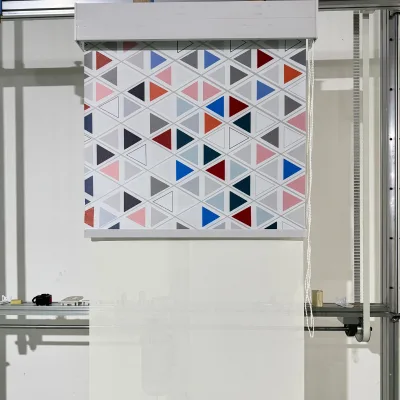


Electric Cordless Venetian Wooden Blinds Vertical Pattern Window Shades
$5.50 - $10.80
MOQ: 10 Square Meters

Motorized Blinds Darkening Dual Shade Electric Zebra Blinds Day and Night Bilinds
$13.00 - $19.85
MOQ: 100 Square Meters
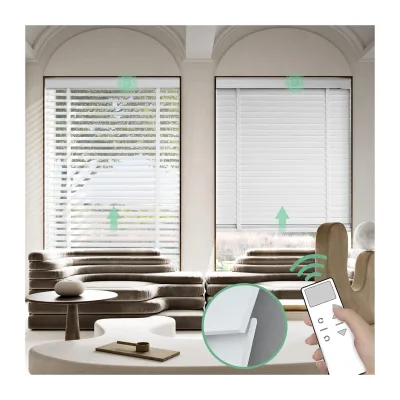

High Quality Wooden Blackout Blinds for Customized Size and Color Wooden Shades
$7.00 - $8.00
MOQ: 2 Square Meters


High Quality Plantation Shutters Wooden Blinds for Living Room Windows
$75.00 - $80.00
MOQ: 50 Square Meters


Factory Wooden Blinds for Window Windows Decoration Curtain Blinds Slats
$0.30 - $0.50
MOQ: 2 Square Meters


Faux Wood Blinds and Wooden Venetian Blinds Motorized for Windows
$15.00 - $25.00
MOQ: 1 Square Meters


Multiple Electric Lithium Battery Roller Blinds
$11.99 - $13.99
MOQ: 1 Square Meters
Shouguang Runchen Environmental Protection Technology Co., Ltd.

Roller Blinds with Remote Battery Power Indoor Smart Blackout Blinds
$11.99 - $13.99
MOQ: 1 Square Meters
Shouguang Runchen Environmental Protection Technology Co., Ltd.

Electric Sunscreen Fabric Roller Blinds for Living Room
$10.99 - $13.99
MOQ: 1 Square Meters
Shouguang Runchen Environmental Protection Technology Co., Ltd.


Remote Control Electric Cordless Zebra Blinds
$13.99 - $23.99
MOQ: 1 Square Meters
Shouguang Runchen Environmental Protection Technology Co., Ltd.

Electric Dream Curtains Blackout Curtains Vertical Blinds for Living Room
$15.99 - $17.99
MOQ: 1 Square Meters
Shouguang Runchen Environmental Protection Technology Co., Ltd.


Comprehensive Sourcing Guide
Wooden Electric Blinds Sourcing Guide
The procurement of Wooden Electric Blinds requires a careful distinction between the specific material composition and the operational mechanisms observed in the current market. While the core keyword emphasizes wood, the available product data indicates a diverse range of materials including polyester and sunscreen fabrics, alongside specific listings for wood-based structures. Buyers must verify that the "Wood" material attribute is explicitly confirmed for the specific model, as many electric options in the catalog utilize synthetic blends like 100% polyester for durability and light control. This distinction is critical because the acoustic and thermal properties of wood differ significantly from those of synthetic fabrics, affecting the suitability for environments requiring sound insulation or specific heat management.
Operational flexibility is a primary driver in this category, with observed listings supporting both manual and electric opening types. The market data confirms the availability of motorized styles and electric open types, which are essential for large windows or hard-to-reach areas in commercial and residential settings. However, the specific model numbers and standard sizes vary, with some products offering customized dimensions while others adhere to fixed standards like 80100mm or 90110mm. Procurement teams must align their architectural requirements with these specific structural constraints, ensuring that the chosen electric mechanism is compatible with the blade width and the overall horizontal or vertical structure of the blind.
Product Scope and Observed Listing Signals
The product scope for Wooden Electric Blinds encompasses a variety of functional attributes, including sound insulation, heat insulation, and insect resistance. Listings indicate that these products are designed for multiple environments such as living rooms, bedrooms, bathrooms, offices, and kitchens, with some models specifically noted for high-quality performance in hotels, hospitals, and conference rooms. The observed data highlights a "Modern" style preference, often paired with motorized features to enhance user convenience. Buyers should note that while "Wood" is a listed material, other options like polyester are prevalent, and the final selection depends on the specific balance of aesthetic preference and functional requirements like dustproofing or windproofing.
Listing signals reveal a wide range of customization capabilities, with many suppliers offering tailored solutions for size, style, and operation. The data shows that products can be customized in terms of standard dimensions, with some models supporting widths within 2.5 meters and lengths up to 3 meters. Additionally, the availability of "Double Roller Blinds" and "All-inclusive cover box" models suggests that buyers can source integrated systems that combine multiple functionalities. The presence of "Carton Box Packages" and specific single package sizes indicates that logistics and packaging are standardized, but the exact dimensions and weight, such as the 1.0 kg gross weight observed in some listings, must be verified for shipping cost calculations.
Technical Specifications to Verify
When evaluating technical specifications, the blade structure and material composition are the most critical verification points. The observed data lists both "Vertical" and "Horizontal" structures, with specific mentions of "Narrow Blade" sheet sizes and standard dimensions like 80100mm or 90110mm. Buyers must confirm whether the wooden blinds they intend to purchase adhere to these specific blade widths, as this directly impacts the light control and aesthetic finish. Furthermore, the material specification must be rigorously checked; while "Wood" is listed, other entries specify "Polyester" or "Sunscreen" fabrics, and the buyer must ensure the final product matches the desired material profile to avoid performance discrepancies in insulation or durability.
The operational mechanism and control systems require detailed scrutiny to ensure compatibility with existing building infrastructure. The market data confirms the availability of both "Manual" and "Electric" open types, with specific references to "Motorized" styles and "Rolling pull" techniques. Buyers should verify the voltage requirements and the type of motorization, as some models may be designed for specific installation types like "Side Installation." Additionally, the light control features, such as "100%/50% Blackout" capabilities, must be matched against the room's lighting needs. The presence of "After-sales Service" in the listings suggests that technical support is available, but the specific scope of this service regarding motor repairs or fabric replacement should be clarified before finalizing the order.
Compliance and Safety Documentation
Compliance and safety documentation for Wooden Electric Blinds should focus on material safety and electrical standards, particularly given the motorized nature of the products. While the provided data mentions "Reach" as a low-confidence background element, buyers must not assume certification status without explicit verification from the supplier. It is essential to request documentation confirming that the wood used is treated for fire resistance and that the electrical components meet the safety standards of the destination country. The absence of specific certification data in the observed listings means that the procurement team must actively seek out third-party test reports to validate the safety of the motorized systems and the chemical treatment of the wooden slats.
Safety considerations also extend to the installation process and the structural integrity of the mounting hardware. The data indicates "Side Installation" as a specific method, which implies that the mounting brackets and support systems must be robust enough to handle the weight of the wooden blinds and the torque of the electric motor. Buyers should verify that the supplier provides installation guidelines that comply with local building codes, especially for commercial applications in hotels, hospitals, and offices. The "High-quality" advantage noted in the listings is a general claim that requires substantiation through warranty terms and liability coverage, ensuring that the supplier assumes responsibility for any installation-related failures or safety incidents.
Cost Drivers and Commercial Terms
Cost drivers for Wooden Electric Blinds are heavily influenced by the material composition, customization level, and the complexity of the motorization system. The observed MOQ range spans from 1 piece to 5000 units, with specific listings showing an MOQ of 10 square meters for certain fabric-based models and 1 piece for others. This variability suggests that buyers can source small quantities for pilot projects or large volumes for bulk installations, but the unit price will fluctuate significantly based on the order size and the degree of customization required. The "Customized" attribute is a key cost factor, as tailored dimensions and specific motor types will incur higher production costs compared to standard off-the-shelf models.
Commercial terms regarding payment, lead time, and shipping must be negotiated with a clear understanding of the supplier's capabilities. The data indicates that products originate from China, specifically Guangdong, which is a major manufacturing hub, but specific lead times are not provided in the observed facts. Buyers should establish clear timelines for production and delivery, especially for customized orders that may require additional manufacturing time. The "Carton Box Packages" and specific single package sizes noted in the data will impact freight costs, and buyers should calculate the total landed cost by factoring in packaging dimensions, weight, and the distance from the port of origin to the final destination.
Supplier Qualification and Quality Control
Supplier qualification for Wooden Electric Blinds should prioritize manufacturers with a proven track record in producing motorized window treatments and those who offer robust after-sales support. The observed data confirms that "After-sales Service" is available, which is a critical indicator of a supplier's commitment to long-term customer satisfaction. Buyers should verify the supplier's ability to handle technical issues related to the electric motors and the structural integrity of the wooden components. Additionally, the "High-quality" advantage mentioned in the listings should be validated through sample testing and reference checks from previous clients in similar industries, such as hospitality or commercial office spaces.
Quality control processes must be rigorous, focusing on the consistency of the wood finish, the precision of the blade dimensions, and the reliability of the motorized mechanisms. The data lists specific standards like 80100mm or 90110mm, and buyers should ensure that the supplier maintains strict tolerances for these dimensions to guarantee a seamless fit. The "Plain" technique and "100% Polyester" fabric options suggest that the supplier has diverse manufacturing capabilities, but the quality of the wood treatment and the durability of the motorized parts must be independently verified. Implementing a pre-shipment inspection protocol is recommended to catch any defects in the wooden slats or the electrical components before the goods are shipped.
Long-Term Procurement Checks
Long-term procurement checks for Wooden Electric Blinds should focus on the durability of the materials and the longevity of the motorized systems. The "Sound Insulation" and "Heat Insulation" functions are key performance indicators that must be maintained over time, and buyers should monitor the product's performance in real-world conditions to ensure these claims hold true. The "Insect Resistant" and "Dustproof" attributes are also critical for maintaining the aesthetic and functional value of the blinds, especially in high-traffic areas like offices and hotels. Regular maintenance schedules should be established to clean the wooden slats and check the motorized mechanisms for wear and tear.
Supplier relationship management is essential for ensuring a steady supply of replacement parts and ongoing technical support. The "Customized" nature of many products means that spare parts may not be universally compatible, and buyers should secure a supply agreement for motors, remotes, and replacement slats. The "After-sales Service" mentioned in the data should be formalized in a service level agreement that defines response times and resolution protocols for any issues that arise. By maintaining a proactive approach to supplier engagement, buyers can mitigate the risks of supply chain disruptions and ensure that their Wooden Electric Blinds continue to perform optimally throughout their lifecycle.
FAQs
What materials are used for Wooden Electric Blinds?
Wood is the primary material used for these blinds, offering a modern style suitable for various rooms. The product line also includes polyester and sunscreen fabric options for roller and double roller variants. These materials provide heat insulation, dustproofing, and windproofing. Buyers can choose between manual and motorized operation types depending on their specific functional needs and room requirements.
Can Wooden Electric Blinds be customized for specific sizes?
Yes, customization is available for these blinds to fit unique window dimensions. Standard specifications include sizes like 80*100mm or 90*110mm, but custom sizes are also supported. The maximum standard width is within 2.5 meters and length within 3 meters. Buyers should specify their exact requirements during the ordering process to ensure a proper fit for their living room, bedroom, or office spaces.
What functions do these blinds provide for home use?
These blinds offer multiple functions including sound insulation, heat insulation, and insect resistance. They are also dustproof, windproof, and provide anti-theft security features. The motorized style allows for easy operation in living rooms, bedrooms, bathrooms, and offices. Some variants feature light control capabilities with 100% or 50% blackout options to enhance privacy and comfort.
What is the minimum order quantity for these products?
The minimum order quantity varies by product type. For some items, the MOQ is as low as 1 piece, while others require a minimum of 10 square meters. Buyers should check the specific product details for accurate MOQ values. The products are packed in carton boxes, and the origin is China, with production locations in Guangdong.
How are Wooden Electric Blinds installed and operated?
Installation is typically done via side installation methods for secure mounting. Operation can be manual or electric, with motorized styles available for convenience. The opening and closing method involves a rolling pull mechanism for standard roller blinds. Buyers can choose between different structures such as vertical or horizontal depending on their aesthetic and functional preferences for their interior spaces.