Source Wooden Reading Magnifier with Plastic Hands for Design Inspection Assembly
Compare 30 listings for a Wooden Reading Magnifier with Plastic Hands featuring LED lights and variable magnification. Buyers can review folding and handheld models with PMMA or glass optics from Chinese factories.
Key considerations
Products List



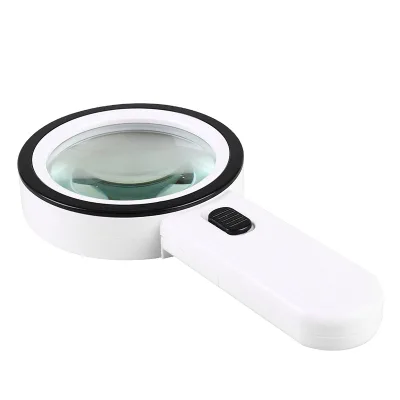
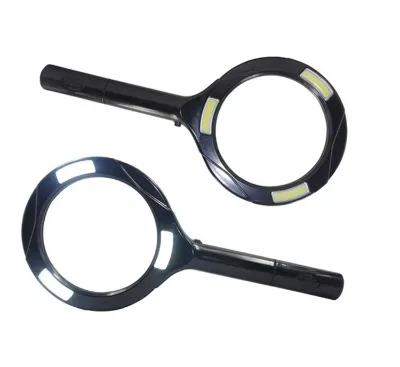
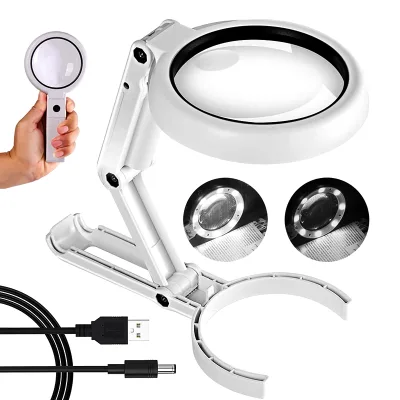



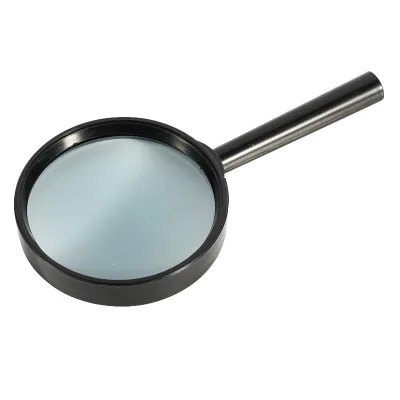




Comprehensive Sourcing Guide
Sourcing Guide for Wooden Reading Magnifiers with Plastic Handles
Understanding Product Variants and Core Attributes
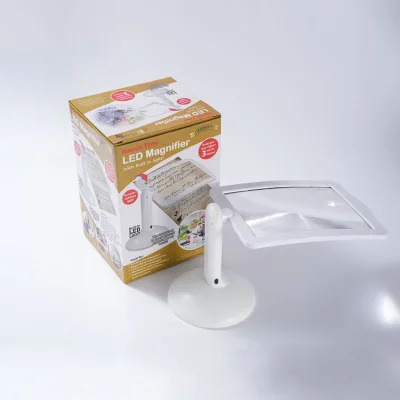
When sourcing a Wooden Reading Magnifier with Plastic Hands, buyers must first navigate the specific terminology and structural definitions found in the current market. While the core keyword suggests a specific material combination, the actual product landscape includes a wide array of variations in construction, magnification, and intended use. The supplied data indicates that products in this category are frequently categorized by their structural type, with "Folding type," "Handle type," and "desktop" configurations being the most prevalent. It is critical to distinguish between a handheld unit and a desktop stand, as the "plastic hands" mentioned in the search query likely refer to the handle mechanism or the structural support components, which are often described in supplier data as "Plastic Cement" or simply "Plastic."
The material composition is a primary differentiator. While the search term specifies "wooden," the provided product facts reveal a significant presence of "PMMA / Silica gel" and "Plastic" materials in the construction of similar magnifiers. Some listings explicitly mention "Glass" as the mirror material, while others utilize "PMMA" (acrylic). Buyers should verify if the "wooden" aspect refers to the handle casing, the base, or if it is a misclassification for a plastic unit with a wood-grain finish. The "Handle" attribute is frequently noted as "Plastic Cement," suggesting a composite or adhesive bonding method rather than a solid wood block. Therefore, the procurement strategy must focus on verifying the exact material of the handle and the lens, as the market offers both pure plastic units and hybrid designs.
The functional attributes are equally diverse. The observed product list includes "Detector" and "LED light" as primary functions. This indicates that many modern reading magnifiers are not passive optical tools but active devices requiring power. The data specifies battery requirements ranging from "2xaa" to "3xaa" batteries, which is a crucial logistical consideration for inventory and shipping. Furthermore, the magnification capabilities vary significantly, with observed ranges of "less 10," "10-100," and "above100." This wide spectrum means that a single search term covers everything from low-power reading aids to high-precision inspection tools. Buyers must define their specific magnification needs before engaging with suppliers, as a unit with "10-100" magnification serves a vastly different purpose than one with "less 10" magnification.
Technical Specifications and Optical Performance
The technical specifications of these magnifiers are defined by their optical properties, structural dimensions, and power requirements. The lens surface type is a critical technical parameter, with observed variations including "Concave," "Convex," and "Fresnel lens." The "Fresnel lens" is particularly notable for its ability to provide high magnification in a thin, lightweight profile, often used in the "Folding type" or "Portable Magnifier" categories. In contrast, "Convex" and "Concave" surfaces are standard for traditional glass or plastic lenses. The "Mirror Surface" attribute also lists "Fresnel lens," which implies a specific manufacturing process where the lens is molded to reduce weight while maintaining optical clarity.
Dimensions and standard sizes are another vital technical aspect. The supplied data lists specific standard sizes such as "40mm, 50mm, 60mm, 65mm, 75mm, 90mm, 100mm," as well as specific model dimensions like "120mm," "138mm," and "108mm." These measurements likely refer to the diameter of the lens or the overall footprint of the device. For a "Wooden Reading Magnifier with Plastic Hands," the size of the handle and the base must be compatible with the user's ergonomics. The "Box size" is also provided in some listings as "1658319mm," which helps in calculating shipping volumes and packaging costs. The "prod_model" identifiers, such as "AMS-MG1002" or "AMS-NO. 70120B," serve as unique identifiers for these specific configurations, allowing buyers to request exact samples.
Power systems are a defining technical feature for many units in this category. The presence of "LED light" and "Detector" functions necessitates a power source. The data explicitly mentions "3xaa" and "2xaa" battery configurations. This variation affects the weight, balance, and operational time of the device. A buyer sourcing a "wooden" unit with "plastic hands" must ensure that the internal cavity for the batteries is designed to accommodate the specific battery count required for the LED function. Additionally, the "Structure" is noted as "Handheld" in several entries, reinforcing the need for a durable handle that can withstand the weight of the lens and battery compartment. The "Shape" is predominantly "Circular," which is standard for reading magnifiers to provide a uniform field of view.
Compliance, Certification, and Safety Standards
When procuring electronic reading aids, compliance and safety standards are paramount, even if the product appears to be a simple optical tool. The integration of "LED light" and battery compartments introduces electrical safety considerations. While the supplied facts do not list specific certification marks (such as CE, FCC, or RoHS), the presence of electrical components implies that these products must adhere to relevant international safety standards for low-voltage electronics and battery safety. Buyers should verify that the "Factory" supplier can provide documentation confirming that the electrical components meet the safety regulations of the target market.
The material composition also raises compliance questions. The use of "PMMA / Silica gel" and "Plastic" requires verification that these materials are non-toxic and safe for prolonged handling, especially if the product is intended for use by children or in educational settings. The "Wooden" component, if present, should be treated with finishes that do not emit harmful volatile organic compounds (VOCs). The "Brand Name" "WUFAN" and "Jaxy" are observed in the data, suggesting that established brands may have more rigorous internal quality control and compliance protocols. However, buyers should not assume certification status based on brand name alone; explicit verification is required.
Furthermore, the "Customization" and "OEM" (Original Equipment Manufacturer) support available in the market suggests that buyers may need to ensure that custom branding does not compromise safety certifications. If a buyer requests a specific logo or color change, the underlying material and electrical safety must remain compliant. The "Standard" sizes listed, such as "120mm" or "138mm," may also correspond to specific industry standards for optical instruments, though the exact standard numbers are not provided in the source data. Buyers should request the specific standard codes (e.g., ISO standards for optical instruments) from the supplier to ensure the product meets professional requirements.
Cost Drivers and Pricing Dynamics
The pricing of wooden reading magnifiers with plastic hands is influenced by a complex interplay of material costs, manufacturing complexity, and order volume. The observed price range in the market is $0.25 to $8.00 USD. This wide disparity suggests that the lower end of the spectrum likely corresponds to basic, non-electric units with simple plastic construction, while the higher end includes units with advanced features like "LED light," "Detector" functions, and higher magnification ranges. The inclusion of "3xaa" or "2xaa" batteries and the associated circuitry for the LED light significantly increases the unit cost compared to passive magnifiers.
Order volume is a primary cost driver. The "MOQ" (Minimum Order Quantity) ranges from 1 to 5000 units. The data explicitly notes "Small Orders: Accepted," which is beneficial for buyers testing the market or requiring low-volume stock. However, the specific listing for a model with "OEM" support indicates an "MOQ: 100pcs," suggesting that customization services often come with a higher minimum threshold. Buyers should be aware that unit prices will decrease as order quantities increase, but the exact price curve is not provided in the source data. The "Delivery Time" of "30-40days" also impacts the total cost of ownership, as longer lead times may require higher safety stock levels, increasing working capital requirements.
Material costs are another significant factor. The use of "Glass" versus "PMMA" or "Silica gel" affects the price, with glass typically being more expensive due to weight and fragility. The "Plastic Cement" used in the handle construction adds to the manufacturing complexity and cost. Additionally, the "Folding type" mechanism requires more precise engineering and assembly than a fixed "Handle type," which can drive up the price. The "prod_packing" in a "Color Box" adds to the packaging cost, which is often included in the unit price. Buyers should request detailed cost breakdowns to understand how much of the price is attributed to the lens, the electronics, the handle, and the packaging.
Typical Applications and Usage Scenarios
The applications for these magnifiers are diverse, spanning from personal reading aids to professional inspection tools. The "Usage" attributes listed include "Design," "Inspection," and "Precision assembly." This indicates that the products are not limited to hobbyist reading but are also used in industrial and technical settings. The "Detector" function suggests utility in tasks requiring the detection of defects or specific features, making these tools valuable in quality control environments. The "LED light" feature is essential for applications where ambient lighting is insufficient, such as in detailed jewelry work, electronics repair, or reading fine print in low-light conditions.
For the "Wooden Reading Magnifier with Plastic Hands" specifically, the ergonomic design of the handle makes it suitable for prolonged use. The "Handheld" structure allows for flexibility in positioning, which is crucial for "Precision assembly" tasks where the user needs to move the magnifier around the workpiece. The "Folding type" variant is particularly useful for portability, allowing professionals to carry the tool in a briefcase or tool kit. The "desktop" option, on the other hand, is ideal for fixed workstations where hands-free operation is preferred, although the "Handle type" is more common in the observed data.
The "Brand Name" "WUFAN" and "Jaxy" are associated with these applications, suggesting that these brands have established reputations in specific niches. The "Customization" support allows for branding these tools for corporate use, such as in educational institutions or manufacturing plants. The "Small Orders: Accepted" policy makes these tools accessible for small businesses or individual professionals who need a single unit for immediate use. The versatility of the magnification range, from "less 10" to "above100," ensures that the same product line can serve multiple applications, from general reading to high-magnification inspection.
Supplier Evaluation and Quality Control
Evaluating suppliers for wooden reading magnifiers with plastic hands requires a rigorous assessment of their capabilities and quality control processes. The data identifies the "Supplier" as a "Factory," which implies a direct manufacturing relationship rather than a trading company. This can be advantageous for pricing and communication, but buyers must verify the factory's capacity and expertise. The "Customization: Available" and "OEM" support indicate that the supplier has the flexibility to meet specific buyer requirements, but this also necessitates a clear understanding of the customization scope.
Quality control should focus on the optical clarity, structural integrity, and electrical safety of the product. Buyers should request samples to test the "Magnification" accuracy, ensuring that the stated "10-100" or "less 10" ranges are precise. The "Mirror Surface" quality, whether "Concave," "Convex," or "Fresnel lens," must be free from distortions. The "Handle" construction, described as "Plastic Cement," should be tested for durability and resistance to breaking under normal use. The "LED light" functionality must be tested for brightness, battery life, and consistency.
The "Shipping Way" options of "by Sea or by Air" provide flexibility, but buyers should consider the impact of shipping on product quality. Glass lenses, if used, are fragile and require careful packaging. The "prod_packing" in a "Color Box" should be evaluated for its ability to protect the product during transit. The "Delivery Time" of "30-40days" should be factored into the supply chain planning to avoid stockouts. Buyers should also verify the "origin" of the product, which is listed as "China," and ensure that the supplier adheres to international shipping and export regulations.
Long-Term Procurement and Strategic Considerations
Long-term procurement of wooden reading magnifiers with plastic hands requires a strategic approach that balances cost, quality, and supply chain stability. The "MOQ" range of 1 to 5000 units offers flexibility, but buyers should plan for volume growth to secure better pricing. The "Customization" and "OEM" support allow for brand differentiation, which can be a competitive advantage in the long term. However, buyers must ensure that the customization does not compromise the product's reliability or safety.
The "Lead Time" of "30-40days" is a critical factor in inventory management. Buyers should maintain a buffer stock to account for potential delays, especially if the product is sourced from a single factory. The "Shipping Way" options should be evaluated based on the urgency of the order and the cost sensitivity of the product. For high-volume orders, sea freight is typically more cost-effective, while air freight may be necessary for urgent restocking.
The "Standard" sizes and "prod_model" identifiers provide a framework for standardization. Buyers should aim to standardize their product line to simplify inventory management and reduce the complexity of the supply chain. The "Brand Name" "WUFAN" and "Jaxy" can serve as benchmarks for quality, but buyers should not rely solely on brand reputation. Instead, they should establish their own quality standards and conduct regular audits of the supplier's production process.
Finally, the "Small Orders: Accepted" policy is a valuable feature for buyers entering the market or testing new product lines. It allows for low-risk experimentation before committing to larger volumes. However, as the business grows, buyers should negotiate better terms and pricing based on their increased order volume. The "Cost Drivers" and "Pricing Dynamics" discussed earlier should be revisited regularly to ensure that the procurement strategy remains competitive and cost-effective in the long run. By focusing on these strategic considerations, buyers can build a sustainable and efficient supply chain for wooden reading magnifiers with plastic hands.
FAQs
What materials are used for the lens and handle?
The lens is typically made of PMMA, silica gel, or glass, while the handle is constructed from plastic or plastic cement. Buyers should verify the specific material composition as some units use pure plastic while others may feature hybrid designs.
Which magnification ranges are available for these tools?
Available magnification ranges include less than 10, 10 to 100, and above 100. The specific range depends on the model, such as the 8039 series, so buyers must select the unit that matches their inspection or reading precision needs.
Can I order small quantities of these magnifiers?
Yes, small orders are accepted with a minimum order quantity as low as one unit. However, customized orders with OEM support may require a higher minimum, such as 100 pieces, depending on the specific supplier and model configuration.
How are these magnifiers powered for LED functions?
Units with LED lights and detectors are powered by batteries, typically requiring either two or three AA batteries. The specific battery requirement varies by model, so check the product specifications to ensure the correct power source is included or purchased separately.
What customization options are available for branding?
Customization is available including OEM support for branding and specific model configurations. Buyers can request changes to the product model or packaging, but they must confirm the minimum order quantity and lead time requirements with the factory before proceeding.
What are the standard delivery times for these products?
The standard delivery time is typically between 30 to 40 days from order confirmation. This lead time applies to most factory-sourced units, so buyers should plan their inventory accordingly to avoid delays in receiving the Wooden Reading Magnifier with Plastic Hands.