Source Zero Emission Electric Pickup Truck for Urban Delivery
Find 29 Zero Emission Electric Pickup Truck models suitable for urban cargo delivery, municipal repair, and small cargo transport. Compare specifications including load capacity, speed, and battery options to select the right vehicle for your fleet needs.
Key considerations
Products List

Environmental Protectional 130km Low Speed Mini Electric Cargo Pickup Truck
$1.00 - $9999.00
MOQ: 4 unit


China Factory Direct EV Pickup Truck with Pickup Electric for Sale
$23900.00 - $25900.00
MOQ: 1 Pieces
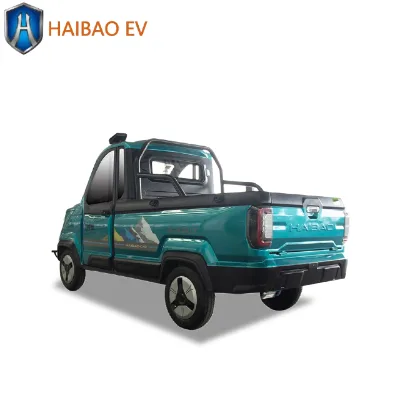
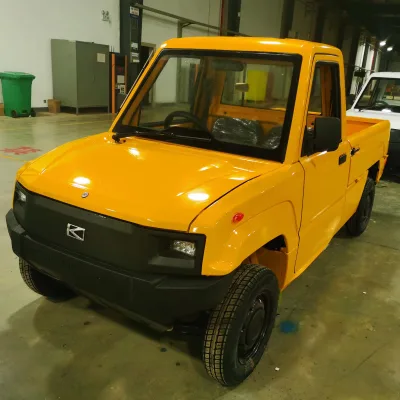
Low Speed Electric 4-Wheel Pickup Truck | 35km/h Top Speed | 120km Range |
$2349.55 - $2359.72
MOQ: 4 units



Comprehensive Sourcing Guide
Strategic Sourcing Guide for Zero Emission Electric Pickup Trucks
The global shift toward sustainable logistics has accelerated the adoption of zero emission electric pickup trucks, particularly for urban and municipal applications. These vehicles represent a distinct category within the light commercial vehicle (LCV) market, offering a solution that balances payload capacity with environmental compliance. For procurement professionals, navigating this sector requires a disciplined approach to verifying technical specifications, understanding regulatory frameworks, and evaluating supplier capabilities without relying on unverified marketing claims. The following guide outlines the critical factors for sourcing these vehicles effectively, grounded in observed market data and standard industry practices.
Technical Specifications and Performance Metrics
When evaluating zero emission electric pickup trucks, the primary focus must be on the powertrain architecture and payload efficiency. The observed market data indicates a strong prevalence of vehicles with horsepower ratings below 150hp, which aligns with the requirements for urban cargo delivery where high-speed highway performance is less critical than torque and maneuverability. These units typically feature an automatic transmission type, simplifying operation for drivers in stop-and-go city environments.
A critical differentiator in this segment is the battery configuration and range. Suppliers often list options ranging from 72V lead-acid batteries to lithium battery systems. The choice between these technologies significantly impacts the vehicle's lifecycle cost and operational range. Observed specifications suggest a typical travel mileage of approximately 130km for certain models, while others indicate a working range of 80-100km. Buyers must verify the specific battery chemistry and capacity against their daily route requirements, as the rated load capacity often varies between 1.5 tons and 800-1000kg depending on the model configuration.
The physical dimensions and design are equally vital for urban integration. The standard product dimensions observed in the market include lengths ranging from 3.48 meters to 4.93 meters, with widths around 1.72 to 1.76 meters and heights near 1.98 meters. These compact profiles facilitate navigation through narrow city streets and tight loading docks. The body type is predominantly open flatbed style, designed for versatility in carrying various cargo types. Furthermore, the drive wheel configuration is frequently noted as 4x4 or rear-axle driven, providing necessary traction for light off-road or uneven municipal terrain. The maximum speed for these vehicles generally caps between 40km/h and 60km/h, a design choice that prioritizes safety and energy efficiency over highway speeds.
Compliance and Certification Verification
In the procurement of electric commercial vehicles, regulatory compliance is non-negotiable. Buyers must rigorously verify that the vehicles meet the emission standards of the target market. The core attribute of these units is their zero emission status, which satisfies strict environmental mandates in many jurisdictions. However, this status must be backed by recognized certifications.
The market data highlights several key certification standards that buyers should look for, including ECE (Economic Commission for Europe), GCC (Gulf Cooperation Council), and ISO standards. Additionally, specific regional certifications such as DOT (Department of Transportation) are critical for operations in North America. It is essential to understand that certification is not a universal attribute; a vehicle sold in one region may not automatically meet the standards of another. Procurement teams must request valid certification documents for the specific model being purchased, ensuring that the vehicle's electrical systems, safety features, and structural integrity have been tested against the relevant local regulations.
Beyond emission standards, tire certifications play a significant role in safety compliance. The observed data points to radial tire designs, which are standard for modern commercial vehicles. Buyers should confirm that the tires carry the appropriate certification marks for the intended operating region. Furthermore, the vehicle's voltage systems, often operating at 72V, must comply with local electrical safety codes. The absence of a specific certification claim in a product listing should be treated as a red flag, requiring immediate clarification from the supplier before proceeding with any purchase.
Cost Drivers and Total Cost of Ownership
The pricing landscape for zero emission electric pickup trucks is highly variable, with observed ranges spanning from $1 to over $38,000 USD. This wide disparity is driven by several key factors, including battery technology, payload capacity, and the level of customization offered. The minimum order quantity (MOQ) is another significant cost driver, with observed ranges starting as low as 1 unit up to 10 units. Buyers purchasing single units may face higher per-unit costs compared to those placing bulk orders, although the flexibility of low MOQs allows for pilot testing.
The total cost of ownership (TCO) analysis must extend beyond the initial purchase price. While the upfront cost of electric vehicles can be higher than their internal combustion counterparts, the savings in fuel and maintenance often offset this difference over time. The choice between lead-acid and lithium batteries is a primary determinant of long-term costs. Lithium batteries typically offer a longer lifespan and faster charging times but come with a higher initial price tag. Lead-acid batteries are more affordable upfront but may require more frequent replacement.
Other cost factors include the availability of optional features such as air conditioning and advanced driver assistance systems like EPS (Electric Power Steering). While these features enhance operator comfort and efficiency, they add to the base price. Buyers should also consider the cost of charging infrastructure and the specific energy consumption rates of the vehicle, which are influenced by the rated load and driving conditions. The observed maximum climbing ability of 20% suggests that energy consumption will vary significantly based on the terrain, a factor that should be included in the TCO calculation.
Typical Applications and Operational Use Cases
Zero emission electric pickup trucks are uniquely suited for specific operational environments where their compact size and zero emission profile provide a competitive advantage. The primary application identified in the market is urban cargo delivery. The vehicles' dimensions and speed capabilities make them ideal for last-mile logistics in dense city centers, where larger trucks face restrictions and higher operational costs.
Municipal repair and maintenance services represent another key use case. The ability to carry tools and equipment, combined with the quiet operation of electric motors, makes these trucks perfect for noise-sensitive areas such as residential neighborhoods or hospital zones. The observed application data also includes patrol duties, where the vehicle's agility and low emissions are beneficial for security and safety operations.
For small cargo delivery and specialized tasks, the towing and lifting abilities of these vehicles are crucial. Some models boast a towing ability of 1500kg and a lifting ability of 1000kg, enabling them to handle light trailers or equipment. The double cabin configurations, such as the T32 Pickup or C1600 models, offer seating for four, facilitating team transport for municipal workers or delivery crews. The open body type allows for the customization of the cargo area to suit specific needs, whether it be a flatbed for construction materials or a specialized rack for utility equipment.
Supplier Evaluation and Capability Assessment
Selecting the right supplier is a critical step in the procurement process. Buyers should evaluate suppliers based on their ability to provide accurate technical data, valid certifications, and reliable after-sales support. The observed data indicates that customization is available, suggesting that suppliers should be capable of tailoring vehicles to specific client requirements. However, buyers must verify the extent of this customization and ensure that any modifications do not compromise the vehicle's safety or compliance status.
The origin of the vehicles is another important factor. The majority of the observed products originate from China, a major hub for electric vehicle manufacturing. While this offers access to a wide range of models and competitive pricing, it also necessitates a thorough evaluation of the supplier's export capabilities and logistics network. Buyers should assess the supplier's experience in shipping to their specific region and their ability to handle customs clearance and local regulatory requirements.
Quality control is paramount when dealing with international suppliers. Buyers should request detailed information about the manufacturing process, including the quality assurance protocols used for battery assembly and electrical systems. The presence of a standardized product model, such as the LGEV102PKL or A6 pickup, indicates a level of production consistency that can be beneficial for maintenance and spare parts availability. However, buyers must remain vigilant and verify that the specific unit they are purchasing matches the specifications of the standard model.
Quality Control and Long-Term Procurement Considerations
Ensuring the long-term reliability of zero emission electric pickup trucks requires a robust quality control strategy. Buyers should implement a pre-shipment inspection protocol that verifies the vehicle's physical condition, electrical system integrity, and compliance with the agreed-upon specifications. Key areas of focus include the battery health, the condition of the tires, and the functionality of safety features like the EPS and braking systems.
For long-term procurement, the availability of spare parts and technical support is essential. Buyers should negotiate service level agreements (SLAs) that guarantee the availability of critical components, such as batteries, motors, and electronic control units. The standard packing method, often containerized, should be verified to ensure that the vehicles arrive in pristine condition. Additionally, the warranty terms should be clearly defined, covering both the vehicle's mechanical components and the battery system.
The evolution of the electric vehicle market means that technology will continue to advance rapidly. Procurement strategies should be flexible enough to accommodate future upgrades and technological changes. Buyers should consider the scalability of their fleet and the potential for integrating these vehicles into a broader smart logistics ecosystem. By focusing on these long-term considerations, organizations can ensure that their investment in zero emission electric pickup trucks delivers sustained value and supports their sustainability goals.
Conclusion
Sourcing zero emission electric pickup trucks requires a meticulous approach that balances technical performance, regulatory compliance, and cost efficiency. By carefully analyzing the available specifications, verifying certifications, and evaluating supplier capabilities, buyers can make informed decisions that meet their operational needs. The observed data highlights a diverse range of models, from compact single-cabin units to larger double-cabin trucks, each offering unique advantages for urban and municipal applications. As the market continues to evolve, maintaining a disciplined focus on quality control and long-term value will be essential for successful procurement outcomes.
FAQs
What is the maximum speed of these electric pickup trucks?
The maximum speed typically ranges from 40km/h to 60km/h depending on the specific model configuration. This speed cap prioritizes safety and energy efficiency for urban cargo delivery rather than highway performance.
Can these trucks be customized for specific needs?
Yes, customization is available for these vehicles to meet specific client requirements. Buyers should verify the extent of modifications to ensure they do not compromise the vehicle's safety or compliance status.
What certifications are required for zero emission electric pickups?
Key certifications include ECE, GCC, ISO, and regional standards like DOT for North America. Buyers must request valid documents for the specific model to ensure electrical systems and structural integrity meet local regulations.
How much load capacity do these electric pickup trucks offer?
Load capacity varies between 800kg and 1.5 tons depending on the model and battery configuration. Some units also feature towing abilities up to 1500kg and lifting abilities of 1000kg for light equipment.
What battery options are available for these vehicles?
Suppliers offer choices between 72V lead-acid batteries and lithium battery systems. The choice impacts lifecycle cost and operational range, with lithium options providing longer life but higher initial prices.
Where are these electric pickup trucks manufactured?
The majority of observed products originate from China, a major hub for electric vehicle manufacturing. Buyers should evaluate the supplier's export capabilities and logistics network for shipping to their specific region.
What is the typical travel mileage for these trucks?
Typical travel mileage ranges from 80km to 130km per charge depending on the battery type. Buyers must verify specific chemistry and capacity against their daily route requirements to ensure operational viability.