Beach Wheelchair Suppliers and Manufacturers in China
Compare 15 verified Beach Wheelchair suppliers in China Zhejiang and Guangdong. Review lead times, certifications like ISO 13485, and prices ranging from 72 to 280 USD. Contact suppliers directly to request quotes for manual or electric models; review the available evidence before requesting comparable quotations from suitable candidates.
Suppliers List

Ningbo Baichen Medical Devices Co., Ltd.
- Verified by SGS
- Trading Company,Manufacturer/Factory
- China Zhejiang
- Lead time23 days
- Avg. response≤ 5h
Main productsElectric Wheelchair, Electric Mobility Scooter, Carbon Fiber Electric Wheelchair, Reclining Electric Wheelchair, Power Wheelchair, Steel Electric Wheelchair, Aluminum Wheelchair, Medical Wheelchair, Manual Wheelchair, Walking Aids and Rehabilitation Equipment
Main marketsSouth America,Eastern Europe,Mid East,North America,Southeast Asia,Eastern Asia,Western Europe

- Trading Company
- China Guangdong
- Lead time15 days
- Avg. response≤ 8h
Main productsElectric Wheelchair, Manual Wheelchair, Sports Wheelchair, Hospital Bed, Crtuches, Walking Aids, Shower Chair, Trailer Mobility Scooter, Commode Wheelchair, Stretcher
Main marketsSouth America,Europe,Australia


Topmedi off Road Stair Climbing Drive Mobility Scooter Beach Electric Wheelchair
$12000.00 - $15000.00
Moq: 1

Anhui Jbh Medical Apparatus Co., Ltd.
- Verified by TUVRHEINLAND
- Manufacturer/Factory
- China Jiangsu
- Lead time23 days
- Avg. response≤ 3h
Main productsPower Wheelchair, Manual Wheelchair, Mobility Scooter, Standing Wheelchair, Carbon Fiber Wheelchair, Wheelchair Battery, Patient Lift, Walking Aid, Wheelchair Controller, Remote Folding Scooter
Main marketsSouth America,Mid East,North America,Southeast Asia,Eastern Asia,Oceania,Western Europe,Africa
- Manufacturer, Trading Company, Distributor/Wholesaler
- Guangdong, China
- Lead time25 days
- Avg. response≤ 2h
Main productsElectric wheelchairs,Beach wheelchairs,Beach walkers,Commode chair,Bath chair
Main marketsWestern Europe(20.0%), Eastern Europe(20.0%), South America(15.0%), North America(15.0%), Domestic Market(10.0%), Northern Europe(5.0%), Southeast Asia(5.0%), Oceania(5.0%), Africa(5.0%)
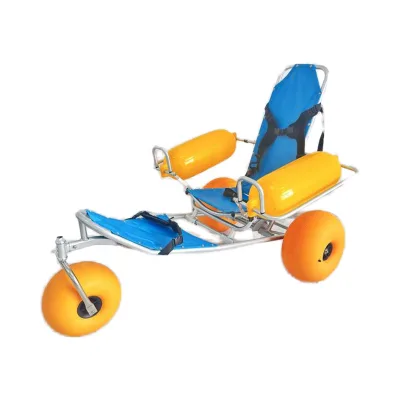
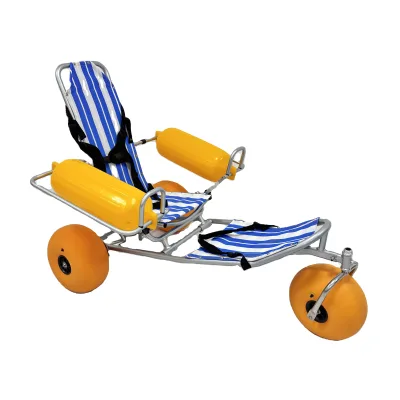
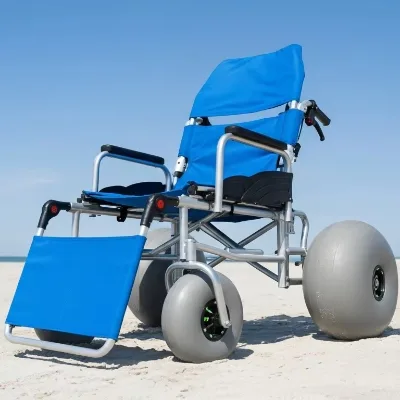
Hot Sale Adult Beach Wheelchair Water Wheelchair Beach Outdoor Use
$888.00 - $1080.00

Ningbo Zhensheng Medical Technology Co., Ltd.
- Verified by TUVRHEINLAND
- Trading Company
- China Zhejiang
- Lead time30 days
- Avg. response≤ 2h
Main productsElectric Wheelchair, Manual Wheelchair, Electric Standing Wheelchair, Elderly Mobile Scooter, Transfer Chair (Mobile Machine), Crutch, Electric Nursing Bed, Manual Nursing Bed, Sports Wheelchair, Electric Lift Wheelchair
Main marketsDomestic


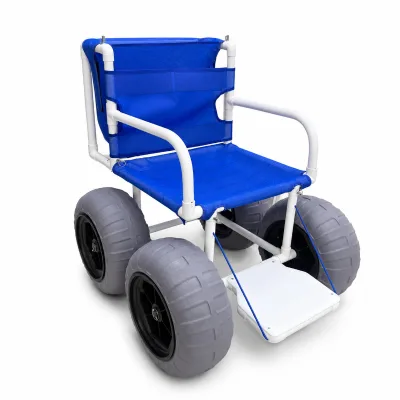
Deban Popular Medical Electric Folding Wheelchair for Handicap Beach Electronic Wheelchair
$2550.00 - $2615.00
Moq: 2

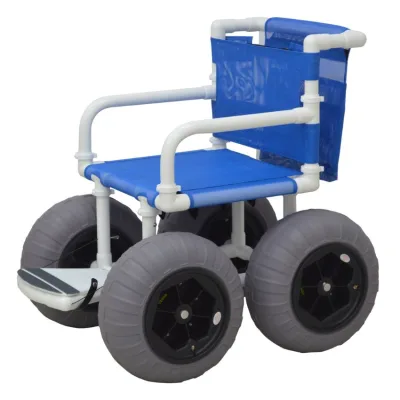
Beach All Terrain Heavy Duty Motor Powered Automatic Electric Motorized Wheelchair
$1850.00 - $1920.00
Moq: 2

- Verified by SGS Group
- Manufacturer, Trading Company
- Lead time30 days
- Avg. response≤ 3h
Main productsStretchers, First Aid Kits, Emergency Products, Wheelchair
Main marketsSouth America(20%), North America(15%), Eastern Europe(15%)
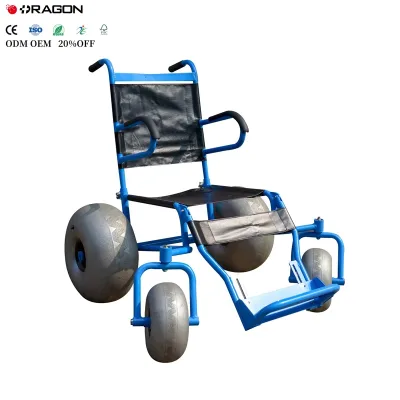
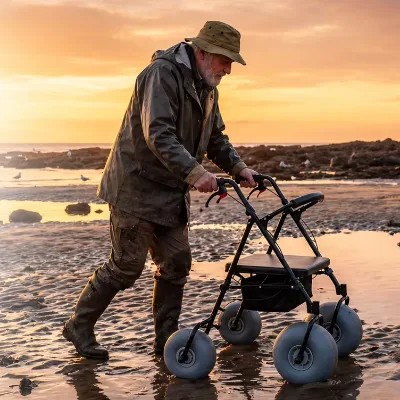
All-terrain Adult Beach Wheelchair with Balloon Tires for Soft Sand Walker & Rollator
$180.00 - $220.00
Moq: 1
Xiangyang Beizhen Medical Equipment Co., Ltd.
- Verified by SGS Group
- Manufacturer, Trading Company
- Hubei, China
- Lead time0 days
- Avg. response≤ 1h
Main productsElectric Wheelchair, Manual Wheelchair, Rollator, Moblity Scooter, Lower Extremity Exoskeleton Rehabilitation Robot
Main marketsDomestic Market(50%), North America(10%), South America(10%)
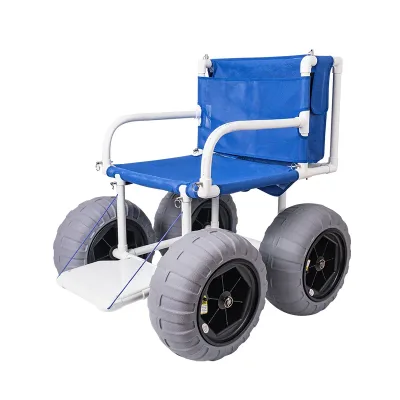
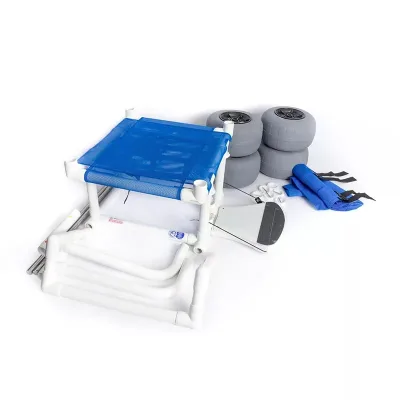
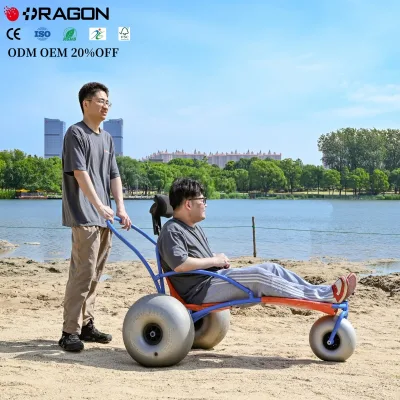
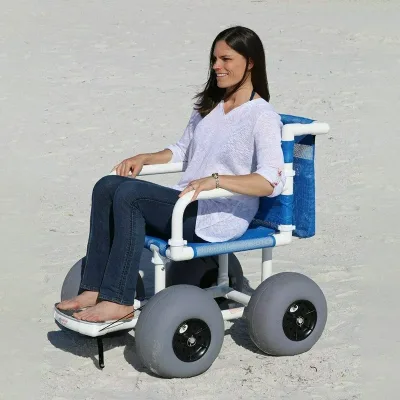
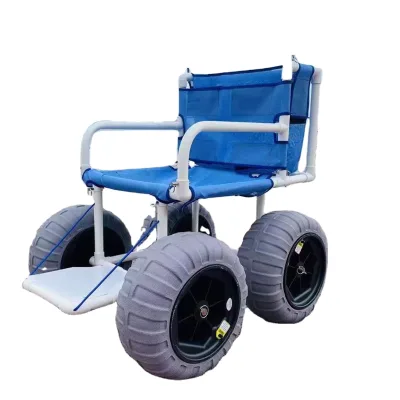
Beach Wheelchair Portable Manual Wheelchair Foldable Lightweight Detachable Chair Frame Sand Use
$388.07 - $439.13
Moq: 20
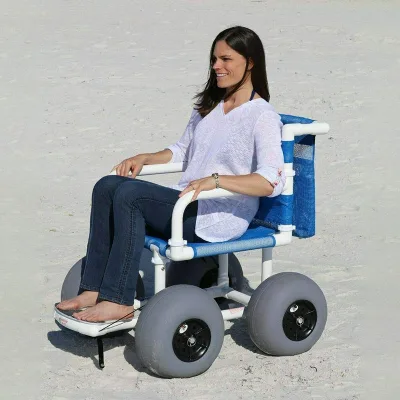
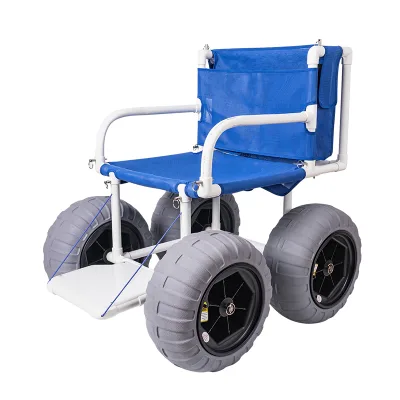
Chongqing Muniu Power Technology Co., Ltd.
- Verified by SGS Group
- Trading Company
- Lead time30 days
- Avg. response≤ 2h
Main productsWheelchair, Wheelchair Parts , Mobility Scooter, Patient Lift, Hand Control
Main marketsOceania(30%), South America(20%), Eastern Europe(15%)

FOSHAN L&C MEDICAL TECHNOLOGY CO., LTD.
- Verified by SGS
- Combined
- China Guangdong
- Lead time30 days
- Avg. response≤ 10h
Main productsWheelchair, Commode Chair, Walking Stick, Crutch, Rollator, Shower Bench, Walker, Walking Aid
Main marketsSouth America,Africa,Southeast Asia/ Mideast

High Quarity Cheap Factory Direct Manual Folding Wheelchair Beach Wheelchair for Hot Sale
$37.00 - $39.00
Moq: 100

Hot Sale High Quarity Cheap Factory Direct Manual Folding Wheelchair Beach Wheelchair
$37.00 - $39.00
Moq: 100

High Quarity Cheap Factory Direct Manual Folding Wheelchair Beach Wheelchair 125j
$37.00 - $39.00
Moq: 100

Jiangsu Yveelt Medical Equipment Co., Ltd
- Verified by TUVRHEINLAND
- Combined
- China Jiangsu
- Lead time23 days
- Avg. response≤ 3h
Main productsElectric Wheelchair, Baby Wheelchair, Wheelchair, Walking Sticks, Toliet Chair, Lightweight Wheelchair, Transfter Lift, Medical Equipment, Manual Wheelchair, Sport Wheelchair
Main marketsDomestic,Europe

ZHEJIANG KAIRUI MEDICAL DEVICE CO., LTD.
- Combined
- China Zhejiang
- Lead time30 days
- Avg. response≤ 7h
Main productsMobility Scooter, Wheelchair, Electric Wheelchair, Scooter
Main marketsDomestic,Europe

2024 Best Selling Folding Outdoor Beach Wheelchair Portable Electric Wheelchair for Daily Use
$280.00 - $300.00
Moq: 10


Shanghai Hubang Intelligent Rehabilitation Equipment Co., Ltd
- Verified by TUVRHEINLAND
- Combined
- China Shanghai
- Lead time15 days
- Avg. response≤ 5h
Main productsWheelchair, Electric Wheelchair, Power Wheelchair, Cane, Walker, Rollator, Crutch, Reclining Wheelchair, Manual Wheelchair, Rehabilitation Wheelchair
Main marketsEast Asia(Japan/ South Korea),Europe,North America

Nanjing Caremoving Rehabilitation Equipment Co., Ltd.
- Manufacturer/Factory
- China Jiangsu
- Lead time23 days
- Avg. response≤ 7h
Main productsManual Wheelchair, Electric Wheelchair, Mobility Disabled Scooter, Rollator Walker, Commode Chair
Main marketsEastern Europe,North America,Southeast Asia,Eastern Asia,Oceania,Western Europe

Suzhou Hengxiang Import & Export Co., Ltd.
- Trading Company
- China Jiangsu
- Lead time15 days
- Avg. response≤ 17h
Main productsDust Mask, Bandage, Surgical Drape, Suture, Operation Lamp, First Aid Kits, Surgical Tape, Infusion Set, Blood Transfusion Set
Main marketsSouth America,Africa,Europe

Contact supplier

Contact supplier

- Verified by BV
- Manufacturer/Factory
- China Shanghai
- Lead time23 days
- Avg. response≤ 20h
Main productsWheelchair, Electric Wheelchair, Commode Chair, Shower Chair, Crutch, Walking Stick, Mobility Scooter, Walker, Lift Chair, Cane
Main marketsSouth America,Eastern Europe,Mid East,North America,Southeast Asia,Eastern Asia,Oceania,Western Europe,Africa


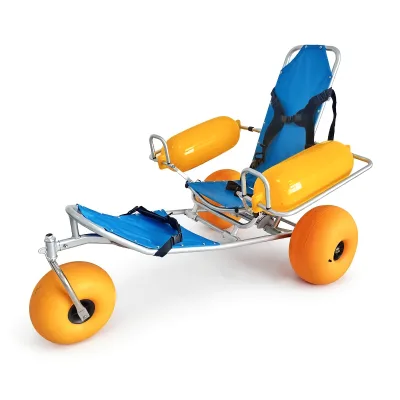
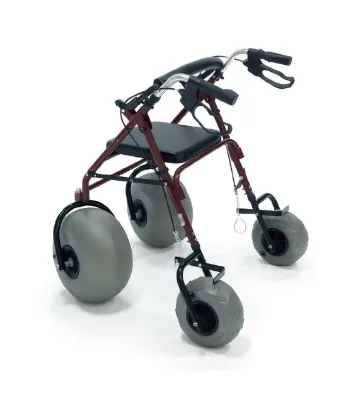


Comprehensive Sourcing Guide
Beach Wheelchair Supplier Concentration and Factory Types
The current supplier landscape for beach wheelchairs shows a distinct concentration of manufacturers and trading companies operating primarily within China's Zhejiang province. These entities often list diverse portfolios including electric wheelchairs, manual mobility aids, and rehabilitation equipment alongside their specialized beach models. The presence of both factory and trading company types suggests a mixed supply chain where some suppliers manage direct production while others facilitate distribution. Buyers should note that the Zhejiang cluster appears to host suppliers offering specific capabilities like OEM and ODM services, with some brands maintaining their own proprietary lines. This concentration allows for a dense network of potential partners, yet it requires careful filtering to distinguish between true manufacturers and intermediaries.
In contrast, other regions such as Guangdong also host suppliers in this category, though the specific factory types and product depths may vary. Some suppliers in these areas operate strictly as trading companies, focusing on aggregating products from various factories rather than owning production lines themselves. This distinction is critical because it impacts the level of control a buyer has over customization, quality assurance, and lead time management. When evaluating the supplier base, one must look for explicit declarations of company type rather than assuming manufacturing capability based on product listings alone. The availability of specific certifications like ISO 13485 and ISO 9001 among these suppliers indicates a baseline of quality management systems, but the physical location of the factory remains the primary indicator of the supply chain structure.
How to Verify Beach Wheelchair Suppliers
Verification of Beach Wheelchair suppliers requires a rigorous check of their declared credentials against independent audit reports. The current data indicates that some suppliers hold SGS verification status, which serves as a third-party confirmation of their business legitimacy. Buyers should prioritize suppliers who display system certifications such as ISO 13485, ISO 9001, and QC 080000, as these are specific to medical device manufacturing and quality control. Additionally, product-level certifications like CE, RoHS, and FDA 510K provide evidence that the specific wheelchair models meet international safety and regulatory standards. It is essential to request current certificates rather than relying on static website claims, as these documents have expiration dates and must cover the specific product models being sourced.
Beyond certifications, the responsiveness and operational history of a supplier offer further verification metrics. Response times recorded in the system, such as the 4.06-hour average observed for some suppliers, can indicate the efficiency of their communication channels and the availability of their sales teams. A faster response time often correlates with a more active and organized operation, which is vital for resolving technical queries regarding wheelchair specifications. Buyers should also verify the supplier's ability to provide detailed product attributes, such as frame materials, battery specifications, and folding mechanisms, as these details demonstrate technical competence. If a supplier cannot immediately provide these granular details or refuses to share verification documents, it is a strong signal to proceed with caution or seek alternative partners.
What to Compare Across Beach Wheelchair Suppliers
When comparing suppliers, the lead time is a primary differentiator that directly impacts inventory planning and project timelines. The observed data shows lead times varying significantly, with some suppliers indicating a 23-day production window while others suggest a 15-day turnaround. This variance often reflects differences in production capacity, order volume, and supply chain maturity. Buyers must align their order schedules with these specific lead times to avoid stockouts or delays, especially for custom orders that may require additional processing time. It is crucial to confirm whether the stated lead time includes packaging and preparation for shipment or if it covers only the manufacturing phase.
Another critical comparison point is the Minimum Order Quantity (MOQ) and the associated pricing structure. Current listings reveal MOQs ranging from as low as 2 pieces for certain electric models to 50 pieces for manual beach wheelchairs. This disparity allows buyers to test the market with smaller orders or commit to larger volumes for better unit economics. Pricing also varies, with manual models appearing in the $72 to $75 range and electric variants reaching up to $280. Buyers should evaluate the total cost of ownership, including shipping and potential customization fees, rather than focusing solely on the base unit price. Additionally, comparing warranty periods, such as the 24-month warranty observed on some models, helps assess the long-term value and reliability of the supplier's products.
Common Beach Wheelchair Sourcing Risks
One significant risk in sourcing beach wheelchairs is the potential mismatch between product specifications and actual performance in harsh environments. While many suppliers list attributes like "all-terrain" or "sand and water" capability, the actual durability of components such as wheels, bearings, and motors under saltwater exposure is not always guaranteed without specific testing data. Some product listings mention solid wheels and high-strength carbon steel frames, but buyers must verify if these materials are treated for corrosion resistance. Without explicit evidence of saltwater testing or specific material treatments, there is a risk that the wheelchair may degrade prematurely, leading to safety hazards and increased maintenance costs for the end-user.
Another risk involves the variability in customization capabilities and the clarity of the customization process. While some suppliers explicitly state that customization is available, others list products as non-customized or have limited options for frame colors and leg rest configurations. This inconsistency can lead to confusion regarding the final product specifications, especially for buyers requiring specific adaptations for their target markets. Furthermore, the reliance on trading companies rather than direct manufacturers can introduce communication gaps regarding technical changes or quality issues. If a supplier claims to offer OEM services but lacks the internal engineering team to support complex modifications, the buyer may face delays or substandard outcomes that are difficult to rectify after production has begun.
Beach Wheelchair Regional Sourcing and Logistics
The geographic concentration of suppliers in Zhejiang and Guangdong provinces in China influences the logistics strategy for Beach Wheelchair procurement. These regions are established manufacturing hubs with well-developed infrastructure for exporting medical devices and mobility aids. Suppliers in these locations typically have experience with international shipping standards, which can streamline the export process. However, the specific port of loading and the distance to the buyer's destination will significantly affect transit times and freight costs. Buyers should request detailed shipping terms from each supplier to understand whether they offer FOB, CIF, or DDP options, as these terms dictate who bears the risk and cost during transit.
Logistics planning must also account for the physical dimensions and weight of the beach wheelchairs, which vary by model. For instance, folded manual wheelchairs may have packing sizes around 53x40x89cm, while electric models can be substantially larger, reaching dimensions like 87x47x80cm. These size differences impact container loading efficiency and shipping costs, particularly for air freight. Buyers should calculate the volumetric weight of their orders to ensure accurate freight quotes. Additionally, the lead time for production must be synchronized with the shipping schedule to ensure timely delivery. Understanding the specific logistics capabilities of each supplier, including their experience with handling oversized or heavy medical equipment, is essential for a smooth supply chain operation.
Beach Wheelchair Commercial Terms and Order Planning
Commercial terms for Beach Wheelchair orders often include specific requirements for payment, warranty, and after-sales support. The observed data indicates that some suppliers offer a 24-month warranty, which is a critical factor in the commercial agreement. Buyers should clarify the scope of this warranty, including what components are covered and the process for claiming repairs or replacements. Additionally, the availability of customization services may incur extra costs or require a separate agreement. It is vital to negotiate clear terms regarding who is responsible for any defects discovered after the initial inspection period, as this can prevent disputes later in the supply chain.
Order planning must also consider the response time and communication efficiency of the supplier. With response times varying from 4 to 7 hours, buyers should establish a preferred communication channel and set expectations for turnaround on inquiries. A supplier with a slower response time may delay critical decisions regarding order placement or specification changes. Furthermore, the MOQ requirements should be factored into the financial planning of the order. For buyers with limited capital, starting with a lower MOQ order can mitigate financial risk, while larger orders may secure better pricing but require more upfront investment. Aligning the order volume with the supplier's production capacity and lead time ensures a balanced approach to inventory management and cash flow.
FAQs
What is the price range for beach wheelchairs?
Manual beach wheelchairs are priced at $75 per unit, while motorized options range from $72 to $280. Prices vary based on features like folding mechanisms, battery capacity, and material construction. Buyers should verify specific model costs as they depend on customization and order volume.
What certifications do beach wheelchairs have?
Products typically hold CE, RoHS, and ISO certifications. Some electric models also feature ISO 13485, ISO 9001, and FDA 510K approvals. These certifications ensure compliance with medical device standards and safety regulations for international trade and distribution channels.
What is the minimum order quantity?
MOQs vary by product type. Manual wheelchairs generally require a minimum order of 50 pieces. Electric beach wheelchairs have a lower MOQ of just 2 pieces. Buyers should confirm specific requirements with suppliers to ensure alignment with their inventory needs.
Where are beach wheelchairs manufactured?
Manufacturers are located in China, specifically in Zhejiang and Guangdong provinces. These regions specialize in producing electric and manual mobility devices. Buyers can source directly from these verified manufacturing hubs to ensure quality control and efficient logistics for international shipments.
What is the lead time for orders?
Production lead times range from 15 to 23 days depending on the supplier and product complexity. Manual models may have faster turnaround times compared to electric variants with battery assembly. Buyers should confirm exact schedules with suppliers to plan inventory and shipping effectively.
What battery specifications do electric models use?
Electric beach wheelchairs typically use 24V 12Ah batteries or 12V 27Ah lead-acid batteries. Some heavy-duty models utilize multiple batteries for extended range. Travel distances generally range from 10 to 25 km, with charging times between 5 and 10 hours.
Are beach wheelchairs customizable?
Customization is available for many models, including color and frame options. Suppliers offer OEM and ODM services for branded products. Buyers can request specific features like tilted seats or different leg rest types to meet unique user requirements and market demands.