CE Certified Portable Game Player Suppliers and Manufacturers
Browse 19 suppliers of CE Certified Portable Game Player units and compare verified certifications, factory or trading company type, response times, lead times, MOQ, and pricing. Shortlist candidates offering OEM or ODM support, then request quotes and documentation to confirm compliance details before ordering.
Suppliers List

Huizhou Huaxi Technology Co., Ltd.
- Verified by SGS
- Trading Company
- China Guangdong
- Lead time15 days
- Avg. response≤ 5h
Main marketsEurope

Shenzhen Esaker Technology Co., Ltd.
- Verified by SGS
- Manufacturer/Factory
- China Guangdong
- Lead time15 days
- Avg. response≤ 8h
Main productsGame Console, Gaming Accessories, Phone Case, Charger, Entertainment Electronics, Game Controller, Game Box, Earphone
Main marketsSouth America,Eastern Europe,Mid East,North America,Southeast Asia,Eastern Asia,Oceania,Western Europe,Africa

Manufacturer Wholesale R46h Retro Handheld Console Portable Game Player
$45.00 - $49.90
MOQ: 50 Pieces


OEM R46h Retro Game Console Portable Handheld Player Supplier Manufacturer
$45.00 - $49.90
MOQ: 50 Pieces

OEM R46h Retro Game Console Portable Handheld Player Supplier Manufacturer
$45.00 - $49.90
MOQ: 50 Pieces


OEM R46h Retro Handheld Game Console Portable Video Game Player Supplier
$45.00 - $49.90
MOQ: 50 Pieces

Shenzhen Vitek Electronics Co., Ltd.
- Verified by BV
- Manufacturer/Factory
- China Guangdong
- Lead time23 days
- Avg. response≤ 6h
Main productsLaptop, Tablet PC, Digital Signage, Mini PC, LCD Monitor, All in One PC, Interactive Flat Panel, Advertising Screen, Self Payment Kiosk, POS Tablet
Main marketsSouth America,Eastern Europe,Mid East,North America,Southeast Asia,Oceania,Western Europe,Africa

Portable 3 " IPS Screen Video Game Console 128GB Handheld Game Player
$24.95 - $26.50
MOQ: 2000 Pieces


Shantou Wiisun Electronic Co., Ltd
- Verified by SGS
- Trading Company
- China Guangdong
- Lead time15 days
- Avg. response≤ 6h
Main productsHandheld Game Console, Video Game Console, Game Controller, Gamepad, TV Game Stick Console, Ai Mini Printer, Game Controller for P5, Game Controller for PC, Game accessories
Main marketsSouth America,Others(foreignTradeCapacity.exportBusinessCapacityMarketOther)

Guangzhou Sundi Electronics Co., Ltd.
- Verified by SGS
- Trading Company
- China Guangdong
- Lead time15 days
- Avg. response≤ 8h
Main productsGame Controller, Game Console, Video Game Console, Video Games & Accessories, Game Chairs, Game Table, Gaming Headset, Gaming Monitor, Gaming Keyboard Mouse Set, Gaming Player
Main marketsSouth America,Southeast Asia/ Mideast,Europe,North America

New Portable Arcade Game Player 7" Open-Source Handheld Gaming Console
$36.00 - $39.50
MOQ: 100 pieces

New Portable Mini Handheld Game Console Handheld Classic Gaming Player
$14.50 - $18.69
MOQ: 100 pieces

Hot Sale Retro Video Gaming Console Controller 520 Games Portable Handheld Game Players
$4.80 - $5.80
MOQ: 100 pieces

$6.80 - $7.80
MOQ: 100 pieces

High Quality D41 Portable Game Console Multi Function Handheld Game Player with Power Bank
$13.50 - $15.70
MOQ: 100 pieces

High Quality Retro Handle Video Console Player 2.4inches Portable Classic Handheld Game Player
$3.49 - $4.69
MOQ: 100 pieces

Shenzhen Xumeng Technology Co., Ltd.
- Verified by BV
- Trading Company,Manufacturer/Factory
- China Guangdong
- Lead time15 days
- Avg. response≤ 8h
Main productsEarphones, Phone Cases, Chargers, Data Cables, Memory Card, Smart Watch, Watch Straps, Speaker, Phone Battery
Main marketsSouth America,Eastern Europe,Mid East,North America,Southeast Asia,Eastern Asia,Oceania,Western Europe,Africa

Game Handheld Video Game Console Player 3.0 Inch Portable A15 Game Players
$5.30 - $6.30
MOQ: 10 Pieces


Sup Game Box 400 Games Nostalgic Retro Portable Mini Handheld Game Console 3.0 Inch Kids Game Player
$5.50 - $6.50
MOQ: 20 Pieces

Wholesale 3.5-Inch Screen X60 4849 Retro Games Single and Double Handheld Game Player
$14.26 - $21.97
MOQ: 50 Pieces

Macaroon Color Retro Video Game Console and Portable Handheld Game Player for Kids Gift 500 in 1
$3.50 - $3.90
MOQ: 20 Pieces

$20.30 - $21.10
MOQ: 10 Pieces

Foshan Lqjp Technology Co., Ltd.
- Verified by CTI
- Trading Company
- China Guangdong
- Lead time30 days
- Avg. response≤ 3h
Main productsGames Accessories, Video Games Accessories, Game Controler, Game Charging Dock, Game Console Repair Parts, Video Game Player Cases, Handheld Game Players, Other Game Accessories, Video Game Consoles
Main marketsSouth America,Domestic,Europe,Australia,North America

Super Retro Portable Video Game Console Childhood Classic Handheld Game Player
$3.00 - $4.00
MOQ: 20 Pieces

Portable Mini Retro Sup Handheld Game Console Built in 400 Games Color Screen Handheld Game Player
$4.00 - $5.00
MOQ: 50 Pieces

Portable 3.5'' X60 Handheld Game Console Retro Video Game Player with Wi-Fi Communication
$15.00 - $19.00
MOQ: 10 Pieces

500 in 1 Video Game Console Kids Popular Portable Mini Classic Handheld Game Player
$3.40 - $4.10
MOQ: 20 Pieces

Retro Handheld Game Console Built-in 400 Games Mini Pocket Handheld Game Player
$3.00 - $4.00
MOQ: 10 Pieces

M25 Handheld Game Console 4.3" IPS Screen Portable Video Game Player 64GB 3D Classic Games
$41.00 - $46.00
MOQ: 10 Pieces
Shen Zhen Ling Ji Technology Co., Ltd.
- Verified by SGS Group
- Manufacturer, Trading Company
- Guangdong, China
- Lead time3 days
- Avg. response≤ 8h
Main productsGamebox/Android TV box/Game console/Handheld game/Joystick game,TV box,android stick,android projector,Handheld game console
Main marketsSouth America(30%), Southeast Asia(30%), North America(20%)
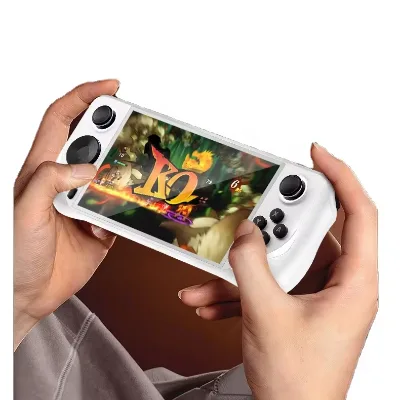
$31.72 - $36.84
MOQ: 40 pieces
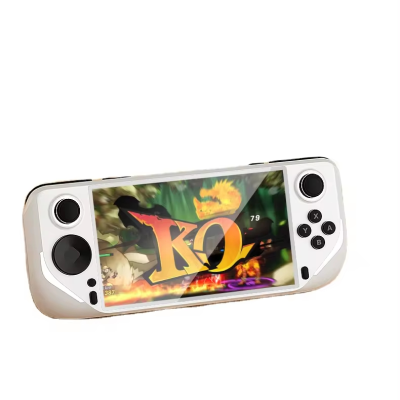
$31.68 - $36.79
MOQ: 40 pieces

Jinjiang Zhengzheng Technology Co., Ltd.
- Trading Company
- China Fujian
- Lead time0 days
- Avg. response≤ 2h

Shenzhen Ikeemi Technology Co., Ltd.
- Trading Company,Manufacturer/Factory
- China Guangdong
- Lead time15 days
- Avg. response≤ 15h
Main productsPhone Accessory, Phone Case, Phone Holder, Screen Protector, iPhone Case, Samsung Case, LG Case, Apple Watch Stand, Promotion Gift, Drawing and Pattern Customized Phone Case
Main marketsSouth America,Eastern Europe,Mid East,North America,Southeast Asia,Eastern Asia,Oceania,Western Europe,Africa

Quality Portable Video Handheld Game Console Retro 400 in 1 Multifunction Handheld Game Player
$4.00 - $5.00
MOQ: 100 Pieces

Retro Portable Game Console 8-Bit 3.0 Inch LCD Game Player Built-in 400 Games for Kids
$4.00 - $5.00
MOQ: 100 Pieces

Shenzhen Junrong Electronic Company Limited
- Verified by SGS
- Trading Company,Manufacturer/Factory
- China Guangdong
- Lead time15 days
- Avg. response≤ 9h
Main productsVideo Game Console Accessories, Video Game Replacement Parts, Handheld Game Console, TV Game Stick, Game Controller, Playstation Game Parts, xBox Game Parts, Nintendo Game Parts, Playstation Accessories, Nintendo Accesosries
Main marketsSouth America,Eastern Europe,Mid East,North America,Southeast Asia,Eastern Asia,Oceania,Western Europe,Africa

Hot Sale Portable Handheld Game Console M17 Video Game Player for Adults Gift Kids Gift
$20.00 - $35.00
MOQ: 2 Pieces

Hot Sale Selling TV Game Player HD 500in1handheld Video Game Console Portable 500in1
$7.00 - $12.00
MOQ: 2 Pieces

Hot Selling Retro Game Player Portable 3.5inch Handheld Game Console for Kids Adult's Gift
$30.00 - $38.00
MOQ: 2 Pieces

$15.00 - $20.00
MOQ: 2 Pieces

Christmas Children's Gifts Portable Game Player Handheld Game Console Built-in 520 Games
$3.00 - $8.00
MOQ: 2 Pieces

E5 Portable Game Player 5-Inch IPS Large Screen Built-in 20000+Games Video Game Console
$25.00 - $33.00
MOQ: 2 Pieces

Shenzhen Bailian Trading Co., Ltd.
- Trading Company
- China Guangdong
- Lead time0 days
- Avg. response≤ 3h
Main productsEarphone, Smart Watch, Charger, Cable

Shenzhen Evolve Electronic Technology Co., Ltd.
- Manufacturer, Trading Company
- Guangdong, China
- Lead time15 days
- Avg. response≤ 2h
Main productsWireless Speaker, Game Console, Charge Cable, Wireless Charger
Main marketsNorth America(30.00%), South America(30.00%), Domestic Market(10.00%), Southern Europe(5.00%), Northern Europe(5.00%), Eastern Europe(4.00%), South Asia(2.00%), Eastern Asia(2.00%), Oceania(2.00%), Western Europe(2.00%), Central America(2.00%), Africa(2.00%), Mid East(2.00%), Southeast Asia(2.00%)
Dongguan Hecheng Interactive Technology Co., Ltd.
- Trading Company
- Guangdong, China
- Lead time30 days
- Avg. response≤ 3h
Main productshandheld game consoles,gaming computers,innovative consumer electronics products,gaming controllers,ai robots
Main marketsNorth America(20.00%), South America(17.00%), Northern Europe(10.00%), Central America(10.00%), Western Europe(10.00%), Eastern Europe(10.00%), South Asia(5.00%), Domestic Market(5.00%), Southern Europe(5.00%), Mid East(3.00%), Southeast Asia(3.00%), Africa(2.00%)

Shenzhen Ainville Electronics Co.,Ltd.
- Verified by SGS
- Trading Company
- China Guangdong
- Lead time15 days
- Avg. response≤ 11h
Main productsEarphone, Phone, Headphone, Wireless Earbud, Bluetooth Earphone, Mobile Phone Accessory, Bluetooth Headphone, Accessory, Mobile Phone Case, Rechargeable Battery
Main marketsSoutheast Asia/ Mideast,Europe,North America


$16.00 - $17.50
MOQ: 10 Pieces
Shenzhen Jinhongyuan Technologies Co., Ltd.
- Manufacturer, Trading Company
- Guangdong, China
- Lead time7 days
- Avg. response≤ 12h
Main productsGame Console,Gaming Headset,Video Game Console,Handheld Game Console,TWS EARBUDS
Main marketsNorthern Europe(20.00%), Southern Europe(15.00%), Western Europe(10.00%), Eastern Europe(10.00%), Central America(9.00%), Domestic Market(8.00%), South America(8.00%), Africa(6.00%), North America(5.00%), South Asia(4.00%), Southeast Asia(2.00%), Mid East(2.00%), Eastern Asia(1.00%)
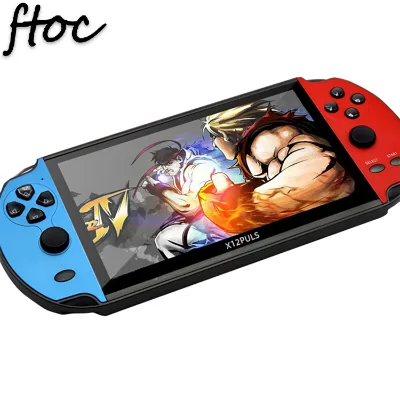
X12 Plus 7.0 Inch 128 Bits Handheld Pocket Retro Video Game Player Mini Game Console
$27.55 - $29.80
MOQ: 5 pieces
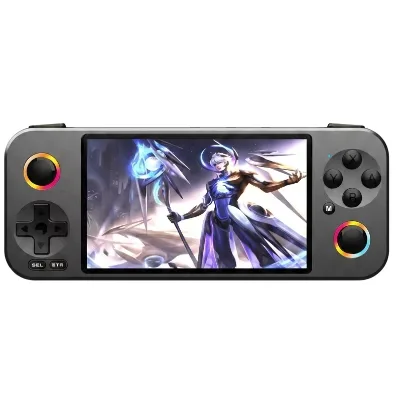
Shenzhen Qianbao Technology Co., Ltd.
- Trading Company
- Guangzhou, China
- Lead time7 days
- Avg. response≤ 12h
Main productsGraphic card,CPU,Motherboard,Cooling plate,Fans
Main marketsNorth America(20.00%), Northern Europe(10.00%), Domestic Market(10.00%), Eastern Europe(10.00%), Mid East(10.00%), Western Europe(8.00%), Southern Europe(8.00%), Southeast Asia(5.00%), South America(5.00%), Eastern Asia(5.00%), Central America(3.00%), Africa(2.00%), South Asia(2.00%), Oceania(2.00%)

Shenzhen Yujia'an Technology Co., Ltd.
- Verified by SGS
- Trading Company
- China Guangdong
- Lead time15 days
- Avg. response≤ 14h
Main productsEarphone, Phone Chargers, Phone Cables, Phone Case, Phone Accessories, Bluetooth Speaker, Memory Card, Flash Drive, Wireless Chargers, Car Chargers
Main marketsAustralia

$5.90 - $6.90
MOQ: 20 Pieces

R36s Retro Mini Portable Pocket Handheld Game Player 64GB 128GB Arcade R36s Ultra Game Console
$29.00 - $33.00
MOQ: 10 Pieces

Shenzhen KidsMind Manufacturing Technology Co., Ltd.
- Verified by SGS
- Trading Company
- China Guangdong
- Lead time15 days
- Avg. response≤ 6h
Main productsGame Console, Electronic Drum, LCD Writing Tablet, Hair Clipper, Gaming Microphone
Main marketsOthers(foreignTradeCapacity.exportBusinessCapacityMarketOther)




Comprehensive Sourcing Guide
CE Certified Portable Game Player Supplier Concentration and Factory Types
Buyers searching for a CE Certified Portable Game Player will encounter two main supplier archetypes on sourcing platforms: manufacturers or factories, and trading companies. The manufacturer listings in this category typically position themselves around game consoles, gaming accessories, controllers, gamepads, TV game sticks and related entertainment electronics, and they advertise ODM or OEM capability. Trading company listings cover similar products — including rechargeable handheld consoles, retro players and pocket game consoles — and often list adjacent electronics such as phone cases, chargers and earphones. One supplier profile in the results is based in Guangdong, China, which is consistent with the province's well-known electronics ecosystem, but other listed origins in this category include Hong Kong, so buyers should not assume a single cluster.
Because the supplier mix changes with every search, cluster identification should be done by the buyer at query time. A practical approach is to sort current results by company type, note how many listings are factories versus trading companies, and check whether stated origins cluster in one province or region. Handheld game players span several listing categories, including handheld game players and video game consoles, so filtering by category rather than by keyword alone reduces noise. Buyers should also weigh whether they want factory-direct customization support, which manufacturer profiles with ODM and OEM capacity typically signal, or the consolidated sourcing breadth that trading companies offer when a single order mixes consoles, controllers and accessories.
How to Verify CE Certified Portable Game Player Suppliers
Verification starts with the credentials displayed on the platform, but buyers must distinguish between platform verification and product certification. In this category, some suppliers carry third-party verification marks such as SGS or BV, and some list management-system certifications including ISO 9001, ISO 14001, BSCI, QC 080000 and TS 16949. None of these is a product-level CE declaration for a specific portable game player model, so a "ce certified" keyword search cannot substitute for asking the supplier directly for the CE declaration of conformity, test reports and the notified-body details relevant to the exact model being quoted.
Practical verification steps should include confirming which listed certifications are current and which entity they belong to, since a group certificate may not cover the factory actually producing the order. Request the model name and specification sheet for each quoted unit — observed listings in this category specify attributes such as screen size, Bluetooth or Wi-Fi communication, touch screen status, battery type, CPU and origin — and match each CE claim to that model identifier rather than to a product family. Ask whether the certification was issued by the manufacturer or by a third-party testing service, and confirm the certificate holder can support customs clearance in the destination market. For verified-supplier status, note what the verification body actually audited, since platform verification typically addresses company identity rather than product compliance. Buyers should document all of this in writing before any deposit, and re-verify certificates when switching models or factories mid-program, because certificates rarely transfer across product revisions.
What to Compare Across CE Certified Portable Game Player Suppliers
Comparison should be built on the supplier-label dimensions that are actually displayed, while remembering that not every supplier shows every attribute. Response time is one useful signal: observed profiles in this category range roughly from about four and a half hours to over seven hours, so a supplier's responsiveness before the sale is measurable and comparable. Stated lead times differ too — one profile lists a lead time around 15 days while another lists about 23 days — and individual product listings may quote shorter production windows such as two to three working days, so buyers should reconcile listing-level and company-level figures before committing.
Other comparable dimensions include MOQ, which in the current results spans very small trial quantities (as low as single-digit or low double-digit units on some consoles) up to 1,000 or 2,000 units on other models, and this spread matters for buyers planning samples versus volume. Price bands on listed products range from the low twenties to around forty-five to fifty dollars per unit, but these are listing prices, not negotiated quotes. Compare main product lines — some suppliers focus on game consoles and accessories while others lead with laptops, tablets, mini PCs or signage, which suggests different levels of category focus. Customization availability, ODM versus OEM capability, packing format, unit weight and product origin listed per item also distinguish otherwise similar offers. Build a simple matrix across these fields so that gaps in a supplier's displayed data become questions to ask, rather than assumptions in your shortlist.
Common CE Certified Portable Game Player Sourcing Risks
The most significant risk in this category is conflating keyword intent with proof. Searching for "ce certified" does not mean the listed products hold CE conformity; the observed product data here contains communication methods, screen sizes, battery specifications and origins, but it does not display CE certificates for specific models. Buyers who ship uncertified consumer electronics into markets requiring CE risk customs holds, recalls and liability, so the certificate-matching step described earlier must happen before orders, not after. A second risk is model confusion: this category contains many near-identical model names and retro consoles with similar form factors, and specifications such as touch screen availability or screen size differ between variants, so quotes and certificates must reference the exact model.
Other risks are commercial rather than technical. Very low MOQs on some listings are attractive for testing, but low-MOFF, low-price offers may come from listings whose production lead time, quality consistency or after-sales support is unproven. Certificate lists on company profiles can be broad — covering many management standards — without any of them addressing product safety for the console itself. Origin details can also vary within one supplier's catalog, with some products listed as originating in Hong Kong and others elsewhere, which affects shipping documentation. Finally, product attribute lists are sometimes truncated or inconsistent, so buyers should request complete specification sheets, real unit photos and a pre-shipment inspection right written into the contract. Treat every unstated attribute as unknown until the supplier confirms it in a signed quotation.
CE Certified Portable Game Player Regional Sourcing and Logistics
Regional assessment should begin with whatever origin data the current search actually shows. In this category, one supplier profile is located in Guangdong, China, which is a major electronics sourcing region, while several individual product listings state an origin of Hong Kong. Rather than assuming all suppliers are concentrated in one place, buyers should extract the location field from each shortlisted profile, note whether they are viewing a company headquarters or a per-product origin, and map where the actual production and dispatch points are. When evidence is missing, ask the supplier for the factory address and the port of loading rather than inferring from the platform listing.
Logistics planning in this category is well supported by the shipping terms visible in listings: observed options include FedEx, UPS or DHL, with DDP service available, alongside longer standard delivery windows quoted in ranges such as seven to nine or fifteen to eighteen working days. Air express suits sample runs and small batches, especially for lightweight units — observed product weights in this category are fractions of a kilogram per unit — while consolidated sea freight becomes relevant at carton-level volumes, such as the 50-piece cartons some listings reference. Buyers should confirm who arranges freight, whether DDP duties are included in the quoted price, and how the declared product origin and CE documentation interact with destination customs requirements. For battery-containing devices, confirm in advance which carriers will accept lithium battery shipments and what packaging and labeling the supplier will provide, because battery rules frequently constrain the cheapest shipping option.
CE Certified Portable Game Player Commercial Terms and Order Planning
Commercial terms should be negotiated around the structure visible in the listings rather than assumed. Observed payment methods in this category include T/T, Western Union, bank transfer and Alipay-type payments, giving buyers several channels with different levels of traceability. Bank transfer and T/T to a verified company account offer the clearest records, while any escrow or platform-protected payment option should be preferred where available for first orders with unverified suppliers. Deposit proportions, balance timing and whether payment triggers the quoted lead time should all be fixed in writing, since some listings quote production in as little as two to three working days while company profiles state longer overall lead times.
Order planning should sequence a small trial order — feasible here given the single-digit to low-double-digit MOQs on some consoles — followed by inspection, then scaled volume at the higher volume tiers some listings require, such as 1,000 or 2,000 units. Confirm per-unit prices at each quantity break, since listed bands span roughly the low twenties to nearly fifty dollars depending on model and quantity. Lock the exact model name, screen specification, battery type, packing format and accessories into the proforma invoice, and state the certificate documents the supplier must provide before shipment. For repeat orders, agree a re-confirmation process so lead times, certificates and component substitutions are re-verified rather than assumed unchanged. Finally, plan calendar buffer for peak-season port congestion and for any retesting a destination market may require, and keep written amendment records for every specification change.
FAQs
What is the price range for portable game players?
Prices for these handheld consoles range from 21.99 to 49.90 dollars per unit. The specific cost depends on the model selected, such as the R36S or R46h. Minimum order quantities also influence the final price per item for bulk buyers.
How long does it take to receive these consoles?
Lead times vary between 2 to 3 work days for some models and up to 23 days for others. Delivery times are listed as 7 to 9 work days or 15 to 18 work days depending on the shipping method chosen by the supplier.
Are these devices available with touch screen capabilities?
Some models feature a touch screen while others do not. Specific product attributes indicate that certain handheld consoles have a touch screen, whereas other retro models like the R46h are listed without this feature for different user preferences.
What certifications do the manufacturers hold?
Certifications include ISO 9001, ISO 14001, BSCI, and SGS verification for some suppliers. Other manufacturers may hold additional standards like OHSAS 18001 or TS 16949. Buyers should verify specific certification documents for each supplier before placing an order.
Where are these portable game players manufactured?
Manufacturing locations include China Guangdong and Hong Kong. The product origin is explicitly stated as China or Hong Kong in the supplier data. Buyers should confirm the specific origin country for each order to ensure compliance with local regulations.
What is the minimum order quantity for these items?
Minimum order quantities range from 5 units to 2000 units depending on the supplier. Some sellers require 50 units, while others set the threshold at 10 or 1000 units. Buyers must check the specific MOQ for the desired model.
Can these consoles be customized for branding?
Customization is available for many of the handheld game console models listed. Suppliers offer OEM and ODM services to meet specific branding needs. Buyers should confirm the customization options and associated costs directly with the supplier before finalizing the purchase.