Detachable Stackable Manurack Suppliers and Manufacturers
Compare 20 verified Detachable Stackable Manurack suppliers in China Liaoning and Dalian. Review lead times, certifications, and product specs like ISO9001 and Hot DIP Galvanized finishes before requesting samples or quotes; review the available evidence before requesting comparable quotations from suitable candidates.
Updated
Suppliers List

Dalian Huamao Logistics Equipment Group Co., Ltd.
- Verified by BV
- Trading Company
- China Liaoning
- Lead time30 days
- Avg. response≤ 3h
Main productsWire Mesh Container, Post Pallet, Roll Container, Tire Rack, Wire Decking, Cage Pallet, Pet Preform Container, IBC, Stillage, Metal Pallet
Main marketsSouth America,Southeast Asia/ Mideast,East Asia(Japan/ South Korea),Europe,Australia,North America

Customized Logistic Warehouse Storage Stacking Durable Detachable Rack Manurack for Sale
$87.50 - $98.00
MOQ: 50 Pieces

Customized Cargo Storage Detachable Stackable Durable Steel Post Pallet Manurack
$63.00 - $71.00
MOQ: 50 Pieces

Transport Detachable Metallic Big Bag Stacking Rack Double Manurack Manufacturer
$79.00 - $88.00
MOQ: 50 Pieces

Customized Galvanized Four Post Support Portable Stackable Food Storage Manurack
$63.00 - $71.00
MOQ: 50 Pieces


AMOY E-SOON Metal Manufacture Co.,Ltd
- Verified by TüVRheinland
- Manufacturer, Trading Company
- Lead time15 days
- Avg. response≤ 1h
Main productsWire Mesh Container, Stillage, Wire Mesh Decking, Roll Container, Roll Trolley
Main marketsDomestic Market(27%), Central America(13%), North America(10%)
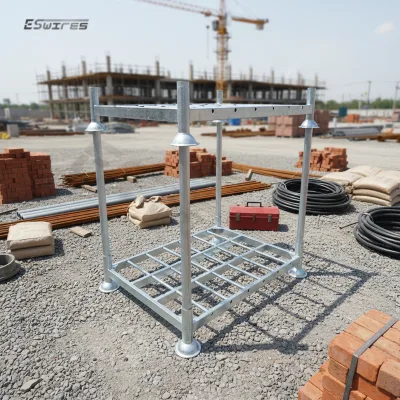
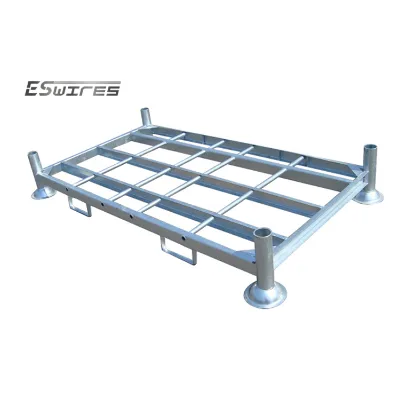
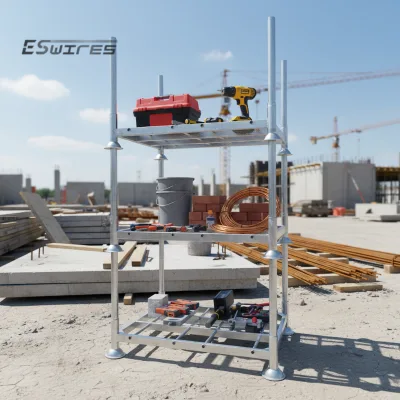
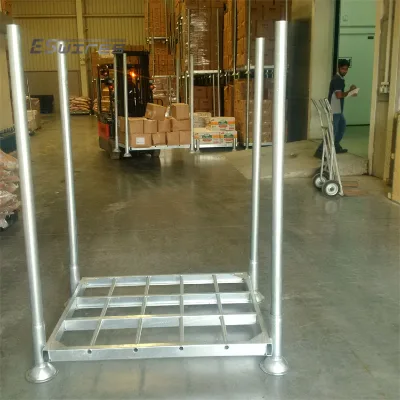
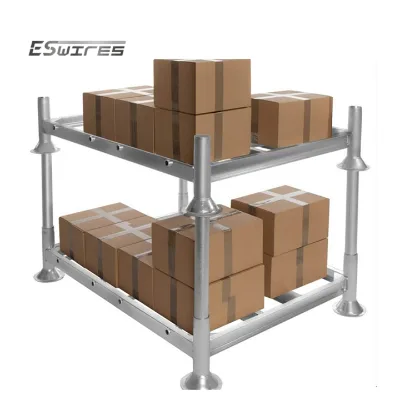
Hot Dip Galvanized Stackable Mobile Foldable Collapsible Steel Load 1000kg Post Pallet Rack Manurack
$65.00 - $74.00
MOQ: 50 sets
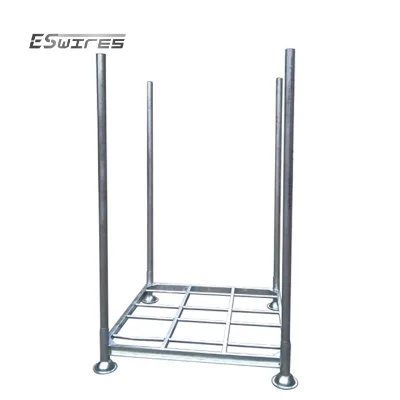
$97.6089 - $200.354
MOQ: 50 sets
Beijing Dongfang Guokai Industrial Equipment Co., Ltd. Hangzhou Branch
- Verified by TüVRheinland
- Manufacturer, Trading Company
- Lead time15 days
- Avg. response≤ 2h
Main productsStack Rack, Pallet Rack, Automated Storage Retrieval System, Rail Guided Vehicle, Automated Guided Vehicle
Main marketsOceania(20%), Mid East(20%), Eastern Europe(15%)

Qingdao SPARK Logistics APPLIANCE Co., Ltd.
- Manufacturer, Trading Company
- Shandong, China
- Lead time0 days
- Avg. response≤ 3h
Main productsRoll Cage,Storage Box Series,Storage Cage Series,Rack Series,Steel Pallet,Wheel Series
Main marketsEastern Asia(23.00%), Western Europe(20.00%), Northern Europe(20.00%), Domestic Market(10.00%), Mid East(5.00%), Eastern Europe(5.00%), Southern Europe(5.00%), South America(3.00%), Africa(3.00%), Southeast Asia(3.00%), Oceania(3.00%)

Wuxi Fuping Metal Products Co., Ltd.
- Combined
- China Jiangsu
- Lead time15 days
- Avg. response≤ 10h
Main productsStorage Cage Trolly
Main marketsDomestic

Qingdao Upban Warehousing Logistics Equipment Co., Ltd
- Verified by SGS
- Combined
- China Shandong
- Lead time15 days
- Avg. response≤ 1h
Main marketsSoutheast Asia/ Mideast,Europe,North America

Jiangsu Qifei Intelligent Storage Equipment Co., Ltd.
- Verified by SGS
- Combined
- China Anhui
- Lead time30 days
- Avg. response≤ 3h
Main productsRack, Sheft, Container, Platform, Cage, Racking, Storaging, Warehousing, Pallet, Mezzanine
Main marketsDomestic

Stackable Steel Stacking Storage Rack Customizable Foldable Anti-Wear Save Space
$60.00 - $80.00
MOQ: 10 Pieces


Jiangsu JISE Intelligent Storage Equipment Co., Ltd.
- Verified by CTI
- Combined
- China Jiangsu
- Lead time23 days
- Avg. response≤ 3h
Main productsSelective Pallet Rack, Drive in Rack, Two Way Shuttle Rack, Agv Shelf, Longspan Shelf, Mezzanine, Robotics Shelf, Four Way Shuttle, Rivet Shelves, Gravity Rack
Main marketsSoutheast Asia/ Mideast,Domestic,Europe,North America

Guangdong Leader Metal Products Co., Ltd.
- Manufacturer, Trading Company
- Guangdong, China
- Lead time30 days
- Avg. response≤ 5h
Main productsEngine Oil Display Stand,Tire Display Stand,Wiper Display Stand,Helmet Display Stand,Hardware Tool Display Stand
Main marketsDomestic Market(30.00%), North America(10.00%), Africa(8.00%), Eastern Europe(8.00%), Western Europe(6.00%), Southeast Asia(5.00%), South America(5.00%), Mid East(5.00%), Eastern Asia(5.00%), Northern Europe(5.00%), Southern Europe(5.00%), Central America(4.00%), Oceania(2.00%), South Asia(2.00%)
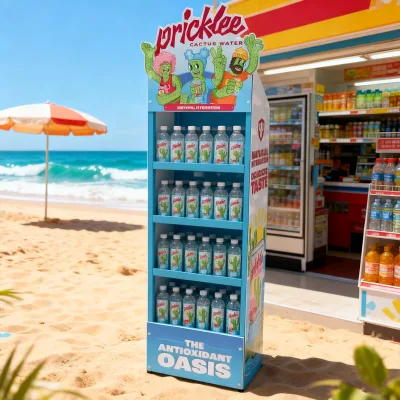
$20.5778 - $51.4444
MOQ: 50 Minimum
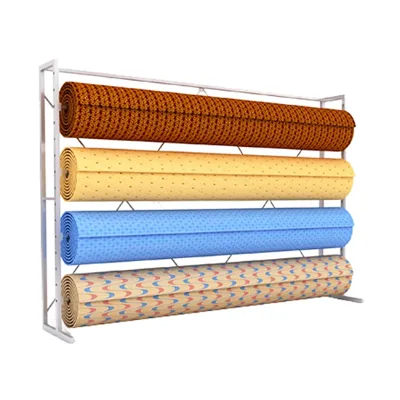
$30.8247 - $84.2512
MOQ: 50 Minimum

Hangzhou Shuangjiu Metal Technology Co., Ltd
- Verified by BV
- Trading Company
- China Zhejiang
- Lead time30 days
- Avg. response≤ 1h
Main productsShelf/Rack
Main marketsDomestic


Hand Crank Moveable Powder Coated Ral Color Optional Steel Storage Racking
$110.00 - $180.00
MOQ: 1 Square Meters


Hand Crank Manual Movable Galvanized Anti Corrosion Outdoor Storage Rack
$110.00 - $180.00
MOQ: 1 Square Meters


Heavy Duty Manual Hand Shake Moveable Stainless Steel Tube Storage Rack
$110.00 - $180.00
MOQ: 1 Square Meters

Liaocheng Jiahe Warehousing Equipment Co., Ltd
- Verified by TUVRHEINLAND
- Combined
- China Shandong
- Lead time15 days
- Avg. response≤ 6h
Main productsCantilever Racks, Supermarket Shelves, Flat Panel Racks
Main marketsDomestic
- Manufacturer, Trading Company
- Guangdong, China
- Lead time30 days
- Avg. response≤ 8h
Main productsCUSTOM METAL WIRE PRODUCTS,OVEN RACK SHELF,SS TUBES,COOKER HOOD FILTER,ANIMAL CAGES
Main marketsNorth America(40.00%), Western Europe(30.00%), Domestic Market(10.00%), South America(5.00%), South Asia(3.00%), Africa(3.00%), Southeast Asia(2.00%), Eastern Europe(2.00%), Northern Europe(2.00%), Eastern Asia(1.00%), Oceania(1.00%), Mid East(1.00%)
Ji'nan Constant Storage Machinery Manufacturing Co., Ltd.
- Verified by Intertek
- Manufacturer, Trading Company
- Lead time30 days
- Avg. response≤ 2h
Main productsSheet Metal Rack, Heavy Duty Cantilever Tube Rack, Automated Pipe Storage Systems, Automated Sheet Metal Storage Systems, Heavy-duty Gantry Loading and Unloading Robots for Laser Cutting
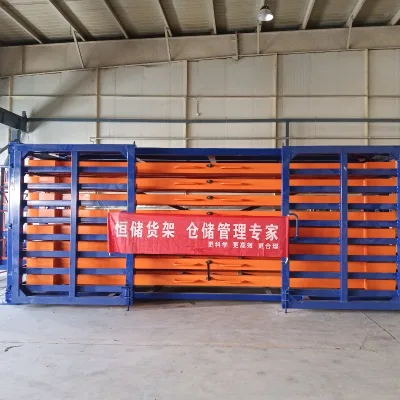
Customizable Bulk Order Manual Drawer Racking, Wholesale Price for Large Warehouse Project
$20550.6169 - $20908.0182
MOQ: 1 sets
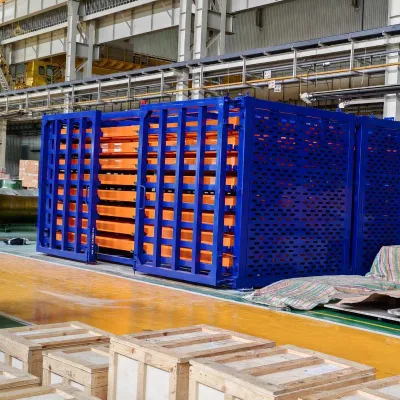
Herochu Industrial Mobile Rack with Manual Drawer Slides and Smooth Move
$14861.4959 - $15171.6489
MOQ: 1 sets
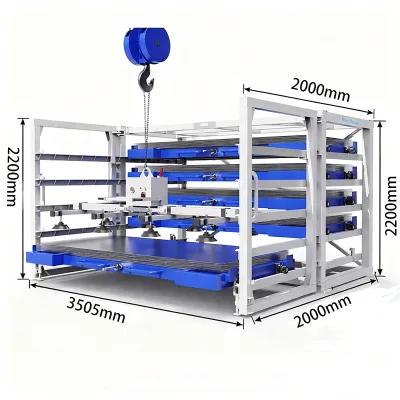
$5583.9537 - $5884.3896
MOQ: 1 sets
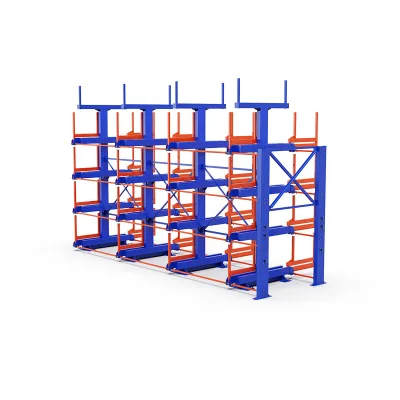
Multi-Layer Telescopic Rack with Secure Hook and Adjustable Arms for Efficient Warehouse Storage
$6078.9981 - $6409.8277
MOQ: 1 sets
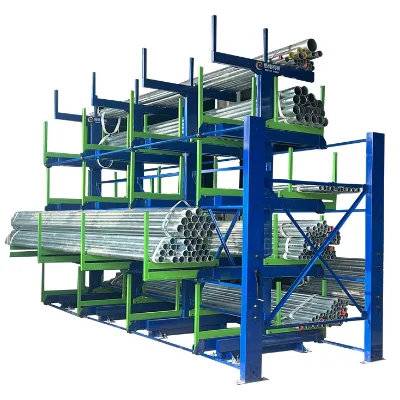
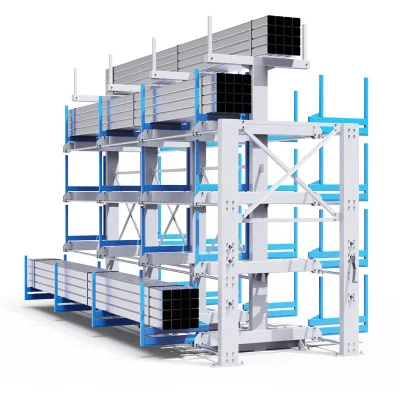
$7326.9183 - $8373.7704
MOQ: 1 sets

- Verified by BV
- Combined
- China Guangdong
- Lead time30 days
- Avg. response≤ 4h
Main productsFolding Table, Folding Ladder, BBQ Grill, Kitchen Shelf, Wooden Table
Main marketsEast Asia(Japan/ South Korea)

Hebei Boto Storage Equipment Co., Ltd
- Verified by SGS
- Combined
- China Hebei
- Lead time30 days
- Avg. response≤ 10h
Main productsWarehouse Rack
Main marketsDomestic

Shanghai Calin Logistic Equipment Co., Ltd.
- Verified by TUVRHEINLAND
- Trading Company
- China Shanghai
- Lead time15 days
- Avg. response≤ 24h
Main productsSelective Pallet Rack, Mobile Pallet Racking, Pallet Shuttle System, as/RS Automated Warehouse Rack, Long Span Shelving, Steel Grating, Wire Mesh Deck, Gravity Flow Rack, Push Back Racking, Rack Mezzanine System
Main marketsSouth America,Others(foreignTradeCapacity.exportBusinessCapacityMarketOther),Southeast Asia/ Mideast,North America

Jiangsu Welfor Storage Equipment Co., Ltd.
- Verified by BV
- Trading Company,Manufacturer/Factory
- China Jiangsu
- Lead time15 days
- Avg. response≤ 2h
Main productsStorage Rack, Shuttle Rack, Mezzanine Rack, Wire Mesh Container, Plastic Bin, Cantilever Rack, Warehouse Storage Equipment, Logistics Equipment
Main marketsSouth America,Eastern Europe,Mid East,North America,Southeast Asia,Eastern Asia,Oceania,Western Europe,Africa

High Quality Medium Duty Longspan Rack with Shelving and CE Certificated
$180.00 - $200.00
MOQ: 10 Sets


Nanjing OKE International Storage Systems Co., Ltd.
- Verified by CTI
- Trading Company,Manufacturer/Factory
- China Jiangsu
- Lead time15 days
- Avg. response≤ 2h
Main productsWarehouse Storage Racking, Pallet Racking, Selective Pallet Racking, Drive-in Pallet Racking, Push Back Racking, Pallet Shuttle Racking, Gravity Flow Racking, Cantilever Rack, Steel Platform, Light Duty Racking
Main marketsSouth America,Eastern Europe,Mid East,North America,Southeast Asia,Eastern Asia,Western Europe,Africa

Shanghai Norton Shelf Manufacturing Co., Ltd.
- Verified by SGS
- Combined
- China Shanghai
- Lead time30 days
- Avg. response≤ 6h
Main productsRack
Main marketsSoutheast Asia/ Mideast

Nanjing Boracs Logistics Equipment Co., Ltd.
- Verified by BV
- Combined
- China Jiangsu
- Lead time15 days
- Avg. response≤ 7h
Main productsPallet Rack, Longspan Racking, Drive in Racking, Shuttle Racking, Cantilever Rack, Mezzanine Floor, Steel Platform, Wire Mesh Decking, Wire Mesh Container, Steel Pallet
Main marketsSouth America,Africa,Others(foreignTradeCapacity.exportBusinessCapacityMarketOther),Southeast Asia/ Mideast,East Asia(Japan/ South Korea),Europe,Australia,North America

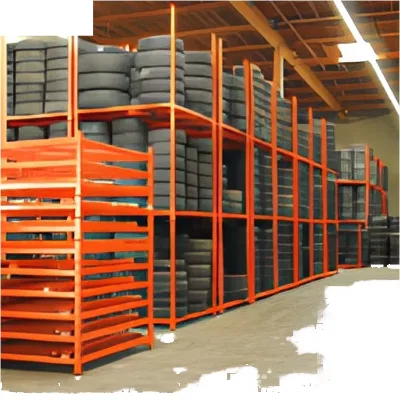
Popular Sale in Au Adjustable Joinable Heavy Duty Industrial Storage Cantilever Rack
$0.80 - $1.20
MOQ: 1 kg


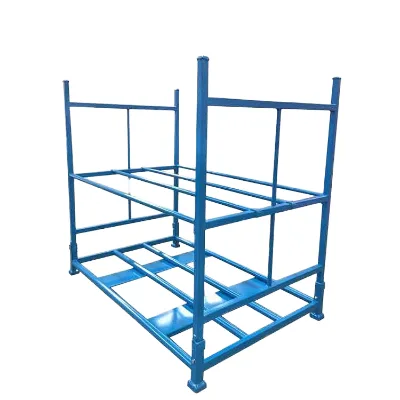
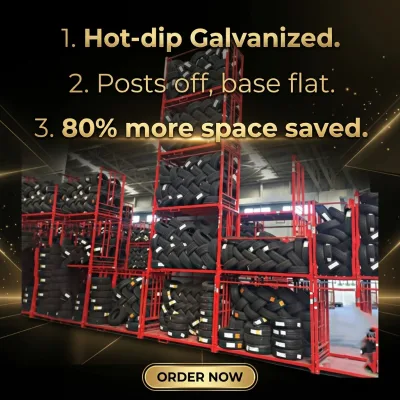
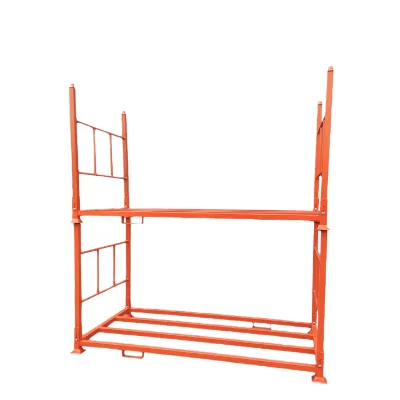
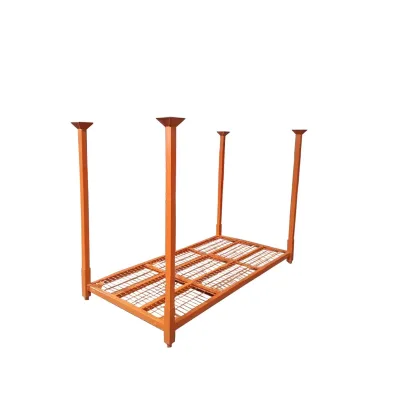
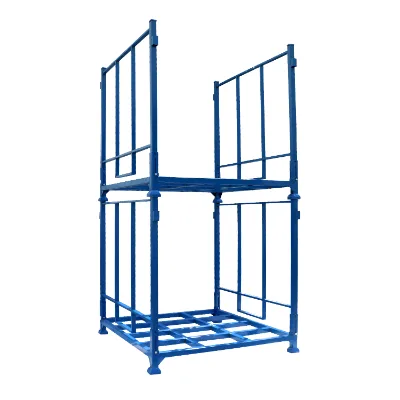
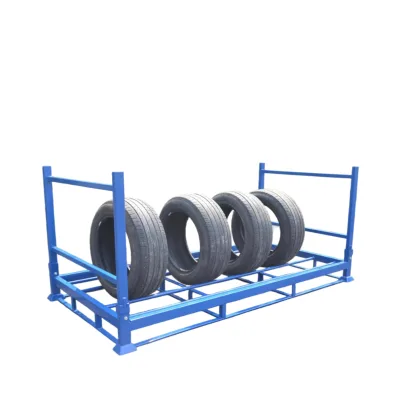
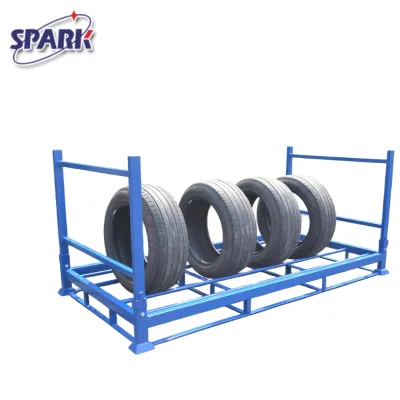


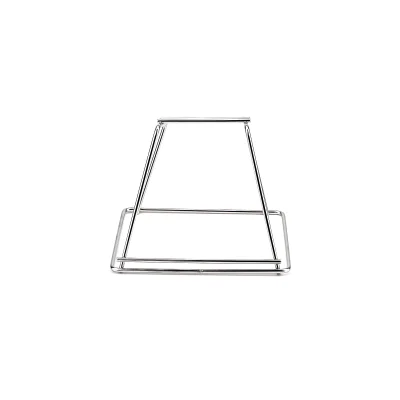


Comprehensive Sourcing Guide
Detachable Stackable Manurack Supplier Concentration and Factory Types
Buyers sourcing detachable stackable manuracks will find that supplier listings in this category frequently point to China's Liaoning province, with Dalian appearing as the stated production origin for several products. This matters because a coastal, port-adjacent cluster naturally supports export-oriented steel fabrication, and suppliers based there often combine manufacturing with logistics packaging such as plastic banding and stretch film wrapping. When you screen results, treat the stated origin field as a starting signal rather than proof of an owned factory, and check whether the profile identifies the entity as a manufacturer, a trading company, or a hybrid manufacturer-trading operation. Hybrid entities are common in this category and can still be legitimate, but they change who controls tooling, quality checks and capacity during peak season.
The factory-type question also shapes product depth. Profiles in this category list main products beyond manuracks, including wire mesh containers, post pallets, roll containers, tire racks, stillages, wire decking and IBC-related containers. A supplier whose catalog spans post pallets, stillages and mesh containers is more likely to have in-house welding, bending and galvanizing coordination than a single-product reseller. Use OEM and customization capability claims, such as available forklift guides, wheels, bags or bottom wire mesh accessories, to distinguish makers from intermediaries, then confirm those claims directly in writing before committing to tooling or sample fees.
How to Verify Detachable Stackable Manurack Suppliers
Verification should begin with third-party verification badges and system certifications displayed on the profile. In this category you can expect to encounter suppliers verified by BV and others verified by TÜV Rheinland, plus ISO 9001:2015 quality management certificates. These signals are meaningful but limited: they confirm an audit occurred and a certificate exists, not that every product in the catalog meets your specification. Ask for the certificate number and scope, check the listed standards claims on individual products against the certificate itself, and request recent audit reports covering welding processes and surface treatment lines, since hot-dip galvanizing quality is the most common failure point on stackable steel racks.
Next, verify the entity behind the listing. Request the business license, confirm the registered scope covers steel fabrication or the relevant trading activity, and reconcile the company type shown on the platform with what the license says. For manuracks specifically, ask which operations are performed in-house versus subcontracted: base frame welding, post forming, galvanizing and assembly. A trading company relying on subcontracted galvanizing is acceptable if disclosed, but undisclosed subcontracting causes traceability gaps. Finally, use response-time data as a live test. Profiles in this category display response times ranging from roughly one hour to over two hours; message several suppliers with identical technical questions and compare both speed and the specificity of their answers, because fast but vague replies indicate a sales intermediary without engineering access.
What to Compare Across Detachable Stackable Manurack Suppliers
Build a comparison matrix using the attributes actually displayed on profiles, while remembering that not every supplier shows every field. Useful dimensions include lead time, minimum order quantity, response speed, location, company type, verification body, R&D capacity and the breadth of main products. In this category, displayed lead times differ sharply: some suppliers state 15 days, others 30 days, a gap that can determine whether the manuracks arrive before your warehouse peak. Minimum order quantities shown on specific manurack listings run at 50 units, and per-unit price ranges on comparable detachable post pallet models span roughly the mid-sixties to high-nineties US dollars depending on size, loading capacity and finish, so normalize listings before comparing prices.
Technical attributes deserve their own columns. Compare base dimensions, post dimensions and thickness, loading capacity, stackability in units high, container loading counts per 40-foot high-cube, entry type, finish, warranty and shelf-life claims. For example, one listed model shows a 1875 mm base with 1500 kg capacity and four-high stacking, while another shows a 950 mm square base with 1000 kg capacity; these are different products despite similar names. Also weigh customization support, sample availability and detachable-post design details, since detachability affects return freight and storage when racks are empty. A supplier offering samples and documented OEM support is generally safer for first orders than one offering only catalog standard models with no engineering contact.
Common Detachable Stackable Manurack Sourcing Risks
The first recurring risk is specification drift between quotation and production. Manurack listings display model numbers, base and post dimensions, steel grades such as mild steel Q235, and finishes like hot-dip galvanizing, yet buyers frequently receive racks with thinner post walls or lighter zinc coatings than quoted. Mitigate this by attaching the exact attribute table to the purchase contract, including post tube thickness, base plate dimensions, loading capacity and finish, and by requiring a pre-production sample approval. A related risk is stacking performance: a rack rated for a given load may perform differently when stacked four high with uneven loading, so define the test condition you expect, not just the number.
The second risk cluster involves verification and logistics assumptions. A verification badge audits the company at a point in time; it does not guarantee the specific manurack production line or that a trading company has disclosed its factory. Similarly, a one-year product warranty claim or a three-to-five-year shelf-life statement is only as strong as the after-sales mechanism behind it, so clarify in writing what constitutes a defect and how replacement parts, especially posts, are handled. Shipping risks matter too: detachable posts reduce volume but must be properly banded and wrapped, and steel racks are heavy enough that container weight limits, not cube, can constrain loading. Confirm the supplier's stated units per container against your freight forwarder's calculation before fixing the order quantity.
Detachable Stackable Manurack Regional Sourcing and Logistics
When a stated origin exists in supplier data, use it; when it does not, infer it systematically. In this category, supplier profiles and product origin fields point to Liaoning province and specifically Dalian, which sits on a major northern Chinese port and historically anchors steel products, material handling equipment and logistics packaging exports. That combination gives buyers practical advantages: established container shipping schedules, local access to hot-dip galvanizing capacity, and freight-forwarder familiarity with heavy steel cargo. If your search results lack location data, identify clusters instead by triangulating product origin fields, port of loading named on quotations, and the density of related listings such as post pallets, stillages and wire mesh decking under one profile.
Logistics planning should exploit the detachable design. Manufacturers in this space publish loading counts per 40-foot high-cube container, with figures like 150 to 250 sets depending on the model, and packing described as plastic banding plus stretch film. Confirm whether posts ship nested inside bases or bundled separately, because nesting density changes your container count. Ask about the loading method, whether the supplier loads the container or hands off at the factory gate, and which Incoterms the quoted prices assume; listings in this category reference FOB, CIF, DDU and factory price structures. Finally, align lead time with the port calendar: a 15-day production lead time stated by one supplier versus 30 days by another only converts into delivery dates reliably if booking space for heavy steel cargo is arranged early.
Detachable Stackable Manurack Commercial Terms and Order Planning
Structure commercial terms around the uncertainties specific to steel stacking racks. Request quotations on a consistent Incoterms basis, and note that suppliers in this category commonly quote FOB, CIF, DDU or factory price structures, so pick one basis for all bids before comparing. Expect a minimum order quantity around 50 units on comparable listings, and treat that figure as a floor for negotiation on customized models rather than an absolute rule. Confirm the payment instrument early: some suppliers support escrow-style protection through the platform, while others require telegraphic transfer. Where escrow is unavailable, phase payments against milestones such as sample approval, production completion and pre-shipment inspection, and never release the final balance before quality checks on a sample container.
Order planning should sequence verification activities against the stated lead times. With lead times in this category ranging from 15 to 30 days, a buyer who allows only the quoted production window risks delays from sample revisions, galvanizing queues and container booking. Plan a timeline that reserves roughly two to four weeks beyond production for sample iteration, inspection and shipping documentation, and specify that the warranty period, listed as one year on some models, plus shelf-life claims of three to five years against proper handling, are written into the order confirmation. Finally, build the first order as a trial: a mid-sized quantity at the stated MOQ, with detailed specifications and inspection rights, gives you reference units and real performance data before scaling to a larger annual contract.
FAQs
What is the typical lead time for these racks?
Manufacturers in Liaoning, China, generally require 15 to 30 days to produce and ship orders. This timeframe depends on order volume and customization needs. Buyers should confirm specific delivery schedules with suppliers before placing orders to ensure alignment with project timelines.
What is the minimum order quantity for these items?
The minimum order quantity is typically 50 sets. This baseline allows for efficient production and shipping logistics. Buyers seeking smaller quantities should verify if suppliers offer sample processing or adjusted MOQs for initial testing and evaluation purposes.
What certifications do these steel racks hold?
Products often carry ISO9001:2015 system certification. Additional standards may include TUV, BV, and SGS compliance. These certifications verify quality management and product safety. Buyers should request valid certificates to ensure the racks meet international industrial standards.
What is the price range for these racks?
Prices typically range from $63 to $98 per set. Costs vary based on material thickness, dimensions, and surface treatments like hot-dip galvanizing. Buyers should request detailed quotes to understand how specific customization options affect the final unit price.
What is the loading capacity of these racks?
Loading capacities generally range from 1000 kg to 1500 kg. This depends on the specific model and structural design. Buyers must ensure the selected rack supports their intended load to maintain safety and prevent structural failure during use.
Are these racks customizable for specific needs?
Yes, customization is available for dimensions, colors, and accessories. Suppliers support OEM requests and specific design requirements. Buyers should provide detailed specifications to ensure the final product meets their exact operational and storage needs.
How quickly do suppliers respond to inquiries?
Response times are typically fast, averaging around one to two hours. This ensures prompt communication regarding quotes and technical details. Buyers can expect efficient support for their sourcing inquiries and order processing.