Disposable Fluff Pulp Nursing Pads Suppliers and Manufacturers
Explore 25 verified suppliers offering Disposable Fluff Pulp Nursing Pads with ISO and SGS certifications. Compare response times, lead times, and MOQs to find the right partner. Contact suppliers directly to request samples and pricing details; review the available evidence before requesting comparable quotations from suitable candidates.
Suppliers List

Ningbo Riway Industrial Co., Ltd.
- Verified by TUVRHEINLAND
- Combined
- China Zhejiang
- Lead time30 days
- Avg. response≤ 3h
Main productsWet Wipes, Nonwoven Folding Machines, Nonwoven Wet Machines, Towel Rolls
Main marketsDomestic

Quanzhou ERA Sanitary Products Co., Ltd.
- Verified by SGS
- Manufacturer
- China Fujian
- Lead time30 days
- Avg. response≤ 3h
Main productsBaby Diaper, Adult Diaper, Sanitary Pad, Baby Wipe, Baby Pant Diaper, Adult Pant Diaper, Tissue Paper, Disposable Protective Mask
Main marketsSouth America,Africa,Southeast Asia/ Mideast,Europe


$0.06 - $0.08
MOQ: 50000 Pieces


Weifang Mimosa Personalcare Technology Co., Ltd.
- Verified by SGS
- Trading Company,Manufacturer/Factory
- China Shandong
- Lead time30 days
- Avg. response≤ 18h
Main productsSanitary Napkin, Adult Diaper, Under Pad, Insert Pad, Panty Liner
Main marketsSouth America,Eastern Europe,Mid East,North America,Southeast Asia,Eastern Asia,Oceania,Western Europe,Africa

Disposable Fluff Pulp Incontinence Under Pad Manufacturer Hospital Nursing Pad
$0.10 - $0.30
MOQ: 60000 pcs

Fluff Pulp Disposable Hospital Under Pad Medical Nonwoven Bed Pad Factory
$0.10 - $0.50
MOQ: 60000 pcs

Fluff Pulp Material Adult Incontinence Disposable Under Pads for Surgical Nursing
$0.07 - $0.09
MOQ: 60000 Pieces

Disposable Pulp Under Mats Nonwoven Fluff Pulp Under Pad for Nursing House Adult Care
$0.10 - $0.50
MOQ: 60000 pcs

Fluff Pulp Mats Disposable Under Pad for Sale Breathable Basefilm Nursing Under Pad
$0.10 - $0.50
MOQ: 60000 pcs

Disposable Fluff Pulp Incontinence Under Pad Manufacturer Nursing Under Pad Supplier
$0.10 - $0.50
MOQ: 60000 pcs

Fujian Xinrun Sanitary Products Co., Ltd
- Verified by TUVRHEINLAND
- Combined
- China Fujian
- Lead time15 days
- Avg. response≤ 22h
Main productsBaby Diaper, Adult Diaper, Sanitary Napkin, Baby Pull up, Wet Wipes, Panty Liner, Under Pads
Main marketsDomestic

Waterproof Underpad Disposable Mattress Protector Fluff Pulp Sap Core Absorbent Nursing Pad
$0.10 - $0.10
MOQ: 1 1 40 foot container


Tianjin Great Hygiene Products Co.,Ltd.
- Verified by BV
- Trading Company,Manufacturer/Factory
- China Tianjin
- Lead time45 days
- Avg. response≤ 1h
Main productsAdult Diapers, Adult Diaper Pants, Underpad, Adult Insert Pad, Sanitary Napkin, Toilet Paper Roll, Pantyliners, Facial Tissue, Incontinence Pad, Maternity Pad
Main marketsEastern Europe,Mid East,Eastern Asia,Oceania,Western Europe
Hefei Yulon Metal and Plastic Co., Ltd.
- Verified by CTI
- Trading Company
- China Anhui
- Lead time15 days
- Avg. response≤ 2h
Main productsHot Cold Pack, Instant Ice Pack, Instant Heat Pack
Main marketsAfrica,Southeast Asia/ Mideast,Australia,North America
- Verified by Intertek
- Manufacturer, Trading Company
- Lead time15 days
- Avg. response≤ 3h
Main productsBaby Diaper, Adult Diaper, Under Pad, Wet Wipes, Sanitary Pants
Main marketsEastern Europe(40%), Domestic Market(40%), Southeast Asia(10%)

- Verified by CTI
- Trading Company,Manufacturer/Factory
- China Anhui
- Lead time15 days
- Avg. response≤ 3h
Main productsMedical Underpads, Disposable Underpads, Adult Diaper, Baby Diaper, Maternity Pad, Pet Training Pad, Pet Diaper, Perineal Cold Pack, Instant Ice Cold Pack, Disposable Patient Transfer Sheet
Main marketsSouth America,Eastern Europe,Mid East,North America,Southeast Asia,Eastern Asia,Oceania,Western Europe,Africa

Adult Disposable Fluff Pulp Material Incontinence Underpad Manufacturer Nursing Underpad
$0.01 - $0.30
MOQ: 10000 piece


100 Pack Baby Disposable Changing Pads Disposable Underpads Waterproof Diaper Changing Pad
$0.03 - $0.04
MOQ: 100000 piece

- Verified by SGS
- Trading Company
- China Shandong
- Lead time15 days
- Avg. response≤ 8h
Main productsAdult Diaper, Baby Diaper, Disposable Diaper, Disposable Underpad, Adult Pant Diaper, Baby Pant Diaper, Pat Pad, Pet Diaper, Mask, Medical Underpad
Main marketsSoutheast Asia/ Mideast

$0.01 - $0.03
MOQ: 10000 Pieces

High Absorbent Hospital Bed Pad Waterproof Disposable Nursing Underpads Made of Fluff Pulp
$0.01 - $0.03
MOQ: 10000 Pieces


Fujian Yifa Healthcare Products Co., Ltd.
- Verified by TUVRHEINLAND
- Combined
- China Fujian
- Lead time30 days
- Avg. response≤ 7h
Main productsBaby Diaper, Face Mask, Wet Wipes, Adult Diaper, Underpad, Paper, 3D Mask, Chird Mask, Nursing Pads, Baby Pants
Main marketsAfrica,Europe,North America

Qingdao Hiprove Medical Technologies Co., Ltd.
- Verified by SGS
- Trading Company,Manufacturer/Factory
- China Shandong
- Lead time23 days
- Avg. response≤ 4h
Main productsBandage, I. V. Cannula, Blood Collection Tube, Centrifuge, High Pressure Syringe, Surgical Suture, Plastic Beaker, Rapid Test, Aneroid Sphygmomanometer, Pipette
Main marketsSouth America,Eastern Europe,Mid East,North America,Southeast Asia,Eastern Asia,Oceania,Western Europe,Africa

Medical Grade Disposable Incontinence Pad Non-Woven Fabric Sap Fluff Pulp Under Pad
$0.02 - $0.10
MOQ: 10000 Pieces


HEFEI TELIJIE SANITARY MATERIAL CO., LTD.
- Verified by BV
- Trading Company,Manufacturer/Factory
- China Anhui
- Lead time15 days
- Avg. response≤ 2h
Main productsRaw Material of Scrim Reinforced Paper, Surgical/Medical Hand Paper Towel, Scrim Reinforced Exam Gown, Industrial Paper Wiper, Kitchen Paper Wipes, Wet Tissue, Facial Paper Towel, Disposable Bib, Couch Cover Roll, Dental Bib
Main marketsSouth America,Eastern Europe,Mid East,North America,Southeast Asia,Eastern Asia,Oceania,Western Europe,Africa


Disposable Fluff Pulp Underpads for Pets with High Water Absorption Nursing Pad Manufacturer
$0.04 - $0.13
MOQ: 50000 Pieces
Hubei Yunge Protection Products Co., Ltd.
- Manufacturer
- Hubei, China
- Lead time15 days
- Avg. response≤ 1h
Main productsdisposable Protective Clothing,Medical Gown,Isolation Gown,Wet Wipes,Non Woven Products
Main marketsMid East(80.00%), Northern Europe(10.00%), South America(10.00%)
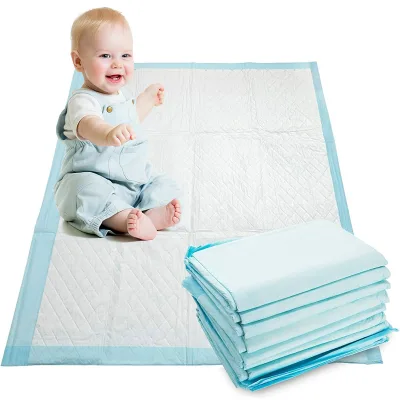
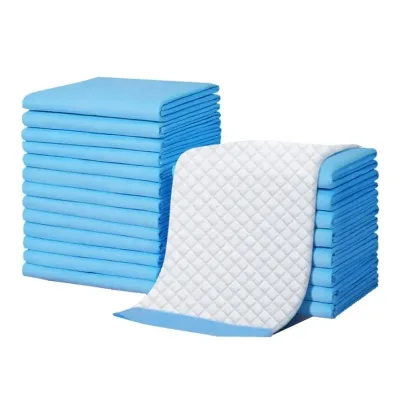
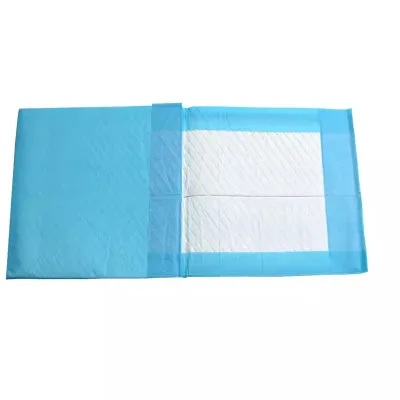
Custom Size Disposable Wholesale Underpad Patient Nursing Pads for Incontinence Adult Diaper
$0.02 - $0.05
MOQ: 20 pieces

Xiamen Hongfutai Import & Export Co., Ltd.
- Manufacturer, Trading Company
- Fujian, China
- Lead time30 days
- Avg. response≤ 2h
Main productsbaby diapers,baby pull ups,sanitary napkins,wet wipes,adult diapers
Main marketsSouth America(30.00%), Africa(20.00%), Mid East(15.00%), Southeast Asia(10.00%), South Asia(5.00%), Western Europe(5.00%), Eastern Asia(5.00%)
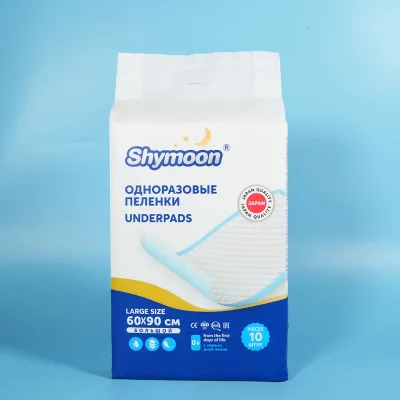
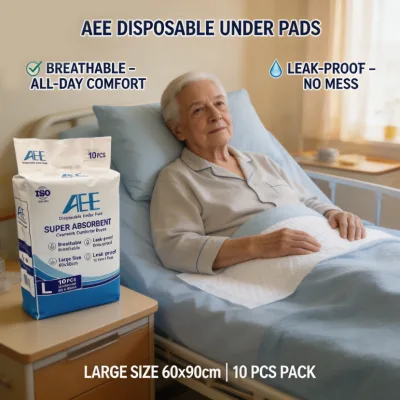
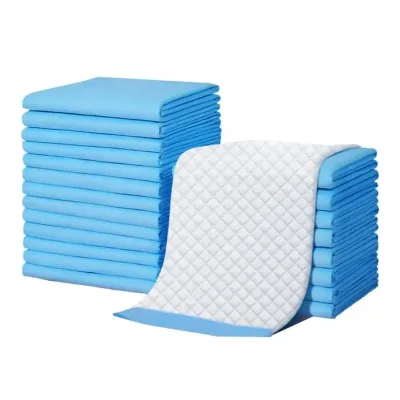
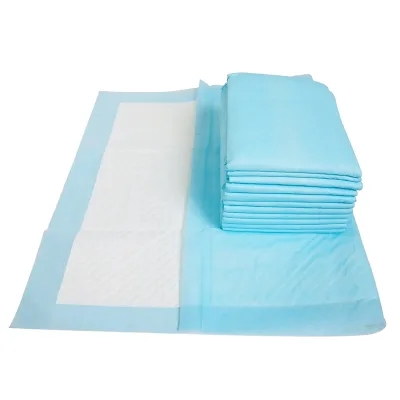
Disposable Underpads for Wholesale Supply, Medical Grade with Complete OEM ODM Service
$0.07 - $0.10
MOQ: 90000

Fujian Jiayue Sanitary Products Co., Ltd.
- Verified by SGS
- Combined
- China Fujian
- Lead time30 days
- Avg. response≤ 3h
Main productsBaby Diaper
Main marketsAfrica,Southeast Asia/ Mideast,Europe

Fujian Putian Licheng Paper Industry Co., Ltd.
- Verified by TUVRHEINLAND
- Combined
- China Fujian
- Lead time23 days
- Avg. response≤ 18h
Main productsDiaper, Baby Diaper, Adult Diaper, Under Pad, Pet Diaper, Sanitary Napkin, Pet Pad, Panty Liner
Main marketsOthers(foreignTradeCapacity.exportBusinessCapacityMarketOther),Europe

$0.05 - $0.10
MOQ: 100000 Pieces

$0.05 - $0.06
MOQ: 210000 Pieces
Shijiazhuang Duronma Trade Co., Ltd.
- Verified by SGS Group
- Trading Company
- Lead time30 days
- Avg. response≤ 6h
Main productsABDL Diapers/Adult Diapers/Baby Diapers/Adult Insert Pads/Underpad, Wet Wipes, Sanitary Napkins
Main marketsNorth America(26%), Western Europe(20%), Eastern Asia(17%)

Anhui Mingde Medical Care Products Co., Ltd.
- Trading Company
- China Anhui
- Lead time15 days
- Avg. response≤ 5h
Main productsSterilization Pouch, Dental Bibs, Examination Paper Couch Roll, Protective Bed Sheet, Dental Accessories, Disposable Underpad, Sterilized Packaging, Dental Appliance, Disposable Medical Consumables, Disposable Beauty Items
Main marketsSouth America,Africa,Southeast Asia/ Mideast,East Asia(Japan/ South Korea),Europe,Australia,North America

Disposable Water-Proof Pad Medical Nursing Pad Disposable Underpads/Mat for Adult
$0.02 - $0.05
MOQ: 200000 Pieces


Agree (Fujian) Sanitary Products Co., Ltd
- Verified by SGS
- Combined
- China Fujian
- Lead time30 days
- Avg. response≤ 8h
Main productsSanitary Napkin, Sanitary Pad, Diaper, Baby Diaper, Panty Liner, Disposable Baby Diaper, Baby Wipes, Wipe, Sanitary Towel, Maternity Pad
Main marketsSouth America,Africa,Southeast Asia/ Mideast,Europe

Quanzhou Newbusi Import & Export Co., Ltd.
- Verified by TUVRHEINLAND
- Trading Company,Manufacturer/Factory
- China Fujian
- Lead time98 days
- Avg. response≤ 9h
Main productsSpunbond Nonwoven, Hot Air Nonwoven, Embossed Nonwoven, Perforated Nonwoven, Breathable PE Film/Casting Film/Composite Film, Sap Paper/Release Paper/Airlaid Paper, Peforated PE Film, Spunalce Nonwoven, Hook/Side Tape/ Loop/Elastic Fabric, Agent Sap/ Hot Melt Adhesive/Spandex/Fluff Pulp
Main marketsSouth America,Eastern Europe,Mid East,North America,Southeast Asia,Eastern Asia,Oceania,Western Europe,Africa

Xiamen Hongfutai Import & Export Co., Ltd
- Verified by TUVRHEINLAND
- Trading Company
- China Fujian
- Lead time15 days
- Avg. response≤ 4h
Main productsBaby Diaper, Baby Diaper Pants, Adult Diaper, Adult Diaper Pant, Sanitary Napkin, Wet Wipe, Under Pad, Stocklots, Pet Care Products, Personal Protective Products
Main marketsOthers(foreignTradeCapacity.exportBusinessCapacityMarketOther),Southeast Asia/ Mideast

High Quality Nursing Underpad Adult Disposable Incontinence Under Pads Urin Pad
$0.09 - $0.10
MOQ: 10000 pieces

Adult Nursing Pads Disposable Pads for The Elderly Adult Underpads 60X90
$0.09 - $0.10
MOQ: 10000 pieces

Wholesales Low Price Good Quality Disposable Daily Use Absorbent Nursing Under Pads
$0.09 - $0.10
MOQ: 10000 pieces

Quanzhou Shanying Import and Export Trade Co., Ltd.
- Verified by TUVRHEINLAND
- Trading Company
- China Fujian
- Lead time15 days
- Avg. response≤ 3h
Main productsAdult Diaper, Baby Diaper, Baby Diaper Pants, Adult Diaper Pants, Diapers, Sanitary Napkin, Sanitary Pads, Pet Diapers, Pet Pad, Baby Wipes
Main marketsSoutheast Asia/ Mideast
Shandong Hengfa Hygienic Products Co., Ltd.
- Verified by TüVRheinland
- Manufacturer, Trading Company
- Lead time0 days
- Avg. response≤ 4h
Main productsSanitary Napkins, Underpad, Disposable Diapers, Breast Pad, Wet Wipes
Main marketsDomestic Market(70%), North America(13%), Southeast Asia(6%)
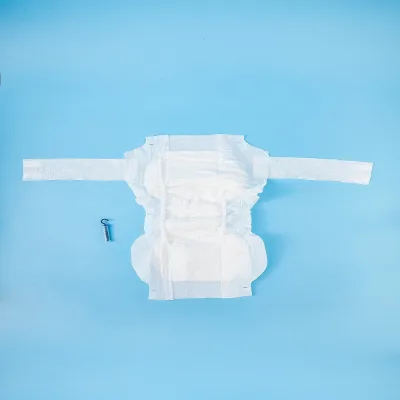
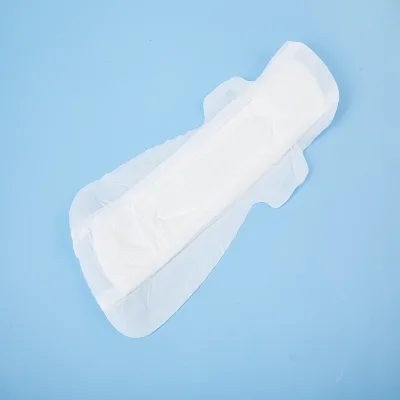
Wholesale Feminine Hygiene Low Cost Fluff Pulp Sanitary Napkins Postpartum Sanitary Pad
$0.06 - $0.07
MOQ: 25000 bags

Quanzhou Xingyuan Supply Chain Management Co., Ltd.
- Verified by TUVRHEINLAND
- Trading Company
- China Fujian
- Lead time30 days
- Avg. response≤ 13h
Main productsBaby Diaper Raw Materials, Adult Diaper Raw Materials, Sanitary Napkin Raw Materials, All Raw Materials for Diaper and Sanitary Napkin, Nonwovens, Sap Absorbent Paper, Airlaid Paper, PE Film
Main marketsOthers(foreignTradeCapacity.exportBusinessCapacityMarketOther),Southeast Asia/ Mideast,East Asia(Japan/ South Korea)

Anhui JM Healthcare Products Co., Ltd.
- Verified by SGS
- Trading Company,Manufacturer/Factory
- China Anhui
- Lead time0 days
- Avg. response≤ 2h
Main productsDental Bibs, Disposable Bed Sheets/Cover, Headrest Cover, Examination Table Bed Sheet Roll, Dental Apron, Disposable Toilet Seat Cover, Disposable Underpad, Disposable Face Mask, Isolation Gown, Dental Tray Cover
Main marketsSouth America,Eastern Europe,Mid East,North America,Southeast Asia,Eastern Asia,Western Europe


High-Quality Waterproof Nursing Underpad for Hospitals and Care Facilities
$0.14 - $0.40
MOQ: 50000 Pieces


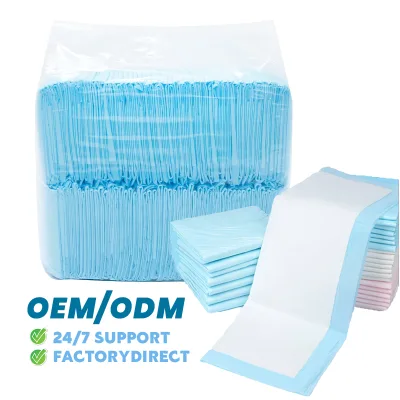
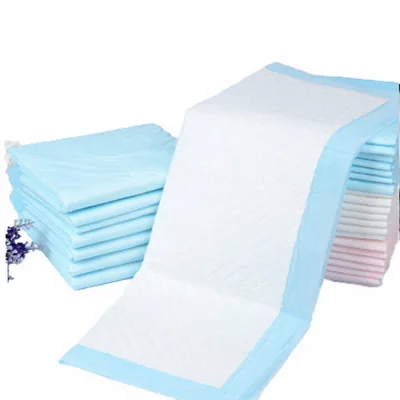



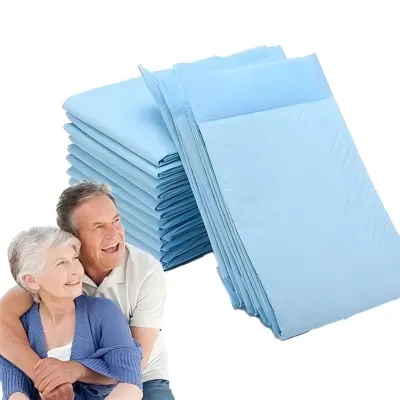


Comprehensive Sourcing Guide
Disposable Fluff Pulp Nursing Pads Supplier Concentration and Factory Types
Supplier concentration for Disposable Fluff Pulp Nursing Pads follows the broader hygiene products industry, where production tends to cluster in regions with strong nonwoven material supply chains and mature converting equipment networks. When browsing supplier results, you will often see location labels at the province level; these are useful signals because provinces with dense concentrations of diaper, sanitary pad and underpad manufacturers usually also support nursing pad production with shared raw material sourcing and experienced operators. Rather than trusting a directory's cluster narrative, map the listed locations yourself and check whether multiple suppliers in one region share similar main product lines, which suggests a genuine manufacturing base rather than isolated trading offices.
Factory types in this category generally fall into three groups. Full-line hygiene manufacturers produce baby diapers, adult diapers, sanitary pads and wipes alongside nursing pads, and they typically run their own absorbent core converting lines. Combined companies mix manufacturing with trading, sometimes outsourcing certain items while producing others in-house, so you should ask specifically which products are made on their own lines. Pure trading companies list many hygiene SKUs without factory ownership; they can be useful for small mixed orders but add a margin layer. The main products field on each supplier profile is your fastest filter: a supplier whose catalog is dominated by wipes or machinery is a different conversation from one listing nursing pads, underpads and diapers as core output.
How to Verify Disposable Fluff Pulp Nursing Pads Suppliers
Start verification with the platform verification label, then go deeper independently. Some supplier listings carry third-party on-site verification from inspection bodies, which confirms the company exists at the stated address and that basic business registration is in order. Treat this as a floor, not proof of capability: a verified trading office will pass the same check as a genuine factory. To distinguish them, request a short live video walkthrough of the nursing pad or underpad production line during operation, and ask the contact to point out the fluff pulp drum former and SAP dosing unit on your specific product run. A factory salesperson can usually arrange this within a day.
Next, verify the certifications shown on the profile and product pages rather than accepting them at face value. Several listings in this category display ISO 9001:2015 quality management certificates, and some also show ISO 14001:2015 environmental certification; ask for the actual certificate copy, check the scope language covers absorbent hygiene products, and confirm the certificate number and validity directly with the issuing body's public database. Third-party test reports such as SGS testing should likewise be requested as documents naming the tested product model, since a generic certificate is easy to reuse. Finally, verify consistency across the profile: the stated company type, location, main products and response behavior should align. A supplier claiming manufacturer status but located far from any hygiene cluster deserves one extra question about where its production actually happens.
What to Compare Across Disposable Fluff Pulp Nursing Pads Suppliers
Build a comparison sheet using the attributes displayed on supplier results, but only where a supplier actually shows the field. Key dimensions include location, company type, main products, system certifications, verification status, average response time, MOQ and lead time. These vary meaningfully across the category: response times in current results range from under three hours to roughly three hours, lead times cluster around twenty-five to thirty-five days, and MOQs span from one hundred thousand pieces for some nursing pad listings to three hundred thousand pieces for others, with underpad MOQs at one hundred twenty thousand. A supplier that displays ODM and OEM capability gives you a customization path; some also list own-brand capacity, which matters if you want a proven retail product rather than a custom build.
Weight the comparison by what actually drives risk in this category. Main products tell you whether nursing pads are a core line or an adjacent item; a factory whose primary volume is diapers or underpads shares most of the same materials and process control, but confirm which line runs your product. Certifications separate suppliers with documented quality systems from those relying on buyer inspections alone. Response speed is a proxy for how the supplier will behave during production problems, not just quoting. Where an establishment year is shown, older companies offer more track record to check, though newer factories may have newer converting equipment. Never penalize a blank field as a fault; instead, ask the supplier directly and record their answer in the same column so your sheet stays comparable.
Common Disposable Fluff Pulp Nursing Pads Sourcing Risks
The most common risk is certification drift: a profile displays ISO 9001:2015, but the certificate has lapsed, covers a different product family, or belongs to a related legal entity. In absorbent hygiene products this matters because buyers downstream, especially retail and pharmacy channels, audit documentation at shipment, not at quotation. The second frequent risk is product-specification mismatch, where the sampled pad matches the agreed fluff pulp and SAP composition but mass production substitutes cheaper core materials after the first shipments. Given that listed products advertise features like super absorbency, breathability and specific SAP grades, insist that the signed specification sheet names the fluff pulp source and SAP grade, and lock it to a retention sample from the pilot run.
Other risks are structural. Combined-type companies may quote as factories while subcontracting your order to a third line, breaking your chain of quality control; require disclosure of the producing entity before contract signature. MOQ pressure is real in this category, with some nursing pad listings at three hundred thousand pieces, which pushes buyers toward accepting oversized first orders; negotiate a smaller trial quantity against a higher unit price instead of betting the full volume on an untested line. Lead-time slippage around the stated twenty-five to thirty-five day window is common during hygiene-sector peak seasons, so confirm capacity reservation in writing. Finally, packaging errors, wrong absorbency tier or mislabeled piece counts per bag frequently appear at carton inspection; define acceptance sampling and rejection remedies in the purchase contract, not by email afterward.
Disposable Fluff Pulp Nursing Pads Regional Sourcing and Logistics
Regional sourcing in this category is best approached through the location data shown on supplier profiles rather than assumed industry maps. Where profiles indicate provinces such as Zhejiang or Fujian, use those signals: both are established bases for hygiene products, with Fujian in particular known for baby diaper and sanitary pad manufacturing and Zhejiang for nonwoven materials and converting machinery. A supplier in a hygiene-dense province benefits from nearby SAP, fluff pulp converting, packaging and nonwoven fabric suppliers, which shortens material lead times and simplifies defect resolution. But cluster membership is an inference, not a guarantee; a Fujian-registered profile could still route production elsewhere, so confirm where the converting line physically sits before comparing logistics.
On logistics, nursing pads are lightweight but bulky relative to value, so freight economics favor full-container sea shipments once volumes justify them. Product listings in this category typically state transportation by air, sea or land, and quoted lead times of twenty-five to thirty-five days generally refer to production, not transit; add port-to-door time separately. Ask each supplier for its nearest loading port and whether it handles export documentation directly, since smaller factories often ship through an export agent, adding a coordination layer. For urgent replenishment, air freight is viable for nursing pads because unit weight is low, though the cost multiple is significant. Plan carton dimensions, container utilization and pallet configuration early, and confirm moisture protection requirements, since absorbent hygiene products must stay dry from warehouse to destination.
Disposable Fluff Pulp Nursing Pads Commercial Terms and Order Planning
Commercial terms in this category follow a recognizable pattern, and current listings help you benchmark them. Indicative unit prices for disposable nursing pads appear in a range from roughly two to three-and-a-half cents at the low end to ten to fifteen cents for other hygiene pad formats, with the spread driven by absorbency tier, size, packaging and order volume. Treat listed prices as negotiation anchors valid at the shown MOQ, not final quotes. Payment terms commonly cited include T/T, and escrow or platform-protected payment may be available on some channels, though you should confirm per supplier rather than assume it. Samples are widely offered, and stated sample preparation times run five to seven days, so build sampling into your schedule before committing to a production slot.
Order planning should respect the stated MOQs and lead times. With nursing pad MOQs at one hundred thousand to three hundred thousand pieces and lead times of twenty-five to thirty-five days, plus transit, a first order typically represents three to four months of retail supply for a small brand; plan cash flow accordingly. Negotiate a pilot production run at a modest premium before the full MOQ, and agree on a spec sheet, retention samples and inspection standard before deposit. Warranty claims deserve explicit terms too, since at least one listing in the category advertises a multi-year product warranty. Finally, calendar your reorders against production lead times rather than stock-out dates, and reserve capacity with your chosen factory during peak hygiene-production seasons to protect delivery.
FAQs
What is the typical lead time for disposable nursing pads?
Lead times generally range from 25 to 35 days for production. Some suppliers offer a standard 30-day window for bulk orders. Sample preparation typically requires 5 to 7 days before mass production begins.
Which certifications do these nursing pad suppliers hold?
Many manufacturers hold ISO9001:2015 and ISO14001:2015 system certifications. Products often carry ISO certificates, and some suppliers are verified by third parties like TÜV Rheinland or SGS for quality assurance.
What is the minimum order quantity for these pads?
Minimum order quantities vary significantly by supplier and product type. Some listings require 100,000 pieces, while others set the threshold at 120,000 or 300,000 units for specific models.
Where are the manufacturers of these pads located?
Manufacturers are primarily located in China, specifically in Zhejiang and Fujian provinces. These regions host combined companies and dedicated manufacturers specializing in nonwoven hygiene products and disposable nursing supplies.
What is the price range for disposable nursing pads?
Unit prices typically fall between 0.02 and 0.15 USD depending on specifications. Specific models may range from 0.02 to 0.035 USD, while other variants are priced between 0.09 and 0.10 USD per piece.
Can suppliers customize the design and branding of pads?
Customization is widely available for logos, sizes, and packaging. Suppliers offer OEM and ODM services, allowing for custom designs, specific colors, and tailored packing solutions to meet buyer requirements.
How quickly do suppliers typically respond to inquiries?
Response times are generally fast, averaging around 2.5 to 3 hours. This ensures efficient communication for buyers seeking quotes, samples, or technical details regarding their specific nursing pad orders.