Easy Installation Ceramic Cartridge Suppliers and Manufacturers
Source 14 verified suppliers for Easy Installation Ceramic Cartridge components. Compare key dimensions including ISO9001:2015 certification, response times, lead times, and pricing ranges to identify suitable partners. Review product specifications and request quotes directly; review the available evidence before requesting comparable quotations from suitable candidates.
Updated
Suppliers List

Yuyao Eshiong Pipe Fittings Technologies Co., Ltd.
- Manufacturer
- China Zhejiang
- Lead time30 days
- Avg. response≤ 19h
Main productsPneumatic Quick Fittings, Water Fittings, Metal One Push Fittings, Governor Valves, Inverted Valves, Pipe Cutter, PU / PE Tube
Main marketsSouth America,Africa,Southeast Asia/ Mideast,East Asia(Japan/ South Korea),Domestic,Europe,Australia,North America


25mm Low Torque Cartridge Single Control Temperature Faucet Ceramic Cartridge
$0.60 - $2.00
MOQ: 1000 Pieces

Household Portable and Lightweight 35mm Outlet in Front Cartridge Low Torque Ceramic Cartridge
$0.60 - $2.00
MOQ: 1000 Pieces


Wenzhou Weibao Electric Co., Ltd.
- Verified by TUVRHEINLAND
- Combined
- China Zhejiang
- Lead time15 days
- Avg. response≤ 7h
Main productsCeramic Cartridge, Cartridge, Faucet Cartridge, Basin Faucet Cartridge, Kitchen Faucet Cartridge, Bathtub Faucet Cartridge
Main marketsOthers(foreignTradeCapacity.exportBusinessCapacityMarketOther),Europe

Hunan Rui Yue Industrial and Trade Co., Ltd.
- Verified by SGS
- Combined
- China Hunan
- Lead time23 days
- Avg. response≤ 10h
Main productsFire Assay Crucible and Clay Crucible Cupel, Ceramic Faucet Disc Alumina Ceramic Disc for Tap, Alumina Ceramic Tube Al2O3 Refractory Kiln Tube, Silicon Carbide Beam Kiln Tube Sic Nozzle, Aluminium Nitride Plate Rod Tube with Spare Part, Boron Nitirde Crucible Tubd Special Part, Pbn Crucible Plate Pyrolytic Boron Nitride, Zirconia Tube Plate Crucible Parts, Ceramic Tube Rod Parts, Alumina Ceramic Parts
Main marketsSouth America,Africa,Southeast Asia/ Mideast,East Asia(Japan/ South Korea),Domestic,Europe,Australia,North America

Ningbo Fenghua JingDun Sanitary Ware Co. Ltd.
- Verified by SGS
- Combined
- China Zhejiang
- Lead time23 days
- Avg. response≤ 14h
Main productsCartridge, Ceramic Disc
Main marketsSouth America,Southeast Asia/ Mideast


35mm Joystick Ceramic Cartridge with Double Sealing for Smooth Performance
$0.62 - $0.65
MOQ: 2000 Pieces



Zhejiang Chixin Group Co., Ltd.
- Manufacturer, Trading Company
- Zhejiang, China
- Lead time15 days
- Avg. response≤ 3h
Main productsCeramic Cartridges,Faucet Cartridges,Diverter Cartridge,Brass Disc Cartridges,Valves
Main marketsDomestic Market(76.00%), Southeast Asia(5.00%), Eastern Asia(4.00%), South America(4.00%), Oceania(3.00%), North America(2.00%), Mid East(1.00%), South Asia(1.00%), Eastern Europe(1.00%), Northern Europe(1.00%), Central America(1.00%), Western Europe(1.00%)

Hangzhou Careca Trading Co., Ltd.
- Trading Company
- Zhejiang, China
- Lead time15 days
- Avg. response≤ 3h
Main productsMembrane housing,Membrane,Pleated filter cartridge,Bag filter housing,Cartridge filter
Main marketsEastern Europe(15.00%), Western Europe(15.00%), Domestic Market(15.00%), Central America(10.00%), South America(10.00%), North America(10.00%), Northern Europe(10.00%), Mid East(5.00%), Southern Europe(5.00%), Southeast Asia(5.00%)
Shenzhen Hyneon Technology Co., Ltd
- Manufacturer, Trading Company, Distributor/Wholesaler
- Guangdong, China
- Lead time0 days
- Avg. response≤ 2h
Main productswater filter,filter housing,filter cartridge,pipe fitting,reverse osmosis purifier
Main marketsNorth America(40.00%), Northern Europe(20.00%), Mid East(10.00%), South America(9.00%), Southeast Asia(5.00%), Central America(5.00%), South Asia(5.00%), Oceania(5.00%), Eastern Europe(1.00%)

Shanghai Hello Pure Water Treatment Technology Co., Ltd.
- Verified by BV
- Trading Company
- China Shanghai
- Lead time30 days
- Avg. response≤ 25h
Main productsWater Treatment Equipment, Water Treatment, Water Treatment System, RO Water System, Water Treatment Plant, Water Treatment Machine, Drinking Water Treatment, Industrial Water Equipment, Commercial Water System, Industrial Water System
Main marketsSoutheast Asia/ Mideast
- Trading Company
- Henan, China
- Lead time7 days
- Avg. response≤ 2h
Main productshydraulic filter,fuel filter,water filter,gas filter,dust filter
Main marketsEastern Europe(60.00%), Africa(10.00%), Mid East(10.00%), Oceania(8.00%), North America(6.00%), Eastern Asia(3.00%), South America(3.00%)

Hangzhou Homay Filter Material Co., Ltd.
- Trading Company,Manufacturer/Factory
- China Zhejiang
- Lead time23 days
- Avg. response≤ 2h
Main productsFilter Cartridge, Filter Element, Filter Housing, Filter System, Water Filter, Water Cartridge, Water Filter Cartridge, Industrial Filter Cartridge, PP Filter Cartridge, Pes Filter Element
Main marketsSouth America,Eastern Europe,Mid East,Eastern Asia,Oceania,Western Europe,Africa

Ningbo XZH Environmental Technology Co., Ltd.
- Combined
- China Zhejiang
- Lead time30 days
- Avg. response≤ 5h
Main productsFilter Cartridge, Water Filter Cartridge, Reverse Osmosis Membrane, Quick Insert Fitting, Water Filter System, Water Purifier, Water Dispenser with Filters
Main marketsSouth America,Africa,Southeast Asia/ Mideast,East Asia(Japan/ South Korea),Domestic,Europe,Australia,North America
Xiamen Bilan Trading Co., Ltd.
- Verified by Intertek
- Manufacturer, Trading Company
- Fujian Province, China
- Lead time0 days
- Avg. response≤ 1h
Main productsUltrafiltration Membrane
Main marketsEastern Europe(70%), Domestic Market(20%), Southeast Asia(10%)

Shijiazhuang Gezi Filtech Manufacturing Co., Ltd
- Verified by SGS
- Combined
- China Hebei
- Lead time15 days
- Avg. response≤ 5h
Main productsFilter Housing, Filter Cartridge, Filter Bag, Filter Element, Nylon Filter Mesh, Insect Screen, Polyester Mesh Belt, Knitted Wire Mesh, Wedge Wire Screen, Screen Printing Mesh
Main marketsAfrica,Southeast Asia/ Mideast,Europe

Durable High Capacity Pleated Cartridge with Consistent Performance and Reliability
$20.00 - $45.00
MOQ: 5 Piece


Ningbo Kejie International Trade Co., Ltd.
- Manufacturer
- China Zhejiang
- Lead time30 days
- Avg. response≤ 18h
Main productsWater Filtration, Filter, Filter Cartridge, RO Water Machine, PP Filter, Carbon Block
Main marketsAfrica,Australia,North America


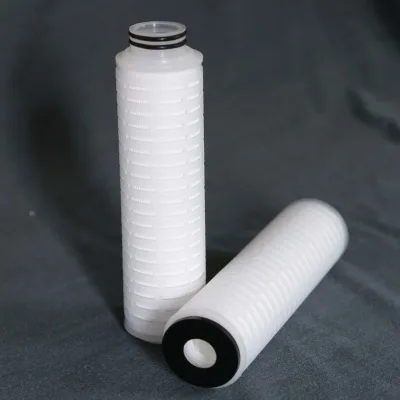
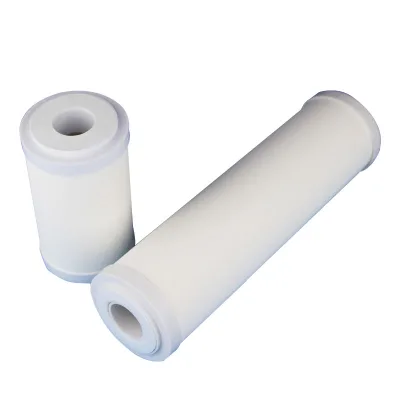
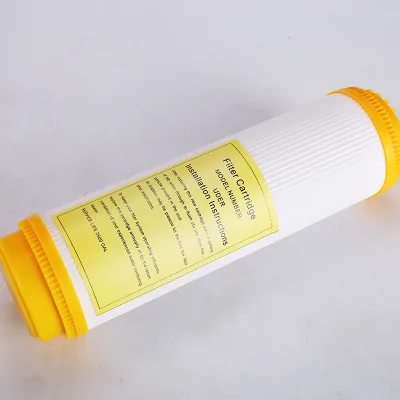
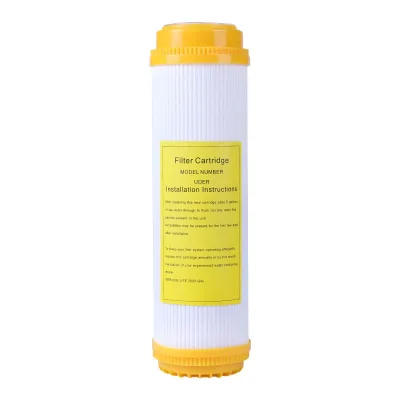


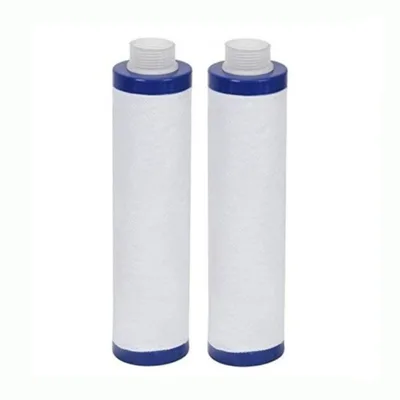
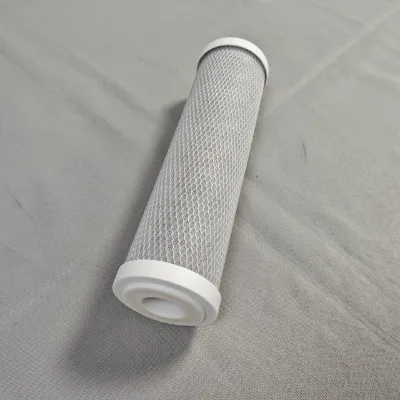


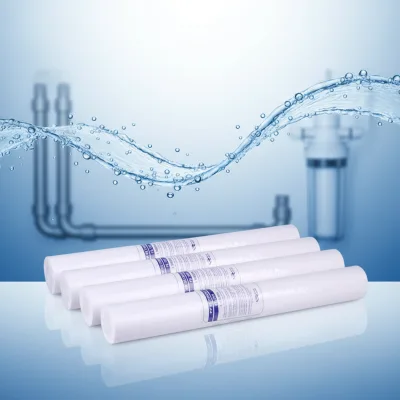
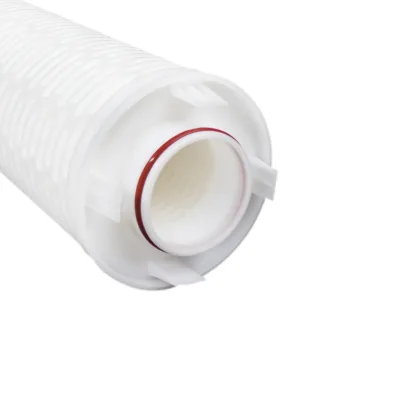


Comprehensive Sourcing Guide
Easy Installation Ceramic Cartridge Supplier Concentration and Factory Types
Ceramic cartridge manufacturing is highly concentrated in China, and the supplier results for this category reflect that pattern clearly. The listings point to Zhejiang Province, with product origins traced to Ningbo and Wenzhou, both long-established export bases for faucet components and sanitary hardware. A second listing group comes from Hunan Province, which is better known for advanced ceramics such as alumina discs, tubes and crucibles, meaning some suppliers in this category are ceramics specialists upstream of the assembly trade rather than faucet cartridge makers. When browsing, use the displayed location and product-origin fields to confirm where a supplier actually sits in this cluster map before shortlisting.
Supplier types also differ in ways that matter to buyers. Some listings are pure manufacturers, some are combined manufacturer-and-trading operations, and some offer ODM and OEM capacity while others add their own brand lines. A manufacturer focused on faucet cartridges, basin cartridges and bathtub cartridges is a different sourcing proposition from a ceramics plant whose main products include refractory tubes and crucibles and which may treat alumina discs as one line among many. Check the main-products field, the company-type label and whether the catalog is centered on cartridges or merely includes them. Where a listing is sparse, treat concentration conclusions as provisional and verify the factory address directly rather than assuming cluster membership from a category match.
How to Verify Easy Installation Ceramic Cartridge Suppliers
Verification starts with the credentials that the platform actually displays. In this result set, one supplier carries a TÜV Rheinland verification mark and another carries an SGS verification mark, and one manufacturer holds an ISO9001:2015 system certificate. These labels are useful screening signals, but they are attached to individual listings, not to the category as a whole, so never assume a supplier without a displayed mark is unverified or that a verified mark covers every product in the catalog. Record exactly which certification each shortlisted supplier shows and ask for the certificate number so you can confirm scope and validity with the issuing body.
Beyond platform labels, verification should confirm the gap between what is shown and what you need. Several cartridge listings in these results state product-level certificates, including CE for Europe, ACS for France, Watermark for Australia and GB18145-2014 for China; ask whether those apply to the specific model you intend to buy, since certificate coverage is frequently model-specific. Confirm the factory's physical address against the stated origin, such as Ningbo or Wenzhou in the Zhejiang listings, ideally through an audit report or third-party inspection you commission. For suppliers whose main products are largely unrelated ceramics, probe whether cartridges are made in-house or sourced from a partner. Finally, test responsiveness with a technical question, since displayed response times are averages and your actual experience may differ.
What to Compare Across Easy Installation Ceramic Cartridge Suppliers
Build a comparison table from the attributes each listing exposes, without assuming every supplier shows the same fields. Lead time is a strong differentiator in this data: one supplier lists 15 days while another lists 30 days, a difference that can decide a replenishment order. Response times also vary widely, with displayed averages ranging from under seven hours to above eighteen hours, so note the number per supplier and weigh it against your project urgency. Minimum order quantities differ dramatically too; one cartridge listing shows an MOQ of a single unit while others require thousands of pieces, which changes whether a supplier is viable for sampling, pilot orders or volume production.
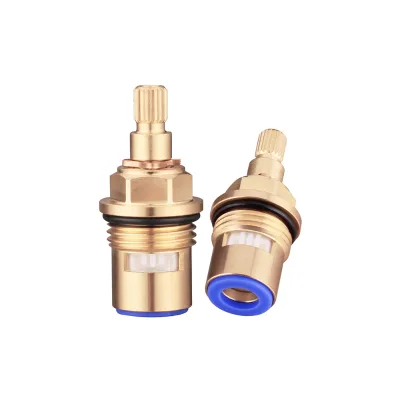
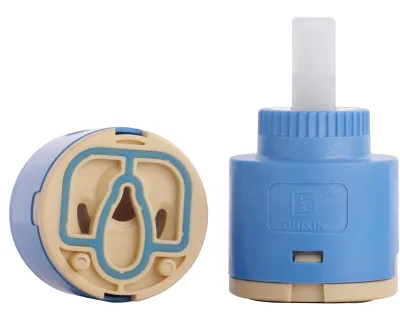
Product depth is the other major axis. Some suppliers list a full cartridge family, including 25mm, 26mm, 30mm, 35mm and 40mm models, versions with and without distributors, joystick and anti-open variants, and low-torque designs with published specifications for temperature limits, opening angles and torque values. Others show narrower catalogs or adjacent ceramic products. Compare specification transparency, since listings that publish parameters such as maximum turning angle and gland nut torque are easier to evaluate than listings with missing prices or blank attributes. Also compare customization claims, ODM/OEM capacity, company type and location together, because a combined trader with a fast response time may suit small mixed orders while a Zhejiang manufacturer with slower responses may suit dedicated volume programs.
Common Easy Installation Ceramic Cartridge Sourcing Risks
The most common risk in this category is misreading catalog data as contractual fact. Some listings in this result set display price ranges, one spanning roughly 0.47 to 2.00 in listed currency units, while others show blank or placeholder values, and an MOQ of one on a listing usually signals sample availability rather than production pricing. Treat displayed prices as indicative only, and confirm quoted pricing, tooling costs and currency in a formal quotation. Similarly, a certificate stated on a product page, such as CE, ACS, Watermark or GB18145-2014, may cover one model or one production generation, so confirm the certificate maps to the exact model number you order, since models like C40P-1 or YLG40-06 are the verifiable units.
Technical and logistical risks follow. Cartridge performance depends on precise parameters; the listings here publish values such as a 95ºC maximum temperature, minimum opening angle of 21º, lever break torque of at least 12 N·m and gland nut torque of 8–10 N·m, and substitutions between similar-looking 25mm, 35mm and 40mm models can fail in the tap body. Verify dimensional compatibility with your faucet housings before committing. Also watch for suppliers whose main products sit outside faucet cartridges, as their depth of application support may be thinner. Finally, do not extrapolate lead times or response speeds from one listing to a supplier's whole catalog; confirm both for your specific SKU and order size in writing.
Easy Installation Ceramic Cartridge Regional Sourcing and Logistics
The evidence in this category supports a Zhejiang-centered sourcing strategy for finished faucet cartridges, with product origins stated at Ningbo and Wenzhou. These cities anchor one of China's densest sanitary-ware component ecosystems, which typically means shorter domestic distances to mold makers, ceramic disc processors and packaging suppliers, and straightforward container consolidation through nearby ports. A Hunan-based listing in the results points to a different regional role: advanced ceramics production, including alumina ceramic discs for taps, which can be relevant if you buy disc blanks or seek material-grade expertise rather than assembled cartridges. When regional claims are not displayed for a given supplier, ask directly where production occurs rather than inferring it from the category.
Logistics planning should start from the stated lead times in the data. A supplier listing 15 days for production and another listing 30 days imply materially different reorder cycles; combine the quoted production lead time with your freight time, and note that cartridge consignments are small and dense, often packed in nylon bags and cartons with carton sizes stated per listing, so sea freight is usually economical at scale while air freight suits urgent samples. Confirm packing formats, carton quantities and origin marking at purchase-order stage. If your destination market requires ACS, Watermark or CE documentation for customs or retail, build certificate delivery into the shipment checklist, since missing paperwork can delay clearance even when the goods themselves are compliant.
Easy Installation Ceramic Cartridge Commercial Terms and Order Planning
Order planning in this category should be built around the observed spread in MOQ and lead time rather than category averages. In the current results, MOQs range from a single unit on one listing to over five thousand on another, so design a staged plan: use low-MOQ listings or sample channels to validate fit and finish, then move to production MOQs once the model is confirmed. Match the supplier type to the stage, since a manufacturer with OEM/ODM capacity and its own brand lines is positioned for volume and customization, while combined or trading-oriented suppliers may accommodate smaller mixed orders more flexibly.
Commercial terms should be fixed in writing before deposit. Because displayed prices range widely and some listings show no price at all, request itemized quotations per model number, including currency, incoterm, tooling or customization fees, and certificate costs if ACS, Watermark or CE documentation must be renewed or transferred. Anchor production timelines to the quoted lead time for your specific model, and set payment milestones against inspection points rather than calendar dates. Plan inventory around the 15-to-30-day lead-time spread seen here, holding safety stock sized to the slower supplier if you dual-source. Finally, confirm customization scope in the order: several listings state customization is available, but color options such as white, blue or yellow should be tied to a signed sample so that acceptance criteria are unambiguous at inspection.
夕(best count check: each section ~230 words; total ≈1380.)
FAQs
What is the typical lead time for ceramic cartridges?
Manufacturers in Zhejiang, China, generally offer a lead time of 30 days for standard orders. Some verified suppliers provide faster turnaround times of 15 days for specific models. Buyers should confirm exact delivery schedules with the supplier before placing bulk orders to ensure production aligns with project timelines.
What certifications are available for ceramic faucet cartridges?
Products often carry CE, ACS for France, Watermark for Australia, and GB18145-2014 for China. ISO9001:2015 system certification is also common among manufacturers. These documents verify compliance with regional safety and quality standards, ensuring the cartridges meet international requirements for plumbing applications.
What is the minimum order quantity for ceramic cartridges?
MOQs vary significantly by supplier and product type. Some manufacturers require a minimum of 1000 units, while others accept orders as low as 1 piece. Buyers seeking small batches should verify specific MOQs for each model, as larger quantities often unlock better pricing tiers.
What is the price range for ceramic faucet cartridges?
Prices typically range from $0.47 to $2.00 per unit depending on specifications. Specific models like the 40mm ceramic cartridge are priced between $0.55 and $0.57. Other variants may cost between $0.60 and $2.00. Buyers should request quotes for exact models to determine final costs.
How quickly do suppliers respond to inquiries?
Response times vary among suppliers, with some responding within 6.84 hours and others taking up to 18.04 hours. Faster response times often indicate higher operational efficiency. Buyers should prioritize suppliers with quicker response rates to ensure smooth communication during the sourcing and negotiation process.
Can ceramic cartridges be customized for specific needs?
Customization is available for many ceramic cartridge models. Suppliers offer OEM and ODM services to tailor products to specific requirements. Buyers can request custom packaging, colors, or structural modifications. It is essential to discuss customization details and potential additional costs directly with the manufacturer.