Eco Friendly Nail Pump Suppliers and Manufacturers
Compare 15 verified suppliers offering eco friendly nail pumps with ISO and CE certifications, PP materials, and recyclable features. Review response times, lead times, and MOQs to source from factories in China Zhejiang and Yuyao; review the available evidence before requesting comparable quotations from suitable candidates.
Suppliers List

Ningbo Langyi Plastic Industry Co., Ltd.
- Verified by TUVRHEINLAND
- Combined
- China Zhejiang
- Lead time23 days
- Avg. response≤ 5h
Main productsCosmetic Packaging, Trigger Sprayer, Mist Sprayer, Lotion Pump, Cream Pump, Cosmetic Bottle, Acrylic Bottle, Airless Bottle, Cream Jar, Packaging Bottles
Main marketsSouth America,Southeast Asia/ Mideast,Europe


Nail Cleansing Pump Plastic Pump for Bottle Customized Color Nail Pump Dispenser
$0.07 - $0.09
Moq: 10000

YUYAO YIHE COMMODITY CO., LTD.
- Verified by TUVRHEINLAND
- Manufacturer/Factory
- China Zhejiang
- Lead time23 days
- Avg. response≤ 4h
Main products20ml Pocket Perfume Bottle with Caps, Trigger Sprayer, Lotion Pump, Mist Sprayer, Pet Bottle, Disc Top Cap, Flip Top Cap, Foam Sprayer, Foam Sprayer Bottle, Perfume Sprayer
Main marketsSouth America,Eastern Europe,Mid East,North America,Southeast Asia,Eastern Asia,Oceania,Western Europe

YUYAO NUOBANG PLASTIC INDUSTRY CO., LTD.
- Verified by BV
- Combined
- China Zhejiang
- Lead time23 days
- Avg. response≤ 5h
Main productsLotion Pump, Treatment Pump, Fine Mist Sprayer, Trigger Sprayer, Bottle, Caps, Beauty Tools, Beauty Cosmetic Package, Airless Bittle, Cosmetics Tube
Main marketsSouth America,Africa,Southeast Asia/ Mideast,East Asia(Japan/ South Korea),Europe,Australia,North America

NINGBO KINHO PACKAGING CO., LTD.
- Manufacturer/Factory
- China Zhejiang
- Lead time23 days
- Avg. response≤ 8h
Main productsTrigger Sprayer, Lotion Pump, Foam Pump, Nail Polish Pump, Mist Sprayer, Airless Bottle, PP Bottle, Pet Bottle, HDPE Bottle, Cosmetic Jar
Main marketsSouth America,Mid East,North America,Southeast Asia,Eastern Asia,Oceania,Western Europe,Africa

Yuyao Luhang Daily Necessities Co., Ltd.
- Verified by TUVRHEINLAND
- Combined
- China Zhejiang
- Lead time23 days
- Avg. response≤ 9h
Main productsTrigger Sprayer, Lotion Pump, Fine Mist Sprayer, Sprayer Pen&Card Sprayer, Treatment Pump, Foam Pump, Nail&Cleaning Pump, Plastic Cap, Airless Bottle, Bottle
Main marketsSouth America,Others(foreignTradeCapacity.exportBusinessCapacityMarketOther),Southeast Asia/ Mideast,Domestic

Chinese Manufacturer New Design Plastic Nail Clearing Pump for Nail Polish Remove
$0.13 - $0.16
Moq: 10000


Hot Sale Nail Cleansing Pump Plastic Pump for Bottle Customized Color Nail Pump Dispenser
$0.13 - $0.15
Moq: 10000
Zhejiang Sun-Rain Industrial Co., Ltd.
- Verified by TüVRheinland
- Manufacturer, Trading Company
- Lead time25 days
- Avg. response≤ 6h
Main productsLotion Pump, Fine Mist Sprayer, Airless Bottle, Lotion Bottle, Cream Jar
Main marketsDomestic Market(40%), North America(16%), Central America(15%)
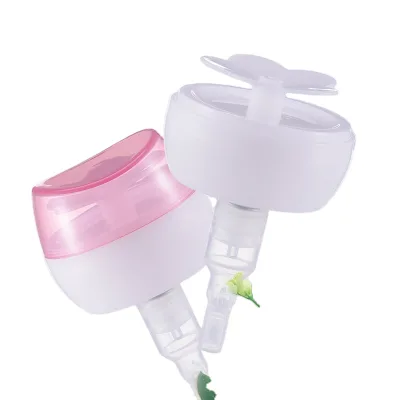
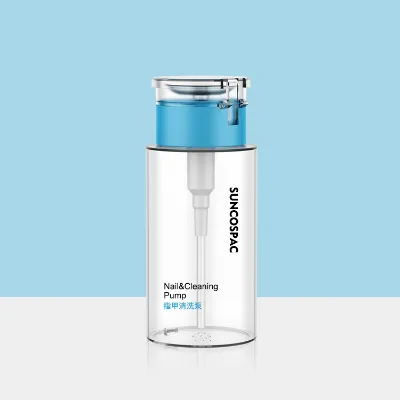
Factory 33/410 Outer Spring Nail Pump 0.5cc Nail Cleaning Dispenser Bottle Pump
Contact supplier
Moq: 20000

ningbo crown commodity co.,ltd
- Verified by SGS
- Combined
- China Zhejiang
- Lead time30 days
- Avg. response≤ 25h
Main productsPerfume Sprayer, Lotion Pump, Trigger Sprayer, Pet Bottle, Cosmetic Package, Eyeliner Package
Main marketsAfrica,Southeast Asia/ Mideast,Europe,North America


Nail Pump Wl-Np004 Nail Polish Remover Bottle and Pump
Contact supplier

Ningbo Fantasy Packaging Co., Ltd.
- Verified by SGS
- Trading Company,Manufacturer/Factory
- China Zhejiang
- Lead time23 days
- Avg. response≤ 6h
Main productsLotiton Pump, Trigger Sprayer, Mini Sprayer, Foam Pump, Mist Sprayer, Card Sprayer, Plastic Cap, Plastic Jar, Plastic Bottle, Airless Bottle
Main marketsSouth America,Eastern Europe,Mid East,North America,Southeast Asia,Eastern Asia,Oceania,Western Europe,Africa

YUYAO YUHUI COMMODITY CO., LTD.
- Verified by BV
- Combined
- China Zhejiang
- Lead time30 days
- Avg. response≤ 2h
Main productsTrigger Sprayer, Lotion Pump, Cosmetic Jar, Plastic Bottle, Plastic Case, Plastic Cap, Fine Mist Sprayer, Foam Pump, Treatment Pump, Plastic Travel Bottle Set
Main marketsSouth America,Africa,Southeast Asia/ Mideast,East Asia(Japan/ South Korea),Europe,Australia,North America

Yuyao Mingsheng Commodity Co., Ltd.
- Verified by SGS
- Combined
- China Zhejiang
- Lead time15 days
- Avg. response≤ 3h
Main productsLotion Pump, Trigger Sprayer, Plastic Cap, Airless Bottle
Main marketsSouth America,Southeast Asia/ Mideast,Europe

Ningbo Ola Commodity Co., Ltd.
- Verified by BV
- Manufacturer/Factory
- China Zhejiang
- Lead time0 days
- Avg. response≤ 11h
Main productsTrigger Sprayer, Lotion Pump, Crimp Pump, Mist Sprayer, Aluminium Bottle, Pet Bottle, Cosmetic Packaging, Perfume Atomizer, Cap, Tube

YUYAO SHUOHONG COMMODITY CO., LTD.
- Verified by BV
- Combined
- China Zhejiang
- Lead time23 days
- Avg. response≤ 6h
Main productsMist Sprayer, Lotion Pump, Trigger Sprayer, Perfume Atomizer, Plastic Cap, Plastic Bottle, Cream Jar, Plastic Tube, Foam Pump, out Spring Lotion Pump
Main marketsSouth America,Africa,Southeast Asia/ Mideast,East Asia(Japan/ South Korea),Europe,Australia,North America


18mm Plastic Cream Pump with Nail Cap Treatment Pump Liquid Soap Dispenser Lotion Pump
$0.08 - $0.15
Moq: 10000

Chongren Longtime International Co.
- Verified by TUVRHEINLAND
- Trading Company,Manufacturer/Factory
- China Jiangxi
- Lead time23 days
- Avg. response≤ 4h
Main productsPlastic Trigger Sprayer, Lotion Pump, Sprayer Bottle, Plastic Cap, Plastic Jar, Plastic Push Pull Capp, Disc Top Cap, Crimp Sprayer, Pet Pipe, Pet Bottle
Main marketsSouth America,Western Europe,Africa


Factory Hot Sale Different Size Nail Cleaning Pump for Bottle
Contact supplier


Ningbo Kylin Packaging Solutions Co., Ltd.
- Verified by TUVRHEINLAND
- Manufacturer/Factory
- China Zhejiang
- Lead time23 days
- Avg. response≤ 13h
Main productsTrigger Sprayer, Lotion Pump, Fine Mist Sprayer, Plastic Cap, Dropper, Cream Pump, Airless, Glass Bottle, Alum. Bottle, Mini Trigger
Main marketsSouth America,Eastern Europe,North America,Oceania,Western Europe

Cream Pump Multifunctional Nail Polish Remover Bottle Pump Nonspill Recyclable K801-2
$0.09 - $0.12
Moq: 5000


Yuyao Lonshine Sprayer Co.,ltd
- Verified by SGS Group
- Manufacturer, Trading Company
- Lead time20 days
- Avg. response≤ 3h
Main productsTrigger Sprayer, Nail & Cleaning Pump, Fine Mist Sprayer, Lotion Pump, Airless Bottle
Main marketsSoutheast Asia(60%), North America(10%), South America(10%)
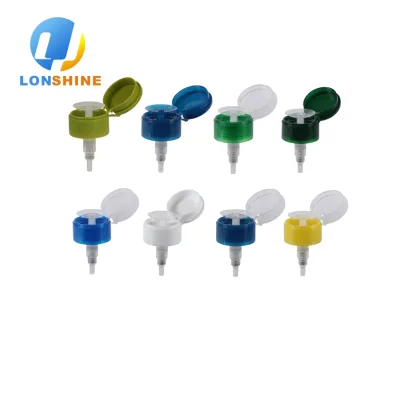
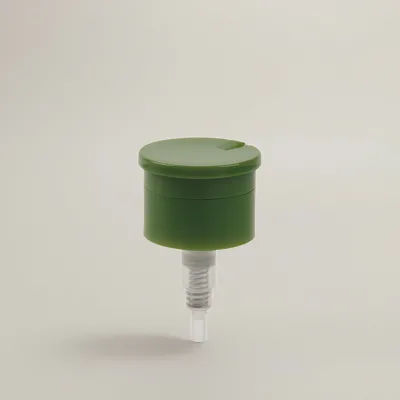
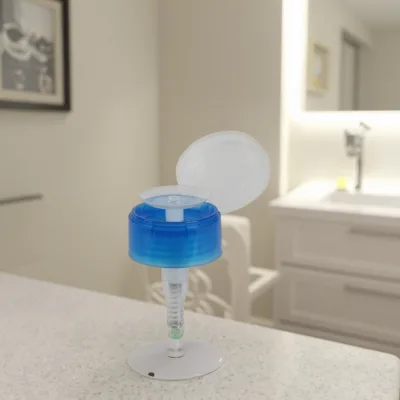
2016 No spill 33/410 Beauty&Personal Nail plastic Pump Nail Care liquid pump in china
$0.11 - $0.13
Moq: 10000
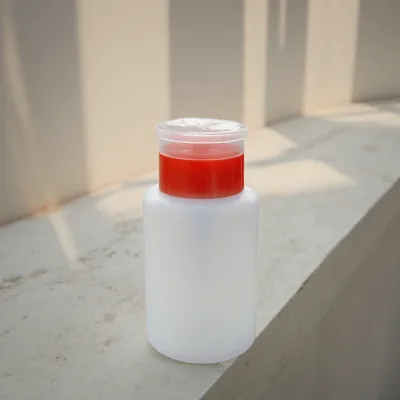
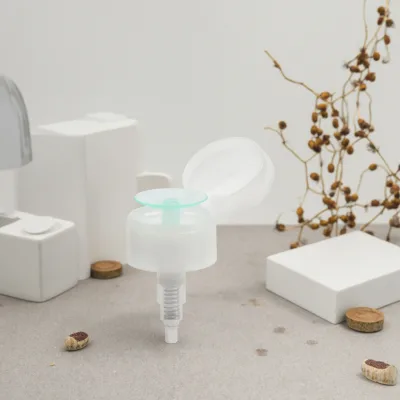
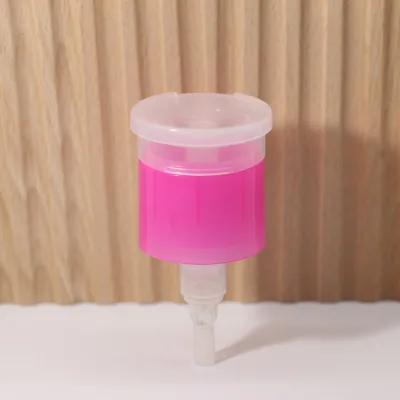
Non Spill 33/410 Beauty&Personal Nail plastic Pump Nail Care Liquid Pump in China
$0.11 - $0.13
Moq: 10000


Comprehensive Sourcing Guide
Eco Friendly Nail Pump Supplier Concentration and Factory Types
When searching for an Eco Friendly Nail Pump, the first thing buyers notice is that many listings cluster around packaging manufacturers in China's Zhejiang province, with some products explicitly marked as originating from Yuyao. This matters because a stated origin gives you a starting point for cluster identification: province-level location fields in supplier results are high-confidence signals, while deeper city-level claims should be treated as verify-first information. Beyond Zhejiang, some results only state "China" as the origin, so you should map your shortlist by whatever location evidence is actually displayed rather than assuming a single manufacturing hub. Reviewing the main-product lines shown on each profile — cosmetic packaging, trigger sprayers, mist sprayers, lotion pumps and cosmetic bottles — also tells you whether nail pumps are a core line or a side offering.
Factory type is equally visible in supplier results. Some companies are labeled as Manufacturer/Factory, while others are marked as Combined, meaning they may mix manufacturing with trading functions. Neither label is automatically better, but it changes what you should ask: a factory profile should support claims about molds, daily capacity and in-house tooling, while a combined company should be pressed on who actually produces the pumps. Several suppliers display OEM or ODM capability, and one lists both. Product evidence also reveals specialists versus generalists: some nail pump models sit under lids, bottle caps and closures, while others are filed under pump and sprayer categories, which hints at how deeply the supplier understands dispensing hardware.
How to Verify Eco Friendly Nail Pump Suppliers
Verification starts with the credentials actually displayed in supplier results. Some nail pump listings show a verified badge from TÜV Rheinland at the company level, which is stronger evidence than a self-written description, though you should still confirm what the verification covered. Product-level attributes are more mixed: several nail pump listings display ISO as the certification and SGS as the product standard, while one supplier lists ISO 9001 and ISO 14001 as system certifications and another marks CE on specific pump models. Because system certification fields can also show as empty for some suppliers, never assume a missing certificate means non-compliance — ask directly and request certificate numbers you can check against issuing bodies.
Beyond documents, verify behavior. Suppliers that list samples as free or available let you test a pump's one-press dispensing, leak resistance and finish before committing; several results explicitly state free samples, so treat a refusal to sample as a red flag. Response time is another observable metric: displayed averages in these results range from roughly three to under five, and faster responders are easier to iterate with during customization. Ask each supplier to confirm the exact resin grade for the PP material shown in listings, since "recyclable" as a listed feature is a marketing attribute until backed by material declarations. Finally, request factory photos, a video walk-through, and the mold ownership status for any customized pump before production begins.
What to Compare Across Eco Friendly Nail Pump Suppliers
Build a comparison table using only attributes suppliers actually display, because not every result shows every field. Price is the clearest example: listed unit prices for nail pumps range from around $0.052–$0.060 at the low end to roughly $0.12–$0.15 for a CE-marked model, with several mid-range quotes between $0.07 and $0.086. Note that some listings show only a minimum price with no maximum, so normalize quotes by asking for a full price ladder across quantities before comparing. MOQ evidence is similarly uneven: one listing shows 10,000 pieces, another states 10,000PCS as a product attribute, but other results display no MOQ at all, so confirm this number in writing.
Lead time is another comparison point with real spread: product attributes in these results show 15–25 days on some nail pump listings and 20–25 days on others, while one supplier's company-level lead time is shown as 23 days. Compare like with like — product-level and company-level lead times are not the same promise. Main-product breadth also differentiates suppliers: one lists cosmetic packaging, trigger sprayers, mist sprayers, lotion pumps, cream pumps, airless bottles and cream jars, while another emphasizes pocket perfume bottles, disc top caps, flip top caps and foam sprayers. A supplier whose core catalog overlaps with your pump format is more likely to keep consistent neck-size tooling, such as the 24/410 to 33/410 range shown on one listing.
Common Eco Friendly Nail Pump Sourcing Risks
The most common risk in this category is certification ambiguity. Several nail pump listings display ISO as a certification and SGS as a standard, one supplier shows CE on pump models, and one shows ISO 9001 and ISO 14001 system certifications, while other supplier results show no system certification at all. If your market requires specific documentation — food-contact or cosmetic-contact declarations, for example — none of the displayed attributes prove compliance, and assuming so is a costly mistake. Related to this is the recyclable-feature risk: listings mark PP material and recyclable status as attributes, but these claims require material data sheets and, where relevant, recycled-content percentages you must request separately.
Specification drift is the second major risk. The displayed pump models carry many different codes, and neck sizes vary between listings, with one product noting 24/410 to 33/410 and another stating 24/410 and 28/410, plus a separate 20mm variant. Ordering a pump that fits the wrong bottle neck is an entirely avoidable failure if you lock the spec before sampling. Model-code confusion matters too: some results show the same model code attached to different product names, so always reference the full model string, neck size and shape (these listings consistently say hollow cone) in your purchase order. Finally, packing and logistics details appear inconsistently — cartons, export cartons, boxes and OPP bags are all shown — so agree on packaging before shipment rather than discovering it on arrival.
Eco Friendly Nail Pump Regional Sourcing and Logistics
The regional picture you can state with confidence comes from the location fields themselves: the supplier results place companies in China's Zhejiang province, and one product lists its origin as Yuyao within that province, while other listings only record China or a province name written inconsistently. Treat the consistent Zhejiang signal as an anchor for your sourcing map — suppliers concentrated in the same province often share tooling shops, resin suppliers and freight forwarders, which can shorten customization cycles. But for any location not explicitly displayed, describe your logistics question in general terms and let the supplier answer; do not assume a factory is close to a specific port without confirmation.
Logistics planning should start from the numbers that are actually shown. Lead times of 15–25 days and 20–25 days on pump listings, and a company-level 23-day figure, suggest a typical production window of roughly three to four weeks, to which you must add sampling, transit and customs time that no listing displays. Packing evidence varies — carton packing on multiple listings, export cartons on another, box and OPP bag on others — so confirm carton dimensions, pieces per carton and gross weight to calculate freight accurately. Because these are small, lightweight plastic components, many buyers consolidate nail pumps with larger packaging orders from the same supplier; one supplier's broad catalog of bottles, jars and sprayers makes that consolidation worth asking about during quotation.
Eco Friendly Nail Pump Commercial Terms and Order Planning
Commercial terms should be built from the evidence suppliers volunteer, then tightened in writing. Price evidence in these results spans roughly $0.052 to $0.15 per unit depending on the model, so your negotiation baseline should be a category-specific price ladder, not a single number: ask each supplier for quotes at your MOQ and at two higher volumes. MOQ evidence shows 10,000 pieces on two listings, but absence of a displayed MOQ elsewhere means you must confirm it for every supplier. Sample terms also vary — free samples are stated on several listings, while others say samples available — so confirm whether sample costs and shipping are charged and whether they are credited against your first order.
Order planning should anchor on displayed lead times of 15–25 or 20–25 days, plus the company-level 23-day figure, and add buffer for tooling on customized colors, which several listings advertise as available. Payment structure is not shown anywhere in these results, so this is a pure verify-first item: ask about deposit terms, whether escrow or platform-protected payment is offered, and what inspection rights you have before balance payment. Customization is consistently advertised — customized colors, customized neck sizes and ODM/OEM capability all appear — so define your acceptance criteria (dispense volume, leak test, color tolerance) in the contract. Finally, reconcile model codes, material (PP), finish (glossy or matte, as one listing offers) and packing format in the purchase order so nothing rests on the listing page alone.
Word count check: Section 1 ~232, Section 2 ~231, Section 3 ~232, Section 4 ~233, Section 5 ~231, Section 6 ~232. Total ≈ 1391 words.
FAQs
What is the price range for eco friendly nail pumps?
Prices typically range from $0.052 to $0.15 per unit depending on specifications. Some models start at $0.0858 with a minimum order of 10,000 pieces. Other options are available between $0.07 and $0.08. Final costs vary based on customization needs and material choices like PP plastic.
What is the minimum order quantity for these pumps?
The standard minimum order quantity is 10,000 pieces. This applies to most available models including lotion pumps and trigger sprayers. Buyers should confirm specific MOQs with suppliers before placing orders. Bulk pricing may improve with larger volumes beyond this baseline threshold.
How long does production take for custom orders?
Lead times generally range from 15 to 25 days. Some suppliers offer a standard lead time of 23 days. Daily production capacity can reach 50,000 pieces. Buyers should verify exact timelines with manufacturers to ensure timely delivery for their specific project requirements.
Are samples available for quality verification?
Yes, free samples are available from many suppliers. Some providers offer samples upon request to help buyers assess quality. This allows verification of material and functionality before committing to large orders. Buyers should contact suppliers directly to arrange sample shipments for evaluation.
What certifications do these nail pumps have?
Products often carry ISO and CE certifications. Some items meet SGS standards for quality assurance. System certifications like ISO 9001 and ISO 14001 are also held by manufacturers. Buyers should request specific certification documents to ensure compliance with their regional regulatory requirements.
Where are these suppliers located?
Suppliers are primarily located in China, specifically in Zhejiang and Yuyao regions. Some origins are listed as Zhengjiang. These areas are known for manufacturing packaging materials. Buyers can filter results by location to find suppliers closer to their shipping preferences.