Eco-Friendly Skin Care Glass Jar Suppliers and Manufacturers
Explore 27 verified options for Eco-Friendly Skin Care Glass Jar sourcing from China. Compare dimensions like ISO certification, MOQ, lead times, and response speeds to find suitable factories. Contact suppliers directly to request samples and confirm pricing details; review the available evidence before requesting comparable quotations from suitable candidates.
Suppliers List

- Verified by SGS
- Manufacturer/Factory
- China Shanghai
- Lead time30 days
- Avg. response≤ 4h
Main productsCosmetic Packaging, Glass Dropper Bottle, Cosmetic Jar, Essential Oil Bottle, Glass Jar, Glass Bottle, Roll on Glass Bottle, Plastic Bottle, Airless Bottle and Jar, Personal Care
Main marketsSouth America,Eastern Europe,Mid East,North America,Southeast Asia,Eastern Asia,Oceania,Western Europe,Africa

- Verified by CTI
- Trading Company
- China Zhejiang
- Lead time30 days
- Avg. response≤ 3h
Main productsAirless Bottle, Glass Bottle, Comb, Cosmetic Packaging, Food Packaging, Sprayer, Lotion Pump Machine, Gift, Roll on Ball
Main marketsAfrica,Southeast Asia/ Mideast

Qingdao Xinte Packaging Co., Ltd.
- Verified by TUVRHEINLAND
- Trading Company,Manufacturer/Factory
- China Shandong
- Lead time15 days
- Avg. response≤ 6h
Main productsGlass Jar, Glass Bottles, Plastic Bags, Perfume Bottle, Dropper Bottles, Paper Box, Tin Box, Glass Syringe, Glass Tubes, Plastic Bottle
Main marketsSouth America,Eastern Europe,North America
Nanning Yuebo Packaging Solutions Co., Ltd.
- Verified by Intertek
- Trading Company
- Lead time30 days
- Avg. response≤ 2h
Main productsGlass Bottle, Glass Jar, Perfume Bottle, Medicine Bottle, Cosmetic Bottle
Main marketsNorth America(20%), Southeast Asia(20%), South America(8%)
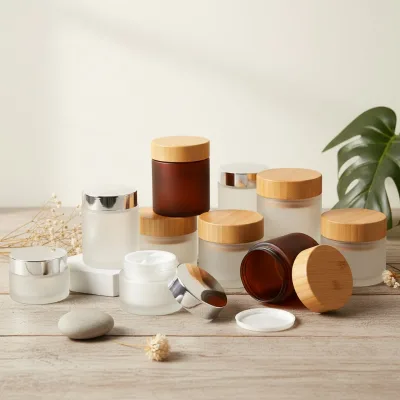
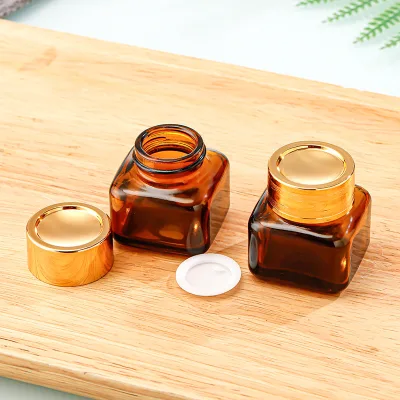
Glass skincare packaging Square glass amber cosmetic jar 120g empty glass cosmetic jar with lid
$0.04 - $0.20
MOQ: 5000 pieces
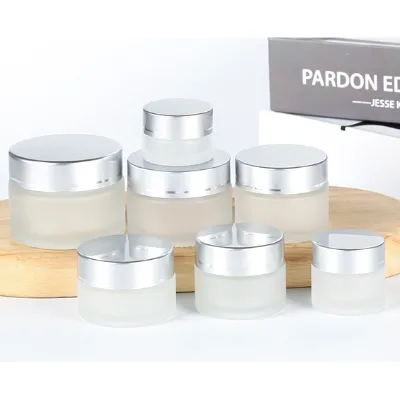
$0.06 - $0.21
MOQ: 5000 pieces
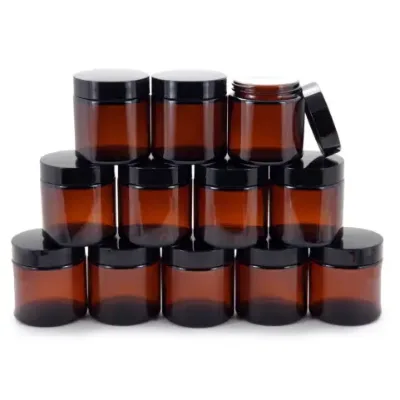
body butter skin care cream jars brown body butter jars body butter jars with spoons
$0.04 - $0.09
MOQ: 5000 pieces

Ningbo Beixuan International Trading Co., Ltd.
- Verified by TUVRHEINLAND
- Manufacturer/Factory
- China Zhejiang
- Lead time15 days
- Avg. response≤ 10h
Main productsPlastic Bottle, Plastic Cup, Plastic Honey Jar, Plastic Food Container, Glass Juice/ Beverage Bottle, Glass Jar, Glass Wine Bottle, Glass Essential Oil Bottles, Cosmetic & Perfume Glass Bottles, Paper Cup
Main marketsSouth America,Eastern Europe,Mid East,North America,Southeast Asia,Eastern Asia,Oceania,Western Europe,Africa


Luxurious Glass Cream Jar 50g 30g Empty Skin Care Glass Cream Jar Cosmetics Jar with Acrylic Lids
$0.36 - $0.52
MOQ: 3000 Pieces

Factory 300ml 350ml 450ml 500ml Glass Cream Jars with Lids for Cosmetic/Skincare
$0.35 - $0.45
MOQ: 5000 Pieces

Xuzhou Selead Packaging Material Co., Ltd.
- Verified by SGS
- Trading Company
- China Jiangsu
- Lead time15 days
- Avg. response≤ 6h
Main productsGlass Bottle, Plastic Bottle, Water Bottle, Glass Jar, Mason Jar, Wine Bottle, Cosmetic Bottle, Beverage Bottle, Glass, Candle Holder
Main marketsAfrica,Southeast Asia/ Mideast,Europe,North America


$0.10 - $0.80
MOQ: 5000 Pieces

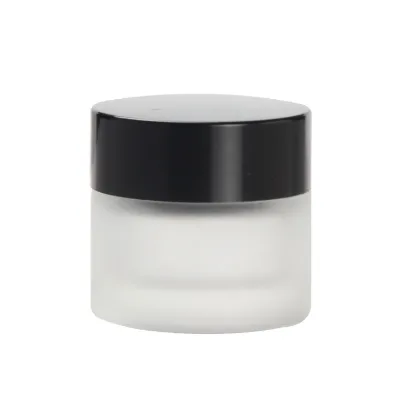
Frosted Glass Bottle Cosmetic Cream Container Jar for Cream Skin Care with Bamboo Lid
$0.15 - $0.50
MOQ: 5000 Pieces


- Verified by BV
- Trading Company,Manufacturer/Factory
- China Zhejiang
- Lead time45 days
- Avg. response≤ 5h
Main productsPet Bottles, PP_PE Bottles, Plastic Tubes, Sustainable Packaging, R&D Service, PCR Pacakgaing, Sugarcane Packaging, Mono Material Packaging, Abl Tubes, Aluminum Tubes
Main marketsSouth America,Eastern Europe,Mid East,North America,Southeast Asia,Eastern Asia,Oceania,Western Europe,Africa

Sustainable and Transparent 45ml Glass Circle Jar for Cosmetic Skincare
$0.01 - $1.00
MOQ: 10000 Pieces


Zibo Chuangxinzhe International Trade Co., Ltd
- Verified by TUVRHEINLAND
- Trading Company
- China Shandong
- Lead time15 days
- Avg. response≤ 3h
Main productsGlass Bottle, Glass Jar, Bottle, Glass Storage Jar, Glass Tube, Mason Jar, Food Jar, Dropper Bottle, Empty Candle Jars, Perfume Bottle
Main marketsSouth America


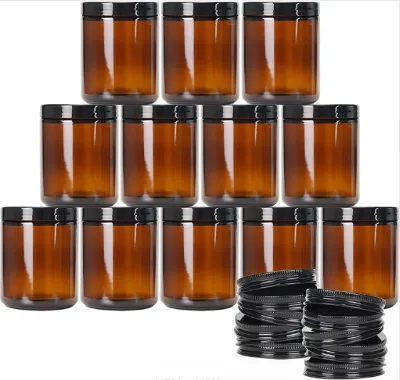
Hand Cream Bottle Skincare Packaging Amber Glass Cream Cosmetics Jars with Lids
$0.05 - $0.44
MOQ: 50000 Pieces

$0.05 - $0.44
MOQ: 50000 Pieces
Hebei Shengjin Package Co., Ltd.
- Verified by TUVRHEINLAND
- Manufacturer/Factory
- China Hebei
- Lead time0 days
- Avg. response≤ 2h
Main productsGlass Bottle, Cosmetic Bottle, Perfume Bottle, Dropper Bottle, Pill Bottle
Main marketsSouth America,Eastern Europe,Mid East,North America,Southeast Asia,Eastern Asia,Oceania,Western Europe,Africa

Xuzhou Sheenland Glass Products Co., Ltd.
- Verified by CTI
- Trading Company
- China Jiangsu
- Lead time45 days
- Avg. response≤ 5h
Main productsGlass Bottle, Glass Jar, Glass Container
Main marketsSouth America,Africa,Southeast Asia/ Mideast,East Asia(Japan/ South Korea),Domestic,Europe,Australia,North America

Jinhua Allies Import and Export Co., Ltd.
- Verified by SGS
- Manufacturer/Factory
- China Zhejiang
- Lead time23 days
- Avg. response≤ 5h
Main productsCanister, Container, Bottle, Cosmetic, Make up, Plastic Packaging, Eyeshadow, Palette, Box, Compact Case
Main marketsSouth America,Mid East


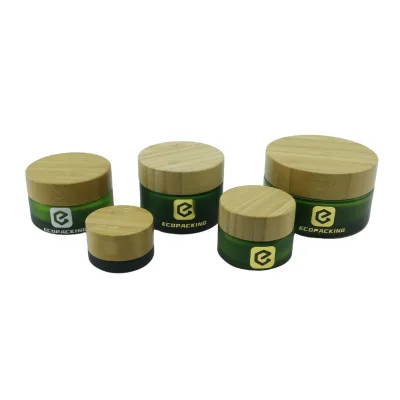
Cosmetics Green Packaging Skincare Cosmetics Jars and Bottles Without Lids
$0.15 - $0.35
MOQ: 10000 Pieces

Xiamen Ebei Import & Export Co., Ltd.
- Verified by CTI
- Trading Company,Manufacturer/Factory
- China Fujian
- Lead time45 days
- Avg. response≤ 2h
Main productsEco-Friendly Products, Bamboo Tableware, Bamboo Furniture, Bamboo Kitchenware, Bamboo Office Supply, Bamboo Fibre Products, Biodegradable Products, Bamboo Towel, Solar Energy Products, Bamboo Garden Products
Main marketsSouth America,Eastern Europe,Mid East,North America,Southeast Asia,Eastern Asia,Oceania,Western Europe,Africa

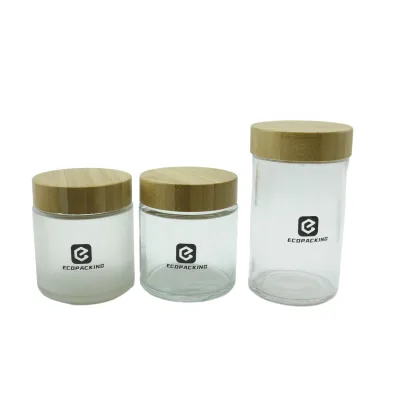
Skincare Body Cream Container Packaging Clear Transparent Glass Cosmetic Jar with Bamboo Lid
$0.85 - $1.05
MOQ: 500 Pieces


Yuyao Xianghao Mold Technology Company Limited
- Verified by BV
- Trading Company
- China Zhejiang
- Lead time30 days
- Avg. response≤ 10h
Main productsInjection Mold, Plastic Mold, Injection Molding, Rapid Prototyping, 3D Pritting, Manhole Cover Mold, Silicone Rubber Mould, Wire Rack, Car Air Compressor, LED Light
Main marketsNorth America
Shanghai Best China Industry Co., Ltd.
- Trading Company
- Lead time旺季: "1 - 5000":30,"> 5000":"To be negotiated", 淡季: "1 - 5000":30,"> 5000":"To be negotiated"
- Avg. response≤ 3h
Main productsGlass Bottle/Glass Jar, Plastic Bottle/Plastic Jar, Metal Bottle/Metal Jar, Bamboo Bottle/Bamboo Jar
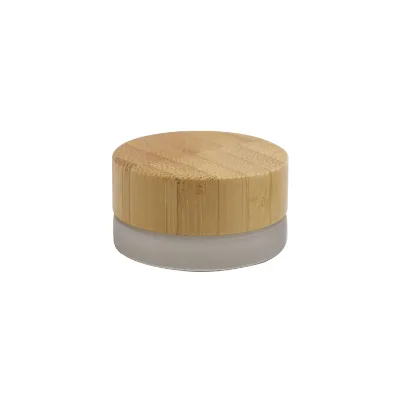
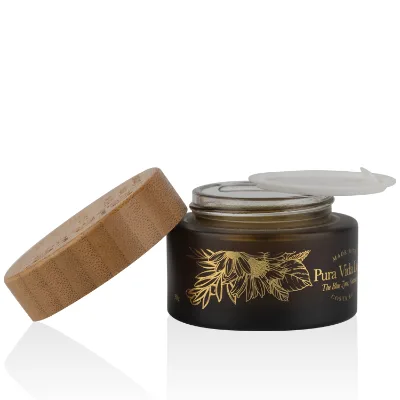
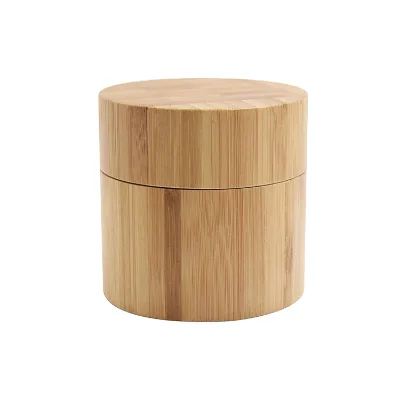
Bamboo Jars Eco Friendly Customize logo Silk Print Glass Jar with Bamboo Lid
$0.10 - $0.30
MOQ: 2 pieces

Shenzhen Bright Glassware Co., Ltd.
- Verified by SGS
- Trading Company
- China Guangdong
- Lead time30 days
- Avg. response≤ 7h
Main productsGlassware, Candle Jar, Glass Candle Holder, Reed Diffuser Bottle, Glass Perfume Bottle, Drinkware, Food Storage Jar, Candle Lid, Packaging Gift Box
Hebei Lingjin Import and Export Co., Ltd.
- Verified by CTI
- Trading Company
- China Hebei
- Lead time30 days
- Avg. response≤ 3h
Main productsBaseball Hats, Trucker Hats, Peforated Hats, Bucket Hats, Snapback Hats, Beanie Hats, 5 Panel Hats, Plastic Bottle, Plastic Tank, Essential Oil Bottle
Main marketsEurope,Australia,North America
Shijiazhuang Gaoou Trade Co., Ltd.
- Verified by SGS Group
- Trading Company
- Lead time10 days
- Avg. response≤ 2h
Main productsCosmetic Packaging, Customize Glass Bottles, Dropper Bottle, Customize Glass Jar
Main marketsEastern Europe(31%), Southeast Asia(16%), Africa(16%)
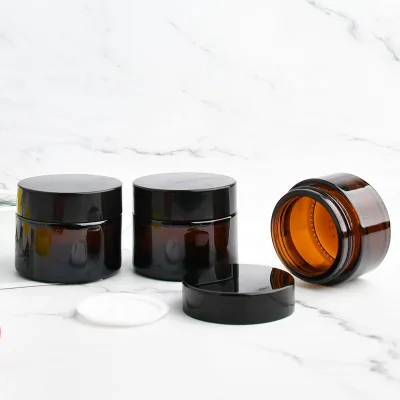
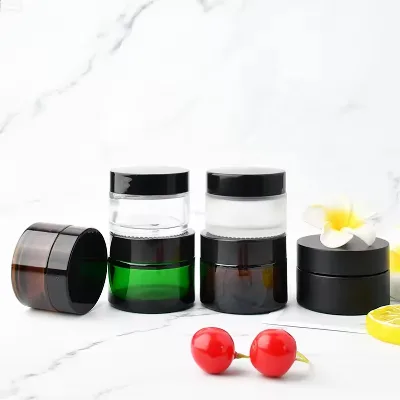
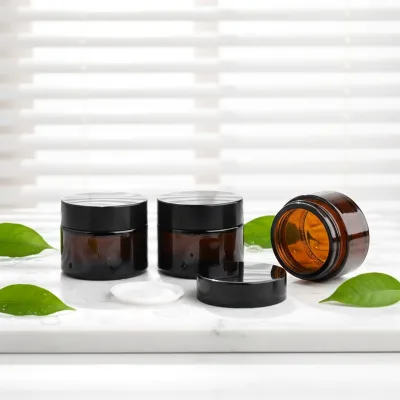
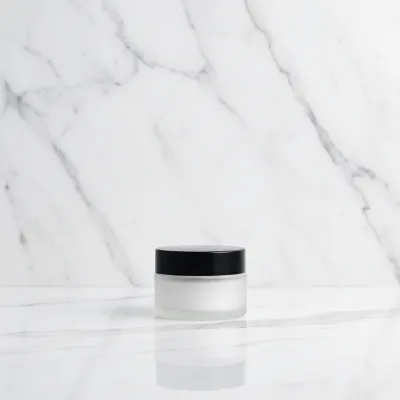
Hot Sale Amber Glass Jar Anti-light 50ml Cosmetic Jars Face Cream Packaging Bottle
$0.10 - $0.26
MOQ: 1000 Minimum
NOVA PACKAGING TECHNOLOGY(SHANDONG) Co., LTD
- Verified by CTI
- Manufacturer/Factory
- China Shandong
- Lead time45 days
- Avg. response≤ 5h
Main productsPerfume Bottle, Glass Bottle, Dropper Bottle, Essential Oil Bottle, Perfume Cap, Custom Perfume Bottle, Perfume Pump Sprayer, Car Perfume Bottle, Diffuser Bottle, Mini Perfume Bottle
Main marketsSouth America,Eastern Europe,Mid East,North America,Southeast Asia,Eastern Asia,Oceania,Western Europe,Africa

Minimalist Design Amber Glass Jar for 100ml Modern Skincare Brands Cosmetic Bottle
$0.13 - $0.19
MOQ: 2000 Pieces

50g Square Glass Cream Jar with Black Lid Premium Cosmetic Bottle for Skincare
$0.64 - $0.69
MOQ: 2000 Pieces
Anhui Creative Packaging Technology Co., Ltd.
- Verified by BV
- Trading Company,Manufacturer/Factory
- China Anhui
- Lead time23 days
- Avg. response≤ 5h
Main productsGlass Jars, Glass Bottles, Glass Liquor/Beer/Oil Bottles, Glass Cosmetic/Perfume Bottles, Glass Cup, Candle Jar, Preform, Lids/Cap, Aluminum Cans, Wine Glass
Main marketsSouth America,Eastern Europe,Mid East,North America,Southeast Asia,Eastern Asia,Oceania,Western Europe,Africa

Eco Friendly Frosted Glass Bamboo Lid Jar for Cosmetic Cream Jars Container
$0.15 - $0.55
MOQ: 1000 Pieces


Qingdao E-Pack Material Co., Ltd
- Verified by BV
- Trading Company,Manufacturer/Factory
- China Shandong
- Lead time23 days
- Avg. response≤ 4h
Main productsGlass Bottle, Glass Jar, Plastic Cap, Pipette Cap, Tubular Glass Vial, Ampoule, Glass Vial, Plastic Bottle, Empty Wine Bottle, Rubber Stopper
Main marketsSouth America,Eastern Europe,Mid East,North America,Southeast Asia,Eastern Asia,Oceania,Western Europe,Africa

$0.23 - $0.54
MOQ: 5000 Pieces

50g 50ml Empty Amber Cosmetic Jar Skin Care Glass Round Candle Jar with Black Silver Glod Lid
$0.09 - $0.17
MOQ: 5000 Pieces

100g 100ml Empty Amber Cosmetic Jar Skin Care Glass Round Candle Jar with Black Silver Glod Lid
$0.09 - $0.11
MOQ: 5000 Pieces

50g 50ml Empty Amber Cosmetic Jar Skin Care Glass Round Jar with Metal Silver Lid
$0.08 - $0.09
MOQ: 5000 Pieces

20g 20ml Empty Amber Cosmetic Jar Skin Care Glass Round Jar with Metal Silver Lid
$0.07 - $0.08
MOQ: 5000 Pieces
Ningbo Somewang Packaging Co., Ltd.
- Verified by SGS
- Combined
- China Zhejiang
- Lead time23 days
- Avg. response≤ 4h
Main productsCosmetic Packaging, Cosmetic Bottle, Plastic Bottle, Cosmetic Tube, Cream Jar, Lotion Pump, Mist Sprayer, Trigger Sprayer, Plastic Cap, Glass Bottle
Main marketsSoutheast Asia/ Mideast,Europe,North America

50ml Wholesale Glass Jar Cream Jar for Skin Care High Quality Customized Logo
$0.20 - $0.22
MOQ: 10000 Pieces

Hotselling Customized Logo Glass Food Storage Jar with Lid 160ml 180ml 230ml Glass Storage Container
$0.22 - $0.23
MOQ: 10000 Pieces
- Verified by SGS Group
- Trading Company
- Hebei, China
- Lead time0 days
- Avg. response≤ 4h
Main productsGlass packaging, Plastic package, Metal packaging, Environmentally friendly packaging
Main marketsNorth America(50%), Eastern Europe(20%), Western Europe(20%)
- Trading Company
- Zhejiang, China
- Lead time30 days
- Avg. response≤ 6h
Main productsCosmetic package,Plastic bottle,Glass bottle,Tubular bottle,Cosmetic jars
Main marketsEastern Europe(20.00%), North America(15.00%), South America(15.00%), Southern Europe(10.00%), Northern Europe(8.00%), South Asia(8.00%), Oceania(5.00%), Western Europe(5.00%), Eastern Asia(3.00%), Southeast Asia(3.00%), Central America(3.00%), Mid East(3.00%), Africa(2.00%)

Qingdao Art Fortune Imp/Exp Co., Ltd.
- Verified by TUVRHEINLAND
- Trading Company
- China Shandong
- Lead time30 days
- Avg. response≤ 5h
Main productsScented Candle, Reed Diffuser, Glass Jar Candle, Flameless LED Wax Candle, Candle and Home Fragrance, Tealight Candle, Candle Holder, Candle Gift Set, Handmade Pillar Candle, Tin Candle
Main marketsAfrica
Anhui Zhengjie Plastic Co., Ltd.
- Verified by SGS
- Combined
- China Anhui
- Lead time30 days
- Avg. response≤ 3h
Main marketsDomestic
Ningbo Shengxin Import and Export Co., Ltd.
- Verified by CTI
- Trading Company
- China Zhejiang
- Lead time23 days
- Avg. response≤ 2h
Main marketsSoutheast Asia/ Mideast,Europe,North America

Eco-Friendly Lotion Bottle and Cosmetic Bottle for Customized Skin Care
$0.20 - $0.30
MOQ: 10000 Pieces

Customizable Lotion Bottle and Cosmetic Bottle for Eco-Conscious Skin Care
$0.20 - $0.30
MOQ: 10000 Pieces

High Quality Eco-Friendly Customized Lotion Bottle for Eco-Conscious Skin Care Users
$0.70 - $0.80
MOQ: 10000 Pieces

CANGZHOU BEWIN PIPELINE CO., LTD.
- Manufacturer/Factory,Group Corporation
- China Hebei
- Lead time45 days
- Avg. response≤ 8h
Main productsStainless Steel Fitting, Stainless Steel Ball Valve, Seamless Pipe, Post Anchor, Wire Mesh, Barbed Wire Machine, Spiral Pipe, Grating, Ground Screw, Flange Ball Valve
Main marketsSouth America,Eastern Europe,Mid East,North America,Southeast Asia,Eastern Asia,Oceania,Western Europe,Africa




Comprehensive Sourcing Guide
Eco-Friendly Skin Care Glass Jar Supplier Concentration and Factory Types
China is the dominant sourcing base for eco friendly skin care glass jars, and the supplier results for this category confirm activity in Shanghai and Zhejiang province. Shanghai listings in this category come from manufacturer/factory type companies whose main products include cosmetic packaging, glass dropper bottles, cosmetic jars, essential oil bottles, and airless bottles and jars — a product mix that signals genuine glass packaging production rather than incidental resale. Zhejiang entries, by contrast, include trading companies whose main product range is broader, spanning airless bottles, glass bottles, combs, food packaging, sprayers, and lotion pump machinery. That breadth is a typical trading-company signature and tells you the seller is aggregating rather than molding glass itself.
When the supplier results on your page do not display location or company type, you should still infer cluster membership indirectly. Check whether the main products are dominated by glass packaging SKUs, whether product attributes list a prod_origin such as Ningbo or a Chinese province, and whether the catalog spans jars, droppers, and pumps that normally share one industrial supply chain. Ask each supplier directly whether it is a manufacturer or a trading company, and request the factory address for verification. Both structures can work for buyers: factories usually control decoration and mold changes, while trading companies consolidate jars with pumps, lids, and cartons from separate workshops, which matters if you want one consolidated shipment.
How to Verify Eco-Friendly Skin Care Glass Jar Suppliers
Start with the verification signals actually displayed on the supplier cards. In this category, results show third-party verification badges such as SGS and CTI, which indicate that an inspection body has audited the company's registration and site claims. One Shanghai manufacturer in the results displays an ISO 9001 system certification, relevant because glass forming and silk screen decoration are process-driven operations where a documented quality management system reduces variance. Treat these badges as a screening filter, not a guarantee: they confirm the entity exists and was audited at a point in time, not that every jar in a production run meets your specification.
Then verify the claims that badges do not cover. Product listings in the results state customization availability, sample availability, and 24-hour online service — all testable commitments. Order a physical sample before any volume commitment, and check wall thickness consistency, frosting uniformity, thread fit with the cap, and whether amber or green glass color matches your reference across a small batch. Ask for the factory's business license, confirm the legal name matches the verified badge, and request recent audit reports or test documentation for lead and heavy-metal content in glass and decorations, since eco friendly claims should be backed by evidence you can file. Response behavior is also a verification signal: the results show listed response times of roughly two to three hours, so note whether your actual inquiry replies match that speed before you invest in sampling.
What to Compare Across Eco-Friendly Skin Care Glass Jar Suppliers
Build a comparison sheet from the dimensions displayed on the supplier results: company type, location, verification badge, system certification, response time, lead time, main products, and per-product MOQ and price. In this category the spread is meaningful. One Shanghai manufacturer lists a 30-day lead time with a response time of about 3.29 hours, while a Zhejiang trading company lists about 2.40 hours response and a 25-day delivery time on its glass cream jar listing. Do not assume every supplier displays all of these attributes; where a card omits lead time or establishment year, contact the supplier and ask, then record the answer alongside the displayed data.
Compare product-level terms just as carefully. The results show frosted 30ml square jars at a flat $0.35 per unit with a 10,000-piece MOQ, amber jars at $0.40, green 150ml jars ranging from roughly $0.32 to $2.16 with a 5,000-piece MOQ, double-chamber jars at $0.32–$0.36, and lidded 80–100ml jars at $0.18–$0.19; a Zhejiang cream jar starts at $0.25 with a 10,000-piece MOQ and a 20,000-piece color MOQ. That range shows why you must normalize quotations to the same capacity, decoration, and closure before comparing. Also weigh main-product focus — a specialist in glass cosmetic packaging versus a mixed catalog — and R&D capacity claims such as OEM and ODM support when customization depth matters to your brand.
Common Eco-Friendly Skin Care Glass Jar Sourcing Risks
The most frequent risk in this category is MOQ misalignment. Multiple listings in the results carry a 10,000-piece MOQ, and one Zhejiang supplier applies a 20,000-piece MOQ for custom colors. Buyers testing a new skincare line often discover too late that the jar body MOQ is affordable but the decorated color or lid MOQ is not. A second risk is conflating "eco friendly" marketing language with verified material attributes. Product cards may advertise eco-friendly frosted, amber, or green glass, but the attributes shown — such as a certification field reading simply "ISO" — do not prove recyclability content, food-contact safety, or heavy-metal compliance. Demand documentation before repeating any green claim on your own packaging.
Breakage and decoration defects are the operational risks. Glass jars ship by sea or air according to the packing methods listed in the results, and inadequate carton or pallet packing (one listing specifies shrink bag, carton, and pallet) can turn a good price into a loss. Frosting and silk screen printing also vary between runs, so retain approved samples and reference them in inspection. Finally, beware of trading companies presenting themselves as factories, and of lead times quoted without decoration time included. Confirm whether the 25- or 30-day figures cover mold preparation, decoration, and quality inspection, and specify what happens if a pre-shipment inspection fails.
Eco-Friendly Skin Care Glass Jar Regional Sourcing and Logistics
The two locations displayed in this category's results — Shanghai and Zhejiang — both sit in China's eastern coastal export corridor, which shapes logistics practicality. Product listings state packing by sea or air, with one specifying carton packing and another shrink bag, carton, and pallet. Given typical order sizes of 10,000 jars or more, sea freight in palletized cartons is the default for volume production, while air shipment is realistic only for urgent samples or small top-up quantities. Confirm whether the quoted price is FOB, and if so, which port the supplier actually ships from, because Shanghai and Ningbo (the stated prod_origin on one Zhejiang jar) are separate ports with different sailing schedules.
Regional proximity within the cluster also helps consolidation. A Shanghai glass manufacturer and a Zhejiang packaging trader can often ship through the same corridor, letting one freight forwarder consolidate jars, droppers, and pumps. When your results page shows no location at all, ask suppliers for the loading port and factory address early, then map transit time to your market. For glass specifically, request details on inner packaging — dividers, molded pulp, or bubble wraps — and pallet stacking limits, since these determine damage rates more than the ocean leg itself. Confirm Incoterms, whether export documentation is handled by the supplier, and who bears the risk during loading, and always insure glass cargo rather than relying on carrier liability.
Eco-Friendly Skin Care Glass Jar Commercial Terms and Order Planning
Plan orders around the commercial terms visible in the results rather than optimistic assumptions. With MOQs of 10,000 pieces standard and one listing at 5,000, your first order will typically be a multi-thousand-unit commitment, so budget it accordingly: at the listed price points of roughly $0.18 to $0.40 per jar for most formats, and up to $1.10 for a 100ml handcrafted-style jar, unit cost is modest but total exposure is not. Confirm whether the displayed price includes decoration, closure, and packing, since one 30ml frosted jar lists at a single $0.35 price while the 150ml green jar spans $0.32 to $2.16 depending on specification.
Payment and timeline planning should reflect the terms actually offered. The Zhejiang listing states samples are available and delivery takes 25 days; the Shanghai manufacturer lists 30 days. Sequence your plan as sample approval, then deposit, then production, then inspection, then balance payment, and ask whether any escrow-style protection is offered if the platform does not display it. Because glass decoration has its own color MOQ (one supplier requires 20,000 pieces per color), lock your color decisions before deposit. Build in buffer time for a pre-shipment inspection against your golden sample, and plan reorders earlier than for plastic packaging, since 25–30 day production windows plus ocean transit mean glass replenishment cycles run months, not weeks.
Word count check: approximately 1,390 words across six sections, each within the 225–235-word allowance.
FAQs
What MOQs apply to eco friendly skin care glass jars?
Typical MOQs range from 5,000 to 10,000 units per item. Some jar listings specify 10,000 pieces as the minimum, while certain green glass jars list 5,000 pieces. Larger capacities or custom colors can carry different minimums, and color options may require a higher MOQ than standard stock. Always confirm the exact MOQ for your chosen size, finish, and decoration before requesting a quotation.
Which jar capacities are commonly available for skincare packaging?
Common capacities include 30ml, 40ml, 60ml, 80ml, 100ml, and 150ml glass jars, with some listings referencing 30g and 50g standards. Square and round shapes are both offered, usually with screw-cap closures. Capacity often affects price and MOQ, so confirm whether your target size is a stocked standard or a customized option requiring additional tooling and production time.
How long is the typical lead time for glass jar orders?
Lead times of around 25 to 30 days are commonly quoted for glass skincare jars. One trading-company listing states 25 days for delivery, while a manufacturer profile lists 30 days. Actual timing depends on order quantity, decoration such as silk screen printing, and sea or air shipping. Confirm production and transit timelines separately, since shipping method can add considerable time.
Where are these glass jar suppliers located?
The suppliers shown are based in China, with locations in Shanghai and Zhejiang, including Ningbo. Both regions are established hubs for cosmetic packaging production, offering glass jar manufacturing and trading companies. Location matters for logistics planning, because port access affects sea-freight consolidation and transit time. Verify the exact factory address and export experience when evaluating any supplier on this page.
What customization and decoration options do these jars support?
Customization is listed as available across the jar products, with silk screen printing as the standard decoration method. Options include frosted, amber, and green glass finishes, screw-cap closures, and any-color requests, though custom colors may carry a higher MOQ. OEM and ODM services are offered, including own-brand options. Confirm sampling availability and artwork requirements before committing to a decorated order.
What prices should buyers expect for eco friendly glass jars?
Listed unit prices range roughly from 0.18 to 2.16 USD depending on the jar. Smaller 30ml frosted jars list around 0.35, amber jars around 0.40, and a 150ml green jar ranges from about 0.32 to 2.16 by specification. Prices vary with capacity, finish, closure, and order volume, so request itemized quotes that state tooling, decoration, and packing costs separately.
Do these suppliers hold certifications or third-party verification?
Yes, one manufacturer holds ISO 9001 system certification and is verified by SGS, while a Zhejiang trading company is verified by CTI. Verification and certification indicate a baseline of quality management, but they do not guarantee product compliance for your market. Ask for current certificates, recent audit reports, and material safety documentation relevant to skincare packaging before placing a first order.