Engraved Glass Serving Bowl Suppliers and Manufacturers
Compare 15 verified suppliers offering engraved glass serving bowls with certifications like LFGB and ISO 9001. Review lead times, MOQs, and response times to select a factory in Guangdong, China, then request samples for quality verification; review the available evidence before requesting comparable quotations from suitable candidates.
Suppliers List

Guangzhou Garbo International Trading Co., Ltd.
- Verified by TUVRHEINLAND
- Trading Company,Manufacturer/Factory
- China Guangdong
- Lead time45 days
- Avg. response≤ 6h
Main productsGlassware, Glass Cup, Glass Mug, Glass Bowl, Glass Candy Jar, Glass Pitcher, Glass Ice Cream Cup and Ice Bucket, Opal Glassware, Stainless Steel Cutlery, Ceramic Dinnerware
Main marketsSouth America,Eastern Europe,Mid East,North America,Southeast Asia,Eastern Asia,Oceania,Western Europe,Africa


$0.14 - $1.00
MOQ: 5000 Pieces

$0.27 - $0.75
MOQ: 3000 Pieces

$2.68 - $3.33
MOQ: 5000 Pieces


Wuhan Xinhuahang Household Goods Co., Ltd.
- Verified by BV
- Combined
- China Hubei
- Lead time15 days
- Avg. response≤ 4h
Main productsWine Glasses, Beer Glass, Drinking Glass, Decanter, Shot Glass, Coffee Glass, Cocktail Glass, Champagne Glass, Wine Accessories
Main marketsEurope,Australia,North America

$1.80 - $2.40
MOQ: 100 Pieces


$0.70 - $1.20
MOQ: 100 Pieces

- Verified by SGS
- Trading Company
- China Yunnan
- Lead time15 days
- Avg. response≤ 4h
Main marketsSoutheast Asia/ Mideast

- Verified by TUVRHEINLAND
- Trading Company
- China Hunan
- Lead time45 days
- Avg. response≤ 2h
Main productsCeramic Mug, Vacuum Flask, Dinner Set, Cup, Mug, Thermal Bottle, Ceramic Dinner Set, Glass Jar, Glass Cup, Wine Cup
Main marketsSoutheast Asia/ Mideast


Storage Glass Bowl for Fruit Salad Serving Bowl High Borosilicate Plate
$0.38 - $0.90
MOQ: 2000 Pieces


Versatile High Transparency Glass Bowls Set for All Occasions Glass Plate
$0.25 - $0.49
MOQ: 2000 Pieces


Zibo Timestone International Co., Ltd.
- Manufacturer/Factory
- China Shandong
- Lead time45 days
- Avg. response≤ 13h
Main productsCeramic Dinnerware, Ceramic Mugs, Stainless Steel Bottles Mugs and Tumblers, Glass Bottles Mugs and Tumblers, Dinnerware, Tableware, Glassware, Kitchenware, Household Items, Ceramic Granding Balls and Filters
Main marketsSouth America,Eastern Europe,Mid East,North America,Southeast Asia,Eastern Asia,Oceania,Western Europe,Africa

Xuzhou New Path Glass Products Co., Ltd.
- Verified by SGS
- Trading Company
- China Jiangsu
- Lead time15 days
- Avg. response≤ 11h
Main marketsSoutheast Asia/ Mideast

Rollin Porcelain Industrial Co., Ltd.
- Verified by BV
- Manufacturer/Factory
- China Guangdong
- Lead time45 days
- Avg. response≤ 6h
Main productsPorcelain Dinnerware, Tableware, Dinner Set, Dinner Plate, Hotel and Restaurant Tableware, Bone China, Cutlery, Glassware, Ceramic Plate, Porcelain
Main marketsEastern Europe,Mid East,North America,Southeast Asia,Eastern Asia,Oceania,Western Europe

Restaurant Unique Design Porcelain Bowls Customized Color Salad Bowls Serving Bowls
$2.30 - $6.28
MOQ: 200 Pieces


Xuzhou Xulang Glass Manufacturing Company., Ltd
- Verified by BV
- Trading Company,Manufacturer/Factory
- China Jiangsu
- Lead time30 days
- Avg. response≤ 3h
Main productsGlass Bottle, Glass Jar, Spice Grinder, Cup, Milk Bottle
Main marketsSouth America,Eastern Europe,Mid East,North America,Southeast Asia,Eastern Asia,Oceania,Western Europe,Africa

Hot Selling High Temperature Resistance Glass Storage Bowls Fruit Vegetable Salad Glass Bowls
$1.60 - $2.70
MOQ: 2000 Pieces

Household Customized Creative Kitchen Irregular Shape Serving Bowls Salad Bowl Glass with Gold Rim
$1.80 - $3.00
MOQ: 2000 Pieces
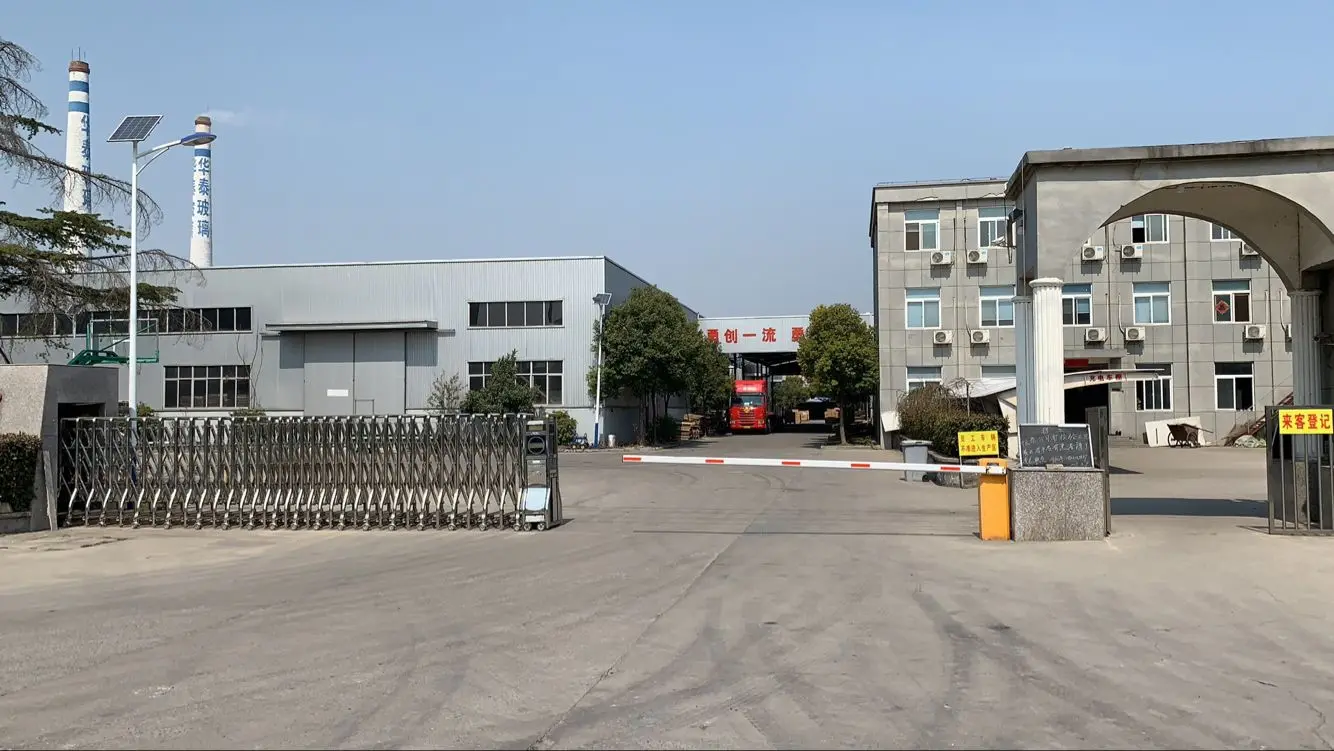
Bengbu Cattelan Glassware Co., Ltd.
- Manufacturer, Trading Company
- Anhui, China
- Lead time35 days
- Avg. response≤ 5h
Main productsWater Glass,Glass Bowl,Beer Glass,Shot Glass,Candle Glass
Main marketsNorth America(32.00%), South America(10.00%), Domestic Market(10.00%), Western Europe(9.00%), Eastern Europe(8.00%), Southern Europe(8.00%), Eastern Asia(6.00%), Southeast Asia(6.00%), Northern Europe(5.00%), Mid East(4.00%), South Asia(2.00%)

Qingdao Simpassic Import and Export Co., Ltd.
- Trading Company,Manufacturer/Factory
- China Shandong
- Lead time0 days
- Avg. response≤ 23h
Main productsGlass Cup, Glass Jar, Borosilicate Glass Food Containers, Glass Mug, Tableare, Glass Tumbler, Glassware, Glass Jug, Glass
Main marketsSouth America,Eastern Europe,Mid East,North America,Southeast Asia,Eastern Asia,Oceania,Western Europe,Africa

Hemera (Tianjin) Technology Development Limited
- Verified by TUVRHEINLAND
- Manufacturer/Factory
- China Tianjin
- Lead time38 days
- Avg. response≤ 4h
Main productsGlass Cup, Glass Teapot, Glass Jar&Container, Glass Pitcher&Carafe, Water Jug, Coffee Set, Wine Set, Glass Cooking Ware
Main marketsSouth America,Eastern Europe,Mid East,North America,Southeast Asia,Eastern Asia,Oceania,Western Europe,Africa


Manufacturer Modern Style Luxury Colorful Irregular Edge Glass Salad Bowl
$2.65 - $3.25
MOQ: 300 Pieces

Manufacturer Modern Style Luxury Colorful Crystal Glass Irregular Edge Salad Bowl
$2.65 - $3.25
MOQ: 300 Pieces

Zibo Melory Import & Export Trade Co., Ltd.
- Trading Company,Manufacturer/Factory
- China Shandong
- Lead time45 days
- Avg. response≤ 19h
Main productsGlass Candle Holder, Glass Jar, Glass Votive, Glass Diffuser, Glass Bottle, Glass Vase, Matches, Ceramic Candle Holder, Ceramic Holder for Incense, Glass Candle Jar
Main marketsSouth America,Eastern Europe,North America,Western Europe

ZHOUKOU BEST KITCHENWARE CO., LTD.
- Verified by TUVRHEINLAND
- Trading Company
- China Henan
- Lead time15 days
- Avg. response≤ 9h
Main productsEnamelware, Enamel Mug, Enamel Casserole, Enamel Storage Bowl, Enamel Kettle, Enamel Basin, Round Tray, Cup, Enamel Pot, Enamel Plate
Main marketsAfrica,Europe
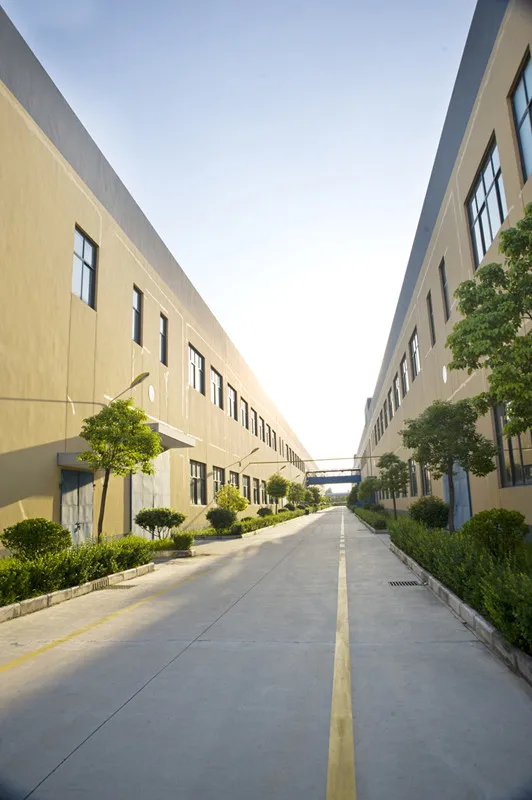
Jiangsu Baoheng New Material Technology Co., Ltd.
- Manufacturer, Trading Company
- Jiangsu, China
- Lead time35 days
- Avg. response≤ 18h
Main productsOpal Glassware,Dinnerware,Glassware,Tableware,Porcelain
Main marketsMid East(50.00%), Domestic Market(15.00%), North America(10.00%), Africa(10.00%), Northern Europe(10.00%), Southeast Asia(5.00%)

Linyi Longying International Trade Co., Ltd.
- Verified by TUVRHEINLAND
- Trading Company
- China Shandong
- Lead time15 days
- Avg. response≤ 4h
Main productsTableware, Dinnerware, Porcelainware, Dinner Set, Hotel Porcelain, Ceramic Dinner Set, Ceramic Plate and Bowl, Tableware Plate and Bowl, Stoneware, Glassware
Main marketsOthers(foreignTradeCapacity.exportBusinessCapacityMarketOther),Europe


7"Food Bowl with Hands and Glass Lid Pad Printing Stoneware Porcelainware Tableware
$1.60 - $1.82
MOQ: 1000 Pieces




Comprehensive Sourcing Guide
Engraved Glass Serving Bowl Supplier Concentration and Factory Types
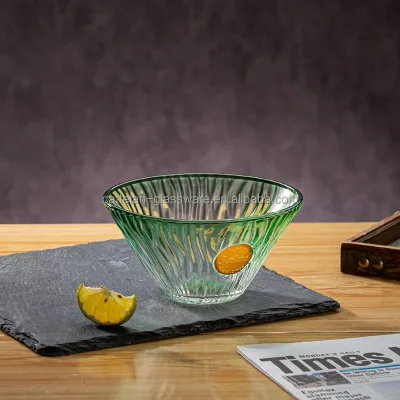
When sourcing an Engraved Glass Serving Bowl, understanding where production is concentrated helps you shortlist realistic partners. The supplier results in this category point to China as the primary manufacturing base, with Guangdong appearing as a documented company location, and individual product listings showing origins in Guangdong and Chongqing. Guangdong is a well-known glassware and dinnerware exporting province with port access, while the appearance of a Chongqing origin on a specific SKU suggests that some factories operate inland and ship goods to coastal ports. Treat these as data points rather than assumptions: always confirm the actual production address, not just the registered office, because a trading company may list a headquarters far from the factory that will make your bowls.
Supplier types in this category split between manufacturers and trading companies, and the results show companies operating as both. A manufacturer-direct source may offer better unit economics on high-volume engraved orders and more control over molding and engraving depth, while a trading company can consolidate glass bowls with cutlery, ceramic dinnerware, or opal glassware in one container. Note that some suppliers carry their own brand alongside OEM and ODM services, which signals established production lines. Before committing, ask each candidate whether engraving is done in-house or subcontracted, since that affects lead time, quality consistency, and your ability to protect custom designs.
How to Verify Engraved Glass Serving Bowl Suppliers
Verification starts with third-party credentials displayed on the supplier profile. In this category, some suppliers carry system certifications such as BSCI and ISO 9001, and hold verification from TÜV Rheinland, an independent inspection body. These are meaningful signals but they are not uniform: not every supplier on the page will display the same badges, so build a checklist of what each candidate shows and what remains unverified. Ask for the certificate numbers and scope documents directly, because a BSCI audit covers social compliance while ISO 9001 covers quality management—neither certifies that a specific engraved bowl design meets food-contact rules in your market.
The second verification layer is product-level evidence. Listings in this category reference certifications such as LFGB, and some also cite FDA, REACH, or SGS on specific items, which relate to food-contact safety for glass tableware. Confirm that any such claim applies to the exact bowl model you intend to order, and request recent test reports rather than screenshots. Practical verification steps include requesting samples of the engraved design, checking whether the supplier responds consistently—response times around five hours appear on some profiles—and asking for a video call or factory audit to confirm machinery. Finally, verify the legal entity name on the invoice matches the name on the platform profile, so you know who is contractually responsible.
What to Compare Across Engraved Glass Serving Bowl Suppliers
Build a comparison sheet using the dimensions actually displayed on supplier profiles, without assuming every supplier publishes every attribute. Core columns should include company type (manufacturer, trading company, or hybrid), location, main products, system certifications, third-party verification status, average response time, and stated lead time. In the current results, one supplier shows an average response time of roughly five hours and a general lead time of about 45 days—useful benchmarks, but only comparable if other suppliers report the same metrics in the same way. Establish whether each lead-time figure covers production only or includes engraving, sampling, and booking.
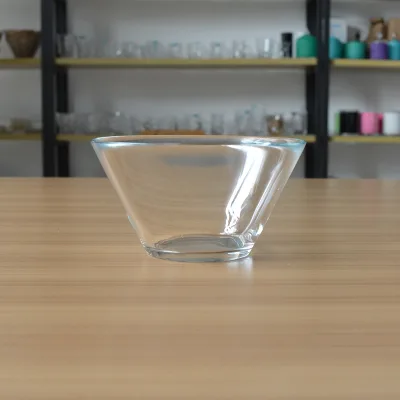
Then compare product-level economics. Engraved glass serving bowls in these results span a wide range: one item lists an MOQ of 5,000 pieces with prices from about $0.14 to $1.00, another lists 20,000 pieces at $0.43–$0.55, and a third lists 30,000 pieces at $0.50–$0.53, while one product line cites an MOQ of 50,000 pieces. That spread means unit price alone is misleading—calculate landed cost at your actual order quantity. Also compare customization scope (OEM, ODM, or logo-only), packing formats such as color boxes per carton, and whether the supplier's main product range covers glassware broadly or specializes. Suppliers offering bowls alongside pitchers, mugs, and ice buckets may handle mixed-container orders more flexibly.
Common Engraved Glass Serving Bowl Sourcing Risks
Engraving is the highest-risk process in this category. Decorative engraving on a glass serving bowl can vary in depth, alignment, and clarity between production runs, especially if the work is subcontracted between the molding plant and a decoration workshop. A sample may be hand-finished while bulk orders run on machine-made lines—the results themselves show some items described as machine made and others as involving inscription craft—so insist that the golden sample is produced on the same line as the bulk order. Photograph and retain signed reference samples before mass production begins.
Volume and compliance risks follow closely. Several engraved bowl listings show MOQs of 20,000, 30,000, or 50,000 pieces, which is a serious capital commitment for a first order with an unproven supplier; a lower 5,000-piece MOQ on a 5-inch bowl offers a safer trial but likely on a different production setup. Confirm whether the MOQ applies per design, per color, or across a mixed bowl assortment. On compliance, food-contact claims such as LFGB, FDA, or REACH must match your destination market—a certification valid for one region may not satisfy another—so verify scope per SKU. Additional risks include transit breakage of glass (demand drop-test packing data), lead-time slippage toward the upper end of a 7–45 day range during peak season, and tooling charges for custom engraved patterns that are not always quoted upfront.
Engraved Glass Serving Bowl Regional Sourcing and Logistics
Regional structure matters for both cost and schedule. Documented data in this category places supplier companies in Guangdong, China, with a specific product origin also listed in Guangdong, while another SKU originates in Chongqing. Guangdong's advantage is logistical: it sits near major export ports, and one listing explicitly names Guangzhou as the loading port, which simplifies container consolidation and reduces inland freight. A Chongqing origin does not disqualify a supplier, but you should ask who bears inland trucking cost to the coast and how many days that leg adds before vessel loading.
Plan logistics around the physical nature of engraved glass bowls. They are heavy, fragile, and bulky relative to value, so freight can represent a large share of landed cost; compare full-container versus less-than-container load pricing once your MOQ is defined. Packing configuration matters as much as the glass itself—results show formats such as single-piece color boxes at 12 cartons per case, 48-piece cartons, and customer-specified packing—so request the carton dimensions and gross weight per carton to compute container utilization accurately. Ask each supplier which port they actually ship from, since the loading port named on a listing may differ from the nearest port to the factory. Finally, confirm whether the quoted price is ex-works, FOB, or delivered, because inland-origin suppliers may quote differently than coastal ones.
Engraved Glass Serving Bowl Commercial Terms and Order Planning
Commercial planning should reconcile MOQ, lead time, and payment exposure. The product data here shows lead-time expectations ranging from a 7–45 day window on one item to about 40 days on another and 45 days stated at the supplier level—so plan orders backward from your retail calendar using the longest credible figure, adding sample approval, engraving plate or mold preparation, and shipping time. Where a supplier supports OEM, ODM, and its own brand, clarify which terms apply to your design and who owns the engraving artwork and any mold after the first order.
Structure payments and quality control to limit risk on high-MOQ orders. For a first engraved bowl order, typical practice is a deposit with balance against shipping documents, but you should negotiate terms directly and consider inspection before final payment. Put these points in writing: the exact bowl model number (results show internal codes for individual items), capacity and dimensions, engraving specification, packing format, certification documents due before shipment, and the remedy for breakage or engraving defects found on arrival. Ask whether samples are free or charged, and whether sample cost is credited against the bulk order. Finally, request a production schedule with milestone dates—molding, engraving, quality check, packing—so delays surface early rather than at the vessel booking stage, and reconfirm lead time in writing during peak seasons.
FAQs
What is the typical lead time for engraved glass serving bowls?
Lead times for engraved glass serving bowls typically range from 7 to 45 days depending on the specific product and order volume. Some items list a standard 40-day lead time, while others offer a broader window. Buyers should confirm the exact timeline with the supplier based on their specific customization requirements and current production schedule.
What are the common MOQs for ordering engraved glass serving bowls?
Minimum order quantities for engraved glass serving bowls vary significantly by product type and supplier. Some listings indicate an MOQ of 3,000 pieces, while others require 20,000 or even 50,000 pieces. Buyers should verify the specific MOQ for their desired design and customization level, as higher volumes often result in lower per-unit costs.
Which safety certifications are available for engraved glass serving bowls?
Engraved glass serving bowls often carry certifications such as LFGB, FDA, REACH, and SGS. These standards ensure the glassware is safe for food contact and meets international regulatory requirements. Buyers should request current certification documents to verify compliance with their specific market regulations and quality standards before placing a bulk order.
Can engraved glass serving bowls be customized with logos or designs?
Yes, most suppliers offer customization options for engraved glass serving bowls, including custom logos and specific engraving patterns. Many products are listed as available for customization, allowing buyers to tailor the design to their brand identity. It is essential to provide clear design files and confirm the minimum order quantity for custom work.
What is the average response time from suppliers for these products?
Suppliers for engraved glass serving bowls typically respond within 5.15 hours on average. This relatively quick response time allows buyers to efficiently discuss specifications, request samples, and negotiate terms. Prompt communication is crucial for aligning on design details and ensuring the production schedule meets your project deadlines.
What are the typical price ranges for engraved glass serving bowls?
Prices for engraved glass serving bowls generally range from $0.14 to $1.00 per unit, depending on size, complexity, and order volume. Smaller or simpler designs tend to be at the lower end, while larger or more intricate engravings cost more. Buyers should request a detailed quote based on their specific design and quantity to get an accurate cost estimate.
What types of glass are used for engraved serving bowls?
Engraved serving bowls are commonly made from clear glass, embossed glass, or tempered glass. Clear glass is popular for its versatility, while embossed glass offers a textured look. Tempered glass is often chosen for its durability and safety. The choice of glass type can affect the final appearance and the engraving process, so buyers should specify their preference.