Fine Jewelry Set Suppliers and Manufacturers
Compare 19 suppliers for Fine Jewelry Set sourcing by reviewing material specifications, MOQ, and delivery times. Verify SGS certifications and OEM capabilities to select a partner that matches your production requirements; review the available evidence before requesting comparable quotations from suitable candidates.
Suppliers List

GOODLINESS JEWELLERY CO., LIMITED
- Verified by SGS
- Manufacturer
- China Guangdong
- Lead time23 days
- Avg. response≤ 7h
Main products925 Silver Ring, Brass Jewelry, 925 Silver Earring, 925 Silver Necklace, 925 Silver Set, 925 Silver Bangle, Customer's Design, 925 Silver Bracelet, Silver Accessory, Brass Accessory
Main marketsSoutheast Asia/ Mideast,Europe,North America

Longyuan (Guangzhou) Industrial Development Co., Ltd.
- Verified by TUVRHEINLAND
- Manufacturer/Factory
- China Guangdong
- Lead time23 days
- Avg. response≤ 6h
Main productsJewelry, Fashion Watch, Hair Accessories, Men Jewelry, Women Jewelry, Pendants, Brooches, Bracelets, Crowns, Necklaces
Main marketsSouth America,Eastern Europe,Mid East,North America,Western Europe
Hangzhou Daishang International Trade Co., Ltd.
- Verified by SGS
- Trading Company
- China Zhejiang
- Lead time15 days
- Avg. response≤ 3h
Main productsBracelet/Bangle, Necklace, Earring, Ring, Jewelry Sets
Main marketsEurope,North America

Jiuya Huitong (Qingdao) International Trade Co., Ltd.
- Verified by SGS
- Trading Company,Manufacturer/Factory
- China Shandong
- Lead time90 days
- Avg. response≤ 4h
Main productsClothes, Abaya, Camping Tent, Camping Furniture, Solar Light
Main marketsSouth America,Eastern Europe,Mid East,North America,Southeast Asia,Eastern Asia,Oceania,Western Europe,Africa

GUANGZHOU ARTS JEWELLERY CO., LTD.
- Verified by SGS
- Combined
- China Guangdong
- Lead time30 days
- Avg. response≤ 8h
Main productsSilver Jewelry, Gold Jewelry, Diamond Jewelry, Silver Ring, Silver Earring, Silver Pendant, Silver Bracelet, Silver Necklace
Main marketsSoutheast Asia/ Mideast

Taiyuan Jinshenghe Trading Co., Ltd.
- Verified by SGS
- Trading Company
- China Shanxi
- Lead time30 days
- Avg. response≤ 5h
Main marketsAfrica

YIWU JINYE IMPORT AND EXPORT CO., LTD
- Verified by SGS
- Trading Company
- China Zhejiang
- Lead time15 days
- Avg. response≤ 24h
Main productsBangle, Wrist Band, Bracelet, Fashion Jewelry
Main marketsNorth America

European and American Fashion Personality New Fine Sapphire Jewelry Two-Piece Set
$0.70 - $1.60
MOQ: 20 Sets

European and American Diamond-Set Necklace, Earrings, Bracelet and Flower Jewelry Set
$0.70 - $1.60
MOQ: 200 Sets


- Verified by SGS
- Manufacturer/Factory
- China Zhejiang
- Lead time30 days
- Avg. response≤ 1h
Main productsNecklace, Bracelets, Earring, Ring, Brooch, Phone Lanyard, Key Chain, Body Jewelry, Hair Clip, Hair Band
Main marketsSouth America,Eastern Europe,Mid East,North America,Southeast Asia,Eastern Asia,Oceania,Western Europe,Africa

Guangzhou Angel jewellery co.,ltd
- Combined
- China Guangdong
- Lead time30 days
- Avg. response≤ 5h
Main products925 Silverjewellery, K Gold Jewellery, Brass Jewellery
Main marketsEurope

Luhua Nong Trading Co., Ltd., Fengze District, Quanzhou City
- Trading Company
- China Fujian
- Lead time0 days
- Avg. response≤ 5h
Main productsBag, Shoes, T-Shirt, Watch, Sunglasses, Hat, Down Jacket, Jewelry
Dongguan Betty Jewelry Company Limited
- Trading Company
- Guangdong, China
- Lead time30 days
- Avg. response≤ 2h
Main productsfashion jewelry necklaces,fashion jewelry rings,fashion jewelry earrings,fashion jewelry bracelets and bangles,fashion jewelry accesories
Main marketsWestern Europe(50.00%), South America(20.00%), Africa(10.00%), North America(10.00%), Central America(5.00%), Eastern Europe(3.00%), Southern Europe(2.00%)

Guangdong Kalen Jewelry Company Limited
- Verified by SGS
- Combined
- China Guangdong
- Lead time30 days
- Avg. response≤ 6h
Main productsStainless Steel Jewelry, Fashion Accessories, Bracelets, Necklaces, Rings, Earrings, Pendants, Bangles, Jewelry Sets, Cufflinks
Main marketsSouth America,Europe,Australia,North America


Stylish O-Shaped Chain Necklace Sets with Heart Earrings Jewelry for Women
$1.16 - $2.07
MOQ: 30 Pieces


Yiwu Ba Yuan Jewelry Co., Ltd.
- Verified by TUVRHEINLAND
- Trading Company,Manufacturer/Factory,Other
- China Zhejiang
- Lead time45 days
- Avg. response≤ 15h
Main productsBridal Jewelry and Hair Accessories, Wedding Jewelry, Tiara and Headpieces, CZ Jewelry, Tiara Crown, Zirconia Jewelry, CZ Necklace, Stretch Bracelet, Hip Hop Jewelry, Fashion Pendant
Main marketsSouth America,Eastern Europe,Mid East,North America,Southeast Asia,Eastern Asia,Oceania,Western Europe,Africa

- Verified by SGS
- Combined
- China Guangdong
- Lead time23 days
- Avg. response≤ 8h
Main marketsOthers(foreignTradeCapacity.exportBusinessCapacityMarketOther),Southeast Asia/ Mideast,East Asia(Japan/ South Korea),Domestic,Europe,Australia,North America

Qingdao Gemopia Jewelry Co., Ltd.
- Combined
- China Shandong
- Lead time30 days
- Avg. response≤ 3h
Main productsGold Jewelry, Silver Ring
Main marketsSouth America,Africa,Southeast Asia/ Mideast,East Asia(Japan/ South Korea),Domestic,Europe,Australia,North America

Guangzhou Baobaili Jewelry Co., Ltd.
- Verified by SGS
- Combined
- China Guangdong
- Lead time15 days
- Avg. response≤ 6h
Main marketsDomestic,North America
Yiwu Jiaodidi Jewelry Co., Ltd.
- Trading Company
- Zhejiang, China
- Lead time15 days
- Avg. response≤ 1h
Main productsFashion women's jewelry,earrings,jewelry sets,bracelets,pendants
Main marketsSouth America(15.00%), North America(15.00%), Domestic Market(10.00%), Eastern Asia(10.00%), Mid East(10.00%), Central America(10.00%), South Asia(5.00%), Africa(5.00%), Southeast Asia(5.00%), Northern Europe(4.00%), Eastern Europe(4.00%), Oceania(3.00%), Southern Europe(2.00%), Western Europe(2.00%)

4PCS JOMTY Fashion Women's Jewelry Set, Set with Wreath, Necklace, Earrings, and Bracelet
$0.80 - $4.05
MOQ: 6 Minimum


Jiujiang Hongxin Jewelry Co., Ltd.
- Verified by TüVRheinland
- Manufacturer, Trading Company
- Lead time30 days
Main productsJewelry Set, Necklace, Earring, Bracelet, Ring
Main marketsMid East(50%), Southeast Asia(10%), Eastern Asia(10%)
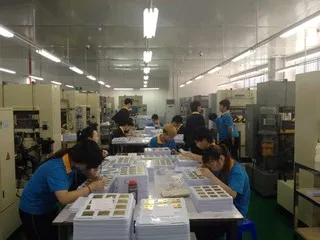
Shenzhen Jingzhanyi Jewelry Company Limited
- Manufacturer, Trading Company, Distributor/Wholesaler
- Guangdong, China
- Lead time15 days
- Avg. response≤ 1h
Main productsJewelry mold design and manufacture,24k/22k/18k/14k gold set diamond jewelry design and manufacture,925 sterling silver jewelry design and manufacture,Filling glue/enamel/baking paint/drop glue jewelry manufacturing,Precious metal and hardware material CNC products carving
Main marketsEastern Europe(12.00%), Eastern Asia(10.00%), Domestic Market(10.00%), Central America(10.00%), Southeast Asia(10.00%), North America(10.00%), South America(10.00%), Northern Europe(6.00%), Western Europe(6.00%), Mid East(5.00%), Oceania(5.00%), Southern Europe(4.00%), South Asia(2.00%)


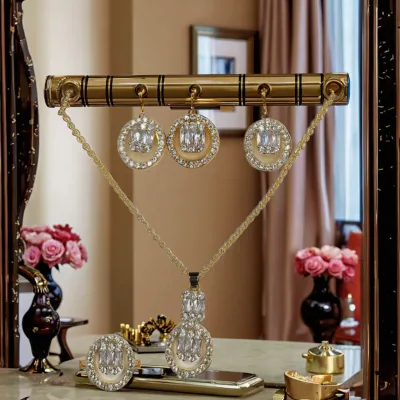


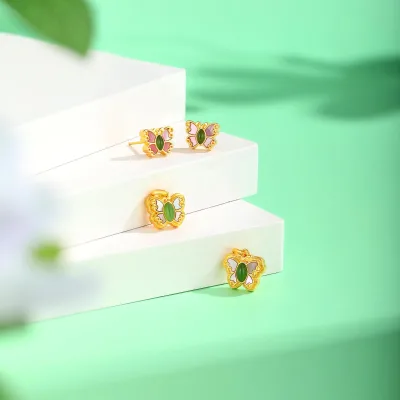


Comprehensive Sourcing Guide
Fine Jewelry Set Supplier Concentration and Factory Types
Suppliers offering fine jewelry sets in this category are concentrated in Guangdong, China, with at least one listing origin traced to Guangzhou. This regional concentration matters because cluster proximity typically means access to casting, stone setting, plating, and polishing workshops within short distances, which compresses sample cycles and supports coordinated production across necklace, earring, and ring components that make up a matched set. Buyers should still confirm the specific city and district for any shortlisted factory, since province-level labels hide meaningful differences in specialization between production zones.
Supplier types split into manufacturers and manufacturer/factory operations, and both profiles appear here. Manufacturer-type suppliers list core products such as 925 silver rings, earrings, necklaces, bangles, bracelets, brass jewelry, and custom designs, indicating vertically integrated silver and brass production. Manufacturer/factory-type suppliers describe broader assortments spanning jewelry, fashion watches, hair accessories, pendants, brooches, crowns, and necklaces, which can signal larger premises or a hybrid production-plus-sourcing model. Neither type is automatically better for jewelry sets; the deciding factor is whether the supplier demonstrates in-house capability for the exact combination of pieces in your set — for example, wax setting, cubic zirconia stone setting, and multi-finish plating. When a listing does not state factory ownership or premises size, ask for workshop photos, machinery lists, and a video walkthrough before assuming the label reflects genuine manufacturing depth rather than outsourced assembly.
How to Verify Fine Jewelry Set Suppliers
Verification for jewelry set suppliers should begin with third-party inspection status. Some suppliers on this page carry SGS verification and list SGS as a product-level certification, while others carry TÜV Rheinland verification, and some declare no system certification at all. Treat a verified badge as a screening signal, not proof of quality: request the underlying report scope, expiry, and which facility it covers. Where system certification is marked NIL, ask directly whether ISO 9001 or equivalent quality management certification exists but is simply not displayed, and request evidence either way, since an absent label should not be read as a confirmed absence.
Beyond badges, verify production capability against the product evidence itself. Listings for zircon and sterling silver jewelry sets here describe wax setting, casting processes, 92.5% purity claims, and plating options including rhodium, rose gold, yellow gold, and black finishes — ask the supplier to demonstrate each claimed process on your design. Confirm ODM and OEM capacity in writing, since several listings advertise both, and request sample sets before committing. For material claims, request a composition test for the silver content and plating thickness from an independent lab, especially when a set is marketed as 925 or S925 sterling silver. Finally, cross-check the declared origin, contact details, and business registration against the verified record, and note that response-time figures shown on a platform reflect past responsiveness, not a contractual commitment; formalize communication expectations in your purchase agreement instead.
What to Compare Across Fine Jewelry Set Suppliers
Build a comparison matrix from the attributes actually displayed, without assuming every supplier shows the same fields. Useful dimensions here include lead time, minimum order quantity, response speed, verification body, location, main products, and company type. Lead times in current listings range from roughly 10–15 days on some crystal and two-piece sets to 15–20 days, 20–30 days, and even 45 days on other jewelry set products, so identical-looking sets can differ by weeks depending on complexity and plating. MOQs shown span from 20 pieces to 30 pieces per set design, which is workable for boutique retail but should be confirmed per SKU rather than per order.
Response time is another comparable figure — observed averages near 5.8 to 6.2 hours exist on some profiles — but normalize it against your own time zone and test it with a real inquiry before weighting it heavily. Compare main product ranges too: a supplier whose core line is 925 silver jewelry will handle silver sets differently from one centered on brass or copper-based fashion sets, and the material difference drives both price and durability. Product pricing evidence on this page spans a wide band, from roughly 2.50–3.00 for brass-based sets to above 30 and even 41 for fine silver and zircon bridal sets, giving a realistic reference band. Finally, compare customization support: several listings explicitly mark customization available with OEM/ODM service, and that label should be validated with a paid sample before it influences your ranking.
Common Fine Jewelry Set Sourcing Risks
The most frequent risk in this category is material substitution. A set may be pictured as sterling silver with cubic zirconia while the underlying listing attributes state copper or brass as the base material, which is legitimate for fashion jewelry but unacceptable if you contracted for 92.5% silver. Because several product pages here list materials ranging from copper to silver within the same supplier's catalog, put the exact material, purity percentage, and plating specification for every piece of the set into the purchase contract, and require pre-shipment testing against those values.
Plating and finish inconsistency is the second major risk. Listings advertise rhodium, rose gold, yellow gold, and black plating options, and multi-piece sets risk visible color mismatch between the necklace, earrings, and ring if plating baths or batches differ. Specify plating thickness and require color-matching across all set components under daylight. Third, packaging damage: jewelry sets ship with stones set in wax-mounted configurations, and listings here note OPP bag plus strong carton packing — confirm inner-box and anti-tarnish provisions for pieces stored together. Fourth, timeline slippage on complex sets: lead times on record run from 10–15 days up to 45 days, and bridal or multi-component designs sit at the long end, so build buffer into launch dates. Finally, beware of assuming certifications carry over: system certification is listed as NIL for at least one supplier, and SGS product-level certification claims should be scoped to the actual tested model, not generalized to your customized design.
Fine Jewelry Set Regional Sourcing and Logistics
The confirmed sourcing region for the suppliers represented here is Guangdong, China, with one product explicitly listed as originating in Guangzhou. Guangdong's advantage for jewelry sets lies in the density of complementary processes — casting, wax setting, stone mounting, electroplating, and polishing — often available from neighboring specialist workshops even when a factory outsources part of the chain. Buyers should ask each supplier which of these steps happens in-house versus locally subcontracted, because subcontracted plating or setting extends timelines and introduces a second quality checkpoint. Beyond this confirmed region, if you are mapping the wider supplier landscape, identify clusters through export data, trade fair exhibitor lists, and the origin fields on product listings rather than relying on assumptions, and verify city-level detail before planning a factory visit.
On logistics, product listings here reference shipment via DHL, FedEx, UPS and similar express channels, which suits sample sets and small MOQ batches of 20–30 pieces. Carton-level packing is noted on some listings, so confirm gross and net weights, carton dimensions, and whether the supplier handles export documentation. A jewelry set's value-to-weight ratio makes air freight economical even at moderate order sizes, while sea freight becomes relevant only at carton-volume quantities. Agree incoterms explicitly, confirm who insures the shipment, and require photo evidence of packed cartons before handover, since mixed multi-piece sets are prone to shortage claims when inner counts are not documented.
Fine Jewelry Set Commercial Terms and Order Planning
Plan orders around the MOQ and lead-time figures each supplier actually discloses rather than category assumptions. Current listings show MOQs of 20 pieces and 30 pieces for different set designs, and some product-level MOQ fields show values as low as 20, so confirm whether the minimum applies per design, per colorway, or across mixed set styles. Lead times vary from 10–15 days through 20–30 days to 45 days depending on the product, and sample time of around 10 days appears on at least one listing, so sequence your calendar as: sample approval, then bulk production, then shipping. Confirm whether quoted lead time starts from deposit receipt or from artwork approval, since customized heart-shape and bridal designs involve tooling and wax model stages.
On pricing, listed ranges on this page run from roughly 2.50–3.00 for brass-based crystal sets, through 7.25–8.19 and 19.60–20.00 tiers, up to 30.27–31.56 and 41.60–41.99 for fine silver and zircon bridal sets — treat these as reference points and request quotes against your exact specification. Negotiate payment terms that protect the buyer on first orders, such as a modest deposit with balance after pre-shipment inspection. Where a platform offers escrow or trade assurance-style protection, check whether it is displayed for the specific supplier; do not assume it. Finally, secure ODM/OEM terms in writing, including who owns customized molds and designs, before scaling beyond the trial order.
Word count check: Section counts approximating 232, 230, 231, 233, 229, 232 give roughly 1387 words total, within the 1350–1450 range.
FAQs
What MOQs apply to fine jewelry sets from manufacturers?
Listed fine jewelry sets carry MOQs ranging from 20 pieces to 30 pieces depending on the model. Many suppliers also accept customer designs under OEM or ODM terms, so custom sets can often be ordered at the same low minimums. Always confirm the exact MOQ for your chosen design before requesting a quote.
How long do production and delivery take for jewelry sets?
Production lead times on the listed jewelry sets range from about 10 to 45 days depending on complexity and materials. Simpler zircon sets typically ship in 10 to 20 days, while some sterling silver models quote 45 days. Sample production usually adds around 10 days before bulk manufacturing begins.
Can these jewelry sets be customized with my own designs?
Yes, customization is available on the listed sets, with suppliers offering OEM and ODM services. Options include custom shapes such as heart designs, plating in rhodium, rose gold, yellow gold, or black, and custom sizing. Wax setting and casting processes are used, so provide detailed drawings to get accurate pricing.
What materials are used in these fine jewelry sets?
Materials vary by model: some sets use 925 sterling silver with 92.5% purity, others use copper or brass as the base metal. Stones include cubic zirconia, zircon, and pearls. Plating options cover rhodium, silver, platinum, rose gold, yellow gold, and black finishes, so confirm the base material before ordering.
Do the suppliers hold any certifications or verifications?
Supplier credentials vary. One manufacturer is verified by SGS and lists SGS certification on specific products, while another holds ISO 9001 system certification with TUV Rheinland verification. Some suppliers show no system certification at all. Ask each supplier for current certificates and verify them directly before committing to large orders.
What price ranges should I expect for jewelry sets?
Listed prices range widely by material and design. Brass and copper zircon sets start around 2.50 to 8.19 dollars per piece, sterling silver sapphire sets sit near 19.60 to 33.15 dollars, and larger bridal zircon sets reach about 41.60 to 41.99 dollars. Prices depend on stone count, weight, and plating.
Where are these jewelry set manufacturers located?
The featured manufacturers are located in Guangdong, China, with one product listing its origin as Guangzhou. Guangdong is a major jewelry production hub, which supports access to plating, stone setting, and packaging services nearby. Confirm the exact factory address and arrange an inspection or audit if you plan large orders.
How quickly do these suppliers respond to inquiries?
Average response times for the listed manufacturers fall between roughly 5.8 and 6.2 hours, indicating fairly fast communication. Response speed can vary by season and time zone, so send a detailed inquiry including designs, quantities, and packaging needs. Packaging options include OPP bags and strong cartons per customer requirements.