Forged Hexagon Brass Double Nipple Suppliers and Manufacturers
Source 19 suppliers for Forged Hexagon Brass Double Nipple fittings. Compare response times, lead times, MOQs, and certifications like ISO9001:2015 and SGS. Review pricing and customization options to identify the right partner for your plumbing needs; review the available evidence before requesting comparable quotations from suitable candidates.
Suppliers List

Zhejiang Acme Pipefitting Co., Ltd.
- Combined
- China Zhejiang
- Lead time30 days
- Avg. response≤ 8h
Main productsBrass Fitting, Brass Valves, Sanitary Wares, Copper Fitting, Saddle Valve, Needle Valve, Ball Valve
Main marketsSouth America,East Asia(Japan/ South Korea),Domestic,Europe,Australia,North America

NINGBO STANDARD IMPORT & EXPORT CO., LTD
- Trading Company,Manufacturer/Factory,Group Corporation
- China Zhejiang
- Lead time23 days
- Avg. response≤ 14h
Main productsPex-Al-Pex Pipe, Pipe Fitting, Brass Fitting, Pex Pipe, Gas Fitting, PPR Insert, Screw Thread Fitting, Press Fitting, Compression Fitting, Valve
Main marketsSouth America,Eastern Europe,Mid East,North America,Southeast Asia,Eastern Asia,Oceania,Western Europe,Africa

Zhejiang Italy Copper Industry Co., Ltd.
- Verified by BV
- Combined
- China Zhejiang
- Lead time30 days
- Avg. response≤ 17h
Main productsValve, Bibcock, Check Valve, Pipe Fittings, Gate Valve, Angle Valve, Radiator Valve, Float Valve, Globe Valve, Compression Fittings
Main marketsEurope

OEM&ODM Brass Forged Fitting Male Female Thread Hexagon Reduce Pipe Nipple
$0.40 - $0.75
MOQ: 1000 Pieces


Shanghai Intelsheng International Trading Co., Ltd.
- Verified by SGS
- Trading Company
- China Shanghai
- Lead time23 days
- Avg. response≤ 11h
Main productsValve, Pipe Fittings, Pump Accessories, Brass Manifolds, Brass Ball Valve, Check Valve, Gate Valve, Stop Valve, Brass Bibcock, Brass Radiator
Main marketsSoutheast Asia/ Mideast

Taizhou Jiaxin Metals Co., Ltd.
- Verified by SGS
- Manufacturer/Factory,Group Corporation
- China Zhejiang
- Lead time30 days
- Avg. response≤ 12h
Main productsBathtub Drain Kit, Manifold, Ball Valve, Plumbing Fitting, Check Valve, Brass Valve, Bathtub Drain Stopper, Radiator, Basin Waste, Siphon
Main marketsSouth America,Eastern Europe,Mid East,North America,Eastern Asia,Oceania,Western Europe,Africa

- Verified by SGS
- Trading Company,Manufacturer/Factory
- China Zhejiang
- Lead time23 days
- Avg. response≤ 10h
Main productsBall Valve, Needle Valve, Check Valve, Globe Valve, Gate Valve, Compression Fitting, Forged Steel Pipe Fitting, Casting Steel Screwed Fitting, Butt Weld Pipe Fitting, Pipe
Main marketsSouth America,Eastern Europe,Mid East,North America,Southeast Asia,Eastern Asia,Oceania,Western Europe,Africa

QUZHOU ECO IMP. & EXP. CO., LTD.
- Trading Company
- China Zhejiang
- Lead time30 days
- Avg. response≤ 25h
Main productsWater Meter, Gas Meter, Electric Meter, PU Tubes, IC Card Prepayment, Caster Wheel, Valves, Pipefittings, Filter, Strainer
Main marketsSoutheast Asia/ Mideast,Europe,North America

Zhejiang Haizhu Pipe Co., Ltd.
- Verified by TUVRHEINLAND
- Combined
- China Zhejiang
- Lead time30 days
- Avg. response≤ 10h
Main productsAluminum Plastic Composite Pipe, Pex-Al-Pex Pipe, Brass Fittings, Press Fittings, Screw Fittings, Multilayer Pipe, Brass Compression Fittings, Brass Tee, Brass Nipple, Chrome-Plated Brass Extension
Main marketsAfrica,Europe


Brass Nipple of Thread Fittings
MOQ: 200 Pieces

WENZHOU LIANGGANG PIPE FITTING VALVES CO., LTD.
- Verified by TUVRHEINLAND
- Trading Company,Manufacturer/Factory
- China Zhejiang
- Lead time45 days
- Avg. response≤ 14h
Main productsPipe Fitting, Valve, Ball Valve, Elbow, Tee, Hex Nipple, Socket, Union, Coupling, Fittings
Main marketsSouth America,Mid East,Southeast Asia,Eastern Asia,Oceania,Africa
Ningbo Boro Industries Co., Ltd.
- Verified by TüVRheinland
- Trading Company
- Lead time0 days
Main productsBrass Ball Valves, Brass Fittings, Tankless Water Heator Valves, Frost Free Silcock, Check Valve
Main marketsNorth America(47%), Western Europe(32%), Eastern Europe(21%)
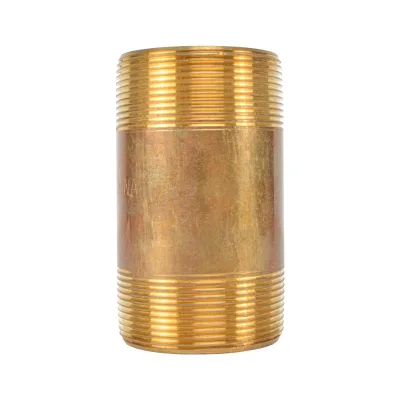

Forged Brass Extensions Fittings
$0.36 - $0.40

Ningbo HuaHui Metal Products Co., Ltd.
- Verified by BV
- Manufacturer/Factory
- China Zhejiang
- Lead time30 days
- Avg. response≤ 5h
Main productsBrass Heating Flange, Brass Connector, Brass Valves, Brass Electric Parts, Aluminum Parts, Stamping Parts, Stainless Steel Parts, Plastic Parts, Brass Nipple, Brass Hose Fittings
Main marketsSouth America,Eastern Europe,North America,Western Europe


High Grade Forged Material Brass Connection Pipe Fittings Adapter Nipple
$0.20 - $1.00
MOQ: 1000 Pieces

Stainless Steel Forged Pipe Fitting Male Thread Connector Hexagon Nipple
$0.40 - $2.00
MOQ: 1000 Pieces


Zhejiang Solerad Environment Technology Co., Ltd.
- Verified by SGS
- Combined
- China Zhejiang
- Lead time45 days
- Avg. response≤ 1h
Main productsMultilayer Pipes, Pex-Al-Pex Pipes, Pert-Al-Pert Pipes, Pex Pipes, Pert Pipes, Pex Fittings, PPR Pipes Fittings, Brass Manifolds, Brass Ball Valves, Brass Fittings
Main marketsSouth America,Africa,Europe


Brass Male & Female Extension Nipple in Pipe Fitting
MOQ: 3000 Pieces

Hongxing Manufacturing Group Ltd.
- Manufacturer/Factory
- China Zhejiang
- Lead time45 days
- Avg. response≤ 14h
Main productsValve, Fitting, Dzr Brass, Lead Free, Sanitary Ware, Cable Tie, Ball Valve, Stop Valve, Thermostat, Gate Valve
Main marketsSouth America,Eastern Europe,Mid East,North America,Southeast Asia,Eastern Asia,Oceania,Western Europe,Africa
Ningbo Riteco Copper Co., Ltd.
- Trading Company
- China Zhejiang
- Lead time30 days
- Avg. response≤ 20h
Main productsBrass Fitting, Fitting, Pex-Al-Pex Pipe, Press Fitting, Pex Fitting, Compression Fitting
Main marketsSouth America,Africa,Southeast Asia/ Mideast,East Asia(Japan/ South Korea),Europe,Australia,North America

Wholesale Brass Pex Pipe Fittings Brass Straight Nipple Double with Oring
$0.82 - $0.84
MOQ: 2000 Pieces


Wholesale Brass Pex Pipe Fittings Brass Straight Nipple Male with Oring
$0.49 - $0.51
MOQ: 2000 Pieces


Wholesale Brass Pex Pipe Fittings Brass Straight Nipple Female with Oring
$0.57 - $0.58
MOQ: 2000 Pieces

WENZHOU JIANHAO PIPE FITTING CO., LTD.
- Combined
- China Zhejiang
- Lead time30 days
- Avg. response≤ 10h
Main productsDegree Elbow, Tee, Socket Banded, Hex Nipple, Union, Welding Nipple
Main marketsSouth America,Southeast Asia/ Mideast,Domestic

Qingdao Fluido Industrial Co., Ltd.
- Verified by SGS
- Manufacturer/Factory
- China Shandong
- Lead time23 days
- Avg. response≤ 2h
Main productsCast Iron Valve, Cast Steel Valve, Ball Valve, Ductile Iron Pipe Fitting, Forged Flange, Pipe Clamp Fittings, OEM Metal Pipe Fittings, OEM Valve and Pump Parts, OEM Stamping Parts
Main marketsSouth America,Eastern Europe,Mid East,North America,Southeast Asia,Eastern Asia,Oceania,Western Europe,Africa

Yuhuan Jinlai Brass Industrial Co., Ltd.
- Verified by TUVRHEINLAND
- Combined
- China Zhejiang
- Lead time30 days
- Avg. response≤ 7h
Main productsBrass Valve, Brass Ball Valve, Brass Check Valve, Brass Gate Valve, Brass Bibcock, Brass Angle Valve, Brass Fitting, Brass Foot Valve, Brass Strainer
Main marketsAfrica,Europe
Zhejiang Ifan Piping Co., Ltd.
- Combined
- China Zhejiang
- Lead time23 days
- Avg. response≤ 6h
Main productsUPVC, CPVC, PPR Fitting, PPR Pipe, Brass Ball Valve
Main marketsAfrica,Southeast Asia/ Mideast,Europe,North America
Wenzhou Long'an Flange Co., Ltd.
- Verified by SGS
- Combined
- China Zhejiang
- Lead time15 days
- Avg. response≤ 2h
Main productsFlange, Tube Sheet, Valves, Pipe Fittings
Main marketsDomestic


Comprehensive Sourcing Guide
Forged Hexagon Brass Double Nipple Supplier Concentration and Factory Types
The sourcing landscape for forged hexagon brass double nipples reveals a distinct concentration of manufacturing activity within specific industrial regions, most notably in China’s Zhejiang province. This geographic clustering is not arbitrary but stems from established supply chains for copper and brass raw materials, as well as specialized forging infrastructure that supports high-volume production. Buyers evaluating potential partners should recognize that suppliers located in these hubs often benefit from shared logistical networks and a dense ecosystem of component manufacturers, which can streamline the procurement process for complex fittings. However, the presence of a Zhejiang address does not automatically guarantee direct factory access, as the market includes a mix of entity types that serve different procurement needs. Understanding this distribution helps buyers narrow their search to regions with proven expertise in brass forging, ensuring they engage with suppliers who have the necessary technical foundation to produce high-quality, durable fittings.
Supplier types in this category vary significantly, ranging from pure trading companies to combined entities that operate both manufacturing facilities and sales divisions. Some suppliers are identified as Group Corporations or Manufacturer/Factory types, indicating they possess the physical capacity for OEM and ODM services, which is crucial for buyers seeking custom specifications or private labeling. Others may be listed as Trading Companies, acting as intermediaries who aggregate products from multiple smaller workshops. The distinction matters because combined entities often offer greater control over production quality and lead times, whereas trading companies might provide broader product assortments but less direct oversight. Buyers must carefully review the company type designation to determine if the supplier can meet their specific volume and customization requirements, ensuring they align with either the need for direct factory engagement or the flexibility of a trading partner.
How to Verify Forged Hexagon Brass Double Nipple Suppliers
Verification begins with scrutinizing the supplier’s declared certifications and system qualifications, which serve as primary indicators of operational maturity and quality management standards. Many reputable suppliers in this sector hold ISO9001:2015 and ISO14001:2015 certificates, demonstrating adherence to international quality and environmental management systems. These certifications are not merely decorative; they reflect a structured approach to production consistency and regulatory compliance, which is vital for brass fittings that must withstand pressure and corrosion. Buyers should request copies of these certificates and verify their validity through the issuing bodies, ensuring the credentials are current and applicable to the specific product lines being sourced. Additionally, some suppliers may display third-party verification badges, such as BV (Bureau Veritas), which provide an independent layer of assurance regarding the supplier’s business legitimacy and operational capabilities.
Beyond certifications, buyers must assess the supplier’s responsiveness and transparency as key metrics of reliability. Response times, such as those recorded around 7.25 to 16.97 hours, offer insight into the supplier’s operational efficiency and customer service commitment. A faster response time often correlates with a more agile organization capable of handling urgent inquiries and order modifications. Buyers should also examine the supplier’s product evidence, including detailed specifications like material composition (copper/brass), connection types (male/female threads), and surface treatments (nickel, chrome). Suppliers that provide comprehensive product attributes, such as standard compliance (SGS, GB) and warranty terms (e.g., 5 years), demonstrate a higher level of confidence in their products. Verifying these details through direct communication and sample requests ensures that the supplier’s claims align with actual product capabilities before committing to large orders.
What to Compare Across Forged Hexagon Brass Double Nipple Suppliers
When evaluating multiple suppliers, lead time and minimum order quantity (MOQ) are critical comparative dimensions that directly impact inventory management and cash flow. Suppliers may offer lead times ranging from 23 to 30 days, reflecting differences in production capacity, raw material availability, and current order backlogs. Buyers should align these timelines with their project schedules, considering that shorter lead times might come at a premium or require higher MOQs. Similarly, MOQs can vary significantly, with some suppliers requiring as few as 1,000 pieces while others mandate 5,000 or more. This variation allows buyers to choose partners that match their volume capabilities, whether they are small businesses seeking lower entry barriers or large enterprises aiming for economies of scale. Comparing these operational metrics helps buyers identify suppliers that offer the best balance between cost efficiency and supply chain flexibility.
Price and customization options are equally important factors in supplier comparison, as they influence the total cost of ownership and product differentiation. Unit prices for forged brass nipples can range from approximately $0.19 to $1.50, depending on size, material grade, and surface finish. Buyers should analyze price structures in conjunction with MOQs to determine the true cost per unit at their desired order volume. Additionally, the availability of customization services, such as OEM/ODM capabilities and specific thread distributions (internal/external), allows buyers to tailor products to their end-market needs. Suppliers that offer flexible production standards, such as Non-Standard or GB compliance, provide greater adaptability for diverse applications. By comparing these commercial and technical attributes, buyers can select suppliers that not only offer competitive pricing but also support their specific product requirements and brand positioning.
Common Forged Hexagon Brass Double Nipple Sourcing Risks
One significant risk in sourcing forged brass fittings is the potential discrepancy between advertised specifications and actual product quality, particularly regarding material composition and forging integrity. While suppliers may claim their products are made from high-grade copper or brass, variations in alloy content can affect durability and corrosion resistance. Buyers must be vigilant in verifying material certifications and requesting third-party test reports to ensure the fittings meet the required standards for their intended application, such as water pipes or gas lines. Additionally, the risk of inconsistent surface treatments, such as nickel or chrome plating, can lead to premature wear or aesthetic defects. Ensuring that the supplier has robust quality control processes in place is essential to mitigate these risks and maintain product reliability over time.
Another common risk involves supply chain disruptions and communication barriers, which can lead to delays or misunderstandings regarding order details. Suppliers with slower response times or limited English proficiency may struggle to convey critical information about production status or shipping logistics. This can result in missed deadlines or incorrect shipments, particularly for custom orders with specific thread sizes or head codes. Buyers should establish clear communication protocols and request regular updates throughout the production process to stay informed. Furthermore, relying on a single supplier without diversifying the supply base can expose buyers to risks associated with factory closures or raw material shortages. Developing relationships with multiple verified suppliers can provide a safety net and ensure continuity of supply in the event of unforeseen disruptions.
Forged Hexagon Brass Double Nipple Regional Sourcing and Logistics
Sourcing from regions like Zhejiang, China, offers access to a mature industrial ecosystem with established logistics networks, but it also requires careful planning for international shipping and customs clearance. The concentration of suppliers in this area facilitates efficient consolidation of orders, allowing buyers to combine multiple items into single shipments to reduce freight costs. However, buyers must account for the lead times associated with ocean freight, which can add several weeks to the overall delivery schedule. Understanding the specific port of loading and the supplier’s experience with export documentation is crucial to avoid delays at customs. Buyers should also consider the impact of regional trade policies and tariffs on the final landed cost, ensuring that the savings from lower unit prices are not offset by unexpected logistical expenses.
Logistics planning should also include considerations for packaging and protection during transit, as brass fittings are susceptible to damage if not properly secured. Suppliers typically use carton boxes or pallets for packaging, but buyers should verify that the packaging meets international shipping standards to prevent damage. Additionally, buyers should evaluate the supplier’s ability to handle different shipping terms, such as FOB or CIF, to determine who is responsible for insurance and freight costs. Clear communication regarding packaging requirements and shipping instructions can help minimize the risk of loss or damage during transit. By proactively addressing these logistical factors, buyers can ensure a smooth and cost-effective supply chain from the factory to their final destination.
Forged Hexagon Brass Double Nipple Commercial Terms and Order Planning
Effective order planning requires a thorough understanding of commercial terms, including payment methods, warranty policies, and after-sales support. Suppliers may offer various payment terms, such as T/T or L/C, each with different implications for cash flow and risk management. Buyers should negotiate terms that align with their financial capabilities and risk tolerance, ensuring that payments are structured to protect their interests throughout the transaction. Additionally, warranty terms, such as the 5-year warranties offered by some suppliers, provide assurance against defects and demonstrate the supplier’s confidence in their product quality. Buyers should clarify the scope of these warranties and the process for claiming replacements or refunds in case of issues.
Order planning should also involve forecasting demand and aligning production schedules with supplier capacity. Given the variability in lead times and MOQs, buyers should maintain a buffer stock to account for potential delays or fluctuations in demand. Regular communication with suppliers about upcoming orders and inventory levels can help ensure timely delivery and prevent stockouts. Buyers should also consider the scalability of their supplier relationships, ensuring that the supplier can handle increased volumes as their business grows. By developing a comprehensive order planning strategy that incorporates commercial terms, logistics, and capacity considerations, buyers can build a resilient and efficient supply chain for forged hexagon brass double nipples.
FAQs
What is the price range for forged hexagon brass double nipples?
Prices for these fittings typically range from $0.19 to $1.50 per unit depending on specifications. Specific models show costs between $0.19 and $0.90, while heavier duty variants may reach $1.50. Buyers should verify exact pricing based on size, thread type, and order volume to ensure accurate budgeting for their procurement needs.
What is the minimum order quantity for these brass fittings?
Minimum order quantities vary by supplier, generally ranging from 1,000 to 5,000 pieces. Some manufacturers require a minimum of 2,000 units for specific models, while others accept orders starting at 1,000. Buyers must confirm the exact MOQ with the supplier before placing an order to align with their inventory requirements.
How long does production take for these brass nipples?
Production lead times typically range from 23 to 30 days after order confirmation. This duration allows for forging, machining, and quality control processes. Buyers should plan their supply chain accordingly and confirm the exact timeline with the supplier, as lead times may vary based on order volume and current production schedules.
Are these brass fittings customizable for specific applications?
Yes, customization is available for many forged brass double nipples. Suppliers offer OEM and ODM services, allowing for specific thread distributions, head codes, and surface finishes like nickel or chrome plating. Buyers can request custom sizes and standards to meet their unique plumbing or industrial application requirements.
What certifications do these brass fitting suppliers hold?
Suppliers often hold ISO 9001:2015 and ISO 14001:2015 certifications for quality and environmental management. Some products also carry CQC or SGS certifications. Buyers should verify specific certifications relevant to their market regulations and request copies of certificates to ensure compliance with industry standards and safety requirements.
Where are these brass fittings manufactured?
These fittings are primarily manufactured in China, with many suppliers located in Zhejiang province. Specific production hubs include Zhuji, a well-known center for plumbing fittings. Buyers should confirm the exact origin of the products to understand logistics, tariffs, and supply chain dynamics associated with sourcing from this region.