Hexagonal Car Polishing Led Lighting Suppliers and Manufacturers
Source Hexagonal Car Polishing Led Lighting from 27 verified suppliers in China. Compare response times, lead times, certifications, and pricing to find the right partner. Contact suppliers directly to request quotes and samples; review the available evidence before requesting comparable quotations from suitable candidates.
Suppliers List

Hubei LiBaiChang Technology Co., Ltd.
- Verified by CTI
- Manufacturer/Factory
- China Hubei
- Lead time15 days
- Avg. response≤ 3h
Main productsSolar Home System, Outdoor Lighting, Emergency Products, Generators, Solar Panel, Commercial Lighting Light, Solar Inverter, Indoor Light, Solar Fan, Solar Insect Killer Light
Main marketsSouth America,Eastern Europe,Mid East,North America,Southeast Asia,Eastern Asia,Oceania,Western Europe,Africa

LED Hexagon Lights Hex Lights for Garage Ceiling Honeycomb Auto Detailing Lamp Hexagonal LED Light
$21.00 - $126.77
MOQ: 10 Pieces

LED Shop Light for Warehouse Workshop Gym Basement Car Care Wash Room 672W Garage Hexagon LED Lights
$21.00 - $126.77
MOQ: 10 Pieces

$21.00 - $126.77
MOQ: 10 Pieces

Shanghai Lanyou Lighting Co., Ltd.
- Verified by CTI
- Trading Company
- China Anhui
- Lead time15 days
- Avg. response≤ 5h
Main productsLED Channel Letters, Acrylic Signs, Metal Sign Letters, Wayfinding Signs, Outdoor Signage
Main marketsSouth America,Africa,Southeast Asia/ Mideast,East Asia(Japan/ South Korea),Europe,Australia,North America


Factory One-Step Connection Hexagonal Car Workshop Auto Maintenance Wash LED Light
$77.00 - $92.00
MOQ: 1 Pieces


Sino Star Automotive Equipment Co., Ltd.
- Verified by BV
- Trading Company
- China Jiangsu
- Lead time23 days
- Avg. response≤ 5h
Main productsCar Wash Machine, Car Lift, Tire Changer, Wheel Balancer, 3D Wheel Alignment, Blue-Point Tools, Car Wash Shampoo, Hydraulic Jacks, Car LED Light
Main marketsSouth America,Southeast Asia/ Mideast,Domestic,Europe,Australia

New Design Hexagonal Garage Lights Customized Hexagrid LED Lighting for Car Workshop and Office
$68.00 - $129.20
MOQ: 3 Pieces

2023 New Design Hexagonal LED Light Car Detailing Lights Car Showroom Lamp
$68.00 - $129.20
MOQ: 3 Pieces


High Quality Custom Hexagonal LED Light Car Workshop Light LED Detailing Light
$68.00 - $129.20
MOQ: 3 Pieces

Car Beauty Station Auto Wash Garage LED Hexagon Light Showroom Light LED Hexagon Garage Lighting
$68.00 - $129.20
MOQ: 3 Pieces

Factory Sell Luxury Hexagonal Ceiling Light for Car Showroom Car Detailing LED Lights
$68.00 - $129.20
MOQ: 3 Pieces

Zhengzhou Well-Known Instrument and Equipment Co., Ltd.
- Verified by TUVRHEINLAND
- Trading Company,Manufacturer/Factory
- China Henan
- Lead time15 days
- Avg. response≤ 4h
Main productsGolf Cart, Automatic Car Wash Machine, Freeze Dryer, Hyperbaric Oxigen Chamber, Coffee Roaster, Sightseeing Cart, Electric Utility Vehicle, ATV&UTV, Tablet Press Machine, Electric Golf Cart
Main marketsSouth America,Eastern Europe,Mid East,North America,Southeast Asia,Eastern Asia,Western Europe,Africa

$69.00 - $89.00
MOQ: 10 Pieces

$69.00 - $89.00
MOQ: 10 Pieces


Zhengzhou Well-Known Instrument and Equipment Co., Ltd.
- Verified by TUVRHEINLAND
- Trading Company,Manufacturer/Factory
- China Henan
- Lead time15 days
- Avg. response≤ 6h
Main productsGolf Cart, Automatic Car Wash Machine, Freeze Dryer, Hyperbaric Oxigen Chamber, Rotary Evaporator, Coffee Roaster, Autoclave Sterilizer, Deep Freezer, Glass Reactor, Laboratory Equipment
Main marketsSouth America,Eastern Europe,Mid East,North America,Southeast Asia,Eastern Asia,Oceania,Western Europe,Africa


$69.00 - $89.00
MOQ: 1 Pieces
Lu'an Baona Import And Export Trade Co., Ltd.
- Trading Company
- Lead time旺季: "1 - 10":7,"11 - 50":8,"> 50":"To be negotiated", 淡季: "1 - 10":7,"11 - 50":8,"> 50":"To be negotiated"
- Avg. response≤ 1h
Main productsSports Flooring,Gym Flooring,Interlocking Floor Tiles,Sport facility,Drop Pad for Gym
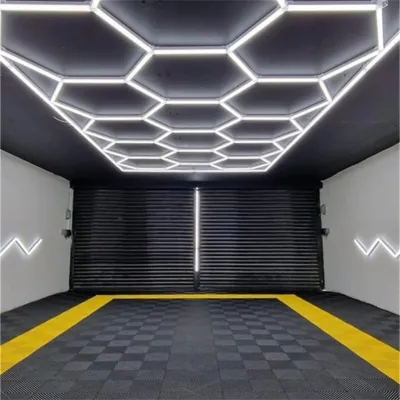
White Color Led Garage Lights Hexagonal Led Lighting for Detailing Light LED Working Lamp
$107.45 - $122.80
MOQ: 1


Shenzhen ETOP Technology Company Ltd.
- Verified by SGS Group
- Manufacturer, Trading Company
- Lead time7 days
Main productsLED Pixel, LED Strip, LED Connector, Permanent Lights, Hexagon Lights
Main marketsNorth America(75%), Western Europe(15%), Oceania(10%)
Shenzhen JJX Technology Co.,Ltd
- Manufacturer, Distributor/Wholesaler
- Guangdong, China
- Lead time3 days
- Avg. response≤ 3h
Main productsLED Neon Light,LED Strip,LED Grow Light,LED Line Light,LED Module
Main marketsNorth America(20.00%), Domestic Market(10.00%), Western Europe(10.00%), South America(10.00%), Southeast Asia(5.00%), South Asia(5.00%), Southern Europe(5.00%), Northern Europe(5.00%), Central America(5.00%), Eastern Europe(5.00%), Eastern Asia(5.00%), Mid East(5.00%), Oceania(5.00%), Africa(5.00%)
Changsha Lido Sci & Tech Co., Ltd.
- Trading Company
- Hunan, China
- Lead time35 days
- Avg. response≤ 2h
Main productsChandelier,Customized chandelier,led table light,LED floor light,LED wall light
Main marketsDomestic Market(5.00%), South Asia(5.00%), Southern Europe(5.00%), Northern Europe(5.00%), Central America(5.00%), Western Europe(5.00%), Eastern Asia(5.00%), Mid East(5.00%), Oceania(5.00%), Africa(5.00%), Southeast Asia(5.00%), Eastern Europe(5.00%), South America(5.00%), North America(5.00%)
Changsha Durlite Lighting Co., Ltd.
- Trading Company
- Hunan, China
- Lead time30 days
- Avg. response≤ 1h
Main productsCustom Gym light,LED Garage Light,led down light,led track light,Office linear light
Main marketsWestern Europe(10.00%), Eastern Asia(10.00%), Mid East(10.00%), Oceania(10.00%), South Asia(10.00%), Southeast Asia(10.00%), Eastern Europe(10.00%), South America(10.00%), Central America(10.00%), Africa(5.00%), North America(5.00%)
Shenzhen Aoying Technology Co., Ltd.
- Trading Company
- Guangdong, China
- Lead time15 days
- Avg. response≤ 5h
Main productsLED Point Light, COB LED Strip, Hexagon LED Light, Pebble Light
Main marketsNorth America(44.00%), Western Europe(15.00%), Oceania(10.00%), Africa(5.00%), Eastern Europe(5.00%), Southeast Asia(5.00%), Southern Europe(3.00%), Central America(3.00%), Northern Europe(3.00%), Domestic Market(3.00%), Mid East(2.00%), Eastern Asia(1.00%), South America(1.00%)
AIER LIGHTING TECHNOLOGY CO., LIMITED
- Verified by SGS Group
- Manufacturer, Trading Company
- Lead time7 days
Main productsCeiling Light, Cabinet Light, Panel Light, High Bay Light, Office Light
Main marketsNorth America(20%), Southeast Asia(20%), Western Europe(11%)
Xiamen Creation Industry & Trade Co., Ltd.
- Manufacturer, Trading Company
- Fujian, China
- Lead time10 days
- Avg. response≤ 3h
Main productsHexagonal light,Working Light,Tunnel Light,Panel Light,Car Sunshade
Main marketsNorth America(17.00%), Western Europe(11.00%), Oceania(10.00%), South Asia(10.00%), Domestic Market(10.00%), Eastern Europe(10.00%), Northern Europe(7.00%), Africa(5.00%), Southeast Asia(5.00%), South America(5.00%), Eastern Asia(5.00%), Southern Europe(3.00%), Mid East(2.00%)
Changsha Jpungsun Sci & Tech Co., Ltd.
- Verified by Intertek
- Trading Company
- Lead time7 days
Main productsFan Lights, Pendant Lights, Wall Lights, Pool Lights, Down Lights
Main marketsNorth America(20%), South America(20%), Central America(20%)
Xiamen Homejoy Technology Co., Ltd.
- Manufacturer, Trading Company
- Fujian, China
- Lead time25 days
- Avg. response≤ 8h
Main productsLED lights,Electronic devices,Home using appliance,Smart door lock
Main marketsWestern Europe(25.00%), Southeast Asia(25.00%), Eastern Europe(15.00%), North America(15.00%), Northern Europe(10.00%), Africa(10.00%)

Garage Repair Car Film Diy Honeycomb Detailing Gym Light Bar Hexagrid Lighting
$14.45 - $117.30
MOQ: 2 Minimum

Hot Sale Auto Detailing Hexagonal Light Led Ceiling Working White Light for Car Advertising Office
$14.75 - $119.71
MOQ: 2 Minimum

$14.45 - $117.30
MOQ: 2 Minimum


Shenzhen Bond Optoelectronic Co., Ltd.
- Verified by TüVRheinland
- Manufacturer, Trading Company
- Lead time7 days
Main productsLED Module, LED Signs, LED Pixel Light, Custom Neon Sign, LED Illuminated Sign
Main marketsNorth America(30%), Southeast Asia(25%), Mid East(20%)
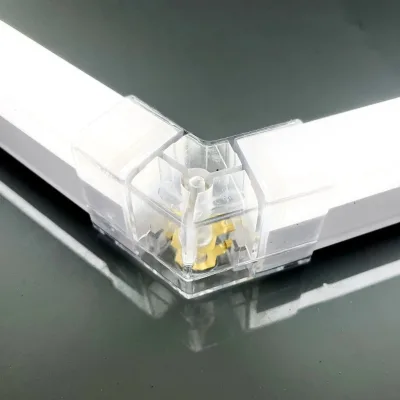
Professional Working 4feet 8feet Deformable Linear Hanging Hexagon Modular Led Ceiling Garage Light
$85.00 - $95.00
MOQ: 2 pieces
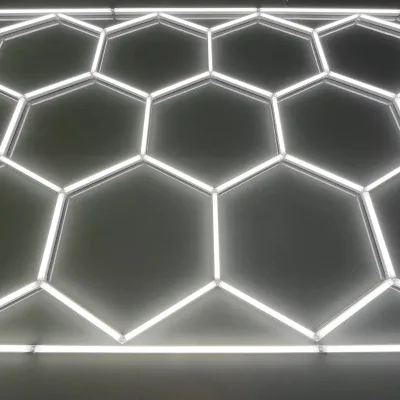
High Cri Seamless Connection Super Bright Hexagonal Led Lighting for Car Detailing
$85.00 - $95.00
MOQ: 2 boxes

Global Professional Workshop Auto Inspection Car Polishing Led Lighting for Car Detailing
$90.00 - $150.00
MOQ: 2 boxes
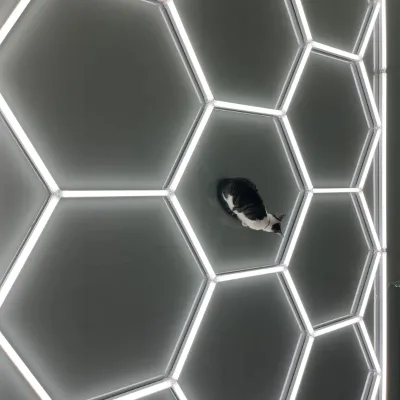
Factory Hot Sell High Performance Led Hexagon Led Ceiling Detailing Light
$85.00 - $95.00
MOQ: 2 pieces


Lu'an Arlott Composite Materials Technology Co., Ltd.
- Verified by SGS Group
- Trading Company
- Lead time15 days
Main productsGarage Floor Tiles, Hexagon Led Work Light
Main marketsWestern Europe(35%), North America(20%), South America(5%)
Wald Import And Export (jiangxi) Co., Ltd.
- Verified by Intertek
- Trading Company
- Lead time0 days
Main productsHoneycomb Light, Nine-palace Lattice Lamp, Mechanical Position Light, Car Cleaning Tools
Main marketsSoutheast Asia(50%), South America(15%), North America(15%)
Guangzhou Jiguang Lighting Co., Ltd.
- Verified by SGS Group
- Manufacturer, Trading Company
- Lead time15 days
Main productsLED Light
Main marketsNorth America(80%), Eastern Asia(10%), Southeast Asia(5%)

Huizhou Delikay lighting Industry Co., LTD
- Verified by TUVRHEINLAND
- Trading Company,Manufacturer/Factory
- China Guangdong
- Lead time23 days
- Avg. response≤ 8h
Main productsLED-Light, LED Module Light, COB LED Strip, Building Lighting, RGB LED Strip, LED Linear Light, Neon LED Strip, LED Aluminium Profile, Signage Lighting, Home Decoration
Main marketsSouth America,Eastern Europe,Mid East,North America,Africa
Zhongshan Baron Lighting Co.,ltd
- Verified by SGS Group
- Manufacturer, Trading Company
- Lead time30 days
Main productsLinear light, Spot light, Down light, Track light, Magnetic track light
Main marketsMid East(40%), North America(20%), Southeast Asia(20%)
Zhongshan Aier Lighting Technology Co., Ltd.
- Verified by TüVRheinland
- Manufacturer, Trading Company
- Lead time7 days
Main productsCeiling Light, LED Tube, LED Cabinet Light, LED Panel Light, LED High Bay Light
Main marketsNorth America(20%), Southeast Asia(20%), South America(10%)

Zhongshan Aier Lighting Technology Co., Ltd
- Verified by SGS
- Combined
- China Guangdong
- Lead time15 days
- Avg. response≤ 3h
Main productsLED Tube Light, LED Ceiling Light, LED Panel Light, Magnetic Track Light, High Bay Light, Street Light, Flood Light, Solar Light, Ceiling Fan
Main marketsSouth America,Africa,Southeast Asia/ Mideast,East Asia(Japan/ South Korea),Europe,North America

Yiwu Meibo Import and Export Co., Ltd.
- Verified by SGS
- Trading Company
- China Zhejiang
- Lead time15 days
- Avg. response≤ 3h
Main productsLED Lights, LED Linear Lights, EV Charge, LED Outdoor Lights, LED Panel Lights, LED Strip Lights, LED Overbed Lights, LED UFO Highbay Light, Desk Lamps
Main marketsNorth America

Henan Hanyin Industrial Co., Ltd.
- Verified by CTI
- Trading Company
- China Henan
- Lead time30 days
- Avg. response≤ 3h
Main productsCar Cleaning Kit, Automatic Car Wash Machine, Car Wash Towel, Auto Detailing Cart, Snow Foam Cannon C
Main marketsEurope

High Brightness LED Hexagon Workshop Light for Car Repair and Maintenance
$22.00 - $29.00
MOQ: 1 Square Meters

Professional Car Inspection LED Light Hexagonal for Auto Detailing Shop
$22.00 - $29.00
MOQ: 1 Square Meters

Waterproof Hexagonal LED Car Wash Light for Auto Detailing and Cleaning Station
$22.00 - $29.00
MOQ: 1 Square Meters

Durable Aluminum Alloy Hexagonal LED Detailing Light for Professional Car Care
$22.00 - $29.00
MOQ: 1 Square Meters

Shock Resistant Hex LED Workshop Lighting Specially for Car Wash Working Area
$22.00 - $29.00
MOQ: 1 Square Meters

High CRI Hexagonal LED Inspection Light Ideal for Car Detailing Paint Checking Work
$22.00 - $29.00
MOQ: 1 Square Meters

Lu'an Woma Import and Export Co., Ltd.
- Verified by SGS
- Trading Company
- China Anhui
- Lead time15 days
- Avg. response≤ 7h
Main productsLED Channel Letters, Acrylic Signs, Metal Sign Letters, Wayfinding Signs, Outdoor Signage
Main marketsEast Asia(Japan/ South Korea)

Factory Direct Modern Honeycomb Hexagon LED Light for Auto Detailing Garage
$80.00 - $90.00
MOQ: 10 Pieces

Multi-Function Honeycomb Hexagon LED Light for Barbershop Car Garage Detailing
$70.00 - $75.00
MOQ: 10 Pieces


Shenzhen BBier Lighting Co., Ltd.
- Verified by BV
- Combined
- China Guangdong
- Lead time15 days
- Avg. response≤ 5h
Main productsE40/E27 LED Corn Lights, E40/E27 LED Garden Lights, E40/E27 LED High Bay Lights, Parking Lot LED Retrofit Kits, LED Wall Pack Lights, LED Canopy Lights, LED Gas Station Lights, LED Shoebox Street Lights, 360deg LED Tube Lights, 210deg LED Tube Lights
Main marketsSouth America,Africa,Southeast Asia/ Mideast,East Asia(Japan/ South Korea),Europe,Australia,North America








Comprehensive Sourcing Guide
Hexagonal Car Polishing Led Lighting Supplier Concentration and Factory Types
The current supplier landscape for Hexagonal Car Polishing Led Lighting reveals a distinct split between manufacturing entities and trading companies, each offering different value propositions for procurement teams. Evidence indicates that manufacturers are primarily located in China Hubei, where they operate as factories capable of handling complex production requirements. These suppliers often list main products that extend beyond just lighting, including solar home systems, outdoor lighting, emergency products, and generators, suggesting a broader industrial capability. This diversification can be advantageous for buyers seeking a single source for multiple facility needs, although it requires careful verification that the specific hexagonal LED units meet professional detailing standards. The presence of OEM and ODM capabilities, along with custom production options, highlights the flexibility these factories provide. Buyers looking for bespoke designs or specific branding should prioritize these manufacturer profiles, as they possess the direct control over the production line necessary to implement custom modifications. The ability to produce custom logos and brands is explicitly available, allowing for unique market positioning. However, the breadth of their product catalog means that buyers must scrutinize the specific product evidence to ensure the hexagonal lights are a core competency rather than a peripheral offering. Understanding this factory type helps in assessing whether the supplier has the dedicated infrastructure for high-volume or specialized lighting production.
In contrast, trading companies appear in regions such as China Anhui, focusing on different aspects of the supply chain. These entities often deal with items like LED channel letters, acrylic signs, and metal sign letters, indicating a specialization in signage and visual communication rather than pure industrial lighting manufacturing. While they may offer hexagonal LED ceiling bar lights, their role as intermediaries can impact lead times and communication efficiency. The response time for these trading companies is recorded at 4.66, which is notably slower than the 2.19 response time observed for the manufacturing factories in Hubei. This difference in responsiveness can be critical during the negotiation and specification phases of sourcing. Trading companies might offer a wider variety of unrelated products, but this does not necessarily translate to better expertise in the technical specifications of hexagonal car polishing lights. Buyers must weigh the potential convenience of a one-stop-shop against the risk of diluted focus and slower communication. The verification status of these suppliers also varies, with some holding CTI verification, which adds a layer of trust regarding their business legitimacy. However, the lack of direct manufacturing control means that quality assurance processes may be less transparent. Evaluating the company type is therefore a primary step in determining the reliability and responsiveness of the potential partner for Hexagonal Car Polishing Led Lighting projects.
How to Verify Hexagonal Car Polishing Led Lighting Suppliers
Verification is a critical step in ensuring that the Hexagonal Car Polishing Led Lighting suppliers you engage with are legitimate and capable of delivering on their promises. One of the primary indicators of supplier reliability is the verification status provided by third-party inspection agencies. In the current results, some suppliers are marked as CTI verified, which signifies that their business credentials and operational capabilities have been audited by a recognized entity. This verification helps mitigate the risk of dealing with fraudulent entities or companies that exaggerate their capabilities. Buyers should prioritize suppliers with such verifications, as it provides an external validation of their existence and operational status. However, verification alone is not sufficient; it must be combined with a thorough review of the supplier’s product evidence and technical specifications. The product listings for hexagonal LED lights often include detailed attributes such as certification marks, material compositions, and performance metrics. For instance, some products list certifications like CCC, CE, EMC, FCC, LVD, RoHS, and SASO, which are essential for ensuring compliance with international safety and environmental standards. Buyers must cross-reference these certifications with the specific requirements of their target markets to ensure that the lighting fixtures will be accepted without regulatory hurdles.
Beyond verification and certifications, buyers should closely examine the technical details provided in the product attributes to assess the quality and suitability of the Hexagonal Car Polishing Led Lighting. Attributes such as the LED chips brand, luminous efficacy, and working lifetime offer insights into the performance and durability of the lights. For example, some suppliers specify the use of Epistar or Samsung LED chips, which are known for their reliability and efficiency. The luminous efficacy is listed as ranging from 100-130 lm/W for some models, indicating high energy efficiency, which is a key consideration for commercial installations. Additionally, the working lifetime is stated as 50,000 hours for certain products, suggesting long-term durability and reduced maintenance costs. Buyers should also look for information on the IP rating, although some listings provide incomplete data, such as "IPLED Chips Brand:Epistar," which may require clarification. The material of the lamp body, often aluminum alloy or a combination of aluminum and PC, affects heat dissipation and structural integrity. By comparing these technical specifications across different suppliers, buyers can identify those who provide transparent and robust product information. It is also advisable to request samples to physically inspect the build quality and verify the claimed specifications, as this hands-on assessment can reveal discrepancies that are not apparent from online listings alone.
What to Compare Across Hexagonal Car Polishing Led Lighting Suppliers
When evaluating multiple sources for Hexagonal Car Polishing Led Lighting, comparing key operational metrics is essential to identify the most suitable partner for your specific needs. One of the most critical factors is the lead time, which directly impacts your inventory management and project timelines. The data shows a lead time of 15 days for some manufacturers, while others specify a lead time for samples of 2-3 working days and a lead time for orders of 5-15 working days. This variability means that buyers must clarify the exact production schedule for their specific order quantity and customization requirements. A shorter lead time can be advantageous for urgent projects, but it should not come at the expense of quality. Another important metric is the Minimum Order Quantity (MOQ), which determines the financial commitment required to initiate a purchase. Some suppliers have an MOQ of 10 units, while others offer a much lower MOQ of 1 set, which is beneficial for small-scale testing or boutique installations. Buyers should align their MOQ expectations with their sales volume and storage capacity to avoid overstocking or insufficient inventory. The price range is also a significant differentiator, with some products listed between $21.00 and $126.77, while others are priced between $290.90 and $439.70. This wide price disparity likely reflects differences in power output, component quality, and customization options.
Response time is another vital aspect of supplier comparison, as it affects the efficiency of communication and problem resolution. The recorded response times vary, with some suppliers responding in 2.19 hours and others taking 4.66 hours. Faster response times are generally indicative of a more responsive and customer-centric organization, which can be crucial during the negotiation and post-sales support phases. Additionally, buyers should compare the main products offered by each supplier to ensure alignment with their broader sourcing strategy. Suppliers in Hubei, for instance, offer a wide range of products including solar panels and generators, which might be relevant if you are sourcing multiple types of equipment. In contrast, suppliers in Anhui focus more on signage and lighting solutions. The availability of customization services, such as OEM and ODM, should also be compared, as this can add value through branded products or specific technical modifications. The warranty period is another key comparison point, with some suppliers offering a 3-year warranty and others providing a 2-year warranty. A longer warranty period can provide greater peace of mind and reduce long-term costs. By systematically comparing these metrics, buyers can create a weighted scorecard to objectively evaluate and select the best supplier for their Hexagonal Car Polishing Led Lighting requirements.
Common Hexagonal Car Polishing Led Lighting Sourcing Risks
Sourcing Hexagonal Car Polishing Led Lighting involves several potential risks that buyers must proactively manage to ensure a successful procurement process. One significant risk is the discrepancy between the advertised specifications and the actual product received. While suppliers provide detailed attributes such as luminous efficacy, color rendering index, and working lifetime, there is always a possibility that the delivered goods do not meet these claims. For example, some listings mention an IP rating, but the information may be incomplete or unclear, such as "IPLED Chips Brand:Epistar," which does not clearly state the ingress protection level. This ambiguity can lead to issues with the durability of the lights in wet or dusty environments, which are common in car wash and detailing workshops. Buyers should mitigate this risk by requesting clear and complete technical documentation and, if possible, conducting independent testing of samples. Another risk is the variability in quality control among different suppliers. Even within the same region, such as China Hubei, the manufacturing standards can vary significantly. Suppliers with OEM and ODM capabilities may have different quality assurance processes depending on the client’s requirements. Buyers should inquire about the supplier’s quality control procedures and ask for evidence of consistent production quality, such as batch test reports or third-party inspection results.
Communication and cultural barriers can also pose risks, particularly when dealing with suppliers in different regions. The response time data shows that some suppliers are slower to respond, which can delay the negotiation process and lead to misunderstandings regarding order details. Miscommunication about customization requirements, such as logo placement or specific color temperatures, can result in products that do not meet the buyer’s expectations. Additionally, the reliance on trading companies introduces the risk of reduced transparency and control over the production process. Trading companies may not have direct oversight of the manufacturing line, making it harder to address quality issues promptly. Buyers should be cautious when dealing with intermediaries and strive to establish direct communication with the actual manufacturers whenever possible. Another risk is the potential for supply chain disruptions, which can affect lead times and availability. While some suppliers list a lead time of 15 days, external factors such as raw material shortages or logistical challenges can extend this period. Buyers should have contingency plans in place, such as identifying alternative suppliers or maintaining a buffer stock. Finally, the risk of non-compliance with local regulations is a concern, especially if the supplier’s certifications, such as CCC or CE, are not valid in the buyer’s target market. Buyers must verify the validity and scope of all certifications before placing orders to avoid legal and customs issues.
Hexagonal Car Polishing Led Lighting Regional Sourcing and Logistics
The regional distribution of Hexagonal Car Polishing Led Lighting suppliers offers insights into the logistical advantages and challenges associated with sourcing from different locations. Suppliers in China Hubei are primarily manufacturers, which often implies a more integrated supply chain for raw materials and components. This concentration can lead to more stable production schedules and potentially lower costs due to economies of scale. However, buyers must consider the logistics of transporting goods from Hubei, which is an inland province. Shipping from inland locations may involve additional transit times and costs compared to coastal ports, although this can be mitigated by efficient inland transportation networks. The presence of manufacturers in this region suggests a robust industrial base, which can be beneficial for large-volume orders. On the other hand, suppliers in China Anhui are often trading companies, which may have easier access to coastal shipping routes due to the province’s location. This can result in faster shipping times and more flexible logistics options for smaller orders. The response time difference between these regions, with Hubei suppliers being faster, may also reflect the operational efficiency of the local industrial clusters. Buyers should evaluate the total landed cost, including shipping and insurance, when comparing suppliers from different regions.
Logistics planning should also account for the packaging and handling requirements of Hexagonal Car Polishing Led Lighting. The product evidence indicates that some items are packed in neutral packaging with specific
FAQs
What is the typical lead time for hexagonal LED lights?
Manufacturers in China generally require 15 days for standard production runs. Sample orders are faster, often taking 2-3 working days to prepare. Bulk shipments depend on order volume and customization needs. Buyers should confirm specific timelines with suppliers before placing large orders to ensure timely delivery.
What certifications do hexagonal LED lights typically have?
Common certifications include CE, RoHS, CCC, EMC, FCC, and LVD. These ensure compliance with safety and electromagnetic standards for international markets. Some products also hold SASO certification. Buyers should verify specific certificates for their target region to ensure regulatory compliance and smooth customs clearance.
What is the minimum order quantity for these lights?
Minimum order quantities vary by supplier and product type. Some manufacturers accept orders as low as one set for customized solutions. Others may require a minimum of ten units for standard inventory items. Buyers should check specific product listings to determine the exact MOQ applicable to their purchase.
What is the expected lifespan of hexagonal LED lights?
Most hexagonal LED lights have a working lifetime of 40,000 to 50,000 hours. This duration ensures long-term reliability for garage and workshop environments. The lifespan depends on usage conditions and heat dissipation. Buyers should consider warranty periods, which typically range from two to three years.
Are customization options available for hexagonal LED lights?
Yes, many suppliers offer OEM and ODM services for these lights. Customization options include logo printing, brand customization, and specific size adjustments. Some manufacturers also provide lighting design services. Buyers seeking unique branding or specific dimensions should confirm customization capabilities and associated costs with the supplier.
What is the price range for hexagonal LED lights?
Prices for hexagonal LED lights typically range from $21 to $440 per unit. The cost depends on power output, certification, and customization requirements. Higher-end models with advanced features like Samsung chips or specific color temperatures may cost more. Buyers should request quotes for specific models to get accurate pricing.