High Tenacity Knitted Twill Tape Suppliers and Manufacturers
Source 21 verified suppliers for High Tenacity Knitted Twill Tape. Compare key dimensions including ISO9001:2015 certification, Zhejiang location, and 23-day lead times. Review product specifications and request quotes directly from the platform; review the available evidence before requesting comparable quotations from suitable candidates.
Suppliers List

Ningbo Yuena Import & Export Co., Ltd.
- Verified by TUVRHEINLAND
- Trading Company
- China Zhejiang
- Lead time23 days
- Avg. response≤ 3h
Main productsLace, Thread, Button, Ribbon, Zipper, Tailors Materials, Fabric, Reflective Materials, Sewing Machine Part, Bra Parts
Main marketsSouth America,Africa,Southeast Asia/ Mideast,Europe,North America


High Elasticity Manufacturer Crochet Knitted Elastic Tape for Sale
$0.05 - $0.06
MOQ: 1000 Square Meters


Double Same Side Elastic Webbing Rubber Elastic Tape for DIY Elastic Webbing
$0.02 - $0.03
MOQ: 1000 Square Meters


NINGBO HOBA INTERNATIONAL TRADING CO., LTD.
- Verified by BV
- Trading Company
- China Zhejiang
- Lead time30 days
- Avg. response≤ 6h
Main productsThread, Button, Lace Tape, Zipper, Hot Fix Stone, Crystal, Rope, Jewelry Accessory, Ribbon, Reflecting Material
Main marketsSouth America,Africa,Southeast Asia/ Mideast,East Asia(Japan/ South Korea),Europe,Australia,North America

1-1/2" High Stretch Knitted Elastic Knitting Woven Ralex Rubber Elastic Tape
$0.03 - $0.03
MOQ: 20000 Yards

High Stretch Knitted Elastic Knitting Woven Latex Elastic Tape Tensile Strength
$0.03 - $0.04
MOQ: 20000 Yards

High Stretch Knitted Elastic Knitting Woven Ralex Rubber Elastic Tape Tensile Strength
$0.01 - $0.05
MOQ: 1000 Meters

Ningbo Sinobest Textile Company Limited
- Trading Company
- China Zhejiang
- Lead time30 days
- Avg. response≤ 4h
Main productsSewing Threads, Embroidery Threads, Garments Trimmings, Sewing Accessories, Embroidery Accessories, Tailor's Materials
Main marketsSouth America,Europe,North America

Beijing Tianxing Ceramic Fiber Composite Materials Corp.
- Trading Company
- China Beijing
- Lead time30 days
- Avg. response≤ 16h
Main productsCeramic Fiber, Fiberglass, Ceramic Fiber Products, Refractory Fiber Products, Refractory Fiber Textiles, Thermal Insulation Products, Biosoluble Fiber Products, High Silica Fiber Products
Main marketsOthers(foreignTradeCapacity.exportBusinessCapacityMarketOther),East Asia(Japan/ South Korea)

Wenzhou Lianyi Wire Harness Tape Co., Ltd.
- Manufacturer/Factory
- China Zhejiang
- Lead time23 days
- Avg. response≤ 9h
Main productsAdhesive Tape, Tape, PVC Tape, Fleece Tape
Main marketsSouth America,Eastern Europe,Mid East,North America,Southeast Asia,Eastern Asia,Oceania,Western Europe,Africa

Ningbo Sunshine Import & Export Co., Ltd.
- Combined
- China Zhejiang
- Lead time30 days
- Avg. response≤ 6h
Main productsGarment Accessories, Haberdashery Items, Tailoring Accessories, Hook and Loop, Sewing Notions, Cotton Tape, PP Webbing, Satin Ribbon, Rat Tail, Knitting Tools
Main marketsSouth America,Southeast Asia/ Mideast,Europe

Ningbo DH Textile Industry&Trade Co., Ltd.
- Verified by TUVRHEINLAND
- Trading Company
- China Zhejiang
- Lead time15 days
- Avg. response≤ 12h
Main productsLace, Interlining, Embroidery Thread, Poplin, Hook and Loop, Satin Ribbon, Sewing Thread, Button, Zipper, Lace Fabric
Main marketsAfrica,Southeast Asia/ Mideast,North America

Shishi Hongxin Textile Technology Co., Ltd.
- Trading Company
- Fujian, China
- Lead time12 days
- Avg. response≤ 3h
Main productsRibbon, Webbing, Cords, Patch, Label
Main marketsSouth Asia(30.00%), Southeast Asia(30.00%), North America(20.00%), Western Europe(10.00%), Eastern Europe(10.00%)

Factory Wholesale Shiny Weave Knit Dtriped Knitted Webbing Tape for Garment Decoration
$0.19 - $1.03
MOQ: 2000
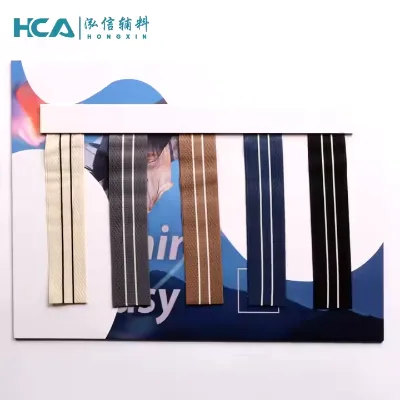
High Quality 4.5CM Colorful Polyester Striped Knit Twill Tapes for Sport Clothing
$0.18 - $1.00
MOQ: 2000

Dongguan FengSuer Textile Co., Ltd
- Verified by TUVRHEINLAND
- Trading Company
- China Guangdong
- Lead time23 days
- Avg. response≤ 4h
Main productsWoven Patches, Woven Labels, Embroidery Patch, Keychians, Hantags, Printing Labels, Printing Patches, Woven Tape, Ribbon
Main marketsEurope

NINGBO NCJN IMPORT AND EXPORT CO., LTD.
- Verified by TUVRHEINLAND
- Trading Company
- China Zhejiang
- Lead time15 days
- Avg. response≤ 16h
Main productsGarment Accessories, Zipper, Button, Lace, Tape, Velcro Tape, Hook and Eye Tape, Ring and Slider, Bra Cup
Main marketsSouth America,Africa,Southeast Asia/ Mideast,East Asia(Japan/ South Korea),Europe,Australia,North America

- Verified by TUVRHEINLAND
- Combined
- China Zhejiang
- Lead time30 days
- Avg. response≤ 7h
Main productsThread, Zipper, Lace, Button, Webbing & Tape, Ribbon, Interlining, Fabric, Tailoring Materials, Hook & Loop
Main marketsSouth America,Africa,Europe,Australia


Knitting Durable Stretch Nylon Spandex Mesh Elastic Tape for Waistband/Cuffs/Clothing
$0.05 - $0.10
MOQ: 20000 Meters

Custom Design Knitting Elastic Tape with Stripe and Plaid Pattern for Waistband
$0.01 - $0.05
MOQ: 20000 Meters

High Elasticity Knitted Woven Elastic Band Elastic Webbing Tape for Bag and Luggage
$0.02 - $0.05
MOQ: 20000 Meters

High Elasticity 38mm Black Woven Elastic Tape in Rolls
MOQ: 20000 Yards

Wholesale Dyed Woven Elastic Tape
MOQ: 20000 Yards

- Trading Company,Manufacturer/Factory
- China Zhejiang
- Lead time30 days
- Avg. response≤ 13h
Main productsFabric, Trimming, Lace, Tape, Zipper, Sewing Thread, Button, Scissors, Garments Accessories, Sewing Machine Parts
Main marketsSouth America,Eastern Europe,Mid East,North America,Southeast Asia,Eastern Asia,Oceania,Western Europe,Africa

Ningbo Alatex Textiles Co., Limited
- Trading Company
- China Zhejiang
- Lead time15 days
- Avg. response≤ 20h
Main productsTag Pin, Tag Gun, String Hang Tag, String Seal, String Tag, Seal Tag, Tag Fastener, Plastic Staple Pin Roll, Garment Accessories, Sewing Accessories
Main marketsSouth America,Africa,Southeast Asia/ Mideast,East Asia(Japan/ South Korea),Europe,Australia,North America

Ningbo Yinzhou Xindew Textile Co., Ltd.
- Trading Company
- China Zhejiang
- Lead time15 days
- Avg. response≤ 12h
Main productsKnitting Needles, Knitting Looms, Knitting Crochet Hook Set, Acrylic Yarn, Elastic Tape, Zipper, Thread, Hook and Loop, Baby Blankets, Baby Bibs
Main marketsSouth America,Africa,Southeast Asia/ Mideast,East Asia(Japan/ South Korea),Domestic,Europe,Australia,North America

Xiamen Ewonlong Webbing Co., Ltd.
- Verified by SGS
- Combined
- China Fujian
- Lead time15 days
- Avg. response≤ 1h
Main productsWebbing
Main marketsDomestic

Twill Elastic Elastic Webbing Tape Woven Elastic Belt 50m/Roll Custom 2 Inch 1 Inch Wide Elastic
$0.29 - $0.50
MOQ: 1000 Meters

Eco-Friendly Custom Printed Logo Webbing Knitting Bias Elastic Woven Tape for Underwear
$0.22 - $0.25
MOQ: 1000 Meters

High Temperature Resistance Nylon Rubber Jacquard Pattern Elastic Tape for Clothing/Underwears
$0.22 - $0.25
MOQ: 1000 Meters


Shantou City Jiancheng Weaving Co., Ltd
- Verified by SGS
- Combined
- China Guangdong
- Lead time15 days
- Avg. response≤ 7h
Main productsWebbing, Elastic Band, Jacquard Webbing, Nylon Elastic Band, Polyester Webbing, Fabric Webbing, Knitted Elastic Band, Flame Retardant Webbing, Nylon Fabric, Spandex Fabric
Main marketsSoutheast Asia/ Mideast,East Asia(Japan/ South Korea),Domestic,Europe,Australia,North America


$0.03 - $0.30
MOQ: 20 Meters

XIAMEN POPTRIMS TEXTILE CO.,LTD.
- Verified by BV
- Trading Company
- China Fujian
- Lead time15 days
- Avg. response≤ 6h
Main productsElastic Webbing, Elastic Suspender, Custom Lanyard, Garment Label, Rubber Patch, Shoelace, Strings & Drawcords, Fancy Satin Grosgrain Ribbon, Jacquard Ribbon, Custom Print Ribbon
Main marketsSouth America,Africa,Southeast Asia/ Mideast,East Asia(Japan/ South Korea),Europe,Australia,North America

- Verified by SGS
- Manufacturer/Factory
- China Zhejiang
- Lead time15 days
- Avg. response≤ 15h
Main productsNylon Taffeta Label Ribbon, Polyester Satin Label Ribbon, Woven Edge Satin Label Ribbon, Polyester Label Tape, TPU Silicone Label Ribbon, Label Printing Machine, Thermal Transfer Printer Ribbon, Label Printing Ink, Label Fabric Cutting Machine, Label Cutting Machine
Main marketsSouth America,Eastern Europe,Mid East,North America,Southeast Asia,Eastern Asia,Oceania,Western Europe,Africa

Phoenix Flame Holdings Limited
- Verified by BV
- Manufacturer/Factory,Group Corporation
- China Guangdong
- Lead time15 days
- Avg. response≤ 11h
Main productsWebbing Cords Buttons Zipper Drawcord & Shoelace, Label Lace Lanyard Wristband, Embroidery Patches Beaded Applique Belt, Underwear Accessories TPU Rubber Tape
Main marketsSouth America,Eastern Europe,North America,Southeast Asia,Oceania,Western Europe,Africa

Yuyao Qili Insulation Materials Factory
- Verified by SGS
- Combined
- China Zhejiang
- Lead time30 days
- Avg. response≤ 25h
Main productsFiberglass
Main marketsDomestic

Guangzhou Govolon Trade Co., Ltd.
- Trading Company,Manufacturer/Factory
- China Guangdong
- Lead time15 days
- Avg. response≤ 25h
Main productsGarment Accessories, Lace, Button, Zipper, Fringe and Tassels, Belt Ribbon, Garment Trimming, Patch Badge, Buckle, Hotfix
Main marketsSouth America,Mid East,North America,Southeast Asia,Western Europe,Africa


Comprehensive Sourcing Guide
High Tenacity Knitted Twill Tape Supplier Concentration and Factory Types
The current supplier landscape for High Tenacity Knitted Twill Tape reveals a distinct concentration of manufacturing and trading entities within specific industrial hubs. Evidence indicates that a significant portion of available suppliers are located in China, with Zhejiang province emerging as a notable cluster for these textile accessories. This geographic concentration suggests that buyers seeking High Tenacity Knitted Twill Tape will likely encounter suppliers operating from this region, which is known for its robust textile infrastructure. The presence of suppliers in Zhejiang implies that logistics and supply chain efficiencies may be optimized for this area, potentially reducing transit times for raw materials and finished goods. However, buyers must recognize that not all suppliers in this region are manufacturers; many are trading companies that facilitate transactions between factories and international buyers. Understanding this distinction is crucial for evaluating the true source of the product and the potential for cost savings or quality control issues. The concentration of suppliers in this specific location provides a centralized point of inquiry for buyers, allowing for more efficient comparison of multiple vendors within a single geographic context. This clustering effect can also indicate a mature supply chain ecosystem, where specialized services for textile production, such as dyeing and finishing, are readily available. Buyers should leverage this geographic data to prioritize suppliers who can demonstrate direct access to manufacturing facilities in these known hubs, rather than relying solely on trading intermediaries. The density of suppliers in Zhejiang also suggests a competitive market, which may drive innovation and variety in product offerings, including different widths and compositions of knitted elastic tapes. This competitive environment can benefit buyers by providing a wider selection of options, from standard white and black tapes to customized colors and specifications. However, the high density of suppliers also means that buyers must be diligent in their verification processes to distinguish between genuine manufacturers and resellers. The focus on Zhejiang as a key location highlights the importance of regional expertise in sourcing High Tenacity Knitted Twill Tape, as local suppliers may have better insights into regional production capabilities and constraints. This geographic insight serves as a foundational element for any sourcing strategy, guiding buyers toward regions with proven expertise in textile accessory production.
The types of companies operating in this space vary significantly, ranging from pure trading companies to those with their own brand identities and manufacturing capabilities. Many suppliers identified in the current results are classified as trading companies, which means they act as intermediaries between the buyer and the actual factory. This structure can offer benefits such as consolidated shipping and simplified communication, but it may also add layers of cost and potential miscommunication regarding product specifications. In contrast, some suppliers possess their own brand capabilities, indicating a higher level of integration in the supply chain and potentially greater control over quality and production schedules. The presence of suppliers with "Own brand" capabilities suggests that some entities are not just resellers but are actively involved in product development and branding. This distinction is vital for buyers who require consistent quality and specific technical attributes, as branded suppliers may have more established quality control protocols. Additionally, the main products listed by these suppliers often include a broad range of textile accessories, such as lace, thread, buttons, and zippers, indicating that many vendors are generalists in the garment accessories market. This generalist approach can be advantageous for buyers looking to consolidate their sourcing across multiple accessory types, as it allows for combined orders and potentially better shipping rates. However, it also means that buyers must verify the specific expertise of each supplier in High Tenacity Knitted Twill Tape, as a generalist may not have the same depth of knowledge as a specialist. The variety in company types underscores the need for careful due diligence, as the level of service, pricing, and reliability can vary widely between trading companies and those with direct manufacturing ties. Buyers should assess whether the supplier’s business model aligns with their specific needs, whether that be cost efficiency, customization flexibility, or technical support. Understanding the composition of the supplier base helps in setting realistic expectations for lead times, communication responsiveness, and product availability. The mix of trading companies and branded entities creates a diverse marketplace, offering buyers multiple pathways to source High Tenacity Knitted Twill Tape, each with its own set of advantages and potential drawbacks.
How to Verify High Tenacity Knitted Twill Tape Suppliers
Verifying the credibility and capabilities of High Tenacity Knitted Twill Tape suppliers requires a multi-layered approach that goes beyond surface-level profile information. One of the primary methods for establishing trust is through third-party verification services, which provide an independent assessment of a supplier’s business legitimacy and operational capacity. In the current supplier results, verification badges from recognized entities such as TÜV Rheinland and Bureau Veritas (BV) are present, indicating that these suppliers have undergone rigorous audits. These certifications serve as a critical indicator of a supplier’s commitment to quality and compliance, as they involve on-site inspections and process evaluations. Buyers should prioritize suppliers who hold these verifications, as they provide a higher degree of assurance regarding the supplier’s existence and operational stability. However, verification is just the first step; buyers must also examine the specific scope of these certifications to ensure they cover the relevant aspects of production, such as quality management systems or environmental standards. The presence of ISO9001:2015 and ISO14001:2015 certificates among some suppliers further reinforces their adherence to international standards for quality and environmental management. These certifications are particularly important for buyers who have strict compliance requirements or who operate in markets with stringent regulatory standards. By checking for these specific certifications, buyers can filter out suppliers who may lack the necessary infrastructure or management systems to deliver consistent quality. Additionally, buyers should look for evidence of product-specific testing and compliance, such as color fastness ratings or tensile strength tests, which are critical for high tenacity applications. The availability of detailed product attributes, such as composition and feature lists, also aids in verification, as it allows buyers to cross-reference supplier claims with technical specifications. Buyers should request test reports or certificates of analysis for specific batches to ensure that the high tenacity claims are substantiated by data. This level of scrutiny helps to mitigate the risk of receiving substandard products that may fail in end-use applications. Furthermore, buyers should verify the supplier’s response time and communication efficiency, as these are indicators of their operational readiness and customer service quality. A supplier with a slow response time may struggle to address urgent issues or provide timely updates on order status. By combining verification badges, certification checks, and performance metrics, buyers can build a comprehensive profile of each supplier’s reliability and capability. This thorough verification process is essential for establishing a secure and productive sourcing relationship, ensuring that the selected supplier can meet the technical and commercial requirements of the High Tenacity Knitted Twill Tape order.
In addition to third-party verifications, buyers should conduct their own due diligence by analyzing the supplier’s product portfolio and technical documentation. The detailed product attributes provided in the search results, such as material composition, customization options, and standard specifications, offer valuable insights into the supplier’s expertise. For instance, suppliers listing specific compositions like Spandex/Polyester or Polyester/Rubber demonstrate a clear understanding of the materials used in high tenacity tapes. Buyers should compare these technical details against their own requirements to ensure compatibility. The presence of customization options, such as available colors and widths, indicates flexibility in production, which is a key advantage for buyers with specific design needs. However, buyers must also verify the supplier’s ability to deliver on these customization promises, as not all suppliers may have the equipment or expertise to handle complex orders. Requesting samples is a crucial step in this verification process, as it allows buyers to physically assess the quality, elasticity, and finish of the High Tenacity Knitted Twill Tape. Samples provide tangible evidence of the supplier’s production capabilities and help to identify any potential issues before committing to a large order. Buyers should also inquire about the supplier’s quality control processes, including how they inspect raw materials and finished goods. A supplier with a robust quality control system is more likely to deliver consistent products that meet the required specifications. Additionally, buyers should check for any past performance issues or complaints, which can be found through online reviews or industry forums. While not always available, such feedback can provide valuable context about the supplier’s reliability and customer service. By combining technical verification, sample evaluation, and background checks, buyers can make informed decisions about which suppliers to engage with. This comprehensive approach ensures that the selected supplier is not only verified on paper but also capable of delivering high-quality products that meet the buyer’s specific needs. The goal is to minimize risk and maximize the potential for a successful long-term partnership, which is essential for the ongoing supply of High Tenacity Knitted Twill Tape.
What to Compare Across High Tenacity Knitted Twill Tape Suppliers
When evaluating multiple suppliers for High Tenacity Knitted Twill Tape, buyers must systematically compare key operational and commercial metrics to identify the most suitable partner. One of the most critical factors to compare is the lead time, which directly impacts inventory management and production scheduling. In the current supplier results, lead times vary, with some suppliers indicating a lead time of 23 days and others suggesting 30 days. This difference can be significant for buyers with tight deadlines or just-in-time manufacturing requirements. Buyers should assess whether the stated lead times are realistic and consistent with their own production cycles. Additionally, buyers should inquire about the factors that influence lead times, such as raw material availability and production capacity, to understand the potential for delays. Another important metric to compare is the minimum order quantity (MOQ), which affects the financial risk and flexibility of the order. The search results show varying MOQs, with some products requiring a minimum of 1000 units and others specifying 5000 meters per color. These differences can influence the buyer’s ability to test new products or manage inventory levels. Buyers should determine which MOQ aligns best with their volume needs and budget constraints. Furthermore, buyers should compare the response times of suppliers, as this reflects their customer service efficiency and operational responsiveness. Suppliers with faster response times, such as those with a response time of 2.04 hours compared to 5.46 hours, may be better equipped to handle urgent inquiries and resolve issues quickly. This responsiveness is crucial for maintaining smooth communication and ensuring that any problems are addressed promptly. Buyers should also compare the main products offered by each supplier to assess their breadth of expertise. Suppliers who offer a wide range of textile accessories, such as lace, thread, and zippers, may provide better value through consolidated sourcing. However, buyers must ensure that the supplier’s core competency includes High Tenacity Knitted Twill Tape, as generalists may not have the same level of specialization. By comparing these metrics, buyers can create a weighted scoring system to objectively evaluate each supplier. This structured comparison helps to identify the supplier that offers the best balance of cost, quality, and service. It also allows buyers to negotiate more effectively, as they have a clear understanding of the market standards and the relative strengths of each supplier. The goal is to select a supplier who not only meets the technical requirements but also aligns with the buyer’s operational preferences and strategic goals.
Price is another critical dimension that must be compared across suppliers, as it directly impacts the overall cost of goods. The search results indicate a range of prices for High Tenacity Knitted Twill Tape, with some products priced between $0.01 and $0.02 per unit, while others range from $0.08 to $0.09. These price variations can be attributed to differences in material composition, width, and customization options. Buyers should analyze the price-to-value ratio, considering factors such as quality, lead time, and service level, rather than simply choosing the lowest price. It is also important to compare the
FAQs
What is the typical lead time for knitted elastic tape orders?
Suppliers in Zhejiang, China, generally offer a lead time of 23 to 30 days for production. This timeframe applies to standard knitted elastic tape orders. Buyers should confirm specific delivery schedules with the supplier before placing bulk orders to ensure alignment with project deadlines.
What are the price ranges for High Tenacity Knitted Twill Tape?
Prices for knitted elastic tape typically range from $0.01 to $0.09 per meter depending on specifications. Higher tenacity options may cost between $0.028 and $0.05 per meter. These prices vary based on material composition, width, and customization requirements requested by the buyer.
What is the minimum order quantity for custom elastic tape?
The minimum order quantity is often set at 1000 meters for standard items. However, for specific color variations, the MOQ may require 5000 meters per color. Some suppliers list an MOQ of 20000 meters for certain high-stretch woven options. Buyers should verify the exact MOQ with the supplier.
Are these suppliers verified for quality and compliance?
Yes, several suppliers hold ISO9001:2015 and ISO14001:2015 certifications. Verification services include TÜV Rheinland and Bureau Veritas. These credentials indicate adherence to international quality and environmental standards. Buyers can rely on these certifications to assess supplier reliability and product consistency for their sourcing needs.
How quickly do suppliers respond to sourcing inquiries?
Response times vary among suppliers, ranging from approximately 2 to 5.5 hours. Faster response times indicate higher availability and engagement levels. Buyers seeking urgent quotes should prioritize suppliers with quicker response metrics to ensure timely communication and efficient order processing throughout the sourcing journey.
What materials are used in high tenacity knitted elastic tape?
Common materials include Spandex, Polyester, and Rubber blends. These compositions provide high elasticity and tenacity suitable for garments and bags. Some products also feature Eco-Friendly attributes. The specific material choice affects the tape's stretch recovery and durability, so buyers should select based on their end-use requirements.