Long Range Electric Car Suppliers and Manufacturers
Source 16 verified suppliers for Long Range Electric Car options from China. Compare key dimensions including lead times, certifications, and pricing to identify suitable partners. Review product specifications and request quotes to proceed with sourcing; review the available evidence before requesting comparable quotations from suitable candidates.
Suppliers List

Qingdao Uniland Import and Export Co., Ltd.
- Verified by TUVRHEINLAND
- Trading Company,Manufacturer/Factory
- China Shandong
- Lead time23 days
- Avg. response≤ 3h
Main productsElectric Car, Electric Vehicle, EV Car, Electric Truck, Electric Van, Electric Bus, Used Electric Car, Toyota EV, Avatr Car, Byd Cars
Main marketsSouth America,Eastern Europe,Mid East,North America,Southeast Asia,Eastern Asia,Oceania,Western Europe,Africa


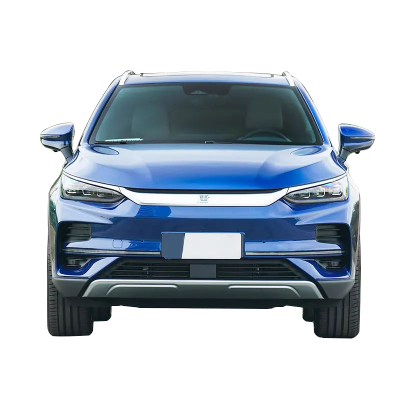
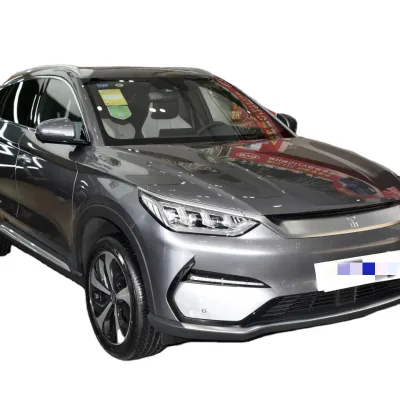
Electric SUV Vehicle New Car Fast Charging Long Nedc Range Range Extended Electric Car
$29780.00 - $29980.00
Moq: 1


Electric Car Fast Speed Long Nedc Range Fully Enclosed Mutiple Color Available on Sale
$35700.00 - $36100.00
Moq: 1

Wuxi Leo New Energy Vehicle Co., Ltd.
- Verified by BV
- Trading Company
- China Jiangsu
- Lead time15 days
- Avg. response≤ 22h
Main productsElectric Car, Electric Bike, Mobility Scooter, Electric Tricycle
Main marketsNorth America


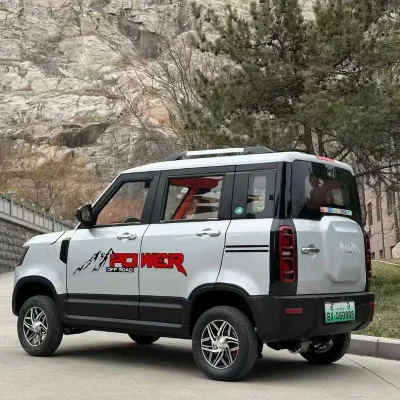
Four Wheel High-Power High Configuration Electric Car Three Seats Long-Distance Commuting
$2350.00 - $2500.00
Moq: 2


Jinjiang Yashixin Electric Vehicle Manufacturing Co., Ltd
- Verified by BV
- Manufacturer/Factory
- China Fujian
- Lead time0 days
- Avg. response≤ 3h
Main productsElectric Scooter, Electric Motorcycle, Electric Mobility Scooter, 3 Wheel Scooter, 4 Wheel Scooter
Main marketsEastern Europe,North America,Southeast Asia,Western Europe
Hebei Laichuang Industrial Co., Ltd.
- Verified by Intertek
- Trading Company
- Lead time7 days
- Avg. response≤ 2h
Main productsElectric Four-Wheeler Vehicle, Electric Bicycle, Electric Tricycle, Fuel-Powered Tricycle, Tuktuk Tricycle
Main marketsSouth America(60%), Africa(15%), Eastern Europe(5%)

Jiangsu Jinpeng Group Co., Ltd.
- Verified by TUVRHEINLAND
- Trading Company,Manufacturer/Factory
- China Jiangsu
- Lead time30 days
- Avg. response≤ 11h
Main productsTricycle, Electric Tricycle, Electric Vehicle, Electric Car, Electric Bike, Gasoline Tricycle, Electric Scooter, Electric Leisure Three Wheel, Electric Passenger Tricycle, Mini Electric Car
Main marketsSouth America,Eastern Europe,Mid East,North America,Southeast Asia,Eastern Asia,Oceania,Africa

Long Drive Mileage Distance 320km Range Electric Car with Cheap Price Electric Vehicle
$9550.00 - $9950.00
Moq: 4


Henan Feibo Automobile Industry Co.,Ltd
- Verified by BV
- Combined
- China Henan
- Lead time30 days
- Avg. response≤ 25h
Main productsElectric Car, Electric 3 Wheels Car, Electric 4 Wheels Car, Electric Scooter
Main marketsEurope

Zhejiang Pukao New Energy Vehicle Co., Ltd
- Verified by SGS
- Trading Company
- China Zhejiang
- Lead time45 days
- Avg. response≤ 4h
Main productsElectric Pickup, Mini Electric Car, Electric Pickup Truck, Electric Car, New Energy Vehicle, Car, New Energy Car, Pickup
Main marketsAfrica

Qingdao Yuanhe Chelian New Energy Vehicle Service Co., Ltd.
- Verified by SGS
- Trading Company
- China Shandong
- Lead time30 days
- Avg. response≤ 5h
Main productsAuto Parts, Byd Electrical Car, Mercedes Smart #1 Electric Car, Byd Qin Electric Car, Byd Haiyang Song, Byd Dolphin Electric Car, Byd Han Electric Car, Byd Seal Electric Car, Byd E5 Electric Car, Xpeng Electric Car
Main marketsSouth America,Southeast Asia/ Mideast,Domestic

- Manufacturer/Factory
- China Shandong
- Lead time60 days
- Avg. response≤ 9h
Main productsElectric Car, Dump Truck, Vehicle Parts
Main marketsSouth America,Eastern Europe,Mid East,North America,Southeast Asia,Eastern Asia,Oceania,Western Europe,Africa


220 Km & 290 Km, High Speed & Low Speed, Electric Car with EEC Certification
$6800.00 - $8980.00
Moq: 24


Zhengzhou Carstar Vehicle Sales Co., Ltd.
- Verified by TUVRHEINLAND
- Trading Company
- China Henan
- Lead time30 days
- Avg. response≤ 8h
Main productsUsed Bus, Used Dump Truck, Used Tractor Truck, Used Water Tanker Truck, Used Fuel Tank Truck, Used Excavator, Used Bulldozer, Used Loader, Used Motor Grader, Semi-Trailer
Main marketsSouth America,Africa,Europe


Electric Vehicles High Speed EV Car Family Car Electric Cars Adults Vehicle
$12000.00 - $20000.00
Moq: 1


Energy Electric Vehicle Motors Car Automobile Cars Made in China Car SUV Electric
$12000.00 - $20000.00
Moq: 1

Guangdong Lvtong New Energy Electric Vehicle Technology Co., Ltd.
- Verified by SGS
- Trading Company,Manufacturer/Factory
- China Guangdong
- Lead time23 days
- Avg. response≤ 6h
Main productsGolf Cart, Eectric Car, Sightseeing Bus, Utility Vehicle, Electric Vehicle, Electric UTV, Electric Golf Cart, Electric Bus, Buggy Car, Club Car
Main marketsSouth America,Eastern Europe,Mid East,North America,Southeast Asia,Eastern Asia,Oceania,Western Europe,Africa

Shandong Everbright Foreign Trade Co., Ltd.
- Trading Company
- Shandong, China
- Lead time20 days
- Avg. response≤ 19h
Main productsHumanoid Robots,Quadruped Industrial Robots,Tracked Mobile Robots,Robot Spare Parts,Collaborative Robot Arms
Main marketsSouth America(25.0%), Eastern Europe(25.0%), Eastern Asia(15.0%), North America(10.0%), Mid East(10.0%), Africa(5.0%), Western Europe(5.0%), Southeast Asia(5.0%)
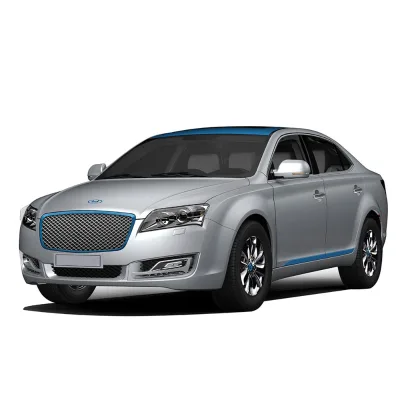
$8888.00 - $18000.00
Moq: 1
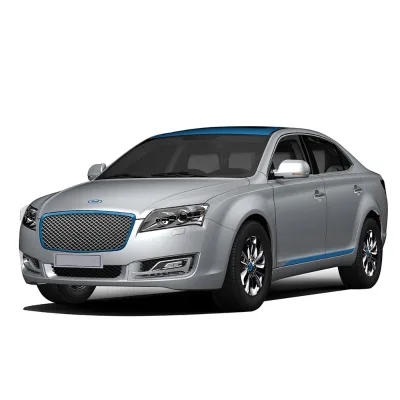
130km/h Electric Car/vehicle with Fabulous Quality Good Performance and Long Crusing Range on Sale
$7643.82 - $7847.65
Moq: 2
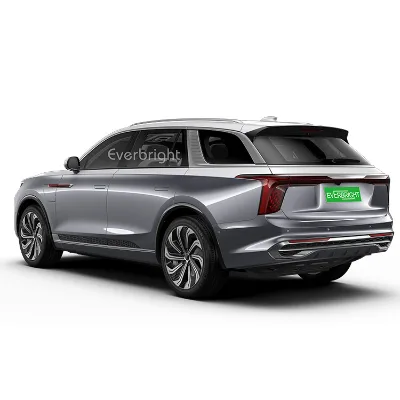
An Electric Car with Different Designs
Contact supplier

Xiamen Longmy Electric Vehicle Co., Ltd.
- Verified by BV
- Trading Company
- China Fujian
- Lead time30 days
- Avg. response≤ 2h
Main productsGolf Car, Electric Golf Cart, Electric Sightseeing Vehicle, Electric Vehicle, Electric Sightseeing Bus, Tourist Sightseeing Vehicle, Tourist Sightseeing Bus, Golf Electric Car, Electric Golf Trolley, Electric Sightseeing Car
Main marketsDomestic
Hubei Chengyun Automobile Trading Co., Ltd.
- Trading Company
- Hubei, China
- Lead time7 days
- Avg. response≤ 1h
Main productsDongfeng mengshi parts,dongfeng 4WD off road vehicles parts,dongfeng 6WD off road vehicles parts,Dongfeng EQ1093 AWD Off Road Long Nose Head Personnel Carrier Cargo Truck,construction komatsu
Main marketsSouth America(50.0%), Northern Europe(40.0%), Africa(10.0%)

Guangdong Haize Intelligent Equipment Technology Co., Ltd.
- Verified by TUVRHEINLAND
- Manufacturer/Factory
- China Guangdong
- Lead time0 days
- Avg. response≤ 2h
Main productsDie Casting Machine, Melting Furnace, Industrial Robot, Spray Machine, Soup Extractor, Extractor, Manipulator, Processing Machine

- Verified by TUVRHEINLAND
- Trading Company,Manufacturer/Factory
- China Shandong
- Lead time15 days
- Avg. response≤ 10h
Main productsCNC Drilling Machine, CNC Punching Machine, Hydralic Shearing Machine, Press Brake, CNC Laser Cutting Machine, CNC Plasam Flame Cutting Machine, Angle Steel Line
Main marketsSouth America,Mid East,Southeast Asia,Africa






Comprehensive Sourcing Guide
Long Range Electric Car Supplier Concentration and Factory Types
Supplier results for Long Range Electric Car sourcing point to several Chinese provinces where production and export activity is concentrated. Shandong-based companies in the current results list electric cars, electric trucks, vans and buses as main products, and combine trading company and manufacturer/factory roles, which suggests they can both produce and consolidate vehicles for export. Jiangsu suppliers focus more narrowly on electric cars, bikes, mobility scooters and tricycles, operating as trading companies that aggregate output from surrounding workshops. Fujian manufacturers center on scooters, motorcycles and mobility vehicles, with some overlap into enclosed passenger vehicles. When your own search returns different provinces, map concentration by repeating the same exercise: group results by province, note which main-product lists genuinely include highway-capable vehicles, and weight clusters by verified status rather than listing volume.
Factory type matters as much as geography in this category. A manufacturer/factory listing indicates control over assembly and potentially battery integration, while a trading company may be reselling another plant's vehicles, which affects customization and warranty handling. Some Shandong entries describe their own brand and research capacity, a signal worth weighting for a technically complex product like a highway-spec electric SUV. Be careful that "long range" in a listing title does not always mean a highway vehicle: some enclosed four-wheel cars in these results are low-speed 60V designs with lead-acid batteries. Classify each supplier by vehicle class first, then by factory role, before shortlisting.
How to Verify Long Range Electric Car Suppliers
Verification for Long Range Electric Car suppliers should start with the platform's third-party inspection badges. In the current results, some suppliers carry TUVRHEINLAND verification and others carry BV verification, meaning an independent inspection body has audited company identity and premises. Treat these as a baseline, not a guarantee: they confirm the company exists and operates at a listed address, but they do not certify vehicle quality. Next, check system certifications shown on the profile. One Shandong supplier lists ISO 9000, ISO 9001, ISO 14000 and TS 16949, the automotive quality management standard, which is particularly relevant for vehicle assembly. A Fujian manufacturer lists BSCI and ISO 9001. Ask for the actual certificate numbers and scope documents rather than relying on profile labels.
Then verify the product itself. Vehicle listings in these results declare CE certification and, in some cases, CCC; request the certificate holder's name, the notified body involved, and whether the certificate covers the exact model and configuration you intend to order. Confirm the declared vehicle attributes against physical inspection: battery type (ternary lithium in the highway models shown), motor power, wheelbase and body dimensions should match a pre-shipment inspection report. Finally, test responsiveness directly. Response times in the current data range from roughly three hours to over twenty-one hours; a supplier answering within a few hours is easier to work with during engineering changes, but send the same technical question to several suppliers and compare the depth, not just the speed, of their replies.
What to Compare Across Long Range Electric Car Suppliers
Build a comparison sheet from the attributes suppliers actually display, and record blanks rather than assuming values. Useful dimensions in this category include: verified status (TUV Rheinland or BV badges), system certifications, supplier type (manufacturer versus trading company), location, lead time, MOQ, response time, and main products. In the current results, quoted lead times range from about fifteen days to about twenty-three days, and one Fujian entry shows no measured lead time, so request a confirmed production schedule in writing. MOQs are low in these listings — as low as one unit for the highway-spec SUVs and two units for a closed low-speed model — but a sample-friendly MOQ does not necessarily extend to container-priced orders, so confirm MOQ at your target volume.
On the product side, compare specifications that drive range and compliance: battery capacity and chemistry, maximum cruising range, motor power and torque, top speed, drive mode, and body type. The highway SUVs shown use ternary lithium batteries with stated cruising range around 550km and motor outputs between 150kW and 230kW, priced in the roughly $29,300 to $36,100 band depending on trim, while enclosed low-speed four-wheel models sit near $2,200 to $2,500. Do not compare these classes on price alone; they serve different regulatory environments. Also compare response time and whether customization is explicitly offered, since one Jiangsu listing states customization is available. Weight suppliers that answer specification questions with documents over those answering with marketing copy.
Common Long Range Electric Car Sourcing Risks
The most frequent risk in this category is specification inflation: listing pages advertise "long range" or "supercar" positioning while the underlying vehicle is a low-speed 60V lead-acid design unsuitable for highway registration. The current results contain both highway-spec BEVs (ternary lithium, ~550km stated range, CE-declared) and low-speed enclosed cars (PHEV-typed, 60V, >800W), sometimes using similar titles. Mitigate this by requiring a signed specification sheet that fixes battery chemistry, capacity, motor power, top speed and dimensions before any deposit, and by matching the declared model code — the results show distinct model identifiers per trim — to the certificate covering that exact model.
Certification and battery risks follow closely. A CE mark declared in a listing may belong to a different trim, an earlier model year, or a component rather than the whole vehicle; ask who holds the certificate and whether it is transferable to your import market's scheme. Lithium battery packs raise shipping obligations: confirm UN 38.3 test summaries and correct dangerous-goods classification before booking freight, since these requirements are specific to battery-equipped vehicles and will block shipment if missing. Trading-company intermediaries create accountability risk — when a warranty claim arises months later, you need to know whether the factory or the trader honors it; ask for the manufacturing entity's name and a tri-party warranty arrangement in the contract. Finally, slow responders (some profiles show response times above twenty hours) become a real risk when pre-shipment defects require rapid decisions; set response-time expectations in the purchase agreement.
Long Range Electric Car Regional Sourcing and Logistics
The regional picture from current results: Shandong suppliers cover the broadest vehicle portfolio — electric cars, trucks, vans and buses — with both factory and trading roles, making them candidates for mixed-vehicle programs. Jiangsu trading companies specialize in small enclosed electric vehicles and scooters, which suits buyers needing low-speed models consolidated with other products. Fujian factories concentrate on two- and three-wheel electric vehicles with enclosed passenger options. Highway-spec SUVs in these results declare China as origin. When your search shows other provinces, evaluate them the same way: match the province's declared main products to the vehicle class you need, and prefer clusters where multiple suppliers compete on the same vehicle type, since competition improves pricing and parts availability.
Logistically, finished vehicles are bulky, so plan around container utilization. Highway SUVs in these results are roughly 4.6m long and around 2.1 to 2.3 tonnes curb weight, meaning two units may fill a container with careful racking; low-speed models at about 2.3m can consolidate more units per container. Ask each supplier whether vehicles ship with batteries installed or detached, because battery-in-vehicle shipments face stricter dangerous-goods handling; some listings show iron-frame packing for smaller vehicles. Lead times in the current data range from about fifteen to twenty-three days for production, to which you must add ocean transit and customs clearance for vehicles plus battery documentation. Confirm whether the supplier handles export declaration and provides the certificate package your port requires, and inspect vehicles at loading, since transit damage claims on finished vehicles are contentious.
Long Range Electric Car Commercial Terms and Order Planning
Structure commercial terms around the verification gap between deposit and delivery. With MOQs as low as one unit shown for highway-spec models, a practical plan is a paid sample or single-unit pilot order to validate build quality, documentation and range claims before committing to container volumes; one Jiangsu supplier's low-speed model shows an MOQ of two, which still supports pilot testing. Require a signed specification annex referencing the exact model identifier and trim, since the results show price bands that vary by trim (for example, a listed SUV range of roughly $29,780–$29,980 for one trim versus $34,900–$35,500 for a higher-output version). Fix what the price includes: homologation documents, battery test summaries, spare keys, tooling and chargers.
Payment and milestone planning should reflect this category's long documentation chain. Avoid full prepayment; use a deposit with balance against a passed pre-shipment inspection that checks VIN assignment, battery labels, declared specifications and cosmetic condition. Escrow or platform-protected payment is worth requesting where offered, but the current results do not confirm escrow availability for any supplier, so verify it per supplier rather than assuming it. Lead times of roughly fifteen to twenty-three days apply to production only; build in time for battery dangerous-goods paperwork, booking space for vehicle racking, and destination-market registration documents. Finally, plan spares: negotiate a first-service parts kit — battery modules or cells per the supplier's warranty terms, motor controller, charger and body panels — with the initial order, because post-delivery parts supply from a vehicle factory is far slower than from a components supplier.
FAQs
What is the price range for long range electric cars?
Prices for long range electric cars typically range from $2,200 to $36,100 depending on specifications. Models with higher motor power and larger batteries command higher prices. For instance, standard SUVs start around $29,300, while premium variants with extended range reach up to $35,500. Buyers should verify specific model pricing before ordering.
What is the minimum order quantity for these vehicles?
The minimum order quantity varies by supplier and product type. Some manufacturers accept a single unit for standard electric SUVs, while others require a minimum of two units for specialized models like three-seat closed electric cars. Buyers must check the specific MOQ listed for each product to ensure their order meets the supplier's threshold.
How long does delivery take for electric vehicles?
Lead times for electric vehicles generally range from zero to twenty-three days. Some suppliers offer immediate availability with zero lead time, while others require up to twenty-three days for production or processing. Response times also vary, with some suppliers replying within three hours and others taking over twenty hours. Buyers should confirm timelines before purchase.
Where are these electric car suppliers located?
Suppliers for long range electric cars are primarily located in China. Specific manufacturing hubs include Shandong, Jiangsu, and Fujian provinces. These regions host both trading companies and manufacturers. Buyers can filter results by these locations to find suppliers closer to their logistics preferences or to assess regional supply chain capabilities for their orders.
What certifications do these electric cars have?
Electric cars in this category typically hold CE certification for product safety. Suppliers often maintain ISO 9001, ISO 14000, and TS 16949 system certifications. Some products also display CCC certification. Verification services like TÜV Rheinland and BV may be used to validate supplier credentials. Buyers should request current certification documents to ensure compliance with local regulations.
What battery types are used in these vehicles?
Most long range electric cars use ternary lithium batteries for high energy density. Some models, particularly smaller or specialized vehicles, utilize lead-acid batteries. Battery capacities vary, with some SUVs featuring 84.8kWh packs for extended range. Buyers should specify their preferred battery chemistry and capacity requirements to ensure the vehicle meets their performance and durability expectations.