MIM Sintered Electronic Component Suppliers and Manufacturers
Source 18 verified suppliers for MIM Sintered Electronic Component needs. Compare key dimensions including location, lead time, and response time to find the right partner. Review product details and request quotes directly; review the available evidence before requesting comparable quotations from suitable candidates.
Suppliers List

ShenZhen Nova Semiconductor Co., Ltd.
- Verified by TUVRHEINLAND
- Trading Company
- China Guangdong
- Lead time15 days
- Avg. response≤ 4h
Main productsIC, Resistor, Capacitor, Sensor, Transistor, Diode, Triode, Passive Components, Drive IC, PCBA
Main marketsSouth America,Southeast Asia/ Mideast,East Asia(Japan/ South Korea),Europe,Australia,North America
Shenzhen Hongchuang Technology Co., Ltd.
- Manufacturer, Trading Company
- Guangdong, China
- Lead time1 days
- Avg. response≤ 4h
Main productsIntegrated circuit,Igbt,Sensors,Resistor,Capacitor
Main marketsEastern Europe(15.0%), North America(15.0%), South America(10.0%), Africa(8.0%), Southeast Asia(8.0%), Domestic Market(5.0%), South Asia(5.0%), Southern Europe(5.0%), Northern Europe(5.0%), Central America(5.0%), Western Europe(5.0%), Eastern Asia(5.0%), Mid East(5.0%), Oceania(4.0%)

Qingdao Boyude Moulding Co., Ltd.
- Verified by SGS
- Combined
- China Shandong
- Lead time45 days
- Avg. response≤ 7h
Main productsPlastic Parts, Plastic Products, Injection Molded Parts, Plastic Injection Mould, Plastic Fittings, Plastic Component, Plastic Corner, Plastic Buckle, Injection Molding
Main marketsEast Asia(Japan/ South Korea),Europe

Shenzhen New Chip international Ltd
- Verified by TUVRHEINLAND
- Combined
- China Guangdong
- Lead time30 days
- Avg. response≤ 8h
Main productsPCB, PCBA, IC
Main marketsSoutheast Asia/ Mideast

Mu Star (shenzhen) Industry Co., Ltd.
- Verified by BV
- Trading Company
- China Guangdong
- Lead time15 days
- Avg. response≤ 13h
Main productsPCBA, PCB Assembly, PCB PCBA, SMT, Medical PCBA, SMD, PCB Assembly Service, EMS, PCBA Assembly
Main marketsNorth America

Hangzhou Electric Driving Technology Co., Ltd.
- Trading Company,Manufacturer/Factory
- China Zhejiang
- Lead time23 days
- Avg. response≤ 4h
Main productsIC Chip, Integrated Circuit, Diode, Resister, Transformer, Capacitor, Stepper Motor, GPS Module, Transistor
Main marketsSouth America,Eastern Europe,Mid East,Southeast Asia,Western Europe

Sailing Commercial (Tianjin) Co., Ltd.
- Verified by TUVRHEINLAND
- Trading Company
- China Tianjin
- Lead time15 days
- Avg. response≤ 3h
Main productsThyristor, Welding Diode, High Voltage Control Cabinet, Water Cooling Power Cable, Semiconductor Device
Main marketsSouth America,Africa,Southeast Asia/ Mideast,East Asia(Japan/ South Korea),Domestic,Europe,Australia,North America

- Manufacturer/Factory
- China Guangdong
- Lead time15 days
- Avg. response≤ 10h
Main productsPCB Board, PCB / Aluminum PCB, Printed Circuit Board / Circuit Board, LED PCB / LED Strip / Light PCB, PCBA / PCB Assembly, OEM PCB / MCPCB, Multilayer PCB / Fr4 PCB, Flexible PCB / FPC, SMT Assembly / PCB Layout, PCB Manufacturers / Electronics PCB
Main marketsSouth America,Eastern Europe,North America,Southeast Asia,Oceania,Western Europe
Shenzhen E-Link Technology Co., Ltd.
- Trading Company
- Guangdong, China
- Lead time7 days
- Avg. response≤ 7h
Main productsModules,Sensor,LED Display,Thermoelectric Cooler,Temperature controller
Main marketsNorth America(28.000000000000004%), Southeast Asia(22.0%), Western Europe(12.0%), South America(10.0%), Africa(8.0%), Eastern Europe(8.0%), South Asia(6.0%), Eastern Asia(2.0%), Northern Europe(2.0%), Oceania(2.0%)
Electronic components HMHA2801R2V hot offer
Contact supplier
Electronic components MIC4427YM TR hot offer
Contact supplier
Electronic components MOC3023TVM hot offer
Contact supplier
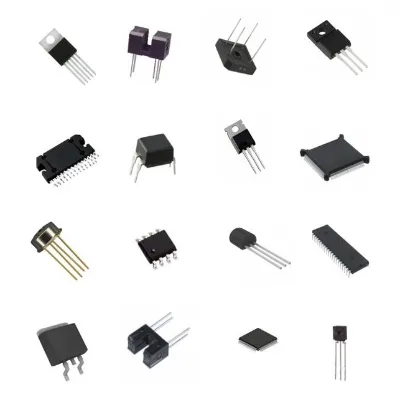
Electronic components MOC213M hot offer
Contact supplier
Shenzhen Winsome Electronic Technology Co., Ltd.
- Manufacturer, Trading Company, Business Service (Transportation, finance, travel, Ads, etc)
- Guangdong, China
- Lead time3 days
- Avg. response≤ 2h
Main productsic
Main marketsWestern Europe(11.11%), Eastern Asia(11.11%), Mid East(11.11%), Oceania(11.11%), Africa(11.11%), Southeast Asia(11.11%), Eastern Europe(11.11%), South America(11.11%), North America(11.11%)
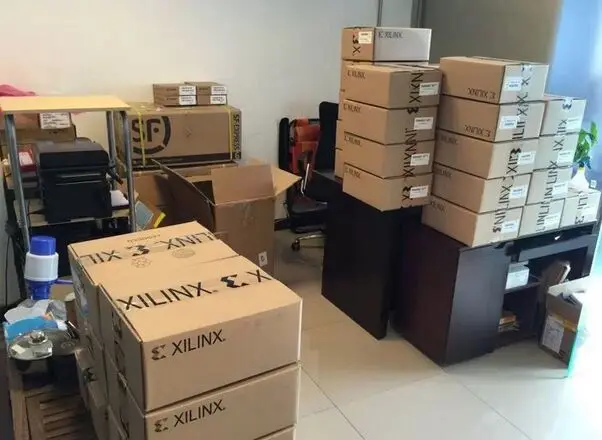
- Trading Company
- Hubei, China
- Lead time3 days
- Avg. response≤ 9h
Main productselectronic components,semiconductor,active components,passive components,Integrated Circuits (ICs)
Main marketsNorth America(19.0%), Eastern Europe(13.0%), South America(13.0%), South Asia(13.0%), Southeast Asia(10.0%), Southern Europe(9.0%), Mid East(5.0%), Western Europe(5.0%), Domestic Market(4.0%), Eastern Asia(2.0%), Northern Europe(2.0%)
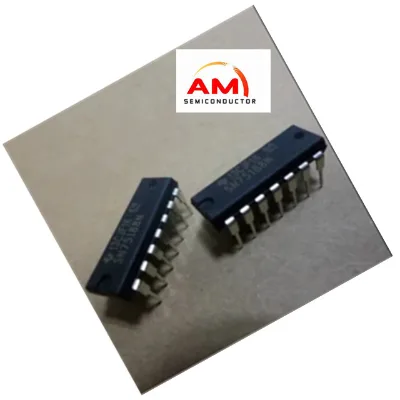
TC4016 Discrete Semiconductor Modules Power Module - Diode
Contact supplier

Shenzhen Jiachuang Weiye Technology Co., Ltd.
- Trading Company, Buying Office
- Guangdong, China
- Lead time3 days
- Avg. response≤ 7h
Main productsIC,Diodes,Integrate Circuit,connector,IGBT
Main marketsDomestic Market(10.0%), Southern Europe(10.0%), Northern Europe(10.0%), Eastern Europe(10.0%), South America(10.0%), Western Europe(10.0%), Southeast Asia(8.0%), North America(7.000000000000001%), South Asia(6.0%), Mid East(5.0%), Oceania(5.0%), Eastern Asia(5.0%), Central America(4.0%)

Shenzhen Xinjiaye Electronics Technology Co., Ltd.
- Verified by BV
- Trading Company,Manufacturer/Factory
- China Guangdong
- Lead time15 days
- Avg. response≤ 10h
Main productsPCB, PCB Board, Aluminum PCB, FPC, PCBA, LED PCB, PCB Assembly, Printed Circuit Board, Rigid PCB, MCPCB
Main marketsSouth America,Eastern Europe,Mid East,North America,Southeast Asia,Eastern Asia,Oceania,Western Europe,Africa

Shenzhen Jin Da Peng Technology Co., Ltd.
- Trading Company
- China Guangdong
- Lead time23 days
- Avg. response≤ 13h
Main productsTransistor, IC, IGBT, Sollcon- Controlled Rectifier, Three End Comstant Voltage
Main marketsSouth America,Others(foreignTradeCapacity.exportBusinessCapacityMarketOther),Southeast Asia/ Mideast,Europe

- Trading Company
- China Guangdong
- Lead time15 days
- Avg. response≤ 7h
Main productsElectronic Components, Semiconductor, Charger/Adapter Power Mangement Solution, Integrated Circuit, House Appliance Control Broad Solution Design, PCBA, CKD SKD Components, Mobile Accessories, LED Driver IC, Mosfet/IGBT
Main marketsSoutheast Asia/ Mideast

Shenzhen Junbo Trading Co., LTD
- Verified by SGS
- Trading Company
- China Guangdong
- Lead time15 days
- Avg. response≤ 3h
Main productsIC Chip, Integrated Circuit, Electronic Components, PCB, Light Emitting Diode, Memory RAM, SMD, Relay, Resistors, Modules
Main marketsNorth America

Shenzhen Donghui Precision Mechanical & Electrical Co., Ltd.
- Verified by SGS
- Combined
- China Guangdong
- Lead time23 days
- Avg. response≤ 1h
Main productsCNC
Main marketsDomestic

Shenzhen Leruan Electronics Co., Ltd.
- Verified by TUVRHEINLAND
- Trading Company
- China Guangdong
- Lead time15 days
- Avg. response≤ 9h
Main productsElectronic Product, SSD, RAM
Main marketsDomestic






Comprehensive Sourcing Guide
MIM Sintered Electronic Component Supplier Concentration and Factory Types
Suppliers serving the MIM Sintered Electronic Component category appear in the current results under two broad location labels: Guangdong in southern China and Shandong in the east. Guangdong-based listings in this category lean heavily toward integrated circuits, resistors, capacitors, sensors, transistors, diodes and PCBA work, with company types ranging from pure trading companies to combined manufacturer-and-trader operations. Shandong listings cluster around plastic parts, injection moulded components, moulds and plastic fittings, which can be relevant when a MIM part is assembled into or packaged with a moulded housing. Treat these regional signals as starting points rather than proof of MIM capability, because none of the visible product titles explicitly name MIM sintered processes.
Factory type matters more than headline location. A trading company can consolidate multiple component lines, which the listings show through broad main-product lists covering ICs and passive components, while a manufacturer-and-trader hybrid may control forming and sintering directly. R&D capacity labels such as ODM or OEM plus ODM indicate whether a supplier can modify a design or only reproduce drawings. Some listings also show third-party verification badges, such as TÜV Rheinland on an electronics-focused profile and SGS on a plastics-focused profile. When your search returns no explicitly MIM-labelled factory, plan to map the cluster yourself: filter by province, then probe each candidate's main products, verification status and declared capacity before shortlisting.
How to Verify MIM Sintered Electronic Component Suppliers
Verification should begin with what a supplier profile actually displays rather than what marketing copy claims. The listings in this category include concrete verifiable fields: a province-level location, a company type (trading company, manufacturer and trading company, or combined), a verification badge such as TÜV Rheinland or SGS, a numeric response time, a stated lead time in days, and declared R&D capacity. One Guangdong electronics profile, for example, shows TÜV Rheinland verification with a response time of 3.70 hours and a 15-day lead time, while a Shandong plastics profile shows SGS verification with a 6.74-hour response time and a 45-day lead time. These are profile-level facts you can cross-check, not guarantees of MIM process control.
Because MIM sintering is a specialised powder-metallurgy process, go beyond the profile. Ask each candidate to confirm in writing whether they perform feedstock compounding, injection moulding, debinding and sintering in-house or through subcontractors, and request process-flow documentation. A profile listing IC chips or injection moulded parts does not itself evidence sintering furnaces, so ask for furnace specifications, sintering atmospheres and dimensional-shrinkage control methods. Verify the badge independently where possible, since a displayed certification mark describes the audited entity and scope, which may not cover your part. Finally, reconcile the stated production role: a self-described combined company should be able to explain which operations it owns, and reluctance to answer that question is a useful screening signal.
What to Compare Across MIM Sintered Electronic Component Suppliers
Comparison works best when you build a side-by-side sheet from the attributes the profiles actually display. Useful dimensions here include lead time, MOQ, response speed, verification status, company type, location, main products and R&D capacity. The spread in the current results is instructive: lead times range from 1 day on a Guangdong IC-focused profile, to 15 days on another Guangdong profile, to 45 days on the Shandong injection-moulding profile. Response times run from roughly 3.7 to 4 hours on electronics profiles up to 6.74 hours on the plastics profile. Remember that not every supplier exposes every attribute; some listings omit establishment year or MOQ entirely, so record gaps rather than assuming worst or best cases.
Product-level listings add another comparison layer. Visible MOQs in this category range from 1 piece to 10 pieces on IC listings and up to 1,000 pieces on the injection-moulded part listing, with per-unit prices spanning from fractions of a cent to over two hundred dollars depending on the component. Customization availability appears on most but not all listings, so confirm it explicitly for a MIM part requiring tooling. Weigh company type against your need: a trading company may aggregate components quickly, while a manufacturer-and-trader hybrid may respond faster to engineering changes. Prioritise the dimensions that actually constrain your project — typically MOQ, lead time and ODM/OEM capability — rather than averaging across all fields.
Common MIM Sintered Electronic Component Sourcing Risks
The most significant risk in this category is capability mismatch: a supplier's profile may look relevant because it lists electronic components or moulded parts, yet lacks any MIM sintering equipment. The current results illustrate this pattern — one profile's main products are ICs, resistors and sensors from Guangdong, while another's are plastic injection moulded parts from Shandong. Neither product list proves powder-metallurgy competence. If a candidate sources MIM parts through an unnamed subcontractor, you inherit opacity on material traceability, sintering temperature records and shrinkage compensation, all of which drive dimensional defects in sintered parts.
Other risks are visible in the data. Lead-time dispersion is real: the same category shows 1-day, 15-day and 45-day lead times, and a mould-dependent part will almost certainly sit near the long end. MOQ floors can block prototyping — one plastics listing requires 1,000 pieces — while very low MOQs on IC listings reflect commodity trade, not custom MIM economics. Verification badges such as SGS or TÜV Rheinland may cover company-level trade conduct rather than your specific process, and custom parts on the plastics profile are priced only with a maximum, meaning final cost is undisclosed until quotation. Long response times, like the 6.74-hour figure on one profile, slow engineering iteration. Mitigate each risk by demanding written process ownership, pilot-run dimensional reports and confirmed tooling timelines before committing.
MIM Sintered Electronic Component Regional Sourcing and Logistics
Regional signals in this category point to two Chinese provinces. Guangdong profiles dominate the electronics side, listing integrated circuits, sensors, IGBTs, resistors and capacitors, and showing fast response times (3.70 and 4 hours) and short lead times (1 and 15 days). Shandong contributes the injection-moulding cluster, with SGS verification, ODM and OEM capacity, and a 45-day lead time reflecting mould-making cycles. Because none of the visible listings explicitly names a MIM sintering factory, use these provinces as search anchors — querying supplier directories by province plus powder-metallurgy and sintering terms — rather than as confirmed MIM hubs.
Logistics planning should follow the product's physical realities. Sintered metal components are compact and durable in transit, but their listings show varied packing conventions: foam packing on one IC listing, standard packing on an EEPROM listing and customised packing on the injection-moulded listing. Confirm packing specs early, since sintered parts with tight tolerances or thin walls may need custom trays that add tooling lead time. Where a MIM part must be assembled with purchased ICs or moulded housings, Guangdong's density of component traders can shorten the assembly supply chain, while Shandong's mould houses may serve better for housings. Factor the 45-day lead time typical of mould work into your launch calendar, align shipping mode with part value density, and verify export documentation ability before placing a first order.
MIM Sintered Electronic Component Commercial Terms and Order Planning
Commercial terms in this category vary sharply by product type, so anchor your negotiation to disclosed figures and verify the rest. Visible price floors range from $0.0001 to $0.10 per piece on commodity IC listings, $0.385 fixed on a specified DIP part, $12.86–$13.26 on a GPS module, and up to $233.20 on a high-end positioning chip; the injection-moulded part shows only a $9.90 ceiling with final pricing on quotation. A custom MIM sintered component will resemble the quotation-based plastics listing more than the commodity IC listings, because tooling amortisation and material lots dominate cost. Ask for a tiered quote separating tooling, first-article and production-unit prices.
Order planning should respect the observed lead-time and MOQ spread. A 1-day lead time on an electronics profile likely reflects stock items, not custom production; a 15-day figure suits repeat IC orders; and the 45-day Shandong lead time signals mould-dependent timelines that your MIM tooling will resemble. Plan payment around staged milestones tied to tooling completion, first-article approval and shipment, and consider escrow-style protection where the platform offers it, noting that not every profile displays escrow status. Confirm customization terms in writing — several listings state customization is available but without scope. Finally, sequence orders so prototype quantities at MOQ 1–10 levels validate dimensions before any 1,000-piece commitment.
MIM Sintered Electronic Component Supplier Concentration and Factory Types
Suppliers serving the MIM Sintered Electronic Component category in the current results fall under two broad location labels: Guangdong in southern China and Shandong in the east. Guangdong-based listings lean heavily toward integrated circuits, resistors, capacitors, sensors, transistors, diodes and PCBA work, with company types ranging from pure trading companies to combined manufacturer-and-trader operations. Shandong listings cluster around plastic parts, injection moulded components, moulds and plastic fittings, which can matter when a MIM part is assembled into or packaged with a moulded housing. Treat these regional signals as starting points rather than proof of MIM capability, because none of the visible product titles explicitly name a MIM sintered process.
Factory type matters more than headline location. A trading company can consolidate multiple component lines, which the listings show through broad main-product lists covering ICs and passive components, while a manufacturer-and-trader hybrid may control forming and finishing directly. R&D capacity labels such as ODM, or OEM plus ODM, indicate whether a supplier can modify a design or only reproduce drawings. Some listings also display third-party verification badges, such as TÜV Rheinland on an electronics-focused profile and SGS on a plastics-focused profile. When your search returns no explicitly MIM-labelled factory, plan to map the cluster yourself: filter by province, then probe each candidate's main products, verification status and declared capacity before shortlisting, and record which candidates disclose nothing on these fields.
FAQs
Where are these suppliers located?
Suppliers are located in China, specifically in Guangdong and Shandong provinces. Guangdong suppliers focus on electronic components and integrated circuits, while Shandong suppliers specialize in plastic injection molding. Buyers should verify the exact city and facility details to ensure proximity to logistics hubs and supply chain requirements.
What is the typical lead time?
Lead times vary significantly by supplier type and product. Electronic component suppliers report lead times of 1 to 15 days. Plastic molding suppliers indicate a longer lead time of 45 days. Buyers must confirm the specific delivery schedule with the supplier before placing an order to avoid production delays.
What is the minimum order quantity?
MOQs depend on the product category. Electronic components have low MOQs, starting from 1 unit up to 10 units. Plastic injection molded parts require a higher MOQ of 1000 units. Buyers should check the specific product page for the exact MOQ to ensure it aligns with their procurement volume.
Are suppliers verified?
Yes, suppliers hold third-party verification certifications. Some are verified by TÜV Rheinland, while others hold SGS certification. These verifications indicate that the suppliers have undergone specific audits for business legitimacy and quality management systems. Buyers should review the verification badges on the supplier profile for detailed audit reports.
What is the price range?
Prices vary widely based on the component type. Electronic components range from $0.001 to $233.20 per unit. Plastic parts are priced up to $9.90 per unit. Buyers should request detailed quotations for specific part numbers to get accurate pricing, as costs depend on volume, customization, and material specifications.
Do suppliers offer customization?
Customization is available for many products. Electronic components offer available customization options for specific models. Plastic parts support OEM and ODM services with customized colors and shapes according to drawings. Buyers should provide detailed specifications or samples to suppliers to ensure the final product meets their exact engineering requirements.