Natural Stone Crystal Pendant Suppliers and Manufacturers
Compare 28 verified suppliers offering Natural Stone Crystal Pendant options from China Guangdong and Jiangsu. Review lead times, certifications like ISO 9001, and product specs such as plating and stone size before requesting quotes; review the available evidence before requesting comparable quotations from suitable candidates.
Updated
Suppliers List

East Sunrise Jewelry Co., Limited
- Verified by SGS
- Manufacturer/Factory
- China Guangdong
- Lead time23 days
- Avg. response≤ 8h
Main productsPendant, Necklace, Bracelet, Ring, Earring, Carving, Ornament, Loose Bead, Jewelry, Semi-Precious Stones
Main marketsSouth America,Eastern Europe,Mid East,North America,Southeast Asia,Eastern Asia,Oceania,Western Europe,Africa


Semi Precious Stone Natural Crystal Amethyst Charming Necklace Jewelry Sets
$2.50 - $3.20
MOQ: 50 Pieces


Lianyungang Best International Trading Co., Ltd.
- Trading Company
- Jiangsu, China
- Lead time10 days
- Avg. response≤ 3h
Main productsCrystal Carvings,Crystal Chips,Crystal Spheres,Crystal Tumbled
Main marketsNorth America(30.00%), Oceania(15.00%), Domestic Market(7.00%), Southern Europe(5.00%), Northern Europe(5.00%), Central America(5.00%), Western Europe(5.00%), Eastern Asia(5.00%), South America(5.00%), Africa(5.00%), Eastern Europe(5.00%), South Asia(3.00%), Mid East(2.00%)
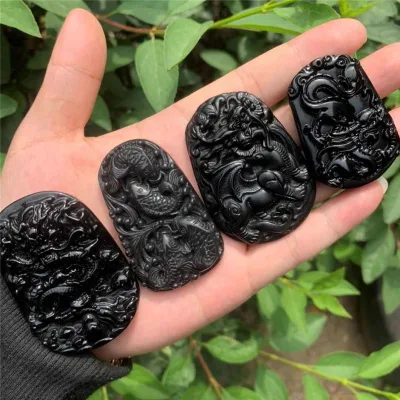
Natural Crystal Pendants Obsidian Pendants Healing Stones Crystal Craft
$1.0254 - $2.0509
MOQ: 1 pieces
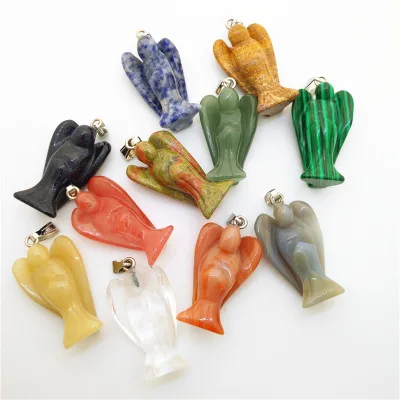
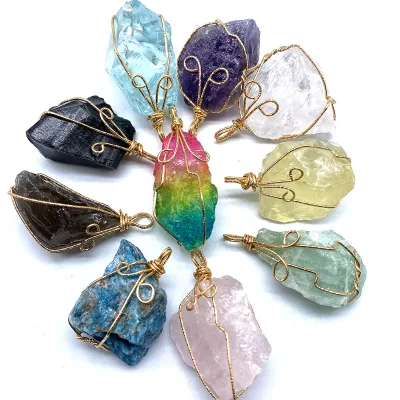
Donghai Pingtouge Jewelry Co., Ltd.
- Trading Company
- Jiangsu, China
- Lead time0 days
- Avg. response≤ 3h
Main productscarved crystal,carving natural crystal stones,crystal carving,crystal animal carvings,crystal moon carving
Main marketsEastern Europe(30.00%), Northern Europe(20.00%), North America(20.00%), South Asia(20.00%), South America(10.00%)
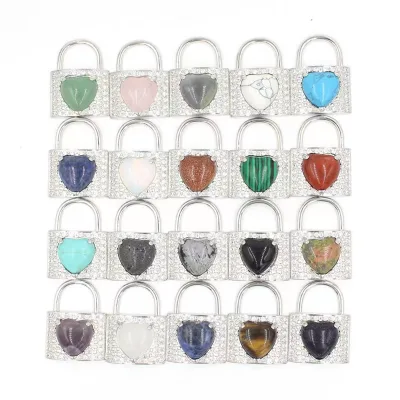
Healing Crystal Stone Couple Lock Pendant Natural Gemstones Heart Lovers Lock Pendant
$1.9536 - $2.5689
MOQ: 50 pieces
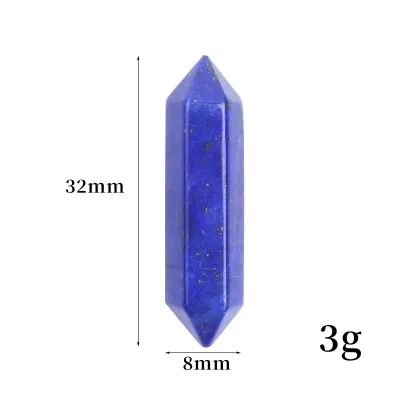
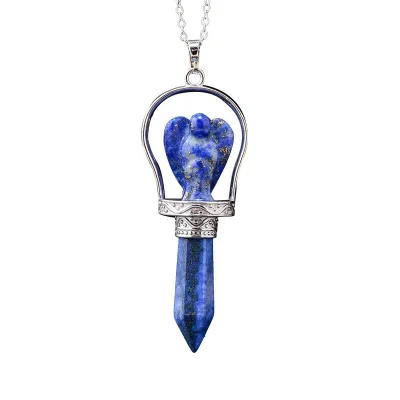
Wholesale fashion natural gemstone crystal point angel pendant crystal pendant
$6.1527 - $7.1781
MOQ: 100 pieces
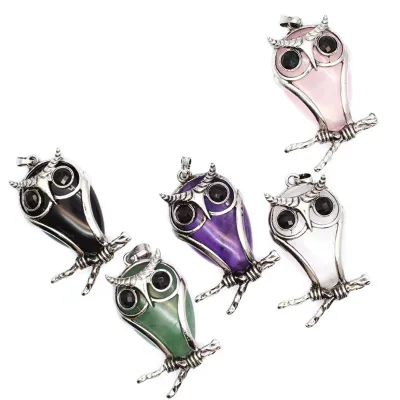
Alloy with Natural Crystal Gemstone Owl Pendants
$2.00 - $2.50
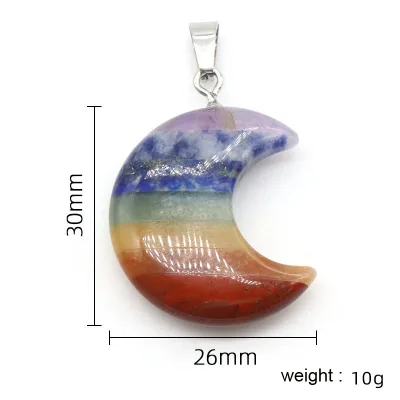
Natural 7 Color Crystal Gem Crescent Carving Seven Chakras Moon Star Healing Stone Pendant
$2.0554 - $3.0838
MOQ: 100 pieces
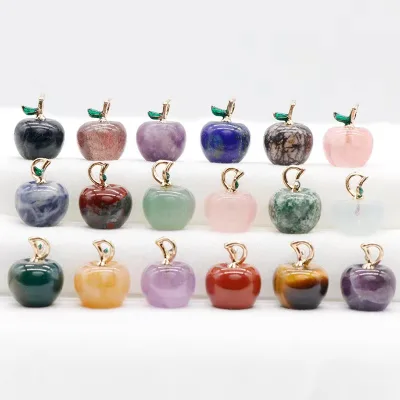
Donghai Kindfull Crystal Product Co., Ltd.
- Manufacturer, Trading Company
- Lead time旺季: "1 - 50":7,"51 - 100":9,"> 100":"To be negotiated", 淡季: "1 - 50":7,"51 - 100":9,"> 100":"To be negotiated"
- Avg. response≤ 2h
Main productsCarving/Crystal Points/Crystal Palm/Crystal Sphere/Beauty Tools
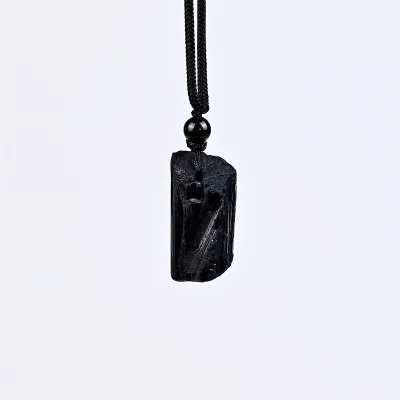
Popular Design Jewelry Crystal Stone Natural Black Tourmaline Pendant for Crystal Healing Stones
$1.1257 - $1.5344
MOQ: 2 pieces
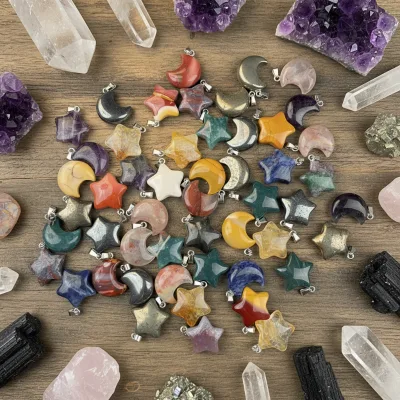
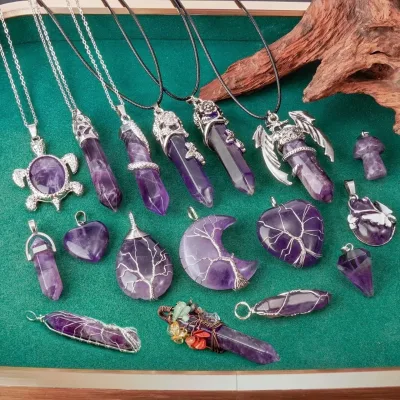
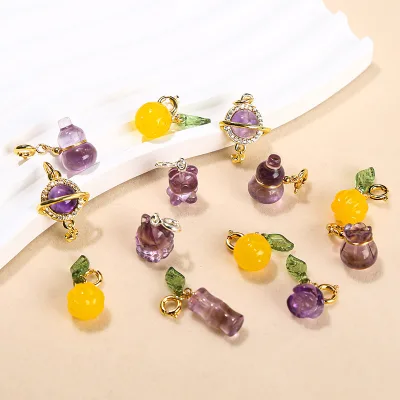

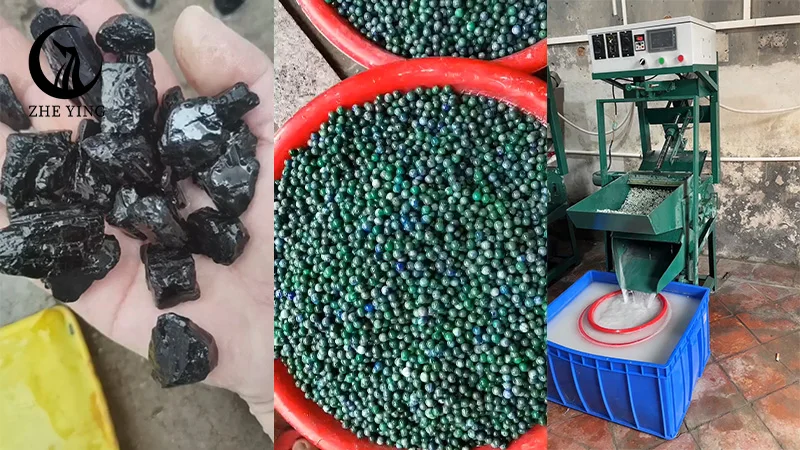
JiangXi Brother Union Crystal&Stone Co.,Ltd.
- Manufacturer, Trading Company
- JIANGXI, China
- Lead time10 days
- Avg. response≤ 2h
Main products4~10mm stone beads,2-4mm faceted stone,natural stone beads,glass beads hydro beads,pearl
Main marketsSouth America(15.00%), North America(15.00%), South Asia(10.00%), Eastern Asia(10.00%), Domestic Market(5.00%), Southeast Asia(5.00%), Southern Europe(5.00%), Northern Europe(5.00%), Central America(5.00%), Western Europe(5.00%), Eastern Europe(5.00%), Mid East(5.00%), Oceania(5.00%), Africa(5.00%)
Donghai Pao Pao Mouse Jewelry Co., Ltd.
- Manufacturer, Trading Company
- Jiangsu, China
- Lead time15 days
- Avg. response≤ 1h
Main productsCrystal Jewelry Design, Crystal Carving, Crystal Sphere Tower, Crystal Chips Tumbled, Crystal Raw Specimen
Main marketsNorth America(34.00%), Eastern Europe(20.00%), Southeast Asia(14.00%), Africa(11.00%), South America(8.00%), Mid East(8.00%), Oceania(5.00%)
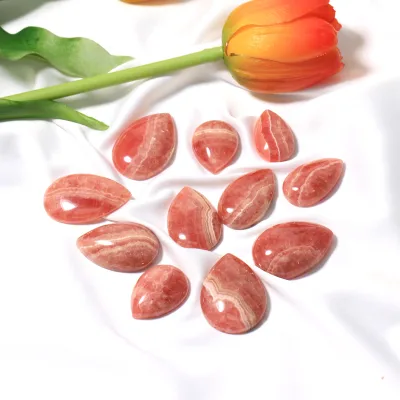
$1.5479 - $8.2545
MOQ: 10 Minimum
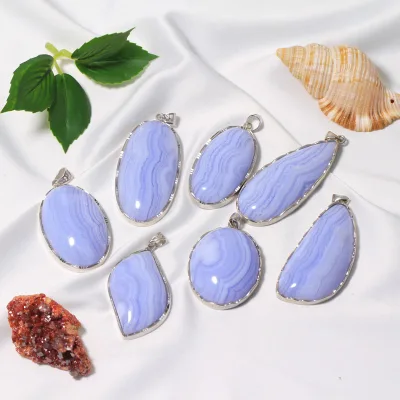
$5.00 - $15.00
MOQ: 10 Minimum
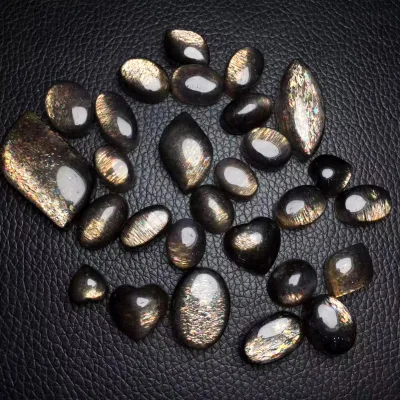
$21.5433 - $29.7963
MOQ: 10 pieces
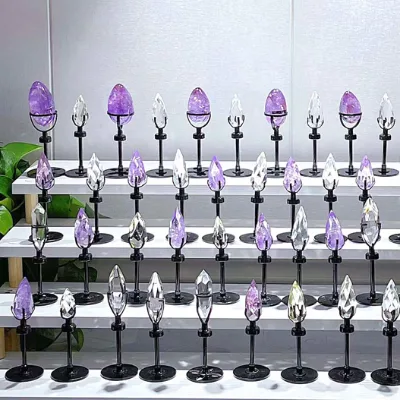
$24.80 - $30.80
MOQ: 5 pieces

Changzhou Sitan Imp. and Exp. Co., Ltd.
- Verified by BV
- Trading Company
- China Jiangsu
- Lead time15 days
- Avg. response≤ 10h
Main productsFitness Equipment, Barbell Series, Resistance Bands, Agility & Speed, Yoga Ball, Massage Series, Power Rack, Weight Ball, Charging Notebook, Custom Logo Goods
Main marketsSoutheast Asia/ Mideast,Domestic,Europe,North America


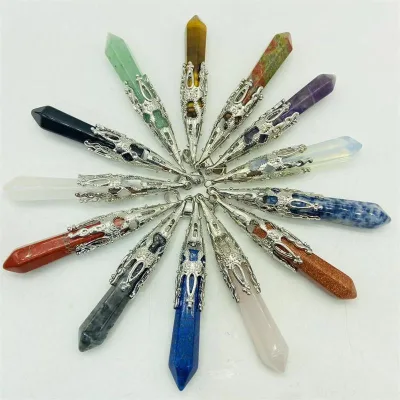
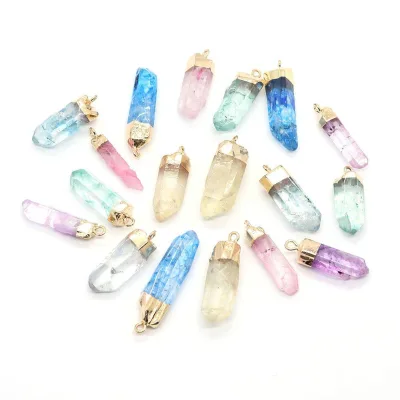
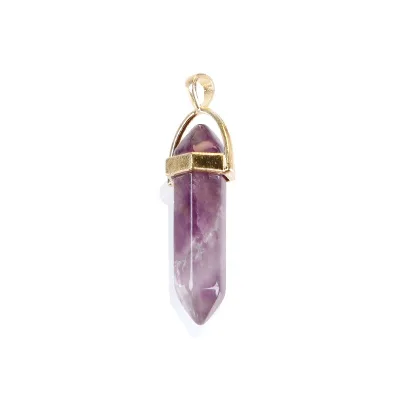
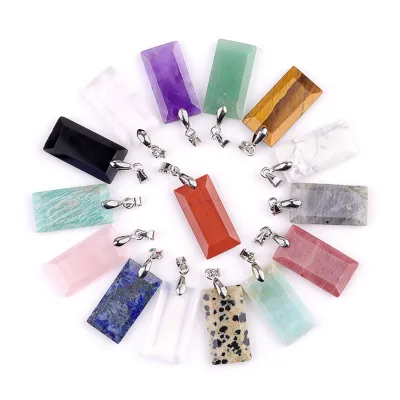
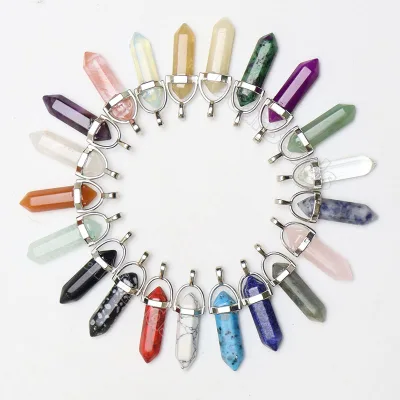
Natural Stone Hexagon Column Pendant Bullet Crystal Rough Stone Healing Meditation Pendant Necklace
$0.47 - $1.15
MOQ: 100 Pieces

Jinjiang Jiayi Supply Chain Management Co., Ltd.
- Verified by BV
- Trading Company
- China Fujian
- Lead time30 days
- Avg. response≤ 1h
Main productsGift, Shoe, Garment, Machine
Main marketsDomestic
Yiwu Shanmei Arts And Gifts Co., Ltd.
- Verified by TüVRheinland
- Manufacturer, Trading Company
- Lead time旺季: "1 - 100":5,"101 - 200":7,"201 - 500":10,"> 500":"To be negotiated", 淡季: "1 - 100":5,"101 - 200":7,"201 - 500":10,"> 500":"To be negotiated"
- Avg. response≤ 8h
Main productsGemstone Jewelry, Metal Jewelry, Jewelry Accessories, Sterling Sliver Jewelry, Gemstone Decorations
- Trading Company
- Jiangsu, China
- Lead time10 days
- Avg. response≤ 1h
Main productsCrystal Crafts
Main marketsNorth America(70.00%), Oceania(20.00%), Western Europe(10.00%)
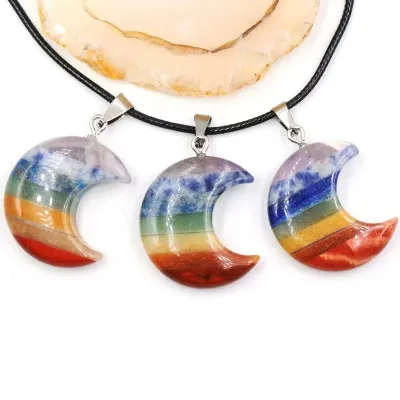
Wholesale Natural Healing Stones Crystal Pendant Seven Chakra Moon Shape Pendant
$4.00 - $4.40
MOQ: 20
Yiwu Zhuofang Jewelry Co., Ltd.
- Manufacturer, Trading Company
- Lead time旺季: "1 - 100":10,"> 100":"To be negotiated", 淡季: "1 - 100":10,"> 100":"To be negotiated"
- Avg. response≤ 2h
Main productsNecklace , Earring, Rings, Bracelet , Brooch

Longyuan (Guangzhou) Industrial Development Co., Ltd.
- Verified by TUVRHEINLAND
- Manufacturer/Factory
- China Guangdong
- Lead time23 days
- Avg. response≤ 6h
Main productsJewelry, Fashion Watch, Hair Accessories, Men Jewelry, Women Jewelry, Pendants, Brooches, Bracelets, Crowns, Necklaces
Main marketsSouth America,Eastern Europe,Mid East,North America,Western Europe

Natural Crystal Stone Hexagonal Column Pendant Diamond Cut Bullet Head Necklace Quartz Point Pendant
$1.10 - $1.50
MOQ: 20 Pieces


Huizhou FubaoYing jewelry Co., LTD.
- Manufacturer, Trading Company
- Guangdong, China
- Lead time0 days
- Avg. response≤ 3h
Main productsStone Pendant,Bracelets,Stone Beads,Cabochon Stone,Stone Crafts
Main marketsNorth America(50.00%), Western Europe(15.00%), Oceania(10.00%), Southeast Asia(10.00%), Northern Europe(5.00%), South America(5.00%), Mid East(5.00%)

Donghai Jinuo Crystal Co., Ltd.
- Trading Company
- Jiangsu, China
- Lead time15 days
- Avg. response≤ 8h
Main productsCrystal Point, Crystal Ball, Crystal Massage Wand, Crystal Carving, Crystal Gravel
Main marketsNorth America(59.00%), Western Europe(10.00%), Northern Europe(10.00%), South America(5.00%), Oceania(5.00%), Southeast Asia(3.00%), Southern Europe(2.00%), Eastern Asia(2.00%), Eastern Europe(2.00%), South Asia(1.00%), Mid East(1.00%)
Donghai County Boheng Crystal Jewelry Co., Ltd.
- Verified by SGS Group
- Manufacturer, Trading Company
- Lead time3 days
- Avg. response≤ 2h
Main productsCrystal Water Bottle; Crystal Smoking Pipes; Crystal Point/Crystal Gravel/Crystal Ball
Main marketsNorth America(60%), Oceania(15%), Southeast Asia(10%)

Shenzhen Hengda Xin Jewelry Co., Ltd.
- Verified by BV
- Combined
- China Guangdong
- Lead time15 days
- Avg. response≤ 3h
Main productsJewelry, Stainless Steel Fittings, Stainless Steel Jewelry, Necklace, Bracelet, Stud Earrings, Ring, Pendant, Fashion Jewelry, Fashion Accessories
Main marketsSoutheast Asia/ Mideast,East Asia(Japan/ South Korea),Domestic,Europe,Australia,North America


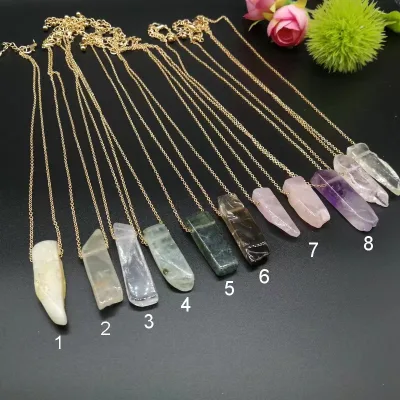
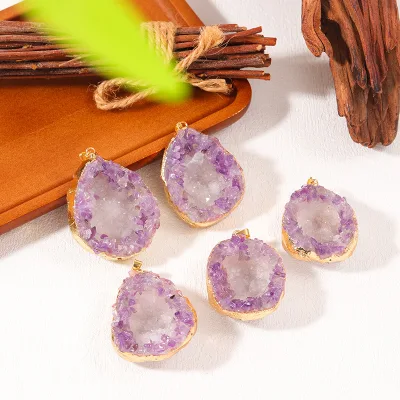
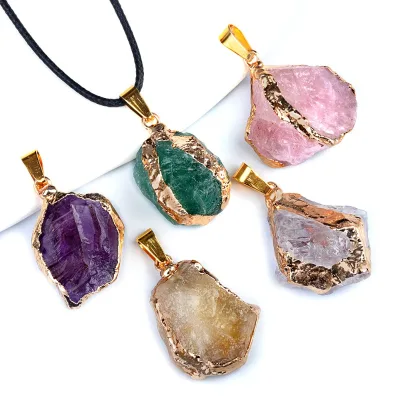
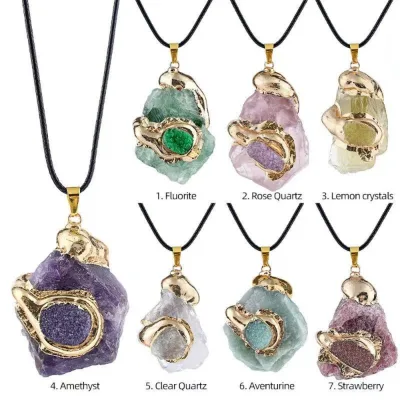
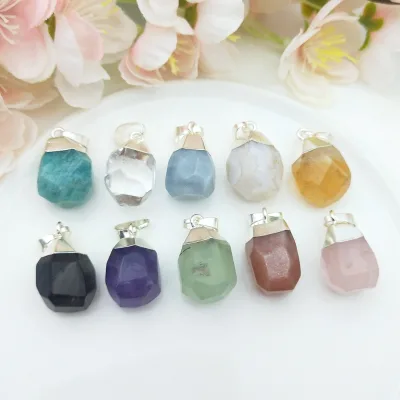
Natural Amethyst Pendant Irregular Crystal Rough Gold-Plated Necklace DIY Jewelry Accessory
$1.58 - $2.30
MOQ: 3 Pieces
- Verified by Intertek
- Manufacturer, Trading Company
- Lead time7 days
- Avg. response≤ 2h
Main productsBeaded Jewelry, Natural Stone Bracelet, Fashion Necklace, Crystal Bracelets, Pearl Necklace
Main marketsNorth America(40%), Western Europe(35%), Oceania(10%)

Fujian Junqing Trade Co., Ltd.
- Verified by CTI
- Trading Company
- China Fujian
- Lead time15 days
- Avg. response≤ 2h
Main productsDesign Necklace, Design Earring, Design Bracelet Bangle, Design Hair Accessories, Shoes, Bags, Watches, Sunglasses, Home Decoration
Main marketsSoutheast Asia/ Mideast,Europe,North America


Wholesale Jewelry Natural Gemstone Pendant White Quartz Crystal Charm Key Chain Keyring Pendant
$1.59 - $4.99
MOQ: 50 Pieces


$2.06 - $3.90
MOQ: 50 Pieces
Donghai Kindfull Crystal Product Co., Ltd.
- Manufacturer, Trading Company
- Lead time旺季: "1 - 300":7,"301 - 500":20,"501 - 1000":31,"> 1000":"To be negotiated", 淡季: "1 - 300":7,"301 - 500":20,"501 - 1000":31,"> 1000":"To be negotiated"
- Avg. response≤ 2h
Main productsCarving/Crystal Points/Crystal Palm/Crystal Sphere/Beauty Tools
Donghai Vardy Crystal Company Limited
- Trading Company
- Jiangsu, China
- Lead time10 days
- Avg. response≤ 2h
Main productscrystal points and wands,crystal spheres,crystal clusters,gemstone carving,mineral specimens
Main marketsWestern Europe(30.00%), North America(25.00%), South America(12.00%), Eastern Europe(12.00%), Northern Europe(11.00%), Oceania(6.00%), Mid East(4.00%)
$1.744 - $2.256
MOQ: 20 pieces
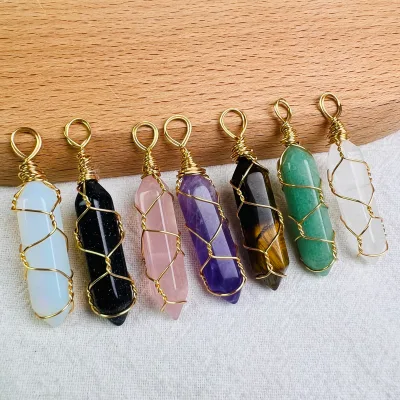
$0.8204 - $1.5389
MOQ: 10 pieces
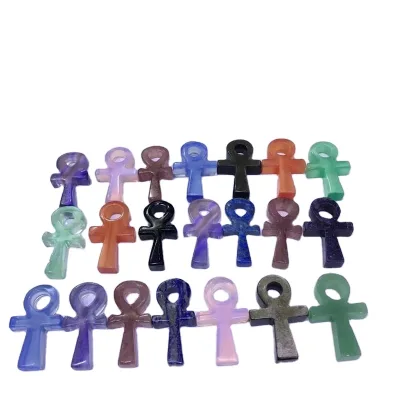
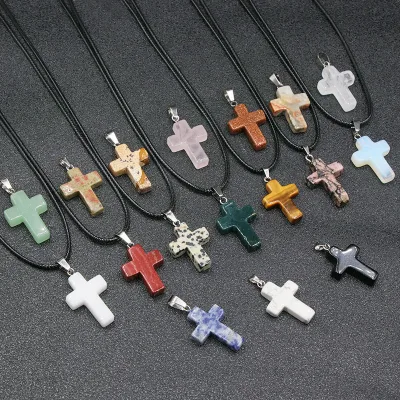
Hot Sale Natural Small Size Hand Carved Crystal Ankh Pendants Gemstone Crystal Cross for Women
$2.2799 - $3.1093
MOQ: 20 pieces
Yiwu Zenghao E Commerce Corporation
- Trading Company
- Zhejiang, China
- Lead time30 days
- Avg. response≤ 5h
Main productsnecklace,earring,bracelet,ring,keychain
Main marketsCentral America(40.00%), Eastern Europe(10.00%), Western Europe(10.00%), North America(5.00%), Domestic Market(5.00%), Mid East(5.00%), Oceania(5.00%), Southern Europe(5.00%), Northern Europe(5.00%), South Asia(3.00%), South America(2.00%), Africa(2.00%), Southeast Asia(2.00%), Eastern Asia(1.00%)
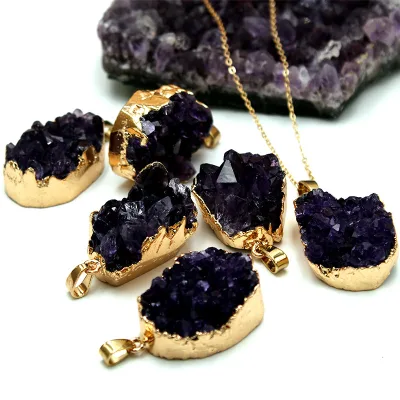
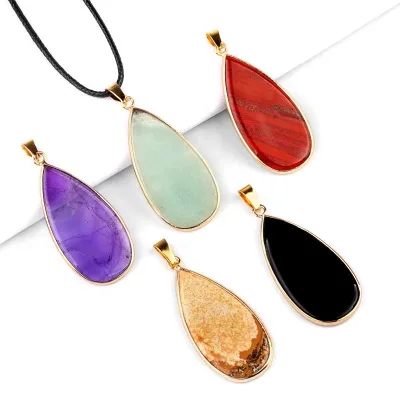
Natural Dark Amethyst Stone Pendant for Crystal Necklace DIY Jewelry Accessories
$2.98 - $3.28
MOQ: 5 pieces
$1.30 - $1.47
MOQ: 12 Minimum
Nanning Haosiqi Jewelry Company Ltd.
- Trading Company
- Guangxi, China
- Lead time7 days
- Avg. response≤ 2h
Main productsNatural Semi-precious stones,Natural Stone Pendant,Bracelet,Rings,Necklace
Main marketsNorth America(45.00%), South America(25.00%), Domestic Market(10.00%), Eastern Europe(5.00%), Mid East(5.00%), Oceania(5.00%), Southeast Asia(5.00%)
$0.9102 - $3.3293
MOQ: 10 Minimum
Yiwu Shanmei Arts And Gifts Co., Ltd.
- Manufacturer, Trading Company
- Lead time旺季: "1 - 100":15,"> 100":"To be negotiated", 淡季: "1 - 100":15,"> 100":"To be negotiated"
- Avg. response≤ 4h
Main productsJewelry
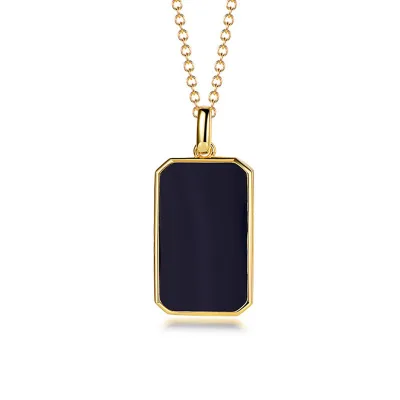
925 Silver Gold Plated Natural Black Agate Pendant Geometric Necklace Simple Clavicle Chain
$11.95 - $14.95
MOQ: 20 pieces
Yiwu Dibishi Jewelry Co., Ltd.
- Trading Company
- Zhejiang, China
- Lead time5 days
- Avg. response≤ 3h
Main productsBeads,Bracelets,Crystal,Gemstone,Loose Beads
Main marketsNorth America(40.00%), Western Europe(20.00%), Northern Europe(10.00%), Eastern Europe(10.00%), Southeast Asia(5.00%), Central America(5.00%), South America(5.00%), Oceania(5.00%)

Guangzhou Huifu Jewelry Co., Ltd.
- Verified by BV
- Manufacturer/Factory
- China Guangdong
- Lead time90 days
- Avg. response≤ 3h
Main productsJewelry, Stainless Steel Jewelry, Stainless Steel Ring, Stainless Steel Pendant, Stainless Steel Earring, Fashion Jewelry, Ring, Necklace, Pendant, Bracelet
Main marketsEastern Europe,Mid East,North America,Western Europe,Africa

GOODLINESS JEWELLERY CO., LIMITED
- Verified by SGS
- Manufacturer
- China Guangdong
- Lead time23 days
- Avg. response≤ 6h
Main products925 Silver Ring, Brass Jewelry, 925 Silver Earring, 925 Silver Necklace, 925 Silver Set, 925 Silver Bangle, Customer's Design, 925 Silver Bracelet, Silver Accessory, Brass Accessory
Main marketsSoutheast Asia/ Mideast,Europe,North America
Guangzhou Yasa Jewelry Co., Ltd.
- Manufacturer, Trading Company
- Guangdong, China
- Lead time10 days
- Avg. response≤ 3h
Main productsjewelry,crystal jewelry,natural gemstone,925 silver jewelry,gold plated jewelry
Main marketsNorth America(40.00%), Southeast Asia(10.00%), Eastern Europe(10.00%), South America(10.00%), Eastern Asia(5.00%), Mid East(5.00%), Oceania(5.00%), Western Europe(5.00%), Southern Europe(2.00%), Northern Europe(2.00%), Central America(2.00%), Africa(2.00%), Domestic Market(1.00%), South Asia(1.00%)

Jinjiang Jiaxing Supply Management Co., Ltd.
- Verified by TUVRHEINLAND
- Trading Company
- China Fujian
- Lead time30 days
- Avg. response≤ 1h
Main productsEVA Clogs, Flip Flop, Shoe Charms, Shopping Bags, Wristbands, Gifts, Promotional Gifts, Slipper, Sport Cap, Ball
Main marketsNorth America


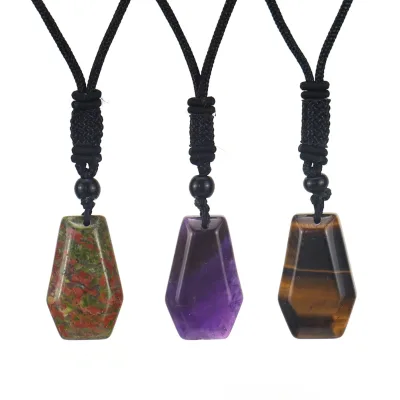
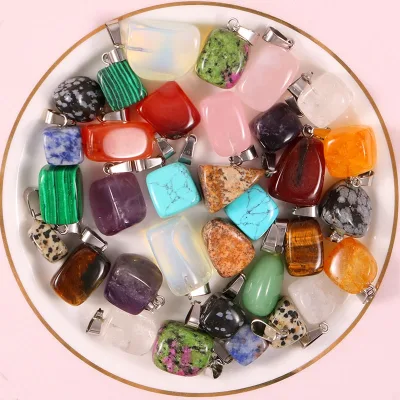
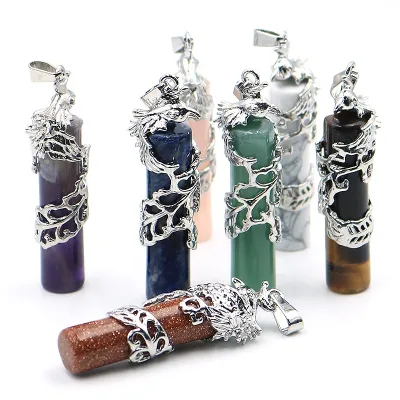
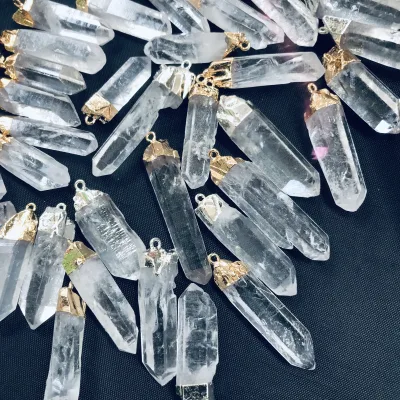
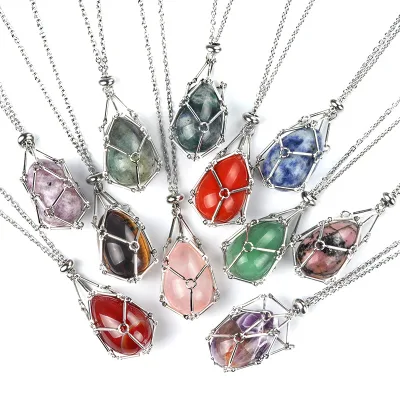
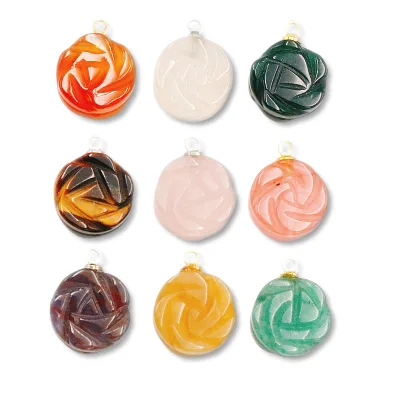
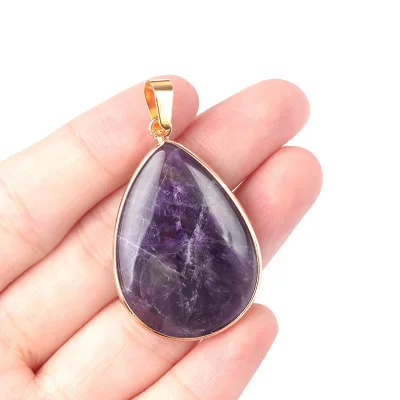
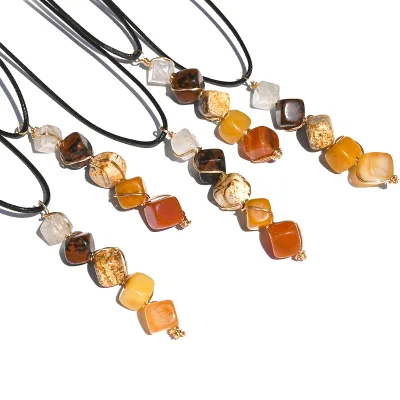




Comprehensive Sourcing Guide
Natural Stone Crystal Pendant Supplier Concentration and Factory Types
The sourcing landscape for natural stone crystal pendants reveals distinct manufacturing clusters that influence production capabilities and supply chain efficiency. Current data indicates a concentration of suppliers in Guangdong, China, where many entities operate as manufacturers or factories. These facilities typically specialize in a broad range of jewelry items, including pendants, necklaces, bracelets, rings, and earrings, alongside carvings and loose beads. This diversification suggests that Guangdong-based factories often possess the infrastructure to handle complex assembly processes, such as setting semi-precious stones into metal findings or creating intricate jewelry sets. The presence of OEM and ODM capabilities in these locations allows buyers to request custom designs, unique shapes, or specific plating finishes without needing to source separate component suppliers. Buyers evaluating these suppliers should look for evidence of integrated production lines that can manage both the stone preparation and the final jewelry assembly in-house, which often reduces lead times and improves quality control consistency.
In contrast, other regions like Jiangsu, China, host a different type of supplier structure, often identified as trading companies. These entities may focus on specific niches such as crystal carvings, chips, spheres, and tumbled stones, acting as intermediaries between raw material sources and international buyers. While they may not operate the factories themselves, trading companies can offer flexibility in sourcing diverse stone types, such as obsidian or amethyst, and may have established relationships with multiple workshops. This model can be advantageous for buyers seeking smaller, varied orders or specific regional features, such as European-style souvenirs. However, it is crucial to distinguish between a true factory and a trading company, as the latter may add a margin and potentially complicate direct communication regarding production details. Buyers should verify the company type to understand who holds the actual production responsibility and how that impacts customization options and cost structures.
How to Verify Natural Stone Crystal Pendant Suppliers
Verifying the legitimacy and capability of a Natural Stone Crystal Pendant supplier requires a multi-layered approach that goes beyond basic company profiles. One critical step is checking for third-party verification badges, such as SGS, which indicate that an independent agency has inspected the supplier’s operations. This verification provides a layer of confidence regarding the supplier’s business license and operational stability. Additionally, buyers should scrutinize system certifications like ISO 9001 and OHSAS/OHSMS 18001. ISO 9001 certification demonstrates that the supplier has a documented quality management system in place, which is essential for maintaining consistency in stone cutting, polishing, and assembly. OHSMS 18001 indicates a commitment to occupational health and safety, which can be a proxy for overall operational discipline. These certifications are not just paperwork; they reflect a supplier’s willingness to adhere to international standards, which can reduce the risk of defects and production delays.
Beyond certifications, buyers should assess the supplier’s responsiveness and transparency as indicators of reliability. A quick response time, such as the 3-day average observed in some results, suggests an active sales team that can address inquiries and negotiate terms efficiently. Conversely, slower response times may indicate a backlog or less dedicated customer service. Buyers should also request detailed product specifications and photos to verify the actual quality of materials, such as the clarity of crystals or the finish of silver plating. It is important to ask for evidence of past orders, such as case studies or references, to confirm the supplier’s ability to deliver on time. Furthermore, buyers should verify the supplier’s claim of customization capabilities by requesting samples of previous custom work. This hands-on verification helps ensure that the supplier can meet specific design requirements, such as custom packing or unique stone shapes, before committing to a larger order.
What to Compare Across Natural Stone Crystal Pendant Suppliers
When evaluating multiple suppliers, buyers must compare key operational metrics to determine the best fit for their specific needs. Lead time is a critical factor, with some suppliers offering a 10-day turnaround while others may take up to 23 days. This difference can significantly impact inventory management and time-to-market, especially for seasonal collections. Buyers should align their order timelines with the supplier’s stated lead times to avoid stockouts or excess inventory. Additionally, the Minimum Order Quantity (MOQ) varies widely, ranging from as low as 1 piece for certain souvenir items to 100 or 50 pieces for more standardized jewelry products. Understanding these MOQs helps buyers assess the financial risk of initial orders and determine if the supplier can accommodate small-batch testing or large-scale production runs. Suppliers with lower MOQs may be more suitable for startups or those testing new designs, while those with higher MOQs might offer better economies of scale.
Another vital comparison point is the price range and customization options. Prices for natural stone crystal pendants can vary based on material quality, stone size, and plating type. For instance, simple crystal pendants may start at very low price points, while more complex amethyst sets with specific stone sizes and shapes command higher prices. Buyers should compare the price per unit against the included services, such as custom packing or logo engraving. Some suppliers offer flexible packing solutions, allowing buyers to request specific packaging that aligns with their brand identity. Additionally, buyers should compare the range of main products offered. Suppliers with a broad catalog, including necklaces, bracelets, and rings, may provide better opportunities for creating cohesive jewelry collections. By systematically comparing these factors, buyers can identify suppliers that offer the best balance of cost, speed, and flexibility for their business model.
Common Natural Stone Crystal Pendant Sourcing Risks
Sourcing natural stone crystal pendants involves several inherent risks that buyers must proactively manage to ensure a smooth procurement process. One significant risk is the variability in stone quality and appearance. Natural stones, such as amethyst, agate, and obsidian, can have variations in color, clarity, and shape, even within the same batch. Buyers should be aware that images provided by suppliers may not always reflect the exact product received, especially for items described as having "random" colors or irregular nugget shapes. To mitigate this risk, buyers should request physical samples before placing bulk orders to verify the actual quality and consistency of the stones. Additionally, buyers should clarify the tolerance for variations in stone size and shape, ensuring that the supplier’s standards align with their own quality expectations.
Another risk is the potential for miscommunication regarding customization and specifications. Suppliers may claim to offer OEM/ODM services, but the actual execution may differ from the buyer’s expectations. For example, a supplier might offer silver plating, but the thickness or durability of the plating may not meet the buyer’s requirements. Buyers should provide detailed technical specifications and request written confirmation of all customization details, including materials, dimensions, and packaging. It is also important to verify the supplier’s ability to handle specific shipping methods, such as air freight via DHL or UPS, to ensure timely delivery. Buyers should also be cautious of suppliers who do not provide clear information about their production capacity or lead times, as this can lead to delays and disrupted supply chains. By identifying and addressing these risks early in the sourcing process, buyers can build more resilient and reliable supplier relationships.
Natural Stone Crystal Pendant Regional Sourcing and Logistics
The geographic location of suppliers plays a crucial role in determining logistics costs and delivery times. Suppliers located in Guangdong, China, often benefit from established export infrastructure and proximity to major ports, which can facilitate efficient shipping for jewelry products. This region’s concentration of manufacturers and trading companies creates a competitive environment that can drive down costs and improve service levels. Buyers sourcing from Guangdong should consider the availability of various shipping options, including air and sea freight, and negotiate terms that best suit their inventory needs. The presence of specialized logistics providers in this region can also simplify the process of handling small, high-value items like crystal pendants, ensuring they are packaged securely and tracked accurately.
In contrast, suppliers in Jiangsu, China, may offer different logistical advantages, particularly for buyers seeking specific regional features or souvenir-style items. These suppliers often highlight shipping methods like air DHL, UPS, and TNT, which are suitable for smaller, urgent orders. Buyers should evaluate the shipping costs and transit times associated with these methods, as they can significantly impact the total landed cost of the products. Additionally, buyers should consider the packaging requirements for fragile items like crystal pendants. Suppliers may use bubble paper or other protective materials to prevent damage during transit, but buyers should verify these practices to ensure the products arrive in good condition. Understanding the logistical nuances of each region helps buyers make informed decisions about where to source their natural stone crystal pendants, balancing cost, speed, and reliability.
Natural Stone Crystal Pendant Commercial Terms and Order Planning
Effective order planning for natural stone crystal pendants requires a clear understanding of commercial terms and payment structures. Buyers should negotiate terms that protect their interests, such as using escrow services for secure transactions. Escrow ensures that payment is only released to the supplier once the buyer confirms receipt and quality of the goods, reducing the risk of fraud or non-delivery. Additionally, buyers should clarify the payment terms, such as deposit percentages and balance due dates, to manage cash flow effectively. It is also important to discuss return policies and defect resolution procedures, ensuring that there is a clear process for handling any issues that arise after delivery. By establishing these commercial terms upfront, buyers can create a more predictable and secure procurement environment.
Furthermore, buyers should plan their orders based on the supplier’s production capacity and lead times. For suppliers with a 10-day lead time, buyers can plan for quicker replenishment cycles, while those with 23-day lead times may require more advanced forecasting. Buyers should also consider the MOQ when planning their inventory, ensuring that they order quantities that align with their sales projections and storage capabilities. For suppliers offering customization, buyers should allow additional time for design approval and sample production. By integrating these commercial and logistical considerations into their order planning, buyers can optimize their supply chain, reduce costs, and improve customer satisfaction. Regular communication with suppliers and continuous monitoring of market trends will further enhance the buyer’s ability to adapt to changes and maintain a competitive edge in the Natural Stone Crystal Pendant market.
FAQs
What is the price range for natural stone crystal pendants?
Prices for natural stone crystal pendants typically range from $0.21 to $3.20 per unit depending on the specific material and customization options. Basic crystal heart pendants start at the lower end, while amethyst jewelry sets cost more. Buyers should verify exact pricing with suppliers as costs vary based on stone size and plating details.
What is the minimum order quantity for these pendants?
Minimum order quantities vary significantly by supplier and product type. Some suppliers offer a low MOQ of just one piece for souvenir-style obsidian pendants, while others require orders of 50 or 100 units for fashion jewelry sets. Buyers must check the specific product listing to confirm the exact MOQ before placing an order.
Where are natural stone crystal pendants manufactured?
These pendants are primarily manufactured in China, with specific production hubs located in Guangdong and Jiangsu provinces. Guangdong suppliers often focus on fashion jewelry and semi-precious stones, while Jiangsu suppliers may specialize in crystal carvings and healing stones. Buyers can filter results by these specific regions to find preferred manufacturing locations.
What certifications do these suppliers hold?
Some manufacturers hold ISO 9001 and OHSAS 18001 system certifications for quality and safety management. Additionally, certain suppliers are verified by SGS for product reliability. Buyers should request current certification documents directly from the supplier to ensure compliance with their specific quality standards and regulatory requirements.
How long does production take for custom orders?
Standard lead times for natural stone crystal pendants are approximately 10 to 23 days depending on the supplier and order complexity. Trading companies may offer faster turnaround times compared to manufacturers. Buyers should confirm the exact delivery time with the supplier, as it can vary based on customization requests and stock availability.
Can I customize the packaging for these pendants?
Yes, many suppliers offer customizable packaging options for natural stone crystal pendants. Manufacturers often state that they can make packing according to customer requests, allowing for branded or specific protective materials. Buyers should discuss their packaging requirements directly with the supplier to ensure the final product meets their branding and shipping needs.