OE Standard Steering Rack Boot Suppliers and Manufacturers
Compare 11 verified suppliers offering OE Standard Steering Rack Boot with varying lead times, certifications, and response speeds. Review their ISO and TS 16949 credentials, location in China, and pricing to select the right partner for your automotive needs; review the available evidence before requesting comparable quotations from suitable candidates.
Suppliers List

HEBEI HANGYUN RUBBER PRODUCTS CO.,LTD.
- Verified by CTI
- Combined
- China Hebei
- Lead time30 days
- Avg. response≤ 2h
Main productsCustom EPDM/NBR/Silicone Rubber Molding Parts, Rubber Seal Strip, Car Seal, Anti-Collision Protection Seal, Door and Window Seal, Self-Adhesive Sealing Strip, Rubber Hose, Edge Band/Edge Corner Protector Strip, Boat Ship Seal, Spiral Guard Hose
Main marketsSouth America,Others(foreignTradeCapacity.exportBusinessCapacityMarketOther),Southeast Asia/ Mideast,East Asia(Japan/ South Korea),Domestic,Europe,Australia,North America


Car Rubber Split CV Joint Boots Auto Parts Steering Gear Rack Rubber Boot
$0.25 - $2.30
MOQ: 100 Pieces

Qingdao JinYuan Rubber Co.,Ltd.
- Manufacturer/Factory
- China Shandong
- Lead time15 days
- Avg. response≤ 7h
Main productsRubber Part, Plastic Part, Auto Parts, Grommet, Seals, Gasket, Rubber Mount, Dust Cover, Tips, Pads
Main marketsSouth America,Eastern Europe,Mid East,North America,Southeast Asia,Western Europe,Africa


Car Rubber Parts Replacement Steering Tie Rod End Boots on Just Replaced Upper Ball Joint Boot
$0.11 - $0.15
MOQ: 300 Pieces

Hebei Ruibo Import&Export Trading Co., Ltd.
- Trading Company
- China Hebei
- Lead time23 days
- Avg. response≤ 6h
Main productsCoil Spring, Cabin/Air. Oil/Fuel Filter, Shock Absorber, Brake Pads, Brake Shoes
Main marketsSoutheast Asia/ Mideast,Europe,North America
Yuhuan Mingyan Technology Co., Ltd
- Verified by SGS Group
- Manufacturer, Trading Company
- Lead time25 days
- Avg. response≤ 5h
Main productsCV Joint Boot, Steering Boot, Drive Shaft, Control Arm, Auto Rubber Parts
Main marketsWestern Europe(50%), Mid East(30%), Southeast Asia(20%)
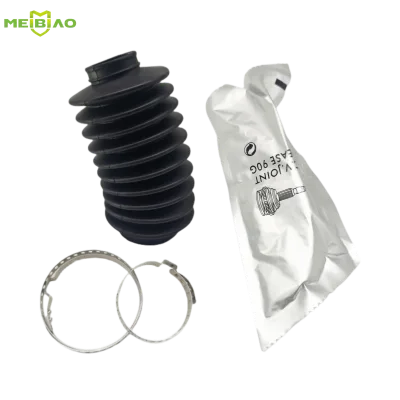
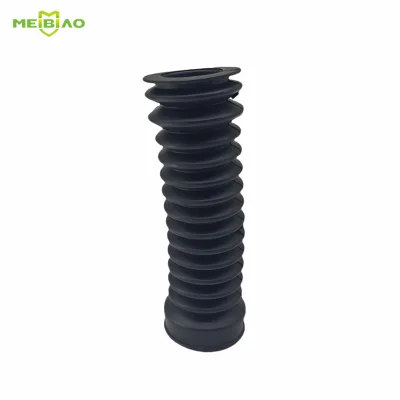
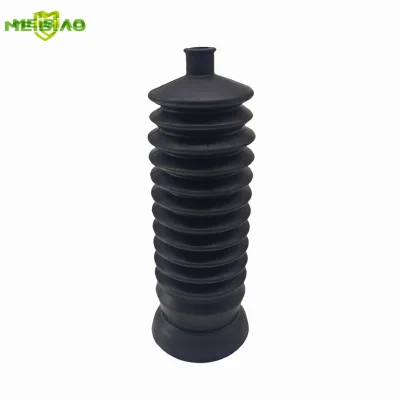
$1.78 - $2.17
MOQ: 100 pieces
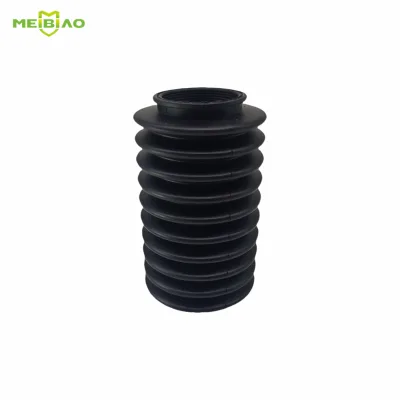
$1.12 - $1.65
MOQ: 100 sets
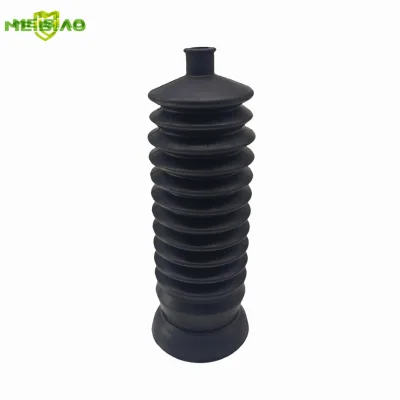
Sell High Quality Steering Boots Rubber Steering Boot Dirt-proof Flexible Black Con
$1.42 - $1.73
MOQ: 100 pieces
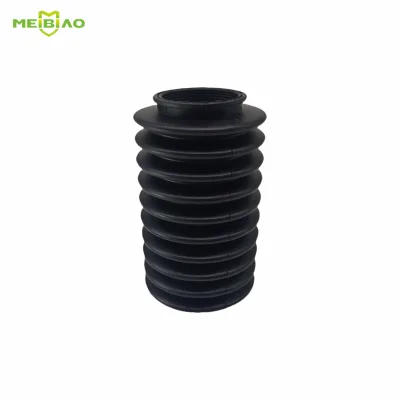

Wenzhou Hangbang Technology Co., Ltd.
- Verified by SGS
- Combined
- China Zhejiang
- Lead time60 days
- Avg. response≤ 6h
Main productsSteering Gear, Steering Rack, Steeing Box
Main marketsDomestic
Ningbo Hohan Auto Parts Co., Ltd.
- Verified by Intertek
- Trading Company
- Lead time20 days
- Avg. response≤ 3h
Main productsProp Shaft, Drive Shaft and Kits, CV Joint and Kits, Control Arm, Shock Absorber
Main marketsNorth America(20%), Western Europe(20%), Southern Europe(20%)
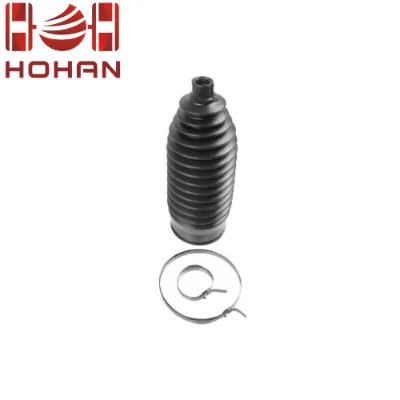
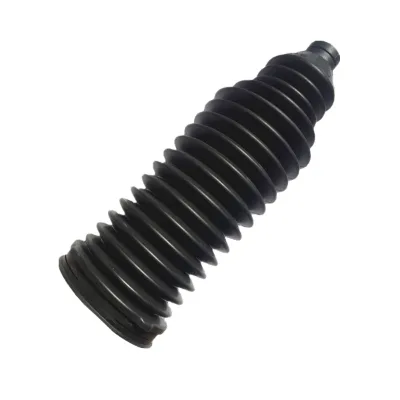
Aftermarket Replacement New Steering Coupling Boot for Chrysler OEM 68263723AA
$1.23 - $1.54
MOQ: 300 sets

Ningbo Yinzhou Henglu Plastic Industry&Trading Co., Ltd.
- Verified by BV
- Trading Company,Manufacturer/Factory
- China Zhejiang
- Lead time23 days
- Avg. response≤ 15h
Main productsBumper, Fender, Dock Cleat, Marine Hardwares, Marine Steering Wheel, Boat Seat, Boat Accessories, Dock Wheel, Auto Steering Wheel, OEM Plastic Parts
Main marketsNorth America,Southeast Asia,Eastern Asia,Oceania,Western Europe

Ruian Shengliang Trading Co., Ltd.
- Verified by TUVRHEINLAND
- Trading Company,Manufacturer/Factory
- China Zhejiang
- Lead time45 days
- Avg. response≤ 10h
Main productsCooling System Parts, Suspension Parts, Engine Parts, Sensor Parts, Chassis Parts
Main marketsSouth America,Eastern Europe,Mid East,Western Europe


Steering Rack Boot, 850016404, Quality Assurance with Competitive Price.
$0.90 - $2.00
MOQ: 500 Pieces

Steering Rack Boot, OEM No.: 45535-30020, 45535-20150, 45535-30030 for Toyota Crown
$0.90 - $2.00
MOQ: 500 Pieces


Steering Gear Boot, Accept Customization. Hight Quality with The More Competitive Price
$0.90 - $2.00
MOQ: 500 Pieces
Hebei Hongou Auto Technology Co., Ltd.
- Verified by TüVRheinland
- Manufacturer, Trading Company
- Lead time7 days
- Avg. response≤ 6h
Main productsCar Interior Ceiling, Car Cover Insulation Cotton, Car Sunroof Curtain, Brake Pad, Shock Absorber
Main marketsSoutheast Asia(20%), Mid East(20%), South America(10%)
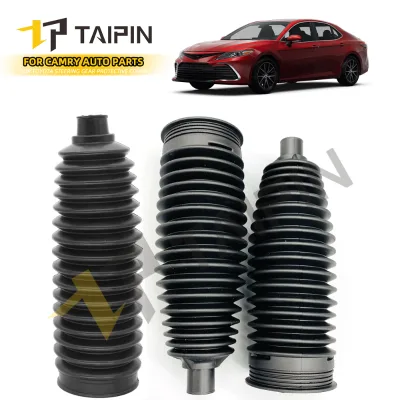
Wholesale High Quality Auto Parts Steering Gear Boots Fits for Toyota Camry
$1.02 - $1.33
MOQ: 50 pieces
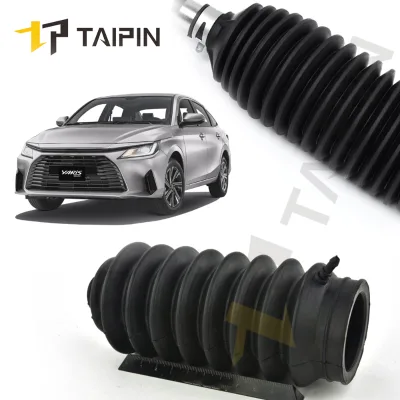
Brand New High Quality for Toyota for Yaris Car Steering Systems Rubber Steering Gear Boots
$1.00 - $1.30
MOQ: 50 pieces
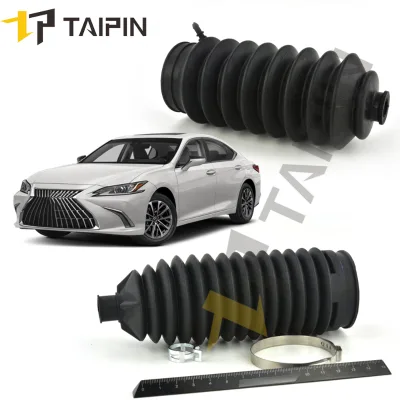

Guangzhou Fengming Auto Parts Co., Ltd.
- Verified by SGS
- Trading Company
- China Guangdong
- Lead time15 days
- Avg. response≤ 6h
Main productsAuto Part, Spark Plug, Filters, Clock Spring, Water Pump, Timing Chain Kit, Engine Mount, Gasket Kit, Control Arm, Steering Rack
Main marketsSoutheast Asia/ Mideast,Europe,North America

Shanghai Spb Industry Co., Ltd.
- Verified by SGS
- Trading Company,Manufacturer/Factory,Group Corporation
- China Shanghai
- Lead time30 days
- Avg. response≤ 4h
Main productsCar Spare Part, Suspension Parts, Ball Joint, Shock Absorber, C. V Joint, Brake Pad, Radiator, Stabilizer Bar, Oil Filter, Steering Rack
Main marketsSouth America,Eastern Europe,Mid East,North America,Southeast Asia,Eastern Asia,Oceania,Western Europe,Africa


Comprehensive Sourcing Guide
OE Standard Steering Rack Boot Supplier Concentration and Factory Types
Current data indicates a concentration of manufacturing capabilities in China, specifically within the Hebei and Shandong provinces. Suppliers in these regions offer a mix of combined company types and dedicated manufacturer factories, providing distinct advantages for sourcing OE standard steering rack boots. Hebei-based entities often present as combined operations, while Shandong facilities frequently operate as manufacturer factories with their own brands. This geographic clustering suggests a mature supply chain ecosystem where raw materials and specialized molding equipment are readily accessible. Buyers should verify the specific operational status of each supplier, as some may function primarily as trading companies despite claiming manufacturing capabilities. The presence of OEM and ODM capacities in these regions allows for significant customization of rubber parts, including specific hardness levels and cross-section shapes required for steering systems.
When evaluating factory types, it is crucial to distinguish between pure manufacturers and combined entities that may outsource production. A manufacturer factory typically holds direct control over the molding process, which can influence quality consistency and lead times. In contrast, combined companies might leverage a broader network to source various rubber components, potentially offering a wider range of products like seals and gaskets alongside steering boots. Buyers must confirm whether the supplier possesses the specific machinery for producing complex rubber bellows and boots. The availability of certifications such as ISO9001:2015 or TS 16949 often correlates with the depth of the manufacturing infrastructure. Without direct verification, the distinction between a factory and a trading company remains a critical variable in assessing the reliability of the supply source for automotive rubber components.
How to Verify OE Standard Steering Rack Boot Suppliers
Verification of suppliers requires a rigorous check of their stated credentials against independent third-party data. The presence of CTI verification is a specific indicator of a supplier's authenticity and operational stability. Buyers should prioritize suppliers who have undergone such external audits to confirm their business registration and physical existence. Additionally, system certifications like ISO9001:2015 and TS 16949 serve as essential benchmarks for quality management systems. These standards are particularly relevant for automotive applications where precision and durability are non-negotiable. A supplier claiming TS 16949 certification should be able to provide documentation proving their compliance with automotive industry-specific quality requirements. This verification step helps mitigate the risk of engaging with entities that lack the necessary infrastructure for high-volume automotive production.
Beyond certifications, buyers must assess the responsiveness and communication capabilities of the supplier. Response times vary significantly, with some suppliers showing a response time of approximately 1.42 hours while others may take nearly 7 hours. A faster response time often indicates a more active sales team and better project management, which is vital for resolving technical queries regarding rubber hardness or dimensions. Buyers should also examine the product evidence provided, such as detailed specifications for materials like Neoprene, Nitrile, or Silicone. Confirming that the supplier can provide samples and has a history of supplying specific automotive parts, such as steering rack boots for Toyota, adds another layer of confidence. The ability to demonstrate past performance through product attributes and specific model numbers is a strong indicator of a verified and capable supplier.
What to Compare Across OE Standard Steering Rack Boot Suppliers
Comparing suppliers requires a systematic analysis of key operational metrics including lead times, minimum order quantities, and pricing structures. Lead times can range from 15 days to 30 days, depending on the supplier's capacity and current order volume. A shorter lead time of 15 days may be preferable for urgent replacement needs, while a 30-day window might accommodate larger production runs. Minimum order quantities also vary, with some suppliers requiring as few as 100 units while others set the threshold at 300 units. Buyers must align these MOQs with their inventory strategy and cash flow constraints. Pricing is another critical factor, with unit costs ranging from $0.02 to $3.00 depending on the material complexity and customization level. Understanding these variables allows buyers to select a supplier that fits their specific operational requirements.
Material specifications and customization capabilities are equally important when comparing potential partners. Some suppliers offer a wide range of materials including Silicone, NBR, PUR, and FKM, while others may specialize in specific compounds like Neoprene or Nitrile. The ability to customize color, size, and hardness (ranging from 30 to 90 Shore a) is a significant differentiator. Buyers should verify if the supplier can accommodate specific cross-section shapes, such as rectangle rings, and if they offer features like waterproofing, soundproofing, and dustproofing. Additionally, the supply capacity, which can reach up to 1,000,000 units per month for some manufacturers, indicates their ability to handle large-scale orders. Evaluating these technical and logistical parameters ensures that the selected supplier can meet the precise demands of the OE Standard Steering Rack Boot market.
Common OE Standard Steering Rack Boot Sourcing Risks
One of the primary risks in sourcing steering rack boots is the potential mismatch between claimed capabilities and actual production capacity. Suppliers may advertise high supply capacities but fail to deliver on time due to unforeseen production bottlenecks or material shortages. This risk is compounded when dealing with combined entities that may not have direct control over the manufacturing process. Buyers should be wary of suppliers who cannot provide clear evidence of their production lines or who lack specific automotive certifications. The absence of a verified track record in producing complex rubber bellows can lead to quality inconsistencies that compromise vehicle safety. It is essential to validate the supplier's ability to maintain consistent quality across large batches, especially when dealing with critical automotive components.
Another significant risk involves the ambiguity of product specifications and material properties. While some suppliers provide detailed attributes like tensile strength and elongation at break, others may offer vague descriptions. This lack of clarity can result in receiving parts that do not meet the required performance standards for vehicle applications. For instance, a boot with insufficient hardness or poor temperature resistance may fail prematurely in harsh operating conditions. Buyers must ensure that the supplier provides comprehensive technical data sheets and is willing to provide samples for testing. The risk of receiving non-compliant products is further heightened if the supplier does not adhere to recognized standards like ISO or TS 16949. Thorough due diligence is necessary to avoid costly returns and potential liability issues associated with substandard automotive parts.
OE Standard Steering Rack Boot Regional Sourcing and Logistics
Sourcing from China, particularly from the Hebei and Shandong provinces, offers logistical advantages due to established export infrastructure. These regions are known for their concentration of rubber manufacturing facilities, which facilitates efficient production and shipping. However, buyers must account for the specific logistics requirements associated with these locations. Shipping times and costs can vary based on the port of origin and the destination country. It is advisable to work with suppliers who have experience in international shipping and can provide accurate estimates for freight charges. The use of standard packaging, such as OPP bags and cartons, helps protect the rubber parts during transit, but buyers should confirm that the packaging meets their specific storage and handling needs.
Regional sourcing also impacts the ability to manage inventory and respond to market fluctuations. Suppliers in these regions often have the capacity to scale production quickly, which is beneficial for meeting sudden demand spikes. However, buyers should be aware of potential delays caused by seasonal factors or regulatory changes in the export sector. Establishing a reliable relationship with a supplier in these regions can provide better visibility into the production schedule and inventory levels. Buyers should also consider the time zone differences and communication channels when coordinating logistics. Clear communication regarding shipping terms and delivery timelines is essential to ensure that the steering rack boots arrive on schedule and in good condition.
OE Standard Steering Rack Boot Commercial Terms and Order Planning
Commercial terms for OE standard steering rack boots often include specific conditions regarding payment, delivery, and quality assurance. Buyers should negotiate clear terms that define the responsibilities of both parties, including who bears the cost of shipping and insurance. Payment terms may vary, with some suppliers requiring full payment upfront while others offer more flexible options. It is crucial to understand the supplier's policy on samples and whether they are provided free of charge or at a reduced cost. Additionally, buyers should clarify the lead time expectations and the consequences of delays. A well-defined contract helps mitigate risks and ensures that both parties have a shared understanding of the order requirements.
Order planning for steering rack boots requires careful consideration of the minimum order quantities and production schedules. Buyers must align their order volumes with the supplier's capacity to avoid delays or stockouts. Planning for seasonal demand fluctuations is also important, as rubber production can be affected by weather conditions and raw material availability. Buyers should maintain a buffer stock to account for potential supply chain disruptions. Regular communication with the supplier regarding production status and inventory levels is essential for effective order management. By planning ahead and maintaining a proactive approach, buyers can ensure a steady supply of high-quality steering rack boots for their automotive needs.
FAQs
What is the typical lead time for steering rack boots?
Lead times vary by supplier, ranging from 15 to 30 days based on order volume and customization needs. Some manufacturers in Hebei offer 30-day delivery, while others in Shandong can ship within 15 days. Buyers should confirm specific timelines before placing orders to ensure timely delivery.
What are the minimum order quantities for these parts?
Minimum order quantities typically start at 100 pieces for standard rubber boots. Some suppliers require 200 units, while others set the threshold at 300 pieces depending on the specific product model. Buyers must check individual listings to verify the exact MOQ required for their purchase.
Which certifications do these rubber boot suppliers hold?
Many suppliers hold ISO 9001:2015 certification, ensuring quality management standards are met. Some manufacturers also possess TS 16949 and ISO 14001 certifications for automotive and environmental compliance. Buyers should verify specific certificates during the supplier selection process to ensure regulatory adherence.
What materials are used for automotive steering rack boots?
Common materials include EPDM, NBR, Silicone, and Neoprene, selected for durability and resistance. Some products feature Nitrile Rubber or specialized compounds like FKM and HNBR for extreme conditions. Buyers can request samples to confirm material suitability for their specific vehicle applications and environmental requirements.
Are custom sizes and colors available for these boots?
Customization is widely available, allowing buyers to specify unique sizes and colors like black or custom shades. Suppliers offer tailored cross-section shapes and hardness levels ranging from 30 to 90 Shore A. Buyers should provide detailed drawings or specifications to ensure the final product meets exact engineering requirements.
What is the price range for steering rack boots?
Prices generally range from 0.02 to 3.00 USD per unit depending on material and complexity. Specific models may cost between 0.20 and 2.80 USD, while specialized boots can reach up to 0.70 USD. Buyers should compare multiple listings to find the best value for their specific volume and quality needs.
How quickly do suppliers typically respond to inquiries?
Response times vary significantly, with some suppliers replying within 1.42 hours and others taking up to 6.95 hours. Faster response times often indicate higher availability and better customer service. Buyers should prioritize suppliers with quick response metrics to ensure efficient communication during the sourcing process.
Can suppliers provide samples before bulk production?
Yes, most suppliers offer samples for evaluation before committing to large orders. This allows buyers to verify quality, fit, and material properties. Some suppliers provide free samples, while others may charge a fee. Buyers should request samples early to validate product performance against their specific vehicle requirements.