OEKO-TEX Screen Printing Textile Paint Suppliers and Manufacturers
Compare 21 verified suppliers offering OEKO-TEX Screen Printing Textile Paint with varying lead times, certifications, and response speeds. Review product specs like viscosity and drying methods to select the right partner for your textile needs; review the available evidence before requesting comparable quotations from suitable candidates.
Suppliers List

Ningbo Colorswoo Art Supply Co., Ltd.
- Trading Company
- China Zhejiang
- Lead time30 days
- Avg. response≤ 9h
Main productsPigment Acrylic Paint Oil Paint Gouache Paint, Water Color Paint Fabric Paint Poster Paint, Finger Paint Tempera Paint Face Paint Eye Paint, Ceramic Paint Window&Glass Pait Water Color Cake, White Glue Glitter Glue Glue Stick Glitter Shake, Crayon Oil Pastels Chalk Soft Pastel, Plasticine Modeling Clay, Water Color Pen Color Pencil Paint Set, Brush Palette Canvas Cleaning Pot, Eraser
Main marketsSouth America,Africa,Southeast Asia/ Mideast,East Asia(Japan/ South Korea),Domestic,Europe,North America

Fabric Textile Paints Dye for Fabric, Canvas, Wood, Ceramic, Glass Art Paintings
$0.50 - $1.50
MOQ: 3000 Sets


Dongguan Tianhui New Material Co., Ltd.
- Manufacturer
- China Guangdong
- Lead time15 days
- Avg. response≤ 4h
Main productsLiquid Silicone, Screen Printing Silicone, RTV Silicone, Silicone Rubber, Silicone Clothing Label, Silicone Clothing Logo, Mold Silicone, Embossed Printing Silicone, Screen Printing Ink, Textile Silk
Main marketsSoutheast Asia/ Mideast
Dongguan Batu Printing Material Co., Ltd.
- Trading Company
- Lead time旺季: "1 - 1000":3,"1001 - 3000":5,"3001 - 5000":7,"> 5000":"To be negotiated", 淡季: "1 - 1000":3,"1001 - 3000":5,"3001 - 5000":7,"> 5000":"To be negotiated"
- Avg. response≤ 5h
Main productswater base rubber print,metallic print,glitter print,silicone print,digital print
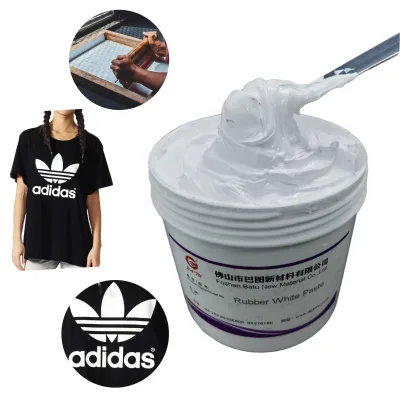
China Bulk Ink Paint for Screen Printing t Shirt Printing Paste for Textile
$2.20 - $4.50
MOQ: 1 Minimum
$7.00 - $10.00
MOQ: 1000 kilograms
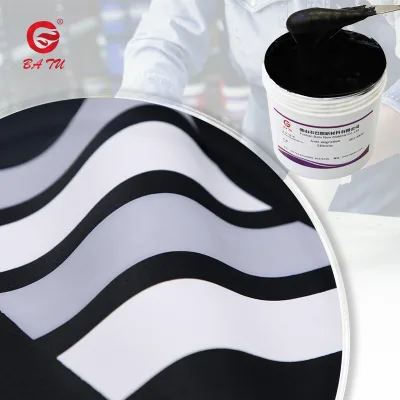
Screen Printing Ink for Stretch Fabric Anti-Migration Silicone Aqueou Rubber Paste
$5.00 - $7.00
MOQ: 1000 kilograms
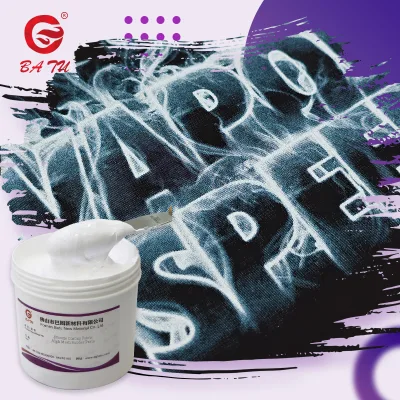
$5.68 - $8.78
MOQ: 1000 kilograms
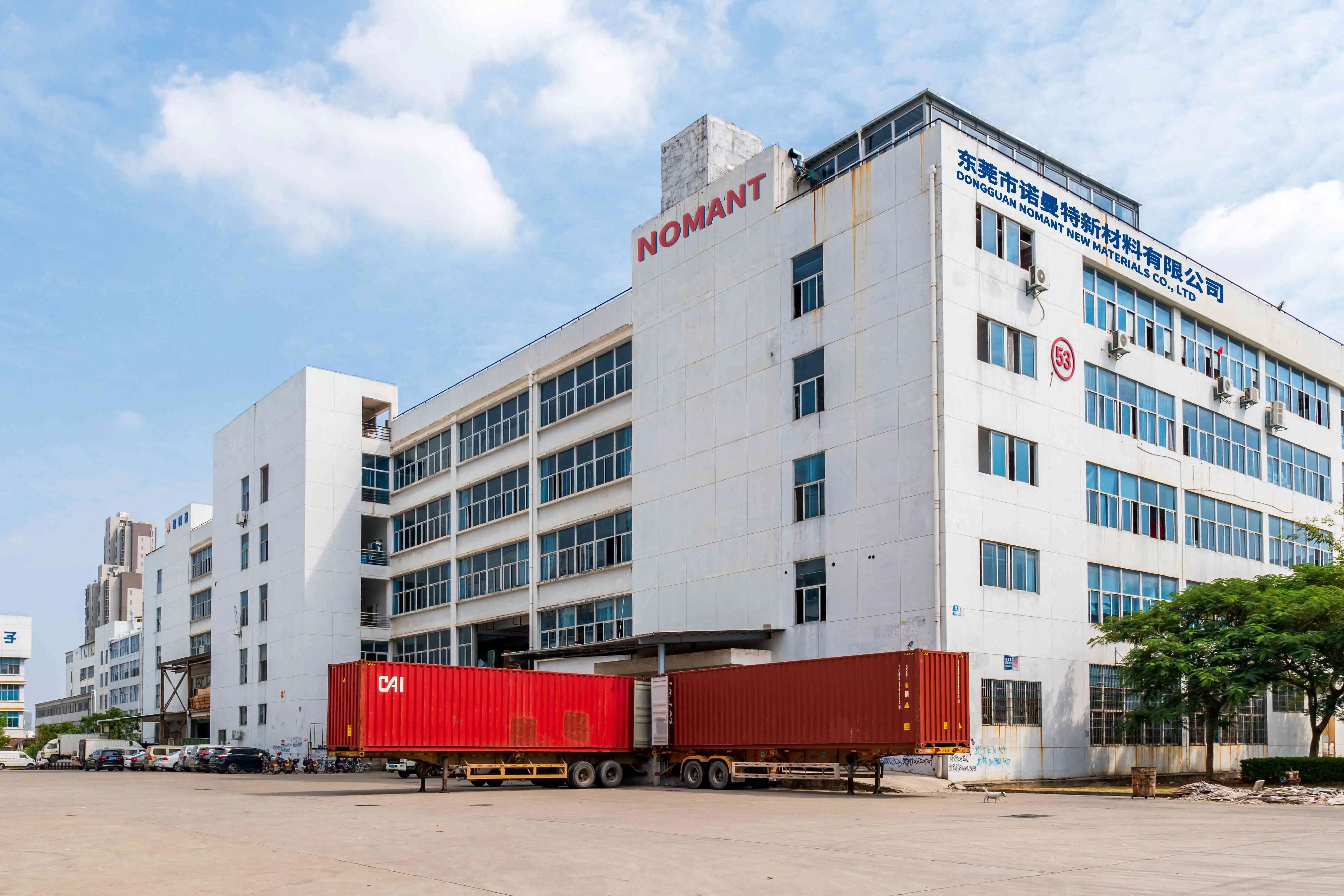
Dongguan Nomant New Materials Co., Ltd.
- Trading Company
- Guangdong, China
- Lead time5 days
- Avg. response≤ 1h
Main productstoner reactive foil,hot stamping foil,plastisol ink,lisence plate foil,digital foil
Main marketsDomestic Market(50.0%), North America(15.0%), South Asia(10.0%), Western Europe(10.0%), Eastern Asia(10.0%), Mid East(5.0%)

Suqian Litai Miqi Technology Co., Ltd.
- Verified by CTI
- Combined
- China Jiangsu
- Lead time23 days
- Avg. response≤ 2h
Main productsCanvas
Main marketsDomestic,Europe,North America


$0.28 - $2.28
MOQ: 100 Square Meters


Dongguan City Kedo Silicone Material Co., Ltd.
- Combined
- China Guangdong
- Lead time15 days
- Avg. response≤ 19h
Main productsSilicone
Main marketsSouth America,Southeast Asia/ Mideast,Domestic,Europe


Lowest Price Textile Fabric Screen Printing Coating Liquid Organic Silicone Ink
$9.50 - $10.50
MOQ: 20 kg


- Combined
- China Zhejiang
- Lead time30 days
- Avg. response≤ 16h
Main productsInkjet Canvas, Stretcher Bar, Art Materials, Stretched Canvas, Artist Brush, Palette, Drawing, Easel, Rules, Pencil
Main marketsSouth America,Africa,Southeast Asia/ Mideast,East Asia(Japan/ South Korea),Domestic,Europe,Australia,North America

- Verified by SGS
- Manufacturer/Factory
- China Zhejiang
- Lead time15 days
- Avg. response≤ 3h
Main productsPVC Flex Banner, Frontlit Banner Backlit Flex, Coated Fabric, Tarpaulin, Self Adhesive Vinyl & One Way Vision, Cotton Canvas Polyester Canvas Polycotton, PVC Foam/Celuka Board, Acrylic Sheet, PP Hollow Board, Sublimation Textile Fabric
Main marketsEastern Europe,Oceania,Western Europe,Africa

Eco Solvent Matte Digital Printing Canvas Fabric Painting Cotton Canvas
$1.90 - $2.50
MOQ: 1000 Square Meters

$0.45 - $1.20
MOQ: 1000 Square Meters

$0.45 - $1.20
MOQ: 1000 Square Meters

HAINING XIANG YU TECHNOLOGY CO., LTD
- Verified by SGS
- Trading Company,Manufacturer/Factory
- China Zhejiang
- Lead time0 days
- Avg. response≤ 25h
Main productsFlex Banner, PVC Tarpaulin, One Way Vision, Self Adhesive Vinyl, Color Stickers, Digital Printing
Main marketsSouth America,Eastern Europe,Mid East,North America,Southeast Asia,Eastern Asia,Oceania,Western Europe,Africa

Suzhou Teide Inkjet Material Ltd.
- Manufacturer
- China Jiangsu
- Lead time15 days
- Avg. response≤ 8h
Main productsVinyl Wallcovering, Wallpaper, Contract Vinyl, Exclusive Wallcovering, Non Woven Wallpaper, Vinyl Wallpaper, Wall Cloth, PVC Wallpaper, Decor Paper
Main marketsSouth America,Africa,Southeast Asia/ Mideast,Domestic,Europe,Australia,North America


Wholesale Latex Dye/Decorative Painting/Poly Matte Printing Canvas for Inkjet Print
$0.10 - $0.90
MOQ: 1 Square Meters

Matte Canvas Art Painting Polyester Inkjet Canvas for Digital Printing
$1.00 - $1.20
MOQ: 1 Square Meters

Waterproof Polycotton Art Print Painting Canvas/Inkjet Print Art Canvas
$2.00 - $3.00
MOQ: 500 Square Meters


Jiangmen Wonder Industrial Co., Ltd.
- Verified by TUVRHEINLAND
- Combined
- China Guangdong
- Lead time15 days
- Avg. response≤ 5h
Main productsPowder Coatings, Epoxy Powder Coatings, Polyester Powder Coatings, Epoxy Polyester Powder Coatings, Polyurethane Powder Coatings, Metal Powder Coatings, Chrome Effect Powder Coatings, Transparent Powder Coatings, Texture Powder Coatings, Electrostatic Spraying Powder Coatings
Main marketsDomestic

Nanxiong Marabin Ink Co., Ltd.
- Verified by CTI
- Combined
- China Guangdong
- Lead time15 days
- Avg. response≤ 4h
Main productsCar Paint, Auto Paint, Auto Refinish, Automotive Paint, Clear Coat, Thinner, Hardener
Main marketsSouth America,Africa,Europe


Good Adhesive Silk Screen Printing Ink for Bottles with Competitive Price Print Ink
$3.50 - $14.00
MOQ: 100 kg

Zhumao New Materials (Dongguan) Co., Ltd.
- Verified by TUVRHEINLAND
- Combined
- China Guangdong
- Lead time15 days
- Avg. response≤ 2h
Main productsSilicone Oil, Dimethicone, 107 Silicone Rubber, Polydimethylsiloxane, Dimethyl Silicone Oil, 107 RTV Silicone Rubber, 107 Polymer, 107 Silicone, Damping Silicone Oil, High Temp Silicone Oil
Main marketsDomestic
Dongguan Batu Printing Material Co., Ltd.
- Manufacturer, Trading Company
- Guangdong, China
- Lead time7 days
- Avg. response≤ 4h
Main productsRubber Paste/High Density Rubber Paste/Metallic Golden Paste/Metallic Silver Paste/Glitter Paste/PU Glossy Gel,Rubber Paste/ High Density Rubber Paste/ Metallic Golden Paste/ Metallic Silver Paste/ Glitter Paste/PU Glossy Gel
Main marketsSouth Asia(45.0%), Domestic Market(35.0%), Southeast Asia(10.0%), Africa(5.0%), Mid East(5.0%)

Hebei Enyang Import And Export Trading Co., Ltd.
- Verified by SGS
- Trading Company
- China Hebei
- Lead time15 days
- Avg. response≤ 4h
Main productsBaseball Caps, Custom Baseball Caps, Plain Baseball Caps, Embroidered Baseball Caps, Running Cap, Washed Cap, Trucker Hat, Flat Bill Hat
Main marketsSouth America,Southeast Asia/ Mideast,Europe

Guangzhou Veslee Chemical Co., Ltd.
- Verified by TUVRHEINLAND
- Combined
- China Guangdong
- Lead time30 days
- Avg. response≤ 7h
Main productsCar Care Products, Car Cleaning Products, Auto Maintenance, Aerosol Paint, Atuo Cosmetic, Auto Cleaning Products, Auto Care Products, Home Care and Cleaning Products, Household Products, Auto Washes
Main marketsSoutheast Asia/ Mideast

Shanghai Signapex New Materials Co., Ltd.
- Verified by SGS
- Trading Company,Manufacturer/Factory
- China Shanghai
- Lead time15 days
- Avg. response≤ 2h
Main productsPVC Flex Banner, Frontlit Banner Backlit Flex, Coated Fabric, Tarpaulin, Self Adhesive Vinyl & One Way Vision, Cotton Canvas Polyester Canvas Polycotton, PVC Foam/Celuka Board, Acrylic Sheet, PP Hollow Board, Sublimation Textile Fabric
Main marketsSouth America,Eastern Europe,Mid East,North America,Southeast Asia,Eastern Asia,Oceania,Western Europe,Africa

Signapex Hot Selling 200g Matte Waterproof Polyester Painting Canvas for Eco-Solvent&UV Ink Printing
$0.45 - $1.20
MOQ: 1000 Square Meters

Signapex Hot Selling 280g Matte Waterproof Polyester Painting Canvas for Eco-Solvent&UV Ink Printing
$0.45 - $1.20
MOQ: 1000 Square Meters

$0.45 - $1.20
MOQ: 1000 Square Meters

$0.45 - $1.20
MOQ: 1000 Square Meters

Foshan Shunde Chaoran Building Materials Industry Co., Ltd.
- Verified by BV
- Combined
- China Guangdong
- Lead time15 days
- Avg. response≤ 2h
Main productsPaint, Interior Paint, Exterior Paint, Floor Paint, Texture Paint, Microcement, Stone Paint, Limewash Paint, Waterproof Paint, Coating
Main marketsAfrica,Southeast Asia/ Mideast,Europe,Australia,North America

Sounda New Materials Co., Ltd.
- Trading Company,Manufacturer/Factory
- China Shanghai
- Lead time15 days
- Avg. response≤ 14h
Main productsPVC Tarpaulin, PVC Flex Banner, Self adhesive Vinyl, PVC Form Board, PVC Hollow Sheet
Main marketsSouth America,Eastern Europe,Mid East,North America,Southeast Asia,Eastern Asia,Oceania,Western Europe,Africa

High Quality Sounda Polyester Canvas Fabric Cotton Screen Printing
$1.50 - $3.20
MOQ: 1500 Square Meters

Waterproof Hemp Fabric Cotton Canvas
Contact supplier

Guangdong Yincai Science & Technology Co., Ltd.
- Verified by SGS
- Manufacturer/Factory
- China Guangdong
- Lead time23 days
- Avg. response≤ 7h
Main productsUV LED Screen Printing Ink, Solvent Screen Printing Ink, Printing Services, Water Transfer Sticker, Screen Printing Machine, LED/UV Curing Machine, Hot Stamping Machine, Pre-Press Equipment, Printing Materials, Foil
Main marketsSouth America,Eastern Europe,Mid East,North America,Southeast Asia,Eastern Asia,Oceania,Western Europe,Africa

- Verified by SGS
- Combined
- China Guangdong
- Lead time15 days
- Avg. response≤ 8h
Main productsPrinting Ink
Main marketsSouth America,Africa,Southeast Asia/ Mideast,East Asia(Japan/ South Korea),Europe,Australia,North America






Comprehensive Sourcing Guide
OEKO-TEX Screen Printing Textile Paint Supplier Concentration and Factory Types
Suppliers of OEKO-TEX Screen Printing Textile Paint listed in current results cluster in two Chinese provinces with clearly different profiles. Zhejiang-based listings come from trading companies whose main product lines span acrylic, oil, gouache, fabric, poster, finger, ceramic and glass paints, plus glue, crayons and modeling clay. These sellers position fabric and textile paint as part of a broad art-materials catalog, with customizable colors, packaging and volumes. Guangdong-based listings, by contrast, come from manufacturers focused on liquid silicone, screen printing silicone, silicone rubber and textile screen printing inks, including matte silicone ink for top coating on garments. That distinction matters: an art-paint trading house suits multi-category buyers, while a silicone ink manufacturer suits technical garment decoration programs.
Concentration alone should not drive selection. When browsing results, buyers should identify clusters by filtering on province and reading the main-products field rather than assuming one region dominates. The evidence here shows Zhejiang trading companies quoting lead times around 30 days and response times above eight hours, while a Guangdong manufacturer quotes roughly 15 days lead time and about three hours response, alongside ISO 9001:2015 and ISO 14001:2015 system certificates. Those gaps illustrate why factory type and location should be assessed together with performance data. Treat any single page of results as a sample, not a census, and expand the search before drawing conclusions about where supply is truly concentrated.
How to Verify OEKO-TEX Screen Printing Textile Paint Suppliers
Verification starts with the certification claims shown on product pages and system certificates shown on supplier profiles. In current results, one Guangdong manufacturer displays ISO 9001:2015 and ISO 14001:2015 system certificates, and its matte textile screen printing silicone ink lists Oeko-Tex100 and SGS on the product record. A Zhejiang trading company's fabric paint listings reference CE, ISO, RoHS, CCC and ASTM D-4236/En71. None of these claims should be accepted from a listing screenshot alone. Ask each candidate for the actual certificate documents, check that the Oeko-Tex certificate names the correct applicant entity and product class, confirm validity dates, and confirm the certified products match what will be shipped.
Supplier type is the second verification axis. Trading companies can be legitimate partners, but you should confirm they hold authorization from the underlying factory and can pass through technical documentation, batch test reports and audit access. Manufacturers should be asked about their own production lines for silicone ink versus outsourced processes. Practical checks include a video factory tour, a request for recent third-party test reports tied to batch numbers, and a small paid sample run with independent lab testing before any volume commitment. Also verify business registration details against the province and company type shown in the listing. If a supplier claims Oeko-Tex compliance but cannot produce a verifiable certificate within a few days, treat that as a signal to keep qualifying alternatives.
What to Compare Across OEKO-TEX Screen Printing Textile Paint Suppliers
Build a comparison sheet from the attributes actually displayed in supplier results, and note gaps rather than assuming every seller shows every field. Useful dimensions here include lead time, minimum order quantity, response time, company type, location, main products, and research-and-development capabilities such as OEM, ODM or own-brand support. In the current evidence set, the Guangdong silicone ink manufacturer quotes lead times around 15 days with MOQs as low as 40 to 100 units on some inks, while the Zhejiang art-paint trading company quotes about 30 days with MOQs of 3,000 to 5,000 for paint sets. Those figures are per listing, not guarantees, so reconfirm them in writing during quotation.
Price bands also differ sharply by product category: silicone inks in the results are quoted per kilogram at roughly ten to twelve dollars, while consumer fabric paint sets are quoted per set at under three dollars. Comparing those numbers directly is meaningless; compare within your intended product family. Response time is another useful proxy for communication quality, with the observed gap between roughly three and eight hours suggesting how quickly issues may be resolved during production. Product evidence such as packing format, standard fill sizes, shelf life and curing method should be captured per SKU. Finally, weight any displayed establishment year, escrow status or platform badges only after confirming what the badge actually guarantees.
Common OEKO-TEX Screen Printing Textile Paint Sourcing Risks
The most frequent risk is certificate mismatch: a listing references Oeko-Tex or SGS, but the document issued later covers a different product, applicant or validity window. In the observed results, one product lists Oeko-Tex100 and SGS while others list CE, ISO, RoHS, CCC or ASTM D-4236/En71, so it is unsafe to assume uniform certification across a supplier's range. A second risk is confusing product families. Silicone screen printing inks heat-cure and are sold in 20kg barrels, while fabric acrylic paints are packaged in color boxes for consumer use; ordering the wrong category for a production line is a costly, preventable error.
Operational risks follow from supplier type. Trading companies add a layer between buyer and factory, which can slow technical answers on viscosity, curing schedules or wash fastness. Lead time quotes of 15 to 30 days are typical listing values and may stretch during peak seasons or when custom colors and packaging are requested, as both profiled sellers offer customization. MOQ structures also create risk: consumer paint sets at MOQ 3,000 to 5,000 tie up inventory for untested SKUs. Shelf life matters too, with one ink listing one year sealed at room temperature, so over-ordering perishable chemistry is a real exposure. Finally, response-time gaps suggest communication risk; slow pre-sales replies often worsen once deposits are paid.
OEKO-TEX Screen Printing Textile Paint Regional Sourcing and Logistics
The evidence places these suppliers in Zhejiang and Guangdong, two coastal Chinese provinces with established export infrastructure, which shapes logistics planning. Guangdong's manufacturing profile, anchored here in silicone inks and screen printing materials, sits near major ports serving garment and apparel supply chains; the observed lead time of about 15 days suits buyers with replenishment-driven programs. Zhejiang's listing profile centers on art and craft paints in retail packaging, where the observed lead time runs closer to 30 days, so buyers of consumer paint sets should plan longer order-to-shipment windows and account for peak-season congestion.
Packaging formats drive freight decisions. Silicone inks quoted in 20kg barrels or buckets move efficiently as sea freight but need attention to temperature, sealing and shelf life during transit; one listing explicitly allows sea or air dispatch. Consumer paint sets packed in color boxes are lighter per unit but bulky, so carton dimensions and palletization deserve scrutiny before comparing landed costs. When a location is not clearly stated in a result, buyers should identify clusters by filtering search results on province, checking the origin field in product attributes, and asking where production actually occurs rather than where the company is registered. Customs documentation for pigment and ink products can trigger chemical-related checks in some destinations, so confirm HS classification, safety data sheets and labeling requirements with your forwarder before the first shipment leaves.
OEKO-TEX Screen Printing Textile Paint Commercial Terms and Order Planning
Commercial terms should be negotiated against the listing data, not copied from it. Current evidence shows silicone ink listings priced roughly between ten and twelve dollars per kilogram with MOQs of 40 to 100, versus consumer fabric paint sets between about half a dollar and three dollars per set with MOQs of 3,000 to 5,000. Use these as anchors for negotiation and ask what price applies at higher volumes, what is included regarding certificates and testing, and whether custom colors or packaging carry tooling or surcharges. Always reconfirm MOQ, price validity and currency in a signed quotation, since displayed figures reflect listing conditions rather than your final order.
Order planning should sequence risk reduction. Start with paid samples, verify certification documents, and run independent tests on wash fastness, adhesion and curing before committing to a first production order sized above the stated MOQ. Given observed lead times of 15 to 30 days plus transit, build a calendar that includes production, quality inspection, certificate checks and shipping buffer, and place repeat orders before stock of inks with one-year shelf life ages out. Clarify payment structure, whether escrow or trade assurance is available on the platform you use, and who bears cost if a certificate fails or goods are rejected at inspection. Document every agreed specification, from viscosity to barrel packaging, in the purchase contract.
(Word count: approximately 1,392)
FAQs
What certifications do the fabric paints hold?
Many fabric paints listed carry CE, ISO, RoHS, and CCC certifications. Some specific products also meet ASTM D-4236 and EN71 safety standards. Always verify the exact certificate for your target market before ordering to ensure compliance with local regulations.
What is the typical lead time for orders?
Lead times vary by supplier and product type. One manufacturer offers a 15-day lead time for silicone inks, while another trading company lists a 30-day lead time for general art paints. Confirm the specific timeline with your chosen supplier before finalizing the purchase.
Are customization options available for these paints?
Yes, customization is available for many fabric and textile paint products. Suppliers offer customized colors, packaging, and specific product models. You can request tailored solutions for your brand, but minimum order quantities may apply depending on the level of customization required.
What are the minimum order quantities for textile paints?
Minimum order quantities differ significantly between product types. Some fabric paints require 3,000 units, while others start at 5,000 units. Silicone inks for screen printing have lower thresholds, with some suppliers accepting orders as low as 40 units or 100 units.
Where are these textile paint suppliers located?
Suppliers are primarily located in China, specifically in Zhejiang and Guangdong provinces. Zhejiang hosts trading companies offering various art paints, while Guangdong features manufacturers specializing in silicone inks and screen printing materials. Location affects shipping costs and delivery times.
What is the price range for fabric paints?
Prices vary based on product type and volume. Fabric paints range from 0.30 to 2.85 per unit, while silicone inks cost between 10.50 and 12.00 per unit. Bulk orders often yield better rates, so request a quote based on your specific quantity needs.
How quickly do suppliers typically respond to inquiries?
Response times vary among suppliers. One trading company averages 8.42 hours, while a manufacturer in Guangdong responds in approximately 3.03 hours. Faster response times often indicate better availability and communication channels, which is crucial for urgent sourcing needs.