Phase Protection Voltage Regulator Suppliers and Manufacturers
Source Phase Protection Voltage Regulator options from 26 verified suppliers in China. Compare ISO 9001 certifications, lead times, and pricing for single and three-phase units. Review specifications and request quotes today; review the available evidence before requesting comparable quotations from suitable candidates.
Updated
Suppliers List

Shanghai Sanyu Industry Co., Ltd.
- Trading Company,Manufacturer/Factory
- China Shanghai
- Lead time23 days
- Avg. response≤ 5h
Main productsFrequency Inverter, Soft Starter, AC Drive, Frequency Converter, Welding Machine, Cutting Machine, Inverter, MMA, TIG, MIG
Main marketsSouth America,Eastern Europe,Mid East,North America,Southeast Asia,Eastern Asia,Oceania,Western Europe,Africa

Shaanxi Sefon Electrical Equipment Co., Ltd
- Verified by SGS
- Combined
- China Shaanxi
- Lead time30 days
- Avg. response≤ 11h
Main productsSingle Phase Transformer, Three Phase Transformer, Voltage Regulator, Power Substation, Voltage Regulator Substation, Single Phase Automatic Voltage Regulator, Prefabricated Substation, Mobile Substations, Single Phase Automatic Voltage Regulators (AVR), 32-Step Single-Phase Voltage Regulator
Main marketsDomestic

Durable Three-Phase Voltage Regulator for Medium Voltage Applications
$8000.00 - $18000.00
MOQ: 1 Sets

Reliable Three-Phase Voltage Regulator for Grid Voltage Stabilization
$8000.00 - $18000.00
MOQ: 1 Sets


Maintenance-Free Single-Phase Automatic Voltage Regulator for Voltage Stabilization and Protection
$10000.00 - $80000.00
MOQ: 1 Sets

Maintenance-Free Single-Phase Voltage Regulator for Consistent Power Supply
$10000.00 - $80000.00
MOQ: 1 Sets

Advanced Maintenance-Free Single-Phase Voltage Regulator for Power Stability
$10000.00 - $80000.00
MOQ: 1 Sets
Henan Shanpu Machinery Equipment Co., Ltd.
- Trading Company
- Henan, China
- Lead time0 days
- Avg. response≤ 2h
Main productsoil press machine,package machine,juicer machine,Woodworking machinery,Rubber and plastic machinery
Main marketsNorth America(15.00%), Mid East(10.00%), Northern Europe(10.00%), Western Europe(10.00%), Southeast Asia(10.00%), Eastern Europe(10.00%), Southern Europe(10.00%), Oceania(5.00%), South Asia(5.00%), Africa(5.00%), South America(5.00%), Central America(2.00%), Eastern Asia(2.00%), Domestic Market(1.00%)
Dernfu Electronic (dongguan) Co., Ltd.
- Trading Company
- Guangdong, China
- Lead time0 days
- Avg. response≤ 12h
Main productsTransformer,Solenoid,Motor,Ozone,PCBA
Main marketsDomestic Market(30.00%), North America(21.00%), Eastern Asia(10.00%), Western Europe(10.00%), Mid East(6.00%), Southeast Asia(3.00%), South Asia(3.00%), Northern Europe(3.00%), South America(2.00%), Africa(1.00%), Southern Europe(1.00%), Eastern Europe(1.00%), Central America(1.00%), Oceania(0.50%)
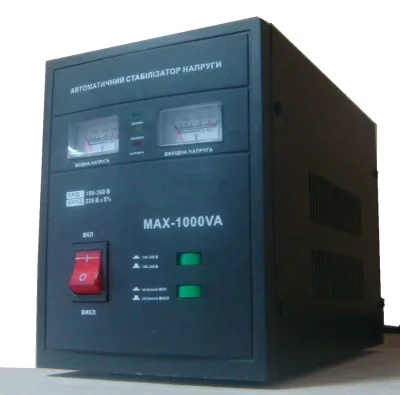
$51.0929 - $71.5312
MOQ: 5 Minimum
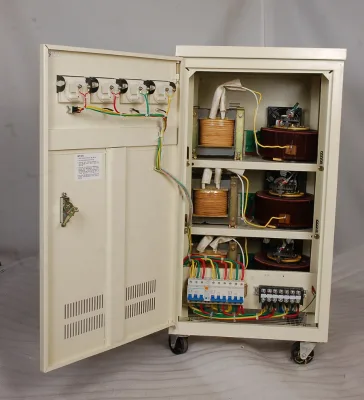
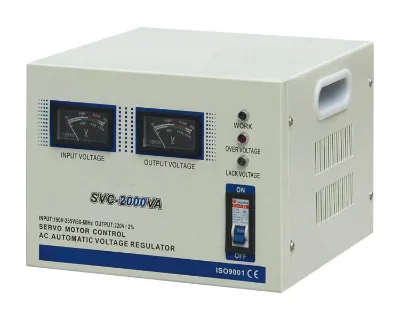
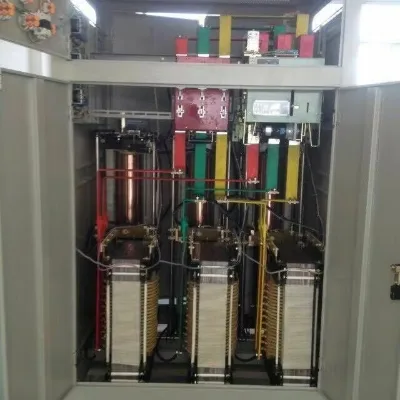
$340.00 - $360.00
MOQ: 10 sets
Zhejiang Dixsen Electrical Co., Ltd.
- Verified by Intertek
- Manufacturer, Trading Company
- Lead time15 days
- Avg. response≤ 7h
Main productsContactor, Fuse, Panel Meter, Breaker, Current Transformer
Main marketsEastern Europe(35%), Western Europe(15%), Southeast Asia(10%)
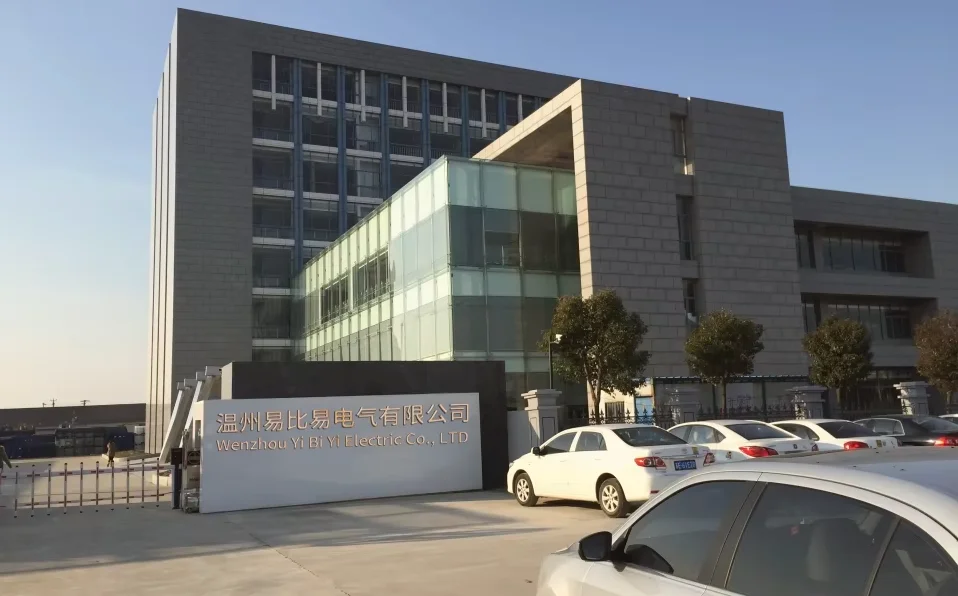
Wenzhou Yibiyi Electric Co., Ltd.
- Trading Company
- Zhejiang, China
- Lead time0 days
- Avg. response≤ 3h
Main productsPower Distribution box,Frequency converter,MCCB,plc,Contactor
Main marketsWestern Europe(20.00%), Mid East(20.00%), Central America(10.00%), Southern Europe(10.00%), Eastern Asia(10.00%), Southeast Asia(10.00%), Domestic Market(5.00%), South Asia(5.00%), Africa(5.00%), Northern Europe(5.00%)
Wenzhou Wenyu Electric Co., Ltd.
- Manufacturer, Trading Company
- Zhejiang, China
- Lead time3 days
- Avg. response≤ 1h
Main productsvoltage transformer,Voltage regulator,Voltage Stabilizer,Switch Power Supply,Sine Wave Inverter
Main marketsWestern Europe(15.00%), Southern Europe(15.00%), North America(10.00%), South America(10.00%), Eastern Europe(10.00%), Southeast Asia(10.00%), Northern Europe(10.00%), South Asia(10.00%), Africa(5.00%), Eastern Asia(5.00%)
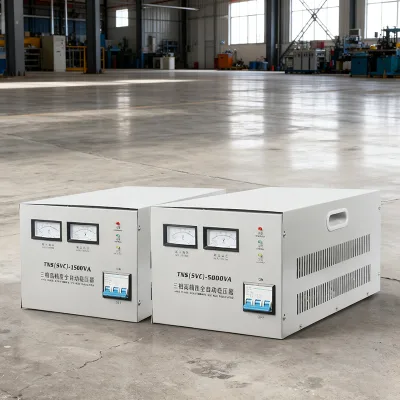
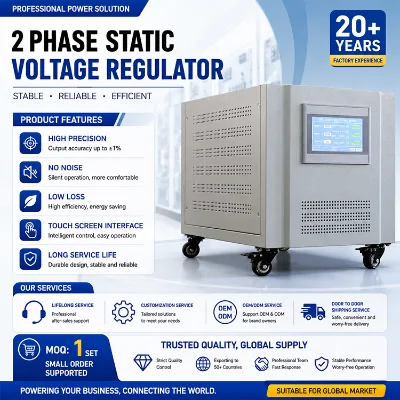
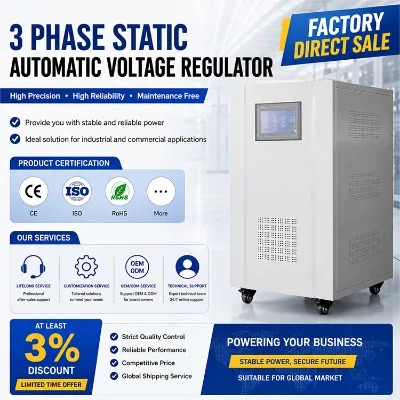
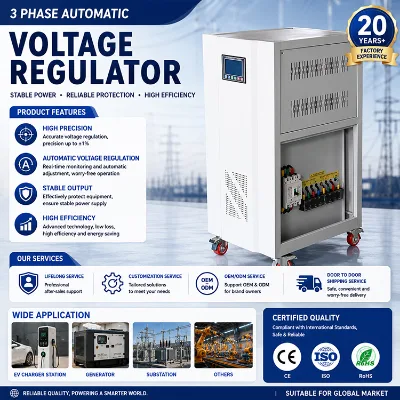
6KVA 3-Phase Non-Contact Voltage Stabilizer | Auto High-Precision AC Voltage Regulator
$137.4106 - $140.5088
MOQ: 1 pieces
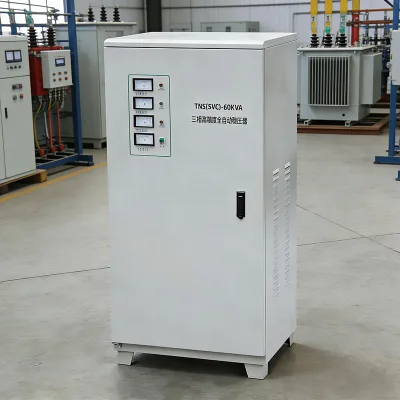
Three Phase 60kva Automatic Low-frequency High-power Outdoor Waterproof 380v Voltage Regulator
$516.3564 - $525.5403
MOQ: 1 pieces
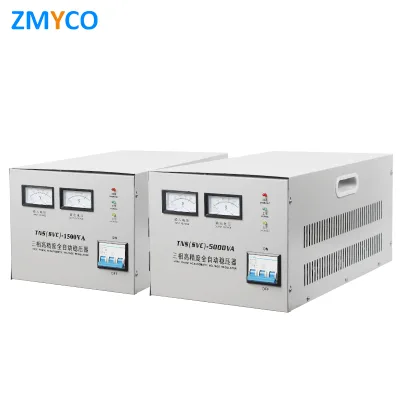
$72.4707 - $80.7541
MOQ: 1 pieces
Jinan Jintong Electrical Equipment Co., Ltd.
- Manufacturer, Trading Company
- Shandong, China
- Lead time5 days
- Avg. response≤ 2h
Main productsVoltage Regulators/Stabilizer,Transformer,Power Supply
Main marketsNorth America(20.00%), Eastern Europe(10.00%), Domestic Market(10.00%), Africa(8.00%), Mid East(7.00%), Southern Europe(5.00%), South America(5.00%), Northern Europe(5.00%), Central America(5.00%), Western Europe(5.00%), Eastern Asia(5.00%), South Asia(5.00%), Southeast Asia(3.00%), Oceania(3.00%)
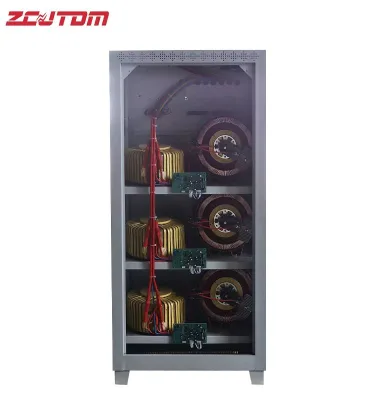
$1090.00 - $1264.00
MOQ: 1 sets
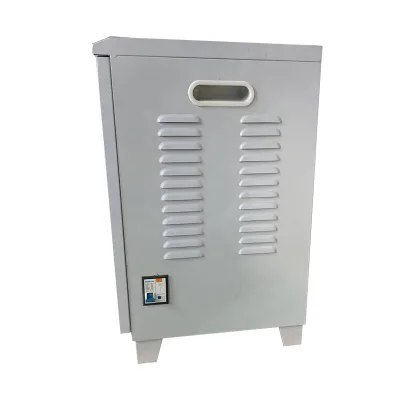
$320.00 - $340.00
MOQ: 1 sets
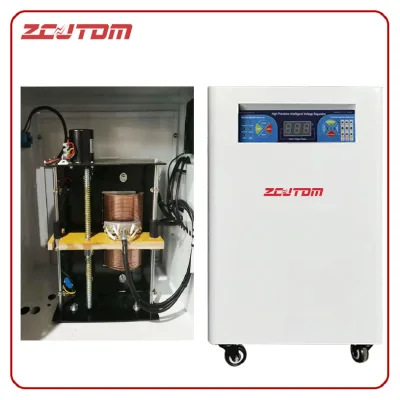
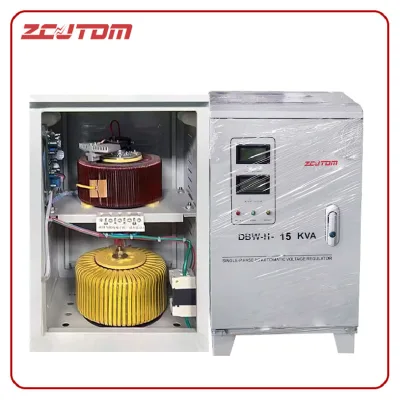
AC Voltage Regulator Suitable for Industrial Use, Large Capacity Voltage Control UVC DBW-H-15KVA
$225.00 - $245.00
MOQ: 1 sets

Fuan Shaluo Electronic Co., Ltd.
- Verified by TUVRHEINLAND
- Trading Company,Manufacturer/Factory
- China Fujian
- Lead time15 days
- Avg. response≤ 7h
Main productsGenerator Parts & Accessories, Automatic Voltage Regulator, Solenoid, Oil Pressure Sensor, Vdo Sensor, Charging Adapter, Generator Controller, Carburetor, Carbon Brush Holder, Dual Fuel Conversion Kit
Main marketsSouth America,Eastern Europe,Mid East,North America,Southeast Asia,Eastern Asia,Oceania,Western Europe,Africa

Efficient Single Phase Control Friendly Installation Automatic Voltage Regulator
$11.00 - $15.00
MOQ: 50 Pieces


Industrial Grade Voltage Regulation Circuitry Protection Automatic Voltage Regulator
$6.00 - $10.00
MOQ: 10 Pieces


Universal Application Various Generator Types Automatic Voltage Regulator
$5.00 - $8.00
MOQ: 50 Pieces


- Verified by SGS
- Combined
- China Zhejiang
- Lead time30 days
- Avg. response≤ 9h
Main productsPower Transformer, Ring Main Unit, Switchgear, Auto Recloser, Load Break Switch, Step Voltage Regulator, Three Phase Transformer, Oil Transformer
Main marketsSouth America,Africa,Others(foreignTradeCapacity.exportBusinessCapacityMarketOther),Southeast Asia/ Mideast,Europe,North America
Yueqing Zhongming Electric Co., Ltd.
- Manufacturer, Trading Company
- Zhejiang, China
- Lead time15 days
- Avg. response≤ 6h
Main productsVoltage stabilizers,voltage regulators,AVR,SBW stabilizers,SVC stabilizers
Main marketsEastern Asia(14.29%), Mid East(14.29%), Southeast Asia(14.29%), Eastern Europe(14.29%), South America(14.29%), Western Europe(14.29%), North America(10.00%)
SHANGHAI GASIM INDUSTRY CO., LTD.
- Verified by SGS Group
- Manufacturer, Trading Company
- Lead time15 days
- Avg. response≤ 2h
Main productsLV MV HV electrical products, Power Transformer, Switchgears, Electric Accessories, Distribution Transformer
Main marketsWestern Europe(20%), North America(15%), Africa(15%)
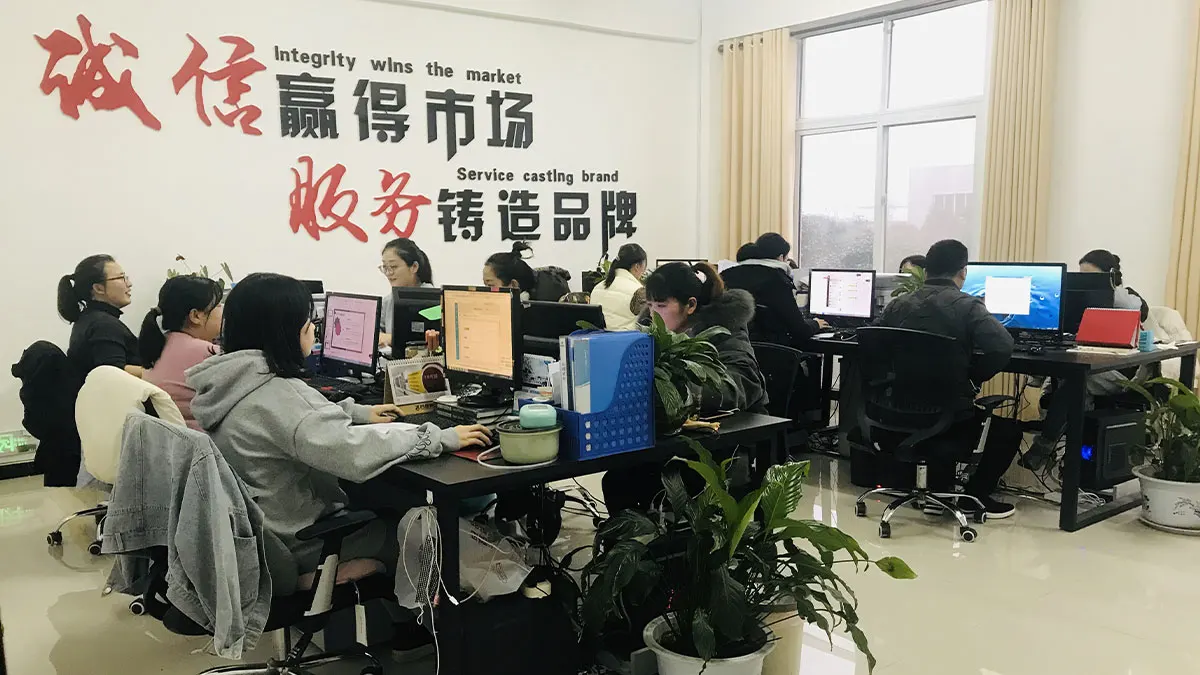
Henan Hundreds Casting Trade Co., Ltd.
- Trading Company
- Henan, China
- Lead time5 days
- Avg. response≤ 1h
Main productsIsolation transformer,Autotransformer,Control transformer,Low voltage trasnsformer,Phase Converter
Main marketsSoutheast Asia(20.00%), Africa(20.00%), South America(10.00%), North America(10.00%), Oceania(8.00%), South Asia(7.00%), Central America(5.00%), Southern Europe(5.00%), Eastern Europe(5.00%), Mid East(5.00%), Western Europe(3.00%), Eastern Asia(2.00%)
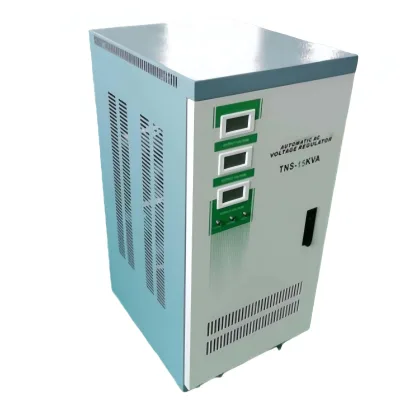
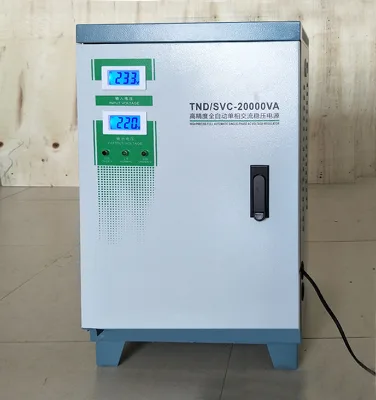
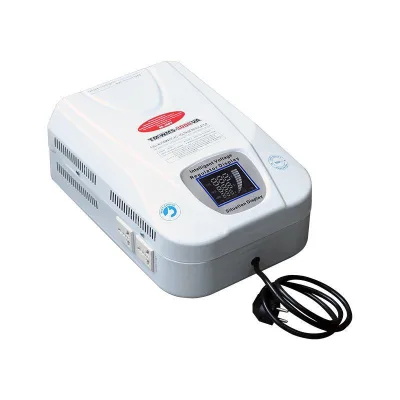
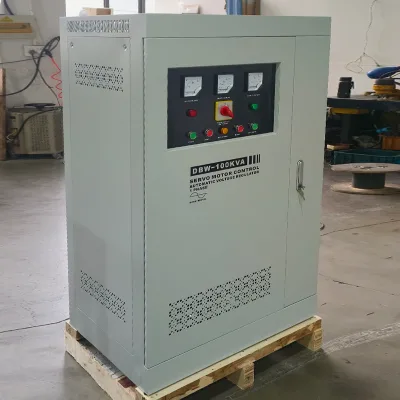
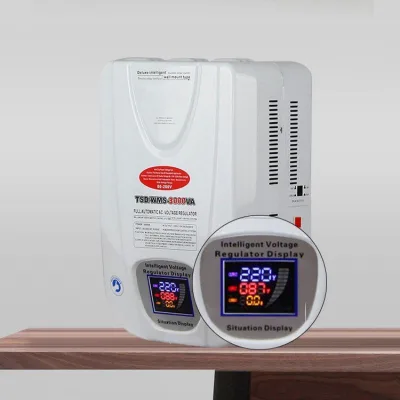
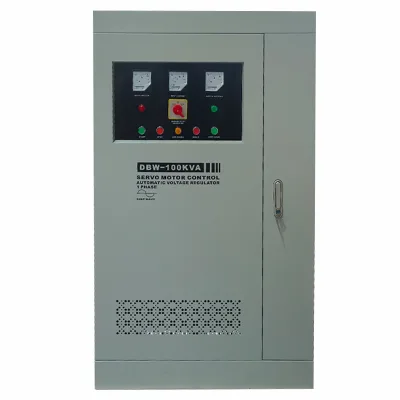
Single-Phase 380V TND/SVC Voltage Stabilizer - High Power Automatic Industrial Copper Core
$43.00 - $44.00
MOQ: 1 sets
Yueqing Kampa Electric Co., Ltd.
- Verified by TüVRheinland
- Manufacturer, Trading Company
- Lead time15 days
- Avg. response≤ 4h
Main productsCircuit Breaker, Contactor, Relay, Thermostat, Voltage Protector
Main marketsEastern Europe(36%), Africa(30%), South America(25%)

Zhejiang Shuntong Electric Co., Ltd.
- Verified by BV
- Trading Company,Manufacturer/Factory
- China Zhejiang
- Lead time23 days
- Avg. response≤ 8h
Main productsTransformers, Frequency Inverter, Inverter, Voltage Stabilizer, Fan
Main marketsSouth America,Eastern Europe,Mid East,North America,Southeast Asia,Eastern Asia,Oceania,Western Europe,Africa
Jinan Deming Power Equipment Co., Ltd.
- Verified by Intertek
- Manufacturer, Trading Company
- Lead time7 days
- Avg. response≤ 3h
Main productsWind Generator Controller, Wind Charge Controller, Inverter, Solar Hybrid Inverter, DCDC Converter
Main marketsDomestic Market(50%), North America(10%), Southeast Asia(10%)
Wenzhou Kaiyi Electric Co., Ltd.
- Manufacturer, Trading Company
- Zhejiang, China
- Lead time10 days
- Avg. response≤ 1h
Main productsLow voltage distribution products,Solar power distribution products,Automation accessories,Industrial control accessories,High and medium voltage electrical equipment
Main marketsDomestic Market(35.00%), Southeast Asia(12.00%), Eastern Europe(10.00%), South America(6.00%), South Asia(5.00%), Eastern Asia(5.00%), Mid East(5.00%), Central America(5.00%), North America(5.00%), Northern Europe(4.00%), Oceania(3.00%), Western Europe(2.00%), Africa(2.00%), Southern Europe(1.00%)
Shenzhen Goter Power Technology Co., Ltd.
- Verified by SGS Group
- Manufacturer, Trading Company
- Lead time10 days
- Avg. response≤ 4h
Main productsInverter, Voltage Regulator, UPS Power Supply, Lithium Battery

Zhejiang Wenma Electric Co., Ltd.
- Verified by TUVRHEINLAND
- Combined
- China Zhejiang
- Lead time15 days
- Avg. response≤ 2h
Main productsVoltage Regultor, Transformers, Stabilizers, Three-Phase Voltage Regulator, Inverter, Uninterruptible Power Supply, Voltage Stabilizer
Main marketsDomestic
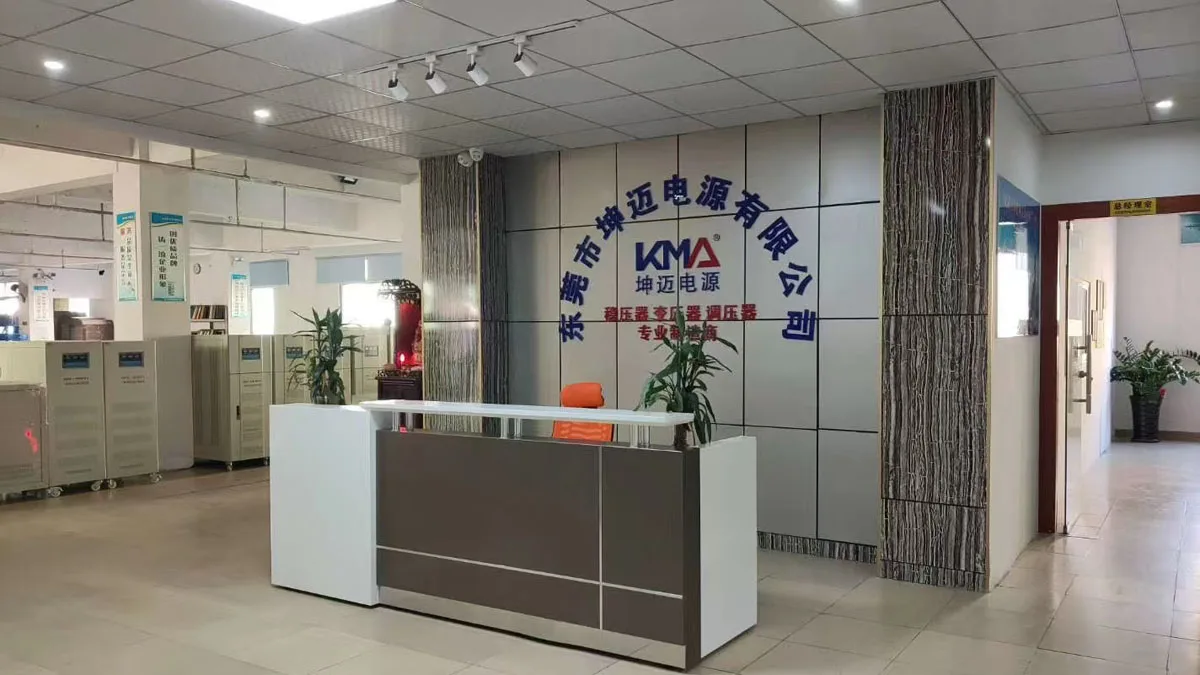
Dongguan Kunmai Power Supply Co., Ltd.
- Manufacturer, Trading Company
- Guangdong, China
- Lead time20 days
- Avg. response≤ 1h
Main productstransformer,voltage stabiilizer,voltage regulator,UPS,Variable frequency power supply
Main marketsDomestic Market(40.00%), Southeast Asia(20.00%), Western Europe(5.00%), Eastern Asia(5.00%), Mid East(5.00%), South America(5.00%), Africa(5.00%), Eastern Europe(5.00%), North America(5.00%), Oceania(1.00%), South Asia(1.00%), Southern Europe(1.00%), Northern Europe(1.00%), Central America(1.00%)
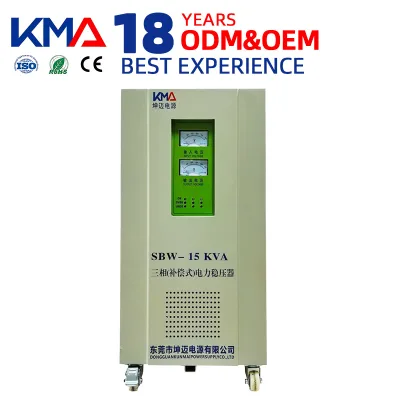
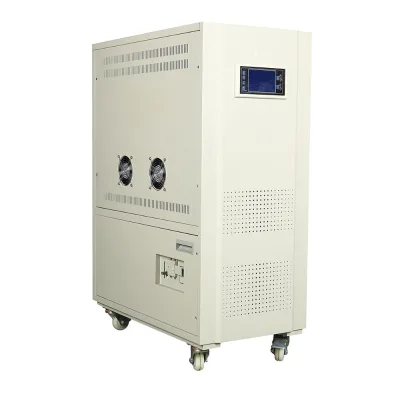
20-40kva Three-Phase Non-Contact Voltage Regulator Transformers Product
$1100.00 - $1720.00
MOQ: 1 Minimum
Guangdong Banatton Technologies Co., Ltd.
- Manufacturer
- Guangdong, China
- Lead time30 days
- Avg. response≤ 2h
Main productsvoltage stabilizer
Main marketsDomestic Market(25.00%), South Asia(20.00%), Southeast Asia(15.00%), Africa(15.00%), North America(10.00%), Mid East(5.00%), Western Europe(5.00%), Eastern Asia(5.00%)
Yueqing Engelec Power Technology Co., Ltd.
- Trading Company
- Zhejiang, China
- Lead time0 days
- Avg. response≤ 9h
Main productsResidential electric products,Industrial electric products,Power and Distribution line electric products
Main marketsEastern Europe(25.00%), Eastern Asia(25.00%), South America(15.00%), Northern Europe(10.00%), Africa(10.00%), Domestic Market(10.00%), Central America(5.00%)

Dongguan Dalingshan Ke Ao Power Equipment Factory
- Manufacturer, Trading Company
- Guangdong Province, China
- Lead time5 days
- Avg. response≤ 4h
Main productsVoltage Regulator,Transformer,Voltage Stabilizer,Stabilizer,UPS
Main marketsDomestic Market(20.00%), Mid East(20.00%), Africa(10.00%), Eastern Asia(10.00%), South America(10.00%), North America(10.00%), Oceania(5.00%), Southeast Asia(5.00%), South Asia(5.00%), Eastern Europe(5.00%)
Shanghai Lepus Electrical Equipment Co., Ltd.
- Verified by Intertek
- Trading Company
- Lead time7 days
- Avg. response≤ 1h
Main productsVoltage Transformer, Voltage Stabilizer, Voltage Regulator
Main marketsNorth America(30%), Southeast Asia(20%), Mid East(20%)
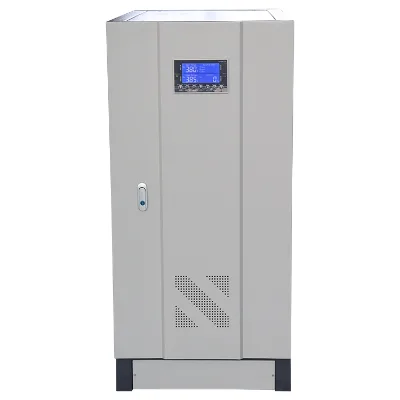
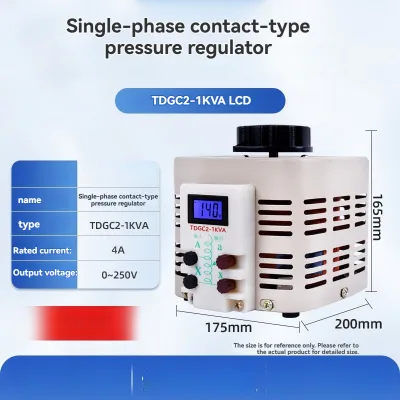
$1500.00 - $1525.00
MOQ: 1 pieces
Anhui Kebang Electric Technology Co., Ltd.
- Verified by Intertek
- Manufacturer, Trading Company
- Lead time3 days
- Avg. response≤ 2h
Main productsTransformer, Voltage Regulator Stabilizers, Power Transformer, Phase Converter, UPS
Main marketsDomestic Market(50%), Southeast Asia(10%), South America(9%)

Yueqing Shuntong Imp. & Exp. Co., Ltd.
- Verified by SGS
- Trading Company
- China Zhejiang
- Lead time15 days
- Avg. response≤ 6h
Main productsWarning Light, Siren, Switch, Socket, Voltage Stabilizer/Regulator, Audible Visual Alarm, Cooling Fans, Computer Parts, Strobe Light, Breaker
Main marketsSouth America,Southeast Asia/ Mideast






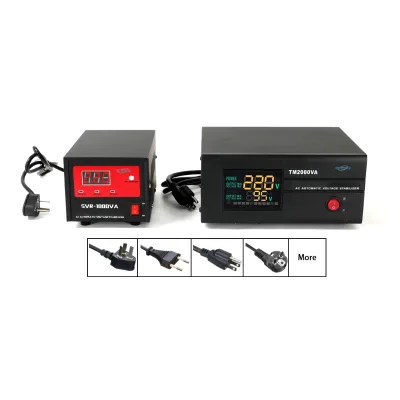
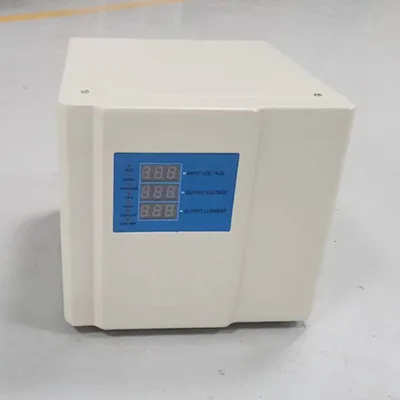
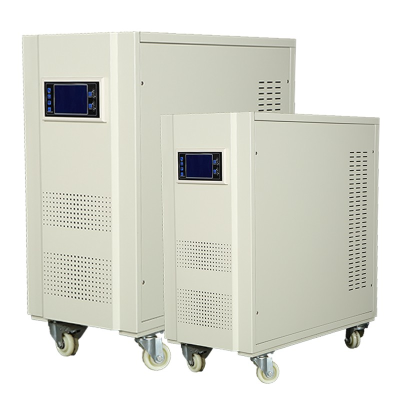


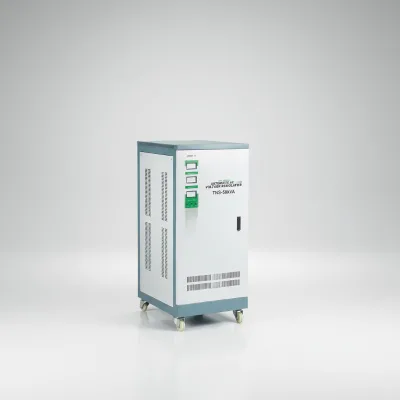
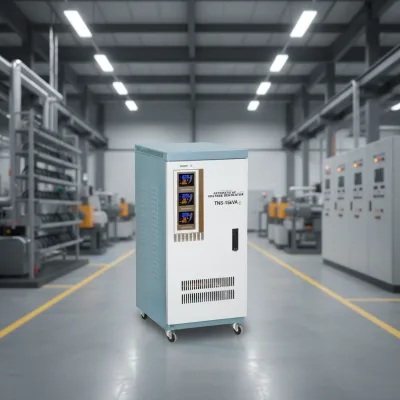
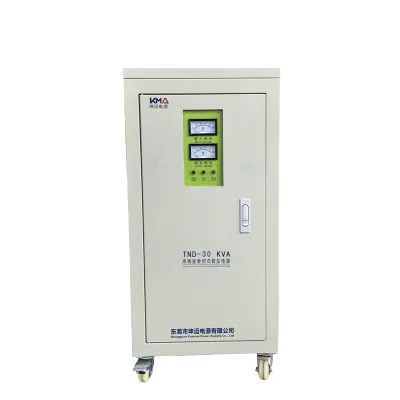
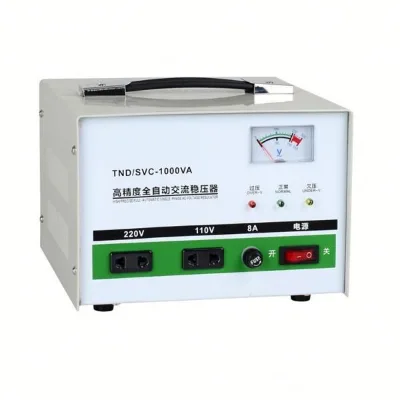


Comprehensive Sourcing Guide
Phase Protection Voltage Regulator Supplier Concentration and Factory Types
The current supplier landscape for phase protection voltage regulators reveals a distinct geographic concentration in China, with specific manufacturing hubs identified in Shanghai and Shaanxi. This clustering suggests established industrial ecosystems where supply chains for electrical components are mature and accessible. Buyers evaluating these regions should note that Shanghai-based entities often operate as trading companies or manufacturer-factory hybrids, offering a blend of direct production capabilities and broader market access. In contrast, suppliers located in Shaanxi appear to operate as combined entities, potentially indicating a different operational model that may influence service delivery and product specialization. Understanding these regional distinctions is crucial for aligning procurement strategies with specific logistical and quality expectations. The presence of these specific locations provides a concrete starting point for sourcing, allowing buyers to focus their due diligence on verified industrial zones rather than searching broadly across unverified global markets.
Factory types vary significantly among the available suppliers, ranging from pure trading companies to full-scale manufacturing factories and combined operational models. This diversity impacts the buyer’s ability to customize products and manage inventory. Suppliers listing themselves as manufacturers or factories often provide more direct control over production processes, which can be critical for complex voltage regulator specifications. Meanwhile, trading companies may offer greater flexibility in sourcing complementary components or managing mixed orders. The distinction between these types is not merely semantic; it affects lead times, communication channels, and the depth of technical support available. Buyers must carefully review the company type designation to ensure it aligns with their operational needs, whether they require strict OEM control or flexible trading arrangements. This variation underscores the importance of verifying the actual operational structure of each supplier before committing to large-scale orders.
How to Verify Phase Protection Voltage Regulator Suppliers
Verification of suppliers requires a multi-layered approach that goes beyond basic profile reviews. Buyers should prioritize suppliers who hold recognized system certifications, such as ISO 9001 or ISO 14001, as these indicate a commitment to standardized quality management and environmental practices. For instance, some suppliers in the current results display ISO 9001 and QC 080000 certifications, while others hold ISO 9001:2015 and ISO 14001:2015 certificates. These credentials serve as foundational evidence of operational maturity. Additionally, third-party verification badges, such as SGS, provide an extra layer of confidence regarding the supplier’s legitimacy and compliance with international standards. Buyers should actively seek out these verification markers and cross-reference them with official certification bodies to ensure authenticity. Relying solely on self-reported claims without external validation exposes the procurement process to significant risk, making third-party audits and verified badges essential tools for risk mitigation.
Beyond certifications, buyers must assess the supplier’s responsiveness and technical capability through direct engagement. Response time metrics, such as those showing averages around 4 to 10 hours, can indicate the efficiency of the supplier’s customer service infrastructure. A faster response time often correlates with better project management and quicker issue resolution. Furthermore, examining the supplier’s research and development capacity is vital for ensuring long-term product reliability. Suppliers offering OEM or ODM services demonstrate a higher level of technical proficiency and flexibility. Buyers should inquire about specific technical details, such as winding types, cooling methods, and core shapes, to gauge the supplier’s expertise. For example, knowledge of auto-transformer windings or oil-immersed cooling methods indicates a deeper understanding of voltage regulator mechanics. This technical due diligence helps buyers distinguish between superficial traders and genuine engineering-focused manufacturers.
What to Compare Across Phase Protection Voltage Regulator Suppliers
When comparing suppliers, lead time and minimum order quantity (MOQ) are critical operational metrics that directly impact supply chain planning. Current data indicates lead times ranging from approximately 23 to 30 days, which buyers must factor into their production schedules. A shorter lead time can be advantageous for urgent projects, but it should not come at the expense of quality. Similarly, MOQs vary, with some suppliers offering low entry points like an MOQ of 1, while others may have higher thresholds for industrial-grade equipment. Buyers should align these metrics with their inventory strategies, balancing the need for flexibility against the potential cost benefits of larger orders. Comparing these logistical constraints across multiple suppliers allows buyers to identify those that best fit their specific volume requirements and delivery timelines. This comparison helps in creating a diversified supplier base that can accommodate both small-scale trials and large-scale production runs.
Product specifications and pricing structures also require careful comparison to ensure value and compatibility. Prices for voltage regulators can vary significantly based on capacity, phase, and customization options. For example, some products are priced around $50 to $150 for smaller units, while industrial-grade three-phase regulators can range from $8,000 to $18,000. Buyers must evaluate these prices in the context of the product’s rated capacity, voltage class, and features such as LED/LCD displays or copper transformers. Additionally, comparing product attributes like frequency characteristics, iron core shapes, and wiring modes is essential for ensuring technical compatibility with existing infrastructure. Suppliers offering customization options provide greater flexibility, allowing buyers to tailor products to specific application ranges, such as industrial mining enterprises or construction sites. This detailed comparison ensures that buyers select suppliers that offer the best balance of cost, quality, and technical suitability for their specific needs.
Common Phase Protection Voltage Regulator Sourcing Risks
One significant risk in sourcing phase protection voltage regulators is the potential mismatch between advertised specifications and actual product performance. Buyers must be cautious of suppliers who provide vague or incomplete product descriptions, as this can lead to compatibility issues in the field. For instance, discrepancies in voltage class ratings, such as 6kv, 10kv, or 35kv, can have serious implications for grid integration and safety. Buyers should insist on detailed technical datasheets and verify that the supplier’s stated specifications align with international standards and local regulatory requirements. Additionally, the risk of receiving substandard materials, such as inferior copper windings or inadequate cooling systems, is a concern. Verifying the material composition and construction quality through third-party inspections or sample testing is crucial to mitigate this risk. Ensuring that the supplier adheres to strict quality control measures, as evidenced by their certifications, helps reduce the likelihood of receiving defective products.
Another common risk is the lack of after-sales support and warranty coverage. Voltage regulators are complex electrical devices that may require maintenance or troubleshooting over their operational lifespan. Buyers should carefully review the warranty terms offered by suppliers, noting that some provide warranties of up to 18 months. However, the availability of technical support and spare parts is equally important. Suppliers with established manufacturing bases in specific regions may have better access to local service networks, whereas those relying solely on trading models may have limited support capabilities. Buyers should inquire about the supplier’s policy for handling defects, returns, and technical assistance. Additionally, the risk of supply chain disruptions due to geopolitical factors or raw material shortages should be considered. Diversifying suppliers across different regions and maintaining open communication channels can help mitigate these operational risks, ensuring continuity of supply even in challenging market conditions.
Phase Protection Voltage Regulator Regional Sourcing and Logistics
Sourcing from specific regions like Shanghai and Shaanxi offers distinct logistical advantages and challenges. Shanghai, as a major port city, provides excellent access to international shipping routes, facilitating efficient export processes. Suppliers located here often benefit from established logistics infrastructure, which can lead to faster and more reliable shipping times. However, buyers must also consider the potential for higher logistics costs associated with premium port facilities. In contrast, suppliers in Shaanxi, located inland, may offer different logistical dynamics, potentially involving longer transit times to coastal ports but possibly lower base manufacturing costs. Buyers should evaluate the total landed cost, including transportation, insurance, and customs duties, when comparing suppliers from different regions. Understanding the logistical implications of each location helps buyers make informed decisions that balance cost efficiency with delivery reliability.
Packaging and handling requirements are also influenced by the regional sourcing strategy. Voltage regulators, particularly larger industrial units, require robust packaging to prevent damage during transit. Current data indicates that suppliers use various packaging methods, including cartons, wooden boxes, and wooden cases, depending on the product size and weight. For example, heavy-duty regulators weighing up to 3.5 tons may require specialized wooden case packaging to ensure safe transport. Buyers should verify that the supplier’s packaging standards meet international shipping requirements to minimize the risk of damage. Additionally, considering the environmental impact of packaging materials, such as the use of sustainable wood or recyclable cartons, may be relevant for buyers with green procurement policies. Coordinating with logistics providers early in the sourcing process ensures that packaging and shipping arrangements are optimized for both safety and cost-effectiveness, reducing the likelihood of delays or product damage upon arrival.
Phase Protection Voltage Regulator Commercial Terms and Order Planning
Commercial terms, including payment methods and escrow services, play a crucial role in securing transactions and protecting buyer interests. Buyers should prioritize suppliers who offer secure payment options, such as escrow services, which hold funds until the goods are received and verified. This mechanism reduces the risk of fraud and ensures that suppliers are incentivized to deliver products as agreed. Additionally, understanding the supplier’s pricing structure, including any volume discounts or customization fees, is essential for accurate budgeting. Buyers should request detailed quotations that break down costs for the product, packaging, shipping, and any additional services. Comparing these commercial terms across multiple suppliers helps identify the most favorable conditions, balancing cost with security and reliability. Clear and transparent commercial terms are foundational to building a trustworthy supplier relationship and ensuring smooth transaction execution.
Order planning must also account for the supplier’s production capacity and customization capabilities. Suppliers offering OEM or ODM services can accommodate specific design requirements, but this may extend lead times and increase costs. Buyers should plan their orders well in advance, considering the supplier’s current workload and production schedule. For instance, a lead time of 23 to 30 days requires careful coordination to avoid production bottlenecks. Additionally, buyers should establish clear communication protocols for order updates, quality checks, and delivery schedules. Regular follow-ups and milestone tracking can help ensure that orders progress smoothly and any issues are addressed promptly. By integrating commercial terms and logistical planning into a comprehensive order strategy, buyers can minimize risks and maximize the efficiency of their procurement process, ensuring timely delivery of high-quality phase protection voltage regulators.
FAQs
What is the price range for single-phase voltage regulators?
Single-phase voltage regulators are available starting at $50.00 per unit. This pricing applies to models with 500VA to 5000VA capacities. Buyers should verify specific model requirements and customization options before finalizing orders to ensure accurate cost estimation.
What certifications do these voltage regulators hold?
Manufacturers hold ISO 9001, QC 080000, and ISO14001:2015 certifications. Some suppliers also provide CCC certification for specific products. These credentials verify quality management and environmental standards, ensuring reliable performance for industrial and mining enterprise applications.
What is the typical lead time for delivery?
Typical lead times range from 23 to 30 days. This duration depends on the supplier location and specific product configuration. Buyers should confirm exact delivery schedules with the manufacturer to align with project timelines and avoid potential delays in supply chains.
Are customization options available for voltage regulators?
Customization is available for most voltage regulator models. Buyers can request specific phases, power sources, and application ranges. Options include single or three-phase configurations, linear regulated power supplies, and various iron core shapes to meet unique industrial requirements.
What is the minimum order quantity for these products?
The minimum order quantity is one unit for many models. This low MOQ allows buyers to test product quality before placing larger orders. It is ideal for small-scale projects or initial procurement evaluations without significant financial commitment or inventory risk.
Where are these voltage regulators manufactured?
Manufacturers are located in China, specifically in Shanghai and Shaanxi provinces. Shanghai suppliers often produce medium-sized regulators, while Shaanxi facilities handle larger, high-voltage applications. Buyers can verify origin details to ensure compliance with regional sourcing preferences and logistics planning.