Pink Decorative Ceramic Plate Suppliers and Manufacturers
Explore 16 verified manufacturers offering Pink Decorative Ceramic Plate options with varying lead times, response speeds, and certifications. Buyers can compare FDA standards, customization capabilities, and pricing ranges before requesting quotes directly from factories in Guangdong; review the available evidence before requesting comparable quotations from suitable candidates.
Suppliers List

Chaozhou Jiayuehui Tableware Co., Ltd.
- Verified by SGS
- Manufacturer
- China Guangdong
- Lead time45 days
- Avg. response≤ 25h

Rollin Porcelain Industrial Co., Ltd.
- Verified by BV
- Manufacturer/Factory
- China Guangdong
- Lead time45 days
- Avg. response≤ 6h
Main productsPorcelain Dinnerware, Tableware, Dinner Set, Dinner Plate, Hotel and Restaurant Tableware, Bone China, Cutlery, Glassware, Ceramic Plate, Porcelain
Main marketsEastern Europe,Mid East,North America,Southeast Asia,Eastern Asia,Oceania,Western Europe

Leaf Shape Green Color Porcelain Plates Ceramic Plates for Hotel and Restaurant
$4.30 - $4.65
Moq: 100


Foshan Ron Hospitality Supplies Co., Ltd.
- Verified by BV
- Manufacturer/Factory,Group Corporation
- China Guangdong
- Lead time45 days
- Avg. response≤ 2h
Main productsRestaurant Furniture, Restaurant Booth, Restaurant Chair, Restaurant Table, Bar Stools, Wedding Chairs, Flatware Sets, Dinnerware Sets, Garden Chairs, Disposable Dinnerware & Tableware
Main marketsSouth America,Eastern Europe,Mid East,North America,Southeast Asia,Eastern Asia,Oceania,Western Europe,Africa

Modern Style Customized Ceramic Round Pink Tableware Dinnerware Plate for Restaurant
$5.00 - $50.00
Moq: 100


Linyi Feifan Imp. & Exp. Co., Ltd.
- Verified by TUVRHEINLAND
- Trading Company
- China Shandong
- Lead time30 days
- Avg. response≤ 13h
Main productsEnamel Mug/Cup, Enamel Bowl, Enamel Basin, Enamel Plate/Tray/Kettle, Enamel Casserole/Pot, Enamel Bucket, Safety Shoe/Boot, Safety Gloves
Main marketsSoutheast Asia/ Mideast,Domestic

Jinjiang Jiaxing Supply Management Co., Ltd.
- Verified by TUVRHEINLAND
- Trading Company
- China Fujian
- Lead time30 days
- Avg. response≤ 1h
Main productsEVA Clogs, Flip Flop, Shoe Charms, Shopping Bags, Wristbands, Gifts, Promotional Gifts, Slipper, Sport Cap, Ball
Main marketsNorth America

- Verified by BV
- Trading Company
- China Shandong
- Lead time30 days
- Avg. response≤ 2h
Main productsCeramic Mugs, Ceramic Dinnerware, Ceramic Tea Set, Ceramic Kitchen Ware, Custom Drum Shape Ceramic Coffee Mug, 24oz Large Capacity 3D Embossed Mug, Porcelain Cappuccino Cup and Saucer, 14oz Custom Souvenirs Ceramic Mug, 12 Sets Vintage Reactive Glazed Tableware, Custom Royal White Ceramic Milk Jar
Main marketsNorth America

Healthy Restaurant Fruit Plate Pink Custom Printing Ceramic Square Plate for Dinner
$1.00 - $5.00
Moq: 5000

Ins Style Dessert Plate Round Ceramic Salad Plate 7.5inch Kitchen Ceramic Plate
$0.50 - $1.50
Moq: 5000

Danyang Liou Kitchenware Co., Ltd.
- Verified by CTI
- Combined
- China Jiangsu
- Lead time23 days
- Avg. response≤ 7h
Main productsCutlery, Flatware, Charger Plate, Wine Glass, Bone China Plate, Glass Plate
Main marketsDomestic,North America

Changsha Happy Go Products Developing Co., Ltd.
- Trading Company
- China Hunan
- Lead time45 days
- Avg. response≤ 6h
Main productsCoffee Mug, Dinner Set, Bowl, Mug, Dinnerware, Tableware, Plate, Porcelain, Crockery, Coffee Cup
Main marketsSouth America,Africa,Southeast Asia/ Mideast,East Asia(Japan/ South Korea),Europe,Australia,North America

Longyan Zhanling Industry and Trade Co., Ltd.
- Manufacturer/Factory
- China Fujian
- Lead time150 days
- Avg. response≤ 4h
Main productsStainless Steel Cup, Customized Cup, Stainless Steel Cup & Mug, Double Wall Stainless Steel Cup, Customized Stainless Steel Cup, Water Bottle, Tumbler, Stainless Steel Water Bottle, Stainless Steel Bottle, Whiskey Glass
Main marketsSouth America,Eastern Europe,Mid East,North America,Southeast Asia,Eastern Asia,Oceania,Western Europe,Africa

Beijing V-great International Trade Co., Ltd.
- Verified by CTI
- Trading Company,Manufacturer/Factory,Other
- China Beijing
- Lead time23 days
- Avg. response≤ 24h
Main productsBulletproof Vest, Aramid Helmet, Body Armor, Aramid Ud Fabric, Bulletproof Plate, Bulletproof Helmet, Tactical Vest, Aramid Bulletproof Vest, Nij Iiia Level Body Armor Vest, Sapi Plate Carrier
Main marketsSouth America,Eastern Europe,Mid East,North America,Southeast Asia,Eastern Asia,Oceania,Western Europe,Africa
Xiamen Dashing Jewelry Co., Ltd.
- Trading Company
- Lead time旺季: "1 - 2000":14,"> 2000":"To be negotiated", 淡季: "1 - 2000":14,"> 2000":"To be negotiated"
Main productsDrinkware, Party Supplies, Home Decoration, Garden Supplies

Shenzhen Hard Precision Ceramic Co., Ltd.
- Manufacturer
- China Guangdong
- Lead time30 days
- Avg. response≤ 5h
Main productsAlumina Ceramics, Zirconia Ceramics, Silicon Nitride Ceramics, Micalex Ceramics, Sic Ceramics, Aluminium Nitride Ceramics, Silicon Carbide Ceramic, Mullite Ceramics, Cordierite Ceramics, Quartz Glass
Main marketsSoutheast Asia/ Mideast,East Asia(Japan/ South Korea),Domestic,Europe,North America

Zhengzhou Mission Ceramic Products Co., Ltd.
- Verified by BV
- Trading Company
- China Henan
- Lead time15 days
- Avg. response≤ 14h
Main productsAlumina Tube, Alumina Crucible, Alumina Plate, Precision Alumina Ceramic Part, Silicon Carbide Ceramic, Zirconia Ceramic, Boron Nitride Ceramic, Alumina Ceramic Fiber Board, Mosi2 Heating Element, Sic Heating Element
Main marketsSouth America,Africa,Others(foreignTradeCapacity.exportBusinessCapacityMarketOther),Southeast Asia/ Mideast,East Asia(Japan/ South Korea),Europe,Australia,North America


High Quality Customized Alumina Ceramic Plate
Contact supplier

Xiamen Yoyo Ceramic Trading Co., Ltd.
- Verified by BV
- Combined
- China Fujian
- Lead time23 days
- Avg. response≤ 10h
Main productsCeramic Mugs, Ceramic Plates, Teawares, Ceramic Canisters, Ceramic Vases, Ceramic Flower Planters, Ceramic Coin Bank, Flowerpot, Canisters, Resin Crafts
Main marketsSouth America,Africa,Southeast Asia/ Mideast,East Asia(Japan/ South Korea),Europe,Australia,North America

Guangzhou Nantian Sources Co., Ltd.
- Manufacturer/Factory
- China Guangdong
- Lead time15 days
- Avg. response≤ 5h
Main productsKitchen Equipment, Kitchenware, Food Machine, Kitchen Appliance, Glassware, Food Machinery, Bakery Equipment, Dinnerware, Kitchen Utensils, Food Processor
Main marketsSouth America,Mid East,Southeast Asia,Eastern Asia,Oceania,Africa

Guangzhou Garbo International Trading Co., Ltd.
- Verified by TUVRHEINLAND
- Trading Company,Manufacturer/Factory
- China Guangdong
- Lead time45 days
- Avg. response≤ 7h
Main productsGlassware, Glass Cup, Glass Mug, Glass Bowl, Glass Candy Jar, Glass Pitcher, Glass Ice Cream Cup and Ice Bucket, Opal Glassware, Stainless Steel Cutlery, Ceramic Dinnerware
Main marketsSouth America,Eastern Europe,Mid East,North America,Southeast Asia,Eastern Asia,Oceania,Western Europe,Africa




Comprehensive Sourcing Guide
Pink Decorative Ceramic Plate Supplier Concentration and Factory Types
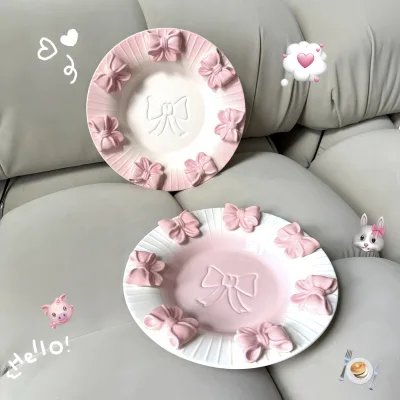
Buyers searching for a Pink Decorative Ceramic Plate will mostly encounter manufacturers based in Guangdong, China, with product-origin details pointing to Chaozhou in that province. This matters because Chaozhou is widely recognized as a ceramics production region, and supplier listings that display this origin give you a concrete anchor for your sourcing map. The supplier mix on B2B platforms typically includes pure manufacturers, manufacturer/factory hybrids, and larger group corporations that also carry adjacent product lines such as restaurant furniture, flatware, glassware, and disposable tableware. A supplier whose main products include porcelain dinnerware, tableware, dinner sets, dinner plates, hotel and restaurant tableware, bone china, and ceramic plates is more likely to have dedicated plate production than a generalist trading entity.
When a location is not displayed or appears incomplete, do not assume a cluster. Instead, verify it yourself: ask each candidate for its registered address, the address of the producing factory (which may differ from a sales office), and the origin field on prior export documents. Cross-check that the factory actually makes decorative ceramic plates rather than only white dinnerware, since pink glazes and decal decoration require separate kiln and decoration-line capability. Company type labels help here: a listing marked Manufacturer with ODM and OEM capability signals in-house design and customization, which is exactly what a decorative pink plate program requires. Group corporations may offer broader catalogs but should be asked who physically produces the plates.
How to Verify Pink Decorative Ceramic Plate Suppliers
Verification should start with the platform-issued badges and then go deeper. Some listings show third-party on-site verification from SGS or Bureau Veritas (BV), which means an inspection body has visited and confirmed the company's identity and operations. Others display system certifications such as ISO 9001, while some show no system certification at all — treat that gap as a question to ask, not a disqualification. Product-level evidence matters equally in this category: certain plate listings carry an FDA certification attribute and state that glazing is under-glazed and safe for eating, which is directly relevant to a food-contact decorative plate. Confirm whether that FDA claim applies to your specific design and finish, not just a sibling product.
Beyond documents, verify capability against the product evidence shown in listings. Strong candidates describe handmade construction, glazed technique, porcelain raw material, thermostability, eco-friendly features, and dishwasher and microwave safety for comparable plates. Ask each supplier to confirm which of these attributes apply to a pink decorative piece, since colored glazes and decals can change food-safety and durability behavior. Request business license details, factory photos or video walkthroughs, and references from restaurant or hotel buyers if the listing positions itself in that segment. Response behavior is itself a verification signal: displayed response times in current results range from under two hours to roughly twenty-five, so measure actual reply speed against any stated figure before committing. A supplier that answers slowly during quotation will not improve after your deposit is paid.
What to Compare Across Pink Decorative Ceramic Plate Suppliers
Build a comparison sheet using the dimensions that actually appear on supplier listings, while remembering that not every supplier displays every attribute. Useful columns include: company type (Manufacturer versus Manufacturer/Factory versus Group Corporation), location, verification body (SGS, BV, or none), system certification (ISO 9001 or NIL), response time, lead time, ODM/OEM capability, and main products. Then layer in product-level data from plate listings: unit price ranges, MOQ, model numbers, size standards, and customization scope. In current results, plate prices span roughly from about one dollar for small side plates to the mid-four-dollar range for large leaf-shaped hotel plates, and MOQs shown range from 100 pieces on some restaurant-oriented plates to 500 on decorated dinner plate sets — a meaningful spread when you are testing a pink decorative design.
Compare customization depth explicitly. Some listings state customization is available across design, color, logo, size, and package; others simply say "Available" with no detail. For a pink decorative plate, ask whether the supplier can match a specific pink tone, whether decoration is hand-painted, decal, or glazed, and whether they support both ODM and OEM. Also compare stated production timelines: one listing cites about 30 days production time while a supplier-level lead time shows 45 days — reconcile those numbers and ask which includes decoration, quality checks, and packing. Finally, compare the sales focus: suppliers whose main products center on dinnerware and hotel tableware will understand restaurant-grade durability better than diversified groups selling chairs and booths alongside plates.
Common Pink Decorative Ceramic Plate Sourcing Risks
The most frequent risk in this category is color inconsistency across production runs. Pink is a difficult glaze and decal color to hold batch-to-batch, and suppliers whose listings emphasize handcrafted, glazed, handmade production will have inherent variation. Mitigate this by approving a physical golden sample and defining an acceptable color tolerance in writing before mass production. A second risk is food-safety drift: listings in this category claim FDA certification and eco-friendly, health-care, and discoloration-resistance features, but colored decoration can introduce lead or cadmium concerns if the decorator changes material suppliers. Require test reports tied to your actual plate design, not generic certificates for white ware.
Other risks come from specification and logistics gaps. Some listings state standards as "Customized" or show MOQ as "Tbd," which means the burden of defining size, packing, and quantity falls on you; one product even shows packing described only as "Fob," leaving export packaging undefined. Ambiguity here leads to chips, breakage, and disputes. Payment and company-structure risks also appear: listings show payment via T/T and PayPal described as friendly payment ways, but a group corporation selling furniture and tableware together may commingle orders — insist the contract names the producing entity. Finally, response-time risk is real: displayed figures range from under two hours to about twenty-five, and slow communication during sampling predicts slow problem-solving during production. Document every agreed attribute — glaze type, safety claims, packing method, size standard — in the proforma invoice to reduce dispute surface.
Pink Decorative Ceramic Plate Regional Sourcing and Logistics
The regional picture in current results is concentrated: supplier locations point to Guangdong, China, and product-origin fields cite Chaozhou, Guangdong specifically. Sourcing from a recognized ceramics region offers practical advantages — dense supply of glaze and decal materials, experienced decoration labor, and freight forwarders familiar with packing fragile tableware. Product listings from this region also show export-oriented habits that matter logistically: standard export cartons as the stated packing method, FOB-based transactions, and payment terms such as T/T and PayPal. Confirm which port the supplier ships from, since Guangdong suppliers commonly containerize through Pearl River Delta ports, and ask whether they consolidate mixed dinnerware items into one container.
Plan logistics around fragility and weight. Ceramic plates are heavy, and a pink decorative plate with raised or hand-applied decoration needs individual wrapping, dividers, and drop-test-validated cartons — do not accept a bare "standard export carton" claim without asking what it contains. Listings indicate production times around 30 days and supplier lead times around 45 days, so build your timeline backward from your in-store or restaurant launch date, adding decoration sampling, safety testing, and vessel transit time. Ask each supplier whether they support port-to-port or door-to-door shipping, as at least one listing advertises both options. If you source outside a known ceramics region, request evidence of decoration-line capability and prior export volume of similar plates, because logistics partners alone do not compensate for weak factory packaging discipline.
Pink Decorative Ceramic Plate Commercial Terms and Order Planning
Commercial terms in this category reward careful reading. Displayed price ranges for comparable plates run from roughly $1.20 for small side plates through $2.00 for decorated dinner plate sets, $3.20–3.90 for curved and rectangular specialty plates, and up to about $4.65 for large leaf-shaped hotel pieces — so a pink decorative plate's price will depend heavily on size, decoration method, and order quantity. MOQs shown range from 100 to 500 pieces, and at least one listing reports MOQ as "Tbd," meaning you must negotiate a trial quantity. Push for a first pilot order at the lower end, then scale once color and packing are proven.
Structure payments and lead-time commitments explicitly. Where T/T and PayPal are offered, consider a small deposit with balance after inspection, and reconcile the stated ~30-day production time against any 45-day supplier lead time so your delivery promise includes decoration and packing. Define Incoterms — several listings reference FOB — and confirm who arranges freight for door-to-door service if offered. In order planning, lock the pink color standard, size standard (listings range from 7.5-inch side plates to 16-inch hotel plates), packing configuration, and safety claims in the contract. Use a comparison of response speed, verification status, and certification to decide which suppliers get larger repeat orders, and revisit terms annually as volumes justify better pricing.
FAQs
What is the price range for ceramic dinner plates?
Prices for ceramic dinner plates typically range from $1.20 to $4.65 per unit depending on size and design. Specific models like the 9-inch drip plate start at $1.20, while larger 16-inch curved plates reach $4.65. Buyers should check the exact model number to confirm the current quote.
What is the minimum order quantity for these plates?
The minimum order quantity varies by supplier and product type. Some manufacturers require a minimum of 100 pieces for standard designs, while others set the threshold at 500 units. Customized orders may have different MOQs, so buyers must verify the specific requirement for their chosen plate style.
Are these ceramic plates safe for microwave and dishwasher use?
Yes, many ceramic plates are explicitly certified as safe for both microwave and dishwasher use. Products often feature FDA certification and are made from high-temperature resistant porcelain. Buyers should confirm the specific safety features listed in the product attributes to ensure compliance with their kitchen equipment standards.
How long does production take for custom ceramic plates?
Production lead times generally range from 30 to 45 days for custom orders. Some suppliers offer a turnaround of about 30 days, while others may require up to 45 days depending on the complexity of the design and volume. Buyers should confirm the exact timeline with the supplier before placing an order.
Can I customize the design, color, or logo on the plates?
Customization is widely available for ceramic dinner plates, including design, color, logo, size, and packaging. Suppliers offer OEM and ODM services to meet specific branding needs. Buyers should provide detailed specifications to ensure the final product matches their requirements, as customization options are explicitly listed as available for most models.
What certifications do these ceramic plates hold?
Many ceramic plates hold FDA certification, ensuring they are safe for food contact. Some suppliers also possess ISO 9001 system certification for quality management. Buyers should verify the specific certifications listed for each product to ensure they meet the regulatory standards required for their target market or restaurant operations.