Portable Wear-Resistant Grinding Table Suppliers and Manufacturers
Compare 13 verified suppliers offering portable wear resistant grinding tables with ISO and CE certifications. Review response times, lead times, and product specifications to select the right factory for your industrial dust collection needs; review the available evidence before requesting comparable quotations from suitable candidates.
Suppliers List

Qingdao Power Space Environmental Protection Technology Co., Ltd.
- Manufacturer
- China Shandong
- Lead time15 days
- Avg. response≤ 8h
Main productsFume Extractor, Laser Fume Extractor, Downdraft Table, Fume Extraction Tower, Industrial Dust Collector
Main marketsEurope,Australia,North America

Botou Xintian Environmental Protection Equipment Co., Ltd.
- Verified by BV
- Combined
- China Hebei
- Lead time15 days
- Avg. response≤ 3h
Main productsWelding Table, Clamps, Soldering Station, Baghouse Dust Collector, Pulse Valve, Filter Bag, Filter Cage
Main marketsSouth America,Africa,Southeast Asia/ Mideast,Domestic,Europe,North America

Explosion Proof Polishing Workbench Dust Collector Grinding Table Portable Downdraft Table
$1000.00 - $2000.00
Moq: 1

Explosion Proof Polishing Workbench Dust Collector Grinding Table Portable Grinding Dust Collector
$1100.00 - $2100.00
Moq: 1


Botou Ever Lucky Machinery Co., Ltd.
- Verified by SGS
- Combined
- China Hebei
- Lead time15 days
- Avg. response≤ 8h
Main productsDust Collector, Screw Conveyor, Bucket Elevator, Drag Chain Conveyor, Rotary Valve, Gate Valve, Flap Valve, Fog Cannon, Filter Bag, Dust Mixing Machine
Main marketsSoutheast Asia/ Mideast,North America
- Manufacturer, Trading Company
- Shandong, China
- Lead time20 days
- Avg. response≤ 2h
Main productsdust collector,water treatment system,HClO generator,reverse osmosis water filter system,grinding table
Main marketsWestern Europe(13.0%), Eastern Europe(13.0%), Southern Europe(12.0%), Oceania(11.0%), Mid East(10.0%), North America(10.0%), Central America(10.0%), Northern Europe(6.0%), South Asia(5.0%), Domestic Market(2.0%), South America(2.0%), Southeast Asia(2.0%), Eastern Asia(2.0%), Africa(2.0%)

Cangnan Shengju Smoking Factory
- Verified by SGS
- Combined
- China Zhejiang
- Lead time23 days
- Avg. response≤ 11h
Main productsCigarette Roling Paper, Olling Trays, Grinder, Cigar Cutter, Metal Pipes, Water Pipe, Asthrays, Cigarette Rolling Machine, Metal Smoking Pipe, Lighter
Main marketsDomestic

Shenzhen Ponda Grinding Technology Co.,Ltd.
- Verified by CTI
- Combined
- China Guangdong
- Lead time15 days
- Avg. response≤ 8h
Main productsLapping Machine, Polishing Machine, Double-Disc Lapping Machine, Double-Disc Polishing Machine, Wafer Thinner, Substrate Thinner, Brush-Polishing Machine, Lathe Machine, Grinding Machine, Thinning Machine
Main marketsSoutheast Asia/ Mideast,East Asia(Japan/ South Korea),Domestic,Europe,Australia,North America
Hebei Jiutai Environmental Protection Equipment Co., Ltd
- Verified by CTI
- Combined
- China Hebei
- Lead time30 days
- Avg. response≤ 2h
Main productsDust Removal and Environmental Protection Equipm, Dust Bag, Dust Removal Skeleton, Polishing Platform
Main marketsDomestic

Hot Sale Portable Metal Grinding Table Multi-Functional Welding and Sanding Work Bench
$399.00 - $599.00
Moq: 1


Tengzhou Allway Machinery Co., Ltd
- Trading Company,Manufacturer/Factory
- China Shandong
- Lead time0 days
- Avg. response≤ 12h
Main productsMachine Tools, Lathe Machine, Milling Machine, Drilling Machine, Sawing Machine, CNC Machine

Zhejiang Keyone Industry Co.,Ltd
- Verified by BV
- Trading Company,Manufacturer/Factory
- China Zhejiang
- Lead time38 days
- Avg. response≤ 6h
Main productsCutting Wheel, Cutting Disc, Grinding Wheel, Grinding Disc, Flap Wheel, Flap Disc, Abrasive Tool, Abrasive Wheel, Fiber Disc, Cut off Wheel
Main marketsSouth America,Eastern Europe,Mid East,North America,Southeast Asia,Eastern Asia,Oceania,Western Europe,Africa

Chengdu West Industrial Machinery Co., Ltd.
- Trading Company
- China Sichuan
- Lead time30 days
- Avg. response≤ 12h
Main productsWorkshop Press, Drilling Machine, on-Site Machine, Surface Grinding Machine, Lathe, CNC Lathe, Milling Machine, Saw Machine, Line Boring Machine, Line Bore and Welding Machine
Main marketsSouth America,Africa,Southeast Asia/ Mideast,East Asia(Japan/ South Korea),Domestic,Europe,Australia,North America

Zhengzhou Timeway Machine Tool Co., Ltd.
- Verified by TUVRHEINLAND
- Trading Company
- China Henan
- Lead time60 days
- Avg. response≤ 11h
Main productsLathe, Milling Machine, Drilling Machine, Grinding Machine, CNC Machines, Shearing Machine, Press Brakes, Rolling Machine, Forklift Truck, Vehicle Machine
Main marketsSouth America,Africa,Southeast Asia/ Mideast,Europe,Australia,North America
Shanghai Ants Machine Equipment Co., Ltd.
- Verified by BV
- Manufacturer/Factory,Group Corporation
- China Shanghai
- Lead time38 days
- Avg. response≤ 2h
Main productsBandsaw Machine, CNC Lathe, CNC Milling Machine, Grinding Machine, Drilling Machines, EDM Machine, Laser Cutting Machine, Shearing Machine, Press Braker Machine, Pipe Bending Machine
Main marketsSouth America,Eastern Europe,Mid East,North America,Southeast Asia,Eastern Asia,Oceania,Western Europe,Africa
Weihai Hanming Automation Technology Co., Ltd.
- Trading Company,Manufacturer/Factory
- China Shandong
- Lead time0 days
- Avg. response≤ 12h
Main productsCNC Milling Machine, CNC Lathe Machine, Laser Cutting Machine, Surface Grinding Machine, Lathe Machine, Milling Machine, Boring Machine, Drilling Machine
Main marketsSouth America,Eastern Europe,Mid East,North America,Southeast Asia,Eastern Asia,Oceania,Western Europe,Africa




Comprehensive Sourcing Guide
Portable Wear-Resistant Grinding Table Supplier Concentration and Factory Types
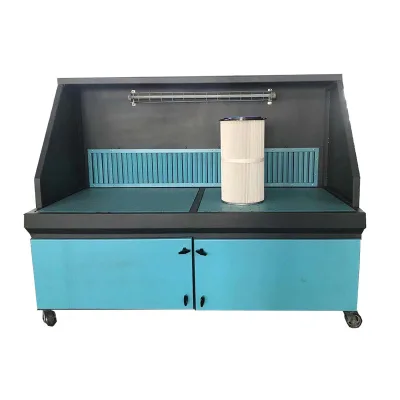
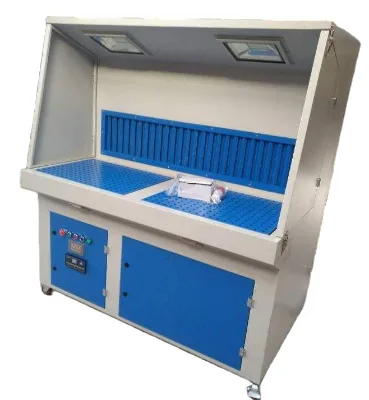
Suppliers of the Portable Wear-Resistant Grinding Table category appear in this search alongside broader dust control and welding equipment makers, with observed locations in China's Shandong and Hebei provinces. Shandong results skew toward dedicated manufacturers whose main products center on fume extractors, downdraft tables, fume extraction towers and industrial dust collectors. Hebei results lean toward combined-type companies whose portfolios mix welding tables, clamps, baghouse dust collectors, filter bags and filter cages. This distinction matters: a manufacturer with a focused downdraft and extraction product line is more likely to control fabrication in-house, while a combined supplier may broker between grinding tables and adjacent consumables like filter media.
Because search compositions shift, buyers should not assume a fixed count of suppliers per region. Instead, treat company_type as a first filter: manufacturers versus combined or trading entities usually declare themselves in the listing. A manufacturer label is stronger evidence of factory ownership but should still be confirmed through a business license check or an audit report before any deposit. The keyword itself—Portable Wear-Resistant Grinding Table—overlaps with downdraft grinding tables, polishing benches and dust extraction workbenches, so cluster identification works best by searching those sibling terms and noting which provinces repeat across results. Where location data is absent from a listing, ask the supplier directly for the production address and cross-check it against the port of loading named in their quotations.
How to Verify Portable Wear-Resistant Grinding Table Suppliers
Verification starts with documents that can be independently confirmed. In the observed results, suppliers display ISO9001:2015 and ISO14001:2015 system certifications, and some listings carry product-level ISO and CE claims on the grinding tables themselves. Ask each supplier for the certificate number and issuing body, then validate the numbers against the certifier's public database rather than accepting a PDF at face value. A BV verification mark on a supplier profile is a useful signal, but it confirms identity screening, not product quality, so it should complement rather than replace your own checks.
Next, verify that the supplier actually builds the equipment listed. Request photographs of the specific model—some observed listings carry model codes—plus a short video of a running unit showing airflow across the perforated surface. Ask whether customization is genuinely available in their own workshop; several observed listings state customization is available, which you should test by requesting a specific dimension or voltage change and seeing whether engineering answers directly. Practical verification steps include: a video call walk-through of the factory floor, a reference call with a buyer in your industry, and a sample or small trial order before committing to volume. Finally, confirm the entity on the quotation matches the entity on the business license and bank account. Mismatches between a trading name and the licensed manufacturer are one of the most common early warnings in this category.
What to Compare Across Portable Wear-Resistant Grinding Table Suppliers
Build a comparison sheet around the attributes suppliers actually display, without assuming every listing shows every field. Useful dimensions from the observed data include response time, lead time, MOQ, company type, system certification, location and main products. Response speed varies materially between suppliers—one observed result reports roughly seven hours while another reports under three—so log first-contact response times yourself over several days rather than relying on a single displayed figure. Lead time: one observed manufacturer lists fifteen days, which gives a useful benchmark, but confirm current production load before relying on it.
MOQ is another differentiator: observed grinding table listings show minimum orders as low as one unit, which suits pilot installations, though you should still confirm whether a single-unit order carries a price premium. Location matters for both cost and speed; Shandong and Hebei suppliers sit at different distances from ports, affecting inland freight and consolidation options. Company type shapes after-sales depth—a manufacturer with ODM and OEM capability can adapt the unit, while a combined supplier may rely on partners. Beyond labels, compare the technical fields listed on product pages: motor power (2.2 kW versus 3 kW in observed listings), process capacity (2000 to 2400 m³/h), filter area, filter efficiency claims, noise levels and voltage customization. Weight, dimensions and packing type also affect landed cost, so capture those alongside price ranges rather than comparing price alone.
Common Portable Wear-Resistant Grinding Table Sourcing Risks
The first recurring risk is spec drift between quotation and delivery. Grinding table listings in this search show filter cartridge counts ranging from one to six, filter efficiencies quoted at 99.9 percent and filter precision at 0.1 microns—claims that are difficult to verify without documentation. Require the filter brand and element type in writing; one observed listing names a specific international filter brand and a nano flame-retardant element, and substitutions with unbranded cartridges are a known cost-cutting move. Put the brand, media type and cartridge quantity in the purchase contract.
A second risk is portability being overstated. Several observed models weigh in the hundreds of kilograms—one gross weight listed at 356 kg—so "portable" often means casters on a heavy welded frame, not a truly movable bench. Confirm casters, locking mechanisms and floor-loading implications, and note that one product title explicitly mentions flexible universal casters while others do not. Third, beware certification ambiguity: a supplier may hold ISO9001 system certification while the CE claim sits only on a single product listing. Ask which entity and which model the certificate covers. Fourth, explosion-proof language appears in some grinding table titles; if your application generates combustible dust, demand documented explosion-protection design rather than accepting a headline term. Finally, voltage defaults such as 3×380V/50Hz are customizable per the listings, but failures to specify your local supply at order time are a frequent and entirely avoidable cause of rework and claims.
Portable Wear-Resistant Grinding Table Regional Sourcing and Logistics
The observed supplier base sits in Shandong and Hebei, two provinces with dense metalworking and environmental equipment manufacturing. Shandong proximity to Qingdao matters directly here: one observed product lists Qingdao, China as its origin, which simplifies ocean freight planning for that supplier's units. Hebei's clustering near northern industrial corridors supports suppliers whose product mix spans grinding tables, welding tables and baghouse filtration. Do not assume any province beyond what listings state; when a location is missing, request the production address and check the named loading port on the proforma invoice instead of inferring it.
Logistics planning should start from packed dimensions and weight, both of which appear in the observed data: units around 1300×1015×1530 mm and gross weights in the 356 kg range, packed in plywood cases or crates. At those dimensions and weights, grinding tables typically ship as sea freight on pallets or in less-than-container loads, and two or more units often justify a full container. Ask each supplier for packed dimensions rather than unpacked ones, since plywood crating adds meaningful volume. Confirm whether the crating is seaworthy for your route and whether the unit ships pre-assembled or knocked down, which changes both volume and your installation labor. For inland legs, some suppliers can deliver to a consolidation warehouse; clarify who books that transport and who insures it. Customs classification for dust collection and grinding equipment varies by market, so give your broker the exact model description early to avoid clearance delays.
Portable Wear-Resistant Grinding Table Commercial Terms and Order Planning
Observed price ranges give a realistic planning band: grinding table listings span roughly USD 1,000–2,000, USD 1,070–5,500 and USD 1,628–2,659 depending on model and configuration, with MOQs as low as one unit. Treat these as listing-level anchors, not final quotes—final pricing depends on motor power, filter configuration, customization and volume. When requesting quotes, specify the model code where one exists, your voltage and frequency, filter requirements and any color or logo customization, since several listings state these are available but priced separately.
Order planning should anchor on the fifteen-day lead time one observed manufacturer reports, padded for customization, inspection and shipping; ask every supplier to confirm current lead time in writing at order confirmation. Structure payment to protect you: avoid full prepayment, and favor terms with a deposit balance against shipment or third-party escrow where the platform offers it—some B2B platforms provide escrow-style protection, and whether a given order qualifies is worth confirming before payment rather than after. Define acceptance criteria tied to the listed specs: process capacity, noise level, filter efficiency and packed condition. Book a pre-shipment inspection against those criteria, especially for first orders. Plan spares at the same time—filter cartridges are consumables, and cartridge counts differ between models, so adding a set of filters to the first shipment avoids a separate costly order later. Finally, record the warranty scope, response commitments and any installation support in the contract, not in chat messages.
FAQs
What is the price range for portable grinding tables?
Portable grinding tables are priced between $1,000 and $5,500. Costs vary based on motor power, filter efficiency, and customization options. Buyers can find units starting at $1,000 for basic models or up to $2,659 for high-efficiency versions with advanced filtration systems.
What certifications do these dust collectors have?
Most portable grinding tables hold ISO and CE certifications. Some manufacturers also provide ISO9001:2015 and ISO14001:2015 system certificates. These credentials ensure compliance with international quality and environmental standards, providing buyers with confidence in the product's safety and manufacturing reliability.
What is the typical lead time for orders?
The standard lead time for manufacturing portable grinding tables is 15 days. This timeframe allows for production, quality checks, and packaging preparation. Buyers should confirm specific delivery schedules with suppliers, as rush orders or custom configurations may require additional processing time.
What is the minimum order quantity required?
The minimum order quantity is typically one unit. This low MOQ allows buyers to test product quality before placing larger bulk orders. It is ideal for small workshops or individual contractors who need a single portable dust extraction solution for their operations.
Where are these suppliers located?
Suppliers are primarily located in China, specifically in Shandong and Hebei provinces. These regions are known for industrial equipment manufacturing. Buyers can source directly from these locations to benefit from established supply chains and competitive pricing for heavy machinery and filtration equipment.
What filter efficiency do these tables offer?
These tables offer a filter efficiency of 99.9%. They use nano flame retardant filter elements with a large surface area of 16.5 square meters. This high efficiency ensures effective removal of fine dust particles during grinding and polishing processes, protecting worker health.