Mobile HEPA Filter Cleanroom Cabin Suppliers and Manufacturers
Explore 23 verified options for Mobile HEPA Filter Cleanroom Cabin units from China. Compare locations, lead times, certifications, and response times to find suitable suppliers. Contact vendors directly to request quotes and verify specifications; review the available evidence before requesting comparable quotations from suitable candidates.
Suppliers List

Jinan Shinsung Environmental Technology Co., Ltd.
- Verified by TUVRHEINLAND
- Trading Company,Manufacturer/Factory
- China Shandong
- Lead time15 days
- Avg. response≤ 3h
Main productsHEPA Filter, Air Filter, FFU, ULPA Filter, Sub HEPA Filter, Nylon Mesh Filter, V Bank Filter, Mini-Pleat Filter, High Temperature Resistant HEPA Filter, Filter Bag
Main marketsSouth America,Eastern Europe,Mid East,North America,Southeast Asia,Eastern Asia,Oceania,Western Europe,Africa


Purification Clean Room Cleanroom Clean Booths with Different Cleanliness Modular Clean Room
$9000.00
MOQ: 1000 Pieces

Suzhou Pharma Machinery Co., Ltd.
- Verified by BV
- Trading Company
- China Jiangsu
- Lead time30 days
- Avg. response≤ 2h
Main productsGMP Clean Room Project, GMP Clean Room Equipment, Tablet and Capsule Making Machine, Filling and Packing Machine, Other Pharmaceutical Machine, Machine Customized Tools and Parts, Clean Room and Lab Furniture, Pharmaceutical Machine Related Consumables
Main marketsSouth America,Africa,Southeast Asia/ Mideast,East Asia(Japan/ South Korea),Europe,Australia,North America

HEPA Filter Clean Booth Medical Easy Installation Cleanroom Clean Booth
$180.00 - $190.00
MOQ: 10 Square Meters

GMP Standard Mobile Clean Room 600 Square Meters Cleanrooms with HEPA Filter
$180.00 - $200.00
MOQ: 10 Square Meters

ISO 7 Cleanroom Dust Free Clean Room with HEPA Filter for Cosmetic Products Workshop
$245.00 - $260.00
MOQ: 5 Square Meters

Dust Free Clean Room Modular Cleanroom Prefabricated Mobile Clean Booth Manufacturer
$245.00 - $260.00
MOQ: 5 Square Meters


Mobile Cleanrooms Laboratories Clean Room Feature Designs ISO 7 Clean Room
$170.00 - $190.00
MOQ: 10 Square Meters

Suzhou Wisdom Equipment Technology Co., Ltd.
- Verified by SGS
- Manufacturer
- China Jiangsu
- Lead time30 days
- Avg. response≤ 24h
Main productshepa filter
Main marketsSoutheast Asia/ Mideast

Non-Dust Room HEPA Filter Medical Easy Installation Cleanroom Clean Booth
$13000.00 - $30000.00
MOQ: 1 Sets


Clean Room Dispensing Down Flow Booth HEPA Filters Clean Booth for Hospital
$13000.00 - $30000.00
MOQ: 1 Sets


Pharmaceutical Clean Booth Class 100 Modular GMP Cleanroom Prefabricated Mobile Clean Booth
$13000.00 - $30000.00
MOQ: 1 Sets

Non-Dust Working Room The Prefabricated Cleanroom Clean Booth for Pharmaceutical Industry
$13000.00 - $30000.00
MOQ: 1 Sets

- Combined
- China Guangdong
- Lead time15 days
- Avg. response≤ 13h
Main productsCleanroom, Air Shower, Modular Cleanroom, FFU, Pass Box, Clean Bench, Laminar Flow, Wardrobe, Cleaning Equipment, Furniture
Main marketsSoutheast Asia/ Mideast,Domestic,Europe,North America


Portable GMP Clean Room Dust Air Cleaning HEPA Filter Modular Cleanroom
$390.00 - $400.00
MOQ: 5 Square Meters


Airkey Modular Cleanroom Prefabricated Clean Room ISO5 Semiconductor Lab Cleanroom
$3000.00
MOQ: 1 Pieces
Kunshan Dersion Environmental Technology Co., Ltd.
- Verified by TüVRheinland
- Manufacturer, Trading Company
- Lead time20 days
- Avg. response≤ 3h
Main productsModular Clean Room, Air Shower, Clean Bench, Clean Windows & Doors, Pass Box
Main marketsDomestic Market(60%), North America(15%), Western Europe(10%)
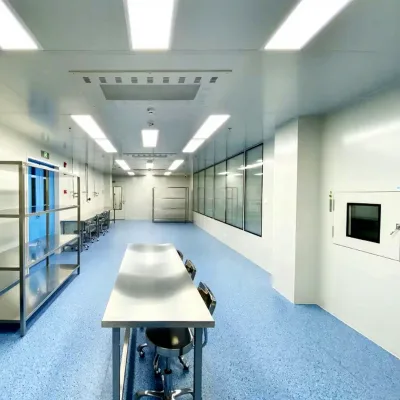
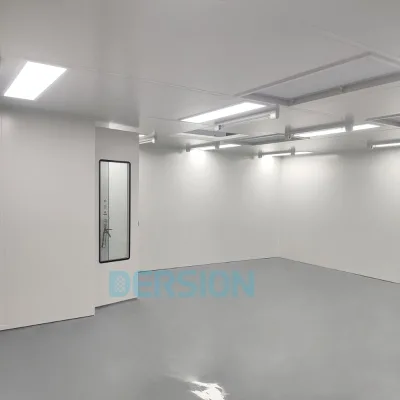
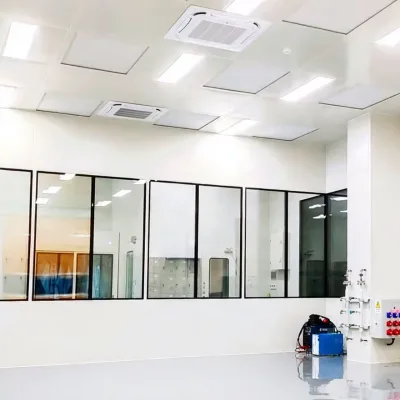
New FDA-Validated Pharma Cleanrooms Full GMP Compliance in 6 Weeks HEPA Filter Mobile Design
$168.51 - $187.57
MOQ: 100 square
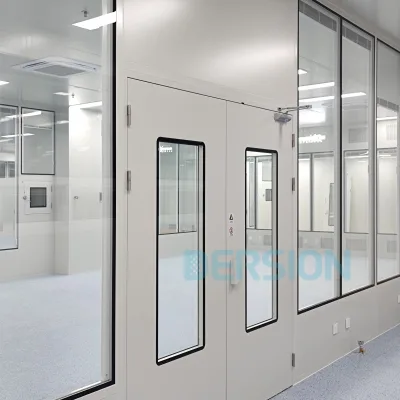
$129.57 - $153.22
MOQ: 10 square
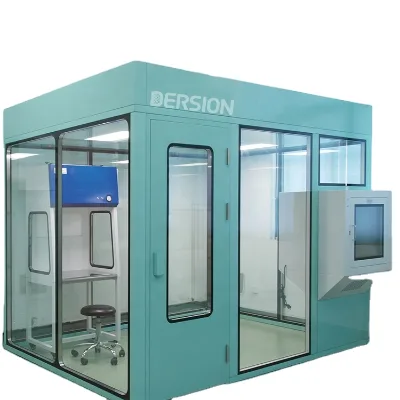
Prefabricated Mobile Clean Room Industrial Wall Panels Clean Room Differential Pressure Digital
$16019.85 - $18730.90
MOQ: 1 sets
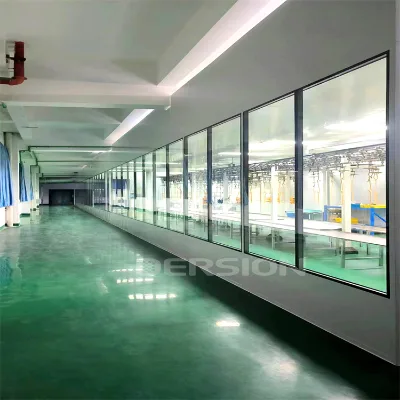
New Modular Cleanroom for Pharma USA Fast On-site Installation & Validation
$115.00 - $128.00
MOQ: 100 square

Suzhou HJ Clean Tech Co., Ltd.
- Verified by BV
- Combined
- China Jiangsu
- Lead time15 days
- Avg. response≤ 1h
Main productsAirborne Particle Counter, Air Sampler, Clean Room, Vhpsterilizer/Vhp  Generator, Pass Box, Sterility Test Isolator, Glove Integrity Tester, Air Flow Capture Hood, Dispensing Booth/Sampling Booth, Biological Safety Cabinet
Main marketsSouth America,Africa,Southeast Asia/ Mideast,East Asia(Japan/ South Korea),Domestic,Europe,North America


Class 100 Clean Room with HEPA Filter for Pharmaceutical Lab Cleanroom
$1000.00 - $8000.00
MOQ: 1 Pieces


Guangzhou Kelaichuang Purification Equipment Manufacturing Co., Ltd.
- Verified by TüVRheinland
- Manufacturer, Trading Company
- Lead time10 days
- Avg. response≤ 3h
Main productsClean Room, Air Shower, Fan Filter Unit, Pass Box, Clean Bench
Main marketsNorth America(15%), South America(15%), Western Europe(15%)
Guangdong Yaguan Construction Co., Ltd.
- Trading Company
- Guangdong, China
- Lead time25 days
- Avg. response≤ 4h
Main productsclean room,operating theater,HEPA Box,FFU,laminar air flow
Main marketsEastern Asia(10.00%), Mid East(10.00%), South Asia(10.00%), Southeast Asia(10.00%), Eastern Europe(10.00%), South America(10.00%), Western Europe(10.00%), Domestic Market(5.00%), Africa(5.00%), Southern Europe(5.00%), Northern Europe(5.00%), Central America(5.00%), North America(5.00%)

Xinxiang Feiyu Clean Tech Co., Ltd.
- Verified by SGS
- Trading Company
- China Henan
- Lead time15 days
- Avg. response≤ 5h
Main productsCleanroom, RO Water System, Oil Fiter Machine, Air Filter, Fan Filter Unit, Pass Box, Water Filter, Laminar Flow Hood, Clean Workbench, Clean Equipment
Main marketsAustralia


Non-Dust Working Room Modular Cleanroom Prefabricated Mobile Clean Booth
$600.00 - $5600.00
MOQ: 1 Pieces

Wuxi Biogreen Pharma Technology Co., Ltd.
- Manufacturer/Factory
- China Jiangsu
- Lead time30 days
- Avg. response≤ 5h
Main productsClean Room, Extraction Line, Pharmaceutical Equipment, Fruit and Vegetable Processing Production Line, Clean Room Equipment, Pineapple Stem Protease Production Line, Dehumidifier Equipment, Fresh Air Equipment
Main marketsSouth America,Eastern Europe,Mid East,North America,Southeast Asia,Eastern Asia,Oceania,Western Europe,Africa


Dust Free Clean Modular Room Custom Clean Booth Class 1000 Cleanroom Booth for Mobile Factory
$100.00 - $150.00
MOQ: 50 Square Meters

High Grade Modular Cleanroom with HEPA Filtration for Pharmaceutical Production Workshop
$150.00 - $180.00
MOQ: 50 Square Meters


Full Customization Modular Cleanroom with Professional Purification Engineering
$150.00 - $180.00
MOQ: 50 Square Meters

Stable Running Modular Cleanroom with Full Set Purification Supporting Equipment
$150.00 - $180.00
MOQ: 50 Square Meters
Guangzhou Cleanroom Construction Co., Ltd.
- Manufacturer, Trading Company
- Guangdong, China
- Lead time0 days
- Avg. response≤ 9h
Main productsAir Shower,Clean Room,Fume Hood,FFU,Laminar Flow Hood
Main marketsSoutheast Asia(35.00%), Mid East(20.00%), North America(15.00%), South America(10.00%), Africa(10.00%), Eastern Europe(10.00%)
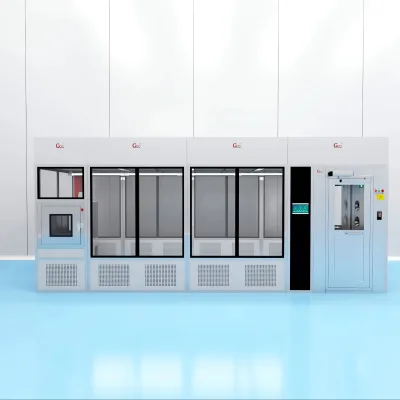
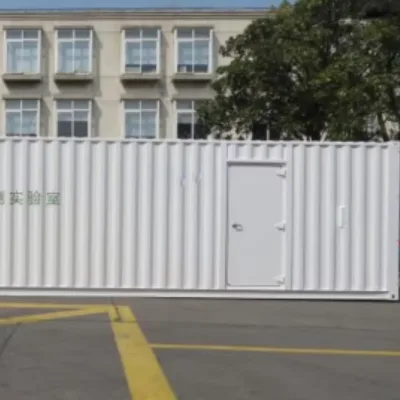
40ft Shipping Container Clean Room for Lab/Clinic/Hospital
$285.00 - $300.00
- Manufacturer, Trading Company
- Lead time旺季: "1 - 10":15,"> 10":"To be negotiated", 淡季: "1 - 10":15,"> 10":"To be negotiated"
- Avg. response≤ 3h
Main productsModular Clean Room, Fan Filter Units, Laminar Air Flow, Dispensing Booth, Clean Bench
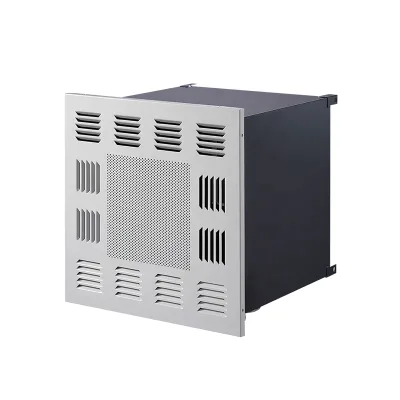
SUS 304 Material Modular Clean Room Equipment Air Filtration Condition Use HEPA Box
$280.00 - $300.00
MOQ: 9 sets
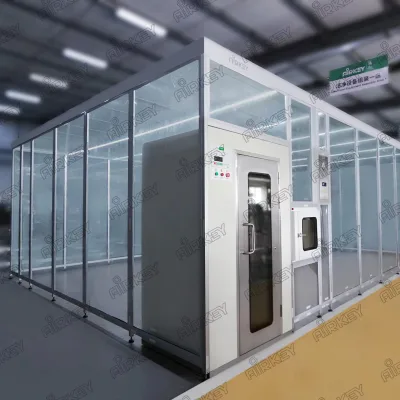
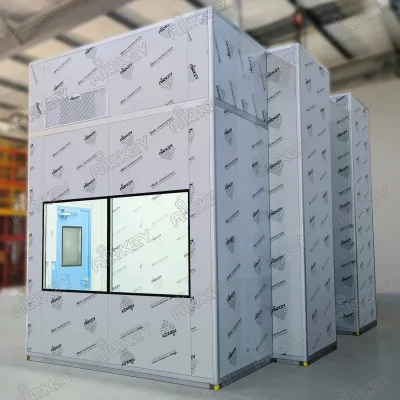
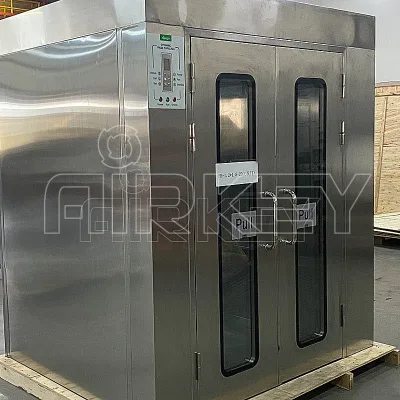
Mobile Portable SS304 Laminar Flow Modular Clean Room HEPA Filter Dynamic Pass Box
$950.00 - $1000.00
MOQ: 1 pieces
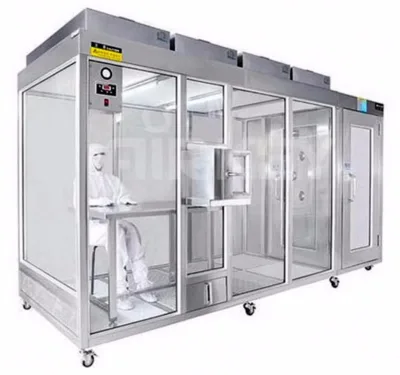
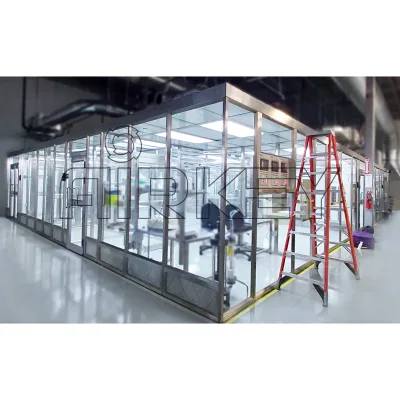
Prefabricated SUS 304 PCB Assembly Dust-free Sterile Manufacturing Modular Cleanroom
$250.00 - $300.00
MOQ: 1 square

- Trading Company
- China Jiangsu
- Lead time15 days
- Avg. response≤ 1h
Main productsAir Filter, Air Compressor Filter, Construction Machinery Filter, Cartridge Filter, Trucks Air Filters, Oil Filter, SPA Filter, Pleated Filter Cartridge, Swimming Pool Filter, Gas Filter
Main marketsOthers(foreignTradeCapacity.exportBusinessCapacityMarketOther),Europe

Guangzhou Anlai General Equipment Co., Ltd
- Verified by SGS
- Trading Company,Manufacturer/Factory
- China Guangdong
- Lead time15 days
- Avg. response≤ 19h
Main productsClean Room, Clean Room Air Shower, FFU, Modular Cleanroom, Laminar Flow, Air Shower, Clean Bench, Laminar Flow Clean Bench, ISO 7 Clean Room, Modular Clean Room
Main marketsSouth America,Eastern Europe,Mid East,North America,Southeast Asia,Eastern Asia,Oceania,Western Europe,Africa
Guangzhou Airwoods Environment Technology Co., Ltd.
- Manufacturer, Trading Company
- Lead time旺季: "1 - 100":90,"> 100":"To be negotiated", 淡季: "1 - 100":90,"> 100":"To be negotiated"
- Avg. response≤ 3h
Main productsAir Handling Unit, Heat Recovery Ventilator, Energy Recovery Ventilator, Air Conditioning, Water Chiller
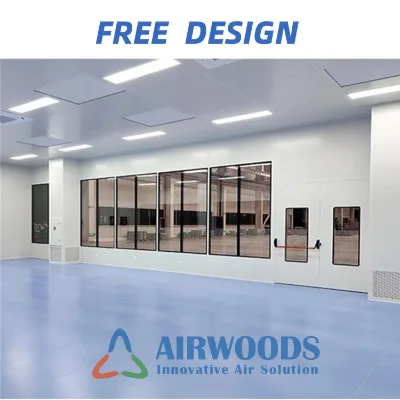
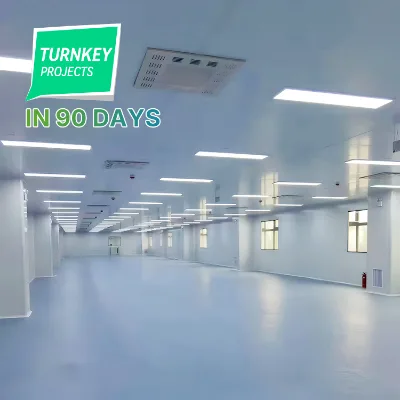
$6.13 - $10.21
MOQ: 50 square
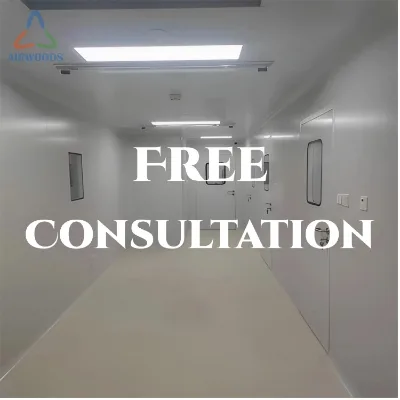
$6.00 - $10.00
MOQ: 50 square
$6.00 - $10.00
MOQ: 50 square

Wuxi Kwang Purification Co., Ltd
- Verified by SGS
- Trading Company,Manufacturer/Factory
- China Jiangsu
- Lead time23 days
- Avg. response≤ 6h
Main productsAir Shower, Cargo Air Shower, Cleanroom Project, Pass Box, Cleanroom Door, Cleanroom Panel, Cleanroom Window, Clean Bench, Industrial Door, Garage Door
Main marketsSouth America,Eastern Europe,Mid East,North America,Southeast Asia,Eastern Asia,Oceania,Western Europe,Africa

Medical and Hospital Modular Clean Room Project with HEPA Filter
$130.00 - $220.00
MOQ: 10 Square Meters


Shenzhen Meiri Purification Technology Co., Ltd.
- Manufacturer, Trading Company
- Guangdong, China
- Lead time5 days
- Avg. response≤ 2h
Main productsAir Purification Equipment,Industrial Air Purification Equipment,Commercial Air Purification Equipment,Labratory Air Purification Equipment,Sheet Metal Working
Main marketsSoutheast Asia(30.00%), North America(30.00%), Domestic Market(10.00%), Western Europe(5.00%), Mid East(5.00%), Southern Europe(5.00%), South America(3.00%), Eastern Asia(3.00%), Northern Europe(3.00%), Oceania(2.00%), Africa(2.00%), Eastern Europe(2.00%)
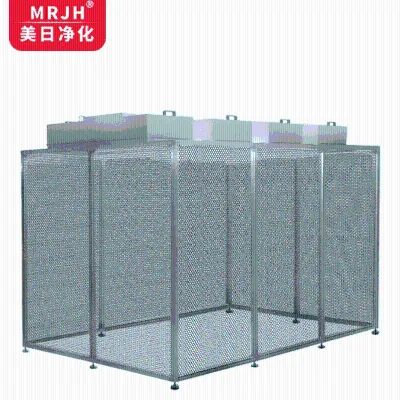
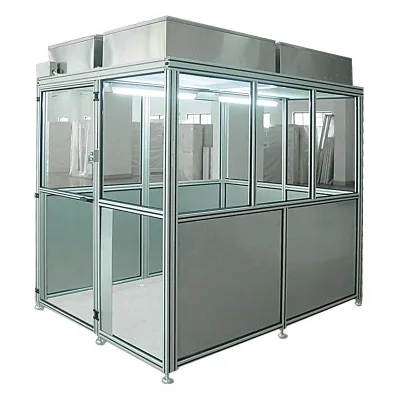
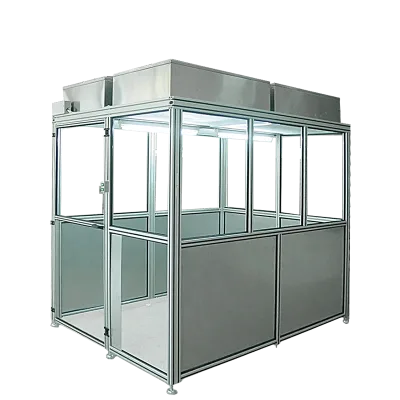
ISO 8 Soft Wall Clean Room Modular Dust Free Enclosure Customizable Size for Electronics Lab
$398.00 - $1160.00
MOQ: 2 sets
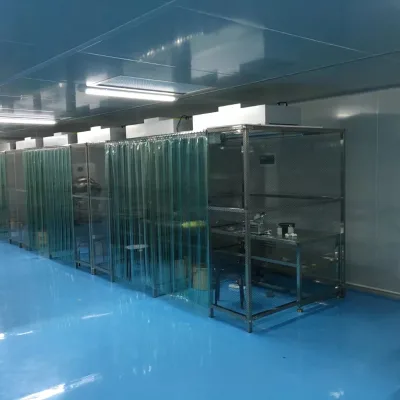

Sinoped International (Liaoning) Co., Ltd.
- Verified by BV
- Combined
- China Liaoning
- Lead time30 days
- Avg. response≤ 8h
Main productsTablet Press Machine, Centrifuge, Cartoning Machine, Liquid Filling Machine, Powder Filling Machine, Drying Machine, Soft Capsule Production Line, Blister Packing Machine, Capsule Filling Machine
Main marketsEurope


Pharmaceutical Customized Modular Cleanroom Dust Free Portable Clean Room Installation GMP Standard
$13.00 - $30.00
MOQ: 50 Square Meters

Meiqi Tiancheng Technology (Wuhan) Co., Ltd.
- Verified by BV
- Trading Company
- China Hubei
- Lead time30 days
- Avg. response≤ 6h
Main productsClean Room, Clean Window
Main marketsSoutheast Asia/ Mideast

Premium Modular Cleanroom Solutions Featuring Advanced HEPA Filtration
$20.00 - $50.00
MOQ: 1 Square Meters

Advanced Modular Cleanrooms for GMP Compliance and High Performance
$20.00 - $50.00
MOQ: 1 Square Meters

Mobile and Relocatable Modular Cleanrooms for Temporary Project Needs
$20.00 - $50.00
MOQ: 1 Square Meters

Advanced Modular Cleanroom System for Superior Contamination Management
$10.00 - $50.00
MOQ: 1 Square Meters

Shanghai Marya Pharmaceutical Engineering & Project Co., Ltd.
- Verified by TUVRHEINLAND
- Combined
- China Shanghai
- Lead time45 days
- Avg. response≤ 6h
Main productsPharmaceutical Engineering, Pharmaceutical Filling Machine, Pharmaceutical Filling Line, Cleanroom, Cleanroom Project, Cleanroom HVAC System, Injection Filling Machine, Powder/Liquid Vial Filling Line, Syringe Filling Machine, Pfs Filling Machine
Main marketsSouth America,Australia

Marya Medical HEPA System Prefabricated Building Pharmaceutical Cleanroom for Industry Company
$50.00
MOQ: 1 Square Meters


Hebei Lixin Medical Engineering Co., Ltd
- Verified by TUVRHEINLAND
- Combined
- China Hebei
- Lead time30 days
- Avg. response≤ 1h
Main productsOxygen Generator, Medical Oxygen Generator, Purification Engineering, Medical Gas Engineering, Air Purifier, Oxygen Concentrator, Medical Air Purifier, Psa Oxygen Concentrator
Main marketsDomestic

Hot Selling Factory Mobile HEPA Filters for Household Medical Air Purifiers
$700.00 - $1200.00
MOQ: 1 Sets

Operating Room/Blood Room/Workshop Mobile Medical Plasma Air Disinfection Machine
$700.00 - $1200.00
MOQ: 1 Sets

Gainjoys Technology (Shenyang) Co., Ltd.
- Verified by BV
- Combined
- China Liaoning
- Lead time30 days
- Avg. response≤ 1h
Main productsCapsule Filling Machine, Tablet Press, Pill Press, Filling Machine, Blister Machine, Boxing Machine, Labeling Machine, Bag Feeding Machine, Capsule Counting Machine
Main marketsSoutheast Asia/ Mideast,Europe,Australia,North America

Purification Cleanroom Modular Industrial Laboratory Cleanroom Dust-Free Clean Room
$400.00 - $450.00
MOQ: 1 set


Suzhou Haolan Purification Technology Co., Ltd.
- Manufacturer, Trading Company
- Jiangsu, China
- Lead time30 days
- Avg. response≤ 3h
Main productsPVC Fast Door, Air Shower, Pass Boxes, Clean Room Sliding Automatic Door, Cold Storage Insulation Fast Rollingshutter Door
Main marketsSoutheast Asia(30.00%)
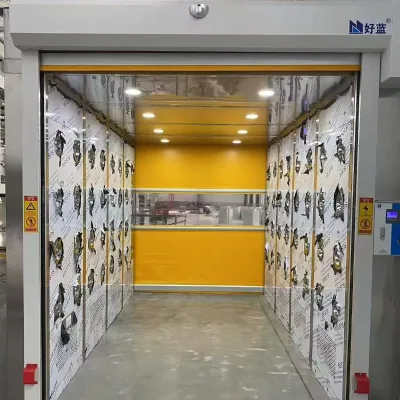
Cargo Air Cleaning Equipment High-Efficiency Shower Room for Air Purification
$1700.00 - $1900.00
MOQ: 1 sets
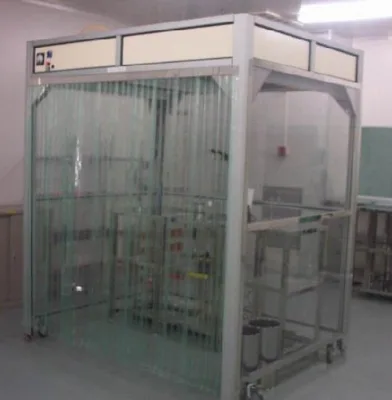
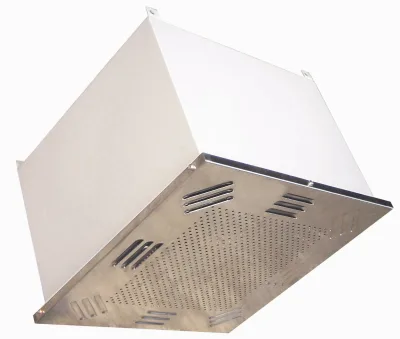
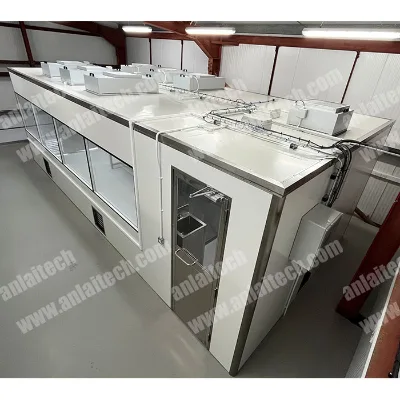
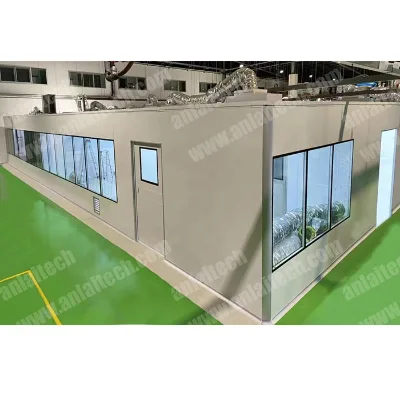


Comprehensive Sourcing Guide
Mobile HEPA Filter Cleanroom Cabin Supplier Concentration and Factory Types
Current data indicates that suppliers for mobile HEPA filter cleanroom cabins are concentrated in specific Chinese provinces, with Shandong and Jiangsu emerging as key manufacturing hubs. Fact sheets show facilities in Shandong offering a diverse range of air filtration products including HEPA, ULPA, and sub-HEPA filters alongside modular clean room units. In contrast, suppliers located in Jiangsu often specialize in GMP clean room projects and pharmaceutical machinery, suggesting a regional specialization in high-standard industrial environments. Buyers should verify the specific province of the factory before assuming a cluster exists, as the supply base is not uniform across the entire nation.
The supplier landscape includes both trading companies and direct manufacturers, each offering distinct advantages for procurement. Some entities list themselves as manufacturers with their own brands, such as SNYLI, while others operate strictly as trading companies facilitating the sale of equipment from various factories. This distinction is critical because manufacturers may offer more direct customization options for clean room dimensions and filtration grades, whereas trading companies might provide a broader portfolio of related equipment like air showers or lab furniture. Buyers must confirm the company type to understand the supply chain depth and the potential for direct engineering support during the design phase of a mobile cleanroom project.
How to Verify Mobile HEPA Filter Cleanroom Cabin Suppliers
Verification of supplier credibility relies heavily on third-party audit reports and system certifications rather than self-declared claims. Available data points to specific verification bodies like TÜV Rheinland and BV, which provide external validation of a supplier's operational capabilities and quality management systems. Buyers should request current audit certificates to confirm that the supplier has undergone rigorous inspection processes. Additionally, system certifications such as ISO 9001, ISO 14001, and ISO 20000 are present in some supplier profiles, indicating adherence to international standards for quality, environmental management, and information security. The absence of these certifications, marked as NIL in some records, requires buyers to exercise heightened caution and demand alternative proof of competence.
Product-specific attributes and compliance standards serve as another layer of verification for mobile cleanroom cabins. Evidence shows that certain units carry CE certification and are constructed with materials like stainless steel and sandwich panels, which are essential for maintaining sterile environments in pharmaceutical or electronic industries. Buyers must cross-reference these product attributes with their specific application requirements, such as the need for ISO 7 cleanliness or specific noise levels between 40 and 70 decibels. It is also vital to confirm that the supplier can provide documentation for the HEPA filter efficiency, as the core function of the cabin depends on this component. Without verified test results or standard compliance documents, the reliability of the cleanroom performance remains unproven.
What to Compare Across Mobile HEPA Filter Cleanroom Cabin Suppliers
When evaluating potential partners, buyers should prioritize lead time and response speed as primary differentiators in the sourcing process. Data reveals significant variation in production schedules, with some suppliers indicating a lead time of 15 days while others require up to 30 days for order fulfillment. Response times also fluctuate, with recorded averages ranging from 1.57 to 2.23 hours, which can impact the efficiency of project planning and troubleshooting. A supplier with a shorter lead time may be preferable for urgent projects, but this must be balanced against their capacity to maintain quality standards during accelerated production cycles. Buyers should explicitly ask for current lead time estimates based on their specific order volume and customization needs.
Minimum Order Quantities (MOQ) and pricing structures vary widely across the supplier base, necessitating a detailed cost-benefit analysis. Some listings show an MOQ of just one unit for large modular cleanrooms, while others require a minimum of 1000 units for specific filter components or smaller cabin models. Price points also differ significantly, with some units listed around 180 to 260 units of currency, while larger industrial setups may reach 9000 units. Buyers must clarify whether the quoted price includes installation, shipping, and customs duties, as these factors can drastically alter the total cost of ownership. Comparing the total value proposition, including the availability of OEM/ODM services and the flexibility of the MOQ, is essential for selecting a supplier that aligns with the buyer's budget and scale requirements.
Common Mobile HEPA Filter Cleanroom Cabin Sourcing Risks
One significant risk involves the discrepancy between advertised capabilities and actual manufacturing capacity, particularly regarding customization and material quality. While some suppliers claim to offer fully customized sizes and features like intelligent voice air showers, others may have rigid standard models that do not meet specific site requirements. The presence of "Customization: Available" in product attributes does not guarantee that the supplier has the engineering resources to execute complex modifications without compromising structural integrity or filtration efficiency. Buyers should request detailed engineering drawings and material specifications before committing to an order to ensure that the final product matches the intended application, such as a pharmaceutical workshop or a precision electronic facility.
Another critical risk is the potential for inconsistent quality control and lack of post-sales support, especially when dealing with trading companies rather than direct manufacturers. If a supplier lacks a verified track record or specific industry certifications, the risk of receiving non-compliant equipment increases. For instance, a cleanroom intended for GMP compliance might fail if the HEPA filters or sealing mechanisms do not meet the required standards. Buyers should verify the supplier's history of handling similar projects and their ability to provide after-sales service, including maintenance of the HVAC systems and replacement of filters. Without a clear support structure, operational downtime can occur, leading to significant financial losses and project delays.
Mobile HEPA Filter Cleanroom Cabin Regional Sourcing and Logistics
Sourcing from China, specifically from provinces like Shandong and Jiangsu, offers access to a mature supply chain but introduces specific logistical considerations. The concentration of manufacturers in these regions means that shipping costs and transit times can vary depending on the port of origin and the destination country. Buyers should account for the fact that large modular cleanrooms often require specialized packaging, such as wooden cases, to prevent damage during international transit. The weight and dimensions of these units, which can include features like air showers and pass boxes, necessitate careful planning for freight forwarding and customs clearance to avoid unexpected delays or additional charges.
Logistics planning must also consider the installation requirements of the mobile cleanroom cabins upon arrival at the destination. Some units are designed for easy installation and may come with pre-assembled components, while others require on-site assembly by specialized technicians. Buyers should verify if the supplier provides installation guides or if they offer remote technical support to assist local teams. The origin of the product, confirmed as China in available data, implies that buyers need to navigate import regulations specific to medical or industrial equipment. Ensuring that the supplier can provide all necessary documentation for customs clearance, including certificates of origin and material safety data sheets, is crucial for a smooth delivery process.
Mobile HEPA Filter Cleanroom Cabin Commercial Terms and Order Planning
Commercial terms for mobile HEPA filter cleanroom cabins often include specific requirements for payment, delivery, and warranty that must be clearly defined in the purchase agreement. Buyers should expect to negotiate terms regarding the Incoterms, such as FOB or CIF, which determine who bears the risk and cost during shipping. The availability of escrow services can provide an additional layer of security, ensuring that funds are only released once the goods are verified to meet the agreed specifications. It is also important to clarify the warranty period and the scope of coverage, particularly for critical components like the HEPA filters and the HVAC system, to protect against premature failure.
Order planning should begin with a detailed specification of the cleanroom requirements, including the desired cleanliness class, dimensions, and any special features like air showers or specific lighting. Buyers must confirm the supplier's ability to meet these specifications within the agreed lead time and budget. The MOQ and pricing structure should be aligned with the project timeline to avoid cash flow issues or storage costs for excess inventory. Additionally, buyers should plan for the possibility of customization, which may extend the lead time and require additional engineering reviews. A well-structured order plan that accounts for all variables, from material sourcing to final installation, is essential for the successful execution of the project.
FAQs
What is the typical lead time for mobile cleanroom cabins?
Manufacturers in China generally require 15 to 30 days to produce and ship mobile cleanroom units. This timeframe depends on the specific configuration, filter grade, and customization requests. Buyers should confirm exact delivery schedules with suppliers before placing orders to ensure project timelines are met.
What certifications do mobile cleanroom suppliers typically hold?
Suppliers often hold ISO 9001, ISO 14001, and ISO 20000 system certifications. Products may also carry CE or ISO product certifications. Verification by agencies like TÜV Rheinland or Bureau Veritas adds credibility. Buyers should request valid certificates to ensure compliance with international quality and safety standards.
What is the minimum order quantity for mobile cleanrooms?
Minimum order quantities vary significantly by supplier and product type. Some manufacturers accept orders as low as one unit for modular booths, while others require 5, 10, or even 1000 units. Buyers must check specific product listings to determine the applicable MOQ for their desired cleanroom specifications.
How quickly do suppliers respond to sourcing inquiries?
Response times for cleanroom suppliers typically range from 1.57 to 2.23 hours. Fast response indicates active sales teams ready to assist with technical queries. Buyers should expect prompt replies during business hours. Delays may occur for complex custom projects requiring engineering assessment before a formal quotation is issued.
What materials are used in mobile cleanroom construction?
Common materials include stainless steel, sandwich panels, and tempered glass. Floors are often PVC, while walls use dust-free panels. HEPA or ULPA filters are standard for air purification. Buyers should verify material specifications to ensure suitability for their industry, such as pharmaceutical, medical, or precision electronics applications.
What is the price range for mobile cleanroom cabins?
Prices vary widely based on size, class, and components. Basic units may start around 180 USD, while larger or specialized systems can exceed 9000 USD. Costs depend on filter grade, control systems, and customization. Buyers should request detailed quotes to understand total costs including shipping and installation services.