Printing T-Shirt Suppliers and Manufacturers in China
Compare 14 verified Printing T-Shirt suppliers in China Anhui and Shanghai. Review response times, lead times, MOQs, and certifications like CTI and BV to select a partner. Contact suppliers directly to request quotes; review the available evidence before requesting comparable quotations from suitable candidates.
Suppliers List

- Verified by CTI
- Trading Company
- China Anhui
- Lead time23 days
- Avg. response≤ 1h
Main productsFurniture, Home Furniture
Main marketsSoutheast Asia/ Mideast

Shanghai Easun Group Imp & Exp Co., Ltd.
- Verified by BV
- Trading Company
- China Shanghai
- Lead time15 days
- Avg. response≤ 18h
Main productsHoodies, Pajamas, T-Shirt, Bath Robe, Sleepwear, Polo Shirts, Safety Shoes
Main marketsAfrica

Power Ascent (Xiamen) International Ltd.
- Verified by BV
- Trading Company,Manufacturer/Factory
- China Fujian
- Lead time90 days
- Avg. response≤ 25h
Main productsMen's Suit, Business Suit, Shirt, Trousers, Casual Jacket, Ski Wears, Softshell Jacket, Function Garments, Office Uniform, Worker Uniform
Main marketsSouth America,Eastern Europe,Mid East,North America,Oceania,Western Europe

Guangzhou Vision Clothing Co., Ltd.
- Verified by BV
- Combined
- China Guangdong
- Lead time15 days
- Avg. response≤ 6h
Main productsT-Shirt, Hoodie, Polo Shirt, Sweatpants
Main marketsSouth America,Southeast Asia/ Mideast,Europe,Australia,North America

Shanghai Touch Industrial Development Co., Ltd.
- Verified by TUVRHEINLAND
- Combined
- China Shanghai
- Lead time15 days
- Avg. response≤ 5h
Main productsInstant Hot Pack, Hot Cold Pack, Gel Eye Mask, Gel Ice Pack, Gel Bottle Cooler, Instant Ice Pack, Hand Warmer, Heat Pack, Cooling Scarf, Gel Beads
Main marketsSouth America,Others(foreignTradeCapacity.exportBusinessCapacityMarketOther),Southeast Asia/ Mideast,East Asia(Japan/ South Korea),Domestic,Europe,Australia,North America

Peipei(Guangzhou) Trading Company Ltd
- Verified by BV
- Trading Company
- China Guangdong
- Lead time15 days
- Avg. response≤ 14h
Main productsPop up Gazebo, Folding Tent, Umbrella, Popup Display, Banner Stand, Promotional Gift, Promotional Products, Beach Flag, Outdoor Banner, T Shirt
Main marketsSouth America,Africa,Southeast Asia/ Mideast,Europe,Australia,North America

Shenzhen Fly-High Industry Co., Ltd.
- Trading Company,Manufacturer/Factory,Group Corporation
- China Guangdong
- Lead time23 days
- Avg. response≤ 25h
Main productsT-Shirt, Polo Shirt, Promotional Items, Cap, Apron, Jacket, Scarf, Singlet, Towel, Hat
Main marketsSouth America,Eastern Europe,Mid East,North America,Southeast Asia,Eastern Asia,Oceania,Africa

Wujiang Hailihong Textile Co., Ltd.
- Verified by CTI
- Combined
- China Jiangsu
- Lead time15 days
- Avg. response≤ 9h
Main productsKnitted Textiles, Chemical Fibers, Home Textiles, Clothing and Accessories, Swim Trunks, T-Shirt, Hawaiian Shirt, Beach Pants, Bikini, Hoodie
Main marketsAfrica,Southeast Asia/ Mideast,East Asia(Japan/ South Korea),Domestic,Europe,Australia,North America

Shanghai David International Trade Co., Ltd.
- Verified by TUVRHEINLAND
- Combined
- China Shanghai
- Lead time15 days
- Avg. response≤ 7h
Main productsPromotional Gifts, Gift Sets, Tshirts, Hats, Hot Packs, Hot Cold Packs, Ice Packs, Bags, Umbrellas, Water Bottles
Main marketsSouth America,Africa,Southeast Asia/ Mideast,East Asia(Japan/ South Korea),Domestic,Europe,Australia,North America
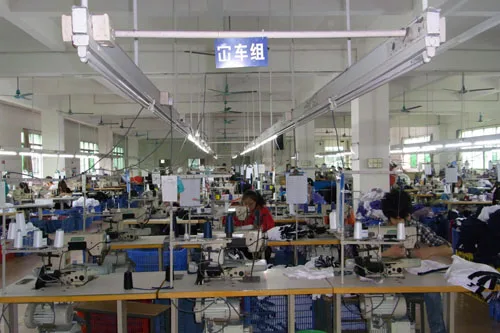
Huizhou Bobon Clothing Co., Ltd.
- Manufacturer, Trading Company
- Guangdong, China
- Lead time30 days
- Avg. response≤ 4h
Main productsMen's Clothing,Sleepwear,Sportswear,Women's cothing,Accessories
Main marketsEastern Europe(35.0%), North America(35.0%), Western Europe(10.0%), Mid East(10.0%), Africa(5.0%), South America(5.0%)

Suning County Xiangbird Clothing Co., Ltd.
- Verified by SGS
- Combined
- China Hebei
- Lead time30 days
- Avg. response≤ 2h
Main productsT-Shirt, Hooded Sweatshirt, Seluar Jeans, Pakaian Pelindung Matahari
Main marketsDomestic

Shanghai J&D International Co., Ltd.
- Trading Company
- China Shanghai
- Lead time23 days
- Avg. response≤ 25h
Main productsShirts, Necktie, Ties, Scarves, Waistcoat, Cufflink, Neckwear, Accessories
Main marketsSoutheast Asia/ Mideast,Domestic,Europe,Australia,North America

- Verified by SGS
- Combined
- China Fujian
- Lead time15 days
- Avg. response≤ 3h
Main marketsEurope

- Verified by TUVRHEINLAND
- Trading Company,Manufacturer/Factory
- China Chongqing
- Lead time38 days
- Avg. response≤ 4h
Main productsBaseball Cap, Beanie Hat, Trucker Hat, Bucket Hat, Snapback Hat, Scarf, Gloves, Apron, Sock, T Shirt&Polo Shirt
Main marketsSouth America,Eastern Europe,Mid East,North America,Southeast Asia,Eastern Asia,Oceania,Western Europe,Africa




Comprehensive Sourcing Guide
Printing T-Shirt Supplier Concentration and Factory Types
When you search for Printing T-Shirt suppliers, the results you see often mix two very different kinds of companies. One listed company type in current results is a Trading Company based in China Anhui, whose main products are furniture and home furniture — a useful reminder that apparel results can surface diversified trading firms whose core catalog sits outside garments. Another listed result is a Shanghai-based company whose main products include T-shirts, hoodies, pajamas, polo shirts, sleepwear and bath robes, and which lists ODM and OEM capability. This contrast matters: a trading company may broker production it does not control, while a garment-focused supplier with OEM/ODM capacity is more likely to manage printing, cutting and sewing in-house or through a stable subcontractor network.
Because search snapshots change, do not assume the geographic picture is fixed. Instead, use the location field on each supplier profile as a filter, then test whether the stated main products genuinely cover printed tees. A supplier whose catalog is dominated by unrelated categories may still quote you, but you should ask who actually produces the shirts and who owns the printing equipment. Look at whether product listings themselves — for example custom round-neck printing tees or unisex printing t shirts with logo options — appear as core offerings rather than side listings. The density of genuine printed-tee listings on a profile is a better concentration signal than the header category alone.
How to Verify Printing T-Shirt Suppliers
Verification labels on a profile are the first checkpoint. In the current results, one supplier carries a CTI verification mark and another carries a BV verification mark; these third-party audit badges indicate that some level of company documentation or site inspection has been reviewed, but they are not quality certificates for the garments themselves. Treat them as a reason to start a conversation, not as proof of print durability, fabric weight or colorfastness. Ask the supplier which specific audit scope the badge covers and request the underlying report or certificate number so your own team can confirm it.
Beyond badges, cross-check the operational signals a profile displays. Response time is one such signal: current results show one supplier responding in under an hour on average and another averaging more than seventeen hours. For a category where print files, Pantone references and size-set approvals go back and forth, a slow responder can stretch development by weeks. Lead time is another verifiable claim — listed values include around fifteen days and around twenty-three days — but you should confirm whether that clock starts at deposit, at artwork approval, or at fabric procurement. Finally, verify the product claims directly: request the actual fabric composition in writing, since listings in this category cite both 100% cotton and 100% bamboo fiber, and a printing method that works on one may fail on the other.
What to Compare Across Printing T-Shirt Suppliers
Build a comparison table from the attributes suppliers actually display, and leave cells blank rather than guessing where data is missing. Useful dimensions here include lead time, MOQ, average response time, verification badge, company type, location, and main product line. Current results illustrate the spread: MOQs for printed or customizable tee listings range from as low as 100 pieces to 10,000 pieces, and quoted unit price ranges run from roughly half a dollar to twenty dollars depending on fabric, technique and order scale. A supplier with a 100-piece MOQ and a low per-unit price may suit a promotional or event run, while the 10,000-piece listing is positioned for branded programs — but you should confirm what that MOQ covers in sizes and colorways.
Also compare customization depth, not just its existence. Several listings state "Customization: Available" and "OEM: Yes," and one Shanghai supplier lists ODM and OEM as R&D capacity, but the specifics differ: some listings advertise print or embroidery logos, others advertise custom designs on round-neck knitted cotton, and one embroidered listing uses polo neck styling in bamboo fiber. Compare which collar styles, sleeve lengths, size ranges (one listing extends to XXXL, another to free size), packing formats (OPP bag, polybag, paper carton) and logo methods each supplier actually documents. Response time and lead time complete the picture: a supplier that answers in under an hour but quotes a longer lead time may still outperform a slow responder on total delivery.
Common Printing T-Shirt Sourcing Risks
The most frequent risk in this category is fabric-print mismatch. Current listings span 100% cotton, 100% bamboo fiber, and cotton-polyester blends, and the printing outcome differs sharply across these: dye migration, ink adhesion and wash fastness all behave differently on natural cellulose fibers versus polyester. One Shanghai listing even notes standards spanning 100% cotton and 100% polyester as options within the same product family. If you approve a sample in one fabric and mass-produce in another, you own the defect. Lock fabric composition, grammage and the printing technique into the specification sheet before deposit.
A second risk cluster involves specification drift and scope ambiguity. Several children's and unisex listings show anomalies worth probing: a boys' tee listing cites an age range of 0–9 months alongside a 10,000-piece MOQ, and a "long sleeves" product title sits against a short-sleeve attribute — exactly the kind of copy-paste inconsistency that signals a listing written loosely rather than a factory run precisely. Size labeling is another trap: free-size and XXXL claims need a physical size chart, not a title. Third, confirm who bears print-file responsibility — the supplier's design team or your artwork — and whether the quoted price includes sampling, screens or digitizing. Finally, low response speeds (one listed supplier averages over seventeen hours) compound every other risk, because a two-week approval loop turns a twenty-three-day lead time into a missed season. Document each resolution in writing before production begins.
Printing T-Shirt Regional Sourcing and Logistics
The location data you can rely on in this snapshot points to two Chinese origins: Anhui and Shanghai. Anhui is listed as the base of a trading company whose main products are furniture and home furniture, so if you engage that route you should treat the apparel production source as an open question and ask where the garments are actually made and shipped from. Shanghai is listed as the origin of a garment-focused supplier with ODM/OEM capacity, and at least one of its product listings explicitly states Shanghai as the production origin. Proximity to a major port generally simplifies container consolidation, but you should confirm the actual loading port and whether inland trucking to it is included in quoted terms.
Logistics planning should start from the lead-time figures suppliers display — around fifteen days for the Shanghai-based supplier and around twenty-three days for the Anhui-listed one — and then add the time your own approval cycle consumes. Packing format affects freight math more than buyers expect: OPP bags and polybags keep cartons light, while paper-carton packing adds volume; one listing specifies roughly half a kilogram per piece, which you can use to model container fill. Ask each supplier for a packing list template, carton dimensions and gross weight per carton, and confirm whether mixed sizes and mixed designs can ship in one consolidation. If your market requires labeling in a local language, raise barcode and label requirements before the cartons are packed, not after.
Printing T-Shirt Commercial Terms and Order Planning
Commercial terms deserve a written checklist that mirrors what suppliers actually display. Price evidence in current results spans a wide band: listed ranges include roughly $0.50 to $2.00 at the low end for plain and round-neck printing styles, $0.70 to $5.00 for unisex printing tees from the Shanghai supplier, $1.00 to $6.00 for children's branded-logo tees, and up to $20.00 for the embroidered bamboo-fiber polo-neck listing. Use these as orientation only — fabric, technique, quantity and packing all move the number — and always ask what incoterm, currency and validity period each quote assumes.
Order planning should reconcile MOQ against your real sell-through. With displayed MOQs at 100, 200, 300 and 10,000 pieces, the wrong starting tier either strands inventory or forces an oversized commitment; ask whether the MOQ applies per design, per color, or across a mixed-size run, since printed tees usually require minimums per graphic. Sequence the order: sample first, then a size set, then bulk — and tie the bulk deposit to written approval of the counter sample. Build your calendar backward from the displayed lead times (roughly fifteen and twenty-three days in current results), adding artwork approval, sample shipping and your own review time. Finally, clarify payment structure and whether any escrow or platform-protected payment option applies to the specific supplier you select, and record every agreed term — fabric, print method, sizes, packing, labels — in a single specification document both parties sign before deposit.
FAQs
What is the price range for custom printed t-shirts?
Prices for custom printed t-shirts typically range from $0.50 to $20.00 per unit depending on material and order volume. Basic cotton options start near $0.50, while premium bamboo fiber or complex embroidery designs can reach up to $20.00. Buyers should verify specific quotes based on their chosen customization level and quantity requirements.
What are the minimum order quantities for printing t-shirts?
Minimum order quantities vary significantly by supplier and product type. Some suppliers accept orders as low as 100 pieces, while others require 500 or even 10,000 units for specific items like infant apparel. Buyers must check individual product listings to confirm the exact MOQ, as it directly impacts pricing tiers and production feasibility.
How long does it take to produce printed t-shirts?
Production lead times generally range from 15 to 23 days for standard orders. Suppliers located in Shanghai often report faster turnaround times around 15 days, while those in Anhui may require up to 23 days. These estimates exclude shipping time and depend on order complexity, customization details, and current factory capacity.
What materials are commonly used for printed t-shirts?
Common materials include 100% cotton, 100% bamboo fiber, and polyester blends. Cotton is preferred for breathability and comfort, while bamboo fiber offers a soft, premium feel. Some suppliers also provide options for specific weights like 0.5kg per piece. Buyers should select materials based on their target market preferences and desired garment durability.
Can I customize the logo on printed t-shirts?
Yes, most suppliers offer customization options including print or embroidery logos. Buyers can choose between various techniques such as sublimation, screen printing, or direct embroidery. Customization is available for round neck, polo, and v-neck styles. Suppliers typically require design files and confirm production standards before initiating the manufacturing process.
Where are the main t-shirt suppliers located?
Major suppliers are located in China, specifically in Anhui and Shanghai regions. Shanghai-based suppliers often specialize in hoodies, pajamas, and safety shoes alongside t-shirts. Anhui suppliers focus on furniture and home goods but also offer apparel. Buyers can filter results by location to prioritize suppliers with convenient logistics or specific regional expertise.