Rolling Standing Kitchen Storage Rack Suppliers and Manufacturers
Compare 16 verified suppliers of Rolling Standing Kitchen Storage Rack products across factory type, location, lead time, response time, MOQ, pricing, and customization capability. Review the grounded listing details side by side, then shortlist suppliers and request quotations to confirm specifications before ordering.
Suppliers List

CAO COUNTY DAWANG ARTS AND CRAFTS CO., LTD.
- Verified by TUVRHEINLAND
- Manufacturer/Factory
- China Shandong
- Lead time23 days
- Avg. response≤ 23h
Main productsWooden Cabinet, Iron Furniture, Wall Shelf
Main marketsEastern Europe,North America,Western Europe


Hot Sale Wooden Kitchen Wooden Shelf Display Kitchen Storage Rack Display Rack
Contact supplier
MOQ: 1500 Pieces

Guangzhou Welldo Hardware Manufacturing Co.,Ltd.
- Trading Company,Manufacturer/Factory
- China Guangdong
- Lead time45 days
- Avg. response≤ 6h
Main productsKitchen Pull-out Basket, Kitchen Wire Basket, Pull out Basket, Kitchen Cabinet Organiser, Wardrobe Accessories, Kitchen Rack, Storage Basket, Kitchen Accessories, Pantry Unit, Tall Unit
Main marketsSouth America,Eastern Europe,Mid East,North America,Western Europe,Africa

Xuzhou Risen Industry and Supply Co., Ltd
- Verified by TUVRHEINLAND
- Trading Company
- China Jiangsu
- Lead time30 days
- Avg. response≤ 3h
Main productsHousehold Adornment, Household Supplies, Home Decoration, Compressed Sofa, Dining Furniture, Bothroom Organizer, Kitchen Storage, Glass Ornaments, Ceramic Tableware, Home Fragrance
Main marketsSouth America
Danyang Zhanyang Metal Products Co., Ltd.
- Trading Company
- Jiangsu, China
- Lead time10 days
- Avg. response≤ 3h
Main productskitchen drainer,home using storing rack,home using storing trolley,corten steel garden fence,barbecue grill
Main marketsEastern Europe(25.00%), South America(20.00%), Central America(10.00%), Mid East(10.00%), North America(10.00%), Southern Europe(5.00%), Western Europe(5.00%), Northern Europe(5.00%), Southeast Asia(5.00%), South Asia(3.00%), Eastern Asia(3.00%), Africa(2.00%)
Tianjin Shining International Trade Co., Ltd.
- Verified by SGS
- Trading Company,Manufacturer/Factory
- China Tianjin
- Lead time30 days
- Avg. response≤ 4h
Main productsStorage Rack&Shelving, Drying Rack, Utility Cart, Dish Rack, Coffee Table, Hotel Chairs&Tables, Church Chairs, Office Chairs
Main marketsSouth America,Eastern Europe,Mid East,Southeast Asia,Eastern Asia,Oceania,Western Europe,Africa


Hot Sale Kitchen Folding Storage Rack Featuring Steel Kitchen Shelves Storage Racks
$8.00 - $10.00
MOQ: 50 pieces

Beijing Tianyuan Rongli Technology Co., Ltd.
- Verified by SGS
- Trading Company
- China Beijing
- Lead time15 days
- Avg. response≤ 2h
Main productsMelamine Board, Chipboard, MDF, Solid Wood Pellet Board, Custom-Made Furniture, Dining Room Furniture, Living Room Furniture, Steel-Wood Furniture
Main marketsSoutheast Asia/ Mideast


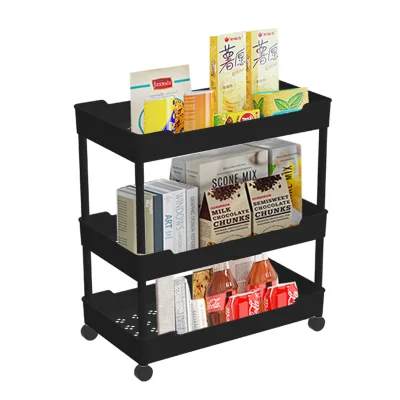
Rolling Kitchen Storage Rack with Multi-Tier Shelves and Casters for Practical Organization
$6.14 - $7.48
MOQ: 500 Pieces


Shangdong Boxing Changtai Environmental Protection Technology Co., Ltd.
- Verified by SGS
- Combined
- China Shandong
- Lead time15 days
- Avg. response≤ 3h
Main marketsSouth America,Africa,Southeast Asia/ Mideast,Europe,Australia,North America


Stainless Steel Shelf Kitchen Equipment Restaurant Stainless Steel Storage Rack
$71.00 - $171.00
MOQ: 1 Pieces


Guangxi Huajiu Home Furnishing Co., Ltd.
- Manufacturer, Trading Company
- Guangxi, China
- Lead time15 days
- Avg. response≤ 12h
Main productsPortable Wardrobes,Shoe Racks,MDF Furniture,Storage Shelves,Flower Stands
Main marketsWestern Europe(25.00%), Southeast Asia(25.00%), North America(25.00%), Eastern Europe(5.00%), Eastern Asia(5.00%), South America(5.00%), Mid East(5.00%), Oceania(5.00%)

Dongguan Simply Metal Products Co., Ltd.
- Trading Company
- China Guangdong
- Lead time23 days
- Avg. response≤ 8h
Main productsWire Shelving, Wire Shelving Units, Shelving, Shelf, Wire Wall Shelf, Wire Rack Shelving, Wire Storage Racks, Wire Racks, Metal Wire Shelving, Wire Storage Shelves
Main marketsSouth America,Africa,Southeast Asia/ Mideast,Europe,Australia,North America


$2.59 - $2.79
MOQ: 500 Pieces


$5.00 - $10.00
MOQ: 100 Pieces

Jinhua Hengyang Cross-Border Trade Limited Liability Company
- Verified by SGS
- Trading Company
- China Zhejiang
- Lead time15 days
- Avg. response≤ 7h
Main productsCoffee Maker Air Fryer Storage Box Knife Set, Silicone Baking Mold Robot Vacuum Cleaning Table, Shower Head Non-Slip Shower Curtain Vacuum Stora, Collapsible Laundry Basket Bohemian Wall Tapestr, Fringe Pillow Cover Bedding Set Memory Foam Pill, Bamboo Tissue Biodegradable Trash Bags LED Fair, Smart Plug Fairy Lights Pet Food Bowl, Household Daily Necessities Kitchen Cleaning, Bathroom Storage and Care Fabric Home Decor, Bedding Daily Chemical Paper Products
Main marketsEurope

Home Countertop Multifunctional Kitchen Bowl Rack, Drain Rack, Storage Rack
$2.78 - $3.48
MOQ: 100 Pieces

Storage Rack Wall Mounted Storage Rack Multi Layer Adjustable Kitchen Cabinets
$3.82 - $4.78
MOQ: 66 Pieces


Shandong Boxing Wangquan Commercial Kitchenware Co., Ltd.
- Verified by SGS
- Combined
- China Shandong
- Lead time15 days
- Avg. response≤ 2h
Main productsStainless Steel Sink, Stainless Steel Table, Shelf, Stainless Steel Cabinet / Locker, Stainless Steel Cart and Trolley, Stinless Steel Tableware / Utensils
Main marketsDomestic

Adidea (Xiamen) Industry And Trade Co., Ltd.
- Trading Company
- China Fujian
- Lead time30 days
- Avg. response≤ 19h
Main productsMetal Display Shelf, Display Stand, Metal Display Rack, MDF Display Showcase, Solid Wood Display Stand, Acrylic Display Stand, Supermarket Display Shelves, Wine Beverage Food Display Rack, Garment Bag Shoe Jewelry Display Stand, Tile Stone Granite Quartz Mosaic Display Stand
Main marketsSoutheast Asia/ Mideast,Europe,North America


$70.00 - $75.00
MOQ: 200 Pieces
Shandong Shenglang Kitchen Co., Ltd.
- Verified by TUVRHEINLAND
- Combined
- China Shandong
- Lead time15 days
- Avg. response≤ 4h
Main marketsSoutheast Asia/ Mideast


Durable Stainless Steel Kitchen Rack with Adjustable Shelves for Organized Storage
$100.00 - $3000.00
MOQ: 10 Pieces

Qingyuan Xingxiang Hardware Products Co., Ltd
- Verified by SGS
- Combined
- China Guangdong
- Lead time30 days
- Avg. response≤ 5h
Main productsShower Caddy Shelves, Hanging Hook, Coffee Pod Holder, Tissue Paper Towel Holder, Wire Storage Basket, Mutifunction Storage Rack, Cup Holder, Dish Drying Rack, Office Accessories, Watering Can
Main marketsEurope,North America


$13.87 - $16.06
MOQ: 200 Pieces


Guangdong Victory Industry Limited
- Trading Company
- China Guangdong
- Lead time15 days
- Avg. response≤ 2h
Main productsTrash Can, Dustbin, Waste Bin, Toilet Brush, Paper Holder, Compost Bin, Kitchen Paper Towel Holder, Makeup Mirror, Towel Rack, Bathroom Accessories
Main marketsEurope,North America

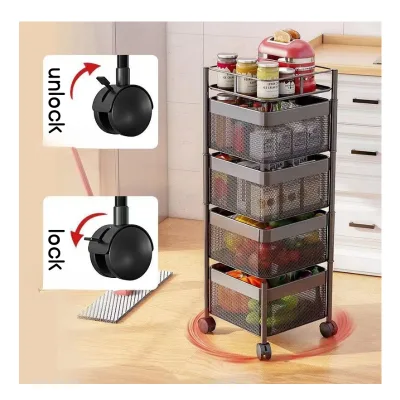
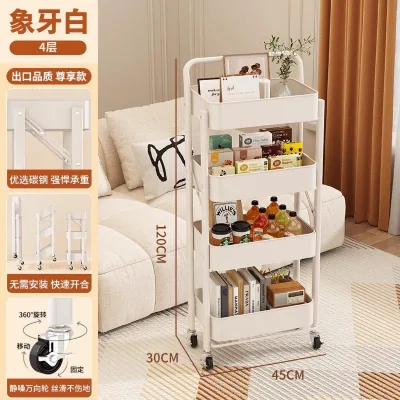
4-Tier Foldable Kitchen Standing Shelves Metal Storage Folding Rack with Wheels
$16.00 - $30.00
MOQ: 300 Pieces

Kitchen Rotating Shelf Storage Rack Bamboo Multi-Function Shelf with Wheels
$13.80 - $23.00
MOQ: 300 Pieces
Quanzhou Anxi Jiangou Home Furnishing Co., Ltd
- Verified by SGS
- Trading Company
- China Fujian
- Lead time0 days
- Avg. response≤ 6h
Main productsStorage Rack, Dog Crate, Wine Rack, Table Leg, Wall-Mounted Shelf, Clothing Rack, Plant Stand




Comprehensive Sourcing Guide
Rolling Standing Kitchen Storage Rack Supplier Concentration and Factory Types
When you search for a Rolling Standing Kitchen Storage Rack, the supplier mix you see typically spans three entity types: dedicated manufacturers, hybrid trading companies that also operate factories, and pure trading companies. Manufacturer profiles in this category commonly list main products such as wooden cabinets, wall shelves, kitchen pull-out baskets, wire organizers, and household storage items, which tells you the product sits inside a broader home-organization line rather than being a standalone specialty. Hybrid supplier profiles are common for metal rolling racks, where the supplier lists both trading company and manufacturer/factory labels and offers OEM and ODM capability. Pure trading companies frequently cover a wide assortment of home goods, including kitchen storage alongside ceramics, glass ornaments, and dining furniture.
Regional concentration matters when judging factory type. Supplier results for this category point to production in Shandong, Guangdong, and Jiangsu, with Shandong entries skewed toward wooden and solid-wood racks, Guangdong entries skewed toward metal and aluminum cabinet organizers, and Jiangsu entries skewed toward mixed household goods through trading companies. When a location is not displayed for a particular supplier, treat the cluster question as open: ask directly where production occurs, whether the quoted entity owns tooling, and whether samples ship from the same site that would produce your order. A rolling rack involving casters, welded frames, or coated wire usually implies a different factory base than a wooden countertop-adjacent rack, so entity type and cluster should be confirmed together, not assumed from the category label.
How to Verify Rolling Standing Kitchen Storage Rack Suppliers
Verification starts with the signals displayed on the supplier profile, then moves to documents you request yourself. In current results for this category, one manufacturer carries system certifications listed as BSCI and ISO 9001 and is marked as verified by TUVRHEINLAND, while a Guangdong-based hybrid supplier shows ISO 9001 system certification. Some profiles, such as the Jiangsu trading company entry, display no certification at all, which is not disqualifying but means you must ask for evidence rather than assume a credential exists. Never treat an unlisted attribute as present, and never accept a certification claim without a certificate number and scope you can check against the issuing body.
The second verification layer is operational consistency. Compare the profile's stated response time against your actual first-contact experience: displayed figures in this category range from under three hours to over twenty-two hours, and a supplier whose real reply lags far behind its stated figure is flagging future communication problems. Ask each candidate whether its company type matches reality by requesting a business license and, for claimed manufacturers, photos or a video call showing the production floor. For rolling racks specifically, confirm in-house capabilities that matter to the product: welding, powder coating or plating, caster assembly, and for wooden variants, finishing capacity such as varnish or primary-color treatment. Finally, request a sample produced on the same line intended for your order, and check that the sample's material specification matches the listing, for example solid wood with varnish versus aluminum with a compact laminated board component.
What to Compare Across Rolling Standing Kitchen Storage Rack Suppliers
Build a comparison sheet using dimensions that actually appear on supplier profiles in this category. Lead time is a primary differentiator: displayed figures range from roughly 23 days for a Shandong wooden-rack manufacturer to 45 days for a Guangdong metal-rack hybrid, with a Jiangsu trading company at about 30 days and some product listings quoting 15 to 30 days delivery. MOQ varies even more sharply, from 100 to 200 pieces on certain metal hanging and space-saving racks up to 1,500 pieces on a wooden kitchen storage rack, so your order volume may determine which supplier tier is feasible before price does.
Response time is a reliable operational proxy: figures in the low single-digit hours suggest dedicated sales staffing, while figures above twenty hours suggest slower internal routing. Product fit is the next comparison axis, using main-product lines as evidence: a supplier whose core catalog is pull-out baskets and cabinet organizers will approach a rolling standing rack differently from one whose catalog centers on wooden cabinets and wall shelves. Customization capability appears on many listings, with OEM and ODM capacity shown by some suppliers and customization marked as available on individual products, but do not assume every supplier offers it. Price ranges in current listings span roughly from the high three-dollar range for small hanging racks to the low forty-dollar range for larger cabinet-style systems, and a wooden medium-size rack lists between ten and thirteen dollars, so normalize comparisons by size, material, and configuration before judging cost.
Common Rolling Standing Kitchen Storage Rack Sourcing Risks
The most frequent risk in this category is material and finish substitution. Wooden rack listings in the results specify solid wood with a varnish or primary color finish, but lower-cost production runs sometimes substitute thinner panels or lighter coatings that fail the "high quality" label shown in the listing. For metal variants, aluminum versus coated steel differences affect both weight and corrosion resistance, and caster quality is rarely shown in listing attributes at all, meaning wheel material, brake function, and load rating must be specified and sample-tested. Packaging is another exposed point: several listings show single-unit carton packing, which may be adequate for rigid wooden racks but insufficient for welded or assembled metal frames shipped long distances.
Communication and structural risks follow. A supplier whose actual response time drifts well above its displayed figure often signals thin staffing that will also slow down pre-production confirmation, which matters because product attributes like size, finish, and packing are frequently marked as customizable. Trading companies add a layer of risk around production visibility: a Jiangsu entry in the results is explicitly a trading company covering household supplies broadly, so the buyer may not learn which factory actually produces the rack until late. MOQ mismatch is a quieter risk: if you need 200 pieces and the only quote comes from a supplier with a 1,500-piece wooden rack MOQ, forcing the order creates inventory exposure. Finally, verify certifications per supplier rather than generalizing, because displayed credentials differ across the profiles in this category.
Rolling Standing Kitchen Storage Rack Regional Sourcing and Logistics
The regional picture from current supplier results is coherent: Shandong suppliers lean toward wooden kitchen racks and solid-wood products, Guangdong suppliers toward metal and aluminum kitchen systems including pull-out baskets and cabinet organizers, and Jiangsu suppliers toward mixed household goods sold through trading companies. This mapping has practical consequences. A wooden rolling rack with varnish finishing likely suits a Shandong-based supplier whose main products already include wooden cabinets and wall shelves, while a rolling rack with a metal frame, wire baskets, or aluminum components aligns with Guangdong's kitchen-hardware supplier base. Use these location signals as a shortlisting filter, then confirm the actual production site, since a supplier's registered location and its factory location can differ.
Logistics planning should account for the lead-time spread visible in the results, roughly 23 to 45 days of production time depending on supplier and product type, before ocean transit is added. Product attributes matter for freight: rolling racks are frequently packed disassembled in single cartons, which improves container density, but you should confirm carton dimensions and whether assembly instructions and hardware are included. Weight differences between solid wood and aluminum constructions affect freight cost calculations materially, so request gross and net weights with quotations. For buyers combining this category with adjacent items such as cabinets or shelving, a supplier whose main-product list already spans those categories may consolidate shipments, though you should confirm whether the same factory or partner sites produce each line before committing to a mixed container.
Rolling Standing Kitchen Storage Rack Commercial Terms and Order Planning
Commercial terms should be negotiated against the specific supplier profile, not against category averages. Use displayed MOQ figures as anchors: 100 to 200 pieces is realistic on several metal rack listings, while 1,500 pieces applies to a wooden storage rack listing, so a first order can often be structured to match the lower tier while requesting a price break schedule for repeat volumes. Price ranges shown in current listings, from the high three-dollar range for small hanging racks to roughly ten to thirteen dollars for a medium wooden rack and into the low forties for a cabinet-style system, give you a sanity check for quotes, but always tie price to the exact material, size, and finish specification in writing.
Order planning should sequence sample approval, deposit, production, and inspection with realistic buffers built on the displayed lead times of roughly 23 to 45 days plus the shorter 15-to-30-day windows quoted on some individual listings. Confirm whether customization affects the lead time, since customized size, color, or finish typically adds tooling or setup time beyond the standard figure. For payment structure, keep the standard deposit-and-balance split and consider whether escrow or platform-protected payment is available, as escrow presence varies and should be confirmed per supplier rather than assumed. Finally, plan a pre-shipment inspection keyed to the risks specific to rolling racks: caster function, weld or joint integrity, finish consistency, and carton drop adequacy, since these are the attributes least visible in listing data and most likely to generate claims after arrival.
FAQs
What is the typical lead time for rolling kitchen storage racks?
Lead times vary by supplier and product type. Some manufacturers in Shandong offer a 23-day lead time, while others in Guangdong may require up to 45 days. Buyers should confirm specific delivery schedules based on their chosen supplier and order volume before finalizing purchases.
What are the minimum order quantities for these storage racks?
Minimum order quantities differ significantly across suppliers. Wooden racks often require 1500 units, while metal or aluminum systems may start at 100 units. Some suppliers list a 200-unit minimum for hanging styles. Always verify the specific MOQ for the exact model and material you need.
Which certifications do these kitchen storage rack suppliers hold?
Many suppliers hold ISO 9001 certification, and some also possess BSCI certification. One manufacturer is verified by TÜV Rheinland. Buyers should request current certificates to ensure compliance with safety and quality standards before placing large orders for kitchen organization products.
What materials are commonly used for rolling kitchen storage racks?
Common materials include solid wood with varnish, aluminum, compact laminated board, and metal. Some racks feature plastic components for rolling functionality. The material choice affects durability and price, so buyers should select based on their specific kitchen environment and weight capacity requirements.
How quickly do suppliers typically respond to inquiries?
Response times vary, with some suppliers replying within 2.82 hours and others taking up to 22.58 hours. Faster response times often indicate higher availability or dedicated sales teams. Buyers seeking urgent quotes should prioritize suppliers with shorter response windows to ensure timely project progress.
Are customization options available for kitchen storage racks?
Yes, customization is widely available for size, material, and design. Suppliers offer OEM and ODM services for brands needing specific dimensions or features. Buyers can request custom packaging or branding, but they must confirm lead time impacts and additional costs associated with these tailored manufacturing requests.
What is the price range for these storage racks?
Prices vary by material and complexity, ranging from approximately 3.55 to 45.40 per unit. Wooden racks often fall between 10 and 13 dollars, while aluminum systems may cost more. Buyers should compare unit prices against minimum order quantities to determine the most cost-effective option for their budget.