Serial Port Sniffer USB Dongle Suppliers and Manufacturers
Compare 19 verified suppliers offering Serial Port Sniffer USB Dongle solutions with varying lead times, response speeds, and certifications. Review product specifications like transmission rates and interface types to select the right partner for your needs; review the available evidence before requesting comparable quotations from suitable candidates.
Suppliers List

Shenzhen Etross Telecom Co., Ltd.
- Verified by TUVRHEINLAND
- Combined
- China Guangdong
- Lead time15 days
- Avg. response≤ 7h
Main productsFixed Wireless Phone, Fixed Wireless Terminal, SMS Gateway, VoIP Gateway, CPE Router, Telemarking Terminal, Fixed Cordless Phone
Main marketsAfrica,East Asia(Japan/ South Korea),Europe,Australia,North America

Tyshen Technology Co., Limited
- Trading Company,Manufacturer/Factory
- China Guangdong
- Lead time45 days
- Avg. response≤ 5h
Main productsComputer Keyboard, Computer Mouse, Powr Bank, Mouse Keyboard, Computer Speaker, Bluetooth Speaker
Main marketsSouth America,Eastern Europe,Mid East,North America,Southeast Asia,Eastern Asia,Western Europe,Africa

Wenzhou Sinoamigo Electric Co.,Ltd
- Verified by BV
- Manufacturer/Factory
- China Zhejiang
- Lead time23 days
- Avg. response≤ 4h
Main productsFloor Boxes, Floor Sockets, Receptacles, Desk Sockets, Wall Switches, Sockets, Wiring Solution, Outlet Boxes, Outlets, Electrical Outlet
Main marketsSouth America,Mid East,North America,Eastern Asia,Africa
Shenzhen Mingruisheng Technology Co., Ltd.
- Trading Company
- Guangdong, China
- Lead time0 days
- Avg. response≤ 24h
Main productsElectronic module
Main marketsWestern Europe(30.0%), Eastern Asia(30.0%), North America(30.0%)

Shenzhen Caratar Technology Co., Ltd.
- Verified by BV
- Combined
- China Guangdong
- Lead time23 days
- Avg. response≤ 6h
Main productsWiFi Module, WiFi USB in Wall Ap Router, Portable WiFi Power Bank Router
Main marketsSouth America,Africa,Southeast Asia/ Mideast,East Asia(Japan/ South Korea),Europe,Australia,North America

Shenzhen Blovedream Technology Co., Ltd.
- Combined
- China Guangdong
- Lead time15 days
- Avg. response≤ 1h
Main productsPDA, Handheld Terminal, Industrial PDA, Handheld PDA, PDA Android, Android Mobile Computer, PDA Barcode Scanner Android, PDA Barcode Scanner, Android Barcode Scanner Terminal, Data Collector
Main marketsSouth America,Africa,Southeast Asia/ Mideast,East Asia(Japan/ South Korea),Europe,Australia,North America

SHENZHEN XIANGTIANZHONG TECHNOLOGY CO., LTD.
- Manufacturer/Factory
- China Guangdong
- Lead time23 days
- Avg. response≤ 4h
Main productsUSB C Type Series Cable, USB Series Connector, Wire Harness Cable, HDMI Cable, Displayport Cable
Main marketsSouth America,Eastern Europe,Mid East,North America,Southeast Asia,Eastern Asia,Oceania,Western Europe,Africa

Shenzhen Dwell Electronics Co., Limited
- Verified by BV
- Trading Company,Manufacturer/Factory
- China Guangdong
- Lead time15 days
- Avg. response≤ 8h
Main productsAccess Control, Access Control Reader, Access Controller, Smart Card Reader, RFID Card Reader, RFID Reader, Single Door Access Controller, Standalone Access Controller, Lock, Access Control Card Reader
Main marketsSouth America,Eastern Europe,Mid East,North America,Southeast Asia,Eastern Asia,Oceania,Western Europe,Africa

Long Distance 2.45GHz Directional Active Reader for Personnel Tracking System
$290.00 - $300.00
Moq: 1


Shenzhen Ex-link Technology Co., Ltd.
- Verified by BV
- Trading Company
- China Guangdong
- Lead time15 days
- Avg. response≤ 12h
Main productsOutdoor Router, Indoor Router, WiFi Router, 3G/4G/5g Gateway, 4G CPE, 5g CPE, Modem, 5g Idu, 5g Portable Router, 4G Portable Router
Main marketsSouth America,Africa,Southeast Asia/ Mideast,Europe,Australia,North America

- Manufacturer/Factory
- China Guangdong
- Lead time15 days
- Avg. response≤ 13h
Main productsDIN41612 Connectors, PCB Connectors, RJ45 with Magentic and PCB Jack, Wire to Board Conncetors, Terminal Block, Wire to Wire Connectors, Flat Cables, Board to Board Connectors, Wire Harness, Automotive Connector
Main marketsSouth America,Eastern Europe,Mid East,North America,Southeast Asia,Eastern Asia,Oceania,Western Europe
Shenzhen Etross Telecom Co., Ltd.
- Manufacturer
- Lead time旺季: "1 - 1000":5,"> 1000":"To be negotiated", 淡季: "1 - 1000":5,"> 1000":"To be negotiated"
- Avg. response≤ 2h
Main productsFixed wireless phone,Fixed wireless terminal,Cordless phone,Sim card to landline converter,CPE SIM router

Yihua Communication (Huizhou) Co., Ltd.
- Verified by SGS
- Trading Company,Manufacturer/Factory,Other
- China Guangdong
- Lead time60 days
- Avg. response≤ 6h
Main products5g CPE Router, 4G CPE Router, 5g Mobile WiFi, 4G Mobile WiFi, WiFi Router, Wireless Router, WiFi Modem, USB Modem, LTE Module, LTE Fwa
Main marketsSouth America,Eastern Europe,Mid East,North America,Southeast Asia,Eastern Asia,Oceania,Western Europe,Africa

- Verified by TUVRHEINLAND
- Combined
- China Guangdong
- Lead time30 days
- Avg. response≤ 7h
Main productsSwing Gate, Barrier Gate, Parking System, Swing Gate Motor, Swing Gate Turnstile, Swing Barrier Gate, Swing Gate Controller, Automatic Swing Gate, Tripod Turnstile
Main marketsSouth America,Southeast Asia/ Mideast,Domestic,Europe,Australia,North America

Dongguan KaiWin Electronic Co., Ltd.
- Manufacturer
- China Guangdong
- Lead time15 days
- Avg. response≤ 22h
Main productsTypec Product
Main marketsEurope,North America
Shenzhen Crownhaosheng Technology Co., Ltd.
- Manufacturer, Trading Company
- Guangdong, China
- Lead time35 days
- Avg. response≤ 3h
Main productselectronic components,electronic device
Main marketsNorth America(40.0%), Western Europe(35.0%), Eastern Asia(9.0%), South America(8.0%), Eastern Europe(8.0%)
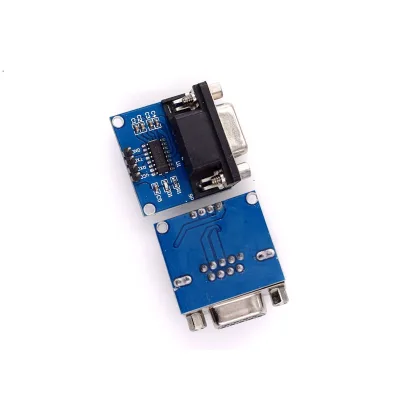
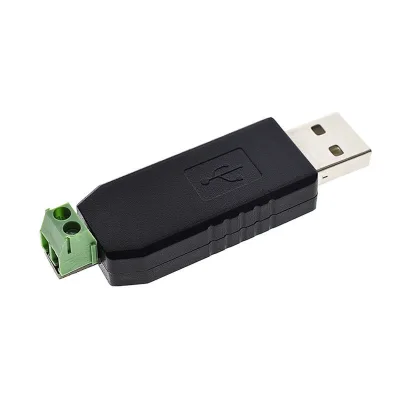
USB to RS485 Converter Adapter
Contact supplier

Changzhou Wistar Electronics Co., Ltd.
- Verified by BV
- Combined
- China Jiangsu
- Lead time15 days
- Avg. response≤ 4h
Main productsSmartphone USB Cable, Computer Cable, Computer HDMI Cable, Pd Cable, Type C Hubs, USB Hub, USB C Hub, Network Cables, USB Adapter, USB 4 Cable
Main marketsEast Asia(Japan/ South Korea),Europe

Shenzhen Toprie Electronics Co., Ltd.
- Verified by SGS
- Manufacturer
- China Guangdong
- Lead time15 days
- Avg. response≤ 2h
Main productsPressure Sensor, Power Meter, Sensor, Temperature Sensor, Level Transmitter, Paperless Recorder, Iiot Gateway, Data Logger, Data Acquisition Module, Liquid Level Sensor
Main marketsEurope,North America

Changzhou Hiyou Microline Electron Co., Ltd.
- Verified by SGS
- Manufacturer/Factory
- China Jiangsu
- Lead time23 days
- Avg. response≤ 1h
Main productsUSB 3.1 Type-C Cable, High-Speed 4K/8K HDMI Cable, 4K Fiber Active Optical Cable, S/FTP Cat. 7 and Cat. 8 Patch Cord, Displayport 4K/8K Cable, BNC Coaxial 3G/6g/12g HD SDI Cable, USB Charger 20W/30W/45W/60W, Power Bank 2500mAh/5000mAh/10000mAh, Screen Panel Green Background for Photography, Audio Video Splitter and Switch
Main marketsSouth America,Eastern Europe,Mid East

Shenzhen Dulcimer Technology Co., Ltd.
- Verified by TUVRHEINLAND
- Trading Company
- China Guangdong
- Lead time30 days
- Avg. response≤ 8h
Main productsLight-Emitting Diode Chip, Lto Tape Drive, Avaya IP Phones, Electrolytic Capacitors, Tantalum Capacitors, Transistors, IC, Resistors, Paste Capacitors, Network Products
Main marketsNorth America






Comprehensive Sourcing Guide
Serial Port Sniffer USB Dongle Supplier Concentration and Factory Types
The current supplier landscape for serial port sniffer USB dongles shows a concentration of manufacturing and trading entities primarily located in China, specifically within the Guangdong province. This region serves as a significant hub for electronics assembly, where suppliers often operate as combined entities or trading companies that also function as manufacturers. The presence of facilities in Guangdong suggests a mature ecosystem for computer hardware and consumer electronics, which supports the production of devices like USB modems and hubs that share similar technical requirements with serial port sniffers. Buyers should recognize that while specific factory names are not disclosed in general results, the geographic clustering in Guangdong indicates a high density of potential partners capable of handling complex electronic assembly tasks.
Factory types in this sector vary from pure trading companies to combined entities offering both OEM and ODM services. Some suppliers in the observed results list capabilities such as ODM, OEM, and owning their own brands, indicating a spectrum of manufacturing depth. A combined company type suggests the ability to manage the entire supply chain from component sourcing to final assembly, which can be advantageous for customizing serial port sniffer dongles. However, buyers must verify if a specific supplier's main products align with their needs, as some listed entities focus on fixed wireless phones, USB hubs, or fingerprint dongles rather than serial port sniffers specifically. Understanding this distinction is crucial when evaluating whether a supplier's existing infrastructure can be adapted for the specific technical demands of a Serial Port Sniffer USB Dongle project.
How to Verify Serial Port Sniffer USB Dongle Suppliers
Verification of suppliers for serial port sniffer USB dongles requires a rigorous check of their stated credentials and operational history. In the current data, some suppliers display verification badges from recognized bodies like TÜV Rheinland, which serves as a concrete indicator of third-party assessment. Buyers should prioritize suppliers with such explicit verification status to mitigate risks associated with unvetted manufacturers. Additionally, checking for system certifications such as ISO 9001 and ISO 14001 provides evidence of quality management and environmental compliance standards. These certifications are critical for ensuring that the manufacturing processes meet international benchmarks, which is essential for electronic components that require consistent performance and safety.
Beyond certifications, buyers must assess the responsiveness and reliability of the supplier through their reported response times and lead times. The observed data includes response times ranging from approximately 4 to 7 hours, which can serve as a proxy for communication efficiency. A supplier with a faster response time may indicate a more agile operation capable of addressing technical queries or production issues promptly. Furthermore, verifying the origin of the products, such as confirming they are manufactured in Shenzhen or Guangdong, China, helps validate the supply chain's transparency. Buyers should request specific documentation for any serial port sniffer dongle they intend to source, ensuring that the product evidence matches the claimed specifications and that the supplier can provide proof of origin and quality control measures.
What to Compare Across Serial Port Sniffer USB Dongle Suppliers
When comparing suppliers for serial port sniffer USB dongles, key dimensions include lead times, minimum order quantities (MOQ), and pricing structures. The available data shows lead times varying significantly, with some suppliers offering 15-day delivery windows while others require up to 45 days. This variance directly impacts inventory planning and time-to-market strategies. Buyers should align their order timelines with the supplier's stated lead time to avoid production bottlenecks. Similarly, MOQs can range from as low as 2 units to as high as 1000 units, depending on the specific product and supplier capacity. Understanding these thresholds is vital for determining whether a supplier can accommodate small-batch prototyping or large-scale production runs without excessive financial commitment.
Pricing and customization capabilities are also critical comparison points. Product evidence indicates price ranges for similar electronic components, such as USB dongles, which can span from $3 to $11 depending on features and volume. While specific prices for serial port sniffers may vary, the trend suggests that customization availability often correlates with pricing flexibility. Suppliers offering ODM or OEM services may provide tailored solutions at different price points compared to those selling standard off-the-shelf items. Buyers should evaluate the trade-off between cost and the level of customization required, ensuring that the selected supplier can meet technical specifications without inflating the unit cost. Additionally, comparing the main products of each supplier helps identify those with relevant expertise in computer hardware and networking devices, which is more likely to yield a high-quality Serial Port Sniffer USB Dongle.
Common Serial Port Sniffer USB Dongle Sourcing Risks
One significant risk in sourcing serial port sniffer USB dongles is the potential mismatch between a supplier's main product focus and the specific technical requirements of the device. Many suppliers in the current results specialize in fixed wireless phones, USB hubs, or fingerprint dongles, which may not guarantee deep expertise in serial port communication protocols. Buyers must verify that the supplier has a proven track record with serial port technology rather than assuming capability based on general electronics manufacturing. Relying on a supplier whose primary output is unrelated to serial communication could lead to compatibility issues, suboptimal performance, or delays in resolving technical challenges during the development phase.
Another risk involves the variability in product standards and certifications across different suppliers. While some suppliers list compliance with standards like CE and ROHS, others may not provide clear evidence of such certifications for their specific products. The absence of documented standards for a Serial Port Sniffer USB Dongle can pose compliance risks, especially if the product is intended for export to markets with strict regulatory requirements. Buyers should explicitly request test reports and certification documents for the specific dongle model before placing an order. Failing to verify these standards can result in rejected shipments, legal liabilities, or the need for costly re-engineering to meet market regulations, ultimately undermining the sourcing strategy.
Serial Port Sniffer USB Dongle Regional Sourcing and Logistics
Sourcing serial port sniffer USB dongles from China, particularly from the Guangdong region, offers logistical advantages due to the established infrastructure for electronics manufacturing and export. The concentration of suppliers in cities like Shenzhen and Guangzhou facilitates efficient supply chain management, with access to ports and airports that streamline international shipping. Buyers should leverage this regional concentration to negotiate favorable freight terms and reduce transit times. However, the specific logistics capabilities of each supplier must be confirmed, as some may rely on third-party logistics providers while others manage their own shipping operations. Understanding the supplier's logistics network is essential for predicting delivery timelines and managing potential disruptions in the supply chain.
Logistics planning also requires attention to packaging and handling standards, which can vary by supplier. Product evidence indicates that items are often packed in paper cartons, blister packs, or color box packages, depending on the product type. For serial port sniffer USB dongles, the packaging must protect the sensitive electronic components during transit while meeting any specific customer requirements for branding or retail presentation. Buyers should discuss packaging specifications early in the negotiation process to ensure that the supplier can deliver products in the desired format. Additionally, verifying the supplier's ability to handle customs documentation and export compliance is crucial, as errors in these areas can lead to delays at the destination port and increased costs for the buyer.
Serial Port Sniffer USB Dongle Commercial Terms and Order Planning
Commercial terms for serial port sniffer USB dongles often include specific conditions regarding payment, escrow, and order planning. While the current data does not explicitly detail escrow availability for all suppliers, buyers should inquire about secure payment methods to protect their financial interests. Establishing clear terms for deposits, milestones, and final payments is essential for managing cash flow and ensuring that the supplier remains committed to the project. Buyers should also clarify the supplier's policy on order modifications and cancellations, as these terms can significantly impact the flexibility of the procurement process. Understanding these commercial terms helps in creating a robust contract that safeguards both parties and minimizes the risk of disputes.
Order planning must account for the supplier's production capacity and lead times to ensure timely delivery. The observed lead times range from 15 to 45 days, which necessitates careful scheduling to align with project deadlines. Buyers should factor in buffer time for potential delays, such as component shortages or quality control issues, when planning their order timeline. Additionally, considering the MOQ requirements is vital for optimizing order quantities and avoiding excess inventory. By aligning order volumes with the supplier's capacity and the buyer's demand forecast, companies can achieve a balance between cost efficiency and supply reliability. Regular communication with the supplier regarding production status and potential adjustments ensures that the order plan remains adaptable to changing market conditions.
FAQs
What is the lead time for USB dongle orders?
Lead times vary by product type and supplier capacity. Some suppliers offer a 15-day lead time for specific modems, while others require up to 45 days for broader computer hardware orders. Buyers should confirm the exact timeline with the specific vendor before placing an order.
What are the minimum order quantities for USB dongles?
Minimum order quantities differ significantly across product listings. Some USB dongles require a minimum of just two units, whereas others like USB hubs may demand orders of 1000 units. Buyers must check the specific product page to determine the applicable MOQ for their needs.
Where are these USB dongle manufacturers located?
Manufacturers of these devices are primarily located in China, specifically within the Guangdong province and Shenzhen areas. This region is a major hub for consumer electronics and computer hardware production, ensuring access to a wide variety of USB modems and related networking equipment.
Do suppliers offer customization for USB dongles?
Yes, many suppliers indicate that customization is available for their USB dongle products. This allows buyers to request specific features or branding. However, the extent of customization depends on the supplier's ODM or OEM capabilities and should be verified directly with the manufacturer.
What certifications do these suppliers hold?
Some suppliers hold ISO 14001 and ISO 9001 certifications for their management systems. Additionally, certain products comply with CE and ROHS standards. Buyers should verify specific product certifications and supplier verification status, such as TÜV Rheinland, to ensure quality and safety compliance.
What is the price range for USB dongles?
Prices for USB dongles vary based on specifications and order volume. Listings show prices ranging from as low as 1.65 dollars to 11.20 dollars per unit. The final cost depends on the specific model, such as a 3G modem or a USB hub, and the quantity purchased.
How quickly do suppliers respond to inquiries?
Response times for supplier inquiries vary, with some suppliers responding within approximately 4 to 7 hours. Faster response times are often associated with trading companies or manufacturers with dedicated sales teams. Buyers should expect different response speeds depending on the specific supplier selected.