Small Chip Voltage Regulator Suppliers and Manufacturers
Source Small Chip Voltage Regulator components from 14 verified suppliers offering PCBA and ICs. Compare grounded dimensions including ISO 9001 certification, 30-day lead times, and Jiangsu origin. Review specifications and request quotes directly; review the available evidence before requesting comparable quotations from suitable candidates.
Updated
Suppliers List
Wuxi Jinzer Science & Technology Co., Ltd.
- Verified by TüVRheinland
- Manufacturer, Trading Company
- Lead time30 days
- Avg. response≤ 6h
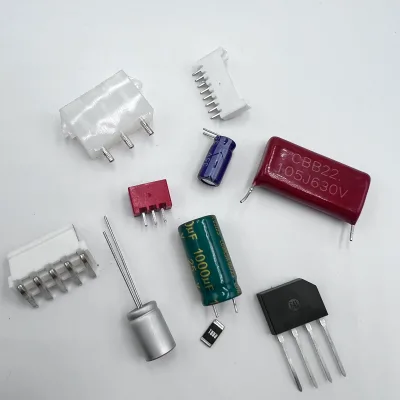
Main productsPCBA, ICs, components, modules
Main marketsDomestic Market(90%), Southeast Asia(10%)
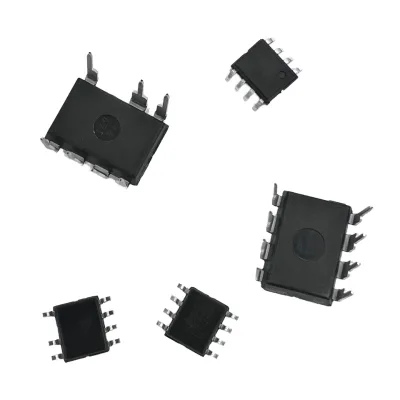
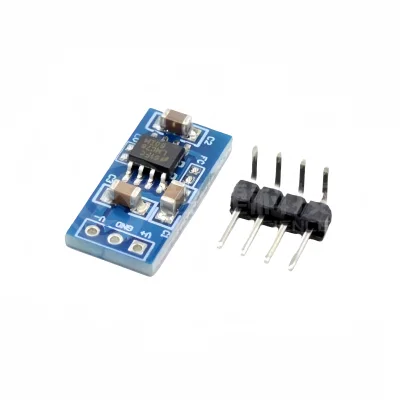
Chipown China Compact High-Accuracy 5V Regulator PN8001HNEC-T1 for Low-Load Power Supplies
$0.12 - $0.20
MOQ: 5 pieces

Fuan Shaluo Electronic Co., Ltd.
- Verified by TUVRHEINLAND
- Trading Company,Manufacturer/Factory
- China Fujian
- Lead time15 days
- Avg. response≤ 7h
Main productsGenerator Parts & Accessories, Automatic Voltage Regulator, Solenoid, Oil Pressure Sensor, Vdo Sensor, Charging Adapter, Generator Controller, Carburetor, Carbon Brush Holder, Dual Fuel Conversion Kit
Main marketsSouth America,Eastern Europe,Mid East,North America,Southeast Asia,Eastern Asia,Oceania,Western Europe,Africa

Professional Economic Design Small Size Universal Automatic Voltage Regulator
$5.00 - $8.00
MOQ: 50 Pieces

Universal Application Various Generator Types Automatic Voltage Regulator
$5.00 - $8.00
MOQ: 50 Pieces

Industrial Grade Voltage Regulation Circuitry Protection Automatic Voltage Regulator
$6.00 - $10.00
MOQ: 10 Pieces

Reliable High Temperature Operation 105℃ Rating Automatic Voltage Regulator
$11.00 - $15.00
MOQ: 50 Pieces

Efficient Single Phase Control Friendly Installation Automatic Voltage Regulator
$11.00 - $15.00
MOQ: 50 Pieces


Shaanxi Sefon Electrical Equipment Co., Ltd
- Verified by SGS
- Combined
- China Shaanxi
- Lead time30 days
- Avg. response≤ 11h
Main productsSingle Phase Transformer, Three Phase Transformer, Voltage Regulator, Power Substation, Voltage Regulator Substation, Single Phase Automatic Voltage Regulator, Prefabricated Substation, Mobile Substations, Single Phase Automatic Voltage Regulators (AVR), 32-Step Single-Phase Voltage Regulator
Main marketsDomestic

Compact Single-Phase Automatic Voltage Regulator for Residential and Small Industrial Applications
$10000.00 - $80000.00
MOQ: 1 Sets

a Single-Phase Automatic Voltage Regulator with Compact and Lightweight
$10000.00 - $80000.00
MOQ: 1 Sets

Durable Three-Phase Voltage Regulator for Medium Voltage Applications
$8000.00 - $18000.00
MOQ: 1 Sets


Qingdao ZITN Technology Co., Ltd.
- Verified by TUVRHEINLAND
- Combined
- China Shandong
- Lead time15 days
- Avg. response≤ 19h
Main productsInertial Measurement Unit, Mwd/Lwd Directional Sensor, Directional Sensor for Logging Tools, Acceleration Sensor/Quartz Accelerometer, High Temperature Flash Memory, Thick Film Integrated Circuit, Linear Voltage Regulator, Dcdc Power Converter, Downhole Electronics, Downhole Telemetry Communication System
Main marketsSoutheast Asia/ Mideast,Europe
Shenzhen Dangjie Technology Co., Ltd.
- Trading Company, Agent, Distributor/Wholesaler, Other
- Guangdong, China
- Lead time10 days
- Avg. response≤ 2h
Main productscomponents and parts,Integrated circuit,resistance,capacitance,triode
Main marketsDomestic Market(20.00%), Western Europe(20.00%), Eastern Europe(20.00%), South Asia(20.00%), Oceania(20.00%), Central America(10.00%), Southeast Asia(10.00%), Southern Europe(10.00%), Mid East(10.00%), North America(10.00%), Africa(5.00%), South America(5.00%), Eastern Asia(5.00%), Northern Europe(5.00%)
- Manufacturer, Trading Company, Distributor/Wholesaler
- Guangdong, China
- Lead time3 days
- Avg. response≤ 2h
Main productsIntegrated circuit,Module,PCB,LCD,3D Printer Accessories
Main marketsSouth America(20.00%), Eastern Europe(20.00%), Western Europe(15.00%), North America(10.00%), Southeast Asia(10.00%), South Asia(5.00%), Southern Europe(5.00%), Northern Europe(5.00%), Africa(5.00%), Eastern Asia(5.00%)

Shanghai Sanyu Industry Co., Ltd.
- Trading Company,Manufacturer/Factory
- China Shanghai
- Lead time23 days
- Avg. response≤ 5h
Main productsFrequency Inverter, Soft Starter, AC Drive, Frequency Converter, Welding Machine, Cutting Machine, Inverter, MMA, TIG, MIG
Main marketsSouth America,Eastern Europe,Mid East,North America,Southeast Asia,Eastern Asia,Oceania,Western Europe,Africa
Shenzhen Jiaxinjie Technology Co., Ltd.
- Trading Company, Agent, Distributor/Wholesaler
- Guang Dong, China
- Lead time3 days
- Avg. response≤ 5h
Main productsElectronic products,Electronic module,IC Chip,Capacitance & Resistance,Medical equipment
Main marketsDomestic Market(10.00%), South Asia(10.00%), Southern Europe(10.00%), Eastern Europe(10.00%), South America(10.00%), North America(10.00%), Oceania(5.00%), Africa(5.00%), Southeast Asia(5.00%), Northern Europe(5.00%), Central America(5.00%), Western Europe(5.00%), Eastern Asia(5.00%), Mid East(5.00%)
Dongguan Dongcheng Donghua Electronic Firm
- Trading Company
- Guangdong, China
- Lead time0 days
- Avg. response≤ 3h
Main productsintegrated circuit,Transistor,Module,capacitor,Resistor
Main marketsDomestic Market(10.00%), Eastern Asia(10.00%), Mid East(10.00%), Africa(10.00%), Southeast Asia(10.00%), Eastern Europe(10.00%), North America(10.00%)
Shenzhen CXS Electronic Co., Ltd
- Manufacturer, Trading Company, Distributor/Wholesaler
- Guangdong, China
- Lead time0 days
- Avg. response≤ 6h
Main productsIC,Capacitor,Resistor,module,LED
Main marketsSouth America(20.00%), North America(20.00%), Northern Europe(10.00%), Western Europe(10.00%), Mid East(10.00%), Southern Europe(10.00%), Southeast Asia(10.00%), Domestic Market(5.00%), Africa(5.00%)
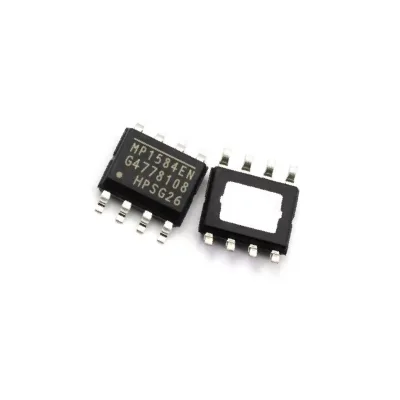
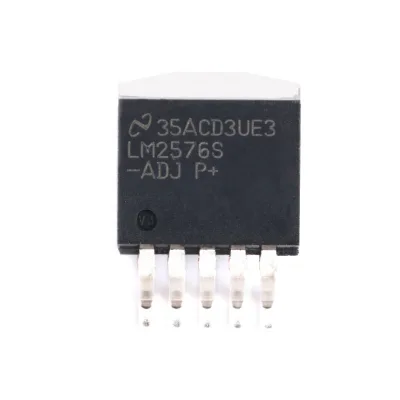
New and Original MP1584EN-LF-Z SOP8 MP1584EN Switch Voltage Regulator Chip MP1584
$0.9245 - $6.0588
MOQ: 10 Minimum
$0.9245 - $1.2327
MOQ: 5 Minimum

Shenzhen Worthy Electronics corp
- Manufacturer, Agent, Distributor/Wholesaler
- Guangdong, China
- Lead time3 days
- Avg. response≤ 11h
Main productswholesale sales,One-stop ordering,Factory orders,Factory orders,Integrated circuit
Main marketsNorth America(20.00%), Southeast Asia(10.00%), Central America(10.00%), South Asia(10.00%), Mid East(8.00%), Africa(8.00%), South America(6.00%), Eastern Europe(5.00%), Western Europe(4.00%), Oceania(3.00%), Domestic Market(3.00%), Southern Europe(3.00%)
Shenzhen Chengfangchip Electronic Technology Co., Ltd.
- Verified by Intertek
- Trading Company
- Lead time0 days
- Avg. response≤ 3h
Main productsPCBA, ICs, Transistor, IGBT, Development Board
Main marketsNorth America(40%), Southeast Asia(20%), Mid East(20%)
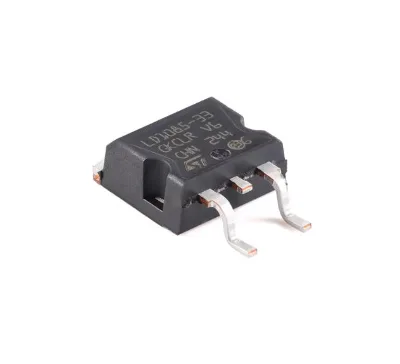
Original Genuine LD1085D2T33R TO-263 3A Low Voltage Drop Fixed Positive Voltage Regulator Chip
$1.1549 - $1.4018
MOQ: 1 pieces
Shenzhen Leixinrui Electronics Co., Ltd.
- Verified by TüVRheinland
- Trading Company
- Lead time3 days
- Avg. response≤ 4h
Main productsIntegrated Circuit Chip, Capacitance, Resistance, Microcontroller, Logic Device
Main marketsCentral America(20%), South America(15%), Eastern Asia(15%)
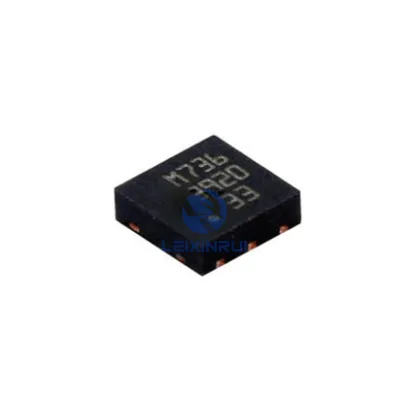
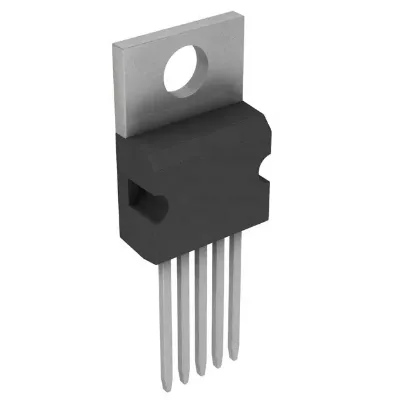
$2.0525 - $6.1575
MOQ: 10 pieces
Shenzhen Jingmaoyuan Electronics Co., Ltd.
- Trading Company, Agent, Distributor/Wholesaler
- Guangdong, China
- Lead time5 days
- Avg. response≤ 4h
Main productsIC,TRANSISTOR,DOIDE,RESISTOR,CONNECTOR
Main marketsSoutheast Asia(40.00%), North America(20.00%), Western Europe(10.00%), Africa(10.00%), South America(10.00%), Eastern Europe(10.00%)




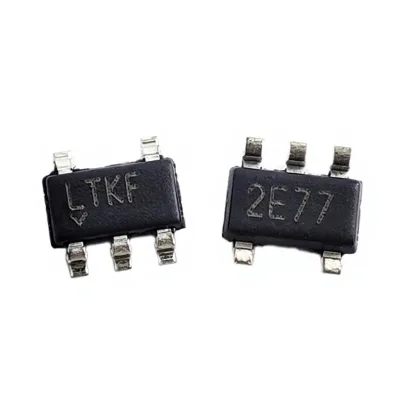
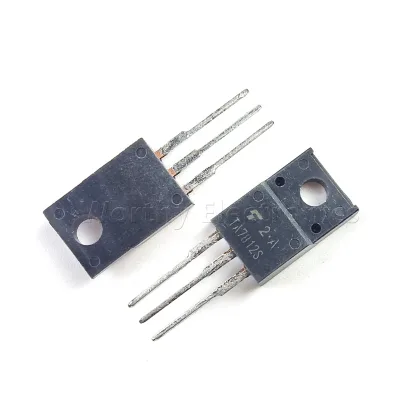
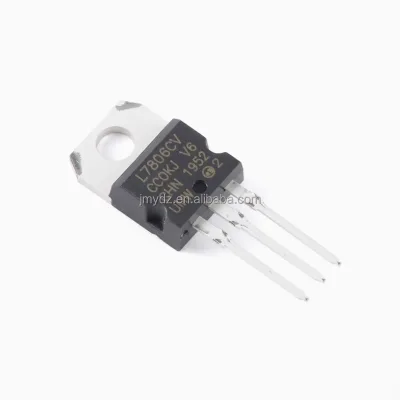
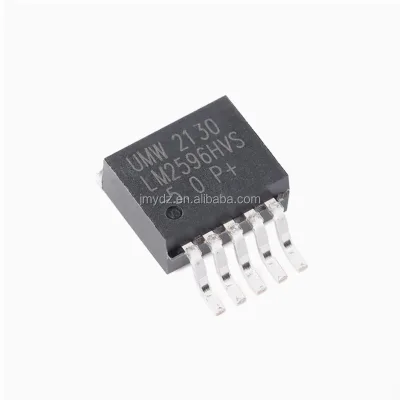
Comprehensive Sourcing Guide
Small Chip Voltage Regulator Supplier Concentration and Factory Types
The landscape for sourcing small chip voltage regulators is defined by a mix of specialized manufacturers and versatile trading companies, each offering distinct advantages for different procurement strategies. Current data indicates that suppliers in this sector are primarily located in China, with specific operational hubs identified in regions such as Jiangsu and Fujian. This geographic concentration suggests a mature supply chain ecosystem where component availability and manufacturing expertise are clustered, allowing for efficient production cycles. Buyers should note that while some entities operate strictly as trading companies, others maintain factory capabilities, which can influence pricing structures and direct communication channels. Understanding this distinction is crucial for determining whether a supplier can offer custom engineering support or if they function primarily as an intermediary for standardized inventory.
Company types vary significantly, with many suppliers listing themselves as both manufacturers and trading entities, reflecting the hybrid nature of modern electronics distribution. This duality often means that a single supplier can provide both direct factory pricing for high-volume orders and flexible sourcing for smaller, diverse component needs. The presence of verified entities, such as those authenticated by TüV Rheinland, adds a layer of credibility to these operational models. Buyers evaluating these suppliers should look for clear indications of their primary business model, as this affects their ability to handle complex technical queries or provide rapid prototyping services. The concentration of these firms in specific Chinese provinces also implies that logistics and shipping routes are well-established, potentially reducing transit times for international orders.
How to Verify Small Chip Voltage Regulator Suppliers
Verification is a critical step in ensuring the reliability of suppliers offering small chip voltage regulators, particularly given the technical precision required for power management components. Buyers should prioritize suppliers who have undergone third-party verification processes, such as those conducted by TüV Rheinland, which can provide assurance regarding the legitimacy of the business entity. This verification often extends to checking the authenticity of certifications, which are essential for demonstrating compliance with international quality and safety standards. In the current market, certifications such as ISO 9001, ISO 13485, and IECQ QC080000 are key indicators of a supplier’s commitment to quality management systems. These credentials suggest that the supplier has established robust procedures for manufacturing, testing, and documentation, which are vital for maintaining consistency in electronic component production.
Beyond certifications, buyers should assess the responsiveness and transparency of the supplier’s communication channels. A quick response time, such as the six-hour average observed among verified suppliers, can indicate a well-staffed and efficient customer service team. This responsiveness is particularly important when discussing technical specifications, such as switching frequencies or protection features, which require detailed and accurate information. Additionally, buyers should verify the supplier’s ability to provide detailed product evidence, including datasheets and application notes, to ensure that the components meet specific design requirements. The presence of detailed product attributes, such as operating temperatures and fault protection mechanisms, further supports the supplier’s technical competence. By combining verification checks with an assessment of communication quality, buyers can mitigate the risk of engaging with unreliable vendors.
What to Compare Across Small Chip Voltage Regulator Suppliers
When evaluating multiple suppliers for small chip voltage regulators, buyers must compare a range of operational and commercial metrics to identify the most suitable partner. Lead times are a primary differentiator, with some suppliers offering turnaround times as short as fifteen days, while others may require up to thirty days for production and delivery. This variance can significantly impact project timelines, especially for time-sensitive electronics manufacturing. Alongside lead times, buyers should examine the minimum order quantities (MOQs), which can range from small batches of five units for sampling purposes to larger orders of fifty units for standard production runs. These MOQs reflect the supplier’s flexibility and willingness to accommodate different order sizes, which is crucial for startups or projects with fluctuating demand.
Response speed and main product focus are also critical comparison points. Suppliers with faster response times, such as those averaging six to six and a half hours, can provide quicker quotations and technical support, enhancing the overall procurement experience. Additionally, the breadth of a supplier’s main products can indicate their specialization; some may focus exclusively on integrated circuits and power management ICs, while others offer a wider array of generator parts and accessories. Buyers should also compare pricing structures, noting that unit costs can vary based on volume and specific component features, such as output voltage and current ratings. By systematically comparing these factors, buyers can select suppliers that align best with their operational needs and budget constraints.
Common Small Chip Voltage Regulator Sourcing Risks
Sourcing small chip voltage regulators involves several inherent risks that buyers must actively manage to ensure supply chain stability and product quality. One significant risk is the potential for counterfeit or substandard components, which can compromise the performance and safety of end products. This risk is heightened when sourcing from unverified suppliers or those with unclear origins. To mitigate this, buyers should insist on comprehensive product evidence, including detailed specifications and testing reports, to verify the authenticity and quality of the components. Additionally, the variability in supplier types, from pure trading companies to manufacturers, can lead to inconsistencies in product availability and pricing, making it essential to establish clear contracts and expectations.
Another common risk is the mismatch between expected and actual lead times, which can disrupt production schedules. Suppliers may quote attractive lead times but fail to meet them due to capacity constraints or supply chain disruptions. Buyers should therefore prioritize suppliers with a proven track record of on-time delivery and transparent communication regarding production status. Furthermore, the complexity of technical specifications, such as switching frequencies and protection features, can lead to errors if not carefully reviewed. Buyers should ensure that all technical requirements are clearly documented and agreed upon before placing orders. By proactively addressing these risks through thorough due diligence and clear communication, buyers can safeguard their projects against potential disruptions and quality issues.
Small Chip Voltage Regulator Regional Sourcing and Logistics
The regional concentration of Small Chip Voltage Regulator suppliers in China, particularly in provinces like Jiangsu and Fujian, offers significant logistical advantages for global buyers. These regions are established hubs for electronics manufacturing, providing access to a dense network of component suppliers, raw material providers, and logistics services. This clustering effect reduces the complexity of sourcing multiple components from a single geographic area, streamlining the procurement process. Buyers can benefit from shorter transit times and more predictable shipping schedules when sourcing from these established industrial zones. Additionally, the presence of specialized manufacturing facilities in these regions often leads to higher levels of technical expertise and innovation, which can be advantageous for projects requiring advanced power management solutions.
However, buyers must also consider the logistical implications of sourcing from these regions, including customs clearance and international shipping costs. While the proximity to major ports in China can facilitate efficient export processes, buyers should account for potential delays due to regulatory changes or global shipping disruptions. Establishing strong relationships with suppliers who have experience in international logistics can help mitigate these challenges. Furthermore, buyers should evaluate the supplier’s packaging and handling practices to ensure that components are protected during transit, especially given the sensitivity of electronic components to static and physical damage. By understanding the logistical landscape, buyers can optimize their supply chain strategies and ensure timely delivery of small chip voltage regulators.
Small Chip Voltage Regulator Commercial Terms and Order Planning
Effective order planning for small chip voltage regulators requires careful attention to commercial terms, including pricing, payment conditions, and warranty policies. Current market data indicates that unit prices for these components can vary significantly, with some items priced as low as $0.12 per unit and others reaching up to $0.73, depending on specifications and order volume. Buyers should negotiate pricing based on their expected order quantities, leveraging the flexibility of suppliers who offer different MOQs. Additionally, understanding the warranty terms, such as the one-year warranty offered by some suppliers, is crucial for managing long-term costs and ensuring product reliability. Buyers should also clarify any additional costs, such as shipping or handling fees, to avoid unexpected expenses.
Payment terms and escrow services are also important considerations for securing transactions. Using verified payment methods can provide an additional layer of security for buyers, ensuring that funds are only released upon satisfactory delivery of goods. Buyers should also plan for potential variations in lead times by maintaining buffer stock or establishing flexible ordering schedules. Clear communication regarding order status and production updates can help buyers anticipate any delays and adjust their plans accordingly. By carefully managing commercial terms and order planning, buyers can optimize their procurement processes and ensure a smooth supply chain for small chip voltage regulators.
FAQs
What is the price range for small chip voltage regulators?
Prices for small chip voltage regulators typically range from $0.12 to $0.73 per unit. This range covers various models like the AP8012H and PN8001HNEC-T1. Buyers should note that costs depend on specific features, output configurations, and order quantities. Always verify the latest pricing with suppliers before placing an order.
What is the minimum order quantity for these components?
The minimum order quantity for small chip voltage regulators is generally five units. Some specialized generator parts may require a higher MOQ of fifty units. Buyers should check the specific product listing for exact requirements. Meeting the MOQ is essential to secure the quoted unit price and ensure efficient shipping.
How long does it take to receive these regulators?
Lead times for small chip voltage regulators vary between fifteen and thirty days. This duration depends on the supplier type and current production capacity. Trading companies may offer faster turnaround times compared to manufacturers. Buyers should confirm the exact lead time with the supplier before finalizing the purchase agreement.
Are these suppliers verified for quality assurance?
Yes, many suppliers are verified by TüV Rheinland for quality assurance. They also hold certifications such as ISO 9001, ISO 13485, and IECQ QC080000. These certifications ensure that the manufacturing processes meet international standards. Buyers can rely on these verifications to assess the reliability and consistency of the supplied electronic components.
Where are these voltage regulators manufactured?
These voltage regulators are primarily manufactured in China, specifically in regions like Jiangsu and Fujian. The products originate from verified manufacturers and trading companies located in these areas. Buyers should check the place of origin listed in the product details. This information helps in assessing logistics costs and supply chain reliability.
What features do these small chip regulators offer?
These regulators offer features like over-current protection, over-voltage protection, and intermittent working modes. They support AC-DC conversion and provide stable output voltages such as 5V or 12V. The chips integrate power MOSFETs and PWM controllers for efficient power management. Buyers should select models based on their specific application requirements and protection needs.