Ultrasonic Atomizer with Night Light Suppliers and Manufacturers
Explore 20 verified suppliers offering Ultrasonic Atomizer with Night Light solutions from China Zhejiang and Jiangsu. Compare response times, lead times, certifications, and product specifications like frequency and particle size before requesting quotes; review the available evidence before requesting comparable quotations from suitable candidates.
Suppliers List

Hangzhou Lanben Trade Co., Ltd.
- Verified by TUVRHEINLAND
- Combined
- China Zhejiang
- Lead time15 days
- Avg. response≤ 4h
Main productsUltrasonic Transducer, Ultrasonic Homogenizer, Ultrasonic Mixer, Ultrasonic Welding Machine, Sonicator, Ultrasonic Food Cutter, Ultrasonic Cutting Machine, Ultrasonic Extraction, Ultrasonic Coating, Ultrasonic Sewing Machine
Main marketsEurope,Australia,North America


100kHz High Frequency Available Ultrasonic Spray Coating Machine Ultrasonic Atomizer
$4000.00 - $4200.00
MOQ: 1 Sets


NANJING ARCHMED MEDICAL EQUIPMENT CO., LTD.
- Verified by SGS
- Trading Company
- China Jiangsu
- Lead time15 days
- Avg. response≤ 12h
Main productsX-ray Machine, Medical Equipment, Medical Instrument, Hospital Furniture, Surgery & ICU Equipment, Laboratory Equipment
Main marketsSouth America,Africa


Rechargeable Atomizer Handheld Atomizer for Children's Home Portable Mesh Nebulizer Machine
$5.00 - $18.00
MOQ: 20 Pieces

Beijing Oksultrasonic Group Co., Ltd
- Trading Company,Manufacturer/Factory
- China Beijing
- Lead time15 days
- Avg. response≤ 7h
Main productsUltrasonic Generator, Ultrasonic PCB Generator, Ultrasonic Transducer, Ultrasonic Cleaning Transducer, Ultrasonic Welding Transducer, Piezo Ceramic, Ultrasonic Cleaning Generator, Ultrasonic Welding Generator, Ultrasonic Immersible Transducer, Ultrasonic Equipment
Main marketsSouth America,Eastern Europe,Mid East,North America,Southeast Asia,Eastern Asia,Oceania,Western Europe,Africa

- Trading Company
- Beijing, China
- Lead time5 days
- Avg. response≤ 2h
Main productsUV Flatbed Printer,T Shirt Printer,Eco Solvent Printer,Sublilmation Printer,Largemat Digital Printer
Main marketsMid East(10.00%), South Asia(10.00%), Africa(10.00%), Central America(10.00%), Eastern Europe(10.00%), South America(10.00%), North America(10.00%), Southern Europe(5.00%), Northern Europe(5.00%), Southeast Asia(5.00%), Western Europe(5.00%), Eastern Asia(5.00%), Oceania(3.00%), Domestic Market(2.00%)

Pioway Medical Lab Equipment Co., Ltd.
- Trading Company
- China Jiangsu
- Lead time15 days
- Avg. response≤ 7h
Main productsHematology Analyzer, Chemistry Analyzer, Electrolyte Analyzer, Ultrasound Scanner, X-ray Machine, Patient Monitor, ECG Machine, Hospital Bed, Microscope, Centrifuge
Main marketsSouth America,Africa,Southeast Asia/ Mideast,North America

- Verified by BV
- Combined
- China Guangdong
- Lead time30 days
- Avg. response≤ 9h
Main productsMedical Air Mattress, Nebulizer, Air Compression Leg Massager, Humidifier, Oxygen Concentrators, Air Mattress, Blood Pressure Monitor, Suction Machine, Therometer, Face Mask
Main marketsSouth America,Africa,Southeast Asia/ Mideast,East Asia(Japan/ South Korea),Europe,Australia,North America

Guangzhou Kinglaiky Industrial Ltd.,
- Verified by TUVRHEINLAND
- Trading Company
- China Guangdong
- Lead time15 days
- Avg. response≤ 12h
Main productsPromotional Gifts, Pen, Leather Product, Wallet, Keyring, Namecard Holder, Mouse Mat, Flask, Wristband, USB Pen Drive
Main marketsAfrica


Portable Mini Silent Compression Ultrasonic Atomizer Household Medical Vaporizer
$11.90 - $15.90
MOQ: 50 Pieces
Dongguan Simzo Electronic Technology Co., Ltd.
- Verified by BV
- Combined
- China Guangdong
- Lead time23 days
- Avg. response≤ 7h
Main marketsSouth America,Southeast Asia/ Mideast,East Asia(Japan/ South Korea),Europe,Australia,North America


Compact Ultrasonic Steam Atomizer for Home Use and Clinical Medical Application Nebulizer
$8.30 - $11.30
MOQ: 1000 Pieces

Dry Burn Protection Handheld Ultrasonic Efficient Home Use Atomizer Nebulizer
$8.00 - $9.50
MOQ: 1000 Pieces

Quiet Rechargeable Handheld Mesh Ultrasonic Steam Atomizer for Respiratory Therapy Nebulizer
$10.50 - $11.50
MOQ: 1000 Pieces

Portable Mini Ultrasonic Atomizer for Travel and Personal Healthcare Use Nebulizer
$8.00 - $9.50
MOQ: 1000 Pieces

Rechargeable Portable Handheld Mesh Ultrasonic Steam Atomizer for Home Travel Nebulizer
$10.50 - $11.50
MOQ: 1000 Pieces

Nantong Braun Machinery Co., Ltd.
- Trading Company,Manufacturer/Factory
- China Jiangsu
- Lead time23 days
- Avg. response≤ 17h
Main productsPerforating Rollers, Vario Bars, Faller Bar, Braiding Machines, Embroidery Machine, Crochet Machine, Weft Yarn Machine, Doubling Winder, Bobbin Winder, Centrifuges
Main marketsSouth America,Eastern Europe,Mid East,North America,Southeast Asia,Eastern Asia,Oceania,Western Europe,Africa

NINGBO FBELE ELECTRONICS CO., LTD.
- Trading Company
- China Zhejiang
- Lead time15 days
- Avg. response≤ 16h
Main productsSolar Cell, Buzzer, Fuse and Fuse Holder, Terminal Block, Switch, Speaker, Telephone Receiver, Siren, Rj, USB Connector
Main marketsSouth America,Southeast Asia/ Mideast,Europe


Fbpzt20-111K 5-6um Pzt Piezoelectric Ceramic Disc Piezo Ultrasonic Atomizer
$12.00 - $15.00
MOQ: 10 Pieces

Fbpzt2520 35mm 3MHz/2.4MHz/1.7MHz Pzt Piezo Ceramic Ultrasonic Microporous Atomizer
$12.00 - $15.00
MOQ: 10 Pieces

Ningbo Finer Medical Instruments Co., Limited
- Trading Company,Manufacturer/Factory
- China Zhejiang
- Lead time23 days
- Avg. response≤ 21h
Main productsMedical Consumables, Medical Equipment, Hospital Furniture, Mobility Safety Aid, Daily Living Aid
Main marketsSouth America,Eastern Europe,Mid East,North America,Southeast Asia,Eastern Asia,Oceania,Western Europe,Africa

Battery Operated Mini Portable Handheld Ultrasonic Atomizer Nebulizer Machine
$10.00 - $20.00
MOQ: 1 Pieces


Shenzhen Apple Vista Technology Ltd.
- Manufacturer
- Guangdong, China
- Lead time30 days
- Avg. response≤ 4h
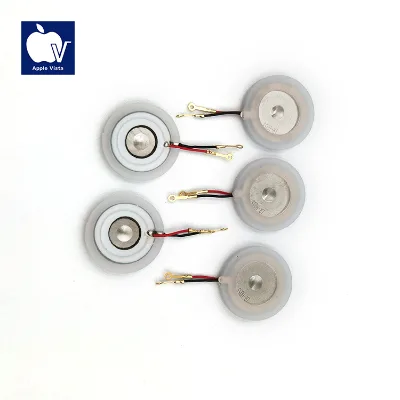
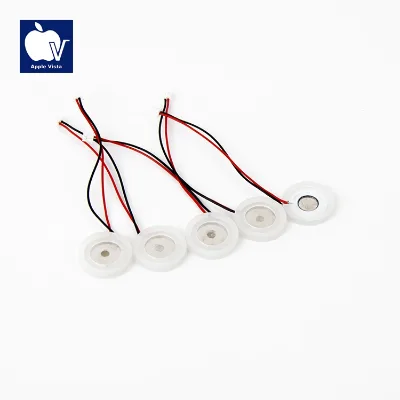
Main productsPiezoelectric Ceramic,Ultrasonic Transducer,Piezo Element,Ultrasonic Cleaning Transducer,Zirconia Ceramic
Main marketsEastern Asia(30.00%), Southeast Asia(20.00%), North America(15.00%), Eastern Europe(15.00%), South Asia(10.00%), Southern Europe(10.00%)
Shenzhen Feng Chipsource Electronic Co., Ltd.
- Manufacturer, Trading Company, Distributor/Wholesaler
- Guangdong, China
- Lead time2 days
- Avg. response≤ 8h
Main productsIntegrated Circuit,Electronic Components,Development Board,Wifi module,Bluetooth module
Main marketsNorth America(20.00%), Northern Europe(16.00%), Southern Europe(10.00%), South America(10.00%), Western Europe(10.00%), Eastern Europe(10.00%), Domestic Market(3.00%), South Asia(3.00%), Oceania(3.00%), Africa(3.00%), Central America(3.00%), Southeast Asia(3.00%), Eastern Asia(3.00%), Mid East(3.00%)
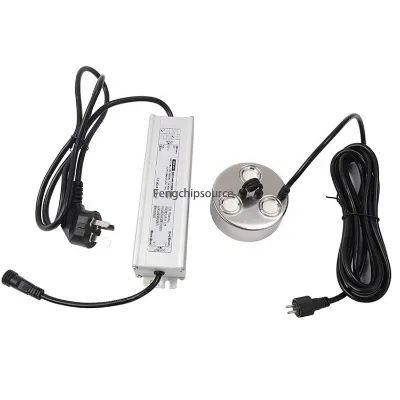
$5.48 - $10.96
MOQ: 10 Minimum
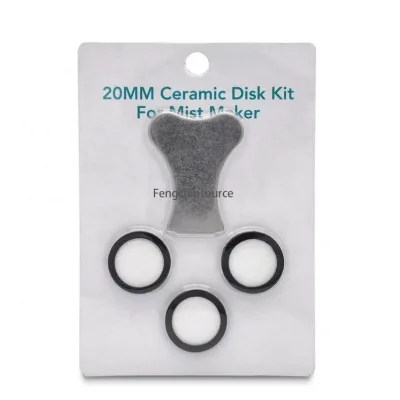
humidifier ultrasonic 10 head atomization plate atomizer nozzle accessories 20MM atomizer plate
$0.31 - $0.62
MOQ: 10 Minimum

- Trading Company,Manufacturer/Factory,Other
- China Jiangsu
- Lead time30 days
- Avg. response≤ 8h
Main productsPiezo Ceramic Components, Multilayer Piezoelectric Actuators, Piezoelectric Bender Actuators, Piezo Ceramic Stack, Piezo Stack Actuator, Rocking Armature Transducer, Siren Alarm Transducer, Fire Alarm Bell, Piezo Ceramic Ultrasonic Sensor, Telephone Receiver and Transmitter
Main marketsSouth America,Eastern Europe,North America,Eastern Asia,Western Europe

Ultrasonic Piezo Atomizer Piezo Atomizer Transducer Medical Atomizer Hnya20-0.9-1
$0.30
MOQ: 1000 Pieces

Ultrasonic Piezo Atomizer Piezo Atomizer Transducer Medical Atomizer Hnya20-1.2-3
$0.50
MOQ: 1000 Pieces

Shenzhen Fitconn Technology Co., Ltd.
- Verified by SGS
- Trading Company,Manufacturer/Factory
- China Guangdong
- Lead time23 days
- Avg. response≤ 9h
Main productsCompressor Nebulizer, Mesh Nebulizer, Anti Decubitus Air Mattress, Blood Pressure Monitor, Pulse Oximeter, Fetal Doppler, Themometer, DC Compressor Nebulizer, Glucose Meter, Mini Masager
Main marketsSouth America,Eastern Europe,Mid East,Eastern Asia,Oceania,Western Europe

Manufacturer Best Selling Home Health Care Ultrasonic Portable Atomizer Mini Nebulizer Machine
$10.20 - $11.00
MOQ: 10 Pieces

New Hot Sale Home Portable Rechargeable Mesh Nebulizer Ultrasonic Atomizer for Kids and Adults
$9.00 - $12.00
MOQ: 1 Pieces


Portable Medical Ultrasonic Atomizer Children Machine Price Home Inhaler Nebulizer for Kid
$10.00 - $11.00
MOQ: 1 Pieces


Portable Handheld Mini Vaporizers Inhaler Atomizer Ultrasonic Mesh Nebulizer Cool Mist Machine
$8.20 - $8.80
MOQ: 500 Pieces

Hefei Yameina Environmental Medical Equipment Co., Ltd.
- Trading Company,Manufacturer/Factory
- China Anhui
- Lead time23 days
- Avg. response≤ 3h
Main productsOxygen Concentrator, Oxygen Generator, Nebulizer, Atomizer, Oxygen Mask, Oxygen Nasal Cannula, Portable Oxygen Supplier, Pulse Oximeter, Infrared Thermometer, Blood Pressure
Main marketsSouth America,Eastern Europe,Mid East,North America,Southeast Asia,Eastern Asia,Oceania,Western Europe,Africa

Nebulizer for Adult and Children Ultra Silent Atomizer and Light-Weight for Fine Nebulization
$10.00 - $16.00
MOQ: 50 Pieces

Mini Mute Home Use Atomizer with Light Weight and Portable Handle Stable Nebulization Rate
$10.00 - $16.00
MOQ: 50 Pieces

HANGZHOU WEIZE IMP & EXP CO., LTD.
- Verified by TUVRHEINLAND
- Trading Company
- China Zhejiang
- Lead time30 days
- Avg. response≤ 4h
Main productsProtective Mask
Main marketsAfrica,Southeast Asia/ Mideast,Europe,North America

Cute Design Ultrasonic Atomizer Portable Handheld Inhaler Mesh Nebulizer for Children
$10.80 - $17.80
MOQ: 5 Pieces

Portable Nebulizer Rechargeable Ultrasonic Atomizer Kids Inhaler Mesh Nebulizer Machine
$8.00 - $15.90
MOQ: 100 Pieces


Guangdong Huajian Medicine Instruments Co., Ltd.
- Verified by TUVRHEINLAND
- Trading Company
- China Guangdong
- Lead time15 days
- Avg. response≤ 11h
Main productsBlood Pressure Monitor, Mesh Nebulizer, CPAP Machine, Ultrasound Machine, Glucometer /Test Strips
Main marketsSouth America

High Quality Portable Mini Nano Spray Ultrasonic Atomizer Inhale Nebulizer
$12.00 - $13.00
MOQ: 100 Pieces

Portable Travel Wholesale Mini Atomizers Handheld Ultrasonic Portable Mesh Nebulizer
$9.50 - $11.50
MOQ: 100 Pieces

- Verified by CTI
- Trading Company
- China Jiangsu
- Lead time15 days
- Avg. response≤ 15h
Main productsClinical Lab Equipment, Rehabilitation Equipment, Surgical Equipment, Medical Furniture, Medical Scales, X-ray Machine, Medical Disposables, Oxygen Concentrator, Medical Equipment, Medical Consumables
Main marketsSouth America,Africa,Southeast Asia/ Mideast,Europe,Australia

Sunny Medical Equipment Limited
- Verified by SGS
- Manufacturer/Factory
- China Guangdong
- Lead time0 days
- Avg. response≤ 9h
Main productsEndoscope Camera, B-Ultrasound Scanner, Laboratory Equipment, ECG, Patient Monitor, Dental Equipment, Dialysis Machine, X-ray Machine, Veterinary Equipment






Comprehensive Sourcing Guide
Ultrasonic Atomizer with Night Light Supplier Concentration and Factory Types
Current data indicates a concentration of manufacturing activity in China, specifically within the Zhejiang and Jiangsu provinces. Suppliers in these regions often operate as combined entities or trading companies, offering a mix of direct manufacturing capabilities and sourcing services. The Zhejiang cluster appears to focus heavily on industrial ultrasonic equipment, including transducers, homogenizers, and specialized coating machines, while the Jiangsu presence is noted for medical equipment and instruments. This geographic distribution suggests that buyers seeking industrial-grade atomizers may find more specialized engineering support in Zhejiang, whereas those requiring medical-grade devices might encounter relevant inventory in Jiangsu.
Factory types vary significantly across the available results, ranging from combined companies that handle both production and trading to pure trading companies. Some suppliers list their capacity as owning their brand, which implies direct control over the manufacturing process and quality assurance. Others operate primarily as trading entities, connecting buyers with various factories. When evaluating potential partners, it is crucial to distinguish between these models, as combined companies may offer more flexibility for customization and direct technical support. Trading companies might provide a broader range of products but could have less direct influence over production timelines and specific engineering modifications required for specialized applications like night light integration.
How to Verify Ultrasonic Atomizer with Night Light Suppliers
Verification of supplier credentials is a critical step in the sourcing process, particularly when dealing with specialized equipment like ultrasonic atomizers. The current results show that some suppliers hold verification from recognized bodies such as TÜV Rheinland and SGS, which adds a layer of confidence regarding their business legitimacy. However, not all suppliers display system certifications like ISO or CE on their product listings, and some explicitly list certifications as "NIL" or "ISOCE" in specific contexts. Buyers must carefully review the specific verification status provided for each supplier rather than assuming universal compliance. It is essential to request current, valid certificates directly from the supplier to confirm that the verification status has not expired or been revoked.
Beyond basic business verification, assessing the technical capabilities of the supplier is necessary to ensure they can meet specific product requirements. The available data highlights that some suppliers offer customization services, which is a strong indicator of manufacturing capability. Buyers should verify if the supplier has the engineering resources to integrate features like night lights into the atomizer design without compromising performance. Checking the response time, which varies from approximately 3 hours to over 11 hours in the current data, can also serve as a proxy for operational efficiency and communication reliability. A supplier with a slow response time may struggle to address urgent technical queries or resolve production issues promptly, making it a vital metric for verification.
What to Compare Across Ultrasonic Atomizer with Night Light Suppliers
When comparing suppliers, buyers should prioritize key operational metrics such as lead time, minimum order quantity (MOQ), and response speed to determine the best fit for their project timeline. The current data reveals a lead time of 15 days for certain products, while response times vary significantly, with some suppliers responding in under four hours and others taking over eleven hours. These differences can have a substantial impact on supply chain planning, especially for time-sensitive orders. Additionally, MOQs appear to be flexible in some cases, with a minimum of one unit available for specific models, which is beneficial for small-scale testing or pilot runs. Buyers must weigh these factors against their specific volume needs and urgency requirements.
Product specifications and pricing structures also require careful comparison to ensure value and compatibility. Prices for ultrasonic atomizers in the current results range from approximately $500 to nearly $5,000, depending on the model, frequency, and features. Some units are priced around $4,800, while others are available for as low as $500, reflecting differences in power, frequency, and application suitability. Buyers should compare technical attributes such as frequency (ranging from 50kHz to 120kHz), flow rates, and particle sizes to ensure the equipment matches their intended application. Furthermore, checking for certifications like CE or ISO on specific products is vital, as not all listed items carry these marks. A comprehensive comparison should balance cost against technical performance and the supplier's ability to deliver on time.
Common Ultrasonic Atomizer with Night Light Sourcing Risks
One significant risk in sourcing ultrasonic atomizers is the potential mismatch between advertised capabilities and actual product performance, particularly regarding customization. While some suppliers list customization as available, the extent of this service is not always detailed. Buyers may face challenges if the supplier cannot deliver the specific night light integration or other custom features promised during the initial inquiry. The lack of detailed product evidence for specific customizations in the current data underscores the need for buyers to request detailed technical drawings or prototypes before placing an order. Relying solely on general product descriptions can lead to disappointment if the final product does not meet the precise requirements of the application.
Another risk involves the variability in certification and compliance standards across different suppliers and product lines. The current data shows that while some products carry CE certification, others do not list any system certification, and some mention "ISOCE" which may not be a standard recognized certification. This inconsistency can pose compliance risks, especially for buyers targeting regulated markets like the medical or industrial sectors. If a supplier cannot provide verifiable documentation for the specific product model being purchased, the buyer may face delays in customs clearance or legal issues upon import. It is crucial to verify that the specific unit ordered, including any custom modifications, carries the necessary certifications for the intended market of use.
Ultrasonic Atomizer with Night Light Regional Sourcing and Logistics
Sourcing from China, specifically the Zhejiang and Jiangsu provinces, offers access to a robust manufacturing ecosystem for ultrasonic equipment. The concentration of suppliers in these regions suggests established logistics networks and supply chains that can support efficient shipping. However, buyers must be aware that shipping times and costs can vary based on the specific origin of the goods and the destination country. The current data indicates that products originate from China, but specific port locations or shipping methods are not detailed. Buyers should clarify the Incoterms and shipping arrangements with the supplier to understand who is responsible for freight costs and insurance, as these factors can significantly impact the total landed cost of the equipment.
Logistics planning should also account for the potential need for specialized packaging, especially for delicate electronic components like ultrasonic atomizers. Some product listings mention standard carton packaging, while others specify wooden packages for export, which may be necessary for medical equipment or high-value industrial units. The choice of packaging can affect the safety of the goods during transit and the ease of handling upon arrival. Buyers should confirm the packaging standards with the supplier to ensure that the equipment will arrive in good condition. Additionally, understanding the lead time of 15 days mentioned in the data is crucial for planning inventory levels and ensuring that the goods are available when needed, preventing production delays or stockouts.
Ultrasonic Atomizer with Night Light Commercial Terms and Order Planning
Commercial terms and order planning are pivotal for a successful procurement process, requiring clear agreements on payment, delivery, and after-sales support. The current data shows a wide range of prices, from $500 to $4,800, which necessitates careful budgeting and negotiation. Buyers should seek clarity on payment terms, such as whether escrow services are available or if upfront payments are required, to mitigate financial risk. Additionally, the availability of after-sales services, such as online support or warranty periods, should be confirmed. Some listings mention a one-year warranty, while others do not specify, making it essential to negotiate these terms explicitly before finalizing the order to ensure long-term support for the equipment.
Order planning must also consider the minimum order quantities and the potential for customization. With some suppliers offering an MOQ of just one unit, buyers have the flexibility to start with small orders for testing purposes. However, for larger production runs, buyers should negotiate volume discounts and ensure that the supplier can scale production to meet demand. The lead time of 15 days provides a baseline for planning, but buyers should confirm if this timeline includes customization or if it applies only to standard models. Clear communication regarding the timeline for production, shipping, and delivery is essential to avoid misunderstandings. By establishing a detailed order plan that accounts for these variables, buyers can streamline the procurement process and ensure a smooth transition from order placement to product delivery.
FAQs
What is the typical lead time for ultrasonic atomizers?
The typical lead time for these ultrasonic atomizers is 15 days. This duration applies to standard orders from suppliers located in China. Buyers should confirm specific shipping schedules with the vendor before finalizing the purchase agreement.
What is the minimum order quantity for these machines?
The minimum order quantity for these ultrasonic atomizers is one unit. This low threshold allows buyers to test the equipment without committing to large volumes. It is suitable for small-scale industrial applications or initial product trials.
Are these ultrasonic atomizers available with CE certification?
Yes, several ultrasonic atomizer models listed include CE certification. This compliance indicates adherence to specific safety and performance standards required for the European market. Buyers should verify the specific model number to ensure the certification is current.
What is the average response time for supplier inquiries?
The average response time for supplier inquiries is approximately 3.13 hours. This metric reflects the speed at which suppliers typically reply to initial contact. Faster response times facilitate quicker negotiations and clearer communication regarding product specifications.
Where are the manufacturers of these atomizers located?
Manufacturers of these ultrasonic atomizers are primarily located in Zhejiang and Jiangsu provinces in China. These regions are known for their industrial manufacturing capabilities. Buyers can expect shipping logistics to originate from these specific Chinese locations.
What is the price range for a single ultrasonic atomizer?
The price range for a single ultrasonic atomizer varies from 500 to 4880 US dollars. This wide range depends on the specific model, frequency, and customization options selected. Buyers should review the detailed product specifications to determine the exact cost.
Do these suppliers offer customization for the atomizers?
Yes, customization is available for many of the ultrasonic atomizer models. Buyers can request specific nozzle sizes, spray angles, or power ratings to match their unique application needs. This flexibility allows for tailored solutions in industrial and medical settings.