Standard Penetration Test Soil Tester Suppliers and Manufacturers
Compare 21 verified suppliers offering standard penetration test soil testers with varying lead times, response speeds, and certifications. Review specifications like drop weight and fall height to select the right equipment for your geotechnical needs; review the available evidence before requesting comparable quotations from suitable candidates.
Suppliers List

Hebei Gaotiejian Testing Instrument Co., Ltd.
- Verified by TUVRHEINLAND
- Combined
- China Hebei
- Lead time15 days
- Avg. response≤ 4h
Main productsPile Test Equipment, Concrete Testing Machine, Universal Testing Machine, Soil Testing Equipment
Main marketsDomestic

Xi'an Zealchon Electronic Technology Co., Ltd.
- Verified by CTI
- Trading Company,Manufacturer/Factory
- China Shaanxi
- Lead time15 days
- Avg. response≤ 4h
Main productsTesting Machine, Xrf Gold Testing Machine, Bitumen Testing Machine, Asphalt Testing Machine, Soil Lab Testing Machine, Geotechnical Testing Equipment, Civil Engieering Testing Equipment, Driling Fuilds Testing Equipment, Retroreflectometer Road Marking, Static Penetration Test
Main marketsSouth America,Eastern Europe,Mid East,North America,Southeast Asia,Eastern Asia,Oceania,Western Europe,Africa


Geosynthetic Material Vertical Constant Head Permeability Testers Penetration Tester
$1200.00 - $1400.00
Moq: 1


Changsha Miracleland Drilling Machinery Co., Ltd.
- Verified by TUVRHEINLAND
- Trading Company
- China Hunan
- Lead time15 days
- Avg. response≤ 9h
Main productsDrilling Rigs, Core Bits, Water Well Drilling Rigs, Mining Exploration Drilling Rig, Diamond Core Bits, Core Barrels, Drill Rods, Mud Pumps, Geotechnical Investigation Drilling Rig, Spt Tools
Main marketsAfrica,Southeast Asia/ Mideast,North America

Zhejiang Top Cloud-Agri Technology Co., Ltd.
- China Zhejiang
- Lead time0 days
- Avg. response≤ 6h
Main productsSoil Nutrient Analyzer, Seed Tester Meter, Chlorophyll Meter, Leaf Area Meter, Fat Analyzer, Fruit Hardness Tester, Incubator, Grain Testing Meter Tester, Plant Physical Tester, Flour and Oil Testing Instrument

Xianxian Zhonglu Tongda Testing Instrument and Equipment Factory
- Verified by SGS
- Trading Company
- China Hebei
- Lead time45 days
- Avg. response≤ 5h
Main productsExperimental Instruments, Testing Instrument
Main marketsDomestic


Civil Engineering Soil Consistency and Plasticity Evaluation Soil Plastic Limit Tester
$200.00 - $220.00
Moq: 1

Henan Bingsheng Industrial Co., Ltd.
- Verified by SGS
- Combined
- China Henan
- Lead time15 days
- Avg. response≤ 2h
Main productsSensor
Main marketsSouth America,Southeast Asia/ Mideast,Domestic,Europe,North America

Zhuozhou Tianpeng Imp. And Exp. Trade Co., Ltd.
- Manufacturer/Factory,Group Corporation
- China Hebei
- Lead time23 days
- Avg. response≤ 3h
Main productsSoil Test Equipment, Asphalt Test Equipment, Concrete Test Equipment, Cement Test Equipment, Rock and Aggregate Test Equipment, Skid Resistance and Friction Tester, Test Mould, Dynamic Probing Rig, Los Angeles Abrasion Machine, Asphalt/Soil Non Nuclear Electric Density Gauge
Main marketsSouth America,Eastern Europe,Mid East,North America,Southeast Asia,Eastern Asia,Oceania,Western Europe,Africa
Hebei Gaotiejian Testing Instrument Co., Ltd.
- Verified by Intertek
- Manufacturer, Trading Company
- Lead time7 days
- Avg. response≤ 2h
Main productsUniversal Testing Machine, Concrete Testing Equipment, Pile Testing Equipment, Soil Testing Equipment
Main marketsDomestic Market(50%), South America(15%), Southeast Asia(10%)
Cangzhou Oubeiruike Instrument And Equipment Co., Ltd.
- Verified by Intertek
- Trading Company
- Lead time20 days
Main productsClimate Chamber, Ring & Ball Apparatus, Concrete Test Hammer
Main marketsMid East(30%), Southeast Asia(25%), Eastern Asia(15%)
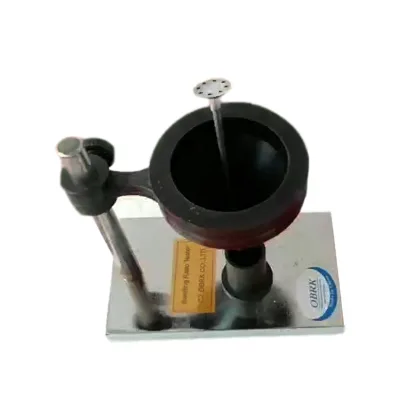
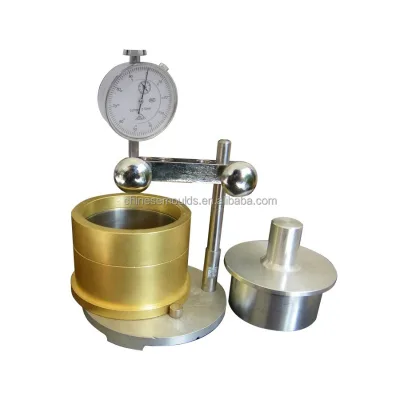
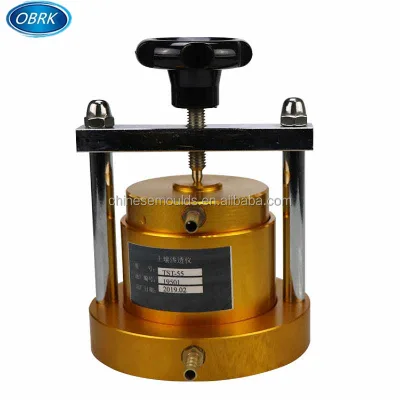
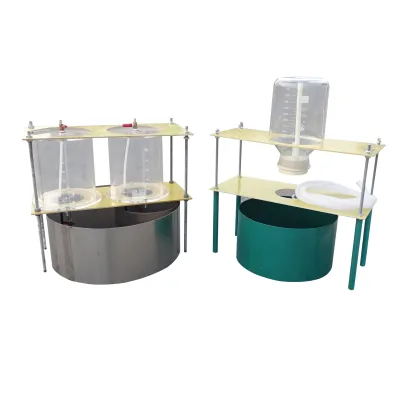
Portable Soil Infiltration Tester with Adjustable Falling Head & Calibration Certificate
$115.00 - $125.00
Moq: 1

Hangzhou Civit Instrument Equipment Co., Ltd.
- Trading Company
- China Zhejiang
- Lead time15 days
- Avg. response≤ 8h
Main productsSoil Aggregate Rock Testing Equipment, Cement Mortar Testing Equipment, Concrete Testing Equipment, Asphalt Testing Equipment, Scientific Lab Equipment, Survey Instrument
Main marketsSouth America,Africa,Southeast Asia/ Mideast

Zhejiang Tugong Instrument Co., Ltd.
- Combined
- China Zhejiang
- Lead time30 days
- Avg. response≤ 2h
Main productsUniversal Testing Machine, Testing Machine, Soil Testing, Field Test, Aggregate, Asphale Asphalt Mixture, Curing Controller Cabinet, Concrete, Rock, Cement
Main marketsSouth America,Africa,Southeast Asia/ Mideast

Kunshan Ast Optoelectronics Co., Ltd
- Verified by BV
- Combined
- China Jiangsu
- Lead time30 days
- Avg. response≤ 3h
Main productsAir Monitor Gas Monitor Cotroller, CO2 Temp Rh PAR Monitor
Main marketsDomestic,Europe,North America

Shijiazhuang Sanli Grain Sorting Machinery Co., Ltd.
- Verified by SGS
- Manufacturer
- China Hebei
- Lead time15 days
- Avg. response≤ 5h
Main productsSeed Processing Equipment, Seed Cleaning Machine, Seed Gravity Separator, Seed Coating Machine, Bucket Elevator, Destoner, Grains Polishing Machine, Seed Grading Machine, Seed Combined Cleaner, Agricultural Testing Instruments
Main marketsAfrica,Others(foreignTradeCapacity.exportBusinessCapacityMarketOther),Southeast Asia/ Mideast


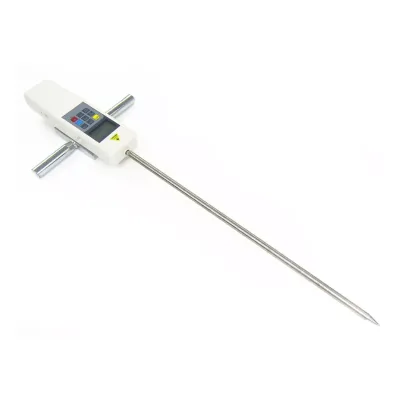
Digital Soil Hardness Tester Soil Compaction Instrument Measurement Depth: 0-450mm
$380.00 - $440.00
Moq: 1


Tubular Soil Profile Moisture Tester Soil Moisture and Temperature Analyzer
$2057.00 - $2200.00
Moq: 1


Qingdao Lubo Environmental Protection Group Co., Ltd.
- Verified by TUVRHEINLAND
- Manufacturer
- China Shandong
- Lead time15 days
- Avg. response≤ 9h
Main productsGas Detector, Water Quality Tester
Hebei Zhongke Beigong Testing Instrument Co., Ltd.
- Verified by TüVRheinland
- Manufacturer, Trading Company
- Lead time7 days
- Avg. response≤ 2h
Main productsSoil Direct Shear Apparatus, Mechanical Testing Machine, Asphalt Penetration Tester, Drilling Fluid Viscosity Meter, Wear Tester
Main marketsDomestic Market(60%), South America(15%), North America(10%)
Hangzhou Civit Instrument Equipment Co., Ltd.
- Verified by SGS Group
- Trading Company
- Lead time7 days
- Avg. response≤ 6h
Main productsUniversal Testing Machine, Compression Testing Machine, Soil CBR Tester, Asphalt Marshall Stability Tester, Lab Testing Sieve
Main marketsSoutheast Asia(40%), Eastern Europe(30%), Africa(20%)

Qingdao Zhongtongluda Testing Instrument Co., Ltd
- Verified by SGS
- Trading Company
- China Shandong
- Lead time30 days
- Avg. response≤ 1h
Main productsTest Equipment
Main marketsDomestic

Programmable Strain Controlled Unconfined Soil Compression Testing Machine Tester
$150.00 - $500.00
Moq: 1

Digital Display Strain Controlled Unconfined Soil Compression Analyzer Tester
$150.00 - $500.00
Moq: 1


Wuxi Serve Real Technology Co., Ltd.
- Verified by BV
- Trading Company,Manufacturer/Factory
- China Jiangsu
- Lead time15 days
- Avg. response≤ 2h
Main productsConstruction Material Test Equipment, Physical Property Testing Equipment, Quality Test Instruments, Oil Analysis Instruments, Coal & Coke Instruments, Analytical Instruments, General Lab Equipment, Agricultural Instruments
Main marketsSouth America,Eastern Europe,North America,Southeast Asia,Eastern Asia,Oceania,Western Europe,Africa

Weshine Electric Manufacturing Co., Ltd.
- Verified by SGS
- Combined
- China Hebei
- Lead time15 days
- Avg. response≤ 5h
Main productsTransformer Tester, Insulating Oil Tester, Hipot Tester, Insulating Tester, Circuit Breaker Tester, Relay and Protection Tester, Sf6 Gas Tester, Partial Discharge Tester, Battery Tester, Power Quality Analyzer
Main marketsSouth America,Southeast Asia/ Mideast

Ningbo Kejie International Trade Co., Ltd.
- Manufacturer
- China Zhejiang
- Lead time30 days
- Avg. response≤ 17h
Main productsWater Filtration, Filter, Filter Cartridge, RO Water Machine, PP Filter, Carbon Block
Main marketsAfrica,Australia,North America
Shanghai Total Industrial Co., Ltd.
- Verified by SGS
- Manufacturer/Factory
- China Shanghai
- Lead time0 days
- Avg. response≤ 22h
Main productsFeeder Clamp, Weather Shield Enclosure, Rubber Grommet, Hoisting Grip, Cable Entry, Flexible Jumper Cable, Cablen Ties, Terminal Lugs, Conduit and Fittings, Hole Saw






Comprehensive Sourcing Guide
Standard Penetration Test Soil Tester Supplier Concentration and Factory Types
When searching for a Standard Penetration Test Soil Tester, buyers will encounter suppliers concentrated in a small number of Chinese industrial regions. Results in this category show suppliers based in Hebei and Shaanxi, and both provinces appear repeatedly across geotechnical and civil engineering testing equipment listings. Hebei-based companies in these results list main products such as pile test equipment, concrete testing machines, universal testing machines, and soil testing equipment, while a Shaanxi-based supplier lists testing machines, bitumen and asphalt testing machines, soil lab testing machines, geotechnical testing equipment, and static penetration test products. This spread suggests that a single province search may miss relevant factories, so buyers should query both clusters and compare before shortlisting.
Company types also vary within these clusters. The Hebei supplier is registered as a combined company, while the Shaanxi entry is a trading company combined with a manufacturer or factory, operating its own brand. A combined or hybrid structure can matter for SPT testers because these instruments combine drop-weight mechanics, calibration-sensitive components, and electronic add-ons; a factory-trading hybrid may handle both production and export documentation in-house. Buyers should note that supplier type labels are self-declared on listing platforms, so the declared structure should be confirmed through business licenses or a third-party audit. When no location is displayed for a listing, buyers should ask directly for the factory address and verify it before assuming it belongs to one of the known clusters.
How to Verify Standard Penetration Test Soil Tester Suppliers
Verification starts with the platform-level credentials shown on the supplier profile. In the current results, one Hebei-based supplier is verified by TUVRHEINLAND, and the Shaanxi supplier carries CTI verification plus an ISO 9001 system certification. These third-party checks are meaningful starting points, but they do not certify individual instruments. For a standard penetration tester, buyers should additionally request the calibration certificate situation for the specific unit: one soil permeability listing from a Hebei supplier states that a calibration certificate is available, which signals the supplier understands laboratory traceability expectations. Ask the same question explicitly for the SPT hammer, anvil, and sampler assembly, since energy transfer depends on tolerances.
Product-level claims should be verified against recognized test conventions. Listings in these results describe SPT-type testers with a 63.5 kg drop weight and a 760 mm fall height, which matches the widely used SPT configuration, and one electronic model cites ISO9001 certification. Buyers should confirm which standard edition each instrument is built to, and ask for documentation showing hammer mass, drop mechanism, and rod dimensions such as the 42 mm outer diameter cited on one Shaanxi electronic SPT listing. Practical verification steps include requesting a video of the free-drop mechanism in operation, asking for the factory's quality control process for weight and height tolerances, and, for higher-value orders, arranging a third-party inspection before shipment. Verification of business registration, export history, and after-sales capability should precede any deposit payment.
What to Compare Across Standard Penetration Test Soil Tester Suppliers
Comparison across suppliers should be structured around the attributes actually displayed in listings, since not every supplier shows every field. In the current results, one Hebei supplier shows a response time of about 3.25 hours and a lead time of 15 days, while the Shaanxi supplier shows roughly 3.18 hours response speed. One Shaanxi product listing states a delivery time of 7 days for a permeability tester, which may not extend to SPT vehicles or heavier machines. MOQ is another visible dimension: an SPT tester listing shows a minimum order quantity of 1, which lowers the barrier for pilot purchases. Buyers should record which of these fields each candidate supplier actually displays and request the missing values in writing rather than assuming they match.
Beyond logistics fields, compare technical and commercial substance. R&D capacity labels differ: the Hebei supplier declares ODM and OEM capability, while the Shaanxi supplier declares OEM capability under its own brand. Price ranges in these results vary widely, from roughly 1,250 to 1,650 USD for a manual SPT tester, about 9,800 to 10,600 USD for an electronic SPT machine intended for CPT vehicle use, and 3,600 to 3,900 USD for a non-nuclear density tester, so buyers should compare like-for-like product classes, not headline prices. Also compare main product focus, packaging, customization availability, and after-sales terms such as engineer support, which one electronic SPT listing explicitly offers. Build a side-by-side matrix before contacting suppliers.
Common Standard Penetration Test Soil Tester Sourcing Risks
The most common risk in this category is specification drift between listing and delivered instrument. A standard penetration tester is defined by narrow tolerances on hammer mass and drop height; several listings here cite the 63.5 kg weight and 760 mm fall height, but buyers must confirm these values appear in the purchase contract, not only in marketing copy. A related risk is mixing up product classes: these results include manual SPT testers, electronic SPT machines for vehicle-mounted CPT use, non-nuclear density gauges, permeability testers, and consolidation apparatus, all sold by the same suppliers. Ordering the wrong class because of similar naming is a real and costly mistake, especially since prices range from under two thousand to over ten thousand dollars.
Certification and support risks follow. A supplier's platform verification or ISO 9001 system certification does not guarantee that each instrument ships with calibration or conformity documents, so certificates must be itemized per order. One listing shows a Tianjin origin while the company is registered in Hebei, which is a reminder that production sites, packing points, and registered addresses can differ and affect inspection logistics. Lead times quoted on cheap peripheral products may not apply to heavy testers; a 15-day company-level lead time and a 7-day product-level delivery claim should both be confirmed for the specific SPT model. Finally, wooden-box export packing is standard in these listings, but buyers shipping to regions with strict ISPM-15 enforcement should verify treatment documentation before booking freight.
Standard Penetration Test Soil Tester Regional Sourcing and Logistics
Regional sourcing in this category currently points to two Chinese provinces. Hebei-based suppliers in these results offer manual SPT testers, non-nuclear density testers, and a broad soil and concrete testing range, with packing described as wooden boxes or engineer boxes and product origins cited as Hebei and, in one case, Tianjin. Shaanxi-based suppliers offer electronic SPT testers designed for CPT vehicle integration, permeability testers, and consolidation instruments, with export wooden case packing and a product footprint listed as large as 1.3 by 2.1 by 2.1 meters for the vehicle-oriented machine. Buyers planning mixed orders should consider splitting between provinces only if consolidation costs do not erase unit savings.
Logistics planning should account for the physical profile of the equipment. Manual SPT kits are compact enough for standard wooden-box export, while electronic and vehicle-mounted testers require oversized crating, and one listing states a cubic-meter-scale packing standard. Buyers should request exact packed dimensions and gross weights per model early, because freight class, container utilization, and inland haulage depend on them. Suppliers in these results show company-level lead times around 15 days and response times near three hours, which supports quick quoting, but heavy machines may need longer production windows than the listing suggests. Port distance, seasonal capacity, and the supplier's experience with export documentation for testing instruments should be part of the regional comparison, and buyers without in-house logistics should confirm Incoterms in writing before placing the order.
Standard Penetration Test Soil Tester Commercial Terms and Order Planning
Commercial terms in this category can be planned around the attributes visible in listings. Price bands run from roughly 1,250 to 1,650 USD for a manual SPT tester, 3,600 to 3,900 USD for a non-nuclear density tester, and 9,800 to 10,600 USD for an electronic SPT machine, so budget expectations should be set by product class. A minimum order quantity of 1 on the SPT listing means buyers can validate a supplier with a single unit before committing to laboratory-scale orders. Customization is declared as available on multiple listings, with OEM and ODM support offered by the two profiled suppliers, which opens the door to branded panels, voltage adaptation, and labeling—but customization clauses must be written into the contract with acceptance criteria.
Order planning should sequence risk reduction. Start with a sample or single-unit order for manual testers, request calibration and packing documentation with that first shipment, and reserve larger electronic or vehicle-mounted purchases for suppliers who have passed inspection. Confirm payment protection options offered by the platform, such as escrow-style arrangements, since these reduce deposit risk on high-value instruments. Build the timeline backwards from project need: allow for the quoted lead time, factory testing, packing, and freight, and add buffer for oversized cargo. Negotiate after-sales terms explicitly, including engineer availability, spare parts for hammers and rods, and response commitments. Finally, keep a written record of every specification cited in listings, because contract documents, not screenshots, govern disputes.
FAQs
What is the price range for standard penetration testers?
Prices for standard penetration testers typically range from $1,250 to $10,600 depending on the model and automation level. Basic manual units start around $1,250, while electronic versions with digital displays and motorized features can cost up to $10,600. Buyers should check specific product listings for exact pricing based on customization needs.
What are the standard specifications for SPT hammers?
Standard SPT hammers generally weigh 63.5kg and drop from a height of 760mm. These specifications ensure consistent energy delivery for soil testing. Some electronic models may offer variable speeds, such as 15 strikes per minute, but the core weight and fall height remain standard for accurate geotechnical data collection.
Do suppliers offer OEM customization for these testers?
Yes, many suppliers offer OEM and ODM customization services for standard penetration testers. Buyers can request custom branding, specific power supplies, or tailored packaging solutions. Customization is widely available, allowing businesses to adapt equipment to their specific operational requirements or branding guidelines without compromising on testing accuracy.
What certifications are common for soil testing equipment?
Common certifications for soil testing equipment include ISO 9001, CE, and ISO. These certifications indicate compliance with international quality and safety standards. Buyers should verify specific product certificates, as some models explicitly list ISO and CE marks, ensuring the equipment meets regulatory requirements for civil engineering and geotechnical applications.
What is the typical lead time for these products?
Typical lead times for standard penetration testers range from 7 to 15 days. Some suppliers offer faster delivery for specific models, while others may require up to 15 days for production and shipping preparation. Buyers should confirm exact lead times with suppliers, as delivery schedules can vary based on order volume and customization requirements.
Where are these testers primarily manufactured?
These testers are primarily manufactured in China, with key production hubs in Hebei and Shaanxi provinces. Some suppliers also list origins in Tianjin. Buyers can filter results by location to find suppliers in specific regions, ensuring proximity to manufacturing centers for potentially faster shipping and easier communication during the sourcing process.