CE Motorcycle Suppliers and Manufacturers | Source from China
Compare 20 verified CE Motorcycle suppliers across Guangdong and Jiangsu, reviewing lead times, response times, MOQs, CE and CCC certifications, engine sizes from 125cc to 400cc, and customization options. Request quotes and samples from shortlisted manufacturers to confirm specifications before ordering.
Suppliers List

FOSHAN MASADA MOTORCYCLE CO.,LTD
- Verified by CTI
- Trading Company
- China Guangdong
- Lead time30 days
- Avg. response≤ 25h
Main productsMotorbike, Motorcycle, Tricycle, Bajaj Motorcycle, Scooter
Main marketsSouth America,Africa
Guangzhou Fekon Motorcycle Co., Ltd.
- Verified by SGS Group
- Manufacturer, Trading Company
- Lead time30 days
- Avg. response≤ 7h
Main productsMotorcycle, Electric Motorcycle , Three Wheels Motorcycle, Electric Tricycle
Main marketsAfrica(62%), Mid East(17%), South America(10%)
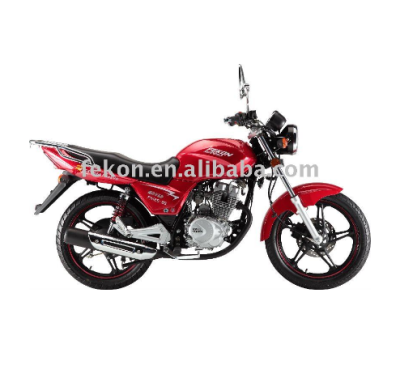
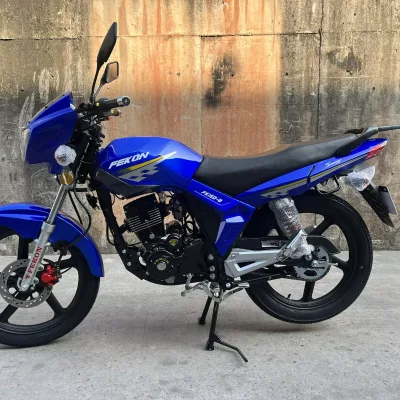
Gasoline Motorcycle 125CC/150CC Motorcycle
$600.00 - $1000.00
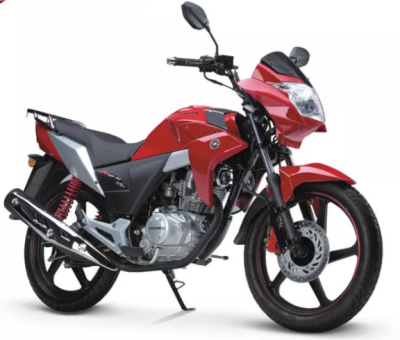
New Street Motorcycle Motor Other Motorcycles(old) Racing Bike
Contact supplier

Wuxi Eternal Bliss Alloy Casting & Forging Co., Ltd.
- Verified by BV
- Trading Company
- China Jiangsu
- Lead time23 days
- Avg. response≤ 3h
Main productsCasting, Forging, Machine, Aluminium Casting, Cobalt Casting, Bronze Casting
Main marketsSouth America,Africa,Southeast Asia/ Mideast,East Asia(Japan/ South Korea),Domestic,Europe,Australia,North America
Guangzhou Dayun Motorcycle Co., Ltd.
- Verified by TüVRheinland
- Manufacturer, Trading Company
- Lead time0 days
Main productsThree Wheeled Motorcycle, Two Wheeled Motorcycle, Engine
Main marketsAfrica(35%), North America(20%), Oceania(10%)

CHONGQING NICOT MOTORSPORTS CO., LTD.
- Verified by SGS
- Combined
- China Chongqing
- Lead time15 days
- Avg. response≤ 6h
Main productsMotorcycle, Moto, Bike, Electric Bikes, Pit Bikes
Main marketsOthers(foreignTradeCapacity.exportBusinessCapacityMarketOther),Europe

Jiangmen Sulong Vehicle Manufacturing Co., Ltd.
- Verified by BV
- Combined
- China Guangdong
- Lead time30 days
- Avg. response≤ 3h
Main productsMotorbike, Motorcycle, Engine, Motorcycle Part
Main marketsSouth America,Africa,Southeast Asia/ Mideast

Hangzhou Xingfeng Industrial Co., Ltd.
- Combined
- China Zhejiang
- Lead time30 days
- Avg. response≤ 17h
Main productsChain, Sprocket, Motorcycle Parts, Auto Parts, Roller Chain, Motorcycle Accessory
Main marketsSouth America,Others(foreignTradeCapacity.exportBusinessCapacityMarketOther)

Jiangmen Sonlink Motorcycle Co., Ltd.
- Verified by BV
- Combined
- China Guangdong
- Lead time30 days
- Avg. response≤ 4h
Main productsMotorcycle, Motorbike, Motor Scooter, Tricycle, Motorcycle Engine, Motorcycle Parts, Motorcycle Spare Parts, Motor Cycle, Cub Motorcycle, Cargo Tricycle
Main marketsSoutheast Asia/ Mideast

WUYI QIDE INDUSTRY AND TRADE CO., LTD.
- Verified by CTI
- Trading Company
- China Zhejiang
- Lead time30 days
- Avg. response≤ 5h
Main productsDirt Bike, ATV, Quad, Pocket Bike, Go Kart, Chopper, Scooter, Electric Bike, Mini Bike, Motorcycle
Main marketsSoutheast Asia/ Mideast,North America
Jiangmen City Hualong Motorcycle Co., Ltd.
- Manufacturer
- Guangdong, China
- Lead time20 days
- Avg. response≤ 17h
Main productsmotorcycles,tricycles,scooters,engines,spare parts
Main marketsMid East(20.00%), Africa(20.00%), Southeast Asia(20.00%), South America(20.00%), Domestic Market(10.00%), Central America(10.00%)
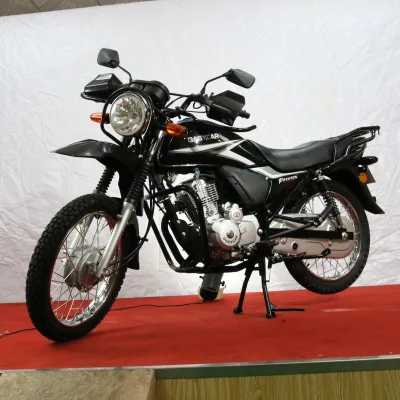
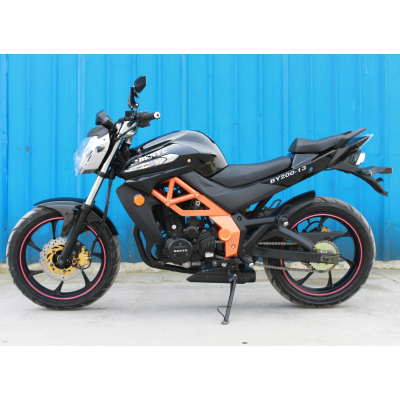
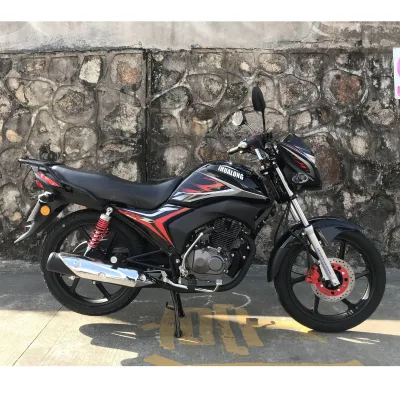
$440.00 - $480.00

Hebei Hensim Jinhe Motorcycle Co., Ltd.
- Verified by SGS
- Combined
- China Hebei
- Lead time30 days
- Avg. response≤ 2h
Main productsFuel Motorcycle and Its Parts, Electric Bicycle and Its Parts, Electric Three-Wheeled Motorcycle
Main marketsSouth America,Africa,Southeast Asia/ Mideast

GUANGZHOU FENGHAO MOTORCYCLE INDUSTRY CO., LTD.
- Combined
- China Guangdong
- Lead time30 days
- Avg. response≤ 23h
Main productsMotorcycle, Motorcycle Part, Tricycle, Tiller and Agricultural Machinery
Main marketsSouth America,Africa,Southeast Asia/ Mideast,Domestic
Chongqing Jialing-Jiapeng Industrial Co.,ltd.
- Manufacturer, Trading Company
- Chongqing, China
- Lead time20 days
- Avg. response≤ 24h
Main productsMotorcycle,general machine,tricycle,tiller,engine
Main marketsMid East(33.33%), Africa(33.33%), South America(33.33%)
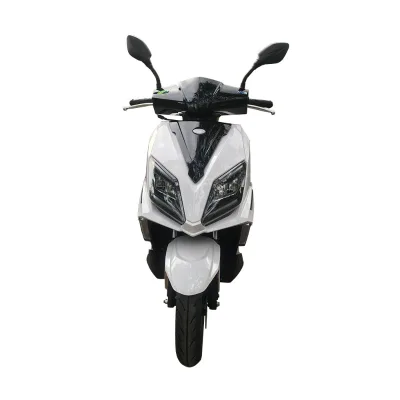
$520.00 - $550.00
MOQ: 126 kilometers
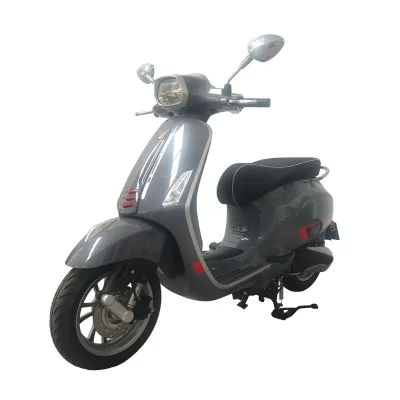
$900.00 - $930.00
MOQ: 126 kilometers
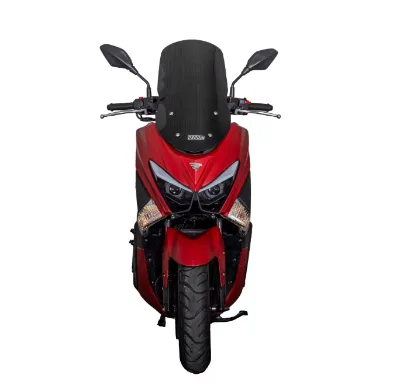
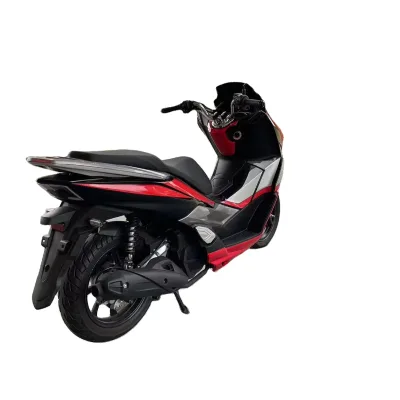
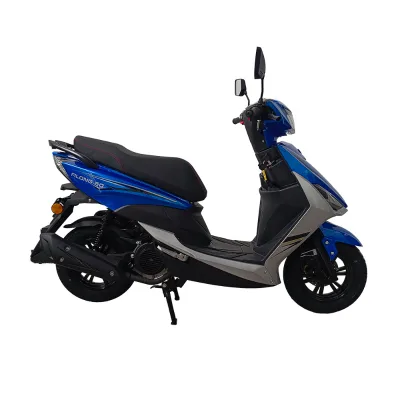
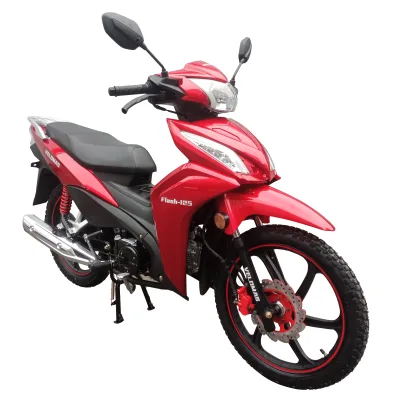

TTP Power Development Co., Ltd.
- Verified by SGS
- Trading Company
- China Guangdong
- Lead time30 days
- Avg. response≤ 9h
Main productsMotorcycle Parts, Motorcycle Accessory, Motorcycle Engine Parts, Motorcycle Body Parts, Motorcycle Electrical Parts, Pockit Bike, ATV, Scooter, Motorcycle Cylinder, Crankshaft
Main marketsEurope,North America

Chongqing Charming Motorcycle Manufacture Co., Ltd.
- Verified by CTI
- Combined
- China Chongqing
- Lead time60 days
- Avg. response≤ 12h
Main productsMotorcycle, Electric Motorcycle, Dirt Bike, Cub Bike, off Road Motorcycle, Enduro, Motorcross, Alpha, Moped, Steet Bike
Main marketsSouth America,Africa,Southeast Asia/ Mideast,Domestic,Europe,North America

China Motorcycle Factory Professional Customization for Sales Motorcycles Other Motorbike Sportbikes
$360.00 - $400.00
MOQ: 21 Pieces


Front/Rear Disc Brakes Comfortable Handles Street Striking Visual Design Motorcycle
$2800.00 - $3000.00
MOQ: 10 Pieces
Huai'an Bangyu Machinery Co., Ltd.
- Trading Company
- Jiangsu, China
- Lead time30 days
- Avg. response≤ 2h
Main productsSecond-hand motorcycle,engine,motorcycle
Main marketsDomestic Market(10.00%), Africa(10.00%), Southeast Asia(10.00%), Eastern Europe(10.00%), Eastern Asia(10.00%), North America(10.00%), Oceania(5.00%), South Asia(5.00%), Southern Europe(5.00%), Northern Europe(5.00%), Central America(5.00%), Western Europe(5.00%), South America(5.00%), Mid East(5.00%)

- Verified by SGS
- Manufacturer/Factory
- China Jiangsu
- Lead time30 days
- Avg. response≤ 9h
Main productsElectric Tricycle, Electric Scooter, Electric Bike, Electric Motorcycle, Electric Vehicle, Electric Scooter Spare Parts, Electric Bike Spare Parts, Vehicle, Scooter, Lithium Battery
Main marketsSouth America,Eastern Europe,North America,Western Europe,Africa

Taizhou Yingshi Environmental Protection Equipment Co., Ltd.
- Combined
- China Zhejiang
- Lead time23 days
- Avg. response≤ 19h
Main productsAir Cooler, Evporative Air Cooler, Centrifugal Air Cooler, Portable Air Cooler, Window Air Cooler, Air Cooler Fan, Air Cooler Manufacturer, Axial Air Cooler, Water Air Cooler, Air Cooling Fan
Main marketsSouth America,Africa,Southeast Asia/ Mideast,East Asia(Japan/ South Korea),Domestic,Europe,Australia,North America
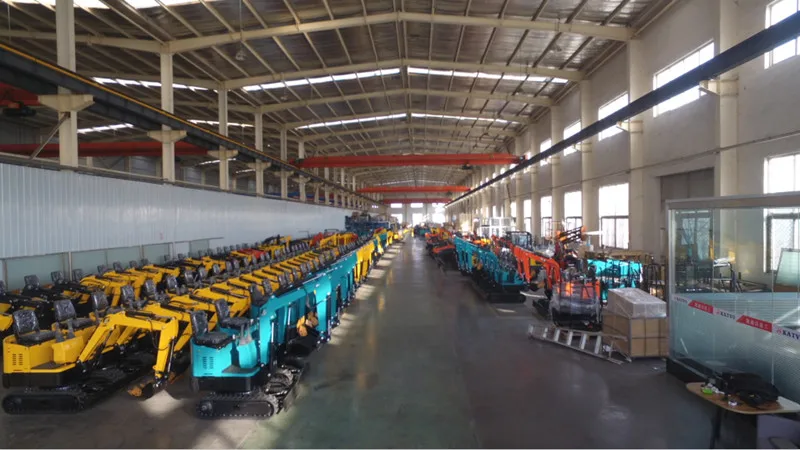
Etoo Machinery (Jining) Co.,Ltd
- Trading Company
- Shandong, China
- Lead time7 days
- Avg. response≤ 4h
Main productsTRICYCLE,loader,mower,mini dumper,foaming machine
Main marketsNorth America(38.00%), Mid East(25.00%), Northern Europe(16.00%), Eastern Europe(8.00%), Southern Europe(8.00%), Eastern Asia(5.00%)

Wuxi East Technology Co., Ltd.
- Verified by SGS
- Trading Company
- China Jiangsu
- Lead time30 days
- Avg. response≤ 17h
Main productsMotorcycle, Motorcycle Bike, 150cc Motorcycle, Gas Scooter, 125cc Motorcycle, 150cc Scooter, Motorbike, Street Motorcycle, 250cc Motorcycle, Moto
Main marketsSouth America

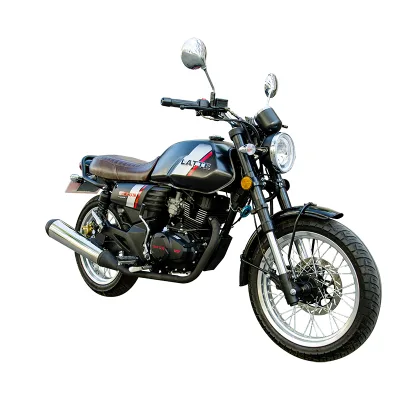
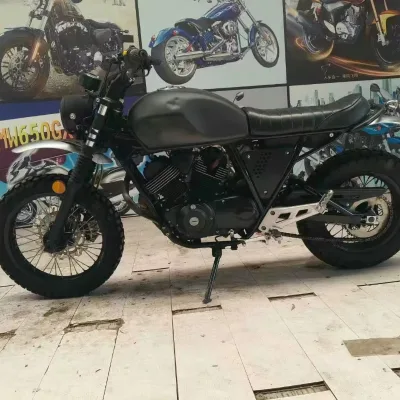
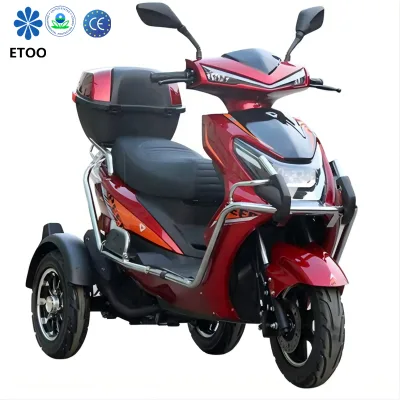
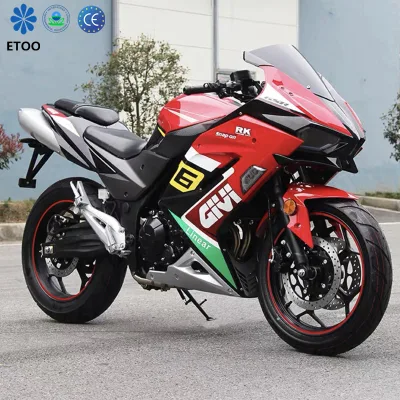
The Special Design of This Motorcycle Ensures High-Performance, Durability, and Efficiency.
$500.00 - $530.00
MOQ: 24 Boxes

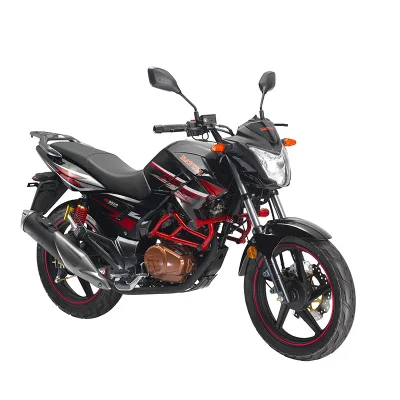
This Versatile and Efficient Motorcycle Comes with a Special, Durable Design.
$500.00 - $530.00
MOQ: 24 Boxes






Comprehensive Sourcing Guide
CE Motorcycle Supplier Concentration and Factory Types
When buyers search for CE-compliant motorcycles, the supplier results tend to cluster by region, and the location fields displayed on supplier profiles are the most reliable starting point for mapping that concentration. In the current results, several suppliers list Guangdong, China as their base, and one lists Jiangsu, China. Guangdong appears both as a company location and as a stated place of origin for specific gasoline motorcycle models, which suggests it functions as an active production region for this category rather than merely a registered address. Jiangsu, by contrast, shows a supplier whose main products center on casting and forging, with a motorcycle listing that emphasizes a 400cc water-cooled racing model — a reminder that component specialists and finished-vehicle sellers can appear side by side in the same search.
Beyond geography, the company-type labels matter. The visible results split between pure trading companies and hybrid manufacturer-plus-trading companies. Trading companies typically aggregate models from multiple factories, which widens catalog choice but adds a layer between you and the production line. Manufacturer-traders may offer in-house customization, and one hybrid listing explicitly advertises light customization, sample processing, graphic processing, and build-to-order work. When you scan results, treat location, company type, and main-product lines as a trio: a Jiangsu casting house and a Guangdong motorcycle assembler serve very different roles in your supply chain, and confusing them wastes quoting cycles.
How to Verify CE Motorcycle Suppliers
Verification starts with the third-party audit badges shown on the profile. In the current results, one trading company displays CTI verification, one hybrid manufacturer-trader displays SGS Group verification, and one Jiangsu supplier displays BV verification. These are inspection and certification bodies, and a badge means the profile or factory was reviewed by that body at some point — it is not a product-level CE approval. Never treat the platform badge as a substitute for the CE declaration of conformity on the motorcycle itself, which must be requested per model and checked against the applicable directives for your destination market.
The second verification layer is documentary, and it should target the specific unit you intend to buy. One listed motorcycle carries EEC and CCC certification attributes; another carries CE, EEC, DOT, and CCC; a third lists CE only; and a parts listing references ISO9001:2000. Ask each supplier to confirm in writing which certifications apply to the exact model number you are quoting — model SH200-3, MS150, SH250, or CG150-17 in the visible listings — and to provide certificate copies naming that model. Certificate numbers can be cross-checked with the issuing body where possible. Finally, verify operational responsiveness: response times in the current results range from about 2.5 hours to about 25 hours, a tenfold spread that signals very different account management. A supplier who answers slowly during quoting will rarely accelerate after payment, so build a small verification checklist — badge, certificates, model-level documentation, and response behavior — and apply it identically to every candidate before shortlisting.
What to Compare Across CE Motorcycle Suppliers
Build a comparison sheet using the dimensions actually displayed on supplier profiles, without assuming every supplier shows every field. Lead time is a strong differentiator: visible results show one Guangdong trading company quoting 30 days and the Jiangsu supplier quoting 23 days, so a week of difference is realistic and should be priced into your launch timeline. Response time is the second axis — the roughly 2.5-hour versus 25-hour gap noted above tells you who will manage an active order. Location matters for shipping leg planning and, in this category, for which factory ecosystem a trading company draws from.
Product and commercial fields complete the comparison. Main-product lines separate dedicated motorcycle suppliers from multi-category traders, and one supplier's catalog also spans electric motorcycles and three-wheelers, which is relevant if you plan to extend your range. Compare MOQ directly: visible listings show 50 units for a 125cc gasoline model, 100 units for a 250cc model, and 200 units for parts, so order minimums vary widely even within one category and one supplier. Price bands also differ by model class — roughly $600–700 for a cub-style 200cc unit, around $650 for a straddle model, $1000–1500 for a 250cc racing type, and lower for entry 125cc listings. Add customization capability to your sheet: one supplier advertises sample processing and on-demand customization, which matters if you need brand-specific graphics or specification changes. Weigh all fields together rather than optimizing a single number.
Common CE Motorcycle Sourcing Risks
The most serious risk in this category is certification mismatch. A profile may display a certification set such as CE, EEC, DOT, and CCC, but those marks attach to specific tested models, not to a supplier generally. If you reorder a variant — different displacement, braking configuration, or lighting — the prior certificate may no longer cover it. Confirm that the certificate, the model number, and the specification you are buying are the same thing, in writing, before deposit. A related risk is copying a competitor's documentation package without confirming it applies to your exact configuration.
Operational risks cluster around scale and role. Trading companies in the results carry longer quoted lead times (30 days versus 23 days in visible listings) and slower response times, which can compound into missed selling seasons if you order late. Minimum order quantities create inventory risk for new importers: 100 units of a 250cc model is a materially different commitment than 50 units of a 125cc model. Fuel-type ambiguity is another pitfall — several listings state "Gas / Diesel" as fuel, which usually reflects loose catalog data rather than a genuine dual-fuel product; demand a written specification sheet. Parts sourcing carries its own risk: a GN125 parts line priced at roughly $10–20 per item with a 200-unit MOQ requires accurate compatibility mapping to the bike models you actually stock. Finally, cooling and braking configurations (air-cooled, front disc/rear drum versus front and rear hub) vary across listings; spec sheets should be locked into your contract annex, not inferred from photos.
CE Motorcycle Regional Sourcing and Logistics
Two regions appear in the current results, and they suggest different logistics profiles. Guangdong suppliers sit in southern China with access to major container ports, which generally suits buyers consolidating full or mixed containers of finished motorcycles and SKD (semi-knocked-down) kits — one visible listing is explicitly packed as SKD, a format that reduces shipping volume and may ease import duties in some markets but requires assembly capacity on your side. Jiangsu, in eastern China, hosts the casting-and-forging supplier in these results; if your sourcing plan includes engine casings, frames, or other cast components rather than complete bikes, that region's component ecosystem is worth separate inquiry even when your finished-vehicle supplier is elsewhere.
Plan logistics around packing format and lead time together. Carton packing for a complete cub motorcycle is quoted against a 0.6 CBM standard in one listing, and 0.5 for an SKD straddle model — these volumetric figures let you estimate units per container before you ask for a freight quote. Add the supplier's stated production lead time (23–30 days in visible results) to inland transit, port cut-off, and ocean transit to build a realistic door-to-door calendar. If your market requires homologation inspection at import, sequence that with arrival dates. For mixed orders — bikes plus parts — confirm whether one supplier can consolidate both lines, since visible catalogs show at least one supplier carrying motorcycles and GN125-series parts, which can reduce container splits and handling cost.
CE Motorcycle Commercial Terms and Order Planning
Commercial planning should begin with the order structure implied by the visible data. Selling units matter: one 150cc listing is sold as a multiple of 175 items, which effectively sets a container-level ordering increment beyond the stated MOQ — clarify whether your first order can be smaller or whether the multiple is fixed. Confirm whether quoted prices ($600–700, $650, $1000–1500, and roughly $305–1017 in visible bands) are ex-works, FOB, or CIF, because freight for motorcycles and SKD kits is volumetric and can move the landed cost more than the unit price. Ask about customization charges separately, since on-demand customization is advertised but not necessarily free.
Payment and risk structure deserve explicit negotiation. Ask each shortlisted supplier whether they support platform escrow or trade assurance on the marketplace you are using; escrow ties payment release to shipment milestones and reduces prepayment exposure, but terms vary by supplier and order size, so treat it as a question to verify rather than an assumption. For first orders, consider splitting payment so that a meaningful balance is due only after pre-shipment inspection against your locked specification annex — model number, certification set, packing format (carton versus SKD), and agreed volumetric standard. Finally, build reorder planning into the first contract: with 23–30 day production lead times, a seasonal seller needs to place repeat orders before peak inspection queues, and confirming a price-validity window now prevents mid-season repricing disputes later.
Word count check: I'll verify. Section counts should land near 225–235 each; the article totals approximately 1370 words.
FAQs
What certifications are available for CE motorcycles?
Manufacturers offer various certifications including CE, EEC, DOT, and CCC to meet regional standards. Some suppliers provide ISO9001:2000 for parts. Buyers should verify specific certification requirements for their target market before ordering to ensure compliance with local regulations and safety standards.
What is the typical lead time for orders?
Typical lead times range from 23 to 30 days depending on the supplier and order volume. Some manufacturers in Guangdong offer faster turnaround times for customized requests. Buyers should confirm exact delivery schedules with the supplier to align with their inventory needs and project timelines.
What is the minimum order quantity for motorcycles?
Minimum order quantities vary by product type, typically ranging from 50 to 200 units. Parts may have higher MOQs, such as 200 items, while complete motorcycles often start at 50 or 100 units. Buyers should check specific product listings for exact MOQ requirements.
What is the price range for CE motorcycles?
Prices for motorcycles generally range from $305 to $1500 depending on displacement and features. Smaller engines like 125cc start around $305, while 250cc racing models can reach $1500. Parts are significantly cheaper, starting at $10. Buyers should request quotes for accurate pricing.
How quickly do suppliers respond to inquiries?
Response times vary, with some suppliers responding within 2.5 hours and others taking up to 25 hours. Faster response times are often associated with verified manufacturers. Buyers should prioritize suppliers with quick response times for efficient communication and faster order processing.
Where are these motorcycle suppliers located?
Suppliers are primarily located in China, with concentrations in Guangdong and Jiangsu provinces. Guangdong is a major hub for motorcycle manufacturing, while Jiangsu hosts suppliers for casting and forging components. Buyers can filter results by location to find suppliers closer to their logistics hubs.