Taiwan Service Cart Suppliers and Manufacturers
Explore 25 verified suppliers offering Taiwan Service Cart options with dimensions, materials, and pricing details. Buyers can compare response times, lead times, and certifications like NSF or ISO 9001 before requesting quotes; review the available evidence before requesting comparable quotations from suitable candidates.
Suppliers List
Jiangmen Goodman Cleaning Supplies Co., Ltd.
- Verified by Intertek
- Manufacturer, Trading Company
- Lead time45 days
- Avg. response≤ 4h
Main productsCleaning Bucket, Plastic Box, Service Trolley, Serving Tray, Trash Can
Main marketsNorth America(76%), Mid East(6%), South America(4%)

Guangzhou Sunrry Kitchen Equipment Co., Ltd.
- Verified by CTI
- Trading Company,Manufacturer/Factory
- China Guangdong
- Lead time30 days
- Avg. response≤ 3h
Main productsCommercial Kitchen Solutions, Turnkey Kitchen Solutions, Catering Equipment, Restaurant Equipment, Commercial Refrigeration Equipment, Commercial Bakery Equipment, Commercial Cooking Equipment, Stainless Steel Equipment, Commercial Food Prep Equipment, Commercial Kitchen Equipment
Main marketsSouth America,Eastern Europe,Mid East,North America,Southeast Asia,Eastern Asia,Oceania,Western Europe,Africa

Guangzhou Nantian Sources Co., Ltd.
- Manufacturer/Factory
- China Guangdong
- Lead time15 days
- Avg. response≤ 6h
Main productsKitchen Equipment, Kitchenware, Food Machine, Kitchen Appliance, Glassware, Food Machinery, Bakery Equipment, Dinnerware, Kitchen Utensils, Food Processor
Main marketsSouth America,Mid East,Southeast Asia,Eastern Asia,Oceania,Africa
Ancheng Hardware Manufacturing Co., Ltd.
- Verified by SGS
- Trading Company
- China Guangdong
- Lead time30 days
- Avg. response≤ 4h
Main productsKitchenware, Restaurant Equipment, Catering Equipment
Main marketsAfrica,Southeast Asia/ Mideast,Europe,Australia,North America
Shandong Wilk Kitchen Equipment Co., Ltd
- Verified by SGS
- Trading Company
- China Shandong
- Lead time15 days
- Avg. response≤ 1h
Main productsStainless Steel Worktable, Stainless Steel Sink, Stainless Steel Shelf, Commercial Rice Steamer, Commercial Gas Stove, Refrigeration Equipment, Western Kitchen Equipment, Bakery Equipment, Cleaning&Sterilizing Equipment, Changing Room Equipment
Main marketsSoutheast Asia/ Mideast


Hotel Trolley Service Cart Service Trolley Hotel Supplies Commercial Equipment
$50.00 - $140.00
Moq: 10

High-Quality Cart Are Used for Waste Cleaning Hotel Kitchen and Restaurant Services
$50.00 - $140.00
Moq: 10

Jiangmen Xinhaohui Kitchenware Manufacturing Co., Ltd
- Verified by BV
- Combined
- China Guangdong
- Lead time15 days
- Avg. response≤ 3h
Main productsPot
Main marketsSoutheast Asia/ Mideast,Europe

Nanjing Toutru Trading Co., Ltd.
- Trading Company,Manufacturer/Factory
- China Jiangsu
- Lead time45 days
- Avg. response≤ 23h
Main productsHand Tool
Main marketsSouth America,Eastern Europe,Western Europe,Africa
Henan Peisa Machinery Co., Ltd.
- Verified by BV
- Combined
- China Henan
- Lead time15 days
- Avg. response≤ 1h
Main productsTransfer Cart, Coil Transfer Cart, Electric Transfer Trolley, Die Cars, Mold Cart, Mold Transfer Cart, Ladle Cart, Ladle Transfer Cart, Steerable Transfer Trolley, Rail Cart
Main marketsDomestic,Europe,North America
Jiangmen Huazhimei Kitchenware Co., Ltd.
- Verified by Intertek
- Manufacturer, Trading Company
- Lead time30 days
- Avg. response≤ 4h
Main productsFood Storage Box, Insulated Food Carrier, Drink Dispensers, Cleaning Bucket, Serving Trolley
Main marketsNorth America(30%), Northern Europe(20%), South America(10%)

Beijing Tianyuan Rongli Technology Co., Ltd.
- Verified by SGS
- Trading Company
- China Beijing
- Lead time15 days
- Avg. response≤ 2h
Main productsMelamine Board, Chipboard, MDF, Solid Wood Pellet Board, Custom-Made Furniture, Dining Room Furniture, Living Room Furniture, Steel-Wood Furniture
Main marketsSoutheast Asia/ Mideast

ZHENGZHOU YITUO MACHINERY CO., LTD.
- Verified by BV
- Combined
- China Henan
- Lead time30 days
- Avg. response≤ 3h
Main productsFood Truck, Food Trailer, Food Cart, Airstream Food Trailer, Ice Cream Bicycle, Electric Food Truck, Mobile Kitchen, Food Kiosk, Food Van, Restaurant Car
Main marketsEurope,Australia,North America

Qingdao Tianhua Yihe Foundry Factory
- Verified by TUVRHEINLAND
- Manufacturer/Factory
- China Shandong
- Lead time23 days
- Avg. response≤ 1h
Main productsSheet Metal Fabrication, Metal Welding Parts, Steel Fabrication Parts, CNC Machining Parts, Cast Iron/Steel/Stainless Steel/Aluminum Casting, Bollard, Agricultural Machinery Parts, Pump Parts, Auto Parts, Machinery Parts
Main marketsSouth America,Eastern Europe,Mid East,North America,Southeast Asia,Eastern Asia,Oceania,Western Europe,Africa
Guangzhou Winner Electric Vehicle Co., Ltd
- Verified by TUVRHEINLAND
- Manufacturer
- China Guangdong
- Lead time15 days
- Avg. response≤ 2h
Main productsGolf Cart, Sightseeing Bus & Car, Fire Truck, Food Trailer, Dump Truck, Tractor Truck, Garbage Truck, Autopartes
Wald Import And Export (jiangxi) Co., Ltd.
- Verified by Intertek
- Trading Company
- Lead time0 days
- Avg. response≤ 1h
Main productsHoneycomb Light, Nine-palace Lattice Lamp, Mechanical Position Light, Car Cleaning Tools
Main marketsSoutheast Asia(50%), South America(15%), North America(15%)
Tongling Dingyan Import and Export Trading Co., Ltd.
- Trading Company
- China Anhui
- Lead time0 days
- Avg. response≤ 2h
Main productsOutdoor Fryer & Burners, Turkey Fryer, Seafood Pot Kit, Burners
Xinxiang Better Smart Transport Equipment Co., Ltd.
- Verified by SGS
- Combined
- China Henan
- Lead time30 days
- Avg. response≤ 3h
Main productsFerry Transfer Cart, Rail Transfer Cart, Transfer Cart, Trackless Transfer Cart, Coil Transfer Cart, Die Cart, Rail Flaw Detection Cart, Industrial Trailer
Main marketsEurope

Qingdao Free Trade Zone Health International Co., Ltd.
- Trading Company
- China Shandong
- Lead time23 days
- Avg. response≤ 21h
Main productsWooden Dolly, Mover Dolly, Furniture Moving Dolly, Tool Carts, Piano Skid Boards, Hand Trolly, Panel Mover Cart, Swivel Casters for Mover Dolly, Ferrule Loop Insert, Glass Beverage Dispensers
Main marketsSouth America,Australia,North America

Weifang Sichuang Machinery Co., Ltd.
- Verified by SGS
- Trading Company,Manufacturer/Factory
- China Shandong
- Lead time23 days
- Avg. response≤ 3h
Main productsMower, Green Roller, Turf Brush, Aerator, Top Dresser, Grass Seeder, Turf Sweeper, Big Roll Harvester, Turf Sprayer, Line Marker
Main marketsSouth America,Eastern Europe,Mid East,North America,Southeast Asia,Eastern Asia,Oceania,Western Europe,Africa

Shenzhen Winan Industrial Development Co., Ltd.
- Verified by TUVRHEINLAND
- Manufacturer/Factory
- China Guangdong
- Lead time23 days
- Avg. response≤ 8h
Main productsFoam Bladder Tank, Fire Monitor, Fire Hydrant, Sprinkler, Foam Equipment, Valves, Foam Generater Foam Making, Fire Hose Reel, Foam Generator, Fire Fighting Foam
Main marketsMid East,North America,Southeast Asia,Eastern Asia,Africa
Wuxi Hio Special Vehicle Co., Ltd.
- Verified by BV
- Combined
- China Jiangsu
- Lead time30 days
- Avg. response≤ 10h
Main productsGolf Cart, Sightseeing Cart, Scooter, Golf Buggy, Golf Car, Golf Cart Accessories
Main marketsSouth America,Southeast Asia/ Mideast,Europe,North America

Xuzhou Risen Industry and Supply Co., Ltd
- Verified by TUVRHEINLAND
- Trading Company
- China Jiangsu
- Lead time30 days
- Avg. response≤ 3h
Main productsHousehold Adornment, Household Supplies, Home Decoration, Compressed Sofa, Dining Furniture, Bothroom Organizer, Kitchen Storage, Glass Ornaments, Ceramic Tableware, Home Fragrance
Main marketsSouth America

Ningbo Shangyang Technology Co., Ltd.
- Verified by SGS
- Combined
- China Zhejiang
- Lead time30 days
- Avg. response≤ 24h
Main productsNetwork Cabinet, Server Cabinet, Distribution Cabinet, Server Rack, 19'' Rack, Wall Mount Cabinet, 19'' Cabinet, 19'' Enclosure, Cabinet Accessory, Power Distribution Unit PDU
Main marketsSoutheast Asia/ Mideast
Tsingtao Haiyou Electrical Appliances Co., Ltd.
- Verified by SGS
- Trading Company
- China Shandong
- Lead time30 days
- Avg. response≤ 12h
Main productsCommercial Refrigerator, Neutral Stainless Steel, Cooking Equipment, Bakery Equipment, Forrd Processing Machine, Pet Equipment, Pet Veterinary Equipment, Gn Pan, Gas Range, Beverage Cooler
Main marketsEurope
Qingdao Quhongxiang Logistics Equipment Co., Ltd.
- Verified by BV
- Combined
- China Shandong
- Lead time30 days
- Avg. response≤ 1h
Main marketsEast Asia(Japan/ South Korea)

Anping Ying Hang Yuan Metal Wire Mesh Co., Ltd.
- Verified by SGS
- Combined
- China Hebei
- Lead time15 days
- Avg. response≤ 4h
Main productsScreen Mesh, Wire Mesh, Welded Wire Mesh, Wire Mesh Fence, Fiberglass Mesh, Chain Link Fence, Razor Wire Fence, Steel Mesh, Crimped Wire Mesh, Galvanized Wire Mesh
Main marketsSouth America,Southeast Asia/ Mideast,North America






Comprehensive Sourcing Guide
Taiwan Service Cart Supplier Concentration and Factory Types
The current supplier landscape for service carts reveals a mix of manufacturing and trading entities, with a notable concentration of production capabilities in Guangdong, China. While the search term references Taiwan, the verified location data for the active suppliers in this specific result set points to Guangdong as the primary manufacturing hub. This indicates that buyers searching for "Taiwan Service Cart" may encounter suppliers based in mainland China who serve the broader Asian market or operate under specific brand arrangements. The supplier types observed include both direct manufacturers and trading companies, suggesting that the supply chain involves both factory-direct production and intermediary distribution.
Buyers should verify the actual factory location rather than assuming the product origin based on the search keyword alone. The data confirms that many suppliers list Guangdong, China, as their place of origin, which is a major industrial zone for plastic and commercial equipment. When evaluating supplier concentration, it is essential to distinguish between a trading company that sources from multiple factories and a manufacturer with its own production lines. The presence of both company types in the results means that a buyer must clarify whether they are dealing with the production facility or a reseller to understand the true nature of the supply chain and the potential for customization.
How to Verify Taiwan Service Cart Suppliers
Verification of suppliers in this category relies heavily on third-party audit reports and system certifications rather than self-declared claims. The available data indicates that some suppliers hold Intertek verification status, while others are verified by CTI, providing an external layer of trust regarding their business operations. Additionally, system certifications such as NSF and ISO 9001 are present in the results, serving as evidence of adherence to specific quality management and safety standards. Buyers should prioritize suppliers who display these specific verification badges and certification numbers, as these are concrete indicators of a supplier's operational maturity and compliance with international standards.
Beyond certifications, buyers must scrutinize the response time and lead time metrics provided in the supplier profiles to gauge operational reliability. The observed response times vary, with some suppliers showing a response time of 4 hours and others as fast as 2.63 hours, which can be a critical factor in urgent procurement scenarios. Lead times also differ, with some suppliers offering a 30-day turnaround and others requiring up to 45 days. To ensure a supplier is legitimate, buyers should request proof of these metrics and cross-reference them with the supplier's claimed capacity for light customization and sample processing. This due diligence helps confirm that the supplier can meet specific project timelines and quality expectations before any financial commitment is made.
What to Compare Across Taiwan Service Cart Suppliers
When comparing suppliers, the primary differentiators include minimum order quantities, pricing structures, and specific product attributes like material and load capacity. The data shows a wide range in minimum order requirements, with some suppliers accepting orders as low as 10 pieces, while others mandate a minimum of 100 pieces. Pricing also varies significantly, with unit costs ranging from approximately $26.95 to over $133.00 depending on the model and features. Buyers must align their order volume with the supplier's MOQ to avoid unnecessary costs or rejected orders, and they should carefully compare the price per unit against the specified material quality, such as polypropylene or PP, to ensure value for money.
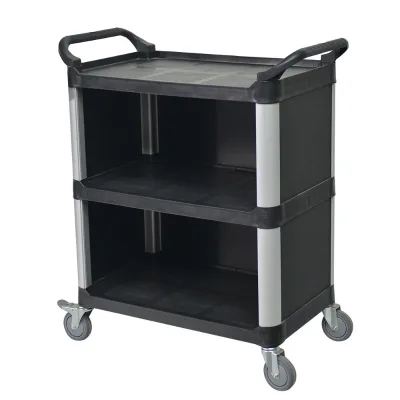
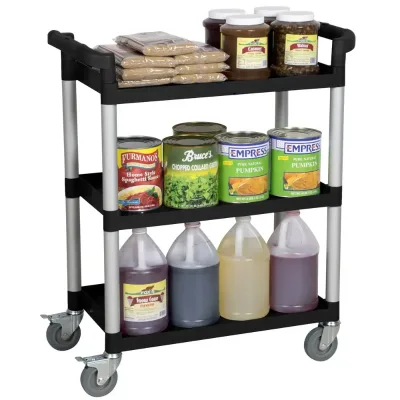
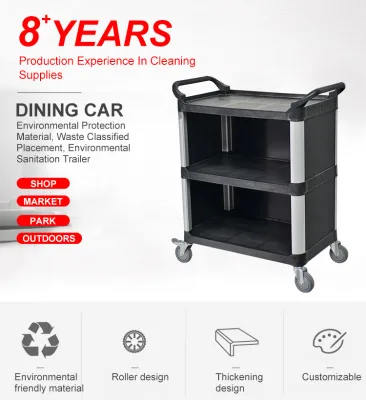
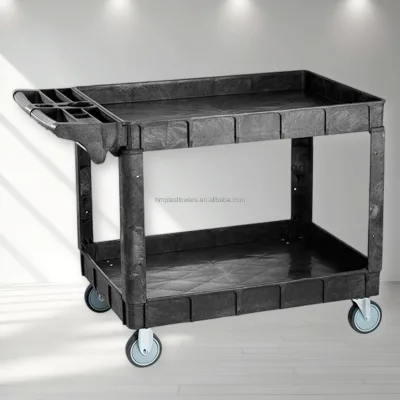
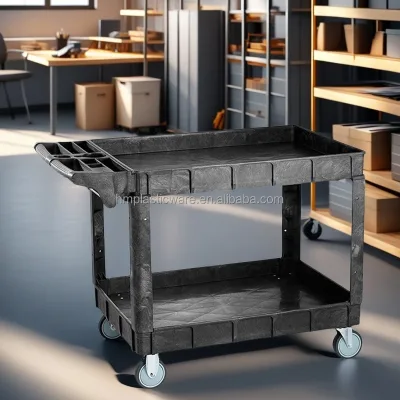
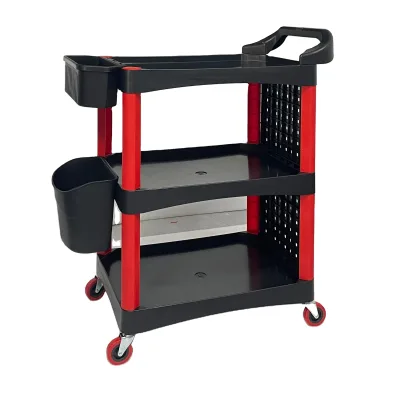
Product specifications and customization capabilities are equally critical when evaluating different suppliers. The results highlight variations in product dimensions, with sizes ranging from 8143.591cm to larger configurations like 980530930mm. Some suppliers offer universal casters and non-slip bases, while others provide options for brakes or specific color finishes like black or gray. Buyers should compare the load capacity, which can reach up to 200 kg for heavy-duty models, and check if the supplier accepts customized logos or specific branding requests. The ability to handle graphic processing and customized on-demand orders is a key differentiator that can determine whether a supplier can meet unique operational needs.
Common Taiwan Service Cart Sourcing Risks
One significant risk in sourcing service carts is the potential discrepancy between the search keyword and the actual supplier location. Since the verified data points to Guangdong, China, rather than Taiwan, buyers may face unexpected logistics challenges or misunderstandings regarding origin labeling. This geographic mismatch can lead to confusion about shipping routes, import duties, and the actual manufacturing standards applied to the goods. Buyers must verify the place of origin on the product specifications and ensure that the supplier's location aligns with their logistical expectations to avoid delays or compliance issues during the import process.
Another risk involves the variability in product specifications and the lack of standardized features across different suppliers. The observed data shows differences in weight, with some carts weighing 13kg while others are 19.37kg, and variations in structural design such as full open versus half-open types. Without a clear standard, buyers risk receiving products that do not fit their specific operational requirements, such as the number of shelves or the presence of armrests. It is crucial to request detailed product drawings and physical samples to confirm that the final product matches the advertised dimensions and features, ensuring that the equipment is suitable for its intended use in restaurants or hotels.
Taiwan Service Cart Regional Sourcing and Logistics
Logistics planning for service carts must account for the specific dimensions and weight of the products, which directly impact shipping costs and container utilization. The data indicates that single package sizes can vary, with some units measuring 76.54423cm and others up to 774423cm, while the gross weight ranges from 11.3kg to 14.08kg per unit. These variations mean that buyers cannot assume a standard shipping volume; instead, they must calculate the exact cubic meterage based on the specific model they choose. Understanding these physical constraints is essential for optimizing freight costs and ensuring that the chosen shipping method can accommodate the size and weight of the service carts.
The regional sourcing hub of Guangdong, China, offers established logistics infrastructure, but buyers should still verify the specific shipping terms and lead times with each supplier. The observed lead times of 30 to 45 days suggest that production and preparation are significant factors in the overall delivery schedule. Buyers should confirm whether the supplier handles export packaging, such as export cartons or plywood cases, to protect the goods during transit. Additionally, understanding the supplier's location within Guangdong can help in estimating the time required for inland transportation to the port, ensuring that the total lead time from order placement to delivery is accurately planned and managed.
Taiwan Service Cart Commercial Terms and Order Planning
Commercial terms for service cart orders are heavily influenced by the minimum order quantity and the pricing tiers associated with different volume levels. The data reveals that some suppliers have an MOQ of 10 pieces, while others require 100 pieces, which directly affects the total cost of the order and the unit price. Buyers should plan their order volume to meet these thresholds while considering the price range, which spans from roughly $26.95 to $133.00 per unit. It is advisable to negotiate based on the specific model and quantity to secure the most favorable pricing, ensuring that the budget aligns with the required specifications and the supplier's capacity to fulfill the order.
Order planning must also consider the customization options and warranty terms offered by the suppliers. The results show that some suppliers accept customized logos and offer specific warranty types, while others may have limited or no warranty coverage. Buyers should clarify the warranty terms and the process for handling defects or replacements before finalizing the order. Additionally, the availability of sample processing and graphic processing capabilities should be confirmed to ensure that the supplier can deliver the exact product design required. Proper planning of these commercial terms helps mitigate risks and ensures a smooth transaction from initial inquiry to final delivery.
FAQs
What is the typical lead time for service carts?
Manufacturers typically require 30 to 45 days to produce and ship service carts. This timeframe allows for material sourcing, manufacturing, and quality checks. Buyers should confirm specific delivery schedules with suppliers before placing orders to ensure timely arrival for their operations.
What certifications do these service carts hold?
Many suppliers offer carts certified to NSF standards, ensuring compliance with food safety regulations. Additionally, some manufacturers hold ISO 9001 certification for quality management systems. Buyers should verify specific certification documents with the supplier to meet local health and safety requirements.
What is the minimum order quantity for these carts?
Minimum order quantities vary significantly by supplier and product type. Some manufacturers accept orders as low as one unit, while others require a minimum of 10 or 100 pieces. Buyers should check the specific MOQ listed for each product to plan their procurement effectively.
What materials are used in these service carts?
Most service carts are constructed from durable polypropylene or PP plastic. These materials provide lightweight strength and resistance to corrosion. Some models feature universal casters for mobility. Buyers should verify material specifications to ensure suitability for their specific commercial environment.
What is the price range for these carts?
Prices for service carts generally range from approximately 27 to 133 USD per unit. The cost depends on features like shelf count, material quality, and customization options. Buyers should request detailed quotes to understand the final price based on their specific quantity and requirements.
Can these carts be customized with a logo?
Many suppliers accept customized logos on their service carts. Options often include printing or other branding methods. Buyers should discuss their branding needs with the supplier to confirm feasibility, additional costs, and any minimum order requirements for custom logo applications.