Three People Crystal Glass Boat Suppliers and Manufacturers
Compare 12 suppliers for Three People Crystal Glass Boat options by reviewing hull materials, engine specifications, and lead times. Verify product certifications and response times to select a partner that matches your operational requirements; review the available evidence before requesting comparable quotations from suitable candidates.
Suppliers List

Qingdao Osic International Co., Ltd.
- Trading Company
- China Shandong
- Lead time60 days
- Avg. response≤ 6h
Main productsYacht, Boat, Rib, Vessel, Ship, Fishing Boat
Main marketsSouth America,Africa,Southeast Asia/ Mideast,East Asia(Japan/ South Korea),Domestic,Europe,Australia,North America

MOQ: 1 Pieces

High Quality Fiber Glass Fishing Boat Panga Boats
MOQ: 1 Pieces

Fiber Glass Boat Fishing Boat Panga 26
MOQ: 1 Pieces

Fiber Glass Boat Speed Boat Fishing Boat Panga 26
MOQ: 1 Pieces

Qingdao Grandsea Marine Tech Co., Ltd.
- Verified by SGS
- Combined
- China Shandong
- Lead time30 days
- Avg. response≤ 2h
Main productsOEM/ODM/Custom-Built Boat, Fishing Boat, Passenger Boat, Yacht, Patrol Boat, Pilot Boat, Work Boat, Panga Boat, Aluminum/Fiberglass/Steel Boat, Outboard Engine
Main marketsEurope

Huaian Kaip International Trade Co., Ltd.
- Verified by SGS
- Trading Company
- China Jiangsu
- Lead time15 days
- Avg. response≤ 6h
Main productsFishing Boat, BBQ Boat, Electric Boat, Pedal Boat, Water Bike, Pontoon Boat, Kayak
Main marketsSouth America,Africa,Southeast Asia/ Mideast,East Asia(Japan/ South Korea),Europe,Australia,North America


530cm Fiberglass Speedboat Double Bottom Strong Hull 8 Person Use for Sea and Lake Leisure Boat
$2000.00 - $2200.00
MOQ: 2 Pieces
Zhengzhou Buyee Trading Co., Ltd.
- Verified by TüVRheinland
- Trading Company
- Lead time30 days
- Avg. response≤ 2h
Main productsSpeed Boat With Cabin, Speed Boat, Passenger Boat, Park Boat, Yacht
Main marketsSouth America(20%), North America(15%), Southeast Asia(10%)
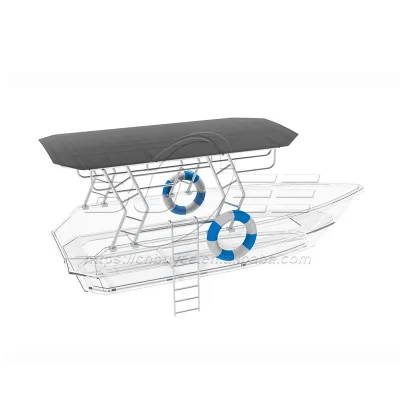
12-person Luxury Crystal Kayak Glass Transparent Tourist Boat PC Recreational clear Boat for Sale
$14598.00 - $14998.00
MOQ: 1 Minimum
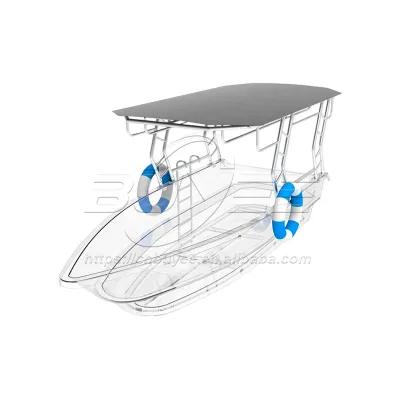
New Arrival 12 Person Crystal Pleasure Boat 5.5 Meters Recreational Craft Transparent Clear Boat
$14598.00 - $14998.00
MOQ: 1 Minimum

Guangzhou Meilan Yacht Co., Ltd.
- Verified by SGS
- Combined
- China Guangdong
- Lead time15 days
- Avg. response≤ 3h
Main productsOutdoor Gear, Water Amusement Facilities, Outdoor Crafts, Hardware Accessories, Space Capsule
Main marketsDomestic

Qingdao Dookyu Crown Marine Co., Ltd.
- Verified by CTI
- Combined
- China Shandong
- Lead time60 days
- Avg. response≤ 3h
Main productsAluminum Boat, Yacht
Main marketsSouth America,Domestic

- Trading Company,Manufacturer/Factory
- China Chongqing
- Lead time15 days
- Avg. response≤ 24h
Main productsLifeboat and Davits, Free Fall Life Boat, Enclosed Lifeboat, Fast Rescue Boat, Rescue Boat, Disposable Bamboo Cutlery Set, Paper Pulp Tablewares, Disposable Tableware, Biodegradable Bamboo Tableware, Sugarcane Food Container
Main marketsSouth America,Eastern Europe,Mid East,North America,Southeast Asia,Eastern Asia,Oceania,Western Europe,Africa

Qingdao Haijia Yacht Co., Ltd.
- Verified by SGS
- Trading Company
- China Shandong
- Lead time15 days
- Avg. response≤ 6h
Main productsInflatable Boat, Rib, Rigid Inflatable Boat, Aluminum Hull Inflatable Boat, Rafting Boat, Boat Trailer, Rescue Boat, Fishing Boat, Inflatable Aluminum Floor Boat
Main marketsDomestic

Ningbo Yinzhou Sailing Outdoor Co., Ltd.
- Trading Company
- China Zhejiang
- Lead time0 days
- Avg. response≤ 12h
Main productsKayak, Kayak Accessories, Motor, Aluminum Tube Processing, Plastic Products, Sports Products, Life Vest, Ice Bath, Sauna, Outdoor Sports

Foshan Ouyue Sports Equipment Co., Ltd.
- Verified by SGS
- Combined
- China Guangdong
- Lead time15 days
- Avg. response≤ 25h
Main productsFRP Ship, FRP Dragon Boat, FRP Speedboat, Carbon Fiber Paddle, Recreational Boat, Small Boat, International Certified Dragon Boat
Main marketsDomestic

Zhenjiang Matchau Marine Equipment Co., Ltd.
- Verified by TUVRHEINLAND
- Trading Company,Manufacturer/Factory,Group Corporation
- China Jiangsu
- Lead time23 days
- Avg. response≤ 5h
Main productsWater Weight Bag, Life Boat, Life Raft, Life Jacket, Rescue Boat, Single Arm Davit, Davit, Crane, Rubber Fender, Anchor Chain
Main marketsSouth America,Eastern Europe,Mid East,North America,Southeast Asia,Eastern Asia,Oceania,Western Europe,Africa

Qingdao Yamane Ryu Yacht Manufacturing Co., Ltd.
- Combined
- China Shandong
- Lead time30 days
- Avg. response≤ 7h
Main productsFiberglass Fishing Boat, Aluminum Alloy Boat, Patrol Pilot Boat, Aluminum Landing Craft, Steel Fishing Trawler Vessel, Passenger Boat, Aluminum Fiberglass Pontoon Boat, Yacht Cruiser, Marine Water Floating Berth Pontoon Dock, PP Honeycomb Boat Trailer
Main marketsSouth America,Africa,Southeast Asia/ Mideast,East Asia(Japan/ South Korea),Domestic,Europe,Australia,North America


Comprehensive Sourcing Guide
Three People Crystal Glass Boat Supplier Concentration and Factory Types
The current supplier landscape for specialized vessels indicates a concentration of manufacturing capabilities within specific Chinese provinces, though no single cluster is explicitly confirmed for "crystal glass" construction in the provided data. Available results show active suppliers located in Shandong and Jiangsu, primarily focusing on fiberglass, FRP, and aluminum hulls rather than transparent glass materials. These regions host a mix of trading companies and combined entities that offer OEM and ODM services for various boat types, including fishing vessels, yachts, and speedboats. Buyers must verify if any of these facilities possess the specific tooling and expertise required for glass-bottom or crystal-glass boat production, as the majority of listed products utilize standard fiberglass hulls.
Factory types observed in the search results range from pure trading companies to combined manufacturers offering both production and trading services. Some suppliers list capabilities for custom-built vessels, including luxury yachts and passenger boats, with response times varying significantly between 1.73 and 5.84 hours. While the data confirms the existence of suppliers capable of producing fiberglass boats with specific engine capacities and lengths, it does not explicitly validate a dedicated facility for "crystal glass" boats. Consequently, buyers should treat the "crystal glass" attribute as a specific customization request rather than a standard inventory item, requiring direct confirmation of the manufacturer's ability to source or fabricate the necessary transparent materials alongside the hull structure.
How to Verify Three People Crystal Glass Boat Suppliers
Verification of suppliers for specialized glass-bottom vessels requires a rigorous check of certifications and material specifications, as the provided data shows mixed certification statuses. Some listed products carry CE certification, while others show no system certification at all. For a "crystal glass" boat, the buyer must explicitly request proof of material safety standards, as standard fiberglass certifications do not automatically cover the structural integrity or optical clarity requirements of glass hulls. It is essential to ask for third-party test reports specifically addressing the glass material's load-bearing capacity and resistance to impact, ensuring the supplier can meet the safety needs of a three-person vessel.
Beyond certifications, buyers should validate the supplier's actual production capacity and response reliability. The observed response times vary from under two hours to nearly six hours, indicating different levels of operational readiness. A supplier with a rapid response time may be more agile in handling custom requests, but this does not guarantee technical competence in glass fabrication. Buyers should request video evidence of the manufacturing process, specifically focusing on the lamination or bonding of glass to the hull frame. Additionally, verifying the supplier's history with similar custom projects through references or past order records is critical, as the lack of explicit "crystal glass" product evidence in the current results suggests this is a niche capability that requires deeper due diligence.
What to Compare Across Three People Crystal Glass Boat Suppliers
When evaluating potential partners, buyers must compare key operational metrics such as lead times, minimum order quantities, and response speeds to ensure alignment with project timelines. The available data shows lead times ranging from 15 to 60 days, with some suppliers offering rapid turnaround for standard fiberglass models. For a custom "crystal glass" boat, the lead time will likely extend beyond these figures due to the specialized nature of the materials. Buyers should also scrutinize the Minimum Order Quantity (MOQ), as some suppliers list an MOQ of just one unit, while others may have higher thresholds for custom builds. Understanding these constraints helps in planning inventory and cash flow effectively.
Another critical comparison point is the range of main products and customization capabilities offered by each supplier. While many suppliers list fiberglass fishing boats and yachts as their primary output, the ability to customize a boat for a specific three-person capacity with a glass bottom is a distinct service. Buyers should compare the stated customization options, such as engine capacity, hull length, and seating arrangements, against their specific requirements. The data indicates some suppliers offer engines ranging from 60 to 600 HP and lengths from 4 to 11 meters. Ensuring the supplier can integrate the glass component without compromising the vessel's structural design is paramount, requiring a detailed comparison of their technical specifications and past custom project portfolios.
Common Three People Crystal Glass Boat Sourcing Risks
One significant risk in sourcing specialized glass-bottom vessels is the potential mismatch between advertised capabilities and actual production expertise. The current supplier results predominantly feature fiberglass and FRP boats, with no explicit confirmation of glass-bottom manufacturing experience. This discrepancy creates a risk that a supplier may attempt to adapt standard fiberglass processes to glass, potentially leading to structural failures or safety hazards. Buyers must be vigilant in verifying that the supplier has specific experience with transparent hull materials, as the engineering requirements for glass differ substantially from those for composite fiberglass, particularly regarding weight distribution and impact resistance.
Another major risk involves the variability in product standards and warranty terms. The data shows warranty periods as short as one year for hulls, and some products lack detailed standard specifications beyond basic dimensions. For a high-value custom item like a crystal glass boat, relying on generic warranty terms is insufficient. Buyers should anticipate risks related to material degradation, such as scratching or clouding of the glass, which may not be covered under standard hull warranties. Additionally, the lack of explicit certification for glass materials in the provided results means buyers must assume the risk of non-compliance with international safety standards unless specific documentation is provided and verified before the order is finalized.
Three People Crystal Glass Boat Regional Sourcing and Logistics
Sourcing from the identified regions of Shandong and Jiangsu offers logistical advantages, yet buyers must account for the specific shipping requirements of large, fragile vessels. The data indicates that transportation is typically arranged by sea, with some suppliers offering bulk shipping or containerized packing. For a glass-bottom boat, the packing method is critical to prevent damage during transit. Buyers should verify if the supplier uses specialized crating or reinforced frames to protect the glass hull, as standard iron frame packages may not provide adequate shock absorption. The lead times observed, ranging from 15 to 60 days, must be factored into the overall logistics timeline, including customs clearance and inland transportation to the final destination.
Regional differences in supplier capabilities also influence logistics planning. Suppliers in Jiangsu may have different port access and shipping rates compared to those in Shandong, affecting the final cost and delivery speed. Buyers should request detailed shipping quotes that include insurance for high-value, fragile cargo. The data shows some suppliers offer "N/M" (No Mark) packing, which may not be suitable for glass components requiring clear labeling and handling instructions. It is essential to confirm the supplier's experience with international shipping of custom boats, ensuring they can manage the complexities of transporting a vessel with a specialized glass bottom across borders without incurring damage or delays.
Three People Crystal Glass Boat Commercial Terms and Order Planning
Commercial terms for specialized vessels often involve significant financial commitments, with prices in the current dataset ranging from approximately $1,280 to $400,000 depending on the vessel type and specifications. For a custom "crystal glass" boat, the price will likely fall at the higher end of this spectrum due to material costs and specialized labor. Buyers should plan for a tiered payment structure, typically involving a deposit followed by progress payments and a final balance upon completion. It is crucial to clarify the payment terms regarding the glass component, as this may be sourced separately or manufactured in-house, affecting the overall cost structure and payment schedule.
Order planning must also account for the customization process and the potential for additional costs. The data shows that some suppliers offer customized options for color, engine capacity, and seating, which can impact the final price. Buyers should establish a clear scope of work that details the glass specifications, engine requirements, and interior finishes to avoid scope creep. Additionally, the response times of suppliers, which vary from 1.73 to 5.84 hours, should be considered when planning the timeline for design approvals and material sourcing. Early engagement with the supplier to confirm all technical details is essential to ensure the order proceeds smoothly and meets the buyer's expectations for a high-quality, three-person crystal glass boat.
FAQs
Are fiberglass boats available for three passengers?
Yes, suppliers offer fiberglass boats suitable for three passengers. Models like the 6-person speedboat provide ample space. These vessels feature durable hulls and customizable colors. Buyers can select from various engine capacities to match their needs. The boats are designed for fishing and sightseeing activities.
What is the typical lead time for these boats?
Lead times vary by supplier and location. Some manufacturers in China offer a 15-day lead time for standard models. Others may require up to 60 days for custom builds. Production often begins after receiving a deposit. Buyers should confirm specific timelines with the supplier before ordering.
Do these boats come with CE certification?
Many fiberglass boats listed include CE certification. This ensures compliance with European safety standards. Buyers should verify the certification status for each specific model. Some suppliers offer customized options that may affect certification. Always request proof of certification during the sourcing process.
What is the minimum order quantity for these boats?
The minimum order quantity is typically one unit. Suppliers often allow single-unit purchases for testing or personal use. This low MOQ makes it easier to source specific models. Buyers can order multiple units if needed. Confirm the MOQ with the supplier to ensure availability.
Can I customize the color of the boat?
Yes, customization is widely available for fiberglass boats. Suppliers offer various color options to suit preferences. Buyers can request specific shades or designs. Customization may affect production time and pricing. Discuss your requirements with the supplier to ensure feasibility.
What engine options are available for these boats?
Boats support various engine types, including 4-stroke outboards. Engine capacities range from 15HP to 600HP. Buyers can choose based on their power needs. Some models support twin engines for higher speed. Verify engine compatibility with the supplier before finalizing the order.