Ultra Short Throw Laser TV Suppliers and Manufacturers
Compare 12 verified suppliers offering Ultra Short Throw Laser TV with ISO9001:2015 certification and ODM capabilities. Review response times, lead times, and pricing to select a partner for your project needs; review the available evidence before requesting comparable quotations from suitable candidates.
Suppliers List

Guangzhou Hongyuan Electronics Co., Ltd.
- Verified by SGS
- Combined
- China Guangdong
- Lead time15 days
- Avg. response≤ 6h
Main productstv led
Main marketsAfrica,Southeast Asia/ Mideast,North America

$72.00 - $129.00
MOQ: 10 Pieces

Full HD 3D 1080P 32 Inch Ultra Slim LED TV with Android Smart LED Television
$150.00 - $164.00
MOQ: 10 Pieces

65inch Curved Smart TV 4K Big Screen Ultra HD LED TV Smart Television 65 Inch TV
$269.00 - $289.00
MOQ: 5 Pieces

Full HD 1080P 65 Inch TV 75inch LED Smart TV Ultra Slim LED TV with Android Smart LED Television
$215.00 - $230.00
MOQ: 10 Pieces


Guangzhou SOHO Industry Co., Limited
- Verified by TUVRHEINLAND
- Trading Company
- China Guangdong
- Lead time30 days
- Avg. response≤ 7h
Main productsPortable Speaker, LED TV, Trolley Speaker, TV Mother Board, TV Panel, Smart TV, Curved TV
Main marketsSouth America

Guangzhou MOORE Solar Energy Co., Ltd.
- Trading Company
- China Guangdong
- Lead time0 days
- Avg. response≤ 3h
Main productsPhotovoltaic Panel, Car Battery, Motor Battery, Solar Battery, Solar Fan, Solar Refrigerator, Solar Panel, Television


Smart Ultra HD 4K Full Screen Remote Control High Resolution Quality Television
$46.00 - $68.00
MOQ: 1 Pieces


Hongxi Technology (Guangzhou) Co., Ltd.
- Verified by BV
- Trading Company
- China Guangdong
- Lead time30 days
- Avg. response≤ 4h
Main productsSmart TV, Interactive Whiteboard, Advertising Equipment, Video Wall, Full Colour LED, Touch Screen Kiosk, Advertising Media Displayer, Curved TV, OLED TV
Main marketsAustralia

Guangzhou Dongpin Electronic Co.,LTD
- Verified by BV
- Combined
- China Guangdong
- Lead time30 days
- Avg. response≤ 2h
Main productsPC Monitor, Computer Monitor, Bus VOD System, AC DC TV, Bus Monitor, Bus VOD Server, Game Monitor, Medical Monitor
Main marketsAfrica,Southeast Asia/ Mideast,Europe,North America
Beijing Fangyuan Xincheng Technology Co., Ltd.
- Trading Company
- Beijing, China
- Lead time20 days
- Avg. response≤ 1h
Main productsPorjector,Projection screen,projector accessories
Main marketsNorth America(1.00%), Eastern Asia(1.00%)

Foshan Zhengkai Lexin Electric Co., Ltd.
- Combined
- China Guangdong
- Lead time30 days
- Avg. response≤ 21h
Main productsLED TV, LCD TV
Main marketsSouth America,Africa,Southeast Asia/ Mideast

Guangzhou CJY Import & Export Co., Ltd.
- Verified by TUVRHEINLAND
- Trading Company
- China Guangdong
- Lead time15 days
- Avg. response≤ 12h
Main productsComputer Case, Power Supply, LED TV, Computer Monitor, Gaming Computer Case, ATX Computer Case, Cabinet, PC Case, TV, Flex Power Supply
Main marketsOthers(foreignTradeCapacity.exportBusinessCapacityMarketOther)

Jiangxi Langshi Electronic Technology Co., Ltd
- Verified by TUVRHEINLAND
- Manufacturer/Factory
- China Guangdong
- Lead time15 days
- Avg. response≤ 23h
Main productsLED TV, LCD TV, LED Monitor, LCD Monitor, Gaming Monitor
Main marketsSouth America,Eastern Europe,Mid East,Southeast Asia,Eastern Asia,Oceania,Africa


Contact supplier

Contact supplier

Shenzhen LED World Co., Limited
- Verified by TUVRHEINLAND
- Manufacturer/Factory
- China Guangdong
- Lead time15 days
- Avg. response≤ 8h
Main productsLED Display, LED Screen, LED Display Screen, LED Video Wall, LED Billboard, LED Wall, LED Sign, Electric LED Billboard, Big LED Billboard, Rental LED Display
Main marketsSouth America,Eastern Europe,Mid East,North America,Southeast Asia,Eastern Asia,Oceania,Western Europe,Africa

Shenzhen Vitek Electronics Co., Ltd.
- Verified by BV
- Manufacturer/Factory
- China Guangdong
- Lead time23 days
- Avg. response≤ 6h
Main productsLaptop, Tablet PC, Digital Signage, Mini PC, LCD Monitor, All in One PC, Interactive Flat Panel, Advertising Screen, Self Payment Kiosk, POS Tablet
Main marketsSouth America,Eastern Europe,Mid East,North America,Southeast Asia,Oceania,Western Europe,Africa

$170.00 - $250.00
MOQ: 500 Pieces


Guangdong Rixian Technology Co., Ltd.
- Verified by SGS
- Combined
- China Guangdong
- Lead time15 days
- Avg. response≤ 5h
Main productsAnalog LED TV, T2/S2/C/Ci/Scart/ISDB-T...DVB LED TV, Monitor
Main marketsSouth America,Africa,Southeast Asia/ Mideast




Comprehensive Sourcing Guide
Ultra Short Throw Laser TV Supplier Concentration and Factory Types
The current supplier landscape for Ultra Short Throw Laser TV units shows a distinct concentration of manufacturing and trading entities within China, specifically in the Guangdong province. This regional clustering is a high-confidence fact derived from the available supplier data, indicating that the primary production hubs for these advanced display technologies are located in this specific coastal region. Buyers evaluating potential partners should prioritize verifying the physical address and operational base of any supplier claiming to manufacture these units, as the Guangdong location is the only confirmed origin point in the current results. This concentration suggests a mature supply chain ecosystem where component sourcing, assembly, and logistics are optimized for this specific product category.
When assessing the nature of these entities, the data reveals a mix of combined company types and trading companies operating within this sector. Some suppliers are identified as combined entities capable of offering ODM, OEM, and own-brand services, which implies a deeper level of manufacturing control and customization capability. Others are classified strictly as trading companies, which may offer a broader range of products including portable speakers and TV motherboards alongside the laser TVs. Buyers must distinguish between these types because a trading company might source from multiple factories, whereas a combined entity or factory might have direct control over the production line. This distinction is critical for understanding who holds the responsibility for quality control and technical support for the Ultra Short Throw Laser TV units.
How to Verify Ultra Short Throw Laser TV Suppliers
Verification of suppliers in this category requires a rigorous check of their certification status and third-party validation records. The available data indicates that some suppliers hold ISO9001:2015 system certification, which serves as a baseline indicator of their quality management processes. However, buyers should not assume all suppliers possess this specific standard without direct confirmation. Furthermore, verification badges such as SGS and TUVRHEINLAND are present in the current results, signaling that these specific entities have undergone external audits. Buyers must request current copies of these certificates and verify the scope of the certification to ensure it explicitly covers the manufacturing of Ultra Short Throw Laser TV units rather than just general electronics.
Beyond certifications, the response time and verification status of a supplier provide immediate insights into their operational reliability. The observed response times in the current dataset range from approximately 5.93 to 6.84, which serves as a metric for communication efficiency. A supplier with a slower response time might indicate a larger backlog or less dedicated support for international buyers. Buyers should also scrutinize the "is_verified" status, noting that different suppliers may have different verification bodies attached to their profiles. It is essential to confirm that the verification covers the specific product line of interest, as a general verification might not guarantee the technical competence required for complex laser projection systems.
What to Compare Across Ultra Short Throw Laser TV Suppliers
Comparing suppliers requires a detailed analysis of their lead times, minimum order quantities, and pricing structures to ensure alignment with project requirements. The current data shows lead times varying significantly, with some suppliers offering a 15-day turnaround while others require up to 30 days. This variance is a critical factor for buyers with tight delivery schedules. Additionally, the minimum order quantities (MOQ) differ, with some suppliers requiring orders as low as one unit, while others set thresholds at five or ten units. Buyers must calculate the total cost of ownership, including the impact of higher MOQs on inventory holding costs, to determine the most economical option for their specific volume needs.
Product specifications and customization capabilities are equally vital when comparing different suppliers. The data reveals a wide range of display formats, from 720P HD to UHDTV and 4K resolutions, alongside various screen sizes and panel types like TFT-LCD and TN-LCD. Some suppliers offer customization options for cabinet colors, OSD languages, and specific interface types, which can be crucial for specialized applications like hotel or portable setups. Buyers should create a comparison matrix that lists these technical attributes side-by-side to identify which supplier offers the exact configuration required. It is also important to note that while some suppliers list specific models like ZT550LED or HY650TV, others may only provide generic descriptions, necessitating a request for detailed datasheets to ensure technical compatibility.
Common Ultra Short Throw Laser TV Sourcing Risks
One of the primary risks in sourcing ultra short throw laser TVs is the potential mismatch between advertised specifications and actual product performance. The current data shows conflicting information regarding display formats, with some products listed as 720P while others claim UHDTV or 4K capabilities. This inconsistency highlights the risk of relying solely on product titles or keywords without verifying the actual panel specifications and resolution. Buyers must demand physical samples or third-party test reports to confirm that the display format, brightness, and color accuracy meet the stated requirements, as discrepancies in these areas can lead to significant customer dissatisfaction and returns.
Another significant risk involves the reliability of the supply chain and the consistency of the manufacturing process. The variation in lead times and the mix of trading companies versus manufacturers introduce uncertainty regarding delivery schedules and quality control. If a supplier is a trading company, they may not have direct oversight of the factory floor, increasing the risk of quality defects or production delays. Furthermore, the lack of standardized pricing across different suppliers, with prices ranging from $72 to $289 for similar-looking units, suggests that cost-cutting measures might be affecting component quality. Buyers should implement strict quality assurance protocols and consider using escrow services to mitigate financial risks associated with non-compliant shipments.
Ultra Short Throw Laser TV Regional Sourcing and Logistics
Sourcing from the confirmed Guangdong region in China offers logistical advantages due to the established infrastructure for exporting consumer electronics. The concentration of suppliers in this area facilitates efficient shipping and reduces transit times to major global ports. However, buyers must account for the specific packaging standards observed in the data, which vary from paper cartons to custom packaging solutions. The dimensions and volume of the packaging, such as 0.051 cubic meters or 0.037 cubic meters, directly impact freight costs and container utilization. Buyers should calculate the total landed cost, including freight, insurance, and customs duties, based on the specific packaging dimensions provided by each supplier to optimize their logistics strategy.
The regional concentration also implies a specific set of regulatory and compliance requirements that buyers must navigate. Since the products originate from China, they must comply with the import regulations of the destination country, including safety standards and energy efficiency labels. The data indicates that some products are designed for specific markets, with OSD languages supporting up to 22 countries and receiving systems compatible with NTSC, PAL, and Secam standards. Buyers should verify that the supplier has experience exporting to their target market and can provide the necessary documentation, such as CE, FCC, or RoHS certificates, to ensure smooth customs clearance. Failure to address these regional compliance issues can result in shipments being held at the border or rejected upon arrival.
Ultra Short Throw Laser TV Commercial Terms and Order Planning
Commercial terms for Ultra Short Throw Laser TV orders must be carefully negotiated to align with the supplier's capabilities and the buyer's risk tolerance. The data shows that some suppliers offer flexible payment terms and customization options, while others may have stricter requirements regarding order volume and lead time. Buyers should clearly define the payment schedule, including deposit percentages and balance payment triggers, to ensure cash flow management. Additionally, the availability of escrow services should be confirmed to protect the buyer's funds until the goods are received and verified. It is crucial to establish clear terms for handling defects, returns, and warranty claims to avoid disputes after the order is placed.
Order planning requires a strategic approach to managing inventory and production schedules based on the supplier's lead times and MOQs. With lead times ranging from 15 to 30 days, buyers must factor in this duration when planning their sales cycles and inventory replenishment. The varying MOQs, from single units to ten units, allow for different procurement strategies, such as small batch testing or large volume bulk ordering. Buyers should develop a contingency plan for potential supply chain disruptions, such as raw material shortages or production delays, by maintaining a buffer stock or identifying alternative suppliers. By integrating these commercial terms and planning considerations, buyers can ensure a smooth and efficient procurement process for Ultra Short Throw Laser TV units.
FAQs
What is an Ultra Short Throw Laser TV and how does it differ from a flat panel TV?
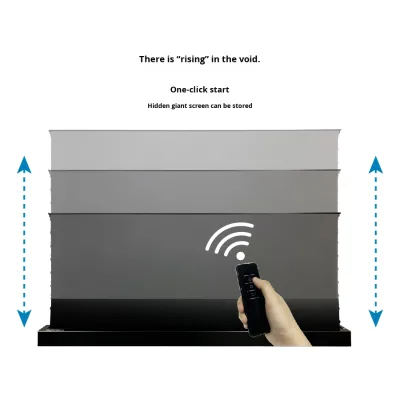
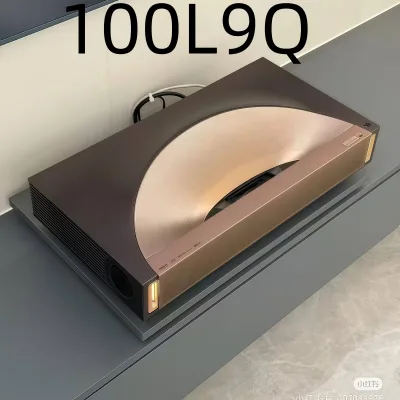
An Ultra Short Throw Laser TV is a projector-based display that sits inches from the wall and projects a very large image, often 100 inches or more, using a laser light source. Unlike flat panel LED TVs, it needs no wall mounting, produces less eye strain, and can pair with an ambient light rejecting screen for bright rooms.
What screen sizes are typically available for Ultra Short Throw Laser TV models?
Listings in this category commonly advertise 100, 120, and 150 inch configurations, sometimes bundled with a dedicated ambient light rejecting screen. Because the unit sits close to the wall, image size is set by the throw ratio rather than installation space. Confirm the exact diagonal supported at your wall distance before ordering, since projector and screen are often sold as a matched set.
Can suppliers customize ultra short throw laser TVs with my own brand and software?
Many television manufacturers in this category list ODM, OEM, and own-brand capability, and individual product listings often mark customization as available. Customization can cover branding, cabinet color, OSD languages, and smart TV platform features. Ask early about minimum order quantities, tooling costs, and software requirements, because these vary by model and affect both unit price and production lead time.
What operating system and smart features do these laser TVs usually include?
Listings in the smart TV category frequently specify Android-based smart systems, with related flat panel models described as Android 11.0 smart TVs supporting smart, Android, and DVB-T2/S2 functions. Typical features include wide screen 16:9 format, LED backlighting on companion panels, multiple interfaces such as USB, HDMI-class AV, RJ45, and earphone outputs, and multilingual OSD menus covering many European and other languages.
What is a realistic lead time when ordering an Ultra Short Throw Laser TV in bulk?
Lead times in the supplied supplier results for television products range from about 15 to 30 days, depending on the supplier type and order complexity. Standard configured units ship faster than customized builds, which add time for branding, packaging, and software changes. Always confirm the lead time in writing for your specific configuration and quantity before placing a deposit.
What minimum order quantity should I expect for laser TV sourcing?
Minimum order quantities in the observed product listings range from as low as 1 to 5 pieces for some television models up to 10 pieces for others, so requirements vary by model and supplier type. Trading companies and manufacturers set different thresholds, and customization usually raises the MOQ. Request the exact MOQ for the configuration you want before comparing quotes.
How can I verify a supplier before placing a large laser TV order?
Look for independent verification and quality system credentials, such as SGS verification or TUV Rheinland checks, plus an ISO 9001:2015 quality management certificate, which appear among the credentials in this category. Ask for the certificate number and scope, request recent inspection or test reports for the specific model, and confirm whether payments can be protected through a platform escrow arrangement.
What price range do laser TVs and large smart televisions typically fall into?
Observed listings in this category show smart televisions ranging roughly from the low 70s USD for smaller flat panel models to the high 200s USD for 65 inch 4K units, with Ultra Short Throw Laser TV pricing depending on screen size and laser configuration. Prices vary with panel grade, resolution, customization, and order volume, so request a detailed quotation for your exact specification.