Vehicle Safety Dome Mirror Suppliers and Manufacturers
Explore 17 verified sources for Vehicle Safety Dome Mirror options with varying lead times, certifications, and response speeds. Buyers can compare ISO standards, material specs, and pricing to select suitable partners. Contact suppliers directly to request samples or quotes; review the available evidence before requesting comparable quotations from suitable candidates.
Suppliers List

ZHEJIANG STARS PLASTIC SAFETY DEVICE CO., LTD.
- Verified by SGS
- Combined
- China Zhejiang
- Lead time15 days
- Avg. response≤ 25h
Main productsTraffic Baton, Safety Baton, Traffic Warning Light, Road Stud, Road Cone, Traffic Direction Sign, Solar Warning Light, Solar Traffic Sign, Safety Vests, Plastic Chain
Main marketsNorth America


Under Car Vehicle Search Convex Mirror Security Inspection Mirror with 30 Cm for Road Safety
Contact supplier
Moq: 500

Sanmen Aroad Traffic Facility Factory
- Combined
- China Zhejiang
- Lead time15 days
- Avg. response≤ 10h
Main productsTraffic Cone, Speed Hump, Anti-Impacted Block, Warning Post, Convex Mirror, Road Stud, Reflective Vest, Road Barrier, Traffic Sign, Cable Protector
Main marketsSouth America,Africa,Southeast Asia/ Mideast,East Asia(Japan/ South Korea),Europe,Australia,North America

Chengdu Rongxiang Technology Co., Ltd.
- Trading Company,Manufacturer/Factory
- China Sichuan
- Lead time15 days
- Avg. response≤ 8h
Main productsConvex Mirror, Speed Hump, Traffic Sign, Road Working Light, Cable Protector, Road Stub, Wheel Stopper, Traffic Cone, Safety Vest, Warning Signage
Main marketsSouth America,Eastern Europe,Mid East,North America,Southeast Asia,Eastern Asia,Oceania,Western Europe,Africa

Wofu Fire & Security Equipment Co., Ltd.
- Verified by TUVRHEINLAND
- Trading Company
- China Hunan
- Lead time30 days
- Avg. response≤ 16h
Main productsFire Extinguisher, Fire Blanket, Extinguisher Accessories, Fire Hose Reel, Fire Fighting, Fire Hose, Fire Sprinkler, Fire Suppression, Foam Extinguisher, Fire Alarm
Main marketsSouth America,Southeast Asia/ Mideast,Europe,North America

Mingshang Technology Co., Ltd.
- Manufacturer/Factory,Group Corporation
- China Guangdong
- Lead time23 days
- Avg. response≤ 4h
Main productsRear View Camera, Mobile DVR, Rear View System, Wireless Camera System, Vehicle Safety System, Ai Camera, 360 Camera System, Adas, DMS, Bsd
Main marketsEastern Europe,North America,Western Europe

DongGuan Viboo Electronic Technology Co.,Ltd
- Trading Company
- China Guangdong
- Lead time15 days
- Avg. response≤ 6h
Main productsSecurity Inspection Equipment, Metal Detector, X Ray Scanner, X Ray Machine, Checkweighers, Walk Through Metal Detector, Industrial Metal Detector, Metal Detection Equipment, Metal Separator, Under Vehicle Inspection System
Main marketsEast Asia(Japan/ South Korea),Europe

Beijing Vacuum Electronic Technology Co., Ltd.
- Verified by BV
- Combined
- China Beijing
- Lead time30 days
- Avg. response≤ 6h
Main productsX-ray Baggage Scanner, Vehicle Inspection System, Container Scanner System, Walk-Through Metal Detector
Main marketsSoutheast Asia/ Mideast,East Asia(Japan/ South Korea),Domestic,North America

Smart Check Security Equipment (Shenzhen) Co., Ltd.
- Verified by TUVRHEINLAND
- Combined
- China Guangdong
- Lead time15 days
- Avg. response≤ 7h
Main productsMetal Detector, Handheld Metal Detector, Walk Through Metal Detector, Under Vechile Inspection Mirror, Under Vehicle Inspection Camera, Life Detector, Gold Metal Detector, Underground Metal Detector, Door Frame Metal Detector, Underground Gold Metal Detector
Main marketsAfrica,Southeast Asia/ Mideast,Domestic,Europe,North America

Hangzhou Eaglerd Traffic Industry & Trade Co., Ltd.
- Verified by SGS
- Trading Company,Manufacturer/Factory
- China Zhejiang
- Lead time23 days
- Avg. response≤ 4h
Main productsRoad Marking Machine, Guardrail, Traffic Cone, Traffic Light, Road Paint, Traffic Sign, Road Stud, Convex Mirror, Speed Bump, LED Street Light
Main marketsSouth America,Eastern Europe,Mid East,North America,Southeast Asia,Eastern Asia,Oceania,Western Europe,Africa
Shanghai Eroson Traffic Facility Co., Ltd.
- Verified by SGS Group
- Trading Company
- Lead time7 days
- Avg. response≤ 5h
Main productsSpeed Bump, Traffic Cone, Convex Mirror, Warning Post, Road Stud
Main marketsSoutheast Asia(18%), Western Europe(12%), Oceania(11%)
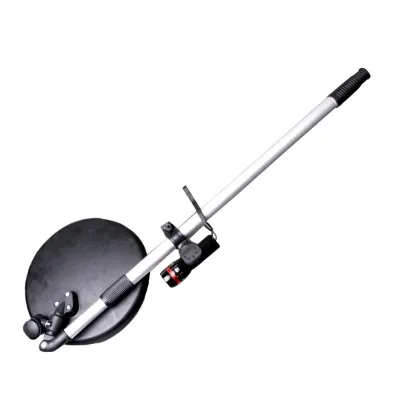
Acrylic Under Vehicle Inspection Mirror With Wheels and Torch for Security Inspection
$44.87 - $47.93
Moq: 100
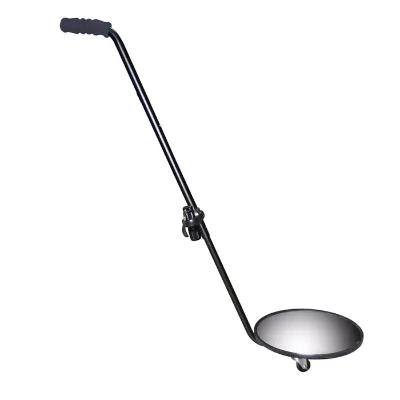

Sunrise Security Technology Co., Ltd.
- Trading Company
- China Guangdong
- Lead time15 days
- Avg. response≤ 4h
Main productsCCTV Security Camera, DVR, WiFi IP Camera, 4G SIM Card Solar Panel Camera, WiFi Doorbell, Vehicle Mobile DVR, Car Camera, Car Camcorder, IP Camera, Video Security Camera
Main marketsSouth America,Africa,Australia

Shenzhen Heping Century Technology Co., Ltd.
- Verified by BV
- Trading Company
- China Guangdong
- Lead time15 days
- Avg. response≤ 3h
Main productsWalk Through Metal Detector, X-ray Baggage Scanner, Hand Held Metal Detector, Under Vehicle Inspection System(Uvss), Hydraulic Rising Bollard, Hydraulic Road Blocker, Tire Killer, Gold Detector, Barrier Gate
Main marketsSoutheast Asia/ Mideast,Europe


Square Convex Mirror Car Safety Under Vehicle Search Mirror Security Inspection Mirror
$42.00 - $49.00
Moq: 10

30 Cm Square Under Vehicle Inspection Mirror for Under Car Danger Item Searching
$42.00 - $49.00
Moq: 10

Hangzhou Guang Yi Hua Material Technology Co., Ltd
- Manufacturer/Factory
- China Zhejiang
- Lead time23 days
- Avg. response≤ 11h
Main productsTraffic Safety Products, Inspection Mirrors, Speed Humps, Wheel Stopper, Cable Protector, Warning Post, Plastic Barrier, Tyre Breaker, Road Stud
Main marketsEastern Europe,Mid East,Southeast Asia,Eastern Asia,Western Europe


Under Car Search Mirror Under Vehicle Mirror Portable Adjustable Search Mirror
$26.00 - $30.00
Moq: 100

Beijing Jia'an Weishi Technology Development Co., Ltd.
- Verified by SGS
- Trading Company
- China Beijing
- Lead time15 days
- Avg. response≤ 1h
Main productsCellphone Jammer, Jammer, Signal Jammer, Nonlinear Node Detector, Camera Detector, Environmental Safety Detection, Uav Detection Category, Cellphone Compliance Testing Equipment, Omnidirectional Signal Jammers, Anti-Spy Detector
Main marketsDomestic
Hangzhou Lutai Import and Export Trading Co., Ltd
- Verified by BV
- Trading Company
- China Zhejiang
- Lead time30 days
- Avg. response≤ 2h
Main productsTraffic Cone, Speed Hump, Cable Protector Ramp, Traffic Post, Wheel Chock, Corner Guard, Traffic Barricade, Reflective Traffic Sign, Convex Mirror
Main marketsDomestic

Henan Chiwai International Trade Co., Ltd.
- Verified by TUVRHEINLAND
- Trading Company,Manufacturer/Factory
- China Henan
- Lead time30 days
- Avg. response≤ 6h
Main productsRoad Safety Facilities, Reflective Clothing, Flood Control Baffle
Main marketsSouth America,Eastern Europe,Mid East,North America,Southeast Asia,Oceania,Western Europe,Africa

Shandong Syys Industrial &Commercial Co., Ltd.
- Verified by TUVRHEINLAND
- Trading Company
- China Shandong
- Lead time15 days
- Avg. response≤ 10h
Main productsAutoparts, Bus Spare Parts, Automotive, Bearing
Main marketsEurope


Comprehensive Sourcing Guide
Vehicle Safety Dome Mirror Supplier Concentration and Factory Types
Current data indicates that suppliers for vehicle safety dome mirrors are concentrated in specific manufacturing regions within China, with Zhejiang and Sichuan provinces appearing as verified locations for active vendors. These regions host a mix of combined entities that function as both manufacturers and trading companies, offering diverse sourcing options for buyers seeking direct factory access or flexible trading arrangements. The presence of ODM and OEM capabilities suggests that many facilities possess the internal engineering resources to customize mirror dimensions, lens materials, and mounting frames according to specific project requirements. Buyers should prioritize verifying the physical factory address against the listed location to ensure the entity is not merely a trading intermediary without production oversight.
When evaluating the supplier type, it is essential to distinguish between pure trading companies and those with established manufacturing floors. The available records show that some vendors hold ISO9001:2015 or ISO 9001 certifications, which often correlates with a more structured production environment capable of maintaining consistent quality control for acrylic or PC lens materials. However, not every supplier displays a specific establishment year, so buyers must rely on other verification metrics such as SGS verification status or the depth of their product portfolio. A supplier listing a wide range of main products, including traffic cones, speed humps, and safety vests alongside dome mirrors, may indicate a broader safety equipment manufacturer rather than a specialized mirror factory, which could impact their focus on specific optical quality standards.
How to Verify Vehicle Safety Dome Mirror Suppliers
Verification of a Vehicle Safety Dome Mirror supplier requires a multi-step approach that goes beyond checking a single badge or certificate. Buyers should first confirm the supplier's verification status, such as SGS verification, which provides an external layer of trust regarding the company's business legitimacy. It is critical to cross-reference the listed system certifications, such as ISO9001:2015 or CE marks, with the specific product attributes provided in the catalog. For instance, a supplier claiming CE certification for a speed hump or mirror must demonstrate that the specific model, such as the CM-A04-KLAQ series, carries the corresponding compliance documentation. Relying solely on a general "Others" certification label without specific product evidence can lead to sourcing non-compliant safety equipment.
In addition to document verification, buyers must assess the responsiveness and communication reliability of the supplier to gauge their operational maturity. The data shows response times varying significantly, with some suppliers responding within 9 hours while others take over 24 hours. A faster response time often indicates a more active sales team and better logistical coordination, which is vital for resolving technical queries about lens materials or frame strength. Buyers should also examine the "Customization" attribute listed in product properties; a supplier that explicitly states customization is available is more likely to have the engineering capacity to handle bespoke orders. Always request proof of the specific model number, such as PCM50101-30, to ensure the supplier can deliver the exact specifications required for your project.
What to Compare Across Vehicle Safety Dome Mirror Suppliers
When comparing potential partners, the primary dimensions to evaluate include lead time, minimum order quantity (MOQ), and the specific technical attributes of the dome mirrors offered. Lead times in the current dataset range from 10 to 15 days after deposit, but this can vary based on the complexity of the order and the supplier's current production load. Buyers must compare the MOQ requirements, which can differ drastically between product lines; for example, some convex mirrors have an MOQ of 10 units, while speed humps or larger safety equipment may require orders of 500 units. Understanding these thresholds is crucial for budgeting and inventory planning, especially for smaller projects that cannot meet high volume requirements.
Technical specifications and material composition are equally critical factors in the comparison process. Suppliers offer dome mirrors with varying lens materials, including acrylic and PC (polycarbonate), each with distinct durability and optical clarity characteristics. The data indicates that some models feature ABS frames which are noted as stronger than fiberglass, while others may use different backboard materials. Buyers should compare the diameter options available, ranging from 30cm to 120cm, and verify if the supplier offers the specific size needed for their application, such as parking lots or roadways. Additionally, checking the packaging details, such as carton or wooden case options, helps in estimating shipping costs and ensuring the mirrors arrive without damage during transit.
Common Vehicle Safety Dome Mirror Sourcing Risks
One significant risk in sourcing vehicle safety dome mirrors is the potential mismatch between the claimed certification and the actual product quality. While some suppliers list CE, MUTCD, or RoHS certifications, others may only display generic "Others" labels without specific product evidence. This discrepancy can lead to the procurement of mirrors that do not meet local safety regulations or fail to provide the necessary visibility in low-light conditions. Buyers must rigorously demand test reports or certification documents for the specific model number they intend to purchase, rather than accepting a general claim that applies to the entire company portfolio.
Another prevalent risk involves the reliability of the supply chain and the consistency of the manufacturing output. Suppliers with mixed product lines, such as those also producing traffic cones and safety vests, may face capacity constraints when prioritizing dome mirror orders. The variation in response times, from under 10 hours to nearly 25 hours, can signal potential delays in communication or order processing. Furthermore, the absence of a clearly stated establishment year for some vendors makes it difficult to assess their long-term stability and experience in the industry. Buyers should mitigate these risks by establishing clear communication protocols and requesting sample units before committing to large-scale orders to verify the actual build quality and material integrity.
Vehicle Safety Dome Mirror Regional Sourcing and Logistics
Sourcing vehicle safety dome mirrors from China involves navigating logistics from specific manufacturing hubs, primarily identified in the data as Zhejiang and Sichuan provinces. These regions serve as key production clusters where factories are equipped to handle the molding of acrylic and PC lenses as well as the assembly of ABS frames. Buyers should verify the exact origin listed for each product, as the "prod_origin" field explicitly states "Zhejiang, China" or "Sichuan, China" for different models. Understanding the regional location helps in estimating freight costs and transit times, as shipping from inland Sichuan may differ from coastal Zhejiang in terms of port access and logistics infrastructure.
Logistical planning must also account for the specific packaging requirements to ensure the mirrors arrive undamaged. The product evidence indicates that items are typically packed in cartons, with some suppliers offering wooden cases or pallets for larger orders. This variation in packaging can significantly impact the volumetric weight and shipping costs, especially for large diameter mirrors like the 100cm or 120cm models. Buyers should confirm the packing details with the supplier to optimize container loading and reduce the risk of breakage during transit. Additionally, verifying the "prod_packing" attribute ensures that the supplier uses appropriate protective materials, such as foam or sturdy cardboard, to safeguard the convex surfaces of the mirrors.
Vehicle Safety Dome Mirror Commercial Terms and Order Planning
Commercial terms for vehicle safety dome mirrors often include specific pricing structures and deposit requirements that buyers must plan for in advance. The data shows price points ranging from approximately $10.50 to $26.80 per unit, depending on the diameter and material specifications of the mirror. These prices are typically quoted for specific MOQs, such as 10 units for smaller mirrors or 500 units for larger safety equipment. Buyers should calculate the total landed cost by factoring in the unit price, shipping fees, and any potential tariffs, ensuring that the budget aligns with the supplier's minimum order thresholds. Understanding the price range helps in negotiating better terms and selecting the most cost-effective supplier for the project scale.
Order planning should also consider the delivery timeline and the flexibility of the supplier regarding customization. Lead times are generally cited as 10 to 15 days after the deposit is received, but this can extend if the order requires custom branding or unique dimensions. Suppliers with ODM and OEM capabilities can accommodate these requests, but buyers must confirm the additional time required for tooling or design adjustments. It is also vital to verify the payment terms and whether the supplier offers escrow services to protect the transaction. By aligning the order timeline with the supplier's production capacity and response speed, buyers can ensure a smooth procurement process and timely delivery of the vehicle safety dome mirrors to their destination.
FAQs
What lens materials are used in vehicle safety dome mirrors?
Manufacturers typically use acrylic or polycarbonate lenses for these mirrors. Acrylic options are common for standard applications, while polycarbonate provides enhanced impact resistance. Buyers can often choose between these materials based on their specific durability requirements and budget constraints for the installation site.
What is the typical minimum order quantity for convex mirrors?
Minimum order quantities vary significantly by supplier and product type. Some suppliers require a minimum of 10 units for specific dome models, while others may set the threshold at 100 or even 500 units for specialized items like speed humps. Buyers should verify the exact MOQ for their desired model.
How long does production take for these safety mirrors?
Production lead times generally range from 10 to 15 days after deposit confirmation. Some suppliers report average response times under 10 hours, indicating efficient communication. Buyers should confirm specific delivery schedules with the supplier, as timelines can depend on order volume and customization requirements.
Which certifications are available for traffic safety mirrors?
Common certifications include ISO 9001:2015, CE, and RoHS. Some suppliers also hold SGS verification or ISO 9001:2000 standards. Buyers should request valid certificates to ensure the products meet international quality and safety regulations for roadway and parking lot installations.
Where are these mirrors typically manufactured?
Most suppliers are located in China, specifically in provinces like Zhejiang and Sichuan. These regions are known for manufacturing traffic safety products. Buyers can source directly from these locations to benefit from established supply chains and competitive pricing for bulk orders.
What sizes are available for full dome mirrors?
Full dome mirrors are available in various diameters, typically ranging from 30cm to 120cm. Specific models include 30cm, 60cm, and 100cm options. Buyers should select the size that best fits their field of view requirements for parking lots or road intersections.