Source 4K Waterproof Action Camera for Diving, Cycling, and Hiking
Find 30 listings for the 4K Waterproof Action Camera with features like nightshot, WiFi support, and 170-degree wide angles. Buyers can compare models including the H02B and SHJ series with CMOS sensors and ABS bodies from Guangdong suppliers.
Key considerations
Products List
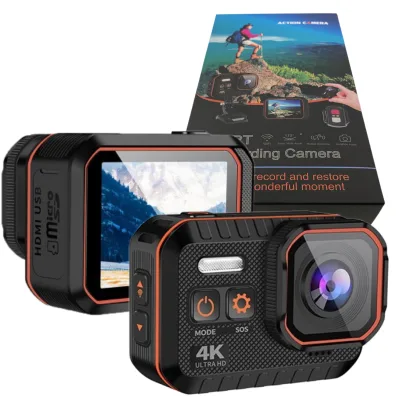
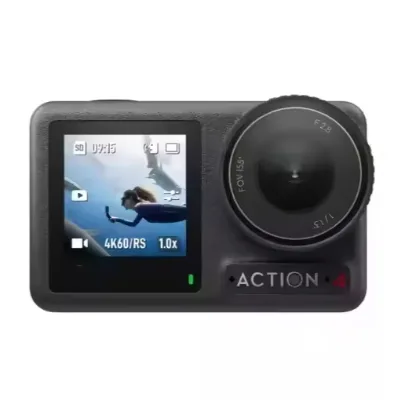


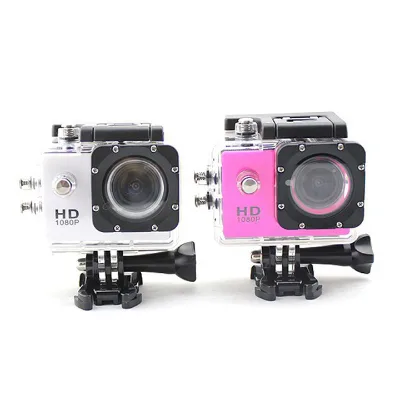

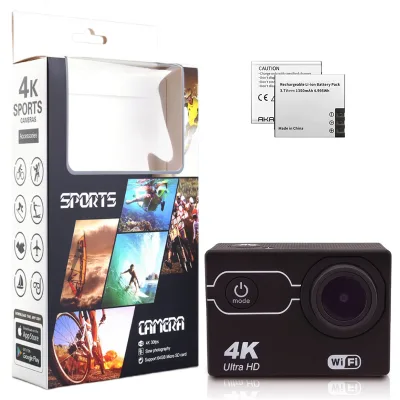
Waterproof 4K Motorcycle Helmet Cam Anti-Shock DVR Fishing Action Camera
$44.00 - $49.00
MOQ: 50 Pieces

Wholesale Zoom Action Cam Wide Angle Recorder Record Anti-Shock Waterproof Underwater Camera
$45.00 - $51.00
MOQ: 50 Pieces

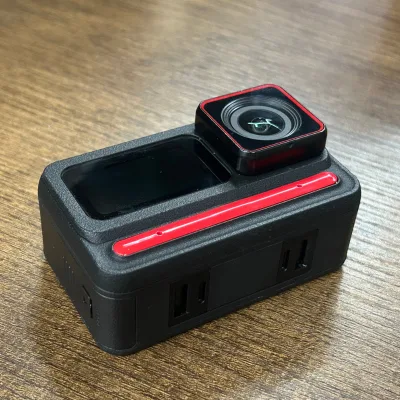
Hot Sale New Waterproof Thumb-Sized Action Cam Anti-Shock Outdoor Cycling Sports Camera
$73.00 - $82.00
MOQ: 30 Pieces

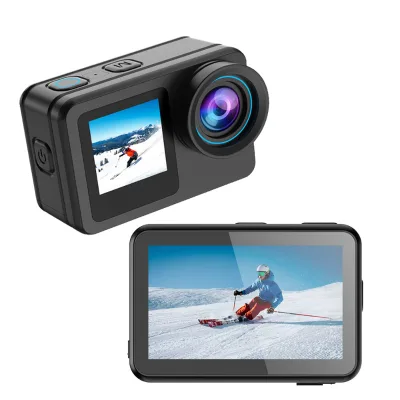
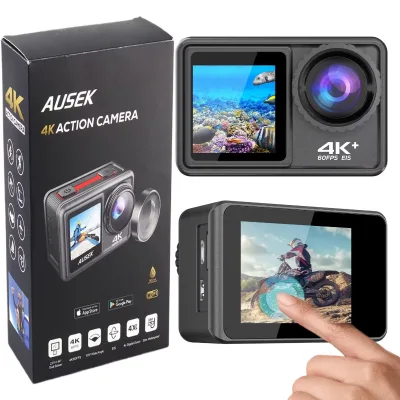
Hot Sale Dual Touchscreen Action Camera Bike Anti-Shock Diving Sports Camera
$49.00 - $55.00
MOQ: 50 Pieces


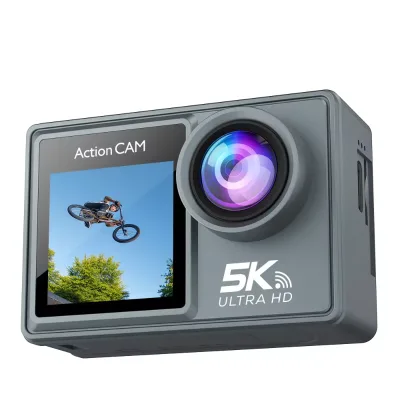


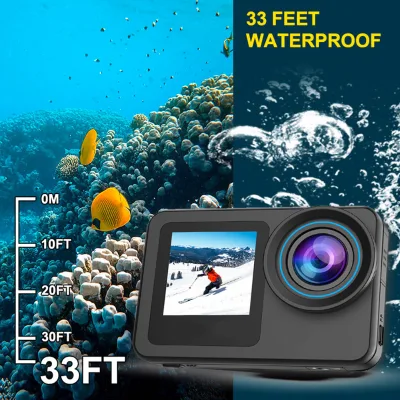
1080P 12MP Sports Camera Full HD 2.0 Inch Action Cam 30m/98FT Underwater Waterproof Action Camera
$48.00 - $49.05
MOQ: 500 Pieces

Comprehensive Sourcing Guide
Strategic Sourcing Guide for 4K Waterproof Action Cameras
Understanding the Product Landscape and Technical Baseline
When sourcing a 4K Waterproof Action Camera, buyers must first distinguish between the broad category of sports cameras and the specific technical realities presented in current market listings. The core keyword implies a device capable of high-resolution video capture in challenging environments, yet the available product data reveals a complex mix of specifications that require careful verification. The observed product range includes devices explicitly categorized as "Sports Camera" and "IP Camera," suggesting a convergence of consumer action gear and industrial monitoring solutions.
A critical observation from the current supply base is the variation in optical capabilities. Listings indicate optical zoom ranges between 21x and 40x, which is unusually high for standard action cameras that typically prioritize wide-angle field of view over magnification. Simultaneously, other entries highlight a 170-degree wide-angle lens, a standard requirement for immersive action footage. Buyers must reconcile these conflicting attributes. The presence of a 1/3-inch CMOS sensor and a 16-megapixel image sensor count suggests a focus on resolution, but the "4K" designation often requires specific compression formats and processing power that may vary by model. The data shows compression formats ranging from H.264 to Mjpeg, indicating that not all listed units may support modern, high-efficiency 4K encoding required for professional workflows.
Furthermore, the physical form factor is diverse. Some units feature a dual-screen setup with a 2.0-inch touch screen and a secondary 1.3-inch display, while others rely on a single 2.0-inch LCD. The body material is consistently noted as ABS, a durable plastic suitable for impact resistance, yet the "Body material" attribute also lists "Other" in some contexts, necessitating a request for specific material composition data. The "Nightshot" and "Anti-shake" features are highlighted as additional functions, which are critical for low-light action scenarios, but the effective distance for remote control is listed as ≥30m, a parameter that must be validated against the buyer's specific operational range requirements.
Compliance, Certification, and Regulatory Standards
Navigating the regulatory landscape is paramount when importing action cameras, particularly those marketed with waterproof capabilities. The supplied product data confirms that a significant portion of the available inventory carries certifications including CE, FCC, RoHS, and EMI/EMC. These are standard requirements for electronic devices sold in the European Union (CE), the United States (FCC), and for compliance with hazardous substance restrictions (RoHS). The presence of EMI/EMC certification is particularly relevant for devices utilizing wireless technology, as listed under the "Technology" attribute as "Wireless."
However, buyers must exercise caution. While the data lists "Certification: CE,FCC,RoHS,EMI/EMC" for some models, other entries only list "CE,FCC,RoHS." This discrepancy indicates that not every unit in the catalog may possess the full suite of electromagnetic compatibility testing. For a 4K camera, which generates significant data throughput and often operates in proximity to other sensitive electronics, the EMI/EMC compliance is not merely a formality but a technical necessity to prevent signal interference.
The "prod_standard" attribute further reinforces the need for ISO compliance, listing "CE, ISO, FCC, ROHS." The specific ISO standard is not detailed in the provided text, but for waterproof electronics, ISO 9001 (quality management) and specific IP rating standards (such as IP67 or IP68) are the industry benchmarks. The product descriptions mention "Waterproof / Weatherproof" and "5M BODY waterproofness," but these are observational attributes rather than verified test results. Buyers should not assume that a "5M" claim equates to a certified IP68 rating without requesting the specific test report from the manufacturer. The "Vandal-proof" feature listed for some models suggests a ruggedized design, but this term is often used loosely in marketing and should be defined by specific impact resistance standards (e.g., IK ratings) during the supplier evaluation phase.
Cost Drivers and Pricing Dynamics
The pricing structure for action cameras in this category is highly volatile, with an observed range spanning from $3.90 to $538.00 USD. This massive disparity is not indicative of a single product tier but rather reflects a spectrum of product types, from basic entry-level modules to premium kits. The lower end of the price range likely corresponds to basic sensor modules or cameras with limited features, while the upper end may include comprehensive kits such as the "Osmo Action 4 Standard Kit" or "All-in-One Set," which bundle accessories like extension sticks, wristbands, and handlebar clamps.
Several factors drive these costs. First, the "Model Number" varies significantly, with some listings referencing specific high-end kits (e.g., Osmo Action series) while others use generic codes (e.g., SHJ-MTR80, SHJ-MTR40). The presence of "Private Mold" as a "Yes" attribute suggests that some manufacturers offer custom tooling, which increases the initial investment but allows for unique branding and design, potentially justifying a higher price point. The "Style: OEM" attribute further indicates that many suppliers are prepared to manufacture white-label products, which can affect the unit cost based on order volume and customization complexity.
The "Selling Units" are listed as "Single item," but the "MOQ" (Minimum Order Quantity) ranges from 1 to 5000 units. This wide MOQ range implies that buyers can source small batches for testing or market validation, but significant cost reductions are likely only available at higher volumes. The "Single gross weight" of 0.800 kg and "Single package size" of 24x13x9 cm are critical logistics variables. These dimensions and weights directly influence shipping costs, especially for air freight, which is often used for high-value electronics. Buyers must calculate the landed cost by factoring in these physical attributes, as a 5000-unit order with these dimensions will require substantial freight capacity.
Typical Applications and Functional Versatility
The functional attributes of the available cameras suggest a dual-purpose application profile, serving both consumer recreational markets and industrial monitoring needs. The "Type" is explicitly listed as "Sports Camera," pointing to use cases in extreme sports, adventure travel, and lifestyle content creation. Features like "Anti-shake," "Nightshot," and "Wideangle 170°" are essential for capturing stable, immersive footage in dynamic environments where the camera is subject to high vibration and rapid movement.
Conversely, the classification as "IP Camera" and the inclusion of "Remote Control" with an "Effective Distance" of ≥30m suggest applications in security, surveillance, and remote monitoring. The "Waterproof / Weatherproof" and "Vandal-proof" features make these units suitable for outdoor security installations in harsh weather conditions. The "Built-in memory size: 0" is a notable constraint; it indicates that these devices rely entirely on external storage, specifically "X MicroSD" media. This requires buyers to consider the total cost of ownership, including the purchase of high-endurance MicroSD cards capable of handling continuous 4K recording.
The "USB Port" specification, supporting "Type-C" and "Msdc Mode and PC Cam," highlights the versatility of these devices for direct computer connection. This feature is valuable for immediate video transfer, live streaming, or using the camera as a high-resolution webcam, expanding its utility beyond traditional action recording. The "Battery: 750mAh" capacity is a standard specification for compact action cameras, but buyers should verify the actual battery life under 4K recording conditions, as high-resolution video consumption can be substantial. The "Customization: Available" attribute allows for branding and firmware modifications, making these cameras suitable for corporate training, fleet monitoring, or specialized industrial inspections where a branded solution is required.
Supplier Evaluation and Quality Assurance Protocols
Evaluating suppliers for action cameras requires a rigorous approach to verifying the claims found in product listings. The "Place of Origin" is consistently listed as "Guangdong, China," a major manufacturing hub known for electronics. However, the presence of multiple model numbers and varying certification lists necessitates a deep-dive audit. Buyers should prioritize suppliers who can provide third-party test reports for the specific certifications listed (CE, FCC, RoHS, EMI/EMC) rather than relying on self-declared compliance.
Quality control should focus on the waterproofing claims. The listing mentions "5M BODY waterproofness," but this must be validated through independent pressure testing. Buyers should request a copy of the waterproof test report, specifically looking for the IP rating (e.g., IP67) and the duration of submersion tested. Additionally, the "Image Sensor: CMOS" and "Megapixel: About 16MP" should be verified against actual image samples. The term "About" suggests a margin of error, and buyers should demand sample units to test the actual resolution and low-light performance, particularly the "Nightshot" capability.
The "Private Mold" and "OEM" attributes indicate that the supplier has the capability for customization. Buyers should assess the supplier's R&D capabilities and their track record with previous OEM projects. The "Screen Size" variations (2.0-inch vs. 2.0-inch + 1.3-inch) require a visual inspection of the display quality and touch responsiveness. The "Lens" specifications, such as "170 Degree Wide Angle" or "140° HD Wide-Angle Lens," should be measured to ensure the field of view matches the marketing claims. Finally, the "Connection" type (USB 2.0 vs. Type-C) and "Compression Format" (H.264 vs. Mjpeg) must be confirmed to ensure compatibility with the buyer's existing software and hardware infrastructure.
Long-Term Procurement and Supply Chain Stability
For long-term procurement, buyers must consider the supply chain stability and the lifecycle of the products. The "Model Number" variations, including specific kits like "Osmo Action 360° Wristband" or "GPS Bluetooth Rem," suggest a complex ecosystem of accessories. Buyers should ensure that the supplier can maintain a consistent supply of these accessories over the product's lifecycle to avoid obsolescence issues. The "Single package size" and "Single gross weight" are critical for warehousing and distribution planning. A consistent package size allows for optimized palletization, reducing shipping costs and storage inefficiencies.
The "Customization: Available" feature offers a strategic advantage for building a unique brand identity. However, customization often comes with a longer lead time and higher MOQ. Buyers should negotiate clear timelines for custom mold development and production runs. The "Remote Control" functionality and "Support WIFI" features rely on software stability. Buyers should inquire about the supplier's firmware update policy and their ability to push security patches or feature updates to the devices in the field.
Finally, the "Compatible Brand: Other" attribute implies that these devices are often generic or white-label. Buyers should be aware of potential intellectual property risks and ensure that the supplier has the rights to manufacture and sell the specific models. The "Feature: Durable" claim should be backed by a warranty policy that covers defects in materials and workmanship. Establishing a long-term partnership with a supplier who can provide consistent quality, reliable certifications, and responsive after-sales support is essential for the successful deployment of 4K waterproof action cameras in any market.
FAQs
What certifications do these cameras have?
The available units carry CE, FCC, RoHS, and EMI/EMC certifications. Buyers must verify specific test reports as some listings only show partial compliance without the full electromagnetic compatibility suite.
How much does the minimum order quantity vary?
The minimum order quantity ranges from 1 to 5000 units depending on the supplier. Lower volumes suit testing, while significant cost reductions typically require higher volume commitments.
Which lens angles are available for wide-angle shots?
Options include 170-degree and 140-degree wide-angle lenses. Some models also feature optical zoom between 21x and 40x, which is unusual for standard action cameras.
Can these cameras be customized with private molds?
Yes, customization is available and some units feature private molds. This allows for unique branding and design but may increase the initial investment for tooling.
What is the waterproof rating for the body?
Some listings claim 5-meter body waterproofness with weatherproof features. Buyers should request independent pressure test reports to confirm the specific IP rating rather than relying on marketing claims.
Where are these cameras manufactured?
The place of origin is consistently listed as Guangdong, China. This region is a major hub for electronics manufacturing, offering various supplier options for sourcing.
How much does the single package weigh?
The single gross weight is 0.800 kg per unit. This weight impacts shipping costs, especially for air freight, and must be factored into the total landed cost calculation.