Source Airless PP Lotion Bottle with Silvery Edge for Cosmetics, Serums, and Creams
Compare 30 verified listings for the Airless PP Lotion Bottle with Silvery Edge designed for cosmetics, serums, and hand care creams. Buyers can evaluate customization options, packaging standards, and OEM/ODM capabilities from suppliers in Zhejiang and Ningbo.
Key considerations
Products List


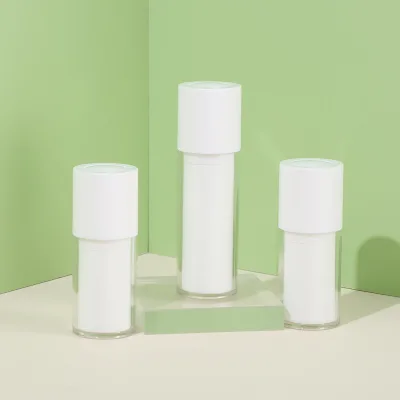


Versatile Airless Lotion Bottle - Customizable for Skin Care Applications
$0.40 - $0.50
MOQ: 10000 Pieces


Comprehensive Sourcing Guide
Strategic Sourcing Guide for Airless PP Lotion Bottles with Silvery Edge
Understanding Technical Specifications and Material Composition
When sourcing an airless PP (polypropylene) lotion bottle with a silvery edge, buyers must first establish a clear understanding of the technical parameters that define the product's functionality and aesthetic appeal. The core material for the bottle body is typically polypropylene, a thermoplastic polymer known for its chemical resistance, durability, and suitability for packaging personal care products. In the context of the available market data, specific material compositions may vary, with some listings indicating the use of SAN (Styrene Acrylonitrile) and aluminum (ALU) components in conjunction with PP to achieve specific barrier properties or structural integrity. The "silvery edge" mentioned in the core keyword often refers to a decorative metallic finish, which can be applied through processes such as hot stamping or specific molding techniques that incorporate metallic pigments into the plastic or apply a foil layer.
The functional design of an airless pump bottle is critical for preserving the integrity of the product inside. Unlike traditional bottles that rely on gravity or suction, airless systems utilize a piston mechanism that rises as the product is dispensed, preventing air from entering the container. This design is essential for products containing active ingredients, such as serums, lotions, and creams, which can degrade upon exposure to oxygen. The standard capacities observed in the current market for these types of bottles range significantly, with common sizes including 15ml, 30ml, 50ml, 100ml, 150ml, and up to 200ml. Buyers should verify the exact capacity requirements for their specific formulation, as the internal volume directly impacts the piston travel distance and the overall height of the bottle.
The shape of the bottle is another defining technical characteristic. While the market data highlights a prevalence of round bottles, which offer a classic and ergonomic form factor, the customization options allow for variations. The "silvery edge" feature is often applied to the neck or the collar of the bottle, creating a visual contrast against the white or clear body of the PP material. This aesthetic detail is frequently achieved through silk screen printing, hot stamping, or labeling, as noted in the production capabilities of various suppliers. The sealing type is universally identified as a pump sprayer or a standard airless pump mechanism, ensuring a precise and controlled dispensing action.
Compliance, Certification, and Regulatory Standards
Navigating the regulatory landscape is a fundamental step in the procurement of cosmetic packaging. For products intended for the global market, particularly in Europe and North America, compliance with international standards is non-negotiable. The available data indicates that suppliers often hold CE and ISO9001 certifications. The CE marking signifies that the product meets EU safety, health, and environmental protection requirements, which is crucial for any item entering the European Economic Area. Similarly, ISO9001 certification demonstrates that the manufacturer adheres to a quality management system that ensures consistent product quality and continuous improvement.
Buyers must verify that the specific airless bottles they select comply with relevant food contact and cosmetic safety regulations. While the provided data mentions ISO9001:2015 as a background standard, the primary focus should be on the material's safety for direct contact with cosmetics. Polypropylene is generally recognized as safe for cosmetic applications, but the presence of aluminum or other metals in the "silvery edge" component requires scrutiny to ensure no leaching of heavy metals occurs. The supplier should be able to provide documentation confirming that the materials used meet the specific migration limits set by regulations such as the EU's Regulation (EC) No 1935/2004 or the US FDA guidelines for cosmetic packaging.
Furthermore, the manufacturing process itself must be validated. The "High Quality" attribute observed in supplier listings suggests a commitment to rigorous production standards, but buyers should request specific test reports regarding the mechanical strength of the pump mechanism and the chemical resistance of the bottle. The "Non Spill" feature mentioned in the data is a performance claim that should be verified through drop tests and tilt tests to ensure the seal remains intact during transit. It is also important to confirm that the packaging materials, such as the cartons used for export, meet the "Safe Export Pack" standards to prevent damage during long-distance shipping.
Cost Drivers and Pricing Dynamics
The pricing of airless PP lotion bottles is influenced by a complex interplay of factors, including material costs, customization requirements, order volume, and manufacturing complexity. The observed price range in the market spans from $0 to $1.30 USD, a wide variance that reflects differences in order quantities, material grades, and the extent of customization. For instance, a basic white bottle with a standard pump may fall at the lower end of this spectrum, while a bottle with a custom silvery edge, specific branding, and a high-capacity piston mechanism will command a higher price.
Order Volume is perhaps the most significant cost driver. The Minimum Order Quantity (MOQ) varies widely, with some suppliers offering as low as 10 units for sampling purposes, while standard production runs often require MOQs of 5,000 to 10,000 pieces. The data indicates a high-confidence fact of an MOQ of 5,000 pieces for certain configurations, while others list 10,000 pieces. Buyers must balance their inventory needs against the per-unit cost savings achieved through larger orders. The "Selling Units" are typically listed as single items, but the economic reality of B2B procurement dictates that unit costs decrease as volume increases.
Customization is another major factor affecting cost. The availability of OEM/ODM services allows buyers to tailor the bottle's color, shape, and printing. The "Customized" color option and the ability to add silvery edges via hot stamping or silk screen printing add layers of complexity to the production process, which can increase the unit price. Additionally, the lead time for production, which is noted as 7-10 days for some suppliers, can impact costs if expedited shipping is required. Buyers should also consider the cost of samples, which are often provided freely, but the shipping costs for these samples must be factored into the overall budget.
Typical Applications and Market Fit
Airless PP lotion bottles with silvery edges are predominantly used in the cosmetics and personal care industry. The "Usage" field in the product data explicitly lists applications such as lotions, creams, essences, hand care creams, and serums. The airless mechanism is particularly beneficial for products that are sensitive to oxidation or contamination, such as vitamin C serums, retinol creams, and high-end moisturizers. The "silvery edge" adds a premium aesthetic appeal, making these bottles ideal for luxury brands or products positioned in the mid-to-high market segment.
The versatility of the bottle's design allows it to accommodate a wide range of viscosities. The piston system ensures that even thick creams and gels can be dispensed efficiently without leaving residue at the bottom of the bottle. This is a significant advantage over traditional bottles where product waste is common. The "Non Spill" feature further enhances the user experience, making these bottles suitable for travel and daily use. The "Round Bottle" shape is ergonomic and fits well in the hand, while the "Silvery Edge" provides a distinctive visual identity that can help a brand stand out on retail shelves.
The market data also highlights the use of these bottles for "Cosmetics" and "Personal Care Product" applications. This broad applicability means that buyers can source a single type of bottle for multiple product lines, streamlining their supply chain. The availability of various capacities, from 15ml to 200ml, allows brands to offer travel sizes, full-size products, and bulk refills using the same packaging family. The "Custom Order" acceptance further supports the ability to tailor the packaging to specific marketing campaigns or seasonal collections.
Supplier Evaluation and Selection Criteria
Selecting the right supplier is critical to ensuring the quality and reliability of the airless PP lotion bottles. Buyers should prioritize suppliers who demonstrate a strong track record in customization and quality management. The presence of ISO9001 and CE certifications is a good starting point, but it is essential to verify the validity and scope of these certifications. Suppliers should be able to provide detailed information about their manufacturing facilities, including their location, which is often cited as Zhejiang or Ningbo in China, regions known for their packaging industry clusters.
The ability to provide samples is a key indicator of a supplier's confidence in their product. The data mentions that samples are "Freely Provide," which allows buyers to physically inspect the quality of the silvery edge, the smoothness of the pump action, and the overall finish of the bottle. Buyers should also evaluate the supplier's responsiveness to customization requests, such as specific color matching or unique printing techniques. The "OEM/ODM: Customization Available" and "Acceptable" attributes suggest that suppliers are flexible, but the buyer must ensure that the supplier has the technical capability to execute the desired design without compromising quality.
Lead time and delivery reliability are also crucial factors. While some suppliers list a delivery cycle of 7-10 days, buyers should confirm this timeline in the context of their specific order volume and customization requirements. The "Safe Export Pack" attribute indicates that the supplier understands the importance of protecting the product during transit, but buyers should request photos or videos of the packaging process to ensure that the bottles are adequately protected. Finally, the supplier's willingness to engage in a long-term partnership and provide after-sales support should be considered, as this can mitigate risks associated with supply chain disruptions.
Quality Control and Long-Term Procurement Considerations
Implementing a robust quality control (QC) strategy is essential for maintaining the integrity of the airless PP lotion bottles. Buyers should establish clear acceptance criteria for the silvery edge, ensuring that the finish is consistent and free from defects such as peeling, scratching, or uneven application. The "High Quality" claim in the data should be validated through rigorous testing, including drop tests, leak tests, and pump cycle tests to ensure the mechanism functions correctly over time. The "Non Spill" feature must be verified under various conditions, including different temperatures and orientations.
Long-term procurement considerations involve building a sustainable relationship with the supplier. This includes negotiating favorable terms for volume discounts, ensuring consistent supply availability, and establishing clear communication channels for addressing any quality issues. The "Custom Order" capability suggests that the supplier can adapt to changing market needs, but buyers should ensure that the supplier has the capacity to scale production as demand grows. The "Refill: No" attribute indicates that these are single-use containers, so buyers should also consider the environmental impact of the packaging and explore options for recyclable materials or sustainable manufacturing practices.
In conclusion, sourcing airless PP lotion bottles with a silvery edge requires a comprehensive approach that balances technical specifications, regulatory compliance, cost efficiency, and supplier reliability. By carefully evaluating the available data and conducting thorough due diligence, buyers can secure high-quality packaging that meets their brand's standards and customer expectations. The flexibility of the product design, combined with the robustness of the airless mechanism, makes these bottles a versatile choice for the modern cosmetics industry.
FAQs
Can I get customized colors for Airless PP Lotion Bottle with Silvery Edge?
Yes, customized colors are available for Airless PP Lotion Bottle with Silvery Edge. Buyers can request any color as per their specific requirements, and the supplier accepts custom orders to match brand identity.
What certifications do Airless PP Lotion Bottle with Silvery Edge manufacturers hold?
Manufacturers of Airless PP Lotion Bottle with Silvery Edge typically hold CE and ISO9001 certifications. These credentials ensure the products meet international safety and quality management standards for cosmetic packaging applications.
Which capacities are standard for Airless PP Lotion Bottle with Silvery Edge?
Standard capacities for Airless PP Lotion Bottle with Silvery Edge include 15ml, 30ml, 50ml, 100ml, 150ml, and 200ml. Specific models like SWC-BPA50-50 support these volumes to suit various cosmetic formulations.
How long is the delivery cycle for Airless PP Lotion Bottle with Silvery Edge?
The delivery cycle for Airless PP Lotion Bottle with Silvery Edge is typically 7 to 10 days. This lead time applies to standard production runs, though larger custom orders may require additional processing time.
What is the minimum order quantity for Airless PP Lotion Bottle with Silvery Edge?
The minimum order quantity for Airless PP Lotion Bottle with Silvery Edge varies between 10 and 30,000 pieces depending on the supplier. Some configurations require 5,000 or 10,000 pieces, while samples can be obtained with lower quantities.
Can suppliers provide free samples of Airless PP Lotion Bottle with Silvery Edge?
Yes, suppliers can freely provide samples of Airless PP Lotion Bottle with Silvery Edge. This allows buyers to verify the quality of the silvery edge finish and the pump mechanism before committing to a large production order.
Which materials are used for Airless PP Lotion Bottle with Silvery Edge?
Airless PP Lotion Bottle with Silvery Edge is primarily made from PP, SAN, and aluminum components. These materials ensure chemical resistance and structural integrity suitable for lotions, creams, and serums in the cosmetic industry.