Source Anti-Slip Golf Training Grips for Practice Competition and Training
Find 30 verified listings for Anti-Slip Golf Training Grips made from rubber, leather, or TPE. Buyers can compare specifications like core size, weight, and customization options from suppliers in China.
Key considerations
Products List


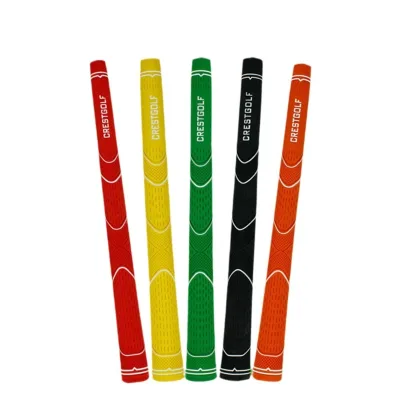
Custom Multi Color Golf Grips OEM Standard Non-Slip Rubber Golf Club Grips
$3.59 - $3.99
MOQ: 100 Pieces




Comprehensive Sourcing Guide
Strategic Sourcing Guide for Anti-Slip Golf Training Grips
The global demand for specialized golf training equipment has driven a significant shift toward high-performance, anti-slip grips designed to enhance muscle memory and swing consistency. For procurement professionals and B2B buyers, sourcing these components requires a nuanced understanding of material science, manufacturing standards, and supply chain logistics. The market offers a diverse array of options, ranging from standard rubber compounds to advanced TPE (Thermoplastic Elastomer) and silicone formulations. This guide provides a comprehensive framework for evaluating suppliers and selecting the right anti-slip golf training grips based on verified product attributes and industry best practices.
Technical Specifications and Material Composition
The foundational element of any anti-slip golf training grip is its material composition. The supplied product data indicates a prevalence of rubber and TPE materials, both of which are critical for achieving the necessary friction coefficients required for training. Rubber grips are often favored for their durability and traditional feel, while TPE offers a softer, more responsive texture that can reduce hand fatigue during extended practice sessions. Buyers must verify the specific material grade, as the "Eco-Friendly" attribute observed in certain listings suggests a growing market segment focused on sustainable manufacturing processes.
Dimensional consistency is equally vital for training applications. The data highlights specific core sizes, such as 0.58 inches, and overall dimensions like a 10.50-inch length for oversize models. These measurements are not arbitrary; they directly influence the grip size classification (undersize, standard, oversize) which dictates the training outcome. For instance, an oversize grip with a top diameter of 1.41 inches and a core diameter of 1.06 inches is specifically engineered to reduce wrist action, promoting a straighter swing path. Procurement teams must ensure that the supplier's production runs strictly adhere to these tolerances, as even minor deviations can alter the training mechanics. Weight is another critical specification, with observed values ranging from 41g to 58g. The standard weight of 50g ±3g suggests a need for precise manufacturing control to ensure the club's balance point remains consistent across the batch.
Compliance, Certification, and Quality Standards
In the B2B procurement of sports equipment, compliance with international standards is non-negotiable. The available data references specific certifications such as SGS, which indicates that the supplier has undergone third-party testing for material safety and quality. Buyers should explicitly request current SGS reports or equivalent certifications (such as ASTM or ISO standards) to verify that the materials used do not contain harmful substances like phthalates or heavy metals. The "Eco-Friendly" label observed in the product attributes further necessitates verification of environmental compliance, ensuring that the manufacturing process meets relevant sustainability regulations.
Furthermore, the structural integrity of the grip is paramount. One of the listed standards mentions a "360-degree grip," which implies a design feature intended to provide uniform traction regardless of hand rotation. While this is a functional claim, it must be validated through physical testing rather than relying solely on marketing descriptions. Buyers should inquire about the specific testing protocols used to verify this claim, including torque resistance and abrasion tests. The presence of a "New" condition status and "Customized" capabilities suggests that suppliers are capable of producing fresh inventory tailored to specific client needs, but this customization must not compromise the baseline quality standards established by the core product specifications.
Cost Drivers and Pricing Dynamics
Understanding the cost structure of golf grips is essential for effective budget management. The observed price range of $0.37 to $9.07 USD reflects a wide spectrum of product complexity, material quality, and branding. The lower end of this range typically corresponds to standard rubber grips with minimal customization, while the higher end likely encompasses premium TPE or silicone models with advanced texturing, custom logos, and specialized packaging. Several factors drive these costs, including the complexity of the molding process, the cost of raw materials (especially for eco-friendly or high-performance elastomers), and the extent of customization required.
Customization is a significant cost driver. The data confirms that "Customization" and "Logo" services are available, allowing buyers to brand the grips with their own corporate identity or training program logos. However, this level of personalization often incurs additional setup fees and higher unit costs. Additionally, the "MOQ" (Minimum Order Quantity) varies significantly, with observed ranges from 1 to 500 units, and specific listings noting 300 pieces per design. Higher MOQs generally correlate with lower unit prices due to economies of scale in production. Buyers must balance their immediate inventory needs against the cost benefits of larger orders, considering that the "Production Time" is listed as 25-30 days, which impacts cash flow and inventory planning.
Typical Applications and Usage Scenarios
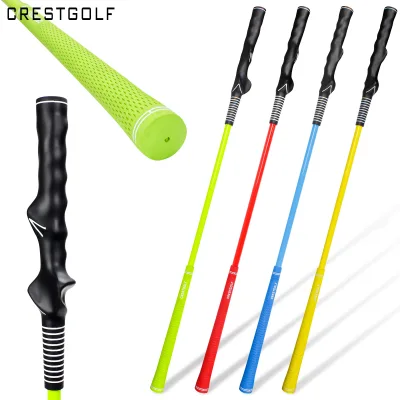
The versatility of anti-slip golf training grips allows them to serve multiple functions within the golf ecosystem. The primary application is clearly identified as "Golf Training," where the specific design features, such as oversize dimensions and textured surfaces, are utilized to correct swing flaws and build muscle memory. However, the data also lists "Entertainment" and "Racing" as usage categories, suggesting that these grips may be adapted for recreational golf events or competitive training scenarios where grip security is paramount under high-stress conditions.
Another notable application is "Gift" usage, where the aesthetic appeal and branding potential of the grips make them suitable for promotional items or corporate giveaways. The availability of various colors, including black, blue, red, yellow, and green, supports this use case by allowing buyers to align the product with specific brand colors or event themes. The "Suitable for: Golf Training, Competition and Practice" attribute confirms that these products are designed to withstand the rigors of regular use, making them appropriate for professional academies, driving ranges, and amateur clubs alike. Buyers should match the specific grip specifications to the intended user demographic; for example, heavier, oversize grips may be better suited for beginners, while lighter, standard-sized grips might be preferred by advanced players.
Supplier Evaluation and Operational Capabilities
Selecting the right supplier requires a rigorous evaluation of their operational capabilities and logistical reliability. The data indicates that suppliers are located in key manufacturing hubs such as Xiamen, Zhongshan Guangdong, and generally within Guangdong, China. These regions are known for their established supply chains in the sports goods industry, offering access to high-quality raw materials and skilled labor. Buyers should verify the supplier's "Place of Origin" and ensure it aligns with their sourcing strategy regarding lead times and shipping costs.
Production capacity and lead times are critical factors in supplier selection. The observed "Sample Time" of 20 days and "Prodution Time" of 25-30 days highlight the importance of early planning. Buyers must account for these timelines when scheduling production runs to avoid delays in inventory replenishment. Additionally, the "Customized" nature of the products implies that the supplier must have flexible manufacturing lines capable of handling small-batch custom orders alongside large-scale production runs. The ability to provide "Carton" or "OPP Poly Bag" packaging options further demonstrates the supplier's adaptability to different client requirements. Buyers should assess the supplier's track record in meeting these timelines and their responsiveness to quality issues.
Quality Control and Long-Term Procurement Considerations
Maintaining consistent quality over time is a challenge in the procurement of molded rubber and TPE products. The "Standard" of "50 pcs in a PE bag" and "300 pcs in a carton" provides a baseline for packaging, but buyers must implement robust quality control measures to ensure that every unit meets the specified weight, dimensions, and material properties. The "Weight" variance of ±3g suggests a need for statistical process control to maintain consistency. Regular audits of the production line and random sampling of finished goods are recommended to verify that the "360-degree grip" and other functional claims hold true across different batches.
Long-term procurement strategies should focus on building a resilient supply chain. This involves diversifying suppliers to mitigate risks associated with geopolitical issues or raw material shortages. Buyers should also consider the "Eco-Friendly" aspect as a long-term trend, ensuring that their suppliers are committed to sustainable practices to meet future regulatory requirements and consumer expectations. The availability of "Customized" options allows for continuous product evolution, enabling buyers to adapt their offerings to changing market demands. By maintaining clear communication channels and establishing mutually beneficial relationships with suppliers, buyers can ensure a steady supply of high-quality anti-slip golf training grips that meet their specific operational and strategic goals.
Comparative Analysis of Product Attributes
To facilitate informed decision-making, the following table summarizes key product attributes observed in the market, highlighting the variations buyers may encounter.
| Attribute | Standard Observation | Variations & Notes |
|---|---|---|
| Material | Rubber, TPE, Silicone | Some listings specify "Eco-Friendly" materials; verify chemical composition. |
| Core Size | 0.58 Inch | Oversize models may have different core diameters (e.g., 1.06in). |
| Weight | 50g ±3g | Range observed from 41g to 58g depending on model and size. |
| MOQ | 100 - 500 PCS | Specific designs may require 300 PCS minimum; verify per design. |
| Lead Time | 25-30 Days Production | Sample time is typically 20 days; plan accordingly for full orders. |
| Packaging | Carton, PE Bag, OPP Bag | Options include 50 pcs/PE bag or 50 pcs/OPP bag; 300 pcs/carton. |
| Origin | China (Xiamen, Guangdong) | Verify specific city for logistics planning and tariff implications. |
| Certification | SGS | Request current reports; verify "Eco-Friendly" claims with documentation. |
This comparative analysis underscores the importance of detailed specification verification. While the table provides a snapshot of common attributes, the actual product specifications can vary significantly based on the specific model number (e.g., Golf Grips 231031 vs. GP-STM005). Buyers must treat these attributes as observations and confirm the exact details with the supplier before finalizing any purchase agreement. By adhering to these guidelines, procurement professionals can effectively navigate the complex landscape of anti-slip golf training grips, ensuring they source products that deliver value, quality, and reliability.
FAQs
What materials are used for Anti-Slip Golf Training Grips?
These grips are primarily made from rubber, TPE, and silicone. Some listings specify eco-friendly materials, while others offer leather options for specific training applications.
Can I customize the logo on these golf grips?
Yes, customization and logo printing are available for these products. Buyers can request specific branding, though this may affect the minimum order quantity and production timeline.
What is the typical minimum order quantity for these grips?
The minimum order quantity ranges from 1 to 500 pieces depending on the supplier. Specific designs often require a minimum of 300 pieces per design to proceed with production.
How long does production take for custom golf grips?
Production time typically takes 25 to 30 days after sample approval. Sample preparation usually requires about 20 days, so buyers should plan their inventory schedules accordingly.
Which certifications do these golf grip manufacturers hold?
Some suppliers provide SGS certification for material safety and quality. Buyers should request current reports to verify compliance with international standards and eco-friendly claims.
Where are these golf grips manufactured?
Manufacturing locations include Xiamen and Zhongshan in Guangdong, China. These regions are established hubs for sports goods, offering reliable supply chains for bulk orders.