Source anti-spy privacy tempered glass for phones, cars, and appliances
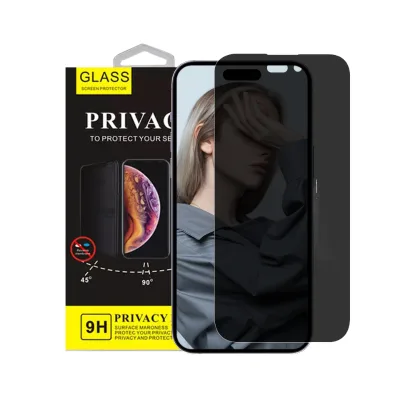
Compare 30 listings for anti-spy privacy tempered glass designed for mobile phones, automotive manufacturing, and home appliances. Buyers can evaluate features like 9H hardness, 2.5D or 3D radian options, and various glue materials from suppliers in Guangdong, China.
Key considerations
Products List




The Manufacturer Produces Custom High-Security Tempered Glass and Transparent Glass.
$8.00 - $15.00
MOQ: 100 Square Meters

The Manufacturer Produces High-Security Tempered Glass and Custom-Made Transparent Glass.
$8.00 - $15.00
MOQ: 100 Square Meters


Privacy Tempered Glass 10 mm Tempered Glass Laminated Tempered Glass with Plywood Packing
$5.00 - $22.00
MOQ: 500 Square Meters


Smart Dimming Privacy Glass with Atomization Technology for Homes
$0.99 - $99.99
MOQ: 500 Square Meters

Smart Privacy Glass with Advanced Dimming and Atomization Features
$0.99 - $99.99
MOQ: 500 Square Meters
Comprehensive Sourcing Guide
Strategic Sourcing Guide for Anti-Spy Privacy Tempered Glass
Understanding the Technical Architecture of Privacy Glass
The core of a successful procurement strategy for anti-spy privacy tempered glass begins with a precise understanding of the product's technical architecture. Unlike standard transparent screen protectors, privacy glass relies on specific optical engineering to restrict viewing angles. The supplied product data indicates that the raw material composition is critical, often utilizing a blend of tempered glass, silicone, and specific adhesive technologies such as premium Crown Brand AB glue or high-aluminum substrates paired with premium Korea privacy glue. These materials are not merely structural; they define the optical performance and the durability of the privacy filter.
A primary technical differentiator observed in the market is the surface finish and edge treatment. The product attributes highlight "Flat Tempered" and "2.5D" or "3D" radian options. The 2.5D edge treatment provides a smooth, rounded transition that enhances the tactile feel and reduces the risk of chipping during application, while 3D radian designs are often associated with full-cover protection for modern curved displays. The hardness of the glass is a non-negotiable specification for durability, with the observed data consistently citing "9h Tempered Glass" or "9h Tempered Glass Film." This rating indicates a high resistance to scratching from common abrasive materials, ensuring the screen remains clear and functional over time.
Furthermore, the fragmentation state of the glass is a vital safety consideration. The data points to a "Fragment State: I," which typically refers to a specific classification of how the glass breaks. In the context of safety glass, this implies a controlled breakage pattern where the glass shatters into small, relatively harmless granules rather than sharp, dangerous shards. This is particularly important for applications in automotive manufacturing and daily products where user safety is paramount. The adhesive layer must also be anti-static to prevent dust accumulation, which can degrade the privacy effect and the visual clarity of the screen. Buyers must verify that the "Anti-Scratch," "Anti-Fingerprint," and "Oil-resistant" features are intrinsic to the glass coating and not merely superficial treatments that wear off quickly.
Compliance, Certification, and Standard Verification
When sourcing industrial-grade privacy glass, verifying compliance with international and regional standards is essential for mitigating legal and safety risks. The supplied facts explicitly mention compliance with "GB/T 9963-Steel Degree:Tempered Glass," which is a Chinese national standard for tempered safety glass. This standard defines the mechanical strength and safety requirements for the glass substrate. Additionally, the product attributes list "CE ISO" and "CCC" (China Compulsory Certification) as relevant standards. These certifications are not optional; they serve as proof that the manufacturing process adheres to specific safety and quality benchmarks required for market entry in Europe, China, and other regulated regions.
Buyers must exercise caution when interpreting these certifications. The presence of a standard code in a product listing does not automatically guarantee that every unit in a specific order is certified. Instead, procurement teams should request valid, up-to-date certification documents from the supplier for the specific batch being ordered. The "GB/T 9963" standard specifically addresses the tempering process, ensuring the glass meets the necessary impact resistance and fragmentation criteria. Similarly, the "CCC" mark is mandatory for products sold within China, while "CE" indicates conformity with health, safety, and environmental protection standards for products sold within the European Economic Area.
It is also crucial to distinguish between product standards and material specifications. Some listings may reference dimensions like "16x8x0.1mm" or "16x8x1mm" under the "prod_standard" attribute. These are likely dimensional specifications for specific models rather than universal safety standards. Buyers should not confuse physical dimensions with regulatory compliance. The verification process should focus on the "Standard" and "prod_standard" attributes that relate to safety and quality assurance, such as the GB/T and CE/CCC marks. If a supplier claims compliance with these standards, the buyer must ensure that the documentation is traceable and that the supplier has the authority to issue such certifications. This due diligence prevents the risk of importing non-compliant goods that could lead to customs seizures or liability issues in the event of product failure.
Cost Drivers and Pricing Dynamics
The pricing structure for anti-spy privacy tempered glass is influenced by a complex interplay of material costs, customization requirements, and order volume. The observed price range in the market spans from $0.3 to $167 USD, a significant variance that reflects the diversity of product configurations. The lower end of this spectrum likely corresponds to standard, non-customized models with basic privacy features and minimal packaging, while the higher end may include specialized 3D curved glass, high-end adhesives, or bulk industrial orders with complex OEM/ODM requirements.
One of the primary cost drivers is the raw material composition. The use of "Premium Crown Brand AB Glue" or "High Aluminum" substrates with "Premium Korea Privacy Glue" suggests that the adhesive technology is a significant portion of the cost. High-viscosity adhesives that ensure a bubble-free application and strong bonding often command a premium. Additionally, the hardness rating of "9h" and the specific fragmentation state contribute to the material cost, as the tempering process required to achieve these specifications is energy-intensive and requires precise quality control.
Order volume plays a decisive role in the final unit price. The observed Minimum Order Quantity (MOQ) ranges from 1 to 1000 units, with a specific high-confidence fact noting an MOQ of 100PCS for certain models. Buyers purchasing small quantities will face a higher per-unit cost, whereas those committing to larger volumes can negotiate better rates. The payment terms, listed as "T/T" (Telegraphic Transfer) or "Western Union," also influence the financial dynamics. Suppliers may offer discounts for upfront payments via T/T, which improves their cash flow and reduces financial risk.
Customization is another major factor affecting cost. The product attributes confirm that "Customization: Available" and "OEM/ODM: Acceptable." Developing a private mold, even though the data notes "Private Mold: No" for some standard items, implies that for custom designs, the supplier may need to invest in tooling. If a buyer requires a specific model number, such as "For Samsung A15 A16 Series" or "for iPhone 13 14 15 16 17," the supplier must align their production lines with these specific dimensions. The complexity of the "Luxury" or "Fashion" style attributes may also add to the cost if it involves special packaging or finishing touches. Buyers should expect the price to fluctuate based on the specific combination of material quality, customization level, and order quantity.
Typical Applications and Market Segmentation
The versatility of anti-spy privacy tempered glass makes it suitable for a wide array of applications, ranging from consumer electronics to industrial and automotive sectors. The supplied data explicitly lists "Building, Furniture, Home Appliance, Electronics & Instruments, Auto Manufacturing, Daily Products" as usage categories. This broad applicability underscores the importance of selecting the right product variant for the specific end-use environment.
In the consumer electronics sector, the primary application is mobile phone protection. The product models are specifically tailored for popular smartphone series, including "iPhone 13 14 15 16 17" and "Samsung A Series" (including A15 and A16). The "Privacy" feature is particularly valuable in this segment, where users frequently handle sensitive data in public spaces. The "Anti-Spy" and "Anti-Peeping" attributes directly address the need for data security, ensuring that only the user directly in front of the screen can view the content. The "2.5D Full Cover" design is ideal for modern smartphones with curved edges, providing comprehensive protection while maintaining the aesthetic appeal of the device.
Beyond mobile phones, the glass is utilized in "Electronics & Instruments" and "Home Appliance" applications. In these contexts, the glass serves as a protective interface for control panels, touchscreens, and display units. The "Anti-Scratch" and "Anti-Fingerprint" features are crucial here, as these devices are often subjected to frequent handling and cleaning. The "High Viscosity" adhesive ensures that the glass remains securely attached even in environments with temperature fluctuations or vibration.
The "Auto Manufacturing" application is another significant market segment. Privacy glass in vehicles can be used for rear-seat entertainment systems, dashboard displays, or infotainment units. The "Fragment State: I" specification is particularly relevant here, as safety glass in automotive applications must meet stringent crash safety standards. The glass must shatter safely in the event of an impact to prevent injury to passengers. Additionally, the "Building" and "Furniture" applications may involve the use of privacy glass in office partitions, meeting room displays, or smart home interfaces, where the combination of durability and privacy is essential.
Supplier Evaluation and Quality Control Protocols
Evaluating a supplier for anti-spy privacy tempered glass requires a rigorous assessment of their manufacturing capabilities, quality control systems, and logistical reliability. The data indicates that the "Place of Origin" is "Guangdong, China," a region known for its robust electronics manufacturing ecosystem. However, the location alone does not guarantee quality. Buyers should verify the supplier's adherence to the "GB/T 9963" standard and their ability to provide valid "CE ISO" and "CCC" certifications.
Quality control should be a central part of the evaluation process. The "Quality: Grade AAA" attribute suggests a high standard of production, but this claim must be substantiated. Buyers should request detailed quality control reports that include test results for hardness, fragmentation, and optical clarity. The "Anti-Scratch," "Anti-Fingerprint," and "Privacy" features should be tested to ensure they meet the specified performance levels. The "Fragment State: I" classification should be verified through third-party testing to confirm that the glass breaks safely under impact.
Logistical reliability is another critical factor. The "Delivery Time" is listed as "7-15 days," which is a standard lead time for this type of product. However, buyers should confirm this timeline based on their specific order volume and customization requirements. The "Product Name" and "Model Number" should be clearly defined to avoid confusion during the ordering process. The "Product Packing" options, such as "Wooden Crates or Plywood Crates" or "Carton," should be selected based on the fragility of the glass and the shipping distance. For international shipments, wooden crates may provide better protection against damage during transit.
Buyers should also assess the supplier's flexibility regarding "OEM/ODM" services. The ability to customize the product, including the "Raw Material" composition and "Style" (e.g., "Luxury" or "Fashion"), is a key differentiator. The "Payment" terms, such as "T/T" or "Western Union," should be clear and secure. Finally, the "MOQ" of 100PCS should be considered in the context of the buyer's inventory needs. Suppliers with lower MOQs may be more suitable for small businesses or testing phases, while those with higher MOQs may offer better economies of scale for large-scale procurement.
Long-Term Procurement and Strategic Considerations
Sourcing anti-spy privacy tempered glass is not merely a transactional activity but a strategic decision that impacts long-term business operations. The "Customization: Available" attribute indicates that suppliers are willing to adapt their products to meet evolving market demands. This flexibility is crucial for businesses that need to align their products with specific brand identities or emerging technology trends. The "OEM/ODM: Acceptable" status further supports this, allowing buyers to develop unique product lines that differentiate them from competitors.
Long-term procurement also involves managing the supply chain's resilience. The "Lead Time" of 7-15 days is relatively short, but buyers should plan for potential disruptions. Establishing a relationship with a supplier who can consistently meet quality standards and delivery timelines is essential. The "Payment" terms should be structured to balance cash flow needs with supplier security. For example, a tiered payment structure based on production milestones can help mitigate risks.
Another strategic consideration is the lifecycle of the product. The "Hardness: 9h" and "Fragment State: I" specifications suggest a product designed for durability and safety. However, buyers should monitor the performance of the glass over time to ensure that the "Anti-Scratch" and "Anti-Fingerprint" features remain effective. Regular quality audits and feedback loops with the supplier can help identify any degradation in product quality or manufacturing processes.
Finally, the "Keyword: Privacy Glass Screen Protector" highlights the growing demand for data security in the digital age. As privacy concerns increase, the market for anti-spy glass is likely to expand. Buyers should stay informed about emerging standards and technologies to ensure their procurement strategy remains competitive. By focusing on high-quality materials, robust compliance, and reliable suppliers, businesses can secure a steady supply of anti-spy privacy tempered glass that meets the needs of their customers and supports their long-term growth objectives.
FAQs
What certifications does anti-spy privacy tempered glass have?
The product holds CE, ISO, and CCC certifications for safety and quality compliance. These standards ensure the glass meets international requirements for tempered safety glass and market entry in regulated regions like Europe and China.
Which hardness rating is standard for this glass?
The standard hardness rating is 9h for the tempered glass film. This high rating provides strong resistance against scratches from common abrasive materials, ensuring the screen remains clear and functional over time.
How is the glass fragmented if it breaks?
The glass breaks into small, relatively harmless granules classified as Fragment State I. This controlled breakage pattern is a critical safety feature for applications in automotive manufacturing and daily products to prevent injury from sharp shards.
Can I customize the packaging for bulk orders?
Yes, customization is available for packaging and product specifications. Options include wooden crates, plywood crates, or cartons, and OEM or ODM services are acceptable for tailored production needs.
What is the typical delivery time for these products?
The typical delivery time ranges from 7 to 15 days after order confirmation. This lead time applies to standard orders and may vary depending on the specific model and customization requirements.
Which smartphone models are compatible with this glass?
The glass is compatible with iPhone 13, 14, 15, 16, 17 and Samsung A series including A15 and A16 models. Specific dimensions like 16x8x0.1mm or 16x8x1mm are tailored for these device series.