Source Auto-Stop Water Kettle for Home, Office, and Travel
Compare 30 Auto-Stop Water Kettle options featuring chassis or coil heating, stainless steel or glass materials, and various plug types. These units offer automatic shut-off, cordless designs, and temperature control for reliable daily use; compare the available evidence and request quotations based on your requirements.
Key considerations
Products List


Electrical Appliances Tea Pot Kettle Plastic Water Bottles Electric Kettle
$7.00 - $7.50
MOQ: 2600 Pieces

Keep Warm Electric Kettle Stainless Steel Fast Water Pot Coffee Pot Tea Kettle
$3.09 - $3.39
MOQ: 3000 Pieces

Electric Water Kettle 1.8 L Best Electric Kettle Stainless Steel Electric
$3.10 - $3.50
MOQ: 3000 Pieces


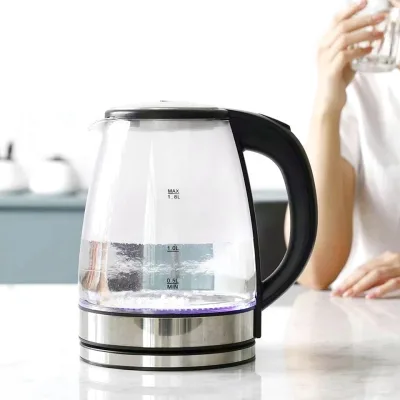


Premium Double Layer Electric Water Kettle Auto Shut off Home Appliance
$2.71 - $3.02
MOQ: 3000 Pieces


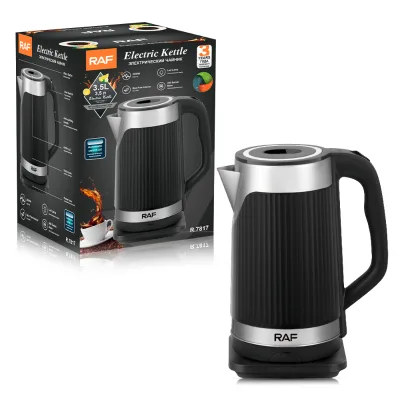


Hot Sale Stainless Steel Electric Water Kettle
$3.69 - $3.98
MOQ: 3000 Pieces
Guangzhou Kingray Electrical Appliances Technology Co., Ltd.

2021 Hot Sale 2.0L Two Layers Water Kettle
$3.69 - $3.98
MOQ: 3000 Pieces
Guangzhou Kingray Electrical Appliances Technology Co., Ltd.




Comprehensive Sourcing Guide
Auto-Stop Water Kettle Sourcing Guide
Sourcing an Auto-Stop Water Kettle requires a clear understanding of the diverse product landscape available from global manufacturers. The observed market includes units ranging from basic electric kettles with chassis heating to more complex portable fast hot water boilers featuring glass housing and coil heating elements. Buyers must distinguish between these variations, as the internal structure and heating method significantly impact performance and durability. For instance, some models utilize a rotary type structure with automatic shut-off features, while others are designed for daily use with specific capacity constraints like 1.8 liters.
The procurement strategy must account for the wide range of customization options and material compositions present in current listings. Stainless steel and plastic are common materials, with some premium options featuring glass interiors or specialized inner coatings. Buyers should verify whether the product supports cordless operation or requires a fixed corded connection, as this affects user convenience and base station compatibility. Additionally, the availability of customized colors and eco-friendly functions indicates that many suppliers cater to branded retail needs, allowing for private labeling and specific aesthetic requirements.
Product Scope and Observed Listing Signals
The current market signals indicate a broad spectrum of auto stop water kettles, with observed prices ranging from 1.5 to 65 USD and minimum order quantities varying from 1 to 5900 units. This disparity suggests that buyers can source either low-cost, high-volume commodity items or higher-priced, specialized units with advanced features. The presence of models with specific dimensions, such as 20.3cm by 16.5cm by 23cm, highlights the importance of verifying physical specifications to ensure compatibility with retail packaging and storage logistics. Buyers should also note the variety of packing options, from simple carton packages to multi-layer colorful gift boxes, which directly influence the final product presentation.
Further analysis of listing signals reveals significant variation in technical attributes, including heating rates of 4-6 minutes and power outputs around 1500W. These metrics are critical for evaluating efficiency and user experience, particularly for products marketed as portable or fast-boiling solutions. The observed plug types, including VDE, BS, American, and others, underscore the necessity of matching electrical standards to the target market. Buyers must carefully review these signals to avoid mismatches in voltage requirements, such as the 220V-240V specification noted in some listings, which may not be suitable for regions with different electrical infrastructure.
Technical Specifications to Verify
When evaluating technical specifications, buyers must prioritize the heating method and structural design to ensure optimal performance. Chassis heating and coil heating are distinct approaches, each with different implications for energy efficiency and ease of cleaning. The rotary type structure mentioned in some listings suggests a specific mechanical design that may affect stability and user interaction. Additionally, the automatic shut-off feature is a critical safety mechanism that must be verified for reliability, as it prevents overheating and dry boiling. Buyers should request detailed schematics or operational videos to confirm that the auto-stop mechanism engages correctly under various load conditions.
Capacity and size specifications are equally important for determining the product’s suitability for different use cases. Models with capacities around 1.3L to 1.5L or 1.8L cater to different household sizes and usage patterns. The physical dimensions, such as 22cm or 28cm in height, must be checked against retail shelf requirements and shipping container utilization. Furthermore, the wire cable specifications, including length and type, should be verified to ensure adequate reach and durability. Buyers should also confirm the voltage compatibility, particularly for markets requiring 220V-240V operation, to prevent electrical failures or safety hazards in the end-user environment.
Compliance and Safety Documentation
Compliance with international safety and environmental standards is non-negotiable for auto stop water kettles. The observed certifications, including CE, LFGB, RoHS, CB, ETL, and GS, indicate varying levels of regulatory adherence depending on the target market. Buyers must ensure that the supplier provides valid certificates for the specific models being ordered, as certification status can vary across product lines. For instance, LFGB certification is crucial for food-contact materials, ensuring that stainless steel or glass components do not leach harmful substances. Similarly, CE and CB marks are essential for market access in Europe and other regions, verifying electrical safety and electromagnetic compatibility.
Beyond product-specific certifications, buyers should verify the supplier’s overall quality management systems and testing protocols. The presence of ISO certifications suggests a structured approach to manufacturing consistency, which is vital for maintaining product reliability. Buyers should request test reports for critical safety features, such as the automatic shut-off mechanism and thermal insulation performance. Additionally, environmental compliance with RoHS ensures that hazardous substances are minimized in the product’s construction. It is advisable to conduct third-party audits or inspections to validate that the documented certifications match the actual production quality and materials used.
Cost Drivers and Commercial Terms
Cost drivers for auto stop water kettles include material selection, manufacturing complexity, and packaging requirements. Stainless steel and glass materials typically command higher prices than plastic alternatives due to durability and aesthetic appeal. The inclusion of advanced features, such as eco-friendly functions or health care benefits, can also increase production costs. Packaging plays a significant role in the final landed cost, with multi-layer gift boxes adding expense but enhancing retail appeal. Buyers should negotiate based on volume tiers, as observed MOQs range widely, allowing for flexibility in initial orders and long-term supply agreements.
Commercial terms must be carefully structured to mitigate risks associated with international trade. Payment terms, delivery schedules, and warranty policies should be clearly defined in the contract. Buyers should consider the impact of currency fluctuations and shipping costs on the total cost of ownership. Additionally, the availability of customization services, such as private labeling or color customization, may incur additional fees. It is essential to clarify who bears the responsibility for compliance testing and certification updates, especially if regulations change in the target market. Transparent communication regarding these terms helps prevent disputes and ensures a smooth procurement process.
Supplier Qualification and Quality Control
Supplier qualification is a critical step in ensuring the reliability of Auto-Stop Water Kettle supplies. Buyers should assess the supplier’s manufacturing capabilities, including their production capacity and quality control processes. Factories located in regions like Zhanjiang, Guangdong, or Linyi City, Shandong Province, may have established expertise in appliance manufacturing. However, buyers must verify that the supplier has a robust quality management system in place, including incoming material inspections and final product testing. Requesting references from existing clients can provide insights into the supplier’s consistency and responsiveness.
Quality control measures should be implemented throughout the production process to maintain product standards. Buyers should define clear acceptance criteria for critical attributes, such as heating rate, automatic shut-off functionality, and material integrity. Pre-shipment inspections are recommended to verify that the products meet the agreed-upon specifications and packaging requirements. Additionally, buyers should establish a protocol for handling defects or non-conformities, including return policies and corrective action plans. Regular communication with the supplier regarding quality performance helps build a strong partnership and ensures continuous improvement in product quality.
Long-Term Procurement Checks
Long-term procurement success depends on continuous monitoring of supplier performance and market trends. Buyers should regularly review key performance indicators, such as on-time delivery rates, defect rates, and customer feedback. This data-driven approach allows for proactive identification of potential issues and facilitates timely corrective actions. Additionally, staying informed about changes in regulatory requirements and consumer preferences helps buyers adapt their sourcing strategies accordingly. For example, increasing demand for eco-friendly products may necessitate a shift towards suppliers with stronger environmental credentials.
Building a resilient supply chain involves diversifying suppliers and maintaining open lines of communication. Buyers should avoid over-reliance on a single source by qualifying alternative suppliers for critical components or finished goods. Regular site visits and audits can help maintain visibility into the supplier’s operations and ensure ongoing compliance with quality standards. Furthermore, fostering a collaborative relationship with suppliers can lead to joint innovation and cost-saving opportunities. By prioritizing long-term partnerships over short-term gains, buyers can secure a stable supply of high-quality auto stop water kettles that meet evolving market demands.
FAQs
How does the automatic shut-off work on an Auto-Stop Water Kettle?
The kettle detects boiling through a steam-activated thermostat and switches itself off automatically, so water cannot keep boiling dry. Most models also include boil-dry protection that cuts power if the unit is switched on with little or no water. After shut-off, the base can be lifted off for pouring and re-seated to resume heating.
What certifications should I check before ordering these kettles?
Look for CE and LFGB marks as a baseline for European retail, with RoHS and CB reports supporting electrical safety and materials compliance. Listings in this category also show ETL, GS, and ISO documentation on some models. Always request the certificate numbers and scope from the supplier before placing a bulk order.
Which plug types and voltages are available for export orders?
Suppliers in this category list VDE, BS, American, Argentina, Philippine, and South Africa plugs, with AU, UK, EU, and US options also shown. Rated voltage is commonly 220V to 240V, so confirm the destination market's standard before ordering. Many factories can match the plug and voltage to your shipment destination during customization.
Can I customize the color, packaging, or capacity of the kettles?
Yes, customization is listed as available across these products. Buyers can typically request customized colors, branded packaging such as three-layer gift boxes with five-layer cartons, and capacity variants within listed ranges like 1.8L. Provide artwork and requirements early, since customization may affect tooling, unit price, and minimum order quantities.
What materials are used for the housing and inner coating?
Listings in this category show stainless steel and plastic housings with stainless steel inner coating, plus glass housing models with glass inner coating. Glass bodies suit buyers who want visible water level and a premium look, while stainless steel offers durability for daily use. Confirm food-contact material certificates such as LFGB before confirming the order.
How fast does a typical kettle heat a full load of water?
Listed heating times in this category run about 4 to 6 minutes for a full capacity, with models rated around 1500W on 220V to 240V supplies. Chassis and coil heating designs are both shown. Actual time varies with water volume, starting temperature, and local voltage, so test samples under your market's real conditions.
Where are these auto stop water kettles mainly produced?
Listed origins include Zhanjiang in Guangdong Province and Linyi City in Shandong Province, China. Guangdong clusters specialize in electric kettle assembly and components, while Shandong suppliers appear in this category as well. When comparing candidates, ask each factory about its production capacity, in-house testing, and experience with your destination market's certifications.
What packaging can I expect when shipping kettles in bulk?
Products in this category are packed in carton packages, with some listings specifying three layers of colorful gift box inside five layers of carton, and others using inner box plus carton. Typical carton dimensions are listed around 20.3cm by 16.5cm by 23cm per piece. Request drop-test reports and confirm packaging specs before container loading.