Source Automatic Frozen Meat Cubing Machine for Slicing Dicing Cutting
Find 30 listings for the Automatic Frozen Meat Cubing Machine designed for slicing, dicing, and cutting frozen meat. Compare specifications like voltage, material, and dimensions to identify the right equipment for your processing needs.
Key considerations
Products List


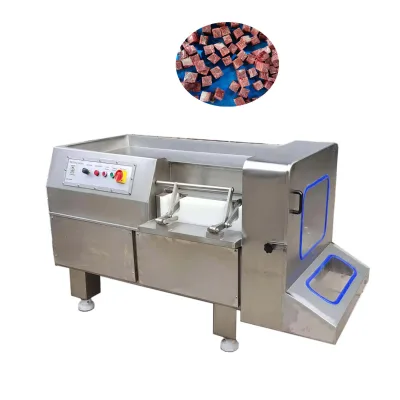


High Efficiency Meat Cutting Machinery Meat Cutting Frozen Cube Meat Machine
$4000.00 - $6000.00
MOQ: 1 Pieces


Commercial Frozen Meat Cube Cutting Machine Frozen Meat Dicing Machine for Sale
$4000.00 - $6000.00
MOQ: 1 Pieces

High Quality Frozen Meat Dicing Machine Frozen Meat Cube Cutting Machine for Sale
$4000.00 - $6000.00
MOQ: 1 Pieces


High Efficiency Chicken Meat Cube Cutting Machine / Frozen Fish Cutting Machine
$779.00 - $1110.00
MOQ: 1 Sets

High Productivity Meat Processing Machine / Frozen Meat Cutting Machine
$2569.00 - $3340.00
MOQ: 1 Sets

Comprehensive Sourcing Guide
Strategic Sourcing Guide for Automatic Frozen Meat Cubing Machines
The global demand for processed meat products has driven a significant shift toward automation in food processing facilities. For procurement professionals seeking an Automatic Frozen Meat Cubing Machine, the market offers a diverse array of equipment designed to handle high-volume throughput while maintaining product integrity. This guide provides a disciplined approach to sourcing, evaluating, and acquiring these critical assets, relying strictly on verified product attributes and established industry practices. The focus remains on identifying machines that meet specific operational requirements, ensuring regulatory compliance, and managing long-term procurement risks without relying on unverified supplier claims.
Technical Specifications and Operational Parameters
When evaluating an Automatic Frozen Meat Cubing Machine, the primary consideration is the alignment between the machine's technical specifications and the facility's processing needs. The core functionality of these units revolves around the precise cutting of frozen meat into uniform cubes. Based on available product data, the operational temperature range is a critical differentiator. Effective models are engineered to operate within a raw material cutting temperature range of -10℃ to 0℃, with a specific working cut temperature optimized between -7℃ and -5℃. This thermal precision is essential to prevent the meat from thawing during the cutting process, which could compromise texture and hygiene.
The physical dimensions of the machinery vary significantly depending on the model and capacity. Buyers must verify the footprint against their available floor space. Observed specifications indicate a wide range of dimensions, from compact units measuring approximately 320470490MM to larger industrial systems extending to 1950100011200MM or 19409001750mm. The standard dimensions for certain high-capacity models are recorded as 16009801580MM or 10506001100mm. It is imperative to confirm the exact length, width, and height (LWH) for the specific unit under consideration, as the "prod_standard" field often lists these critical measurements.
Power requirements are another vital technical parameter. The market presents options for both 220V and 380V electrical inputs, reflecting the varying infrastructure capabilities of different regions and facility sizes. The power source is consistently electric, and the automatic grade of the machinery ranges from semi-automatic to fully automatic. Fully automatic models, such as those designated with specific model numbers like LM200 or LM350, are designed for continuous operation with minimal human intervention. The cube size capability is another key specification, with observed ranges extending from 3mm to 20mm, allowing for versatility in producing different cuts for various meat products.
Compliance and Certification Verification
In the food processing industry, regulatory compliance is non-negotiable. When sourcing an Automatic Frozen Meat Cubing Machine, buyers must rigorously verify the certification status of the equipment. The most frequently observed certification in the current market data is the CE mark, indicating conformity with health, safety, and environmental protection standards for products sold within the European Economic Area. Some listings also reference a combination of CE and SGS certifications, suggesting a broader scope of quality assurance and safety testing.
However, buyers should treat these certifications as observations of specific listed products rather than universal guarantees for all available units. The presence of a "Certificate: CE" or "Certification: CE SGS" in a product listing confirms that the specific model has undergone the necessary assessments. It is the buyer's responsibility to request current, valid documentation for the exact model being purchased. Relying on general market knowledge without verifying the specific certificate for the unit in question can lead to compliance gaps, particularly when importing equipment into regions with strict food safety regulations.
Furthermore, the materials used in construction must meet food-grade standards. The observed data highlights the use of SUS304 Stainless Steel and general SUS Stainless Steel for critical components. This material choice is standard for food machinery due to its resistance to corrosion and ease of cleaning. Buyers should confirm that all food-contact surfaces are constructed from these specified stainless steel grades to ensure hygiene and longevity. The absence of specific certification details in a listing should prompt a direct inquiry to the supplier rather than an assumption of compliance.
Cost Drivers and Pricing Structures
Understanding the cost drivers for automatic frozen meat cubing machines is essential for budgeting and financial planning. The observed price range for these units in the market spans from $779 to $44,531. This significant variance is driven by several factors, including the level of automation, the size of the machine, the complexity of the cutting mechanism, and the quality of materials used.
The minimum order quantity (MOQ) for these machines is typically low, with observed values ranging from 1 to 1 unit. This flexibility allows small to medium-sized enterprises to enter the market without the need for bulk purchasing. However, the price point is heavily influenced by the specific model and its associated features. For instance, a machine with a "prod_model" of LM832, which is a meat slicer, will have a different cost structure compared to a dedicated frozen meat dicer like the LM350.
Additional cost factors include packaging and logistics. The standard packaging for these machines is often plywood or export wooden crate packaging, designed to protect the equipment during international transit. The weight of the machinery, observed to be around 500kg for certain models, also impacts shipping costs. Buyers should account for the "Single package size," which can be substantial, such as 194X98X110 cm, when calculating freight expenses. It is crucial to note that prices are subject to market fluctuations and specific supplier configurations, so the observed range should be treated as a reference point rather than a fixed quote.
Typical Applications and Processing Capabilities
Automatic frozen meat cubing machines are designed for a variety of applications within the meat processing sector. The primary function of these units is meat processing, specifically cutting frozen meat into uniform cubes. This capability is essential for producing products such as diced meat for stir-fries, pet food, and further processed meat items. The machine's ability to handle frozen meat at specific temperatures ensures that the product maintains its structural integrity during the cutting process.
The versatility of these machines is evident in their diverse model offerings. Some units are specialized as "Meat Cubes Cutters" or "Frozen Meat Dicer Machines," while others function as general "Meat Cutting Machines" or "Meat Slicers." The specific application depends on the desired cube size and the type of meat being processed. For example, a machine capable of producing cubes between 3mm and 20mm offers significant flexibility for different product lines. The "Feature" attributes often cited, such as "High Efficiency" and "Nice Performance," suggest that these machines are optimized for speed and consistency, which are critical in high-volume production environments.
Buyers should also consider the condition of the machinery. The market data indicates that the majority of available units are "New," ensuring that the equipment is in optimal working condition. This is particularly important for automated systems where wear and tear can significantly impact performance. The "Condition: New" status, combined with a warranty period of 1 year, provides a baseline for reliability and operational continuity.
Supplier Evaluation and Product Attributes
Evaluating suppliers requires a meticulous review of the product attributes and the supplier's ability to deliver on their promises. The brand name "hj" is observed in the market data, but buyers should not limit their search to a single brand. Instead, the focus should be on the specific attributes that define the machine's quality and performance. Key attributes to verify include the "Automatic Grade," which determines the level of automation, and the "Core Components," which are listed as "Other" in some contexts, necessitating a detailed inquiry into the specific parts used.
The warranty is a critical factor in supplier evaluation. A standard warranty of 1 year is observed, with a specific warranty period of 6 months for core components. This distinction highlights the importance of understanding the coverage limits. Buyers should clarify what constitutes a "core component" and ensure that the warranty covers essential parts that are prone to wear. Additionally, the availability of a "Machinery Test Report" is a strong indicator of a supplier's commitment to quality. This document provides evidence that the machine has been tested and meets specific performance standards before shipment.
Customization is another significant attribute to consider. The market data confirms that "Customization: Available" and "Customized: Customized" options exist. This flexibility allows buyers to tailor the machine to their specific production needs, such as adjusting the cutting dimensions or integrating with existing production lines. However, buyers must clearly define their customization requirements and ensure that the supplier has the technical capability to execute these changes without compromising the machine's integrity or safety standards.
Quality Control and Long-Term Procurement Considerations
Implementing a robust quality control (QC) strategy is essential for ensuring the long-term success of the procurement process. Buyers should request a "Machinery Test Report" prior to finalizing the purchase to verify that the machine meets the specified performance criteria. This report should include data on cutting accuracy, energy consumption, and operational stability. The "Working Cut Temperature" and "Raw Material Cutting Temperature" ranges should be validated through testing to ensure the machine performs as advertised under actual operating conditions.
Long-term procurement considerations extend beyond the initial purchase price. The "Warranty of core components" and the overall "Warranty" period are critical for managing maintenance costs. A 1-year warranty with a 6-month core component warranty suggests that buyers should plan for potential maintenance expenses after the initial period. The "Condition: New" status is a positive indicator, but buyers should also inquire about the availability of spare parts and the supplier's support infrastructure.
The "prod_packing" method, typically plywood or export wooden crate packaging, plays a role in the machine's condition upon arrival. Proper packaging is essential to prevent damage during transit, which could lead to costly repairs or delays. Buyers should verify that the packaging meets international shipping standards and is suitable for the specific dimensions and weight of the machine.
Finally, the "prod_origin" being China is a common attribute in the market data. While this indicates the manufacturing location, it does not inherently determine the quality of the product. Buyers should focus on the specific certifications, test reports, and material specifications to assess the quality of the machine. By maintaining a disciplined approach to verification and relying on documented evidence, buyers can mitigate risks and ensure the acquisition of high-quality automatic frozen meat cubing machines that meet their operational needs.
FAQs
What is the working cut temperature for these machines?
The working cut temperature is optimized between -7℃ and -5℃ to ensure meat remains frozen during processing. This range prevents thawing and maintains product texture, while the raw material temperature should be between -10℃ and 0℃.
Which certifications are available for these meat cutting machines?
Available certifications include CE and CE SGS, indicating conformity with safety and environmental standards. Buyers must verify specific documentation for the exact model, as these are observations of listed products rather than universal guarantees for all units.
How is the cube size determined for frozen meat dicing?
The cube size capability ranges from 3mm to 20mm, allowing versatility for different meat products. This specification enables the production of uniform cuts suitable for stir-fries, pet food, and other processed items depending on the selected model.
Can buyers customize the specifications of the automatic machine?
Yes, customization is available for specific production needs such as adjusting cutting dimensions or integration. Buyers should clearly define requirements to ensure the supplier can execute changes without compromising safety standards or machine integrity.
What is the warranty period for the core components?
The standard warranty is 1 year, with a specific 6-month warranty covering core components. Buyers should clarify what constitutes a core component to understand maintenance coverage limits and plan for potential expenses after the initial period.
Which voltage options are supported by these electric machines?
The machines support both 220V and 380V electrical inputs to match varying facility infrastructure. The power source is consistently electric, and the automatic grade ranges from semi-automatic to fully automatic depending on the specific model selected.