Source Automatic Ultrafine Powder Making Pulverizer for Food, Chemical, and Plastic Processing
Find and compare 30 Automatic Ultrafine Powder Making Pulverizer options from Jiangsu, China. These CNC-controlled machines feature SUS304/316 construction, bag filter dust collection, and output capacities up to 500 kg/h for high-precision milling applications.
Key considerations
Products List

Superfine Pulverizer Machine Continuous Micron Powder Making Grinding
$10990.00 - $76890.00
MOQ: 1 Pieces


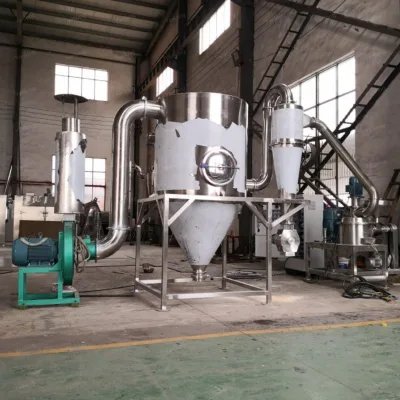
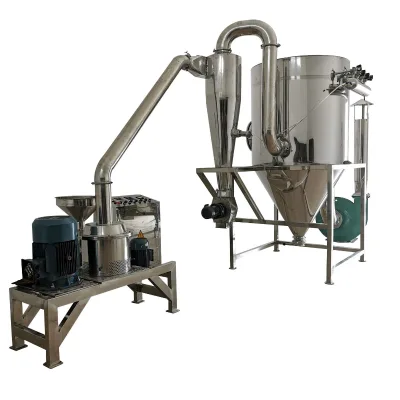


Ultrafine Grinder Superfine Pulverizer Mill Incense Powder Making Machine Complete Production Line
$20000.00 - $150000.00
MOQ: 1 Pieces

Factory Direct Sales Fine Powder Grinder Capacity Output 80-100kg/Hour Superfine Pulverizer
$20000.00 - $150000.00
MOQ: 1 Pieces

Automatic Ultrafine Tea Herb Powder Grinder Pulverizer for Production
$1999.00 - $89999.00
MOQ: 1 Pieces

Food Seasoning Powder Ultrafine Pulverizer for Industrial Processing
$1999.00 - $89999.00
MOQ: 1 Pieces

Ultrafine Chili Powder Grinder Pulverizer for Hot Sauce and Spices Manufacturing
$20000.00 - $90000.00
MOQ: 1 Sets

Industrial Ultrafine Pulverizer for Chili Pepper and Spice Powder Making
$20000.00 - $90000.00
MOQ: 1 Sets

Industrial Powder Ultrafine Pulverizer for Large-Scale Spice Production
$1999.00 - $89999.00
MOQ: 1 Pieces


Spices Pulverizer Superfine Powder Making Machine Dry Foods and Vegetables Powder Grinder
$13800.00 - $28650.00
MOQ: 1 Pieces

Hot Sale Rice/Corn/Grain/Herbs/Cereal Turmeric Superfine Pulverizer Grinder for Powder
$13800.00 - $28650.00
MOQ: 1 Pieces

Industrial Superfine Cacao Bean Grinder Sugar Licorice Root Pepper Powder Making Machine
$13800.00 - $28650.00
MOQ: 1 Pieces

Brightsail Spice Pulverizer Super Fine Powder Making Machine China Mill Expert
$3000.00 - $70000.00
MOQ: 1 set


Comprehensive Sourcing Guide
Automatic Ultrafine Powder Making Pulverizer Sourcing Guide
The Automatic Ultrafine Powder Making Pulverizer represents a critical class of industrial machinery designed for high-precision material reduction across diverse sectors. Based on observed market data, these units are frequently categorized as multi-use grinding machines or super fine grinders, often featuring CNC controlling modes to ensure consistent output quality. The core functionality centers on transforming raw materials into fine powders with mesh sizes ranging from 20 to 500 mesh, making them suitable for applications in chemical processing, plastics, and food industries. Buyers must recognize that while the machine name may vary—appearing as a fine powder pulverizer, cosmetic grinder, or stainless steel grinder—the underlying mechanical principles remain focused on achieving ultrafine particle sizes through automated milling processes.
Procurement decisions for this equipment require a clear understanding of the specific operational environment, as these machines are engineered to handle materials with varying hardness and moisture content. The observed product attributes indicate a strong emphasis on automation, with key selling points highlighting automatic grades and the ability to process materials ranging from 0.5 to 20 mm in feeding size. This versatility allows the machinery to serve as a central component in production lines for food chemical powder grinding mills, where hygiene and particle consistency are paramount. Buyers should verify that the specific model selected aligns with their required output capacity, which typically spans from 10 to 500 kg/h, ensuring the equipment meets the throughput demands of their specific manufacturing scale.
Product Scope and Observed Listing Signals
When evaluating product listings, buyers will encounter a wide variance in pricing, with observed ranges extending from $1,999 to $150,000, reflecting differences in build quality, motor power, and automation levels. The minimum order quantity (MOQ) for these units is consistently observed at one piece, allowing for flexible procurement strategies for small to medium enterprises. However, the price disparity suggests that lower-cost listings may lack advanced features such as the 380V/220V power configurations or the specific structural materials like SUS304 and SUS316 stainless steel, which are critical for corrosion resistance in food and chemical applications. It is essential to scrutinize the listing details to confirm whether the advertised price includes the necessary core components, such as high-grade bearings, gears, and motors, which directly influence the machine's longevity and performance.
The physical characteristics of the machinery also vary significantly, with dimensions observed around 1.2m x 4m x 2.2m and weights reaching up to 900 kg, indicating substantial industrial-grade construction. Listings often specify the use of bag filters for dust collection and cyclone separators to manage airflow and particle separation, which are vital for maintaining a clean working environment and ensuring product purity. Buyers should note that while the product name may be generic, the specific configuration, such as the WFJ model series, dictates the spindle speed range, which typically operates between 1000 and 5000 r.p.m. Understanding these physical and operational signals helps in distinguishing between basic grinding units and advanced ultrafine pulverizers capable of meeting stringent industry standards.
Technical Specifications to Verify
A primary technical verification step involves confirming the precision and control mechanisms of the grinder mill, as the observed data highlights high precision and CNC controlling modes as standard features for top-tier units. Buyers must ensure that the machine's automatic grade aligns with their production requirements, specifically checking for the presence of core components like gearboxes and motors that support the specified spindle speed range. The feeding size capability, typically between 0.5 and 20 mm, must be compatible with the raw material form to prevent clogging or inefficient processing. Additionally, the output size, which can range from 100 to 500 mesh, should be verified against the specific particle size requirements of the end product, as the mesh size is a direct indicator of the machine's grinding efficiency and fineness capability.
Material compatibility and structural integrity are equally critical, with the observed specifications pointing to the use of SUS304, SUS304L, SUS316, and SUS316L stainless steel for the machine's construction. These materials are essential for applications in food processing and chemical handling, where corrosion resistance and hygiene are non-negotiable. Buyers should verify that the machine's structure matches the intended application, particularly for the production of cosmetic or food-grade powders, where contamination risks must be minimized. Furthermore, the power consumption, often listed as 11 kW, and the voltage requirements of 380V or 220V must be confirmed to ensure compatibility with the facility's electrical infrastructure, preventing potential operational disruptions or safety hazards.
Compliance and Safety Documentation
Compliance with international standards is a fundamental requirement for sourcing industrial grinding machinery, with observed listings frequently citing CE, SGS, ISO, and GMP certifications. These standards indicate that the manufacturer adheres to specific safety, quality, and environmental regulations, which is particularly important for equipment used in food and chemical processing sectors. Buyers should request documentation proving that the machine meets these standards, as the presence of a CE mark or ISO certification often correlates with rigorous testing of electrical safety, mechanical integrity, and operational reliability. The inclusion of a machinery test report in the product attributes further suggests that the supplier provides evidence of performance validation, which buyers should review to confirm the machine's ability to meet the claimed specifications.
Safety features such as dust collection systems and automatic controls are integral to the safe operation of ultrafine grinding machines, and their compliance with local and international safety regulations must be verified. The observed use of bag filters for dust collection highlights the importance of air quality management, which is critical for preventing respiratory hazards and maintaining a clean production environment. Buyers should ensure that the dust collection system is designed to handle the specific volume of dust generated during the grinding process and that it complies with relevant environmental and occupational safety standards. Additionally, the guarantee period, typically observed as one year, should be clearly defined in the contract, outlining the scope of coverage for mechanical failures and the availability of after-sales service, including overseas support for machinery maintenance.
Cost Drivers and Commercial Terms
The total cost of ownership for an Automatic Ultrafine Powder Making Pulverizer is influenced by several factors beyond the initial purchase price, including the complexity of the automation, the quality of materials used, and the level of after-sales support provided. The observed price range of $1,999 to $150,000 reflects these variables, with higher-priced units likely offering superior precision, more robust construction, and advanced control systems. Buyers should consider the long-term value of investing in a machine with a higher initial cost if it offers better energy efficiency, lower maintenance requirements, and a longer operational lifespan. The inclusion of a wooden case for packing and the provision of a one-year guarantee are standard commercial terms that should be factored into the overall cost analysis.
Shipping and logistics represent another significant cost driver, with sea shipping being the standard method for transporting these heavy industrial units. The observed origin of the machinery, typically from Changzhou or Jiangsu, China, implies that buyers must account for international freight costs, import duties, and potential delays in delivery. The lead time for production and shipping is not explicitly stated in the observed data, so buyers should negotiate clear timelines with the supplier to ensure the equipment arrives when needed. Additionally, the availability of overseas after-sales service is a critical commercial term that can reduce downtime and maintenance costs, making it a key factor in the decision-making process for international procurement.
Supplier Qualification and Quality Control
Supplier qualification is a critical step in the procurement process, requiring a thorough assessment of the manufacturer's reputation, production capabilities, and quality control systems. The observed brand name "Yanlong" and the origin in Changzhou, Jiangsu, China, provide a starting point for due diligence, but buyers should verify the supplier's track record in delivering reliable machinery for the specific applications they intend to serve. Requesting references from previous clients, particularly those in the food, chemical, or cosmetic industries, can provide valuable insights into the supplier's ability to meet quality expectations and deliver on time. The provision of a machinery test report and adherence to standards like CE and ISO are strong indicators of a supplier's commitment to quality, but these should be validated through independent verification.
Quality control measures should be integrated into the procurement process, with buyers requesting detailed inspection reports and test results before finalizing the purchase. The observed specification of a 900 kg weight and specific dimensions suggests that the machine is a substantial piece of equipment, and any defects in construction or assembly could lead to significant operational issues. Buyers should consider implementing a pre-shipment inspection to verify that the machine meets the agreed-upon specifications, including the material grade, power rating, and functional performance. The availability of after-sales service, including overseas support, is also a key quality control factor, as it ensures that any issues that arise after installation can be addressed promptly and effectively.
Long-Term Procurement Checks
Long-term procurement success depends on establishing a sustainable relationship with the supplier, focusing on ongoing support, spare parts availability, and the ability to adapt to changing production needs. The observed one-year guarantee provides a baseline for support, but buyers should negotiate extended service agreements or maintenance contracts to ensure continued operational reliability. The availability of core components such as bearings, gears, and motors is crucial for minimizing downtime, and buyers should verify that the supplier maintains a stock of these parts or has a reliable supply chain for replacements. The ability to provide service machinery overseas is a significant advantage, but buyers should confirm the response time and technical expertise of the support team to ensure that any issues are resolved efficiently.
Future-proofing the procurement investment involves considering the scalability and flexibility of the machinery to accommodate changes in production volume or product specifications. The observed output capacity range of 10 to 500 kg/h and the adjustable mesh size capabilities suggest that the machine can be adapted to different production requirements, but buyers should verify the ease of these adjustments and the availability of technical support for modifications. Regular maintenance and performance monitoring are essential to maintain the high precision and efficiency of the ultrafine grinding machine, and buyers should establish a schedule for routine inspections and servicing. By prioritizing long-term support and adaptability, buyers can ensure that their investment in an Automatic Ultrafine Powder Making Pulverizer continues to deliver value over the lifespan of the equipment.
FAQs
What is the output capacity of this Automatic Ultrafine Powder Making Pulverizer?
The machine produces between 10 and 500 kilograms per hour depending on the specific model and material. This capacity range supports various industrial needs from small batch testing to large-scale chemical or food processing operations.
Which certifications does the Automatic Ultrafine Powder Making Pulverizer hold?
The equipment meets CE, SGS, ISO, and GMP standards for safety and quality assurance. These certifications ensure the machine complies with international regulations for use in food, chemical, and cosmetic processing environments.
Can the Automatic Ultrafine Powder Making Pulverizer be customized for specific needs?
Yes, customization is available to tailor the machine to your specific production requirements. Buyers can request adjustments to fit unique processing objects or material specifications while maintaining the core high-precision grinding functionality.
What is the guaranteed warranty period for the Automatic Ultrafine Powder Making Pulverizer?
The product comes with a one-year guarantee covering manufacturing defects and operational issues. This warranty ensures reliability for buyers in the chemical, plastics, and food processing sectors who require consistent performance.
How is the Automatic Ultrafine Powder Making Pulverizer shipped to international buyers?
The machine is shipped via sea freight and packed securely in a wooden case for protection. This method ensures safe delivery of the heavy 900 kg unit to destinations worldwide while minimizing damage risks during transit.
What materials are used to construct the Automatic Ultrafine Powder Making Pulverizer?
The main structure is built from SUS304, SUS304L, SUS316, or SUS316L stainless steel grades. These materials provide corrosion resistance and hygiene, making the unit suitable for food, chemical, and cosmetic powder milling applications.