Source Automatic Ultrasonic Toothpaste Tube Sealer for Cosmetics, Medicine, and Chemicals
Find 30 Automatic Ultrasonic Toothpaste Tube Sealer options for cosmetics, medicine, and chemical applications. Compare semi-automatic and fully automatic models with rotary structures and pneumatic lifting features to match your production needs.
Key considerations
Products List

Semi Automatic Ultrasonic Tube Sealing Machine Toothpaste Cosmetic Tube Sealer
$4000.00 - $4400.00
MOQ: 1 Pieces


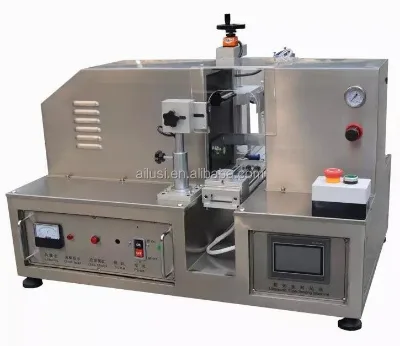


Popular Ultrasonic Tube Filling Filler and Sealing Machine for Cosmetic Toothpaste
$20000.00 - $26000.00
MOQ: 1 Pieces

Popular Ultrasonic Tube Filling Filler and Sealing Machine for Cosmetic Toothpaste
$20000.00 - $26000.00
MOQ: 1 Pieces


Comprehensive Sourcing Guide
Strategic Sourcing Guide for Automatic Ultrasonic Toothpaste Tube Sealers
Understanding the Core Technology and Operational Scope
When sourcing an Automatic Ultrasonic Toothpaste Tube Sealer, buyers must first distinguish between the specific sealing mechanism and the broader filling capabilities often bundled in these units. The core keyword implies a machine designed to apply high-frequency vibrations to the crimped end of a tube to create a hermetic seal, a process particularly effective for aluminum and laminate materials used in toothpaste packaging. However, the available market data indicates a diverse landscape where "filling machines" and "sealing machines" are frequently integrated into a single rotary unit. The observed product attributes reveal that many units in this category operate as "Volumetric Filling Machines" with a "Rotary" structure, utilizing a "Multi-Head" filling valve system.
It is critical to understand that the term "automatic" in this sector is not monolithic. The supplied facts highlight a split in operational grades, with some units classified as "Semi-Automatic" and others as "Fully Automatic." A semi-automatic unit typically requires operator intervention for tube loading or positioning, whereas a fully automatic system handles the entire sequence from tube feeding to sealing and discharge. The specific model data points to a "Plunger" dosing device and a "Pressure" filling principle, which are standard for handling the viscous nature of toothpaste. Furthermore, the "Pneumatic" power source and "Air Cooling" methods suggest that these machines rely on compressed air for actuation and thermal management, rather than purely electric motor drives for the sealing head itself.
The application scope extends beyond toothpaste, with specific attributes noting suitability for "Hand Cream," "Ointment," "Cosmetic Gel," and "Chemical" products. This versatility is a significant value driver, allowing facilities to switch between product lines without changing the entire production line. The "Multi-Room Feeding" structure and "Pneumatic Lifting" of the packaging container indicate a design focused on handling various tube sizes and orientations, which is essential for maintaining high throughput in a busy manufacturing environment.
Technical Specifications and Mechanical Configuration
Evaluating the technical specifications of an ultrasonic toothpaste tube sealer requires a deep dive into the mechanical architecture and dimensional constraints. The physical footprint of these machines varies significantly, with observed standard dimensions ranging from compact units measuring 860620610mmH to larger configurations reaching 16090190cm. Buyers must verify the exact dimensions against their factory floor plans, as the "Rotary" structure implies a circular motion that requires specific clearance for operation and maintenance access.
The control systems are another critical technical aspect. The data indicates that some units feature "Semi-Automatic" control modes, while others are designed for fully automated sequences. The "High Frequency" attribute suggests the use of ultrasonic generators capable of operating at frequencies suitable for melting and fusing tube materials without damaging the product inside. The "Disc" style mentioned in the attributes likely refers to the rotary indexing mechanism that moves tubes from station to station, ensuring precise alignment for the filling and sealing heads.
Material compatibility is paramount for toothpaste applications. The machines are explicitly designed for "Aluminum Tube Product" and "Plastic and Laminate Tube" filling and sealing. The "Plastic" packaging material and "Paste" material type attributes confirm the machine's ability to handle the specific rheological properties of toothpaste, which is a non-Newtonian fluid that requires consistent pressure to dispense without dripping. The "Wooden Box" or "Wooden Case" packing standard for the machinery itself suggests that these units are heavy and require robust protection during shipping, a factor that influences logistics planning and initial setup costs.
Compliance, Certification, and Safety Standards
In the realm of industrial machinery, compliance and certification are non-negotiable, particularly when the equipment is used for food, cosmetic, or pharmaceutical products. The supplied context mentions "CE" certification in a low-confidence background section, which indicates that while CE marking is a common expectation for machinery exported from China to the European market, buyers should not assume every listed unit possesses this status without verification. The "Hot Selling Tube Filling Machine" attribute often correlates with compliance, but the specific certification status must be confirmed through official documentation.
Buyers must verify that the machine meets the safety standards of their local jurisdiction. For instance, if the machinery is intended for use in the United States, compliance with OSHA standards and potentially UL listing for electrical components is required. The "AC" electric current specification necessitates that the electrical systems adhere to local voltage and frequency standards, typically 220V/50Hz or 110V/60Hz depending on the region. The "Stainless Steel" construction mentioned in some product descriptions is a critical safety feature, as it ensures the machine is resistant to corrosion and easy to clean, meeting hygiene requirements for cosmetic and food-grade applications.
Furthermore, the "Automatic Stainless Steel Cosmetic Alumi" attribute suggests that the machine may feature stainless steel contact parts, which is a standard requirement for GMP (Good Manufacturing Practice) compliance in the pharmaceutical and cosmetic industries. Buyers should request a detailed compliance matrix from the supplier that lists all applicable standards, including electrical safety, mechanical guarding, and material safety data sheets for any lubricants or components that come into contact with the product.
Cost Drivers and Pricing Dynamics
The pricing for automatic ultrasonic toothpaste tube sealers is influenced by a complex interplay of factors, including automation level, material construction, and production capacity. The observed price range in the market spans from $750 to $26,000, a wide variance that reflects the difference between basic semi-automatic units and advanced fully automatic rotary systems. The lower end of the spectrum likely corresponds to simpler machines with fewer heads, manual loading features, or basic control systems. In contrast, the higher price points are associated with fully automatic units featuring multi-head filling valves, advanced ultrasonic generators, and integrated quality control sensors.
The "Automatic Grade" is a primary cost driver. A "Fully Automatic" machine commands a premium over a "Semi-Automatic" counterpart due to the increased complexity of the control logic, the number of pneumatic actuators, and the precision engineering required for high-speed operation. Additionally, the "Multi-Head" configuration significantly impacts cost; a machine with four filling heads will be more expensive than a single-head unit but offers higher throughput. The material type also plays a role; machines designed specifically for "Aluminum Tube" sealing may require different tooling and pressure settings compared to those for "Plastic" tubes, potentially affecting the overall price.
Other cost factors include the "Packaging" of the machine itself. The "Wooden Box" or "Wooden Case" standard adds to the shipping weight and volume, which can increase freight costs. The "Origin" location, specifically "Guangdong, China," suggests that buyers may benefit from the established manufacturing ecosystem in that region, which can offer competitive pricing but also requires careful logistics planning. Buyers should also consider the "MOQ" (Minimum Order Quantity), which in the observed data is consistently "1," indicating that single-unit purchases are feasible, though bulk orders might offer volume discounts.
Typical Applications and Production Versatility
The versatility of automatic ultrasonic toothpaste tube sealers makes them suitable for a wide array of industries beyond just oral care. The product attributes explicitly list applications for "Cosmetics," "Chemical," "Medicine," "Food," and "Household Appliances." This broad applicability is due to the machine's ability to handle various viscosities and packaging materials. For example, the "Hand Cream" and "Eye Cream" applications require precise dosing and gentle handling to prevent product separation, which the "Plunger" dosing device and "Pressure" filling principle are designed to achieve.
In the "Food" sector, the machine is noted for "Juice Tube Sealing Packing," indicating its capability to handle liquid products with different flow characteristics compared to toothpaste. The "Oil" tube sealing application further expands its utility to the lubricant and automotive sectors. The "Stationery" and "Electronic" applications suggest that the machine can also be adapted for smaller, precision-packed items, although this may require specific tooling changes.
The "Rotary" structure and "Multi-Room Feeding" design allow for continuous processing, making these machines ideal for high-volume production lines. The ability to switch between "Toothpaste," "Shampoo," and "Gel" products on the same machine reduces capital expenditure for manufacturers who produce multiple product lines. However, buyers must verify the changeover time and the availability of tooling for different tube diameters and lengths, as these factors can impact overall production efficiency.
Supplier Evaluation and Quality Assurance
Selecting a reliable supplier for an Automatic Ultrasonic Toothpaste Tube Sealer requires a rigorous evaluation process. Given the wide price range and the technical complexity of these machines, buyers should prioritize suppliers who provide detailed technical documentation and transparent communication. The "Guangdong, China" origin suggests a concentration of manufacturers in this region, but not all suppliers offer the same level of quality or after-sales support.
Buyers should request a comprehensive product specification sheet that details the "prod_model," "prod_standard," and "prod_packing" information. The specific model numbers, such as "XX-2027TSA" or "XX-2025TS," serve as unique identifiers that can be used to cross-reference technical data and customer reviews. It is essential to verify the "Control" system capabilities, ensuring that the machine offers the desired level of automation and user interface functionality.
Quality assurance should be a central part of the evaluation. Buyers should ask for evidence of the machine's construction, specifically regarding the use of "Stainless Steel" for product contact parts. The "Cooling Way" and "Electric Current" specifications should be verified against the buyer's facility capabilities to ensure compatibility. Additionally, the "CE" certification mentioned in the background data should be confirmed with valid documentation, as this is often a prerequisite for exporting to certain markets.
Long-Term Procurement and Maintenance Considerations
Investing in an Automatic Ultrasonic Toothpaste Tube Sealer is a long-term commitment that requires careful consideration of maintenance, spare parts availability, and operational longevity. The "Pneumatic" power source and "Air Cooling" systems mean that the machine will require a steady supply of compressed air and regular maintenance of pneumatic components. Buyers should inquire about the availability of spare parts, particularly for the ultrasonic generator and the sealing dies, which are subject to wear and tear.
The "Wooden Box" packing standard indicates that the machine is robust, but it also implies that the initial setup may require significant space and handling equipment. Buyers should plan for the installation process, including the need for a stable foundation and proper electrical connections. The "Semi-Automatic" or "Fully Automatic" nature of the machine will also dictate the training requirements for operators, which should be factored into the total cost of ownership.
Finally, buyers should consider the scalability of the machine. As production demands grow, the ability to upgrade the machine or add additional heads can extend its useful life. The "Multi-Head" capability and "Rotary" structure suggest that these machines are designed for scalability, but buyers must verify the maximum throughput and the potential for future upgrades before making a purchase decision. By carefully evaluating these long-term factors, buyers can ensure a successful procurement experience that delivers value over the lifespan of the equipment.
FAQs
What is the automatic grade for the toothpaste tube sealer?
The machine is available in both semi-automatic and fully automatic grades. Semi-automatic units require operator intervention for loading, while fully automatic systems handle the entire sequence from feeding to sealing using a plunger dosing device.
Which filling principle does the rotary machine utilize?
The machine utilizes a pressure filling principle with a plunger dosing device. This configuration is designed to handle viscous materials like toothpaste and cosmetic gels effectively within a rotary multi-head structure.
Can the sealer handle aluminum and laminate tubes?
Yes, the equipment is explicitly designed for aluminum tube products and plastic or laminate tubes. It supports various applications including toothpaste, hand cream, and ointments with a pneumatic lifting structure for container handling.
How is the machine powered and cooled?
The unit operates on pneumatic power and uses air cooling for thermal management. It requires an AC electric current supply and features a disc style rotary mechanism for continuous processing of packaging materials.
What are the standard dimensions of the filling machine?
Standard dimensions vary by model, with sizes ranging from 860 by 620 by 610mmH to 160 by 90 by 190cm. Buyers must verify specific model standards against their factory floor plans due to the rotary structure.
What is the minimum order quantity for this equipment?
The minimum order quantity is one unit for the observed products. This allows buyers to purchase single units without needing to meet bulk volume requirements, though pricing may vary based on automation level.
Where is the product origin and how is it packed?
The product originates from Guangdong, China, and is packed in wooden boxes or wooden cases. This robust packaging is necessary to protect the heavy machinery during shipping and initial setup.