Source Beam Moving Head Light for Stage, Events, and Clubs
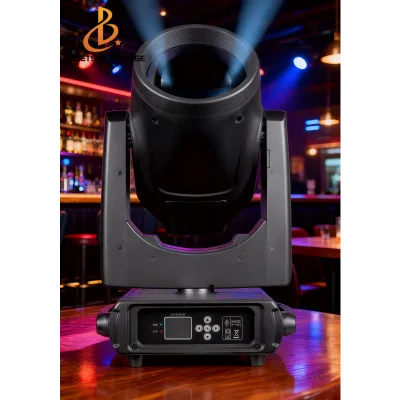
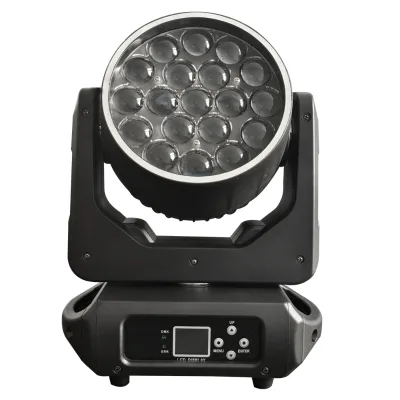
Compare 30 Beam Moving Head Light options from Guangzhou suppliers. These units feature DMX control, LED or Xenon sources, and adjustable strobes for professional stage, event, and club applications; compare the available evidence and request quotations based on your requirements.
Key considerations
Products List


Comprehensive Sourcing Guide
Beam Moving Head Light Sourcing Guide
Procuring beam moving head lights requires careful evaluation of the specific control protocols and optical configurations available in the current market. Buyers must verify that the selected units support the required control channels, such as the 16-channel or 22-channel modes observed in listings, to ensure seamless integration with existing lighting consoles. The availability of customization options allows for tailored solutions, but the core functionality must align with the intended venue size and complexity.
The observed product range includes diverse models like the SF-M295 and X-M350, each offering distinct features such as adjustable strobe speeds or specific gobo configurations. Sourcing decisions should prioritize units that offer versatile control modes, including DMX, Master Slave, and Sound Active options, to accommodate various event dynamics. Understanding these technical variances is essential before engaging with suppliers to avoid mismatches between equipment capabilities and project requirements.
Product Scope and Observed Listing Signals
The market for beam moving head lights presents a wide spectrum of options, ranging from compact units to high-power fixtures with advanced optical systems. Listings indicate that products often feature aluminum alloy construction, providing durability for both static and moving head applications. Buyers should note that while some units specify an IP rating, the exact protection level varies, necessitating a clear distinction between indoor and outdoor deployment scenarios.
Price points in the observed range span from $1 to over $2,000, reflecting differences in light source technology and power consumption. Some models utilize 200W LED modules, while others rely on Xenon bulbs, directly impacting the operational cost and maintenance schedule. The minimum order quantities are generally low, often starting at a single unit, which facilitates sampling and small-scale procurement for smaller venues or rental companies.
Technical Specifications to Verify
Technical due diligence must focus on the light source and color rendering capabilities to ensure the fixture meets the visual demands of the production. Buyers should confirm whether the unit offers RGB emitting colors or specific color temperatures like 7500K and 3200K, as these define the atmospheric quality of the lighting design. The presence of static gobos and linear focus adjustment further refines the beam quality, making these specifications critical for professional applications.
Power consumption and voltage compatibility are equally vital for system stability and energy efficiency. Specifications such as 220V or 240V operation must match the local grid infrastructure to prevent equipment failure. Additionally, verifying the beam angle, which can be as narrow as 2 degrees for specific effects, ensures the light reaches the intended target with the desired intensity and spread without unnecessary spill.
Compliance and Safety Documentation
Safety compliance is non-negotiable when sourcing electrical lighting equipment for public or commercial use. Buyers must insist on documentation confirming CE and RoHS certifications, which indicate adherence to European safety and environmental standards. These certifications are essential for importing goods into many regions and serve as a baseline for verifying that the electrical components meet rigorous safety requirements.
Beyond general certifications, specific safety data regarding the light source and thermal management should be reviewed. For instance, units with high-power LEDs or Xenon bulbs require clear information on heat dissipation and lifespan, such as the observed ≥2000h rating for certain models. Ensuring that the product packing, whether in cartons or flight cases, meets transport safety standards is also crucial for protecting the investment during shipping.
Cost Drivers and Commercial Terms
The total cost of ownership is influenced significantly by the choice of light source and the complexity of the control system. High-power LED modules and advanced gobo wheels increase the initial purchase price but often reduce long-term energy and replacement costs compared to traditional bulb-based systems. Buyers should analyze the power consumption figures, such as the 650W rating for specific models, to calculate the operational expenses over the expected lifespan of the equipment.
Commercial terms regarding warranty and packaging also play a major role in the final procurement decision. A standard one-year warranty provides a baseline for protection against manufacturing defects, but the specific terms should be clarified in the contract. Furthermore, the choice between standard carton packaging and heavy-duty flight cases affects both the initial cost and the long-term durability of the units during transport and storage.
Supplier Qualification and Quality Control
Supplier qualification should begin with verifying the origin of the products, as many listings indicate manufacturing in Guangzhou or Guangdong, China. While this region is a known hub for lighting manufacturing, buyers must ensure that the specific factory has a track record of quality consistency and reliable production capacity. Requesting samples or factory audit reports can help validate the supplier's ability to meet the required technical and quality standards.
Quality control processes must be established to verify that the delivered units match the agreed-upon specifications. This includes checking the physical dimensions, such as the 320mm x 230mm x 585mm standard for certain models, and confirming the functionality of all control channels. Implementing a pre-shipment inspection protocol ensures that issues like incorrect voltage ratings or missing certifications are identified before the goods leave the supplier's facility.
Long-Term Procurement Checks
Sustainable procurement requires a focus on the longevity and maintainability of the beam moving head lights over their operational life. Buyers should prioritize models with clearly defined life spans and accessible replacement parts, such as gobo wheels or LED modules, to minimize downtime. The availability of a one-year warranty is a good start, but understanding the supplier's policy for post-warranty support is essential for long-term asset management.
Regular performance checks and maintenance schedules should be integrated into the procurement strategy to ensure consistent lighting quality. This includes monitoring the dimming range, which should be linear from 0 to 100%, and verifying the stability of the strobe speeds over time. By establishing a proactive maintenance plan, buyers can extend the useful life of the equipment and maintain the high standards required for professional stage and event lighting.
FAQs
What control modes do these beam moving head lights support?
These fixtures support DMX signal control, master-slave mode, sound active mode, and auto mode. DMX control gives full programming access for professional shows, while auto and sound active modes suit quick setups without a console. Control channels vary by model, with options including 16, 20, 22, and 32 channels depending on the fixture you choose.
What light sources are available across these beam moving head models?
Available light sources include LED modules and xenon bulbs depending on the model. For example, one listed model uses a 200W LED module, while another xenon-based unit offers a 2-degree beam angle and cool white output. LED versions generally offer efficient RGB color mixing, and xenon versions deliver strong narrow-beam output for long-throw applications.
Can these fixtures be customized for specific project requirements?
Yes, customization is available on the listed products. Buyers can discuss requirements such as control channels, color configuration, housing details, or packaging preferences with the supplier before ordering. Customization typically affects lead time and minimum order quantity, so confirm exact options, any added cost, and delivery schedules directly with the supplier during the quotation stage.
What certifications do the beam moving head lights carry?
The listed products carry CE and RoHS certification. CE indicates conformity with European safety, health, and environmental requirements, while RoHS restricts hazardous substances in electrical equipment. Always request current certificates for the specific model and production batch you order, because certification documents should match the exact unit being shipped before payment or inspection.
How are the fixtures packed for shipping?
Packing options include carton cases and flight cases, listed as carton or flightcase, carton case or fly case, and carton or flight case depending on the model. Carton packing keeps freight cost lower for stable shipments, while flight cases provide durable protection for touring and frequent transport. Confirm the packing type and cost when requesting your quotation.
What warranty and strobe features are offered on these lights?
A one-year warranty is listed on these fixtures, covering manufacturing defects under normal use. Strobe functions include adjustable speed strobe and electronic strobe, with one model rated at 0 to 25Hz per second. Review the warranty terms with the supplier to confirm coverage scope, exclusions, and the claims process before finalizing your order.
What dimming and color temperature performance can I expect?
Listed fixtures provide 0-100 percent linear dimming for smooth fade transitions, and one model offers a color temperature range of 7500K plus 3200K, letting you switch between cool daylight tones and warmer output. A xenon-based model lists a fixed 7500K cool white temperature. Check the specification sheet of each model for exact color performance details.
Where are these beam moving head lights manufactured?
The listed products originate from Guangzhou and Guangdong, China, which is a major production hub for professional stage lighting equipment. Sourcing from this region typically offers access to many factories, varied price points, and customization services. Verify each supplier's export experience, inspection options, and shipping arrangements for your destination before placing a trial order.