Source Beaded Pen for Office, School, and Business Gifts
Explore 30 Beaded Pen options from verified suppliers. Compare specifications like point diameter, material, and customization features to find the right writing instrument for office, school, or promotional use.
Key considerations
Products List


Glitter Ball Pen for Women Girls Classic Metal Twist Action Ballpoint Pen
$0.46 - $0.47
MOQ: 200 Pieces
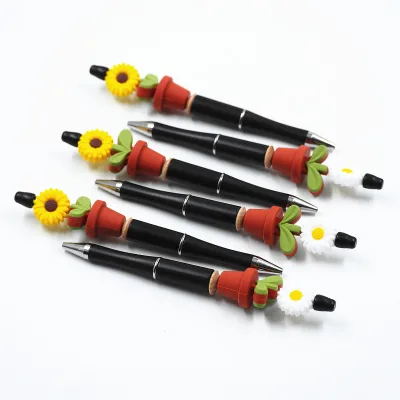
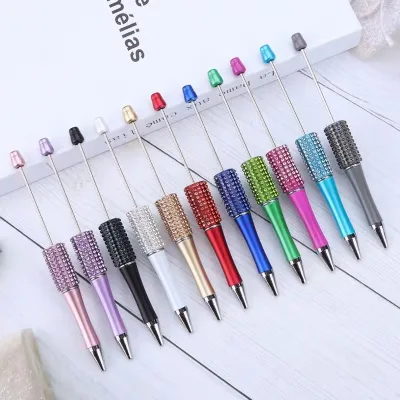
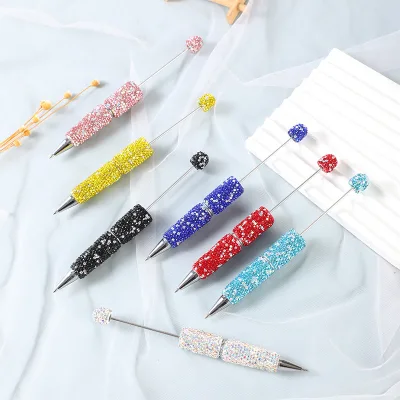
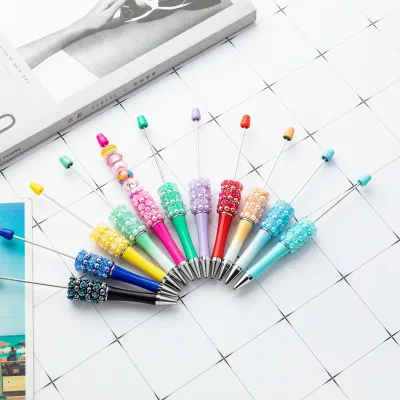
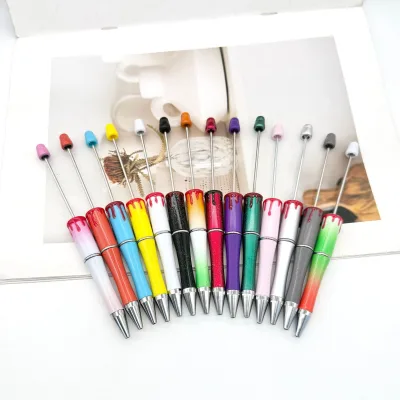


Custom Cute Holders Pen Stylus Bead Pen Ballpoint Gel Pens with Custom Logo
$0.10 - $0.50
MOQ: 2000 Pieces
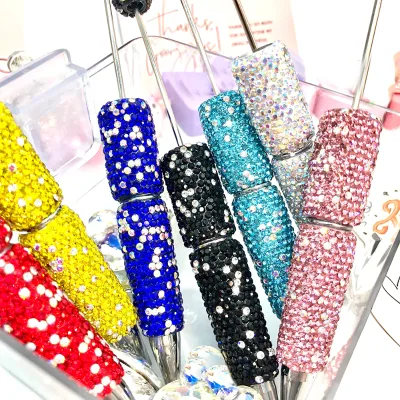


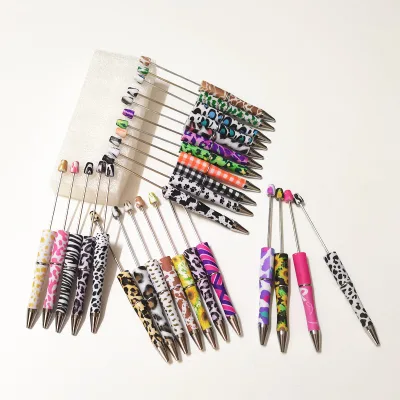
Comprehensive Sourcing Guide
Strategic Sourcing Guide for Beaded Pen Procurement
Understanding the Product Category and Technical Variability
The term "Beaded Pen" in the current B2B marketplace often refers to ballpoint pens featuring specific aesthetic or functional designs, sometimes incorporating bead-like textures or mechanisms. When sourcing this category, buyers must first recognize that the product is not monolithic. The supplied data reveals a significant divergence in technical specifications across available listings, which directly impacts procurement strategy. The core product is identified as an oil ball pen, yet the mechanical operation varies between "Twist" and "Click" open styles. This distinction is critical for end-user experience; twist mechanisms often offer a more compact profile suitable for pocket carry, while click mechanisms provide a tactile feedback preferred in high-volume office environments.
Furthermore, the writing tip diameter is a primary differentiator. The observed data indicates two distinct point diameters: 0.7mm and 1.0mm. The 0.7mm variant typically produces finer lines, ideal for detailed note-taking or technical drafting, whereas the 1.0mm tip offers a bolder stroke, often preferred for general office use or signing documents. Buyers must explicitly define their requirement for tip diameter before engaging suppliers, as mixing these specifications in a single order can lead to fulfillment errors. The ink color is predominantly observed as black, with specific references to "1.0mm Black Ink Color," suggesting that while custom colors may be available, the standard inventory focuses on high-contrast black ink for reliability.
Material Composition and Physical Specifications
Material selection is a fundamental driver of both cost and perceived quality in the Beaded Pen sector. The supply chain data highlights a split between metal and non-toxic plastic constructions. Metal-bodied pens are generally associated with a premium feel, durability, and a higher price point, making them suitable for corporate gifts or high-end promotional campaigns. In contrast, the "Non Toxic Plastic" variant suggests a focus on safety and cost-efficiency, often targeting the educational sector or mass-market promotional giveaways. The hardness of the pen body also varies, ranging from "Medium Soft" to "Partial Hard," which influences the tactile resistance and the likelihood of the pen snapping under pressure.
Physical dimensions are equally standardized yet varied. The standard length for many units is observed at 14cm, with some specific models measuring 14.3cm in length and 1cm in width. Packaging dimensions also fluctuate, with batch package sizes ranging from 15x15x15 cm to specific carton configurations. These variations affect logistics planning; a buyer ordering 500 units of the 14cm metal pen will have a different volumetric weight calculation compared to an order of 1000 units of the 14.3cm plastic variant. The gross weight per batch is noted at 0.8 kg for specific configurations, a figure that should be verified against the actual order volume to ensure accurate freight cost estimation. Additionally, the "Erasable Or Not" attribute is consistently "No," confirming that these are permanent ink devices, which simplifies the specification sheet but requires clear communication to avoid confusion with erasable gel pens.
Cost Drivers and Minimum Order Quantity Dynamics
The pricing structure for beaded pens is heavily influenced by the Minimum Order Quantity (MOQ) and the level of customization requested. The observed MOQ range is broad, spanning from 50 pieces to 2000 pieces. This wide variance suggests a market segmented between small-batch prototyping and large-scale industrial distribution. For instance, a specific model with the designation "CY2025032104" lists an MOQ of 50 pieces, catering to startups or small businesses needing immediate stock. Conversely, other listings require 1000 or 2000 pieces, indicating economies of scale that are only accessible to larger corporations.
The listed price range of 0.08 to 0.9 USD per unit reflects these volume tiers and material differences. However, buyers should treat these figures as baseline observations rather than fixed costs. The "Customization" attribute is marked as "Available" with "Design: Accept OEM" capabilities, which invariably increases the unit cost due to tooling and setup fees. The presence of "With Logo Printing" versus "Without Logo Printing" is a significant cost driver. While the base price might be near the lower end of the observed range, adding a custom logo can shift the unit price toward the higher end. Furthermore, the "Selling Units" are often structured as multiples of 50 items, which buyers must account for when calculating total order costs to avoid partial shipment issues. The "Tricolor" and "Single Color" options also play a role; multi-color pens may incur higher material costs due to the complexity of the ink cartridge or barrel design.
Compliance, Certification, and Safety Standards
In the realm of stationery, particularly items used in schools and offices, compliance with safety standards is non-negotiable. The supplied data explicitly mentions "Non Toxic Plastic" as a material attribute, which is a strong indicator of adherence to basic safety requirements for children's products. However, buyers must verify specific regional certifications. While the data notes the origin as "China" with specific production locations in "Fujian," it does not list specific certification bodies like ISO, CE, or ASTM. Therefore, procurement teams must request proof of compliance with local regulations, such as the US Consumer Product Safety Commission (CPSC) standards or the European EN71 standards for toys and school supplies.
The "Standard" attribute lists dimensions like "14cm" and "14*1cm," but these are physical specifications, not safety certifications. Buyers should not assume that a product meeting dimensional standards automatically meets chemical safety standards. The "Novelty" attribute being "Yes" for some models suggests these may be marketed as fun or novelty items, which could trigger stricter safety testing requirements regarding small parts or choking hazards, even if the pen itself is not intended for very young children. Verification of the "Non Toxic" claim is essential, requiring suppliers to provide Material Safety Data Sheets (MSDS) or third-party lab test results confirming the absence of harmful substances like lead, phthalates, or heavy metals in the plastic and ink components.
Supplier Evaluation and Operational Capabilities
Evaluating a supplier for beaded pens requires a deep dive into their operational flexibility and logistical reliability. The data indicates that suppliers are capable of "Logo Printing" and "Customization," with some explicitly stating "Logo: Customize." This implies a capability for OEM (Original Equipment Manufacturer) and ODM (Original Design Manufacturer) services. However, the "Logo Printing" attribute also appears as "Without Logo Printing" in other listings, indicating that suppliers may offer both blank and branded options. Buyers must clarify whether the supplier is a manufacturer or a trading company, as this affects lead times and quality control capabilities.
The "prod_packing" and "Packing" attributes reveal diverse packaging strategies, ranging from "100PC/OPP Bag" to "1PC/OPP" and "Carton." This variability suggests that suppliers may have different packaging lines or offer customizable packaging solutions. A robust supplier should be able to accommodate specific packing requirements, such as blister packs for retail or bulk cartons for distribution. The "Place of Origin" is consistently noted as "Fujian, China," a region known for its manufacturing infrastructure. Buyers should verify the specific factory location within Fujian to assess the supply chain resilience, especially given the potential for regional disruptions. The "Design: Accept OEM" claim is a positive signal, but buyers should request a portfolio of previous OEM work to validate the supplier's design and production capabilities.
Quality Control and Long-Term Procurement Strategy
Quality control for beaded pens must address both functional performance and aesthetic consistency. The "Hardness" variations, from "Medium Soft" to "Partial Hard," require a defined acceptance criterion. A pen that is too soft may deform during shipping or use, while one that is too hard may be brittle. Buyers should establish a sampling protocol that tests the "Click" or "Twist" mechanism for durability, ensuring it can withstand repeated cycles without failure. The "Point Diameter" consistency is another critical quality metric; a 0.7mm pen must consistently write at 0.7mm, not 0.6mm or 0.8mm, to maintain brand integrity.
For long-term procurement, the "Disposable: Non-Disposable" attribute is a key consideration. If the pen is marketed as non-disposable, it implies a refillable mechanism or a durable construction intended for long-term use. This affects the total cost of ownership and the environmental impact of the product. Buyers should inquire about refill availability and compatibility. Additionally, the "prod_model" numbers, such as "0707," "CY1," and "CY2025032104," serve as unique identifiers. Maintaining a consistent model number across orders is essential for supply chain continuity. If a supplier changes a model number, it may indicate a change in materials or design, which could disrupt the supply chain. Buyers should insist on a formal change notification process for any model alterations.
Comparative Analysis of Key Product Attributes
To facilitate decision-making, the following table summarizes the key attribute variations observed in the market, helping buyers align their specific needs with available product options.
| Attribute Category | Option A (Standard/Observed) | Option B (Premium/Alternative) | Procurement Implication |
|---|---|---|---|
| Open Style | Twist | Click | Twist offers compactness; Click offers tactile feedback. |
| Point Diameter | 0.7mm | 1.0mm | 0.7mm for detail work; 1.0mm for general writing. |
| Material | Non Toxic Plastic | Metal | Plastic is cost-effective; Metal is premium/durable. |
| Hardness | Medium Soft | Partial Hard | Softer for comfort; Harder for durability. |
| Logo Printing | Without Logo | With Logo (Custom) | Custom adds cost but enhances branding value. |
| MOQ | 50 pcs | 1000-2000 pcs | Low MOQ for testing; High MOQ for unit cost reduction. |
| Packing | 1PC/OPP | 100PC/OPP Bag | Retail-ready vs. Bulk shipping. |
| Origin | Fujian, China | Fujian, China | Consistent region, but verify specific factory. |
This comparison highlights that while the core product remains a ballpoint pen, the specific configuration dictates the target market and cost structure. A buyer targeting the school sector might prioritize the "Non Toxic Plastic" and "1.0mm" options with a lower MOQ, whereas a corporate client might opt for the "Metal" and "Click" variants with custom logo printing.
Final Procurement Considerations
In conclusion, sourcing beaded pens requires a meticulous approach to specification definition and supplier verification. The market offers a wide array of options, from 0.08 USD to 0.9 USD per unit, driven by material, customization, and volume. Buyers must navigate the nuances of "Twist" versus "Click" mechanisms, 0.7mm versus 1.0mm tips, and the trade-offs between plastic and metal construction. Compliance with safety standards, particularly regarding "Non Toxic" materials, must be validated through documentation rather than assumption. By leveraging the observed data on MOQs, packing, and origin, buyers can construct a robust procurement strategy that balances cost efficiency with quality assurance. The key to success lies in clear communication of requirements, rigorous supplier vetting, and a commitment to continuous quality control throughout the supply chain.
FAQs
What are the available open styles for beaded pens?
Beaded pens are available in both Twist and Click open styles. The Twist style offers a compact profile suitable for pocket carry, while the Click style provides tactile feedback preferred in high-volume office environments.
Which point diameter options exist for these ballpoint pens?
The pens come with either 0.7mm or 1.0mm point diameters. The 0.7mm variant produces finer lines ideal for detailed note-taking, whereas the 1.0mm tip offers a bolder stroke for general office use or signing documents.
Can buyers request custom logo printing on these pens?
Custom logo printing is available for many Beaded Pen models. While some listings offer pens without logos, others support OEM design and logo customization, which may increase the unit cost due to setup fees.
What materials are used to construct these beaded pens?
Construction materials vary between metal and non-toxic plastic. Metal-bodied pens are associated with a premium feel and durability, while the non-toxic plastic variant focuses on safety and cost-efficiency for educational or mass-market use.
How does the minimum order quantity vary for these products?
Minimum order quantities range widely from 50 pieces to 2000 pieces. Lower MOQs cater to small-batch prototyping, while higher MOQs indicate economies of scale accessible to larger corporations or industrial distributors.
What are the standard packaging configurations for these pens?
Packaging options include 1PC/OPP bags, 100PC/OPP bags, and cartons. The specific configuration depends on the model and intended use, ranging from retail-ready single units to bulk shipping cartons for distribution.