Source Black Steel Case Tire Gauge for Industrial, Civil, and General Pressure Applications
Find and compare 30 Black Steel Case Tire Gauge options for industrial, civil, and general pressure applications. These gauges feature radial connections, various dial sizes, and OEM customization services to meet specific operational needs.
Key considerations
Products List


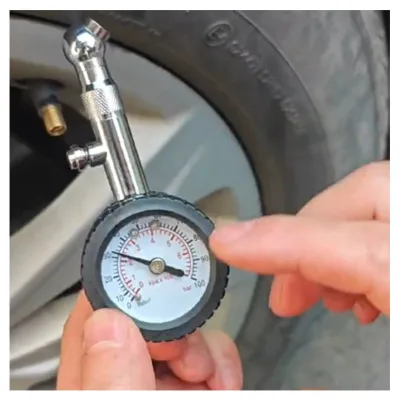


Comprehensive Sourcing Guide
Black Steel Case Tire Gauge Sourcing Guide
Sourcing black steel case tire gauges requires a disciplined approach to balancing cost-efficiency with operational reliability. These instruments are ubiquitous in industrial and civil settings, serving as critical tools for monitoring pressure in pneumatic systems, vehicle maintenance, and general manufacturing processes. The black steel case is a standard industry choice, offering a durable, cost-effective housing that protects internal mechanisms from environmental wear while maintaining a professional aesthetic. Buyers must recognize that while the external casing is uniform, the internal specifications—such as accuracy class, connection type, and pressure range—vary significantly across suppliers. Understanding these nuances is essential for selecting the right gauge for specific operational demands, whether for high-vibration environments or precise calibration needs.
The procurement landscape for these gauges is characterized by a wide range of customization options and manufacturing origins, primarily concentrated in regions like Anhui and Jiangsu in China. Suppliers often provide OEM and ODM services, allowing buyers to tailor dial colors, pointer styles, and packaging to their brand identity. However, this flexibility introduces complexity in quality control. A single supplier may offer multiple models, such as the 119TL or Y60A, each with distinct features like vibration resistance or specific dial sizes. Buyers must navigate these variations carefully, ensuring that the selected model aligns with their technical requirements rather than settling for the most generic offering. This guide provides a structured framework for evaluating suppliers, verifying technical specifications, and managing commercial risks associated with black steel case tire gauges.
Product Scope and Observed Listing Signals
The market for black steel case tire gauges encompasses a diverse array of products, ranging from basic radial connection models to more specialized units with rubber covers or stainless steel internals. Observed listings indicate a price range of $1 to $33.85 USD, reflecting the disparity between basic industrial-grade gauges and those with enhanced features or higher accuracy ratings. The minimum order quantity (MOQ) varies widely, from single units for sampling to 2,000 pieces for bulk industrial contracts. This variability suggests that buyers can engage with suppliers at different scales, but they must be prepared for tiered pricing structures. Smaller orders may incur higher per-unit costs due to setup and packaging overheads, while larger volumes often benefit from economies of scale in production and shipping.
Listing signals also reveal significant differences in product specifications and certifications. Some gauges are marketed with ISO and KS certifications, while others list CE, CMC, or ISO9001 compliance. These certifications are critical for buyers operating in regulated industries or exporting to specific markets. Additionally, the presence of features such as vibration resistance, absolute pressure measurement, or specific dial sizes (e.g., 40mm, 60mm) indicates a higher level of product specialization. Buyers should scrutinize these signals to identify suppliers who offer the precise combination of features required for their application. It is also important to note that some listings may include additional accessories or packaging options, such as individual bubble bags or export cartons, which can impact the total landed cost and handling requirements.
Technical Specifications to Verify
Verifying technical specifications is paramount to ensuring that the selected Black Steel Case Tire Gauge meets operational requirements. Key attributes to confirm include the measuring range, accuracy class, and connection type. For instance, some gauges are designed for low-pressure applications, while others are rated for medium-pressure ranges up to 12 bar or 170 psi. The accuracy class, often indicated as 1.0 or 1.6, determines the permissible error margin and is crucial for applications requiring precise pressure monitoring. Buyers should also verify the dial size, with common options including 40mm and 60mm, and the case material, which is typically black steel but may be upgraded to stainless steel for corrosive environments.
Another critical aspect is the internal mechanism and mounting structure. Spring pressure gauges are common for general industrial use, while fluid column gauges may be preferred for specific stability requirements. The connection type, whether radial or axial, and the thread size must match the existing piping or equipment. Additionally, features such as vibration resistance and liquid filling (often with glycerin) can extend the gauge's lifespan in high-vibration environments. Buyers should request detailed technical datasheets that specify these parameters, ensuring that the gauge is suitable for the intended application. It is also advisable to confirm the lens material, with options including polycarbonate (PC) or glass, as this affects durability and clarity under various lighting conditions.
Compliance and Safety Documentation
Compliance with international and regional standards is a non-negotiable aspect of sourcing black steel case tire gauges. Buyers must verify that suppliers hold relevant certifications, such as ISO9001 for quality management, CE for European market compliance, and KS for Korean standards. These certifications indicate that the manufacturer adheres to rigorous production and testing protocols, reducing the risk of product failure. Additionally, some gauges may require CMC (China Metrology Certification) for use in regulated industries within China. Buyers should request copies of these certificates and verify their validity with the issuing bodies to ensure authenticity.
Safety documentation should also include test reports and calibration certificates. These documents provide evidence that the gauges have undergone rigorous testing for accuracy, durability, and environmental resistance. Buyers should inquire about the testing procedures used, including pressure cycling, vibration testing, and temperature stability checks. Furthermore, it is important to confirm that the materials used in the gauge, such as the case, dial, and internal components, comply with relevant environmental regulations, such as RoHS or REACH. This is particularly important for buyers operating in markets with strict environmental standards. By ensuring comprehensive compliance documentation, buyers can mitigate legal and operational risks associated with non-compliant products.
Cost Drivers and Commercial Terms
Understanding the cost drivers for black steel case tire gauges is essential for effective budgeting and negotiation. The primary cost factors include the accuracy class, dial size, connection type, and any additional features such as vibration resistance or liquid filling. Higher accuracy gauges and those with specialized features typically command higher prices. Additionally, the choice of case material, whether standard black steel or upgraded stainless steel, can significantly impact the cost. Buyers should also consider the packaging requirements, as custom packaging or individual bubble bags may incur additional charges.
Commercial terms, including payment methods, lead times, and shipping arrangements, also play a crucial role in the total cost of ownership. Lead times can vary from 3 to 45 days, depending on the order quantity and supplier capacity. Buyers should negotiate clear delivery schedules and penalties for delays to ensure timely receipt of goods. Payment terms, such as T/T or L/C, should be aligned with the buyer's financial policies and risk tolerance. Additionally, buyers should clarify who is responsible for shipping and insurance costs, as these can add significant expenses to the final invoice. By carefully managing these commercial terms, buyers can optimize their procurement costs and ensure a smooth supply chain process.
Supplier Qualification and Quality Control
Supplier qualification is a critical step in the sourcing process, ensuring that the selected manufacturer can consistently deliver high-quality black steel case tire gauges. Buyers should conduct thorough due diligence, including verifying the supplier's business license, production capacity, and quality management systems. Suppliers with ISO9001 certification are generally preferred, as they demonstrate a commitment to standardized production processes. Additionally, buyers should assess the supplier's R&D capabilities and ability to provide OEM/ODM services, as this indicates flexibility and innovation.
Quality control measures should be clearly defined and enforced throughout the production process. Buyers should request a detailed quality control plan that includes incoming material inspections, in-process checks, and final product testing. Sampling plans, such as AQL (Acceptable Quality Limit), should be agreed upon to ensure that the delivered products meet the specified standards. Buyers may also consider third-party inspection services to verify product quality before shipment. By implementing robust supplier qualification and quality control measures, buyers can minimize the risk of receiving defective products and ensure consistent performance in their operations.
Long-Term Procurement Checks
Long-term procurement success depends on establishing a sustainable relationship with suppliers and continuously monitoring performance. Buyers should implement a supplier performance evaluation system that tracks key metrics such as on-time delivery, product quality, and responsiveness to issues. Regular audits and site visits can provide valuable insights into the supplier's production capabilities and quality control practices. Additionally, buyers should maintain open communication channels to address any concerns promptly and collaboratively.
As market conditions and regulatory requirements evolve, buyers must stay informed about changes that may impact their sourcing strategy. This includes monitoring updates to international standards, such as CE or ISO certifications, and adapting their procurement processes accordingly. Buyers should also explore opportunities for cost optimization through volume consolidation, alternative material sourcing, or process improvements. By maintaining a proactive approach to supplier management and market analysis, buyers can ensure the long-term reliability and cost-effectiveness of their Black Steel Case Tire Gauge supply chain.
FAQs
What is the accuracy class for industrial black steel case tire gauges?
The accuracy class is designated for industrial applications. These gauges typically feature a pointer display and are designed for general pressure measurement tasks in industrial settings.
Can I request custom OEM services for these pressure gauges?
Yes, OEM and ODM services are available for customization. Buyers can request specific modifications to meet their unique operational requirements while maintaining standard industrial quality.
Which certifications do these black steel case gauges hold?
These products hold ISO, Ks, CE, CMC, and ISO9001 certifications. Such documentation ensures compliance with international standards for industrial and civil pressure measurement applications.
How long is the delivery time for bulk orders?
Delivery typically takes between 3 to 45 days depending on order quantity. Specific timelines are determined by the production schedule and the total volume requested by the buyer.
What is the minimum order quantity for these gauges?
The minimum order quantity ranges from 1 to 2000 units based on supplier terms. Buyers should verify specific MOQ requirements with the manufacturer before placing a large order.
Which connection types are available for radial mounting?
Radial direction connection is a standard option for these gauges. Additional connection types can be requested as needed to fit specific installation structures and system requirements.
What materials are used for the case and socket?
Cases are available in black steel or stainless steel 304. The socket is often made of 316 stainless steel to ensure durability and resistance to corrosion in various environments.
How are these gauges packaged for export shipping?
Individual units are packed in bubble bags and boxes within export cartons. Bulk shipments are often palletized to ensure safe transport and protection during international logistics.