Source Blue Universal Bus Seat for school, transit, and coach
Compare 29 listings for the Blue Universal Bus Seat featuring PU or PVC materials and customizable options. Buyers can evaluate specifications, pricing, and delivery times from verified suppliers in China.
Key considerations
Products List


Vehicle Seat for Bus OEM Vehicle Seat Bus Public Transport Passenger Seats
$52.00 - $225.00
MOQ: 1 Pieces

OEM High-Quality PVC Bus Seat Cost Performance Passenger Seat for City Bus
$52.00 - $225.00
MOQ: 1 Pieces


$66.00 - $76.00
MOQ: 50 Pieces


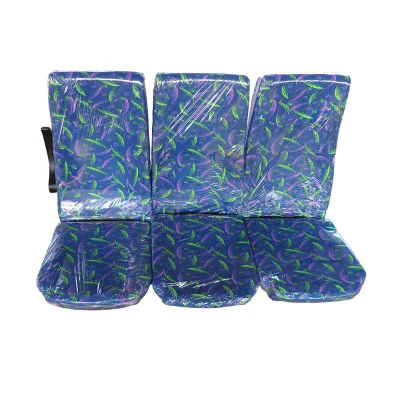
HC-B-16254 Auto Interior Accessories Bus Seat Manufacturer Universal Bus Seats
$95.00 - $200.00
MOQ: 1 Minimum


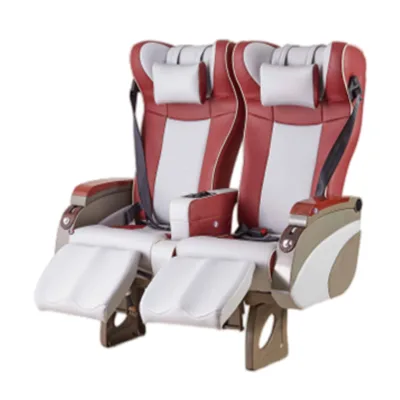


Comprehensive Sourcing Guide
Strategic Sourcing Guide for Blue Universal Bus Seats
The global market for public transportation and commercial vehicle seating is characterized by a demand for durability, safety compliance, and adaptable design. When sourcing a "Blue Universal Bus Seat," buyers must navigate a complex landscape of material specifications, regulatory standards, and manufacturing capabilities. This guide provides a disciplined approach to identifying suitable suppliers and products, relying strictly on verified product attributes and established industry knowledge. The focus is on ensuring that the procurement process yields components that meet the rigorous demands of bus and commercial vehicle operators while adhering to international safety and quality benchmarks.
Technical Specifications and Material Composition
The foundation of any successful procurement for bus seating lies in understanding the specific technical attributes of the product. For a universal bus seat, the material composition is a primary determinant of longevity and comfort. In the current market, polyurethane (PU) and polyvinyl chloride (PVC) are the dominant materials observed for upholstery. PU offers superior breathability and a softer feel, often preferred for long-distance travel, while PVC provides enhanced resistance to abrasion and easier cleaning, making it suitable for high-traffic urban transit.
Buyers should verify the "Leatheriness" classification of the material, as this directly impacts the tactile experience and perceived quality. A standard classification of "A Class" indicates a high-grade finish that resists cracking and fading under UV exposure. The color specification is critical; while "Blue" is the core requirement, suppliers often offer "White or Customized" options, meaning the blue hue must be explicitly defined in the purchase order to ensure consistency. Furthermore, the seat structure often involves customizable brackets, allowing the seat to adapt to various vehicle chassis configurations. The physical dimensions are equally vital; some specifications indicate a standard size of 120cm115cm80cm, though universal models may vary. The "Type" of the seat, whether classified as a "General Seat" or "Seat Parts," dictates the level of integration required. A complete seat unit includes the cushion, backrest, and frame, whereas parts may require additional assembly. The condition of the product is typically "New," but buyers must confirm that the "Model" designation, such as YXS001, C model, or Q15-2, aligns with the specific vehicle architecture they intend to service.
Regulatory Compliance and Certification Verification
Safety is the non-negotiable pillar of bus seat procurement. Unlike general furniture, bus seats must withstand dynamic forces during sudden stops or collisions. Consequently, verifying certifications is the most critical step in the sourcing process. The market data indicates the presence of several key standards. The "ECE R44" standard is a recognized regulation for child restraint systems, but for general bus seating, the "ECE" mark is a fundamental requirement for vehicles operating in European markets and many other jurisdictions. Additionally, the "CCC" (China Compulsory Certification) is essential for products manufactured in or sold within China.
Buyers must also look for "ISO" certification, which signifies that the manufacturer adheres to international quality management systems. The presence of these certifications should not be assumed; they must be validated through documentation. The "Certificate" field in supplier listings often lists "3, ECE," suggesting a tiered compliance system where "3" may refer to a specific test level or batch verification. It is imperative to request the actual test reports associated with the "ECE R44/Condition:New" or similar standards to ensure the seat has passed impact and fire resistance tests. The "Standard" field often lists "Customized," which implies that while the base design meets general norms, specific safety features may need to be tailored. Buyers should never accept a seat without a valid certificate that matches the destination country's regulations. The "Brand" of the seat, such as "Gds," may also be relevant for warranty claims, but the certification is the primary indicator of safety compliance.
Cost Drivers and Pricing Structures
Understanding the cost structure of bus seats is essential for budgeting and negotiation. The observed price range in the market spans from $4.1 to $630 USD, a significant variance that reflects differences in material quality, complexity, and order volume. The lower end of the spectrum likely corresponds to basic seat components or parts, while the higher end represents fully assembled, high-specification units with advanced safety features. The "Price" is frequently listed as "Negotiation," indicating that the final cost is highly dependent on the order quantity and specific customization requests.
Several factors drive the final cost. The "MOQ" (Minimum Order Quantity) is a primary driver; while some suppliers list an MOQ of 10 pieces, others may require 100 or even 2000 units. A higher MOQ typically results in a lower unit price due to economies of scale. The "Customization" factor also plays a major role. Requests for specific "Logo," "Color," "Packing," "Shape," or "Size" modifications incur additional tooling and setup costs. The "Material" choice between PU and PVC will also influence the price, with PU generally commanding a premium. Additionally, the "Production Time" of 15-30 days or 30-60 days can impact costs if expedited shipping is required. Buyers should also consider the "Packing" method; "Carton Packing" or "The Neutral Carton Packaging" adds to the logistics cost but ensures the product arrives undamaged. The "Currency" is typically US Dollars, but payment terms such as "Tt, LC, Western Union, Paypal" affect the financial risk and cash flow for the buyer.
Typical Applications and Vehicle Compatibility
The "Universal" designation in "Blue Universal Bus Seat" suggests broad applicability, but buyers must exercise caution. The "Vehicle Type" field explicitly lists "Bus, Mini Bus" and "Bus and Truck," confirming that these seats are designed for commercial transport rather than private passenger cars. The "Position" of the seat, whether "Front Row" or "Back Row," determines the mounting requirements and safety constraints. Front-row seats often require more robust anchoring systems due to proximity to the driver and potential impact zones.
The "Automotive" attribute of "Universal Adaptation" implies that the seat can be fitted to various chassis, but this does not guarantee a plug-and-play installation. The "Bracket" is often "Customizable," meaning the buyer must provide the vehicle's mounting specifications to the manufacturer. The "Model" numbers, such as H001 or KA, serve as reference points for specific vehicle fits. For example, a seat model designed for a "Mini Bus" may not be suitable for a heavy-duty "Truck" without significant modification. The "Usage" is strictly defined as "Car Seat" in some contexts, but in the context of "Bus and Truck," it refers to the seating within the vehicle cabin. Buyers should verify that the seat's dimensions and mounting points align with the specific bus or truck model they are equipping. The "Annual Production Capacity" of 3 Million units suggests that large-scale manufacturers can handle bulk orders for fleet replacements, ensuring supply stability.
Supplier Evaluation and Operational Capabilities
Selecting the right supplier requires a deep dive into their operational capabilities and geographic location. The "prod_origin" is frequently listed as "Dongguan, Guangdong," "Xiamen City, China," or simply "China." These regions are hubs for automotive manufacturing, offering access to a robust supply chain for materials like PU and PVC. However, the specific location can influence lead times and logistics costs. A supplier in "Dongguan" may have different shipping advantages compared to one in "Xiamen."
The "Production Time" is a critical metric for planning. Ranges of 15-30 days or 30-60 days indicate the time required for manufacturing after the order is confirmed. Buyers must account for this lead time in their project schedules. The "Sample Time" of 3-7 days is crucial for quality verification before mass production. A supplier that can provide samples quickly demonstrates efficiency and confidence in their product. The "Loading Port" is listed as "China Main Port," which is a standard term, but buyers should clarify the specific port (e.g., Shenzhen, Guangzhou) to optimize freight costs. The "Payment" terms, including "Tt, LC, Western Union, Paypal," offer flexibility, but "LC" (Letter of Credit) is often preferred for large orders to mitigate financial risk. The "Brand" presence, such as "Gds," can be a factor in supplier reputation, but the "Certification" and "Standard" compliance are more reliable indicators of quality. Buyers should evaluate the supplier's ability to handle "Customization" requests, as the availability of logo, color, and shape customization is a key differentiator.
Quality Control and Long-Term Procurement Strategy
Ensuring long-term value requires a robust quality control (QC) strategy. The "Condition" of the product is listed as "New," but this must be verified upon receipt. The "Packing" method, whether "Carton Packing" or "Neutral Carton Packaging," is the first line of defense against damage during transit. Buyers should insist on a QC protocol that includes visual inspection for material defects, checking the "Leatheriness" grade, and verifying the "Color" accuracy against the agreed-upon blue standard.
For long-term procurement, the "Customization" capability is a strategic asset. The ability to customize "Logo, Color, Packing, Shape, Size, etc." allows buyers to maintain brand consistency across their fleet. The "Standard" of "Customized" suggests that the manufacturer can adapt to specific needs, but this requires clear communication and detailed specifications. The "Model" consistency is also important; ordering the same model, such as "C-1" or "Q15-2," ensures that replacement parts and maintenance procedures remain uniform. The "Delivery Time" of 15-30 days or 30-60 days should be factored into inventory planning to avoid stockouts. Finally, the "Payment" terms should be negotiated to balance cash flow with supplier security. By focusing on these operational details, buyers can build a sustainable supply chain for blue universal bus seats that meets both immediate and future transportation needs.
FAQs
What certifications do blue universal bus seats typically have?
These seats often carry ECE, CCC, and ISO certifications to ensure safety compliance. The ECE mark is fundamental for European markets, while CCC is essential for China. Buyers must verify specific test reports like ECE R44 for child restraint systems to confirm the seat meets impact and fire resistance standards.
Which materials are used for Blue Universal Bus Seat upholstery?
The primary materials observed are PU and PVC, offering different benefits for commercial transport. PU provides superior breathability and a softer feel for long-distance travel. PVC offers enhanced abrasion resistance and easier cleaning, making it suitable for high-traffic urban transit environments.
How long is the production time for custom blue bus seats?
Production time typically ranges from 15 to 30 days or 30 to 60 days depending on complexity. Customization requests for specific logos, colors, or shapes can extend the timeline. Buyers should account for this lead time in their project schedules to ensure timely fleet deployment.
Can I customize the logo and color of the blue bus seats?
Yes, customization is available for logos, colors, packing, shape, and size. Suppliers often offer white or customized options, so the specific blue hue must be defined in the order. This flexibility allows buyers to maintain brand consistency across their fleet while adapting to specific vehicle requirements.
What is the minimum order quantity for blue universal bus seats?
Minimum order quantities vary, with some suppliers requiring 10 pieces and others up to 100 or 2000 units. A higher MOQ typically results in a lower unit price due to economies of scale. Buyers should check specific supplier listings to find options that match their budget and volume needs.
Where are Blue Universal Bus Seat manufacturers located?
Manufacturers are primarily located in Dongguan, Guangdong, and Xiamen City, China. These regions are hubs for automotive manufacturing, offering access to a robust supply chain for materials like PU and PVC. The specific location can influence lead times and logistics costs for international buyers.
What is the price range for blue universal bus seats?
The observed price range spans from 4.1 to 630 USD, reflecting differences in material quality and complexity. The lower end likely corresponds to basic components, while the higher end represents fully assembled units with advanced safety features. Final costs are often negotiable based on order volume and customization.
Which vehicle types are compatible with blue universal bus seats?
These seats are designed for Bus, Mini Bus, and Truck applications. The position can be Front Row or Back Row, requiring specific mounting brackets. Buyers must verify that the seat dimensions and mounting points align with the specific vehicle architecture they intend to service for safe installation.