Source Bus Rocker Arm Bushing for Ford, Honda, and BMW
Find 30 verified listings for the Bus Rocker Arm Bushing to compare specifications and pricing. Buyers can evaluate options based on material, hardness, and certification standards like ISO 9001:2015 for reliable replacement needs.
Key considerations
Products List
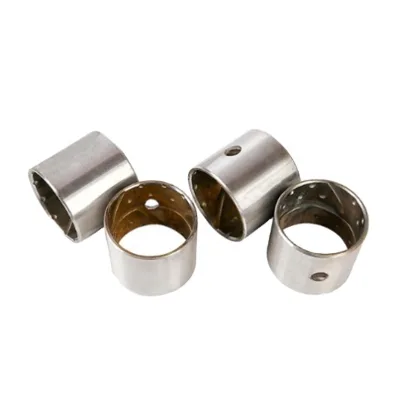


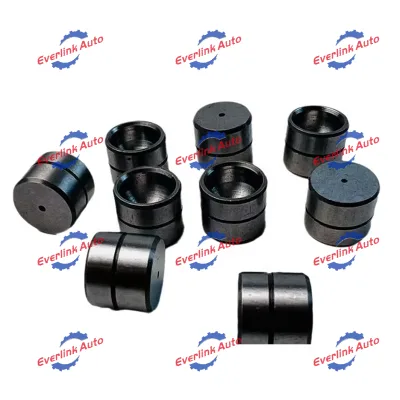
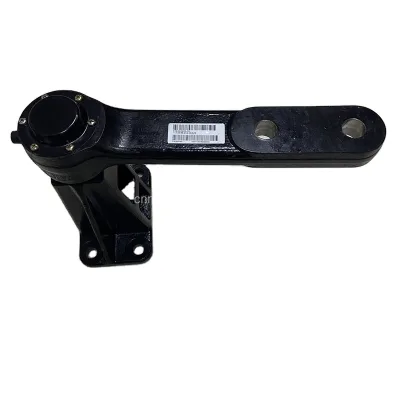
Automotive Rocker Arm Engine Component Custom Made with Factory Supply
$10.00 - $20.00
MOQ: 1000 Pieces










Comprehensive Sourcing Guide
Strategic Sourcing Guide for Bus Rocker Arm Bushings
The global commercial vehicle sector relies heavily on the durability and precision of suspension components, with the Bus Rocker Arm Bushing serving as a critical pivot point for stability and ride quality. For procurement professionals, sourcing these components requires a nuanced understanding of manufacturing processes, material science, and rigorous compliance verification. The market presents a wide array of options, ranging from standard replacement units to highly customized OEM solutions. This guide synthesizes available market data to provide a disciplined framework for evaluating suppliers and products, ensuring that procurement decisions are grounded in verifiable facts rather than marketing assertions.
Technical Specifications and Material Composition
The technical integrity of a Bus Rocker Arm Bushing is defined by its material composition, dimensional tolerances, and surface treatments. Based on current market observations, the primary material utilized for these components is steel, often subjected to specific heat treatments to enhance performance. A critical attribute observed in high-quality units is the hardness rating, which typically falls within the range of 50-60 HRC. This specific hardness range is essential for balancing wear resistance with the necessary flexibility to absorb road shocks without fracturing.
Manufacturing processes play a pivotal role in determining the final product's reliability. The dominant production method identified is die forging combined with machining and finishing. This "Forging" molding style ensures a dense grain structure, superior to casting, which is vital for components subjected to high cyclic loads. Following the forging process, surface treatments such as sand blasting are frequently applied to remove impurities and prepare the surface for further coating or to improve fatigue life.
Dimensional precision is another non-negotiable specification. While some suppliers offer standard dimensions, the market also supports fully customized requirements based on specific vehicle drawings. Tolerance levels vary by supplier capability; observed data indicates precision tolerances as tight as 0.01-0.05mm for high-accuracy applications, while general standards may allow for 0.1mm variance. Buyers must verify that the supplier's stated tolerance aligns with the specific engineering requirements of the bus chassis. Furthermore, the product standard often cited is the GB (Guobiao) standard, though many manufacturers also adhere to custom drawings approved by the buyer.
Compliance, Certification, and Quality Assurance
In the B2B automotive supply chain, certification is not merely a formality but a prerequisite for trust. The most frequently observed certification for Bus Rocker Arm Bushing manufacturers is ISO 9001:2015, which validates the supplier's quality management systems. Some advanced suppliers in the sector also hold ISO/TS 16949 (often referred to in market listings as ISO/Atf16949) and ISO 19001, indicating a commitment to automotive-specific quality controls. These certifications suggest that the manufacturer has established processes for traceability, consistency, and continuous improvement.
When evaluating a supplier, procurement teams should verify the specific scope of these certifications. For instance, a certification for "Forging Tolerance:+/-0.1mm" implies a specific capability in dimensional control that should be cross-referenced with the buyer's engineering drawings. It is crucial to note that while certifications like ISO 9001 are common, they are not universal guarantees of product performance for every single unit listed. Buyers must treat certification as a baseline requirement and demand specific test reports or quality assurance documentation for the batch being purchased.
Quality is often marketed as "Guaranteed," but this claim must be substantiated by the supplier's internal quality control protocols. The presence of a "Sample: Yes" attribute indicates that the supplier is willing to provide prototypes for validation, a critical step before committing to a full production run. Additionally, the "Quality: Guaranteed" attribute should be backed by a clear warranty policy and a defined process for handling non-conforming products.
Cost Drivers and Pricing Dynamics
The pricing structure for bus rocker arm bushings is highly variable, reflecting the diversity of materials, customization levels, and order volumes. Observed market data reveals a price range spanning from $0.20 to $10,000,000 USD. This extreme variance is not indicative of a single product type but rather encompasses everything from small individual bushings to large-scale industrial forging contracts or complete assembly kits.
Several key factors drive these costs. First, the level of customization is a primary determinant. Products with "Customized" dimensions, colors, or materials will command a higher price than standard "standard" size items. Second, the volume of the order significantly impacts the unit cost. The Minimum Order Quantity (MOQ) observed in the market ranges from 1 unit to 5,000 units, with specific suppliers setting an MOQ of 1,000 PCS for certain models. Buyers purchasing in smaller quantities may face higher per-unit costs due to the setup and tooling expenses involved in forging and machining.
Material costs also play a role. While steel is the standard, the use of galvanized sheet or other specialized alloys for corrosion resistance can increase the base price. Furthermore, the complexity of the "Process: Die Forging+Maching+Finishing" adds labor and energy costs compared to simpler manufacturing methods. Buyers should analyze the total cost of ownership, including packaging costs, as suppliers utilize various methods ranging from anti-rust paper and cartons to wooden cases and pallets, depending on the shipment size and destination.
Typical Applications and Vehicle Compatibility
Bus rocker arm bushings are designed for specific applications within the suspension systems of heavy-duty vehicles. The primary purpose of these components is for "replace/repair," making them essential for fleet maintenance and overhaul operations. The market data indicates compatibility with a wide range of major vehicle manufacturers, including Roewe, Geely, Ford, Nissan, Honda, Hyundai, BMW, and Benz. This broad compatibility suggests that while the bushings are often customized, the underlying engineering principles are adaptable across different chassis designs.
The position of the bushing is typically at the "Front" of the vehicle, where it manages the articulation of the suspension arms. The "Application" is broadly categorized as "Machinery Parts," but in the context of buses, this refers specifically to the suspension linkage. The "Car Make" attribute highlights the importance of cross-referencing the part number with the vehicle's original equipment (OE) specifications. For example, OE numbers such as ZK6119H and ZK6938HQ are specific identifiers that buyers must match to ensure fitment.
The "Selling Units" are listed as "Single item," which implies that these components can be purchased individually for spot repairs, though bulk purchasing is often more economical. The "Service" attribute of "OEM/ODM" indicates that suppliers are capable of producing parts for original equipment manufacturers or designing custom solutions for specific fleet requirements. This flexibility is crucial for bus operators managing diverse fleets or those looking to upgrade their suspension systems with aftermarket improvements.
Supplier Evaluation and Geographic Considerations
When selecting a supplier, geographic origin is a significant factor in logistics and lead times. The majority of the observed product data points to "Guangdong, China" and "Luoyang, China" as the primary places of origin. These regions are known for their robust manufacturing infrastructure, particularly in metalworking and automotive parts production. The "prod_origin" being listed as "China" generally confirms the supply chain location, but specific city-level data can help buyers assess logistics efficiency.
Evaluating a supplier requires a focus on their customization capabilities and service offerings. The "Customization: Available" attribute is a strong indicator of a supplier's ability to adapt to unique buyer requirements. Buyers should inquire about the "Standard" of the product, which can range from "GB" to "As per approval product drawings." This flexibility allows for precise engineering alignment. Additionally, the "Condition" of the products is consistently listed as "New," ensuring that buyers receive fresh inventory rather than refurbished or used parts.
The "Processing Object" is identified as "Metal," confirming the material base. Buyers should verify the supplier's capacity for "Heat Treatment: Quenching," as this process is critical for achieving the desired hardness and structural integrity. A supplier that explicitly mentions this process demonstrates a commitment to metallurgical standards. Furthermore, the "Tolerance" capabilities, ranging from 0.01mm to 0.1mm, should be matched against the buyer's engineering specifications to ensure that the bushings will function correctly within the tight tolerances of modern bus suspension systems.
Long-Term Procurement and Quality Control Strategies
Sourcing bus rocker arm bushings is not a one-time transaction but a long-term strategic partnership. To ensure consistent quality, buyers should implement a rigorous quality control protocol that includes sample validation and batch testing. The availability of samples ("Sample: Yes") allows for pre-production verification of hardness, dimensions, and surface finish. Buyers should request test results that confirm the hardness falls within the 50-60 HRC range and that the tolerance levels meet the specified 0.01-0.05mm or 0.1mm requirements.
Packaging is another critical aspect of long-term procurement. The "prod_packing" options, including "Anti-Rust Paper, Carton, Wood Case or Pallet," and "Fiber Wooden Case," must be selected based on the shipping distance and environmental conditions. Proper packaging prevents corrosion and physical damage during transit, ensuring that the bushings arrive in "New" condition. For large orders, the use of wooden cases or pallets is often necessary to secure the goods.
Finally, buyers should maintain open communication regarding the "Standard" and "Customized" nature of the products. Since the "prod_standard" can be "According to the drawing," it is vital to have clear, approved engineering documents on file. This ensures that any future re-orders or replacements are identical to the original specifications. By focusing on these technical and procedural details, procurement teams can mitigate risks and secure a reliable supply of high-performance bus rocker arm bushings.
| Feature Category | Observed Market Data | Verification Requirement |
|---|---|---|
| Material | Steel, Galvanized Sheet | Confirm alloy grade and composition |
| Hardness | 50-60 HRC | Request hardness test report |
| Tolerance | 0.01-0.05mm or 0.1mm | Match with engineering drawings |
| Certification | ISO 9001:2015, ISO/Atf16949 | Verify current certificate validity |
| Origin | Guangdong, Luoyang, China | Confirm specific factory location |
| Process | Die Forging, Quenching, Sand Blasting | Validate heat treatment logs |
| MOQ | 1 to 5,000 PCS (e.g., 1,000 PCS) | Negotiate based on volume needs |
| Packaging | Anti-Rust Paper, Wooden Case | Ensure protection for transit |
FAQs
What materials are used for bus rocker arm bushings?
The primary material used is steel, though galvanized sheet is also available. Some suppliers offer customized material options to meet specific corrosion resistance or strength requirements for different bus chassis applications.
Which certifications should I verify for quality assurance?
Look for ISO 9001:2015 certification as a baseline for quality management. Advanced suppliers may also hold ISO/TS 16949 or ISO 19001, indicating stricter automotive-specific controls and traceability for forgings.
How is the hardness of these bushings measured?
High-quality units typically exhibit a hardness rating between 50 and 60 HRC. This range ensures the component balances wear resistance with the flexibility needed to absorb road shocks without fracturing.
Can I order customized dimensions for my specific bus model?
Yes, customization is available for dimensions, colors, and materials based on approved product drawings. Suppliers can produce parts according to specific engineering standards or custom designs rather than just standard sizes.
What is the typical minimum order quantity for these parts?
The minimum order quantity varies, with some suppliers requiring 1000 pieces while others accept orders as low as one unit. Bulk purchasing often reduces the per-unit cost compared to single-item purchases.
Which vehicle makes are compatible with these bushings?
These bushings are compatible with major manufacturers including Roewe, Geely, Ford, Nissan, Honda, Hyundai, BMW, and Benz. Buyers must match the OE number, such as ZK6119H, to ensure correct fitment.
How are the products packaged for international shipping?
Packaging options include anti-rust paper, cartons, wooden cases, or pallets depending on the order size. Fiber wooden cases are also used to prevent corrosion and physical damage during transit.