Source Red Universal Emergency Hammer for cars, boats, and homes
Compare 30 Red Universal Emergency Hammer options from verified suppliers. Buyers can evaluate specifications like material, size, and MOQ to find the right safety hammer for vehicle or home use.
Key considerations
Products List


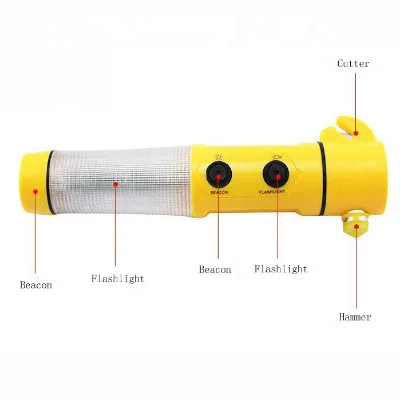
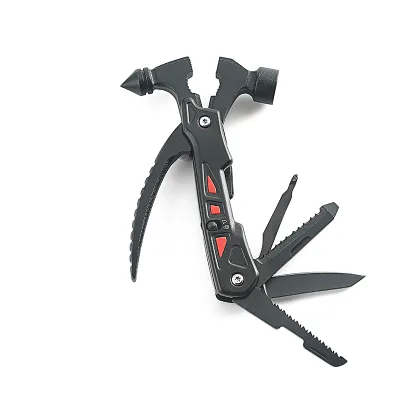
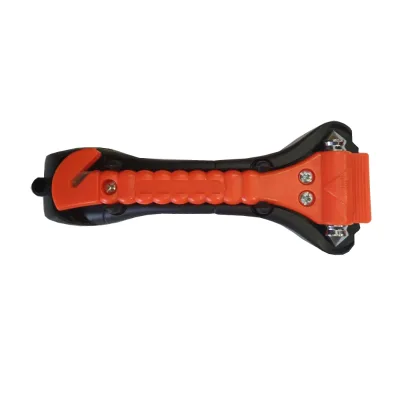

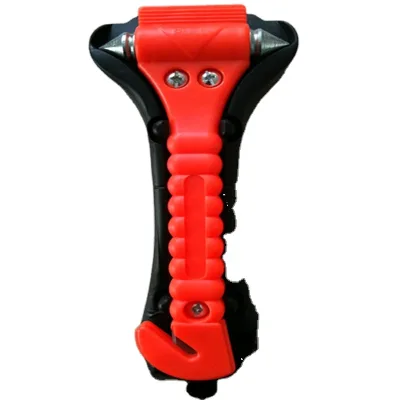
Comprehensive Sourcing Guide
Strategic Sourcing Guide for Red Universal Emergency Hammers
Technical Specifications and Material Composition Analysis
When sourcing a Red Universal Emergency Hammer, the primary objective is to identify a tool that balances structural integrity with immediate deployability. Based on observed market data, the core material composition for these devices typically involves a combination of High Carbon Steel (HCS) for the striking head and Acrylonitrile Butadiene Styrene (ABS) or High-Density Polyethylene (HDPE) for the handle and body. The steel component is critical for penetrating tempered glass, while the polymer housing provides necessary insulation and grip. The hammer head material is explicitly noted as steel in verified listings, ensuring the tool can withstand the high-impact forces required during an emergency escape scenario.
Physical dimensions vary significantly across different product models, a factor that buyers must scrutinize to ensure compatibility with vehicle storage compartments. Observed specifications indicate a range of sizes, from compact "Mini" variants to larger units measuring approximately 19.27.33.4 cm or 23.58.73.8 cm. In metric terms, one specific model is listed at 1927334 mm. These dimensions directly influence the weight and portability of the unit. While some listings indicate a single gross weight of 5.000 kg for bulk packaging, individual unit weights are often cited around 150g. The handle color is frequently customizable, with red being a dominant choice for high visibility, though "Colorful" options are also available. The product is universally designed for adult application, ensuring the force required to operate the tool is within the physical capabilities of the average user.
Compliance, Certification, and Safety Standards
Verifying compliance is the most critical step in the procurement process for emergency safety equipment. The market data reveals a variety of certification claims, including RoHS, CE, GS, and specific fire-fighting standards. Buyers must understand that "universal" standards do not guarantee a specific certification status for every unit; rather, they indicate the product category. For instance, some listings explicitly state certifications such as "RoHS CE GS," while others list only "CE" or "Ceiso." It is imperative for the buyer to request current, valid certification documents from the supplier for the specific batch being purchased, as these documents are not automatically transferable across all SKUs.
The product standard is often described simply as "universal" or specifically as "Safety hammer" and "Fire fighting life hammer." However, the term "universal" in this context refers to the application across various vehicle types rather than a specific ISO or ANSI standard number. Buyers should verify if the product meets regional safety regulations for automotive safety equipment. The attribute "Explosion-proof" is explicitly noted as "Not Explosion-proof" in some listings, which is a crucial distinction. This indicates the hammer is designed for mechanical impact on glass, not for use in explosive atmospheres. Consequently, the procurement strategy must focus on mechanical durability and glass-penetration efficacy rather than explosion resistance.
Cost Drivers and Pricing Dynamics
The pricing structure for red universal emergency hammers is highly variable, influenced heavily by order volume, material quality, and customization requirements. The observed price range in the market spans from $0.20 to $1,500.00. This wide disparity is not indicative of a single product's fluctuating price but rather reflects the difference between individual retail units and bulk industrial orders. The lower end of the spectrum likely represents single-item purchases or basic models, while the upper end may encompass large-scale industrial contracts, custom packaging, or bundled safety kits.
The Minimum Order Quantity (MOQ) is a significant driver of unit cost. Data indicates MOQs ranging from 1 piece to 2,000 pieces. Suppliers with an MOQ of 1 piece typically charge a premium per unit, whereas those requiring 500 or 2,000 pieces offer significantly lower per-unit pricing. The specific MOQ of 500 PCS is common for standard OEM orders, while 2,000 PCS represents a high-volume tier. Additionally, the option for OEM logo customization is available, which often incurs additional setup fees or mold costs, further influencing the final landed cost. Payment terms such as TT, West Union, and Paypal are standard, but the chosen method can impact transaction fees and cash flow timing.
Typical Applications and Functional Requirements
The primary function of the Red Universal Emergency Hammer is "Escape From Car" and "Emergency Escape." These tools are designed to shatter tempered side and rear windows in vehicles when doors are jammed or electrical systems fail. The "Use Place" is consistently identified as emergency scenarios, specifically within automotive environments. The product is marketed as a "Life Hammer" or "Fire Life Hammer," emphasizing its role in saving lives during critical incidents.
The application age is specified as "Adult," meaning the tool is designed for users with sufficient strength to generate the necessary impact force. The packaging often includes a "Slid Card" or "OPP Bag" for retail display, while bulk shipments utilize "Carton" or "Carton Box" packaging. Some suppliers offer "OEM Box" packaging, which allows for branding and specific instructions. The "Selling Units" are typically listed as "Single Item," suggesting that these are often sold individually to consumers or small fleets. The "Using Field" is broadly categorized as "Field," implying versatility in various outdoor or vehicular environments. Buyers should ensure the selected hammer includes a sharp, hardened steel tip capable of concentrating force on a small area to fracture tempered glass effectively.
Supplier Evaluation and Procurement Parameters
Evaluating suppliers for emergency hammers requires a rigorous assessment of their operational capabilities and transparency. The origin of these products is predominantly "China (Mainland)," with specific mentions of "Zhe" (likely Zhejiang province), a known manufacturing hub for hardware and safety equipment. When vetting suppliers, buyers should verify the "prod_model" numbers, such as 609004 or 609003, to ensure consistency in the product line. The availability of customization, including OEM logos and selective colors, is a key differentiator. Suppliers that offer these services demonstrate flexibility and a capacity for branding, which is essential for corporate procurement.
Payment terms are standardized across the market, with TT (Telegraphic Transfer), West Union, and Paypal being the accepted methods. Buyers must confirm the specific payment terms for their order size, as high-value transactions may require different security measures. The "prod_packing" is listed as "Carton," which is standard for shipping, but the internal packaging (e.g., "Slid Card" or "OPP Bag") affects the retail presentation. A supplier's ability to provide accurate "Single Package Size" data, such as 20X8X5cm or 10X10X20.Cm, is vital for logistics planning and storage optimization.
Quality Control and Long-Term Procurement Considerations
Ensuring consistent quality in emergency hammers involves more than just checking the initial sample. The material composition, specifically the "Hammer Material" (Steel) and "Handle Material" (Copper or ABS), must be verified against the supplier's specifications. While "Copper" is listed as a handle material in some contexts, ABS and HDPE are more common for the main body; buyers should clarify the exact material mix to ensure durability and corrosion resistance. The "prod_standard" of "hammer" or "Safety hammer" is a baseline, but buyers should request specific test results regarding the hammer's ability to penetrate glass under various conditions.
Long-term procurement requires a focus on supply chain stability. The "prod_origin" being China (Mainland) implies potential logistical variables, including lead times and shipping costs. Buyers should establish clear communication channels regarding production schedules and potential delays. The "Certification" status, whether RoHS, CE, or GS, must be maintained across all production runs. If a supplier changes their manufacturing process or material source, the certification may become invalid, posing a risk to the buyer. Therefore, contracts should include clauses that mandate immediate notification of any changes in production or materials.
Furthermore, the "Explosion-proof" attribute being "Not Explosion-proof" should be clearly communicated to end-users to prevent misuse in inappropriate environments. The "Function" of "Escape From Car" must be the sole focus of the product design, ensuring no compromises are made on the striking mechanism. Buyers should also consider the "Package" type; "OEM Box" or "Carton" options should be selected based on the intended distribution channel. Finally, the "Weight" of the unit, whether 150g or higher, impacts user ergonomics and should be balanced against the need for a heavy, durable striking head. By adhering to these rigorous evaluation criteria, buyers can secure a reliable supply of red universal emergency hammers that meet safety standards and operational requirements.
FAQs
What materials are used for the Red Universal Emergency Hammer?
The hammer typically combines High Carbon Steel for the striking head with ABS or HDPE for the handle. This composition ensures the tool can penetrate tempered glass while providing a durable, insulated grip for the user during emergency escape scenarios.
Can I customize the logo on the Red Universal Emergency Hammer?
Yes, OEM logo customization is available for most suppliers offering this product. Buyers should confirm specific setup fees and minimum order quantities, which often start at 500 pieces, before finalizing the branding design and production schedule.
What are the standard dimensions for the Red Universal Emergency Hammer?
Common specifications include sizes like 19.2 by 7.3 by 3.4 cm or 23.5 by 8.7 by 3.8 cm. Some models are listed as Mini, while others measure 192 by 73 by 34 mm, so verify the exact dimensions to ensure fit within your vehicle storage.
Which certifications are required for the Red Universal Emergency Hammer?
Verified listings often display certifications such as RoHS, CE, GS, or Ceiso. Buyers must request current documents for the specific batch, as the universal standard does not guarantee certification for every unit, and explosion-proof status is explicitly not claimed.
How does the MOQ affect the price of the Red Universal Emergency Hammer?
Minimum Order Quantities range from 1 piece to 2000 pieces, directly influencing the unit cost. Lower MOQs like 1 piece usually carry a premium, while orders of 500 or 2000 pieces typically secure significantly lower per-unit pricing and better terms.
Where are the red universal emergency hammers manufactured?
The products originate primarily from China (Mainland), with specific mentions of Zhejiang province. This location is a known manufacturing hub for hardware, but buyers should verify lead times and shipping logistics associated with this specific region for their orders.
What is the primary function of the Red Universal Emergency Hammer?
The main function is to facilitate escape from a car during emergencies like electrical failure or jammed doors. It is designed for adult use to shatter tempered glass, serving as a critical life-saving tool in automotive safety scenarios.