Source Bodycon Halter Neck Mini Dress for parties, events, and daily wear
Explore 30 listings for the Bodycon Halter Neck Mini Dress, comparing features like polyester fabric, A-line or high waist designs, and customization options. Buyers can evaluate single-color styles with summer suitability and various lengths to match specific sourcing needs.
Key considerations
Products List

Women's Black Halter Neck Bodycon Mini Dress - Sexy Clubwear with High Slit
$5.00 - $25.00
MOQ: 100 Pieces

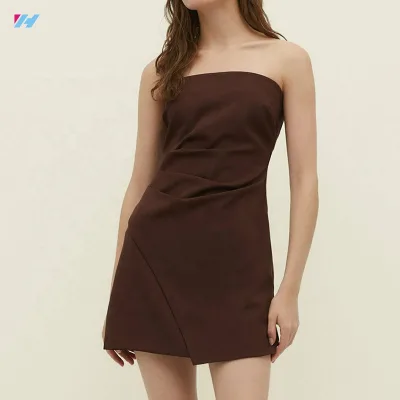


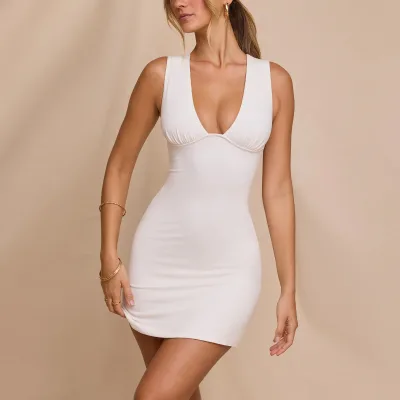
Summer Women Party Bodycon Bandage Sexy Deep V Neck Mini Backless Dresses
$9.98 - $12.39
MOQ: 50 pieces

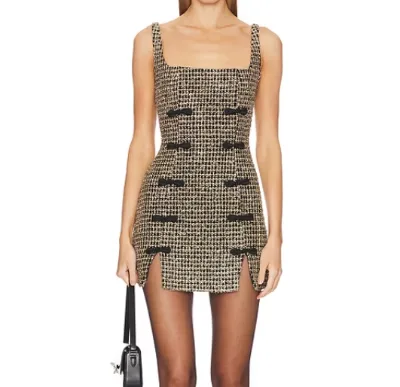
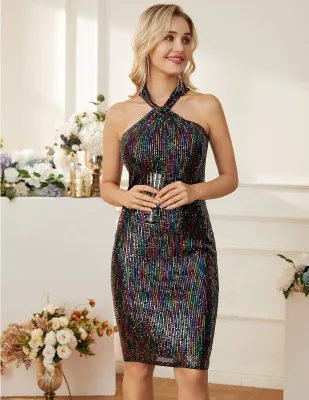
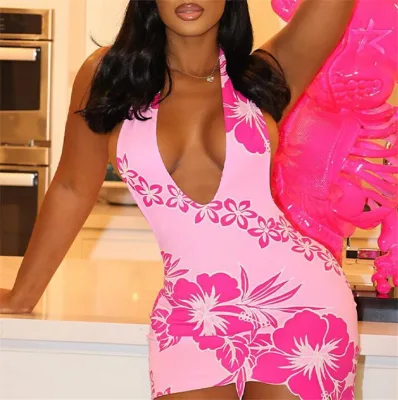



Rhinestone Bodycon Mini Dress Spaghetti Strap Customizable Party Club Dress
$27.55 - $32.55
MOQ: 300 Pieces


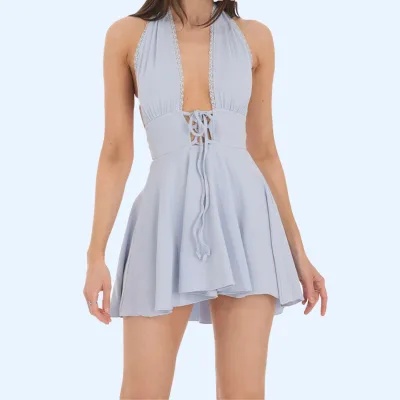

Comprehensive Sourcing Guide
Strategic Sourcing Guide for Bodycon Halter Neck Mini Dresses
Defining Technical Specifications and Design Parameters
When sourcing a Bodycon Halter Neck Mini Dress, the primary objective is to align the physical product attributes with the intended market application while ensuring the manufacturing capabilities match the design complexity. The term "bodycon" implies a tight-fitting silhouette that requires specific fabric properties, such as high elasticity and recovery, to maintain shape without restricting movement. The "halter neck" design introduces structural challenges regarding strap security and neckline stability, necessitating precise pattern making and reinforcement at the shoulder attachment points. The "mini" length specification dictates a hemline that sits well above the knee, which influences the total fabric consumption and the proportion of the garment that must be constructed with high-quality finishing to prevent fraying or uneven edges.
Based on available market data, the fabric composition for such garments often centers on synthetic blends or natural fibers. Polyester is a frequently observed material in this category, offering durability, wrinkle resistance, and ease of care. Some listings indicate a blend of Polyester and Cotton, which can provide a softer hand feel while retaining the structural integrity required for a bodycon fit. The fabric weight is a critical metric; observations suggest a standard weight around 240 grams per square meter, which provides sufficient opacity and structure for a tight-fitting dress. The weaving method is typically woven, though the inclusion of elastane (often implied in bodycon styles) is essential for the stretch required.
The design details further refine the specification. The neckline is a defining feature, often appearing as a strapless or halter configuration. In some variations, the style may incorporate cut-out fashion elements, which require precise cutting and edge finishing to ensure the garment does not unravel. The waist shape is frequently high-waisted to elongate the silhouette, and the overall style may range from casual to elegant. Color options are generally single-color or solid, though customization for specific branding is a common requirement. The length specifications in the market vary, with some products listed as mini, others as midi or long, requiring the buyer to explicitly define the target length to avoid confusion during the sampling phase.
Compliance, Certification, and Material Standards
Navigating the compliance landscape for apparel sourcing involves verifying that the product meets both the regulatory requirements of the destination market and the ethical standards of the brand. While specific certification statuses like GOTS or Oeko-Tex are mentioned in broader industry contexts, buyers must verify the actual certification status of the specific supplier and batch rather than assuming these standards apply universally. The absence of explicit certification data in general product listings means that verification is a critical step in the procurement process.
Material safety is paramount, particularly for garments worn close to the skin. Buyers should request documentation regarding the absence of harmful substances, such as azo dyes or formaldehyde, which are common concerns in textile manufacturing. The "needle detection" feature observed in some supplier profiles is a significant quality control indicator. This process ensures that no metal fragments from sewing needles remain in the finished garment, a standard requirement for many international retailers to prevent injury and ensure product safety.
Regarding production standards, some listings reference specific weight standards, such as 1kg, which may relate to packaging or bulk shipment weights rather than the garment itself. More relevant is the "Customized" standard often applied to logos and packaging. Buyers must clarify whether the supplier adheres to specific international safety standards (such as ASTM or EN) relevant to their target region. The origin of the product, often cited as Guangzhou, China, is a major manufacturing hub known for its textile infrastructure. However, the location of origin does not guarantee compliance; it merely indicates the supply chain node. Buyers should explicitly ask for test reports from accredited third-party laboratories to validate claims regarding fabric safety, color fastness, and dimensional stability.
Cost Drivers and Pricing Dynamics
Understanding the cost structure of a Bodycon Halter Neck Mini Dress is essential for budgeting and negotiating effective terms. The price range observed in the market spans from approximately $4.19 to $32.55 USD, a wide variance that reflects differences in material quality, production complexity, order volume, and customization levels. Several key factors drive these costs.
First, the material composition significantly impacts the base cost. A pure polyester fabric is generally more cost-effective than a cotton-polyester blend or a fabric containing high-grade elastane. The fabric weight, such as the 240-gram specification, also influences the cost per unit; heavier fabrics require more raw material. Second, the complexity of the design plays a major role. A simple bodycon dress is less expensive to produce than one featuring cut-out elements, intricate halter straps, or custom embroidery. The "cut-out" fashion element mentioned in some listings requires additional labor for edge finishing and reinforcement, adding to the production cost.
Third, customization is a primary cost driver. The availability of "Customized Logo" and "Custom Packaging" services allows for brand differentiation but incurs additional setup fees and per-unit costs. The "OEM service" model implies that the supplier is manufacturing to the buyer's specifications, which often involves higher minimum order quantities (MOQs) and potentially higher unit costs compared to stock items. The MOQ range observed is between 1 and 300 units, with a specific observation of 100 PCS as a common threshold. Lower MOQs, such as 1 unit, are typically available for sample orders but come with a significantly higher per-unit price.
Finally, the lead time and logistics contribute to the overall cost. Suppliers offering "7 days sample order lead time" support rapid prototyping, which is valuable for fast-moving fashion cycles but may command a premium. The "Box" packing standard is a basic requirement, but "Support Custom Packaging and Label" adds value and cost. Buyers should request a detailed breakdown of costs, separating material, labor, overhead, and logistics, to understand where the price differential lies between the low-end and high-end listings.
Typical Applications and Market Segmentation
The Bodycon Halter Neck Mini Dress is a versatile garment with applications across various market segments. Its primary appeal lies in its ability to create a sleek, figure-hugging silhouette that is suitable for both casual and formal occasions. The "Daily Casual" type observed in product attributes indicates that these dresses are designed for everyday wear, while the "ELEGANT" style designation suggests suitability for evening events, parties, or social gatherings.
The seasonal relevance is another critical factor. The "Summer" and "Spring" seasons are the primary windows for this product, as the sleeveless design and mini length are optimized for warmer weather. The "Breathable" and "Anti-wrinkle" features observed in product descriptions are particularly valuable for summer wear, ensuring comfort and ease of maintenance in hot climates. The "Machine Washable" care instruction further enhances its suitability for casual, everyday use, as it reduces the need for dry cleaning, which is often impractical for frequent wearers.
In terms of target demographics, this style appeals to a broad audience seeking trendy, form-fitting apparel. The "Single Color" and "Solid" pattern options make the dress a versatile staple that can be easily accessorized. The "High Waist" design is particularly popular among consumers looking to accentuate their figure, making it a staple in contemporary fashion retail. The "Strapless" or halter neckline adds a touch of sophistication, making it appropriate for cocktail parties or summer weddings.
Supplier Evaluation and Selection Criteria
Selecting the right supplier is a critical step in ensuring product quality and supply chain reliability. Buyers should evaluate potential partners based on several key criteria derived from the available data. The "OEM service" capability is a strong indicator of a supplier's flexibility and ability to handle custom orders. Suppliers offering this service should be able to provide samples, manage custom packaging, and adhere to specific design requirements.
The "7 days sample order lead time" is a significant advantage for buyers needing to validate designs quickly. This capability suggests an efficient production workflow and a willingness to support the sampling process. However, buyers must verify if this lead time applies to the initial sample or if it changes for bulk production. The "Needle detection: Yes" attribute is a non-negotiable quality control measure for many buyers, indicating a commitment to safety and defect prevention.
Geographic location is another factor. The "Guangzhou" origin is a well-established textile hub, offering access to a robust supply chain and skilled labor. However, buyers should verify the specific factory location and capacity to ensure it can meet their volume requirements. The "Place of Origin: China" is a broad classification, and buyers should seek more specific details about the manufacturing facility's size, equipment, and workforce.
Customization capabilities are also vital. The ability to offer "Customized Logo" and "Custom Packaging" allows brands to differentiate their products. Buyers should assess the supplier's experience with digital printing and other decoration methods, such as the "Digital Printing" observed in some listings. The "Logo position: back neck" or "back" indicates standard placement options, but flexibility in positioning should be confirmed.
Quality Control and Inspection Protocols
Implementing a robust quality control (QC) protocol is essential to maintain brand integrity and customer satisfaction. The "Needle detection" feature mentioned in the data is a foundational QC step that must be verified through the supplier's process. Buyers should request evidence of this process, such as photos or certificates, to ensure that metal detection is performed on every garment.
Fabric quality is another critical area of inspection. Buyers should verify the "Fabric Weight" (e.g., 240 grams) and "Material" composition (e.g., Polyester or Cotton blend) against the agreed-upon specifications. Dimensional stability and color fastness are also important; the "Washable" and "Anti-wrinkle" claims should be tested to ensure the garment maintains its shape and appearance after washing. The "Machine Washable" care instruction must be validated through actual washing tests to confirm that the fabric does not shrink, fade, or distort.
Construction quality is paramount for a bodycon dress. The "Halter neck" design requires secure stitching at the straps and neckline to prevent tearing. The "Cut-out" elements must be finished with precision to avoid fraying. Buyers should inspect the "Hem Shape" and "Lining" (if applicable) to ensure they meet the desired standards. The "Lining: Custom" attribute suggests that some garments may include internal linings, which should be checked for comfort and durability.
Packaging is also part of the QC process. The "Box" packing standard is basic, but "Support Custom Packaging and Label" requires careful inspection to ensure that the branding is accurate and the packaging protects the garment during transit. The "Single package size: 35X30X10 cm" provides a reference for logistics planning, but buyers should verify the actual dimensions of the packaged product to optimize shipping costs.
Long-Term Procurement Considerations and Scalability
Sourcing a Bodycon Halter Neck Mini Dress is not just a one-time transaction but a strategic decision that impacts long-term business operations. Buyers should consider the scalability of the supplier's production capabilities. The observed MOQ range of 1 to 300 units suggests flexibility, but buyers must assess whether the supplier can scale up to meet increased demand without compromising quality or lead times.
The "Supply Type: OEM service" indicates a partnership model, which is beneficial for long-term growth. However, buyers should establish clear communication channels and contract terms to ensure consistency in product quality and delivery schedules. The "7 days sample order lead time" is a positive indicator, but buyers should verify if this lead time remains consistent for bulk orders or if it extends as volume increases.
Sustainability is an increasingly important consideration. While specific certifications like GOTS or Oeko-Tex are not universally confirmed in the data, buyers should inquire about the supplier's environmental practices. The "Eco-Friendly" feature observed in some product descriptions suggests a potential for sustainable production, but this should be verified through specific documentation.
Finally, buyers should plan for the lifecycle of the product. The "Summer" and "Spring" seasonal relevance means that inventory management must be aligned with the fashion calendar. Buyers should consider the "Care Instruction: Machine Washable" as a selling point that extends the product's lifespan and reduces customer complaints. By focusing on these long-term factors, buyers can build a resilient supply chain that supports their brand's growth and market positioning.
FAQs
What is the typical fabric composition for this dress?
The fabric is typically polyester or a polyester and cotton blend. This composition offers durability and wrinkle resistance while maintaining the structure required for a bodycon fit.
Can I order samples with a quick lead time?
Yes, suppliers support sample orders with a seven-day lead time. This allows for rapid prototyping and design validation before committing to bulk production quantities.
What is the minimum order quantity for custom production?
The minimum order quantity is commonly 100 pieces for custom orders. Some suppliers may accept lower quantities for samples, but bulk production usually requires meeting this threshold.
How is the product packed and shipped?
Standard packing involves a box, but custom packaging and labeling are available. Buyers should specify their requirements early to ensure the packaging meets their branding needs.
Is the dress suitable for summer wear?
Yes, the dress is designed for summer and spring seasons. Features like being breathable and machine washable make it practical for warm weather and frequent casual use.
What customization options are available for the logo?
Customized logos are available with digital printing on the back or back neck. Buyers can specify the logo position and design to align with their brand identity.
Does the product include safety checks for metal fragments?
Yes, needle detection is performed to ensure no metal fragments remain in the garment. This quality control step is essential for meeting international safety standards.